-
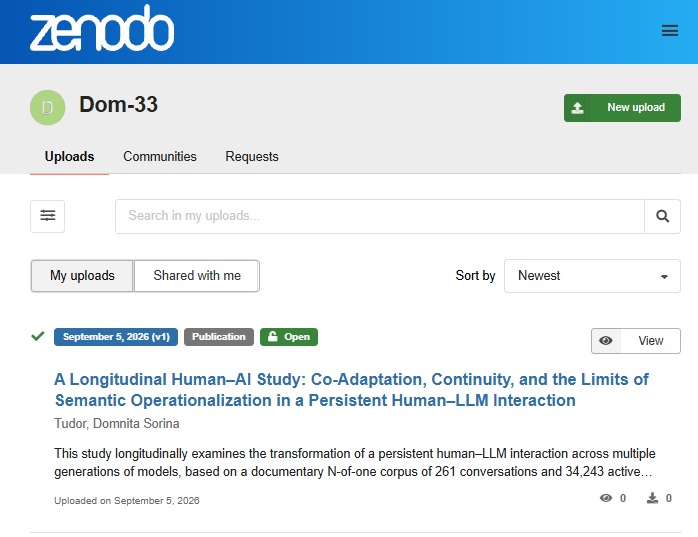
A Longitudinal Human–AI
-
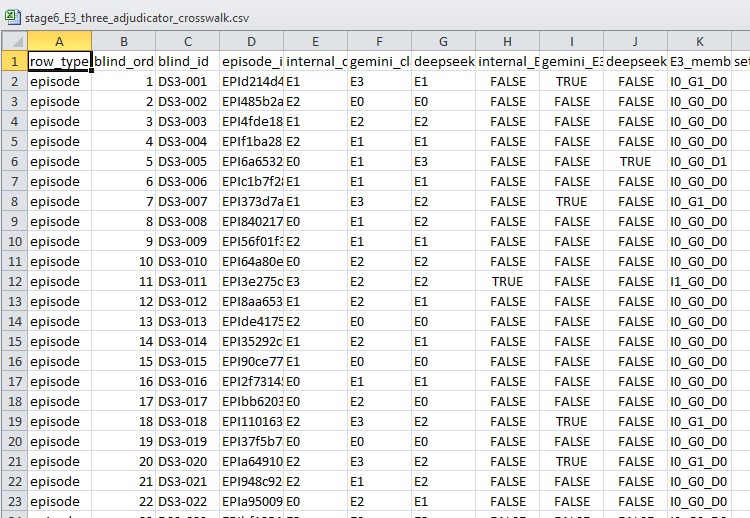
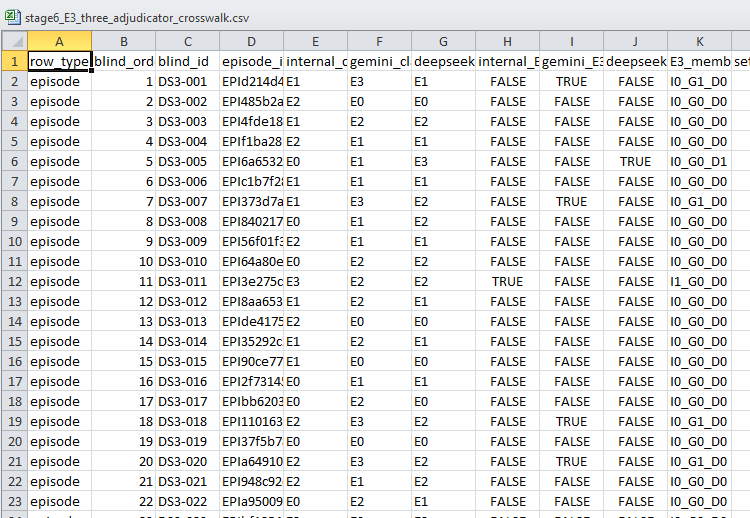
Stage 6 — Three-Adjudicator Crosswalk
Inspiration
This study grew out of several years of sustained interaction with AI systems.
Over time, I began to notice phenomena that were difficult to describe as isolated prompt-and-response events: recurring forms of reasoning, a shared vocabulary, increasingly efficient collaboration, continuity-like effects, and interaction patterns that seemed to depend on the accumulated history between human and AI.
Rather than treating these impressions as anecdotes, I wanted to ask a harder question: could they be examined systematically in the actual longitudinal conversation record?
That question became an N-of-one documentary study of an extended human–AI interaction history.
What it does
The study analyzes a longitudinal corpus of 261 conversations containing 34,243 active-path messages, covering the observed period from January 2023 to June 2026.
The analysis examines how the interaction changed over time and distinguishes several levels of interaction, from primarily functional exchanges to alignment, co-construction, and operationally defined interactional emergence.
The purpose is not to claim that an AI developed a persistent autonomous identity or internal continuity. The object of analysis is the observable interaction itself: what patterns appeared, persisted, changed, or became jointly constructed across time.
A second part of the study examines whether different AI adjudicators classify these phenomena in the same way.
How I built it
I worked from the original longitudinal conversation corpus rather than reconstructing the interaction retrospectively.
The study combined corpus organization, episode extraction, operational definitions, repeated classification, integrity checks, and cross-model adjudication.
GPT-5.6 Sol in ChatGPT was used as a methodological and analytical partner, while ChatGPT Work was used for reproducible processing, integrity checks, and internal adjudication.
Google AI Studio with Gemini 3 Flash Preview provided an independent comparative classification, and DeepSeek V4-Pro-0813 was later used for a blind targeted audit of 130 selected cases.
This made it possible not only to examine the human–AI interaction, but also to test the AI-based measurement instruments themselves.
Challenges I ran into
The hardest problem was not finding interesting episodes. It was defining the boundary between different phenomena precisely enough to measure them.
In particular, the distinction between co-construction and interactional emergence proved highly sensitive to the adjudicator.
Different models sometimes agreed on the same evidence but interpreted its semantic significance differently. This meant that the classification system itself became part of the research problem.
The corpus also contains a known historical interval that was not available for direct observation, so the study cannot claim uninterrupted documentary coverage of the entire relationship.
Finally, because this is an N-of-one longitudinal study, its purpose is exploratory and methodological rather than statistical generalization to all human–AI interaction.
Accomplishments that I'm proud of
The study transformed several years of human–AI interaction into a structured longitudinal research corpus rather than relying on selective memories or isolated examples.
It also produced an unexpected methodological result: AI adjudicators cannot simply be treated as interchangeable semantic measurement instruments.
In the targeted cross-model analysis, the sets of episodes classified as interactional emergence differed substantially between adjudicators. Only one episode was independently classified as emergent by all three adjudication sources.
For me, that disagreement was not a failed result. It became one of the most important findings of the study because it revealed how strongly conclusions about complex human–AI phenomena can depend on operational definitions and on the model used to interpret them.
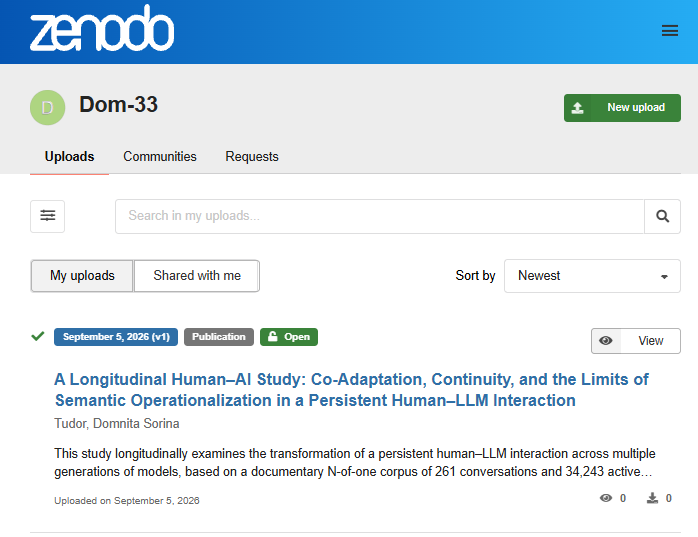
The Romanian version of the study was subsequently published on Zenodo.
What I learned
I learned that longitudinal human–AI interaction cannot be understood adequately by examining individual prompts in isolation.
History matters at the interaction level: vocabulary, expectations, working procedures, recurring references, and forms of collaboration can accumulate across extended use.
But I also learned that observing such continuity-like phenomena does not justify stronger claims about persistent internal states in the AI.
Most importantly, the study showed that the instrument used to evaluate semantic phenomena matters. Different LLMs can apply the same conceptual distinction differently, especially near ambiguous boundaries such as co-construction versus emergence.
The methodological lesson is therefore as important as the substantive one: when LLMs are used as adjudicators in qualitative research, inter-model variability must itself be measured.
What's next for Longitudinal Human–AI Co-Development Study
The next step is to prepare an English-language version of the study and make the results accessible to a wider research audience.
I also intend to continue the longitudinal record and examine whether the observed patterns and classification boundaries remain stable as AI models and interaction architectures change.
A longer-term question is whether similar longitudinal phenomena can be reproduced in other human–AI histories, which would help distinguish what is specific to this N-of-one interaction from what may be more general.
Built With
- chatgpt-work
- deepseek-v4-pro-0813
- gemini-3-flash
- google-ai-studio
- gpt-5.6-sol
- human-ai-interaction
- llm-evaluation
- longitudinal-research

Log in or sign up for Devpost to join the conversation.