-
-
cover
Inspiration
In today’s global economy, air cargo is vital for supply chains, transporting millions of tons of goods daily, from medical supplies to electronics. However, this complexity places immense pressure on airlines and ground handling agents to ensure timely delivery. Despite technological advancements, the industry faces critical challenges, including delays, miscommunication, and operational inefficiencies, which can lead to disruptions costing up to $38,000 per hour. Even minor delays can create ripple effects, exacerbated by outdated systems and unexpected disruptions like weather changes. When airlines and ground handling agents lack visibility of key milestones, such as freight out of the warehouse, it can lead to confusion and leave the teams scrambling. The pressing question remains: how can we bring order to this chaos?
What it does
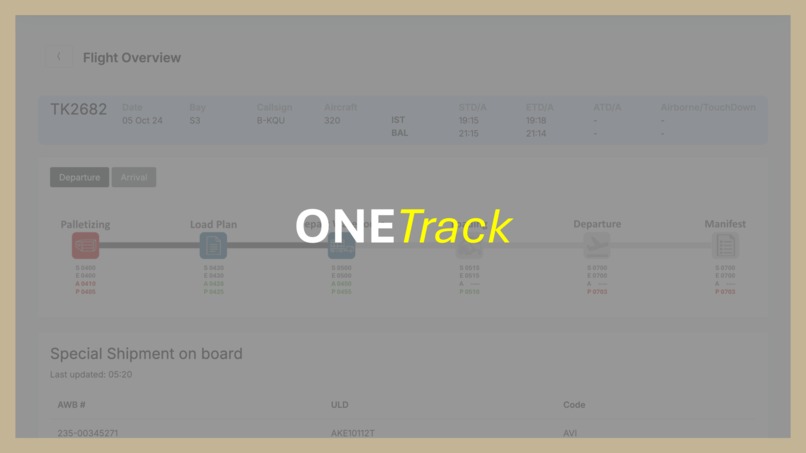
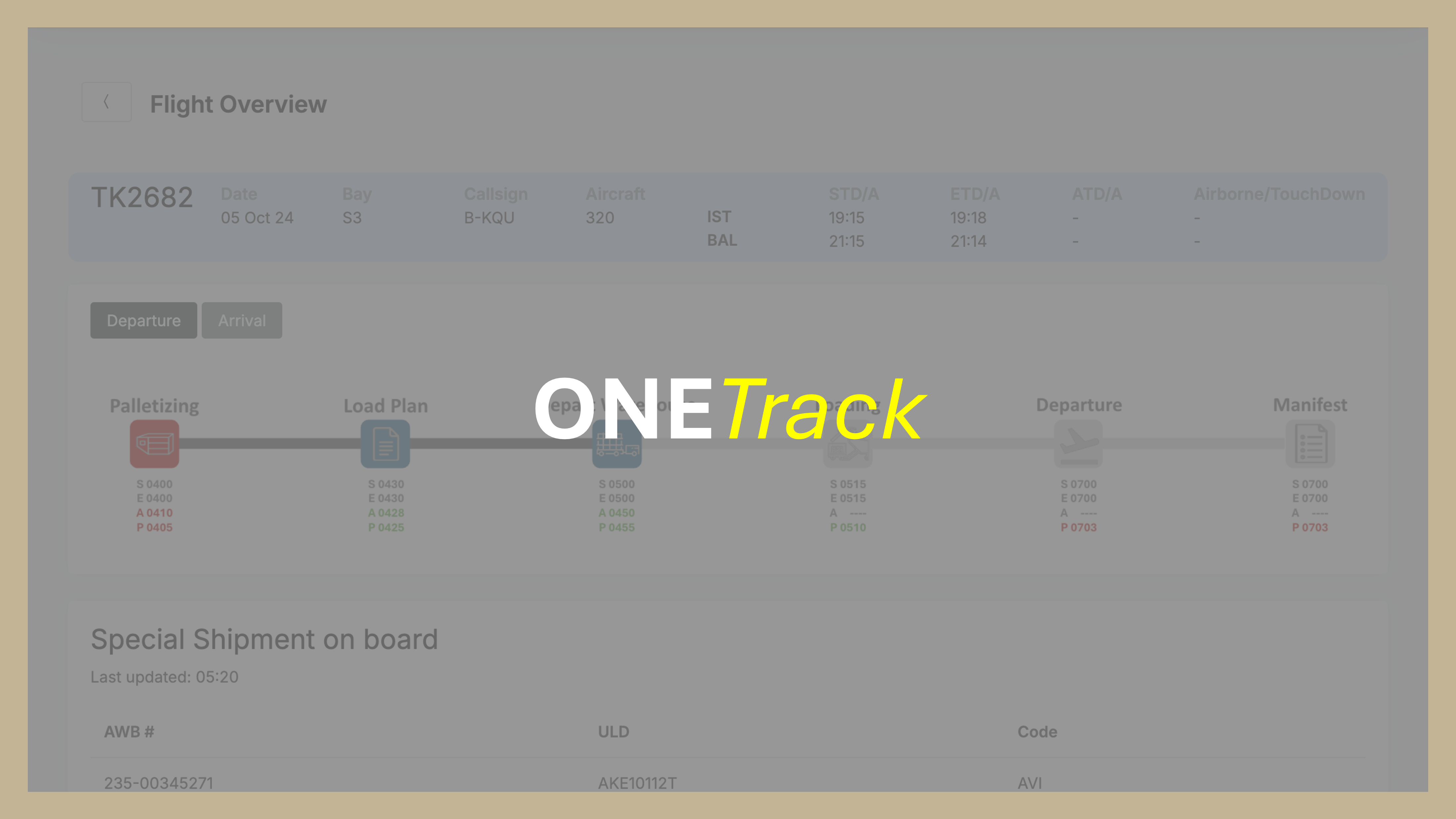
One Track is a centralized data platform designed to streamline the air cargo supply chain. By implementing a unified data-sharing model through One Record, it ensures real-time visibility and transparency across all stakeholders, including ground handling agents, air carriers, and cargo terminals. This platform provides timely access to critical milestones, reducing delays, miscommunication, and operational inefficiencies, thereby enhancing overall efficiency and minimizing disruptions.
How we built it
We built One Track by leveraging the One Record data-sharing model, which simplifies the complex data flow between various stakeholders. Our development process involved integrating APIs to support different priorities and aligning with industry standards like IATA’s One Record. We focused on creating a user-friendly interface with customizable dashboards for different stakeholders, ensuring that each party has access to the information they need in real-time.
Challenges we ran into
CargoiQ Challenge
Accomplishments that we're proud of
We are proud of several key accomplishments:
Successfully simplifying the data flow in the air cargo ecosystem, reducing the need for multiple, scattered updates. Enhancing real-time visibility and transparency, which has significantly improved operational efficiency. Developing a centralized platform that serves as a single source of truth for all stakeholders, ensuring timely access to critical information. Receiving positive feedback from early adopters who have reported reduced delays and improved coordination.
What we learned
Throughout the development of One Track, we learned the importance of collaboration and communication among various stakeholders in the air cargo industry. We also gained insights into the challenges faced by ground handling agents and airlines, which helped us tailor our solution to meet their specific needs. Additionally, we learned the value of real-time data sharing and its impact on operational efficiency and decision-making.
What's next for OneTrack
Looking ahead, we plan to:
Expand the capabilities of One Track by incorporating advanced analytics and machine learning to predict potential disruptions and optimize operations. Enhance the user experience by continuously improving the interface and adding new features based on user feedback. Explore partnerships with more airlines and ground handling agents to broaden the adoption of One Track. Develop training programs to help stakeholders fully utilize the platform and maximize its benefits.


Log in or sign up for Devpost to join the conversation.