
Inspiration
Teachers regularly balance lesson preparation, differentiated learner support, assessment activities and communication with parents. These responsibilities consume time that could otherwise be spent teaching, mentoring and supporting learners.
As an educator and founder of TALL ENTERPRISES, I have experienced this challenge directly. I created Onésime AI to explore how artificial intelligence can reduce repetitive administrative work while keeping teachers responsible for every educational decision.
What it does
Onésime AI is a Gemini-powered teaching assistant that helps educators:
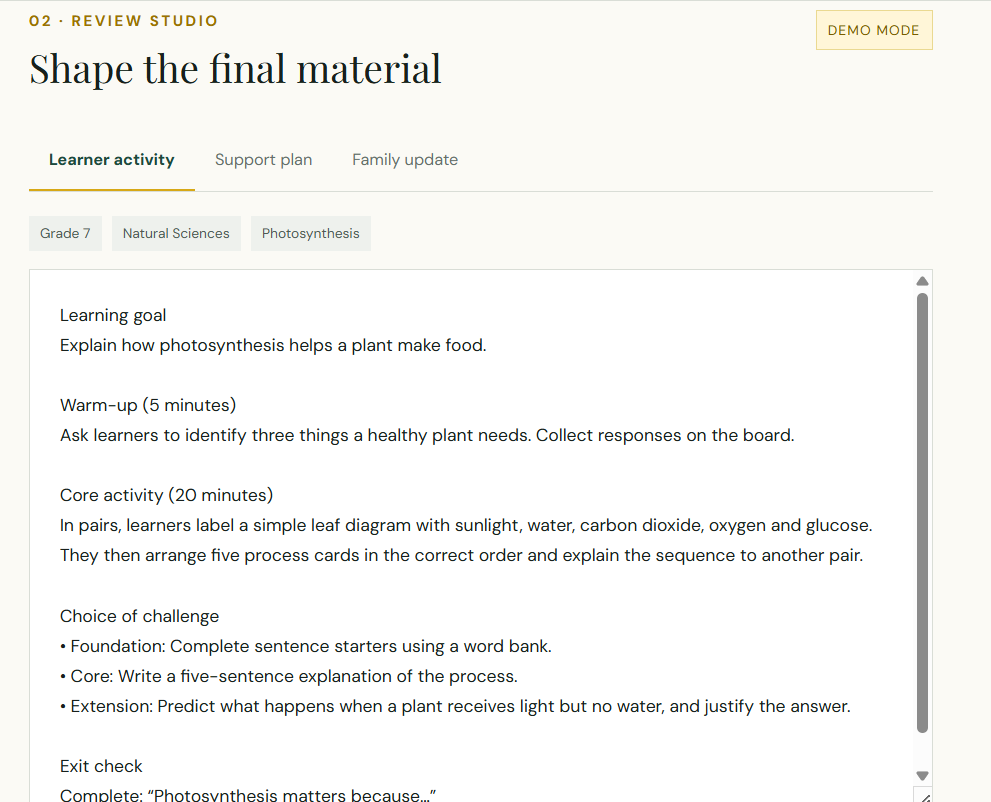
- Create differentiated learning activities for different learner-support needs;
- Generate structured lesson-support and intervention plans;
- Prepare age-appropriate classroom exercises;
- Draft clear progress summaries for parents or guardians; and
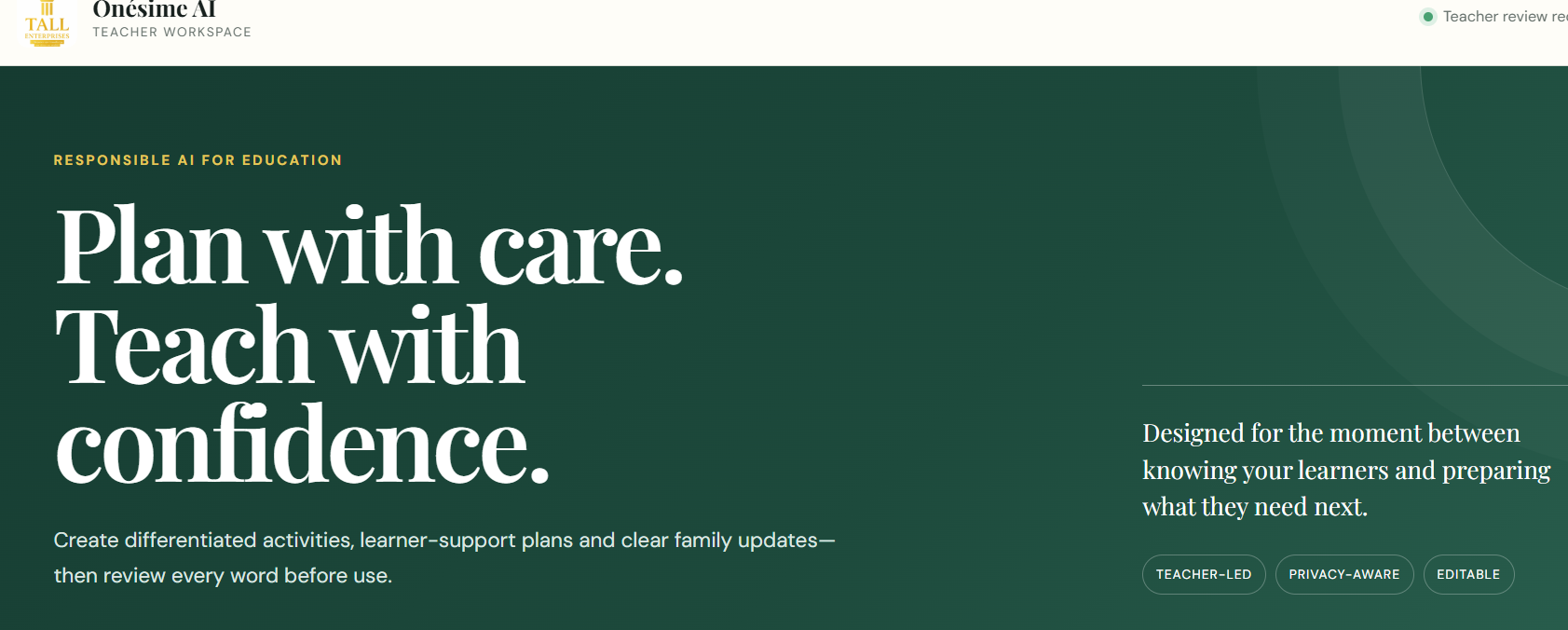
- Review and edit every AI-generated output before it is used or shared.
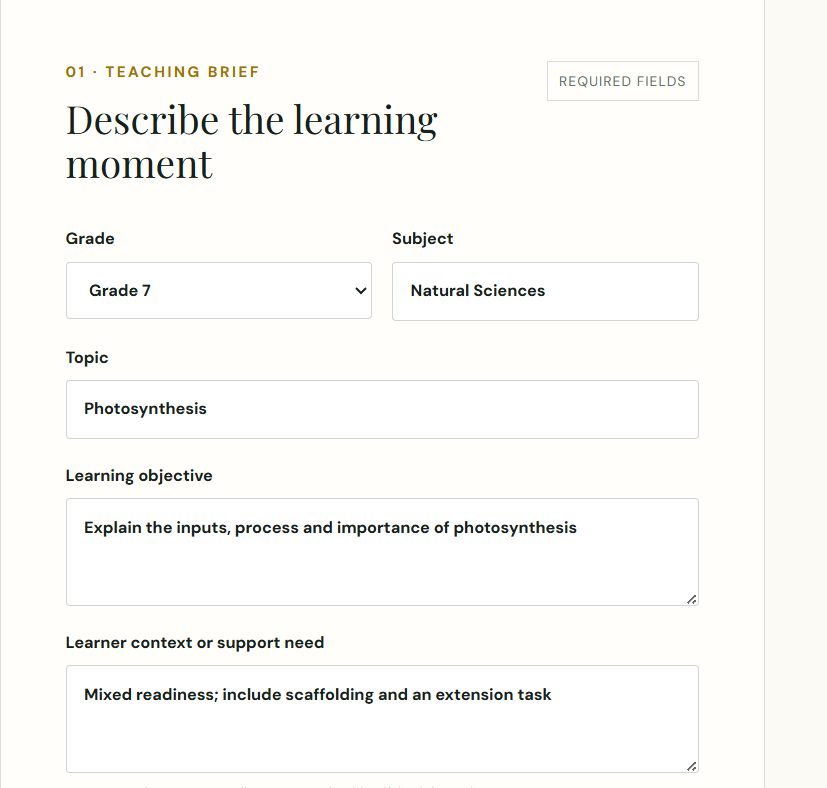
A teacher enters the grade, subject, topic, learning objective and relevant support requirements. Onésime AI uses Gemini to produce structured, editable educational content based on those instructions.
The platform is designed as a teacher-support tool, not a replacement for professional judgment. It does not independently diagnose learners, determine final marks or communicate with families without human review.
How we built it
We designed the prototype around a focused workflow:
- The teacher enters the learning context and desired output.
- The application structures the request and sends it to the Gemini API.
- Gemini generates differentiated educational content.
- The teacher reviews, edits and approves the output.
- The approved material can be saved for classroom use.
The solution uses the Gemini API as its core intelligence layer and Google Cloud services to support deployment and data management. The interface prioritizes simplicity so that educators do not need technical or prompt-engineering experience.
Challenges we faced
One major challenge was controlling the quality and consistency of generated content. Educational material must be appropriate for the learner’s grade, curriculum context and specific support needs. We addressed this by using structured inputs, defined output formats and mandatory teacher review.
We also considered learner privacy and responsible AI use. The prototype is designed to minimize the collection of personal learner information and to keep educators in control of all outputs.
Another challenge was avoiding an overly broad first product. We therefore concentrated on three connected functions: differentiated activities, learner-support planning and parent progress summaries.
What we learned
We learned that an effective education product should not simply provide a general-purpose chatbot. It should convert a teacher’s real workflow into clear steps and produce outputs that can be reviewed and used immediately.
We also learned that responsible AI in education requires transparency, privacy safeguards and meaningful human oversight. The quality of the experience depends as much on workflow design as it does on the underlying model.
Business model
Onésime AI is being developed as a sustainable education technology business. The proposed model includes:
- Affordable monthly subscriptions for individual educators;
- Institutional licences for schools and education organisations; and
- Future multilingual and curriculum-specific packages.
Our initial focus is on educators and independent schools in South Africa, followed by expansion into other African education markets.
What’s next
Our next priorities are to:
- Test the prototype with educators and document verified feedback;
- Measure time saved on lesson preparation and parent communication;
- Improve curriculum-aligned templates;
- Add multilingual support;
- Strengthen privacy and administrative controls; and
- Develop school-level dashboards and institutional licensing.
Our long-term vision is to give educators practical, responsible AI tools that reduce administrative pressure and make personalized learning support more accessible.
Built With
- ai
- api
- authentication
- cloud
- css3
- firebase
- firestore
- gemini
- html5
- javascript
- node.js
- react
- run
- studio
- typescript

Log in or sign up for Devpost to join the conversation.