Inspiration
We were inspired by the difficulty of paying with multiple QR systems in different countries.
- Singapore: Multiple QR systems exist (e.g. NETS, PayLah!, PayNow), but some merchants may only accept one type.
- China: Services like Alipay and WeChat Pay sometimes only work for locals or charge extra fees for foreign users.
What it does
OneQR is a payment web app that enables users to make purchases in foreign countries conveniently. It acts as a QR router, leveraging XRPL’s Cross-Currency Payments feature. This allows a user to pay in their preferred currency while the merchant receives payment in their local currency—all in a single, atomic transaction.
How we built it
- Backend: Flask API on XRPL Testnet handling payments.
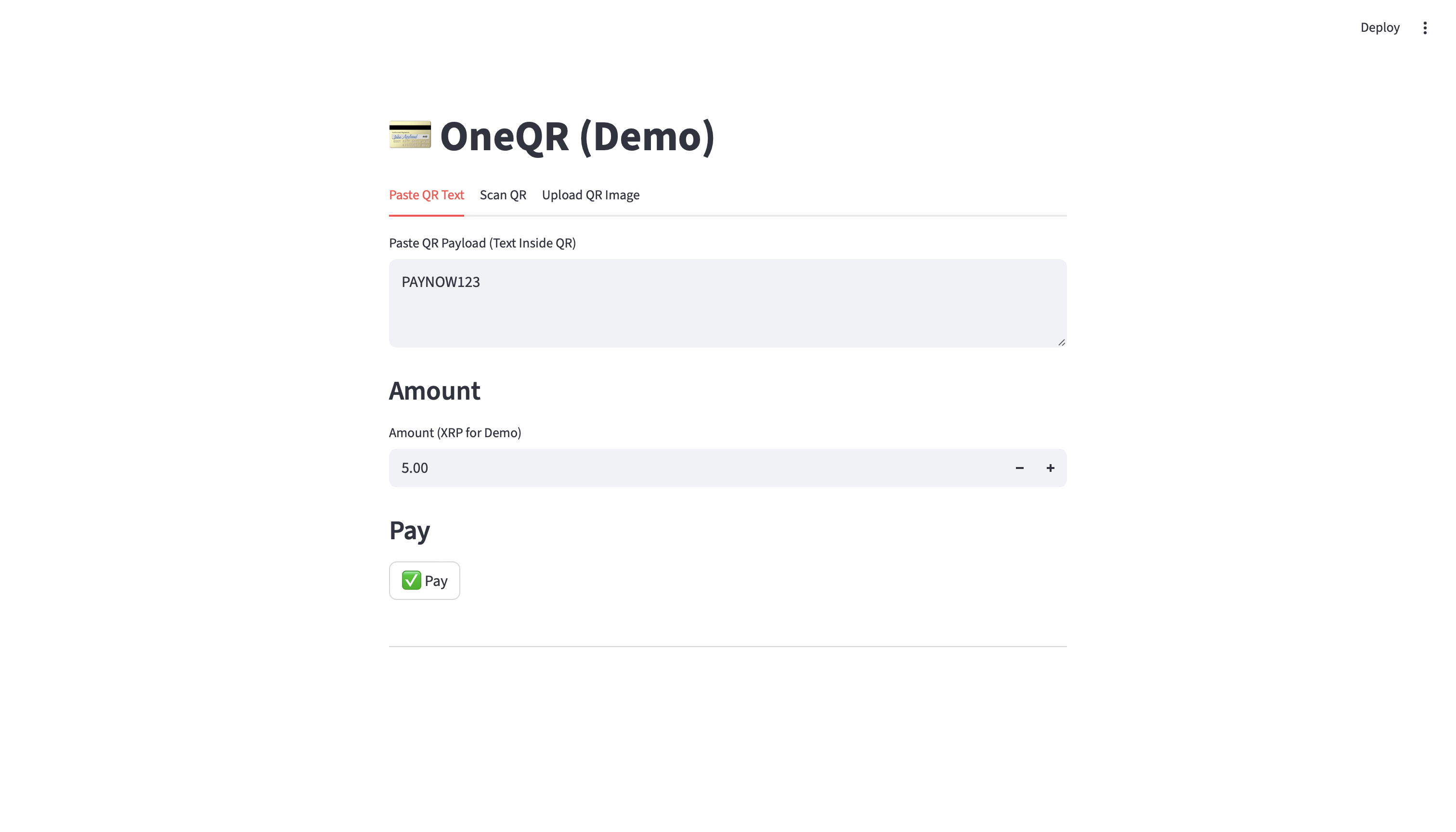
- Frontend: Streamlit app where users can paste QR text and enter amounts.
- Payment flow: Detects QR type, sends XRP via XRPL to settle payments seamlessly.
Challenges we ran into
- Creating a user-friendly frontend interface quickly.
- Implementing QR scan and image upload in Streamlit.
Accomplishments that we're proud of
- The web app works with pasting QR text, and the Pay button successfully triggers XRPL Testnet transactions.
- Backend reliably detects QR type and returns transaction info.
What we learned
- How to integrate XRPL features into a web app.
- How to build a frontend quickly with Streamlit.
What's next for OneQR: A Global QR Payment Routing Demo
- Improving QR scan and upload functionality.
- Extending support to more payment rails.
- Making the demo more interactive and closer to a real-world global payment experience.

Log in or sign up for Devpost to join the conversation.