-
-
OneMove-Logo
-
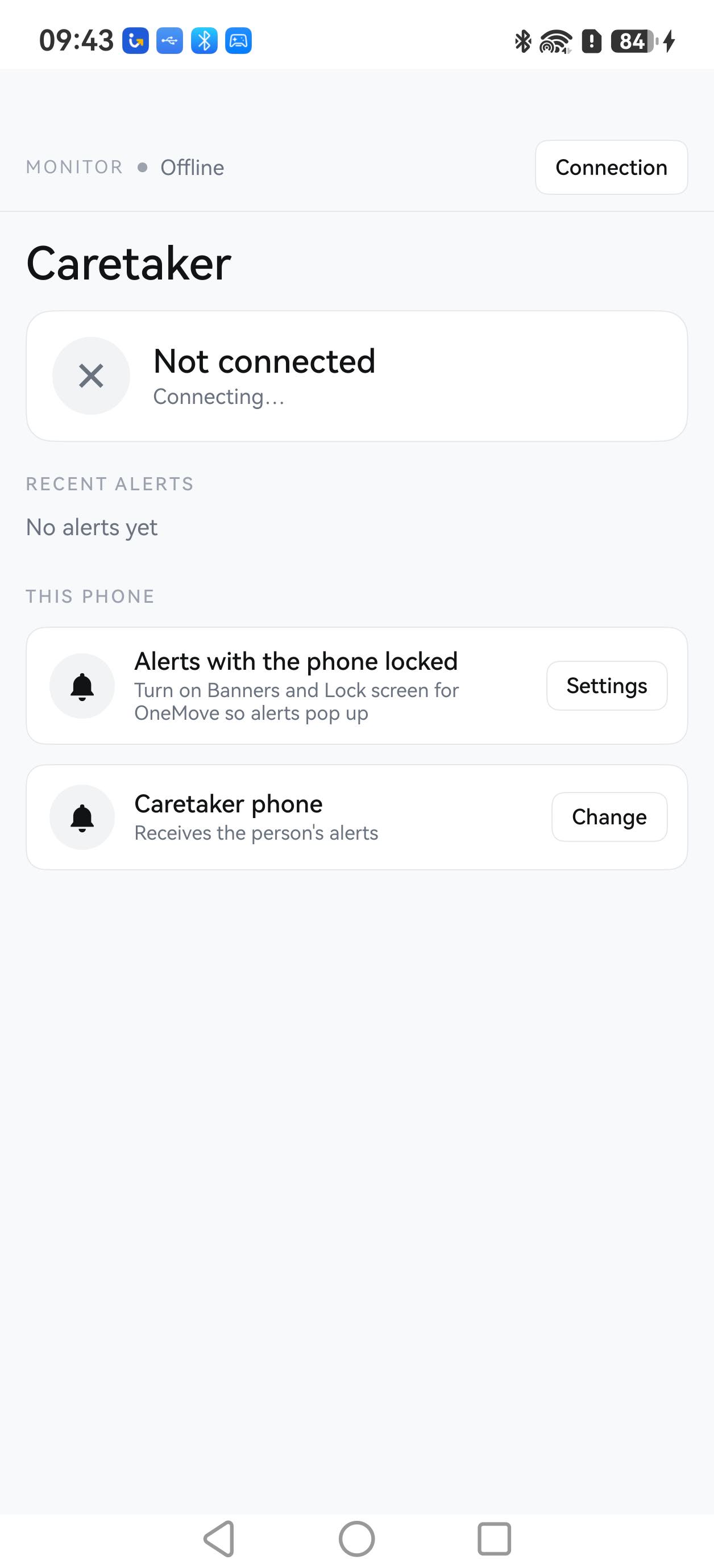
01-caretaker-monitor
-
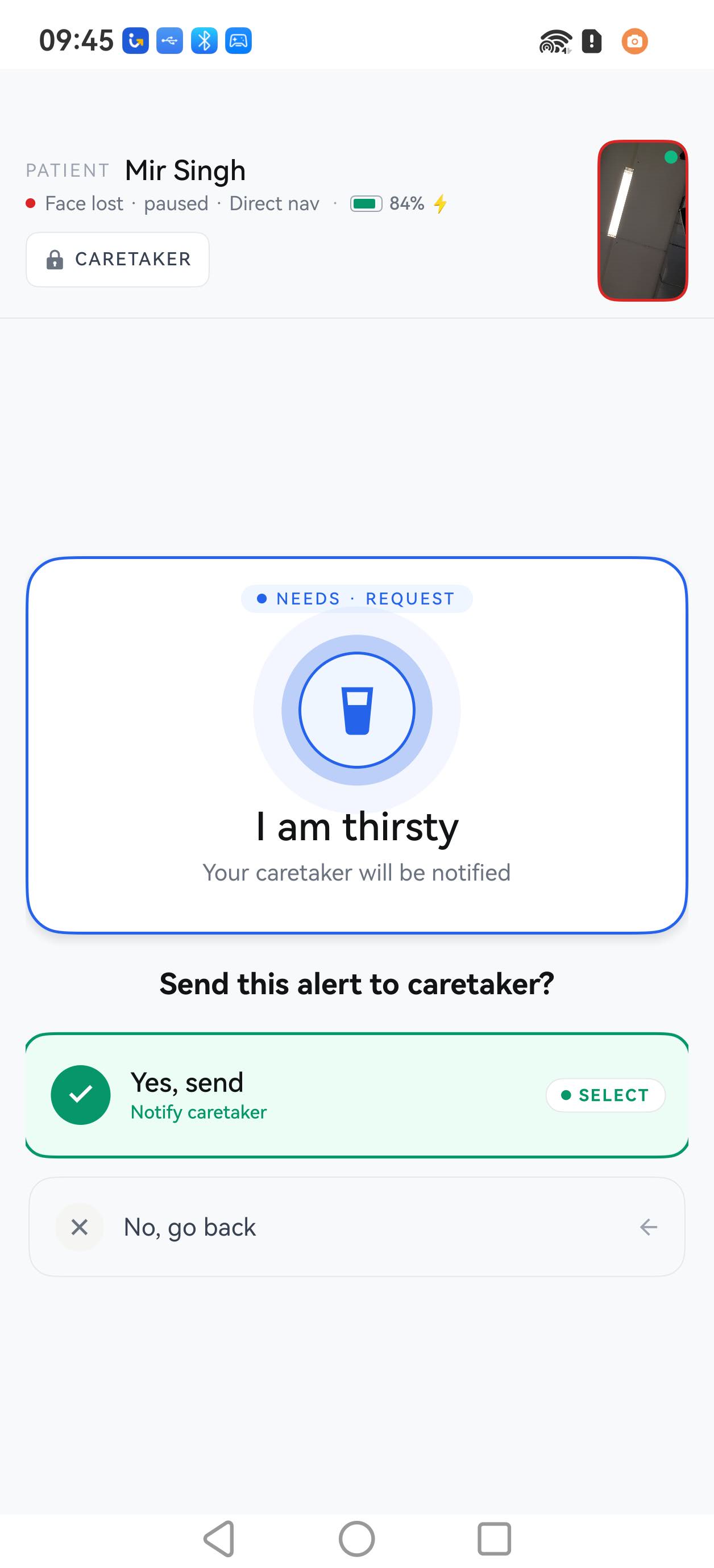
10-confirm-send
-
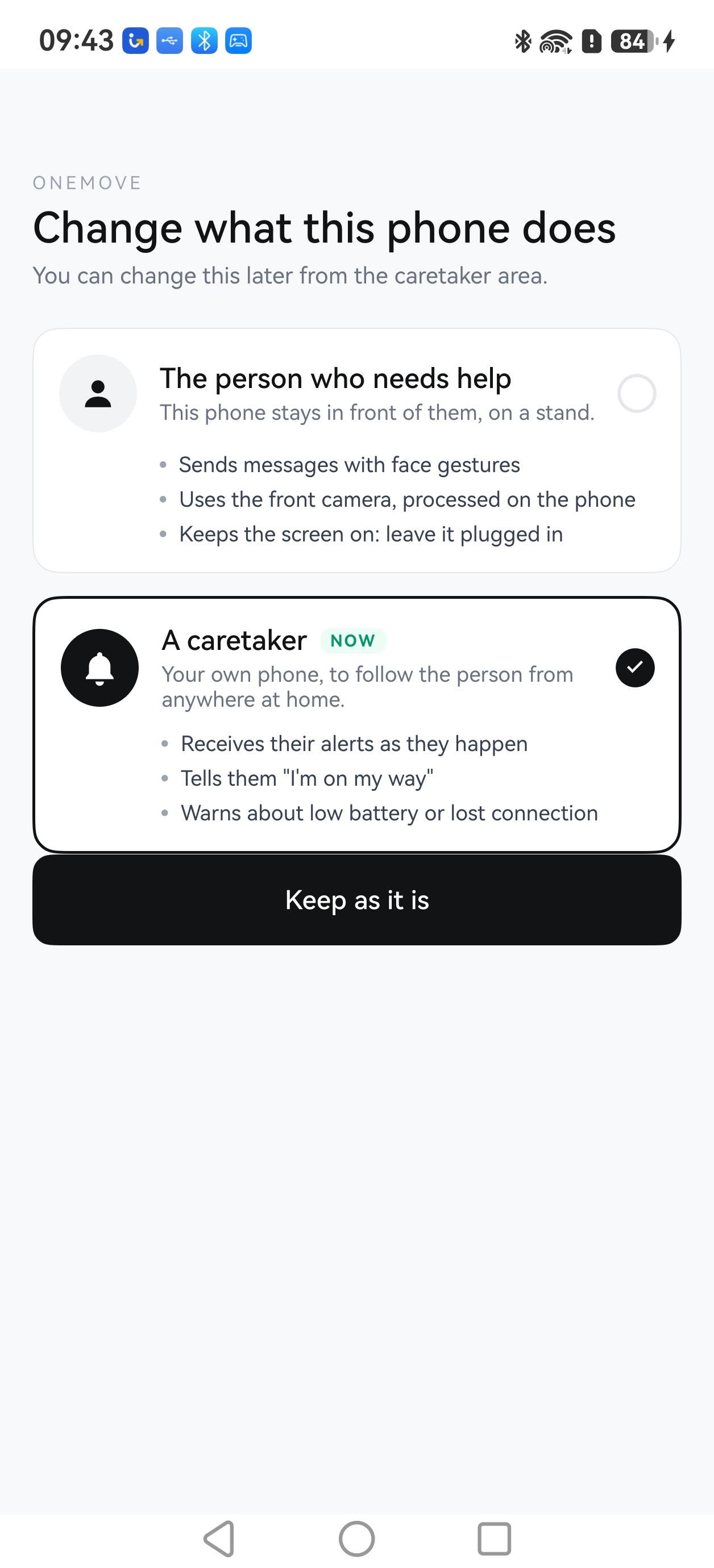
02-role-select
-
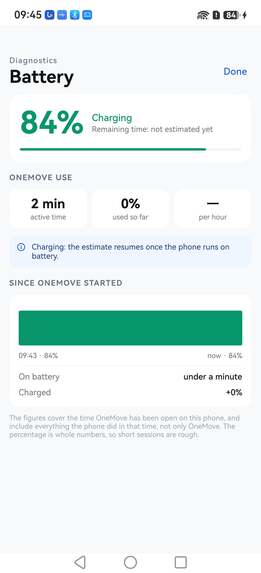
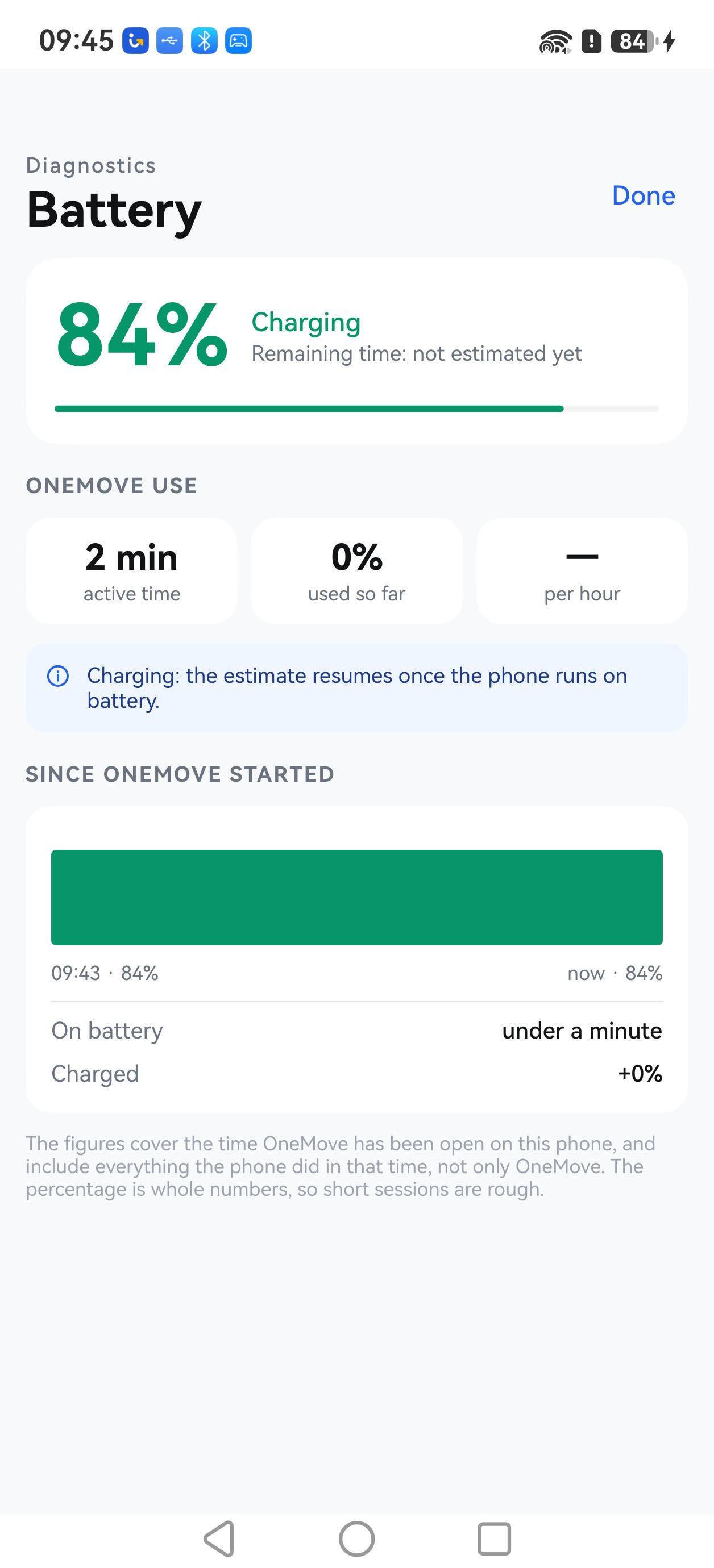
09-battery-detail
-
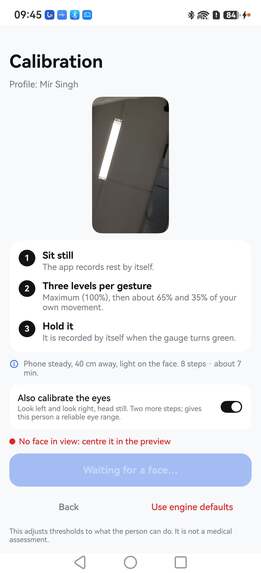
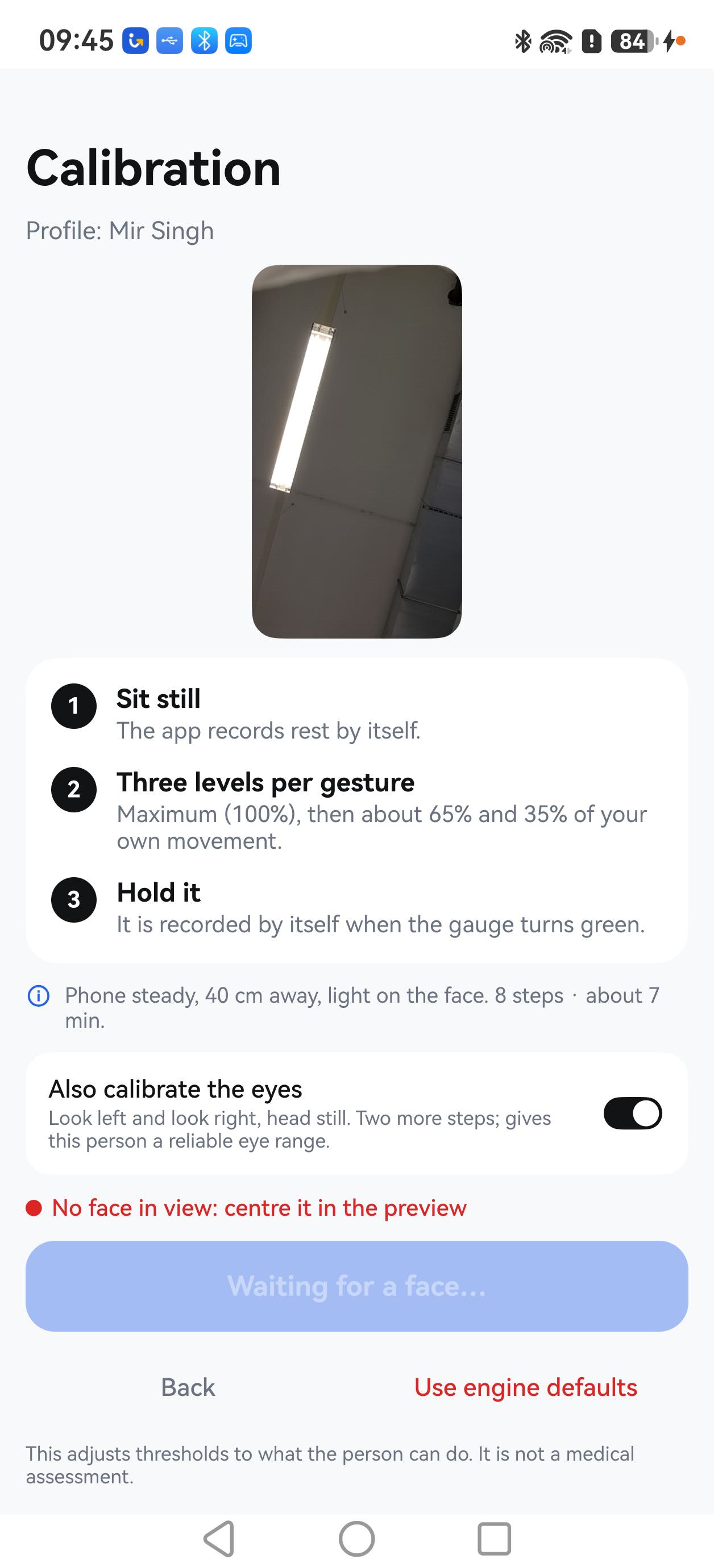
08-calibration
-
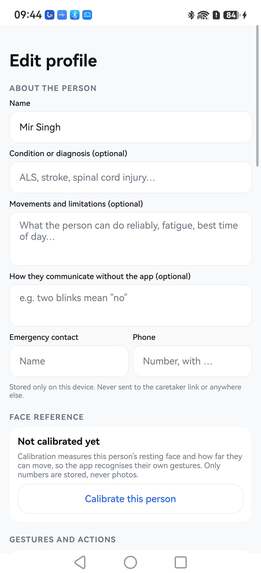
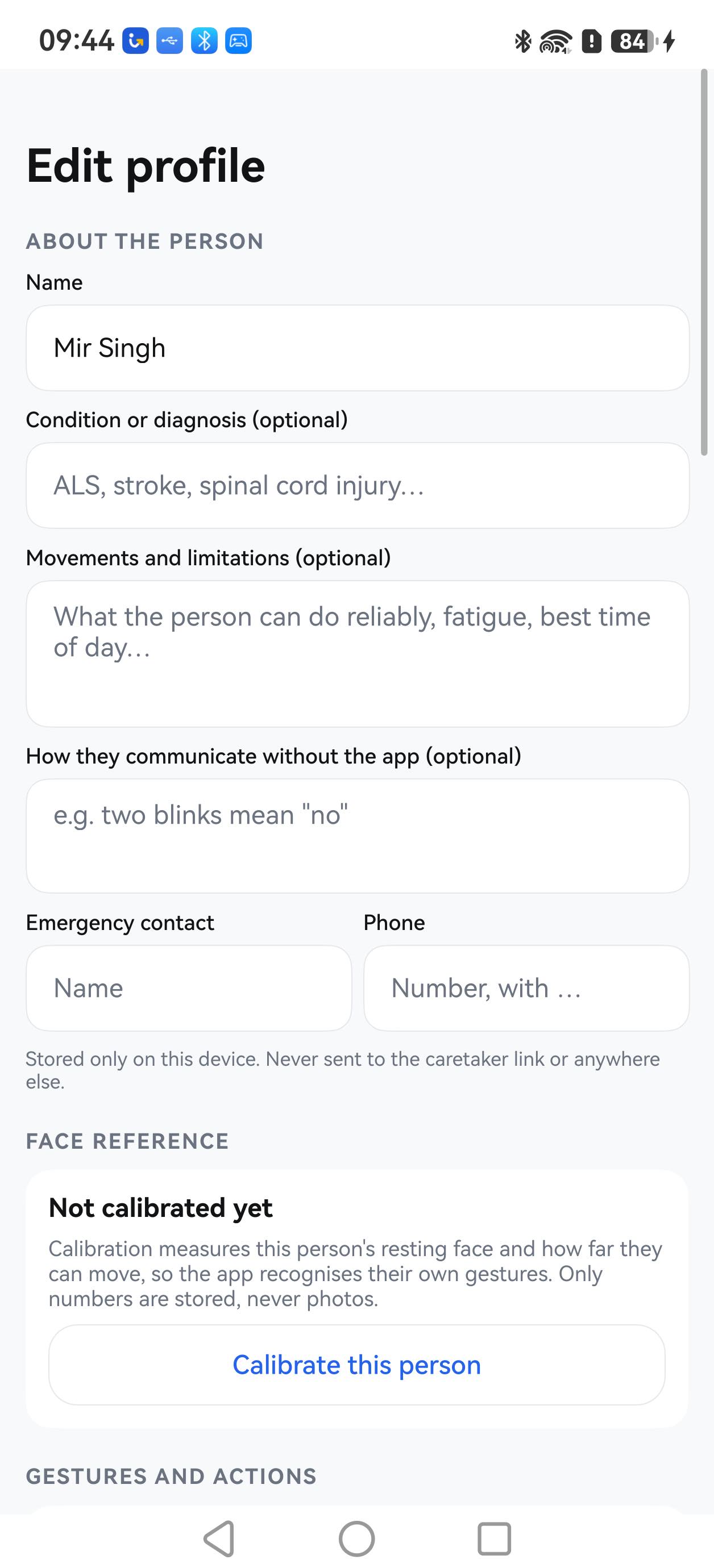
06-profile-editor
-
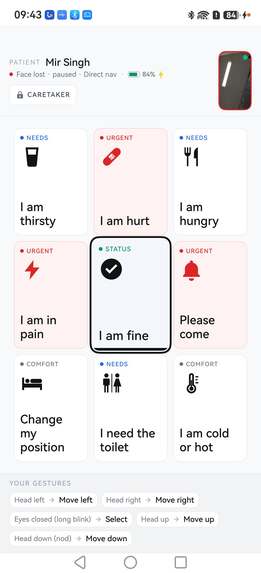
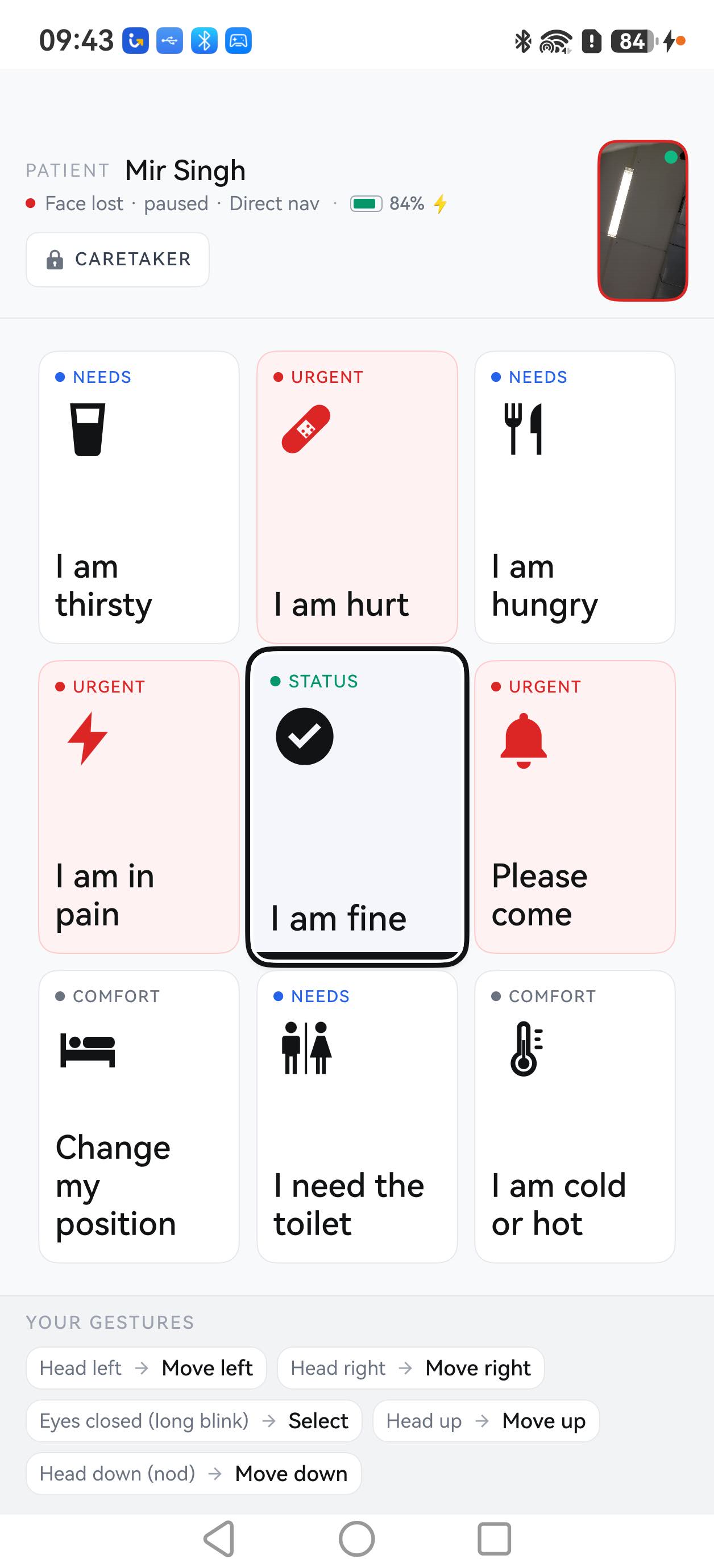
03-patient-home-grid
-
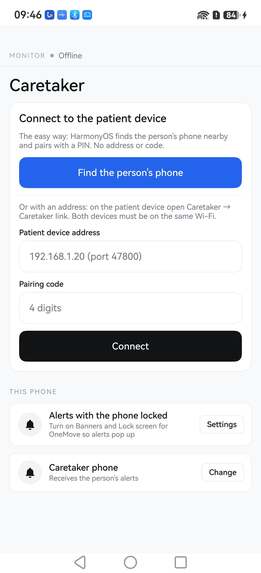
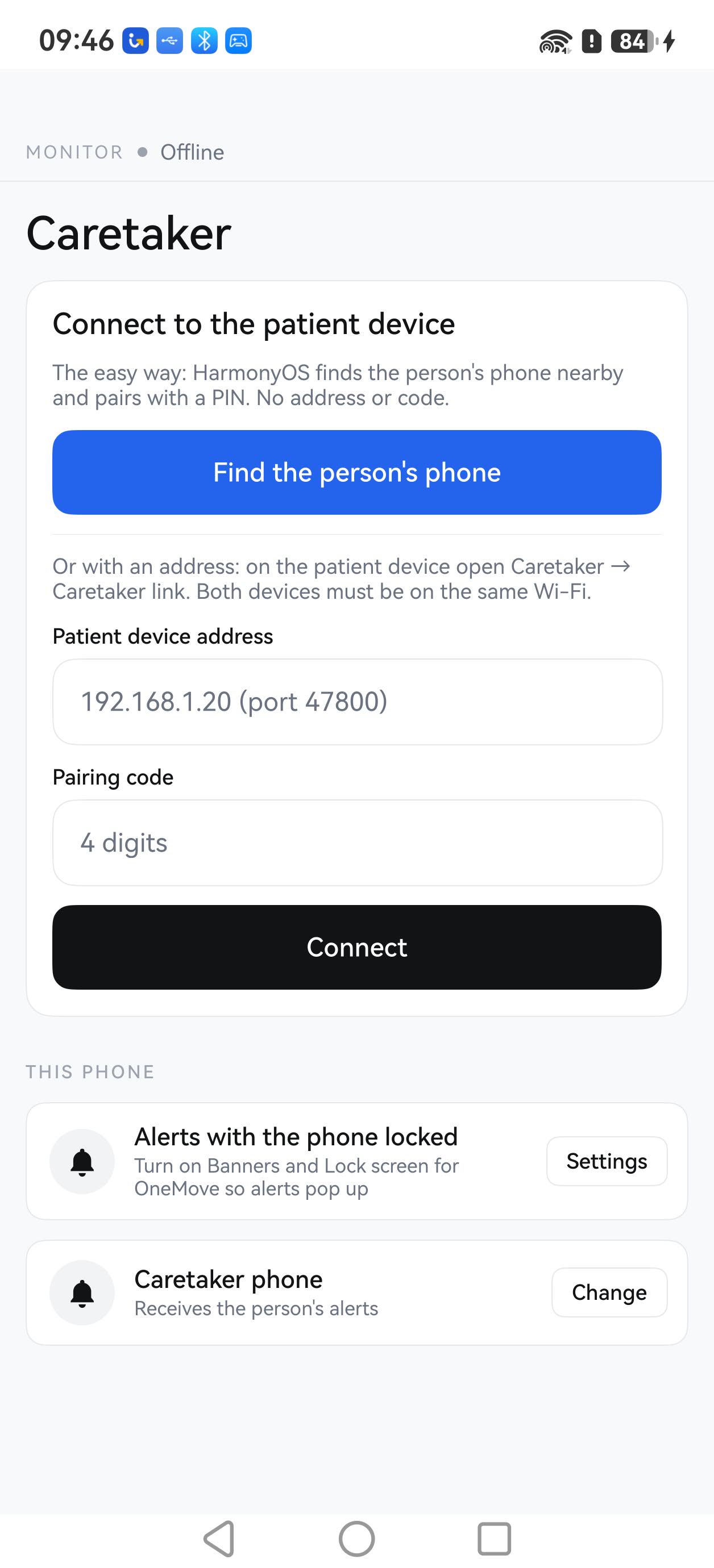
12-caretaker-pairing
-
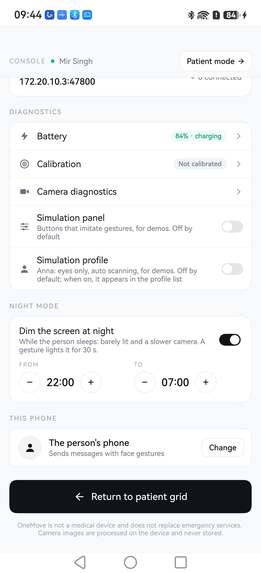
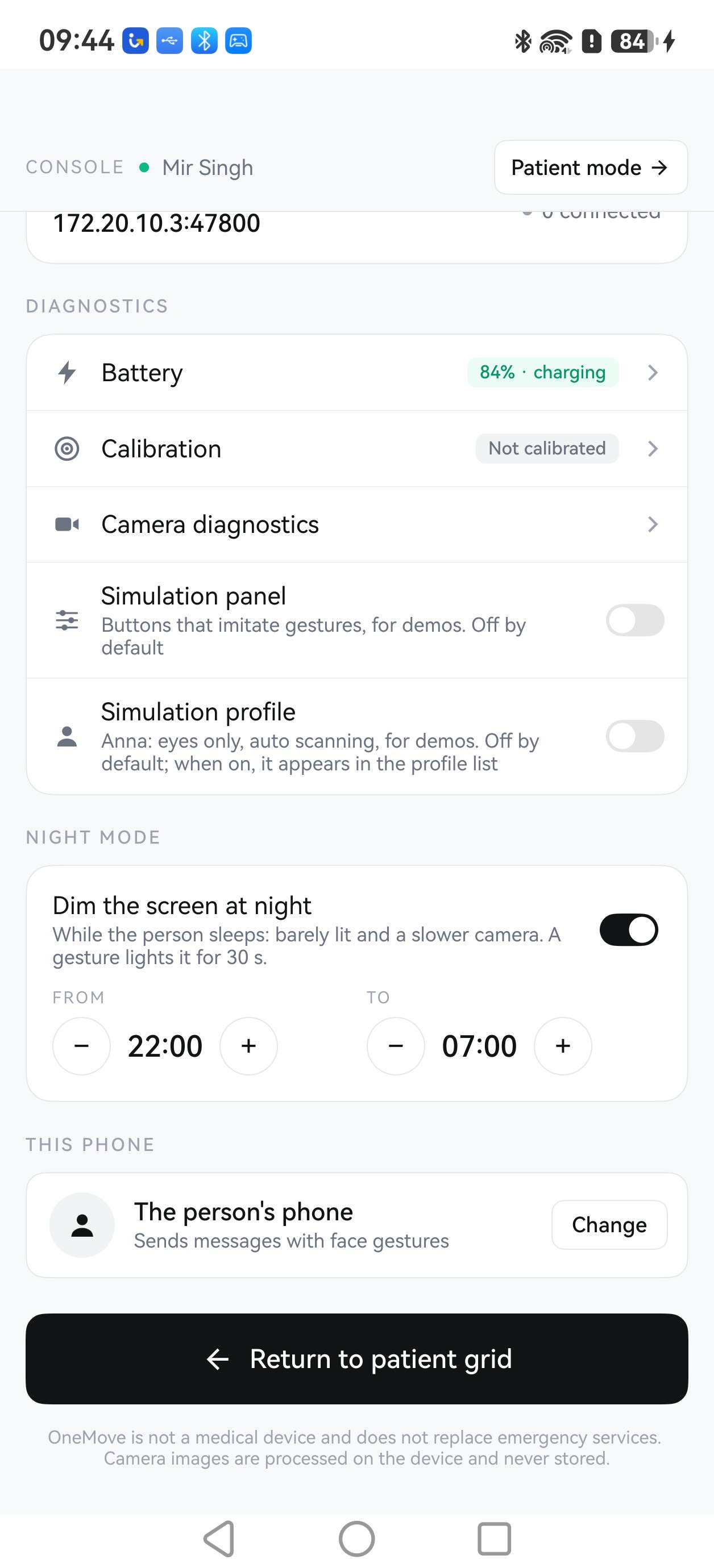
05-caretaker-console-settings
-
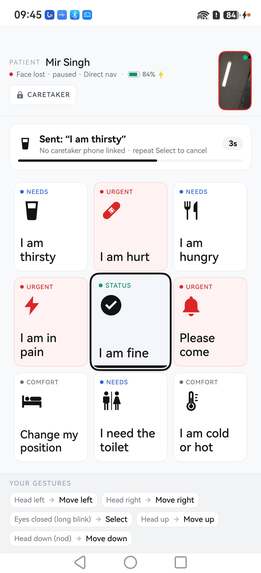
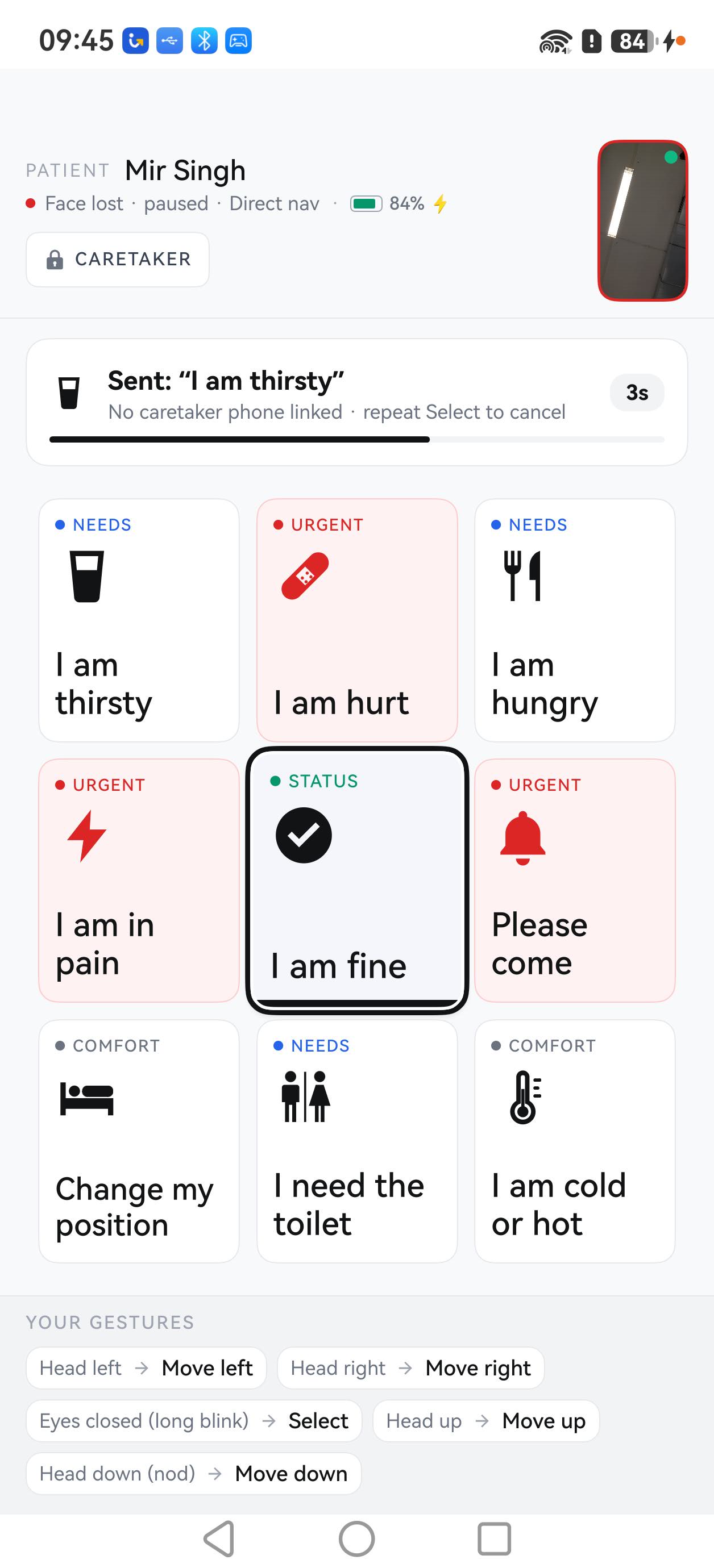
11-alert-sent
-
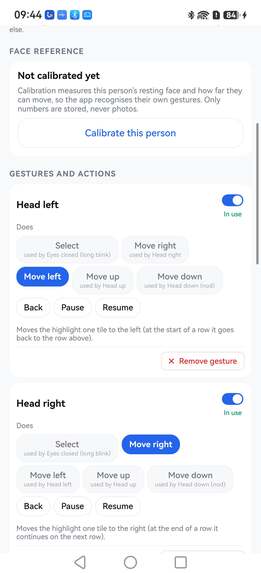
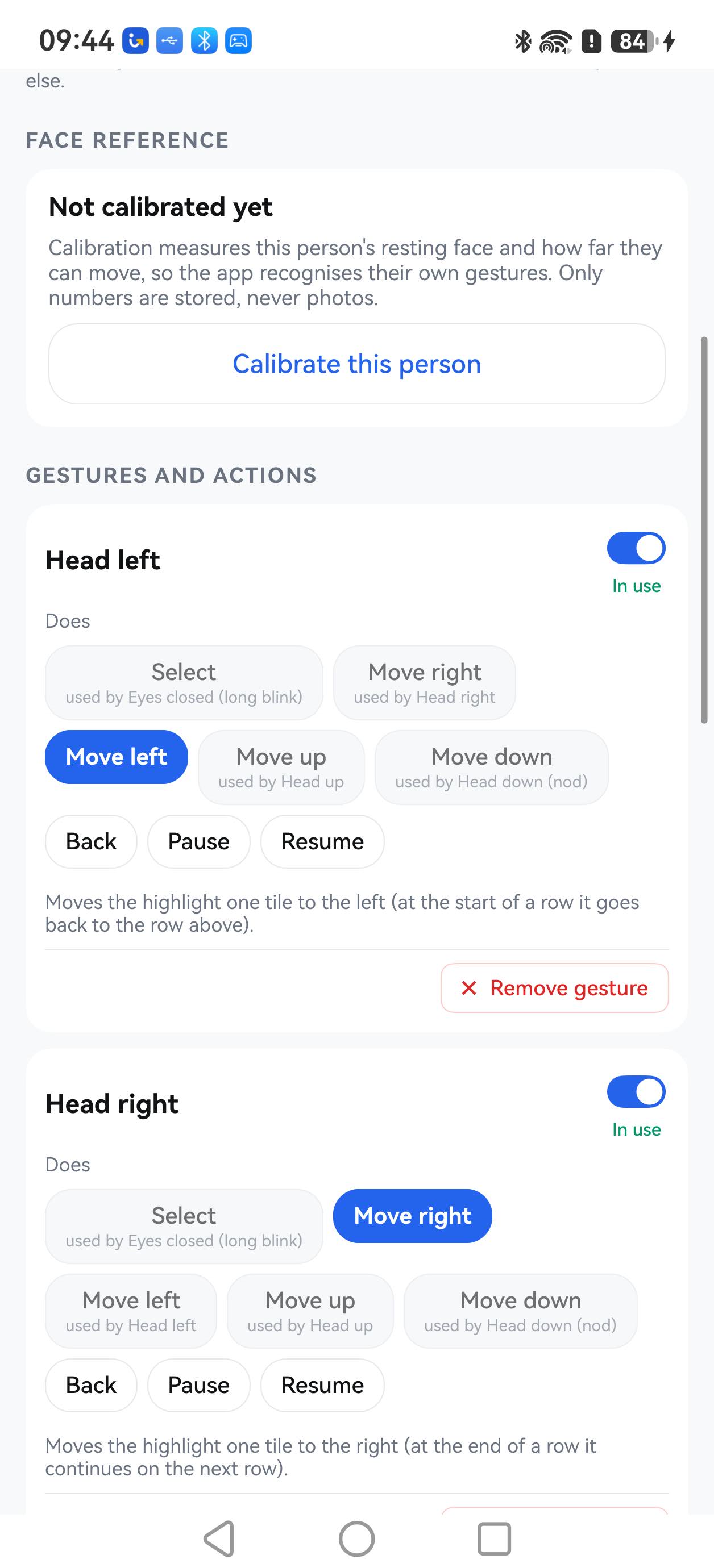
07-profile-editor-gestures
-
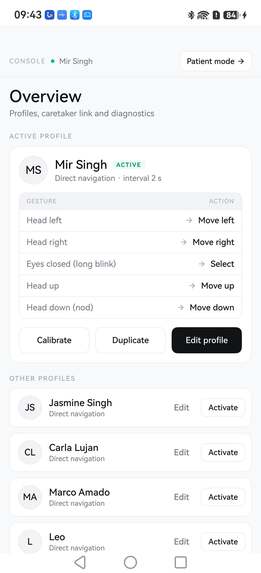
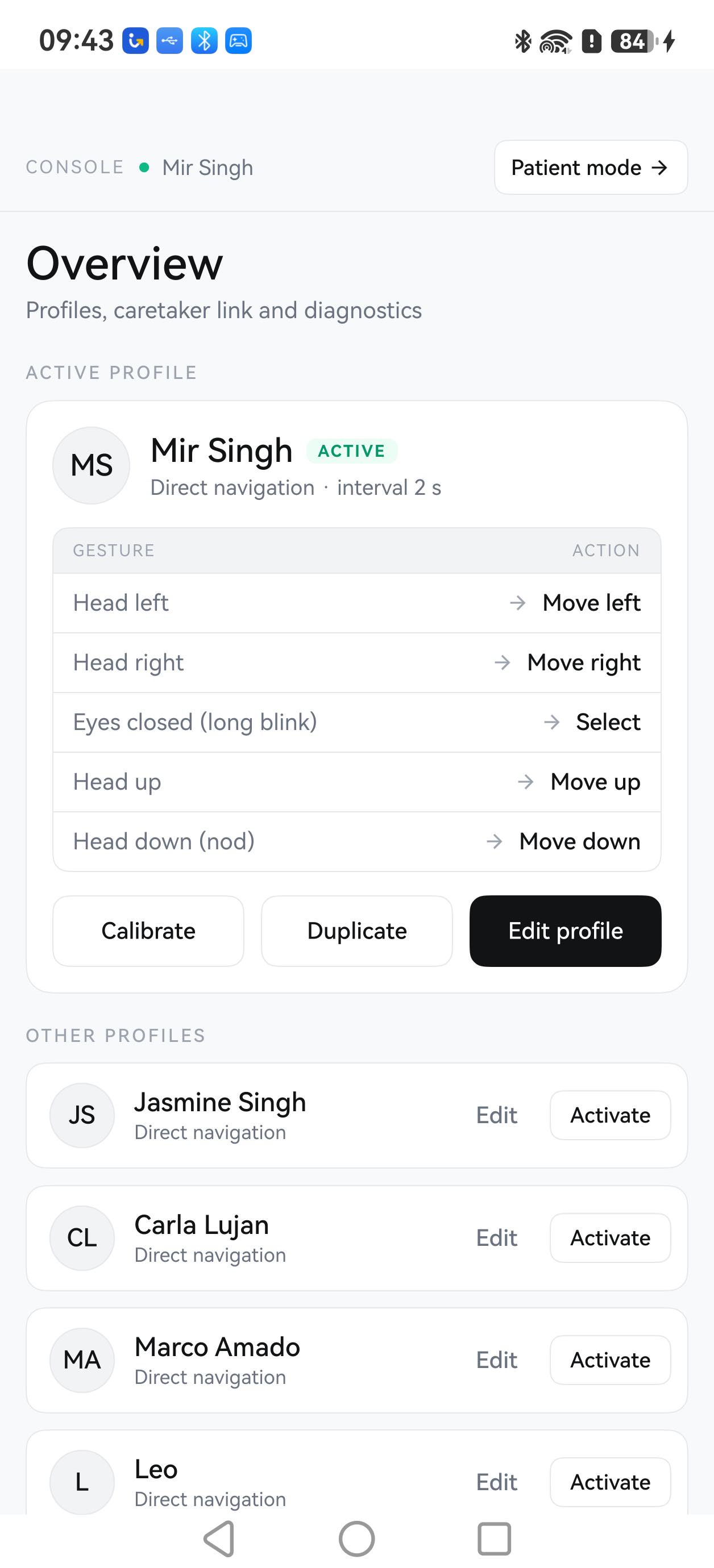
04-caretaker-console
OneMove. One gesture. A way to be heard.
Inspiration
For people living with ALS, a stroke or a spinal cord injury, asking for water or saying that something hurts often depends on someone happening to look at them. Eye-tracking systems are expensive, need dedicated hardware and often send video to the cloud. We wanted something that runs on a phone already on the bedside table, adapts to whatever movement the person still has, and keeps their face private.
What it does
OneMove turns one reliable facial movement per person (closing the eyes, turning the head, opening the mouth) into commands on a grid of everyday messages: I am thirsty, I am in pain, Please come…
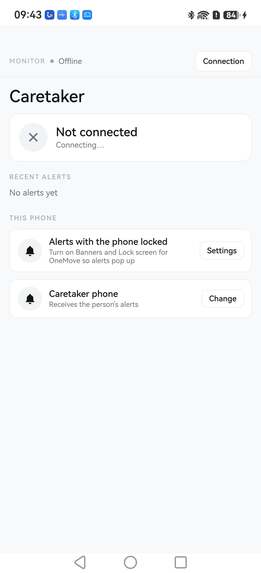
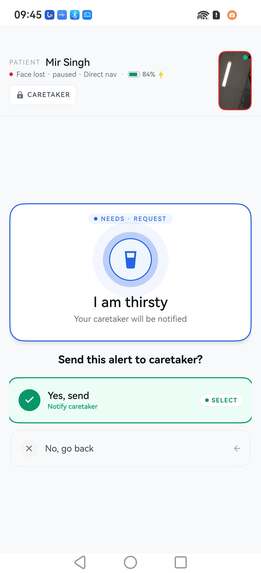
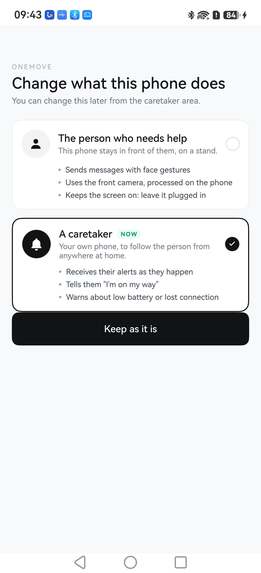
Two ways to navigate: direct (one gesture moves, another selects) or auto-scan (the focus moves on its own and a single gesture selects), for people who can only close their eyes. Personal calibration records the person's rest pose and three levels of each movement, sets thresholds for them, and switches off any gesture that cannot be told apart from rest. Head up/down, winks and gaze are available after calibration (experimental). Safety by design: a normal blink never selects, gestures pause when the face is lost, normal messages ask for confirmation, urgent ones go straight through and can be cancelled within 5 seconds. A connected caretaker: a second phone receives the alert, can answer "I'm on my way", which the person sees on screen, and warns about low battery or a lost connection. A caretaker sets up each person's profile. All day and all night: the screen stays on (it is the person's voice), dims when idle and has a night mode that never gets so dark that the camera can't see the face.
How we built it
Native HarmonyOS app in ArkTS/ArkUI with a C++ engine connected through Node-API. On-device AI: MediaPipe BlazeFace + FaceMesh (478 landmarks, Apache-2.0) converted to MindSpore Lite, running on the phone's CPU at ~30 fps (~22 ms per frame). From the landmarks we compute head yaw, pitch and roll, eye and mouth openness and iris position. A tracker with smoothing, hysteresis, minimum hold time, cooldown and a state machine (IDLE → CANDIDATE → CONFIRMED → COOLDOWN), plus a "voluntary vs. natural movement" score, turns them into gestures. CareLink: our own lightweight protocol over the local network between the two phones (pairing, heartbeat, alerts, acknowledgements). No cloud. HarmonyOS kits: Camera Kit, Distributed Service Kit (device discovery and PIN pairing), Notification Kit, Background Tasks Kit, battery and brightness APIs, vibration. Design created with Google Stitch and implemented in ArkUI: calm, high contrast, clear focus ring. Tests: five C++ unit-test suites (~14,000 checks) for features, gesture tracking, the voluntary filter and calibration.
Challenges we ran into
No system-wide control for third-party apps: the accessibility APIs to drive other apps are deprecated with no replacement, so we built our own interface, fully hands-free. Models on a new runtime: the MindSpore Lite converter does not run on Windows, so we convert in Docker, then check the models load on the phone and match the originals. Camera frames on API 24: some image APIs failed, so we read frames natively in C++. Telling a head turn from a head translation, and avoiding accidental activations: natural blinks, talking and tremors must not trigger anything. This led to per-person calibration. Linking two HarmonyOS phones took several attempts; our first approach required both phones to share a Huawei account, so we moved to device discovery with PIN pairing over the local network. UX had to be simple: the person never configures anything; a caretaker sets up the profile once. Battery vs. reliability: dimming the screen too much turned the backlight off and the camera could no longer see the face in a dark room. We measured on a real phone and chose safety.
Accomplishments that we're proud of
A real on-device pipeline from camera frame to gesture event, with no cloud. Per-person calibration instead of fixed thresholds. Two real phones working together: the person's and the caretaker's. Documentation that separates what we verified on the phone from what we did not.
What we learned
Accessibility is about failing safely: confirmations, cancel windows and pausing when the face is lost matter as much as accuracy. On-device AI on HarmonyOS is practical: two face models run in real time with MindSpore Lite. And measuring on real hardware changes decisions.
What's next for OneMove
Testing with real users and occupational therapists; evaluating accuracy across faces, skin tones, glasses and facial asymmetry. Training the voluntary-movement filter on real data. Custom messages and text-to-speech; encrypted CareLink. Huawei Push Kit, so the caretaker is reached anywhere, not only at home.
Built with: HarmonyOS, ArkTS, , C++, Node-API, MindSpore Lite, MediaPipe, DevEco Studio, Google Stitch.
Built With
- arkts
- arkui
- c++
- devecostudio
- harmonyos
- mediapipe
- mindsporelite
- node-api
