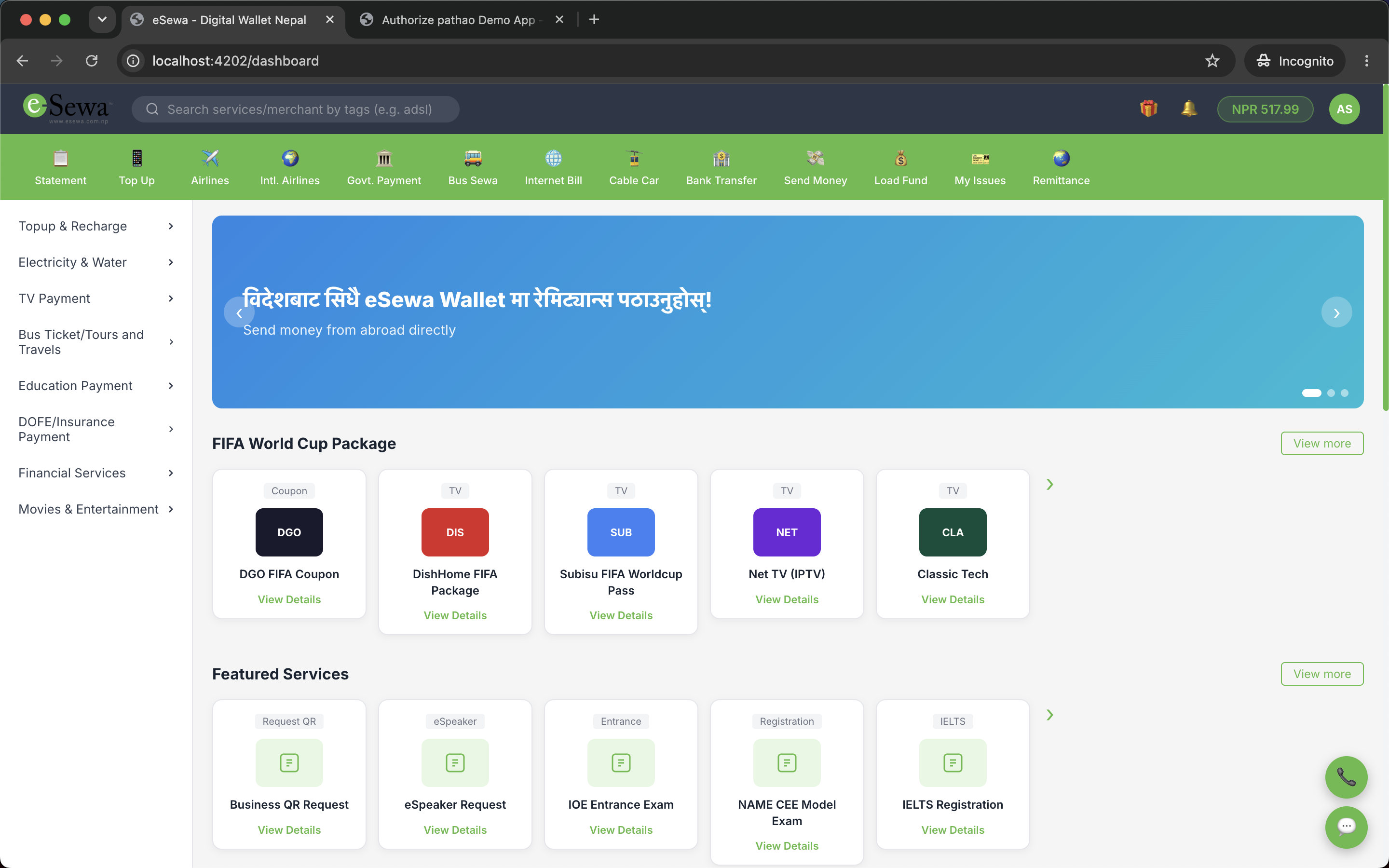
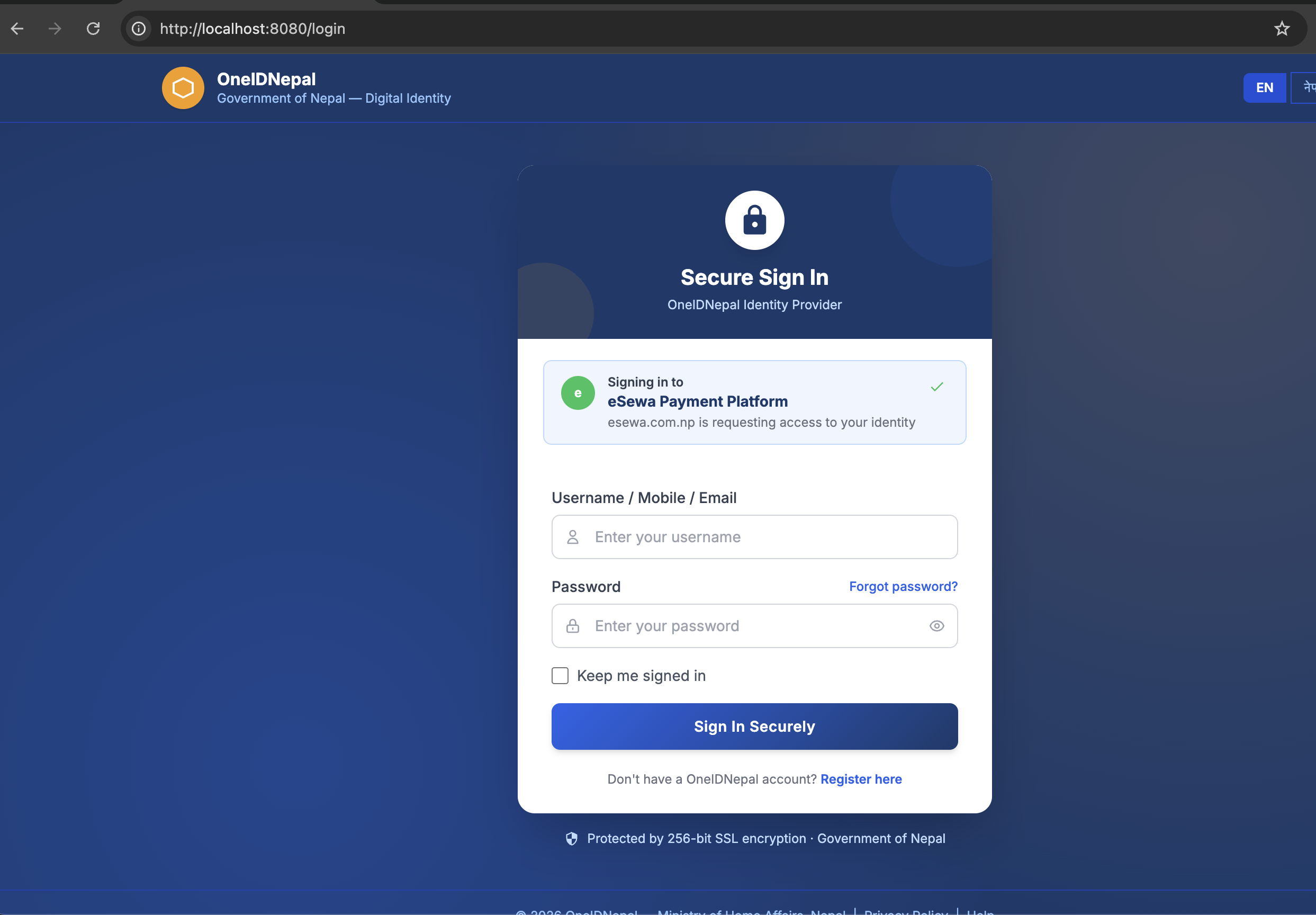
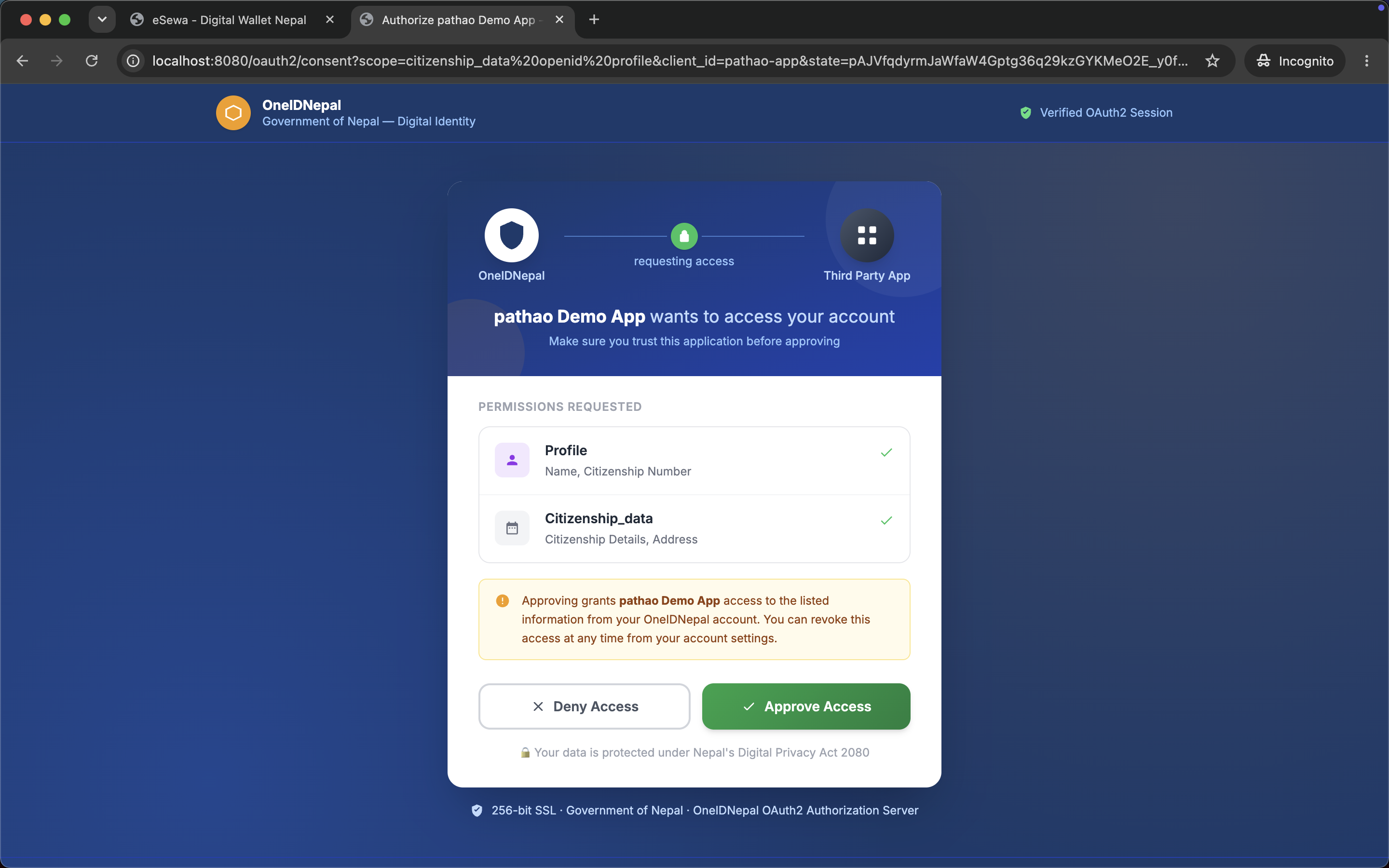
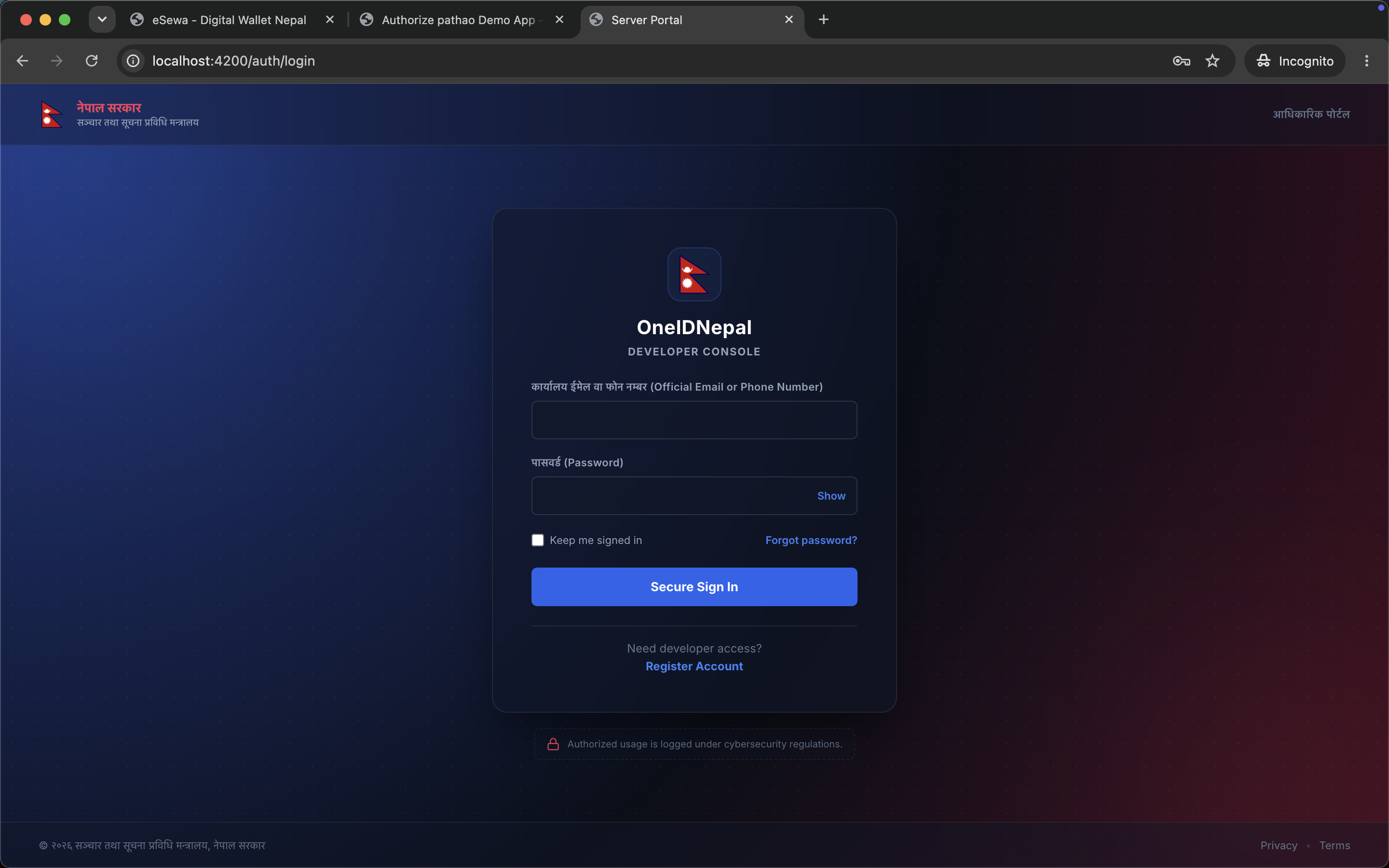
Inspiration
Repeated identity verification is a persistent friction point across digital services in Nepal. Whether people are opening a banking app, signing up for insurance, accessing a university portal, or using a government service, they're asked to upload the same documents and repeat the same KYC process over and over.
We wanted to fix that. We imagined a future where a person verifies their identity once and can securely reuse it across any trusted application. That idea became OneID Nepal, a proof of concept for a centralized digital identity platform.
What it does
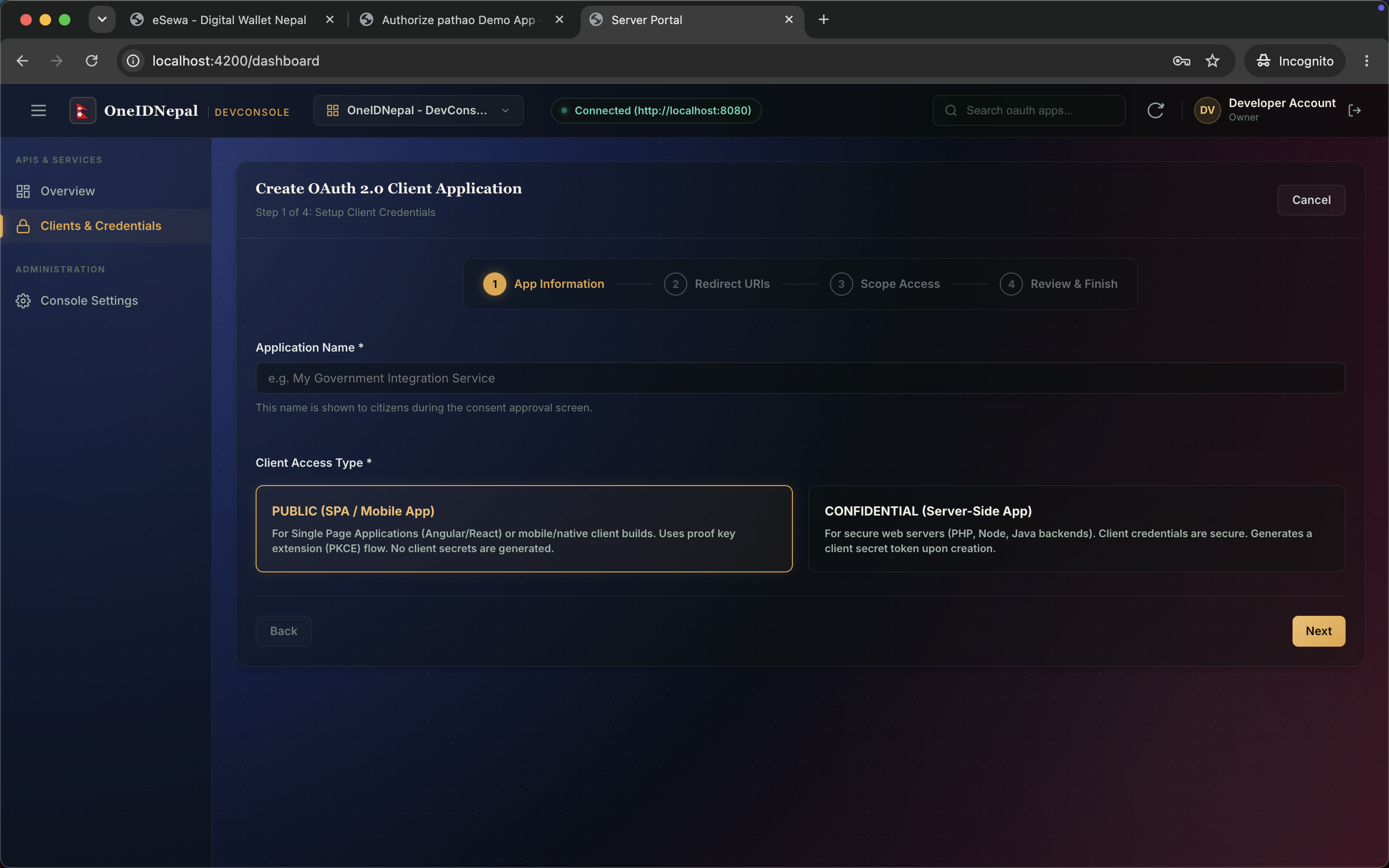
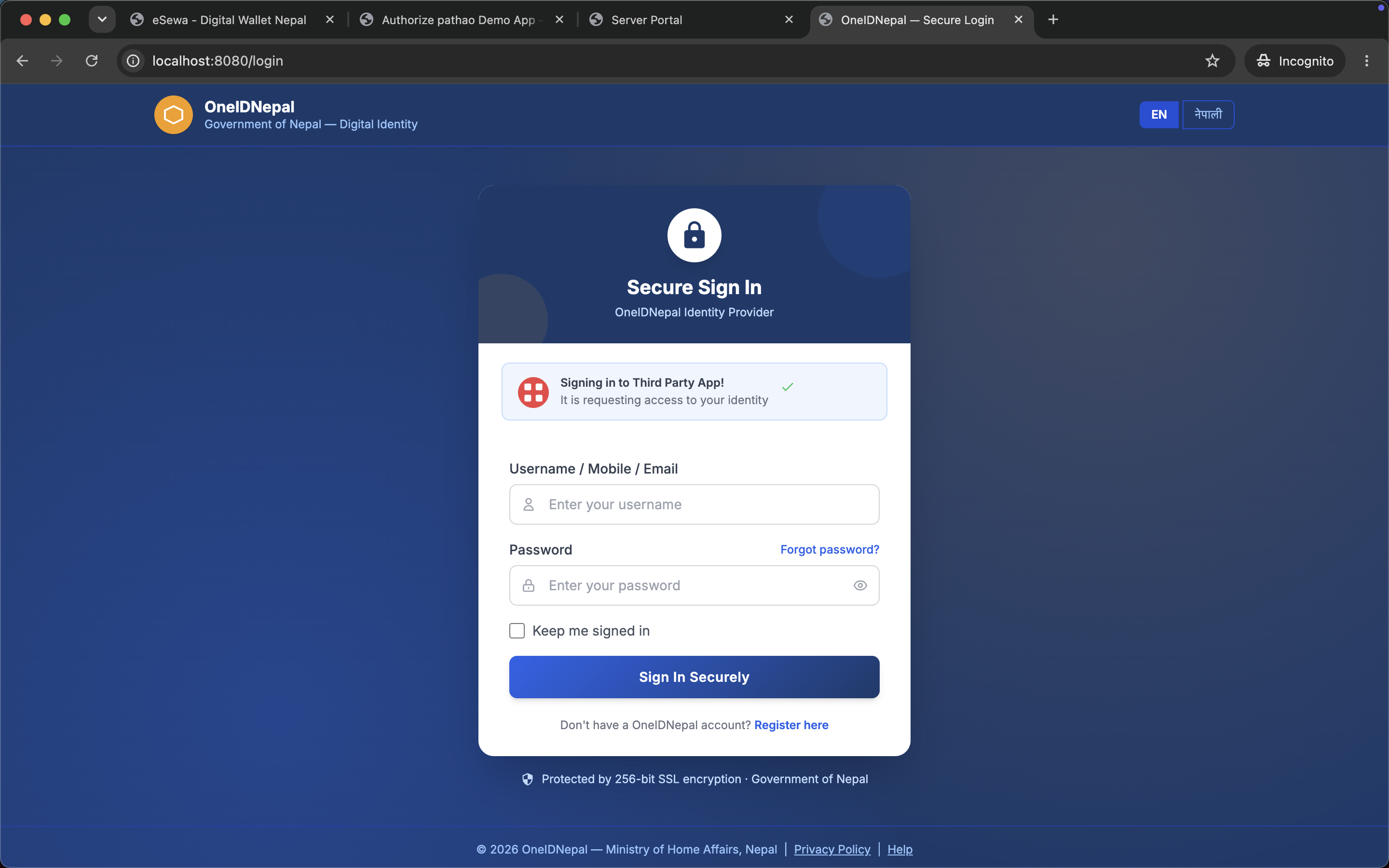
OneID Nepal is a centralized digital identity provider that lets users verify their identity once and then securely authenticate across multiple third-party applications using OAuth 2.0.
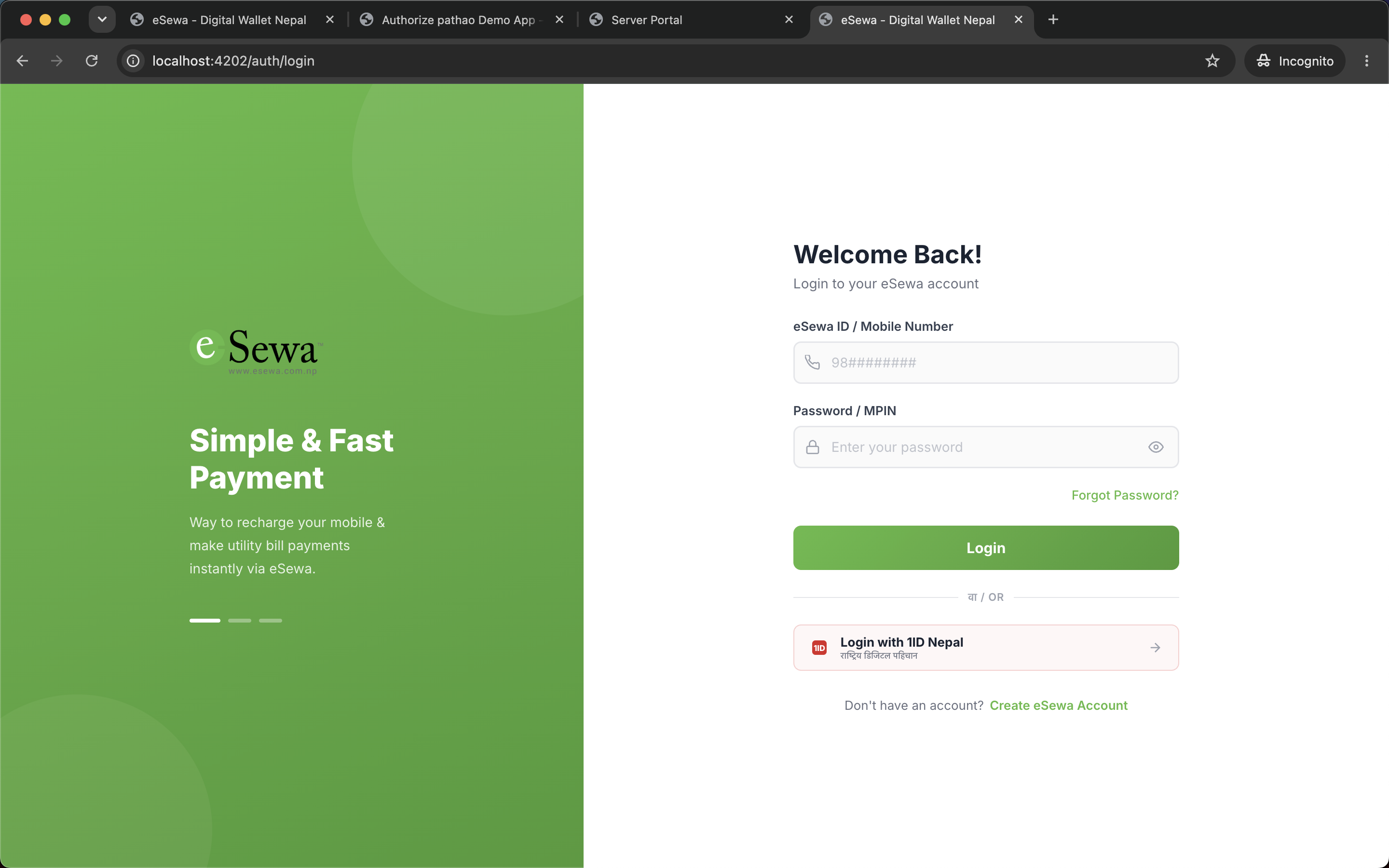
Instead of every application running its own KYC process, users log in through OneID Nepal, review a consent screen, and share only the specific information each application actually needs. The result: less repeated KYC, a smoother user experience, and far less exposure of sensitive personal data.
How we built it
- Spring Boot — backend REST APIs
- Angular — frontend and user-facing flows
- PostgreSQL — application and consent data storage
- OAuth 2.0 — secure authentication and authorization
- JWT — signed, stateless access tokens
Challenges we ran into
- Designing a secure OAuth authentication and consent flow from the ground up
- Handling secure token exchange between the identity provider and third-party applications
- Balancing user privacy against giving applications the data they legitimately need
- Shipping a functional MVP within the hackathon timeframe
Accomplishments that we're proud of
- Built a working OAuth-based centralized identity provider
- Implemented a complete authentication and consent workflow end to end
- Integrated a real third-party application with OneID Nepal
- Demonstrated a concrete way to cut down repeated KYC through centralized verification
- Delivered a functional proof of concept that tackles a genuine problem in Nepal
What we learned
This hackathon gave us experience with:
- OAuth 2.0 authentication and authorization flows
- Core identity and access management (IAM) concepts
- Secure API design and token-based authentication
- Why user consent and data privacy sit at the heart of any digital identity system
- Building and shipping under tight deadlines as a team
What's next for OneID Nepal
- Integrating with official government identity services
- Supporting additional OAuth scopes for fine-grained, purpose-specific data sharing
- Adding multi-factor authentication for stronger security
- Providing SDKs and APIs so developers can integrate quickly
Built With
- angular.js
- digital-identity
- iam
- identity-management
- java
- jwt
- oauth2
- postgresql
- rest-api
- spring-boot

Log in or sign up for Devpost to join the conversation.