-
-
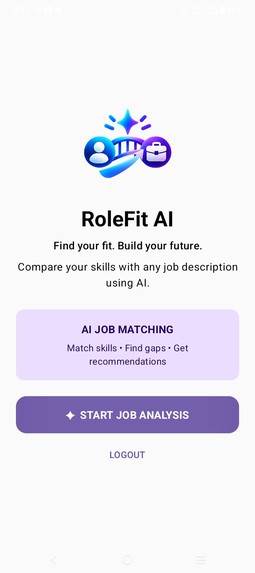
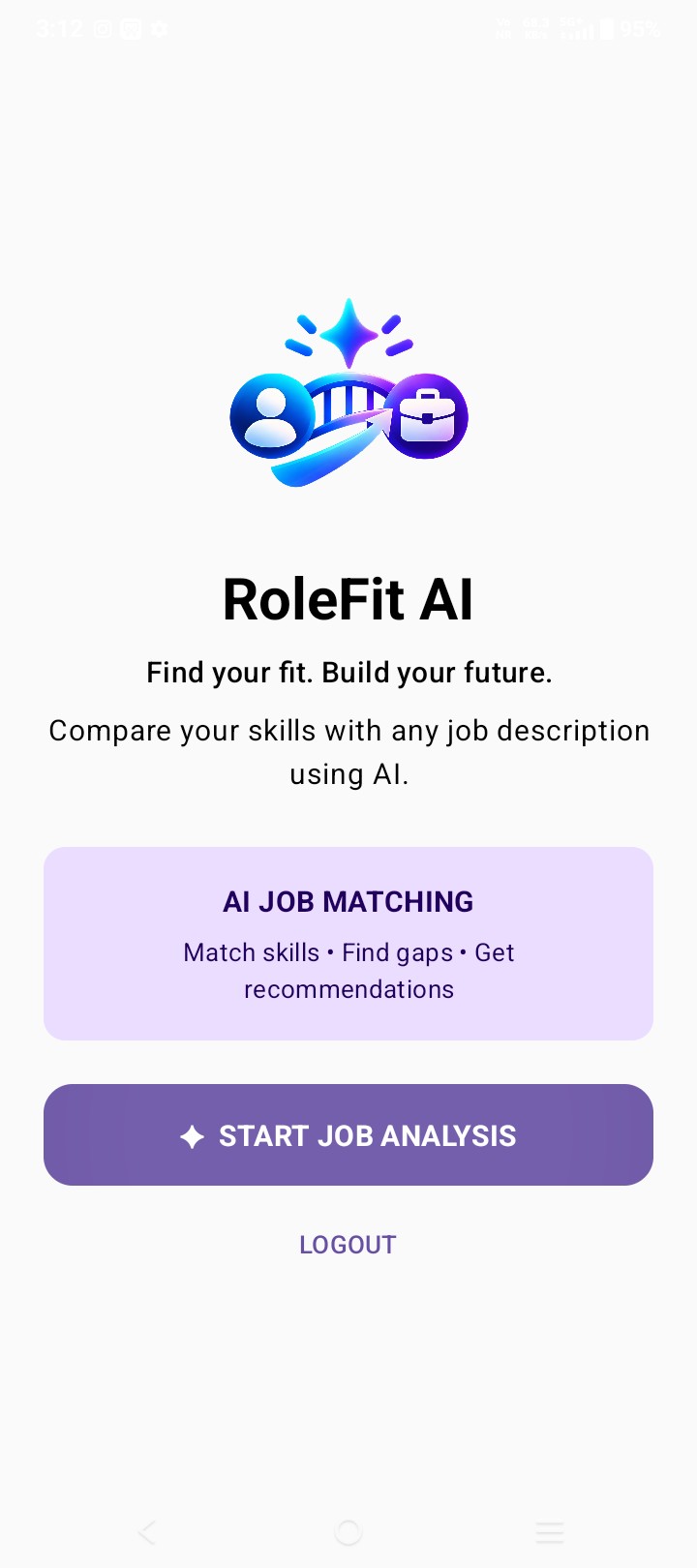
RoleFit AI's landing page introduces the job-matching platform and guides users to analyze their skills against target job descriptions.
-
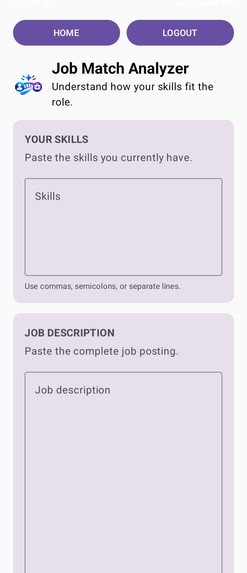
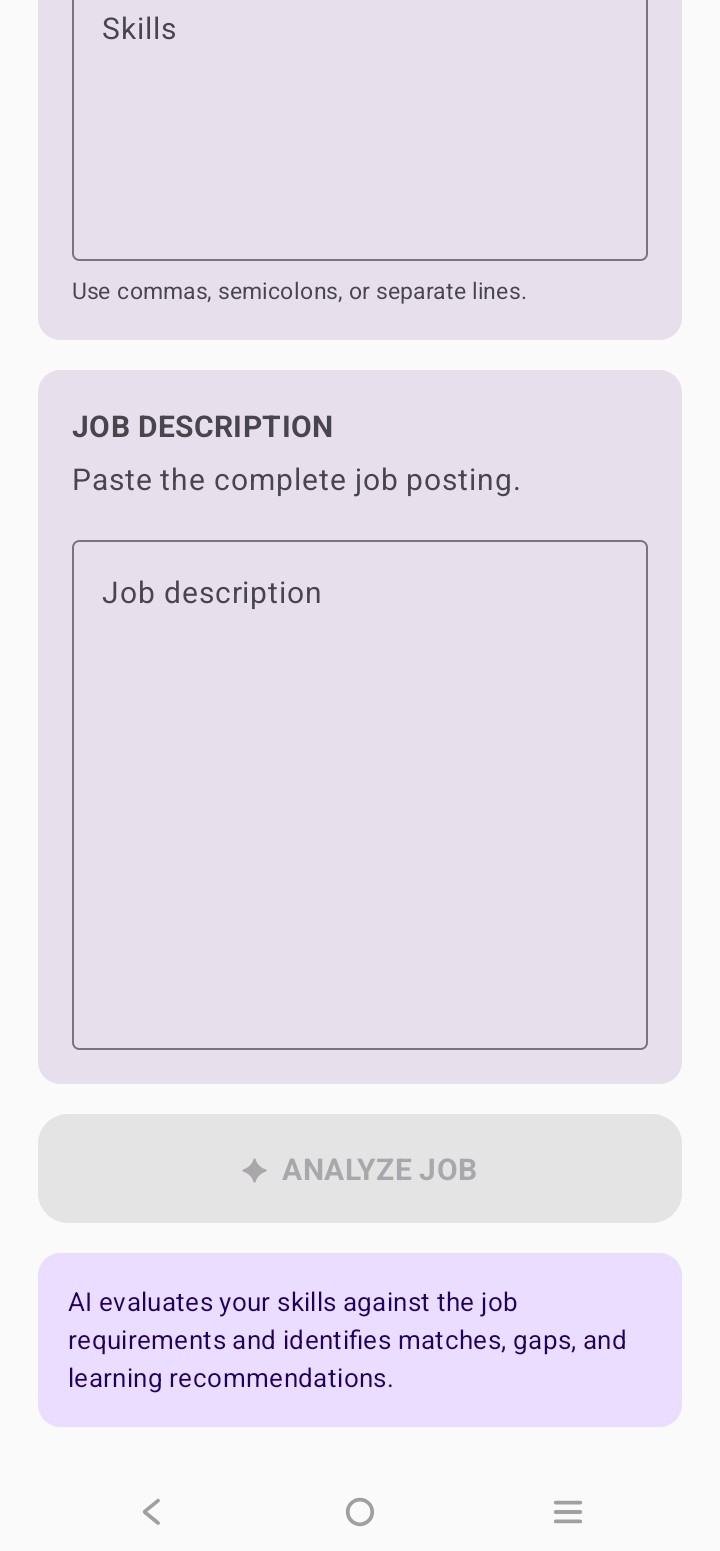
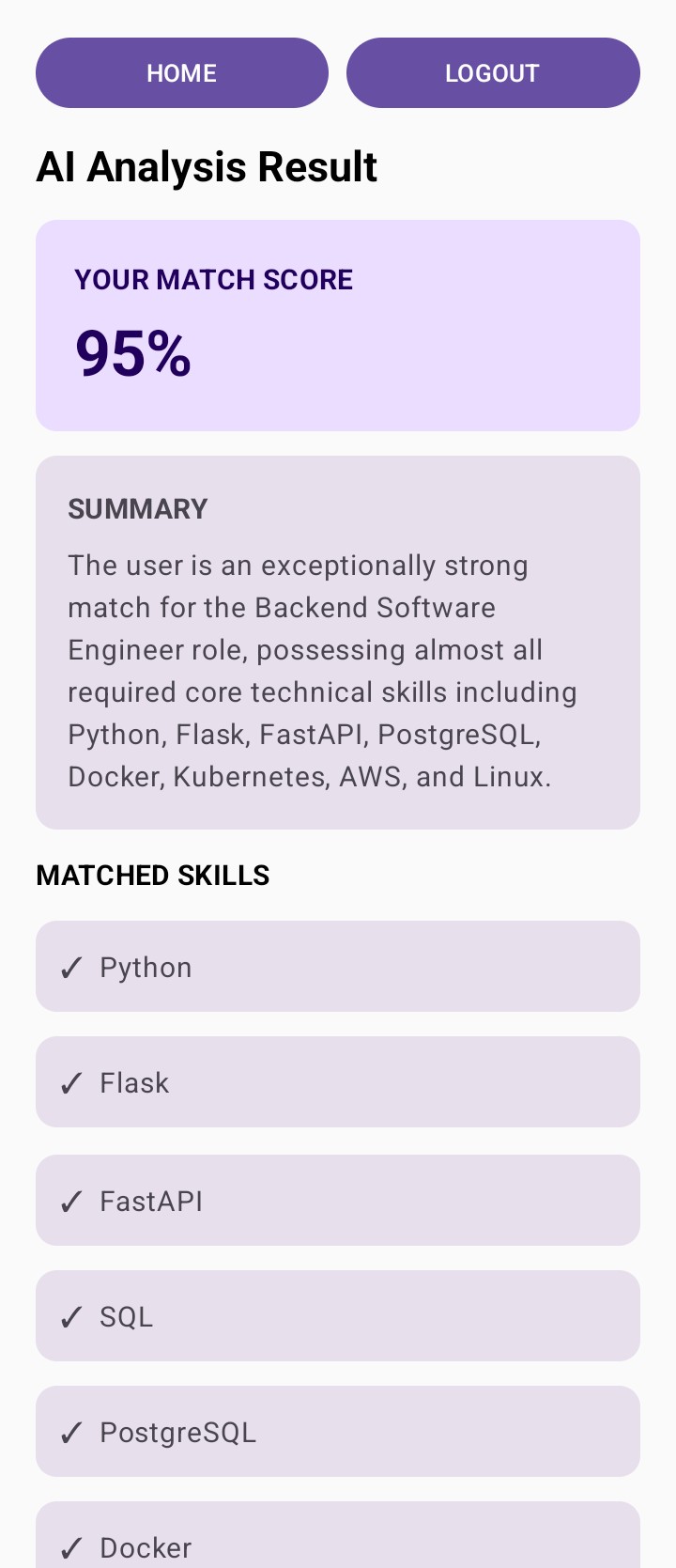
RoleFit AI evaluates job fit and generates recommendations from candidate skills and job descriptions.
-
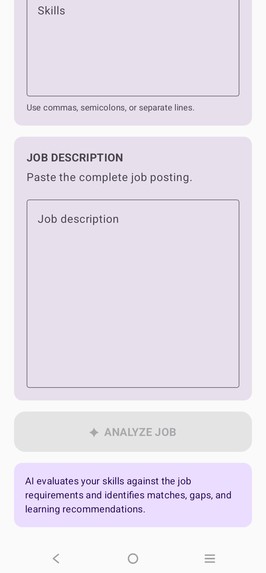
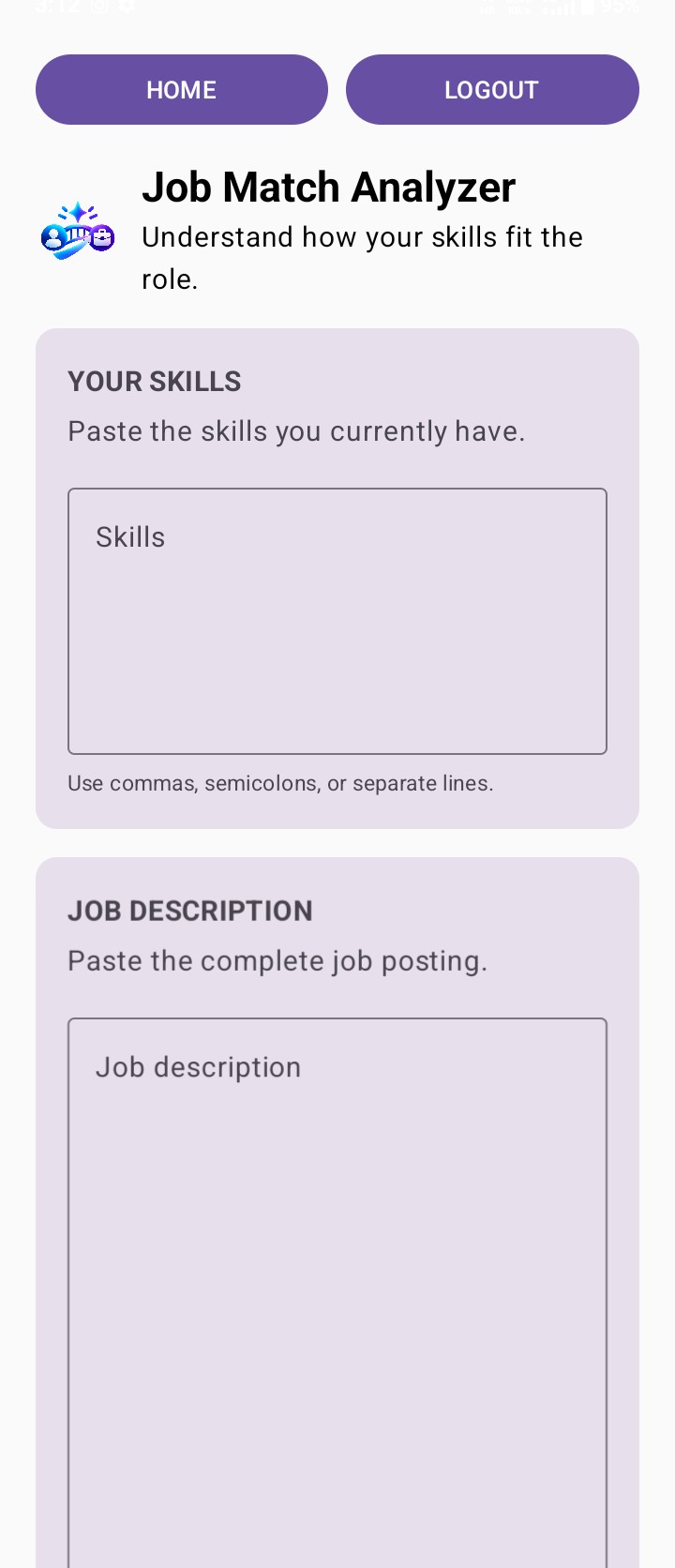
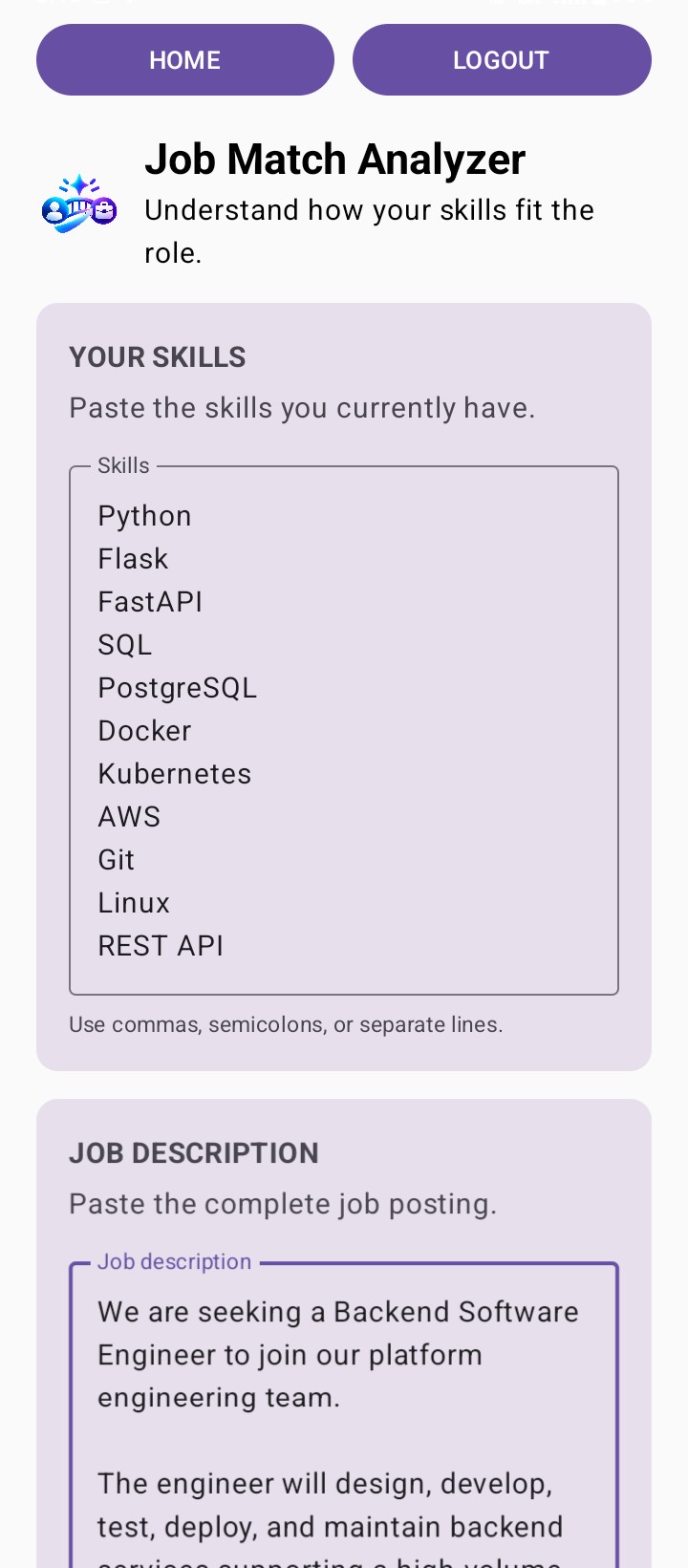
RoleFit AI's initial screen collects candidate skills and job descriptions to begin personalized job-fit analysis.
-
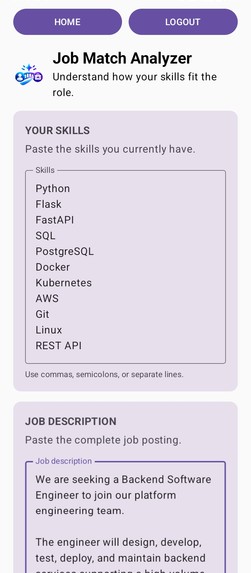
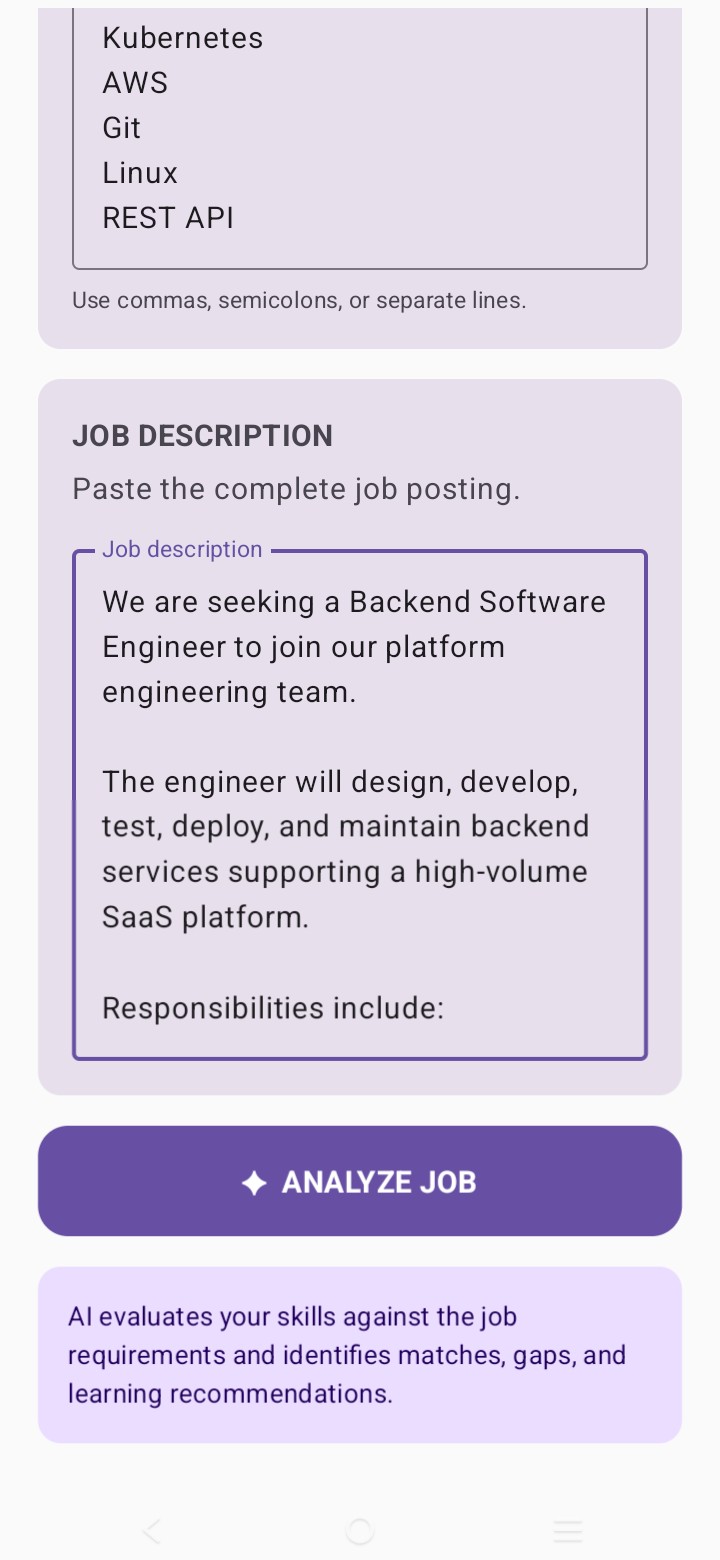
RoleFit AI analyzes job descriptions against candidate skills to identify gaps.
-
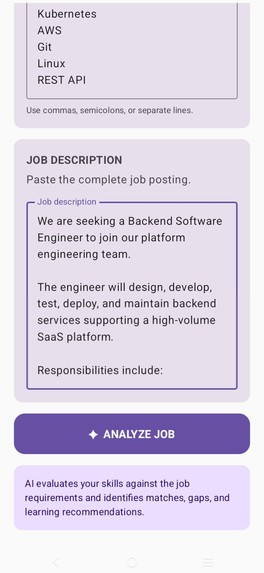
RoleFit AI collects candidate skills and job descriptions for job-fit analysis.
-
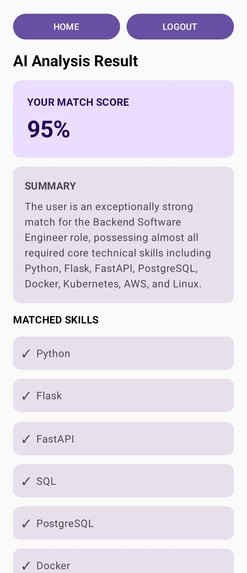
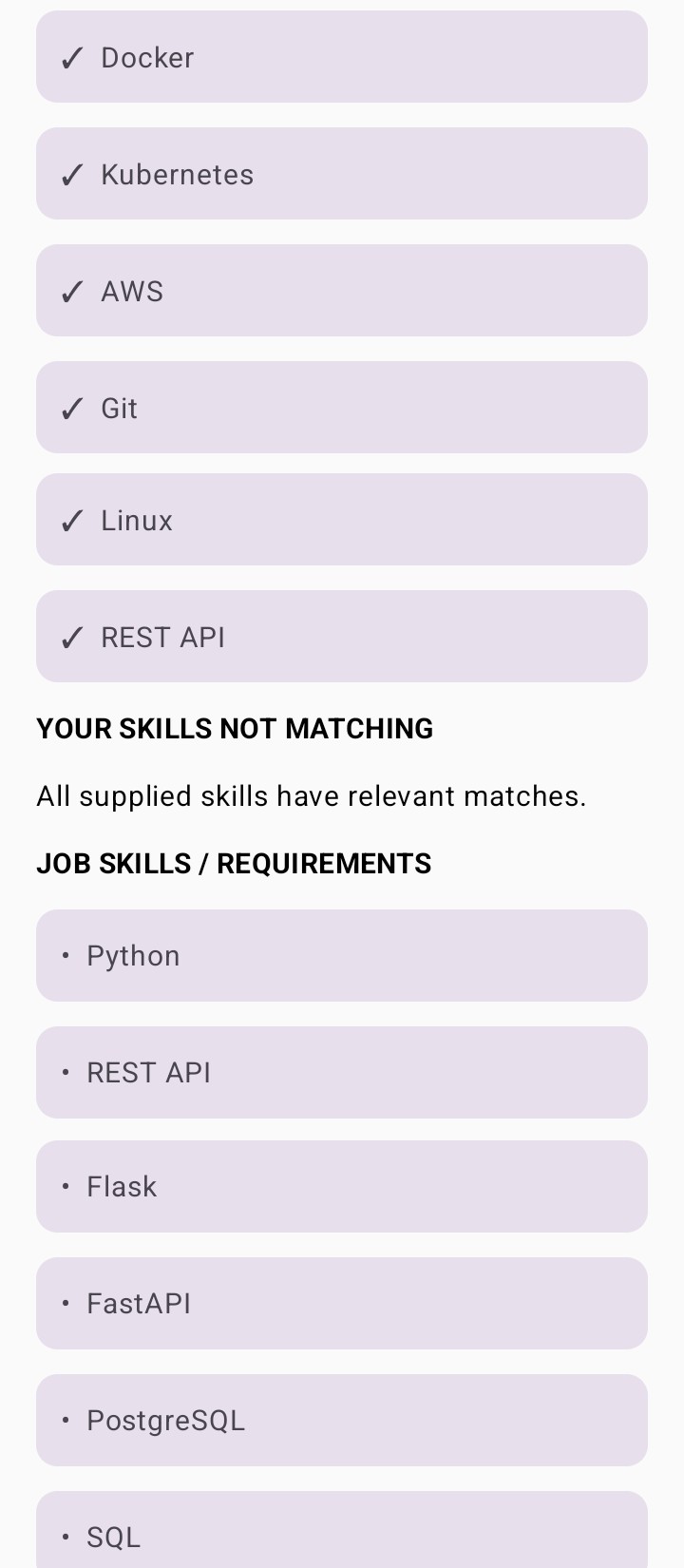
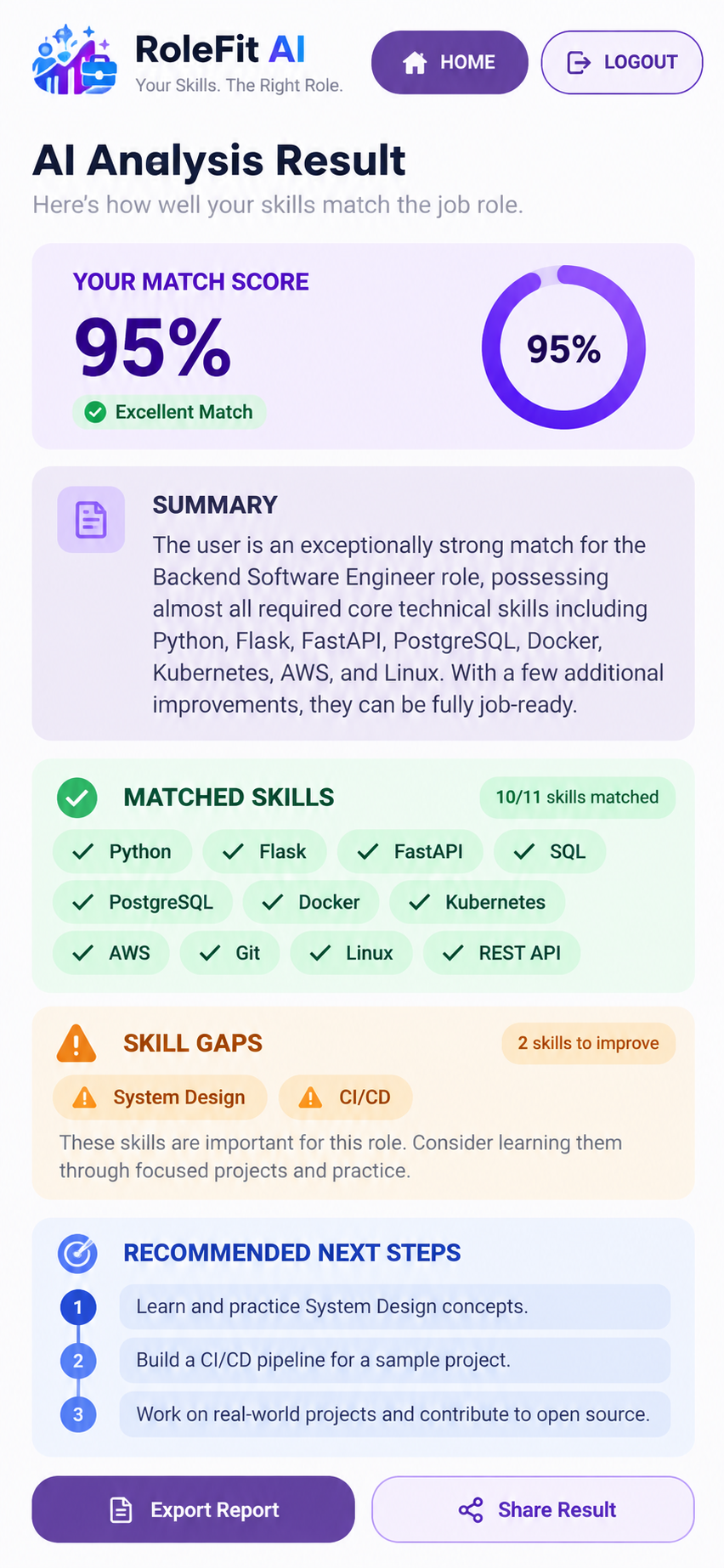
RoleFit AI generates a match score with supporting evidence to help candidates evaluate job fit and plan targeted skill development.
-
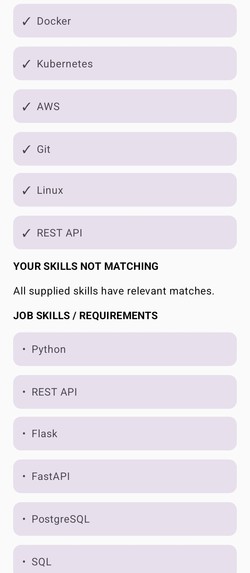
RoleFit AI compares candidate skills to job requirements, highlighting gaps to guide targeted learning.
-
RoleFit AI — AI-powered career matching that connects your skills to the roles we’re built for.
-
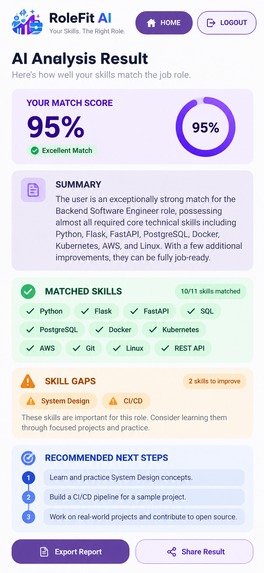
RoleFit AI — Know your fit. Find your gaps. Build your path to the right role.
Inspiration
We all have goals, tasks, and plans, but the hardest question is often the simplest one: “What should I do right now?” Most productivity apps give users more lists, more notifications, and more information. We wanted to build something different — an app that reduces decision fatigue instead of adding to it. That idea became Oneday, an AI-powered personal action planner that turns a user's goals, available time, and current energy into a practical plan for the day.
What it does
Today starts with a simple question: What do you have today? Users provide their goal, available time, energy level, and priorities. The app then creates a focused action plan rather than overwhelming them with dozens of recommendations. The experience is designed around a simple loop: Tell us your situation → Get a plan → Take action → Give feedback → Get a better plan. Over time, the system can use the user's previous interactions and feedback to make future recommendations more relevant and personalized.
How we built it
We designed the product around three principles: simplicity, personalization, and actionability. The mobile experience handles onboarding, daily planning, progress, and feedback, while the backend manages user data and the AI-powered recommendation workflow. RevenueCat is integrated into the app to manage the monetization layer. The free experience provides the core value of the product, while premium features unlock deeper personalization and additional capabilities. We also designed the architecture with growth and retention in mind. Shareable plans can turn individual results into organic discovery, while personalized reminders can bring users back when they are most likely to need the product.
Challenges we ran into
The biggest challenge was balancing AI flexibility with a focused user experience. An AI system can generate almost unlimited possibilities, but users do not want unlimited possibilities when they are already overwhelmed. We therefore focused on turning complex reasoning into a small number of clear, actionable recommendations. Another challenge was designing monetization without damaging the core experience. We wanted the premium layer to feel like a meaningful extension of the product rather than an artificial restriction.
Accomplishments that we're proud of
Turned an idea into a working product: We transformed the concept of a personalized daily decision assistant into a functional mobile app designed around a clear user problem.
- Built the core AI experience: Instead of creating another generic chatbot, we designed an experience that converts a user's goals, available time, and energy into a focused, actionable plan.
- Designed for personalization: The product is structured to learn from user feedback and previous interactions, creating a foundation for increasingly relevant recommendations over time.
- Integrated monetization from the beginning: We integrated RevenueCat into the product architecture so that subscriptions and premium functionality are part of the actual product experience rather than an afterthought.
- Built with growth in mind: We designed shareable results and retention mechanisms into the product so that users can discover, use, and return to the app through natural product loops.
- Prioritized simplicity over feature overload: One of our proudest decisions was deliberately keeping the experience focused. Every major feature is evaluated against one question: Does this help the user decide what to do and actually do it?
- Shipped under constraints: Building a complete product within the Shipaton timeframe forced us to make fast technical and product decisions, prioritize ruthlessly, and continuously iterate instead of waiting for a “perfect” version.
- Learned by building: The project pushed us beyond simply using AI APIs. We learned how product design, AI behavior, monetization, retention, and distribution have to work together to create something people will actually use.
What we learned
One of our biggest lessons was that adding more features does not necessarily create more value. For a productivity product, reducing cognitive load can be more valuable than providing more functionality. We also learned to think about the entire product loop rather than treating the AI as the product itself. The important part is not simply generating an AI response — it is helping someone make a decision, take action, and return because the next recommendation is genuinely useful.
What's next for OneDay
Today is designed to become more useful with continued use. Our next focus is improving personalization, measuring retention and conversion, experimenting with different growth loops, and learning from real users. The goal is simple: Less time deciding what to do. More time actually doing it.

Log in or sign up for Devpost to join the conversation.