-
OVERVIEW
-
CUSTOM TIMER FOR WORKING
Inspiration
Most productivity tools fail not because people don’t plan, but because they overplan. Endless to-do lists, flexible schedules, and constant edits often increase decision fatigue instead of helping users execute.
The inspiration for OneDay came from observing that clarity and commitment matter more than features. I wanted to explore what happens when a tool intentionally removes flexibility and forces users to commit to a single focused day.
What it does
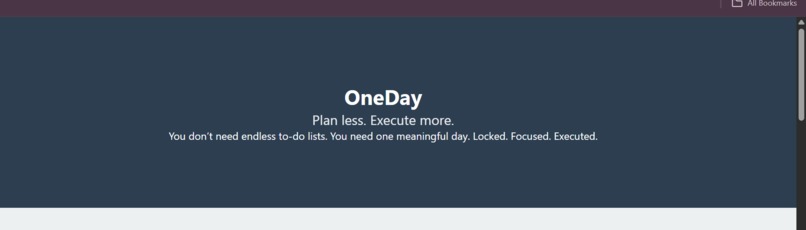
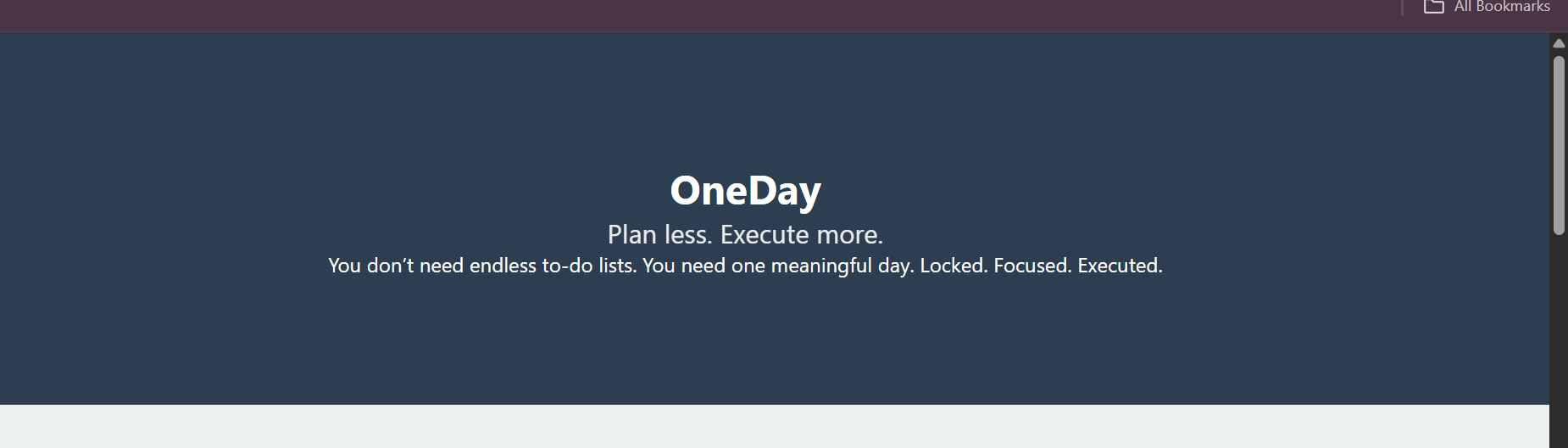
OneDay is a deliberately constrained productivity tool designed for single-day execution.
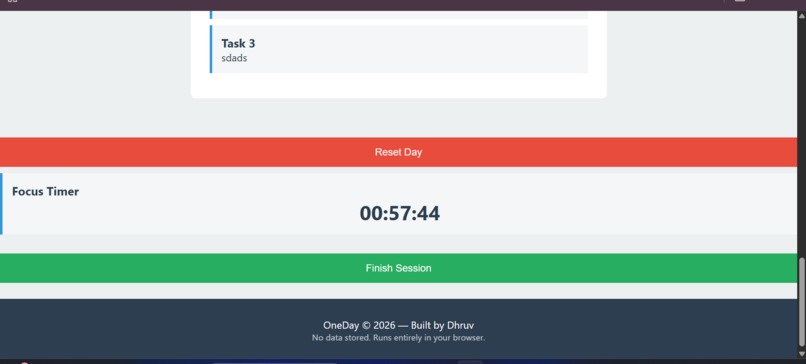
Users define:
- one main goal
- three supporting tasks
- a fixed focus duration
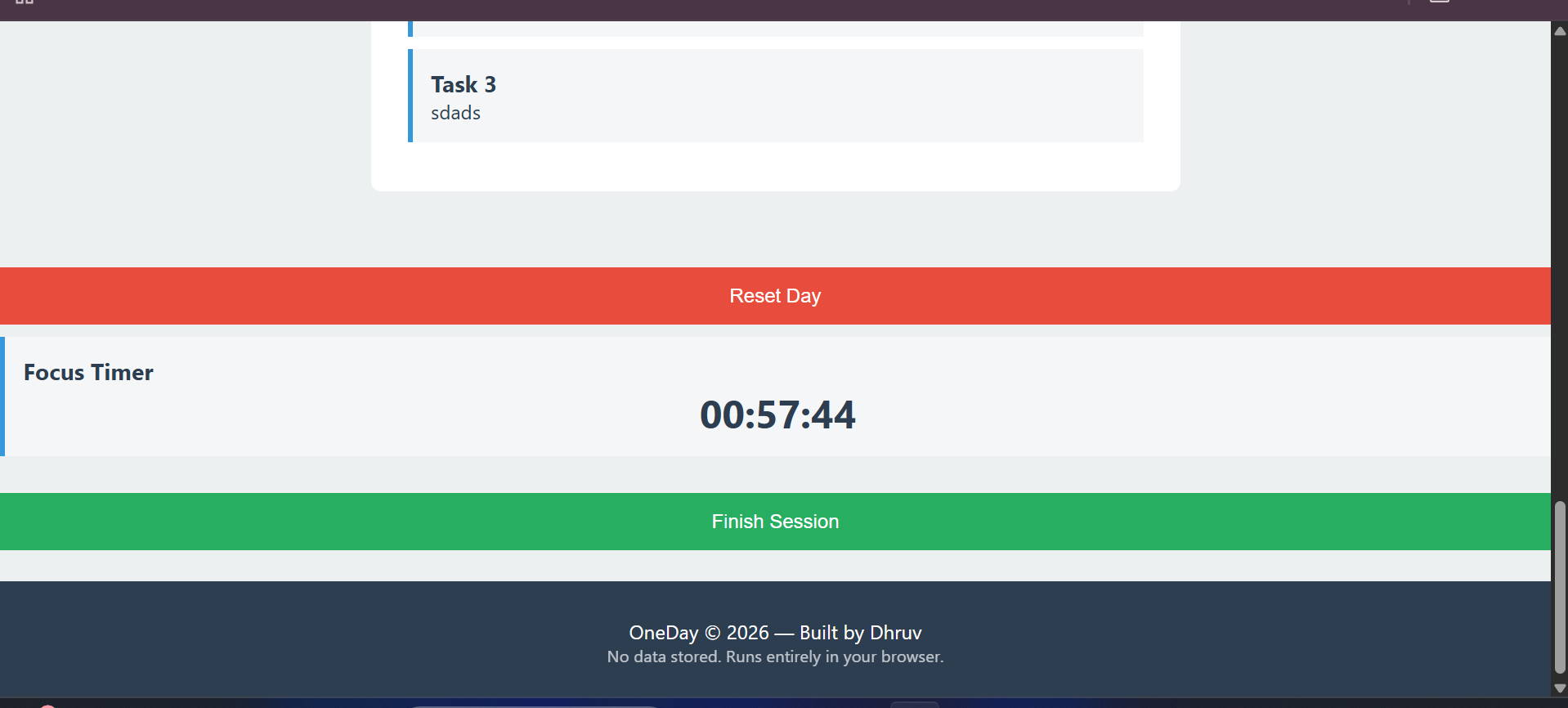
Once the day is locked, the plan cannot be edited. A live countdown timer encourages execution rather than planning. When the session is finished, the user receives a short reflective quote instead of analytics or stored data.
Each session stands alone. Nothing is saved.
How I built it
The project is built as a frontend-only web application using:
- HTML for structure
- CSS for layout and visual hierarchy
- Vanilla JavaScript for state control, timers, and interactions
The application manages a clear flow: input → commitment → execution → completion → reset.
No backend, frameworks, or databases were used. The focus was on clarity, intentional UX, and reliable execution rather than complexity.
Challenges I ran into
The main challenge was designing restraint instead of adding features. It was tempting to add editing, saving, or analytics, but those would weaken the core idea.
Another challenge was managing state cleanly: locking inputs, starting and stopping the timer, and resetting the experience without bugs.
Solving these reinforced the importance of simplicity, clear state transitions, and deliberate design decisions.
What I learned
This project taught me that good tools don’t always add power — sometimes they remove it. By designing limitations intentionally, it’s possible to create stronger focus and better user commitment.
I also learned how small UX details, such as a commit animation, a live timer, and a clear end state, can significantly change how a product feels without adding complexity.


Log in or sign up for Devpost to join the conversation.