-
-
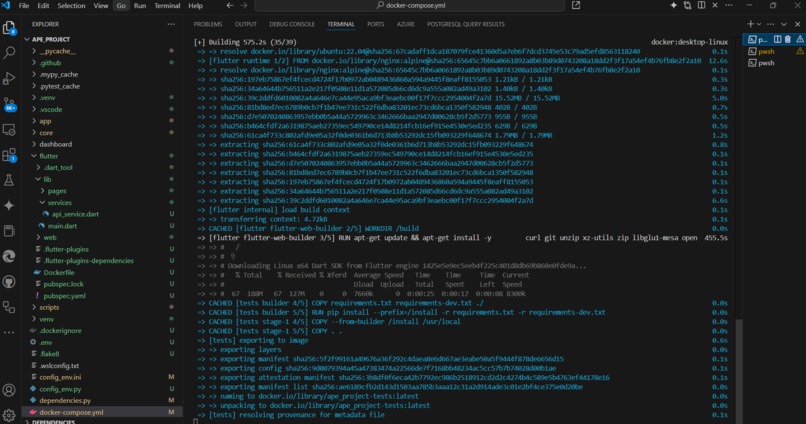
OneAPIIRS project build process using Docker Compose
-
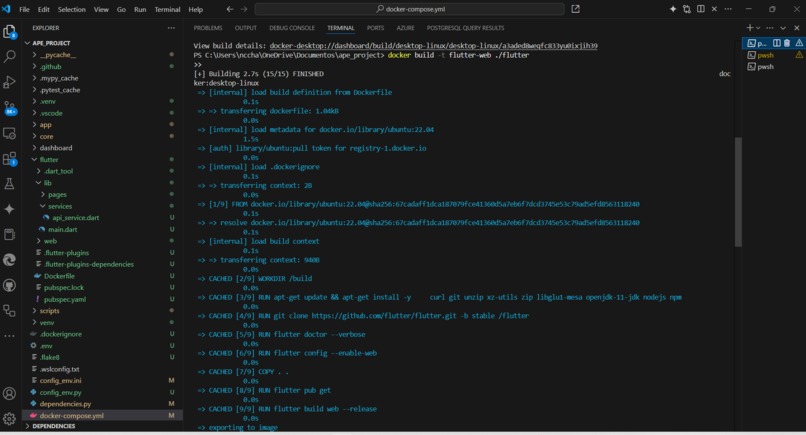
Using Docker to compile the Flutter Web frontend. The terminal confirms success in creating the flutter-web image
-
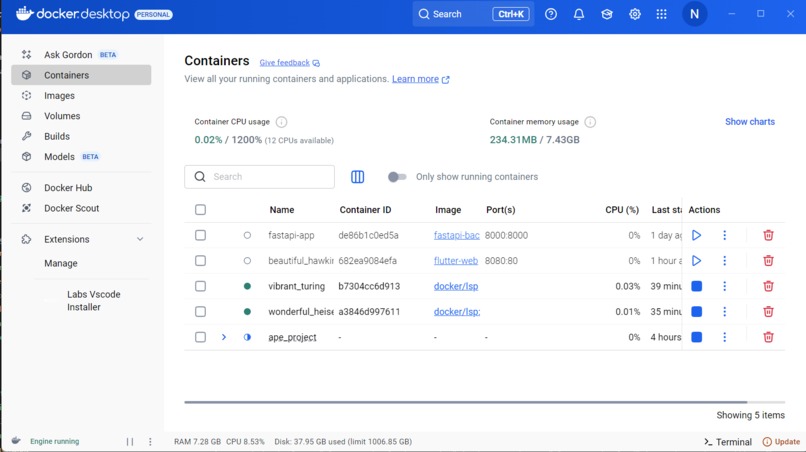
Docker Desktop dashboard with fastapi-app backend and flutter-web frontend. Both services from the OneAPIIRS project are ready to run.
-
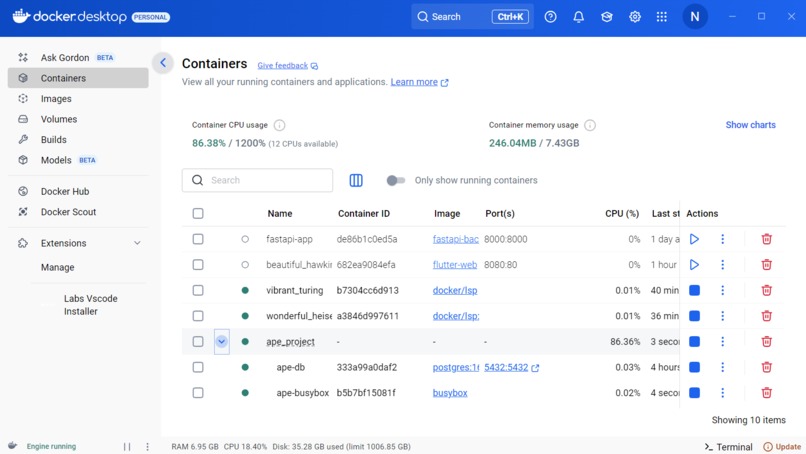
OneAPIIRS project containers active in Docker, highlighting the main ape_project service running
-
Modernizing Legacy: OneAPIIRS transforms COBOL into a modern, future-ready API.


The Origin of a Digital Rebellion
It all started with a bold headline:
"Elon Musk Legally Invites Hackers from Around the World to Play with Americans' Personal Data"
For many, this was just another eccentricity of the billionaire.
For me, it was a call to see my potential.
At that moment, I understood that the world was thirsty for something that no one else dared to do: to face the digital monsters of the past — legacy systems, written in COBOL, that control the tax machine of an entire nation. It was like challenging Leviathan itself, and I said: I ACCEPT THE DUEL.
That's how OneAPIIRS was born: a unifying, bold API, forged not by a company, but by a Brazilian, visionary, neurodivergent mind — driven by constructive anger, passion for code and thirst for digital justice.
What I Learned
I learned that technical courage isn't just about choosing good tools — it's about keeping going even when everything breaks.
I learned to persist with builds that fail at 3 a.m. To refactor parts that no one sees. To turn poetry into something that only compiles after the 17th test.
I discovered that my neurodivergence is a secret weapon, not a weakness. And that with it, I can see patterns where no one sees a solution.
This project didn't just make me a better programmer — it revealed me as a human being.
Challenges? All of them.
Dependency errors, conflicts between Flutter and FastAPI, PostgreSQL crashing in a container... Docker crashing silently... Everything you can imagine... But the biggest challenge was psychological: continuing to believe that it was worth it.
Building this alone, without sponsorship, without a team, without applause — only with one internal certainty:
The only thing that is impossible is the code that no one has written yet.
Being a neurodivergent woman with ADHD in a world that demands linearity from a mind made of creative labyrinths.
Living with ADHD means coding with 30 tabs open — inside and outside your head.
It means having a thousand ideas per second and trying to grab one before it slips through your fingers.
It means fighting daily against self-sabotage, the fatigue of hyperfocus, and the frustration of not functioning like others.
This project was often built amidst chaos and doubt.
But every mistake I faced, every night I restarted builds (and hopes), made me stronger.
I didn't need a team, a dream job, or a perfect environment.
I just needed to believe that my mind — the way it is — is enough to change the world.
Being ADHD doesn't slow me down.
It just forces me to follow paths that others don't even see.
I'm ready to join a team that values difference — not as a limitation, but as a strength. Because where many see noise, I see patterns. Where the world stops, I reinvent.
What This Means
OneAPIIRS is a proof of concept.
But more than that, it is a manifesto:
That public systems can be modern.
That Brazil has brilliant developers.
That neurodivergent women can lead silent revolutions — with lines of code as ammunition.
This project was born from a challenge launched by Elon Musk. But it was answered by Nívea Caroline Ribeiro, a 35-year-old woman with an IQ of 170, three incredible dogs and zero excuses.
OneAPIIRS
Built With
- alembic
- bash
- cors
- csrf
- dart
- docker
- docker-compose
- fastapi
- flake8
- flutter
- jwt
- mypy
- postgresql
- pydantic
- python
- railway
- sonarqube
- sql
- sqlalchemy
- typer


Log in or sign up for Devpost to join the conversation.