Inspiration
We come from Unisys, an AI-First company and over the past year, we've been experimenting and integrating Generative AI capabilities across our products to push the envelope.
When we saw the IATA One Record Hackathon, we saw a great fit between large language models to ease booking compliance with the power of Retrieval Augmented generation, since LLMs are excellent at sorting through large haystacks of data and finding facts that match up to questions
What it does

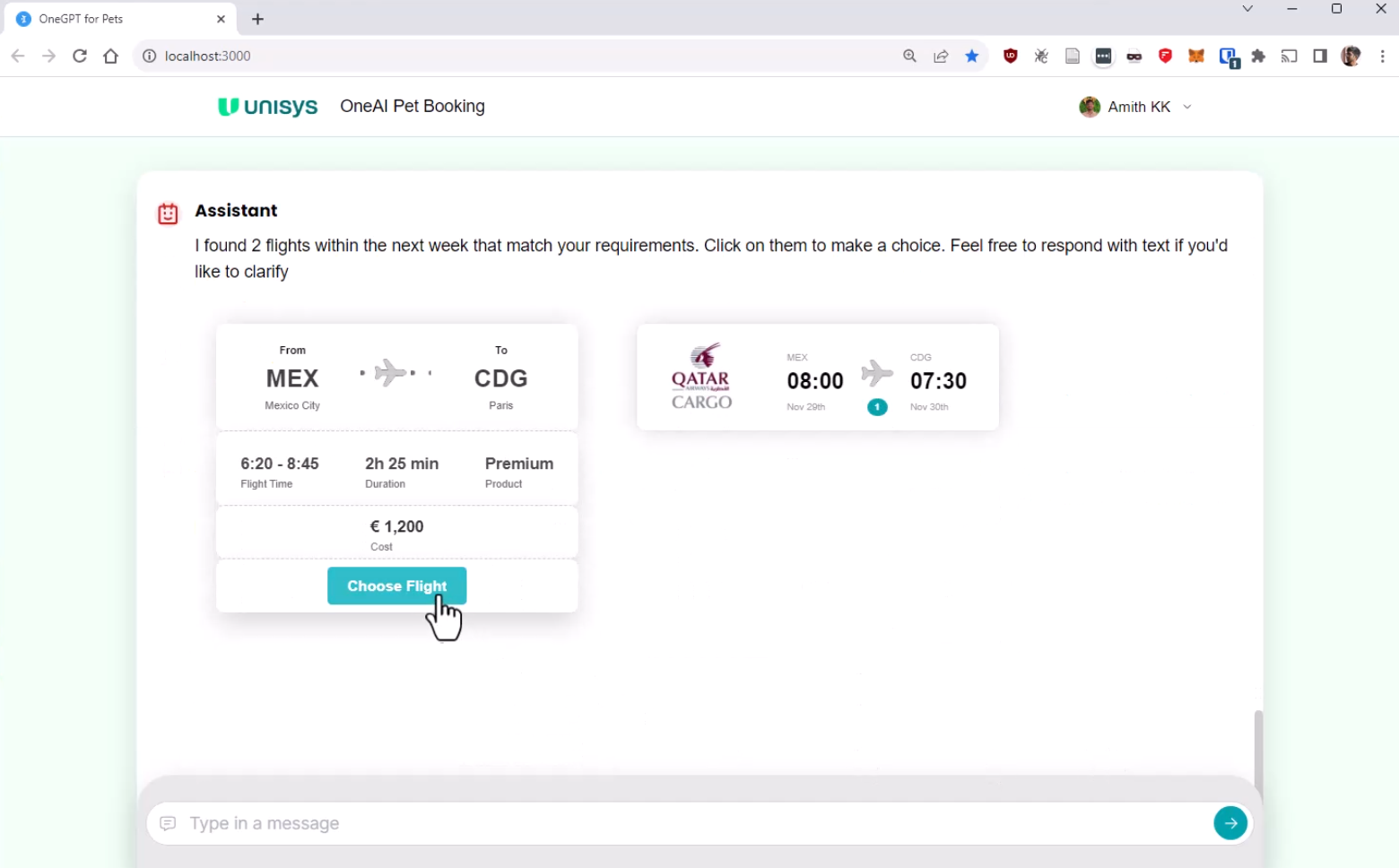
- We believe, Air Cargo Booking is not just a mere screen; it is a conversation. So, we simplify the Air Cargo booking process by using modern technologies like Conversational AI, Generative AI, and IATA One Record standards.
We have taken Pet Shipment as a use case to demonstrate our solution. This enables pet shippers/Freight Forwarders to ship pets, from any origin to any destination while remaining compliant with IATA and country-specific requirements, all guided by a conversational interface
Do so without needing to manually create flows for each parameter (such as country, species, etc.) with the power of ChatGPT-like generative AI that understands and interprets regulatory documents
Reduce repeated effort filling compliance documents and forms using cutting edge fact extraction techniques that fills the forms based on documents already possessed by the end user
How we built it
The key piece of the system is a large language model agent that is capable of multiple "skills"

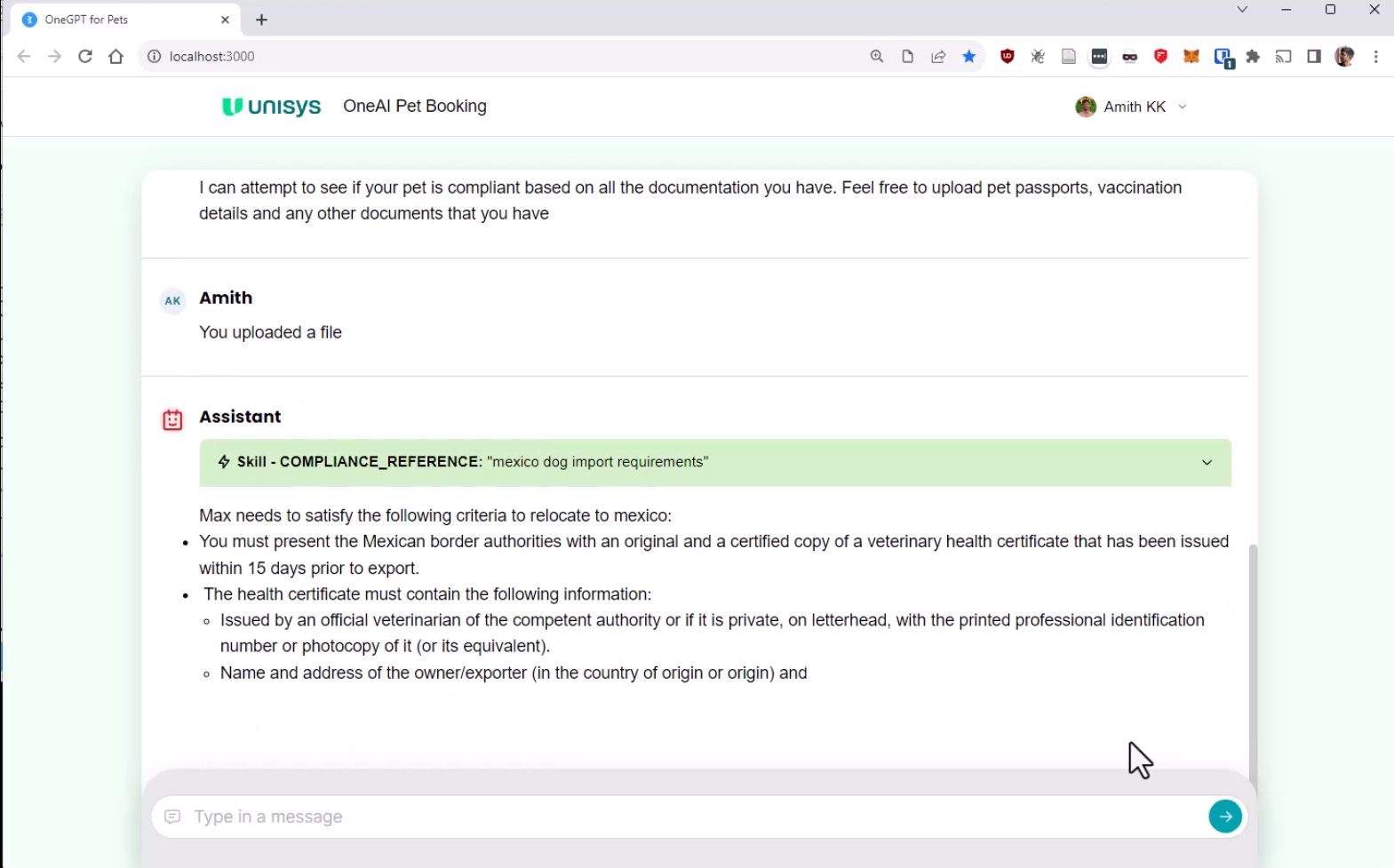
The primary skill is being able to dig into compliance documents from different geographies and institutions. This is done with Retrieval augmented generation run against a vector database (pinecone) where we've chunked, embedded and published the documents
When filling in compliance forms and documents, you often have to perform manual information entry and verification even though you already have all the documentation as paper or digital records. To tackle this we have an LLM-powered fact extraction engine

With this, you are able to dump a bunch of documents, derive the facts that you want to extract from the compliance documents we talked about earlier and evaluate compliance. This speeds up form-filling significantly.
While booking shipments, we also have to talk to various "Real Time" APIs and information sources. That brings us to the final skill that allows us to reach out to APIs to get AWB stocks, perform booking and create OneRecord Logistic Entries!
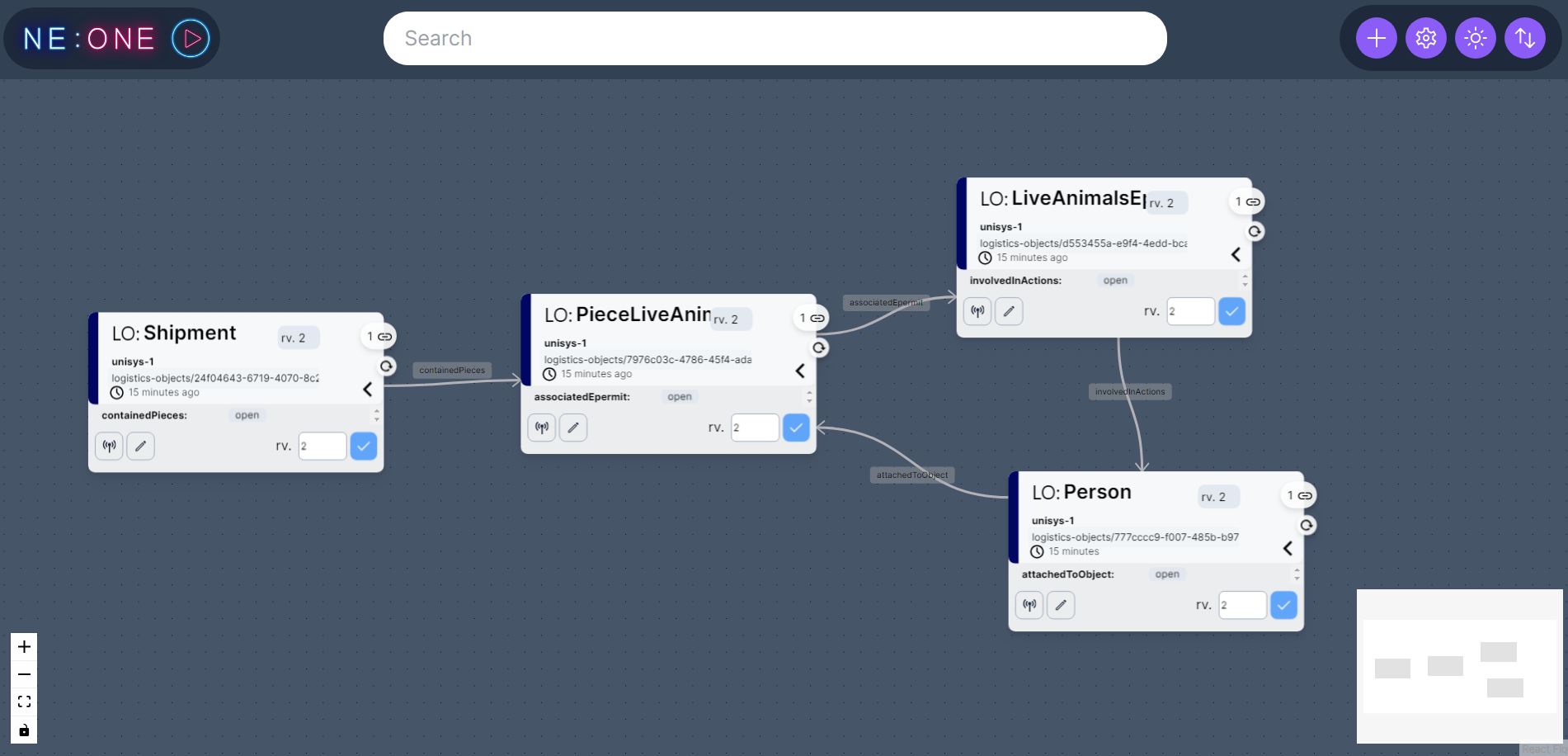
We tested this against the NE:One Server - and here's a set of LOs produced by the LLM pertaining to a pet:

Challenges we ran into
Effectively using large language models is both an art and a science involving multiple iterations of prompt engineering, figuring out the right mix of parameters for ingestion and retrieval.
We faced several challenges, such as
- The entire OR Ontology not fitting into the context space (solved by reducing the loaded ontologies to the ones for pets)
- Hallucination issues when extracting facts (Circumvented and reduced by using hallucination guardrails)
Accomplishments that we're proud of
The fact that we were able to make a compelling working prototype in the short duration :)
What we learned
- An incredible amount about OneRecord Ontologies and the value of having vast amounts of structure data
- Interesting quirks and nuances with international pet/live animal shipping laws
What's next for OneAI - OneRecord and GPT4 Powered Pet Booking
We're using this hackathon as a validation point to understand if a solution like this resonates, solves key issues and is worth pursuing. The feedback from the other teams, mentors and sponsors have been incredibly useful and encouraging. So we may pursue this as a product!

Log in or sign up for Devpost to join the conversation.