Inspiration
Restaurants run on an unwritten rule: party size equals customer worth. Solo diners are OpenTable's fastest-growing reservation segment (+62% in two years) and are profitable, not a cost, yet businesses still default to group-first policy: minimum bookings, group-shaped menus, refused solo tables. Our own survey of 78 people showed the flip side. 86% said solo dining is normal, but 70% admitted to hiding behind a phone anyway. That gap told us the problem wasn't confidence, it was a shared illusion nobody had designed their way out of, on either side of the table.
What it does
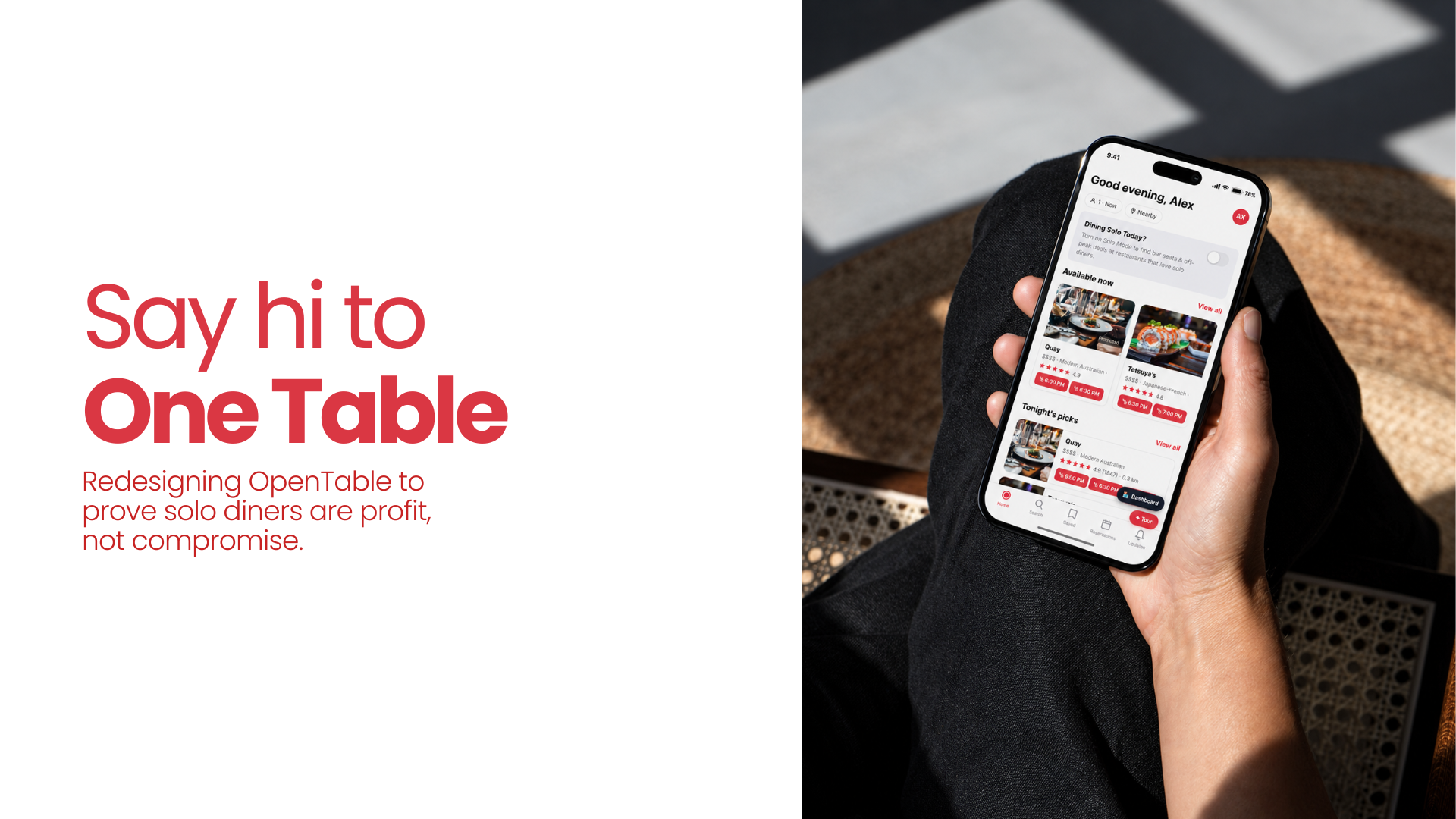
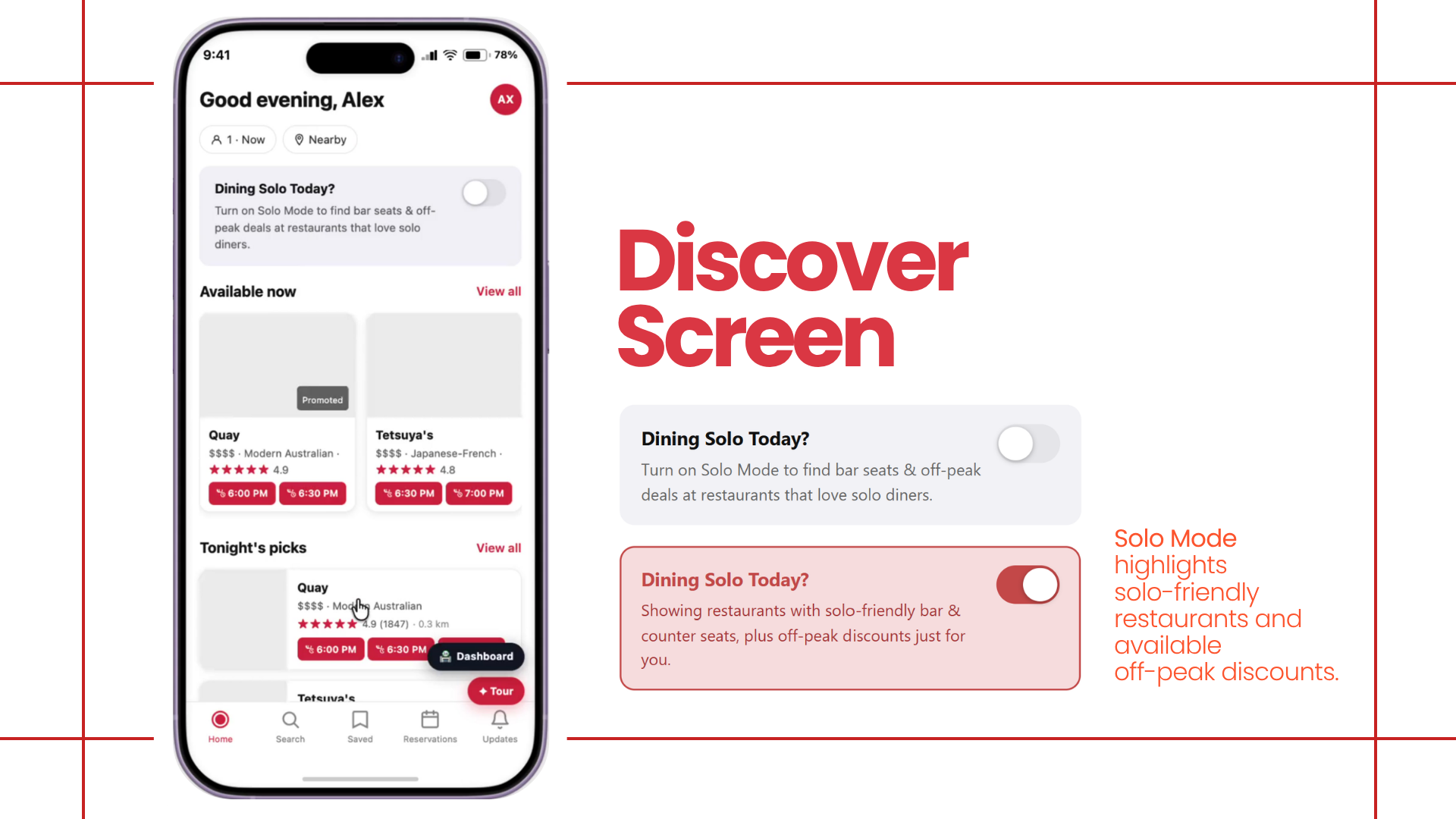
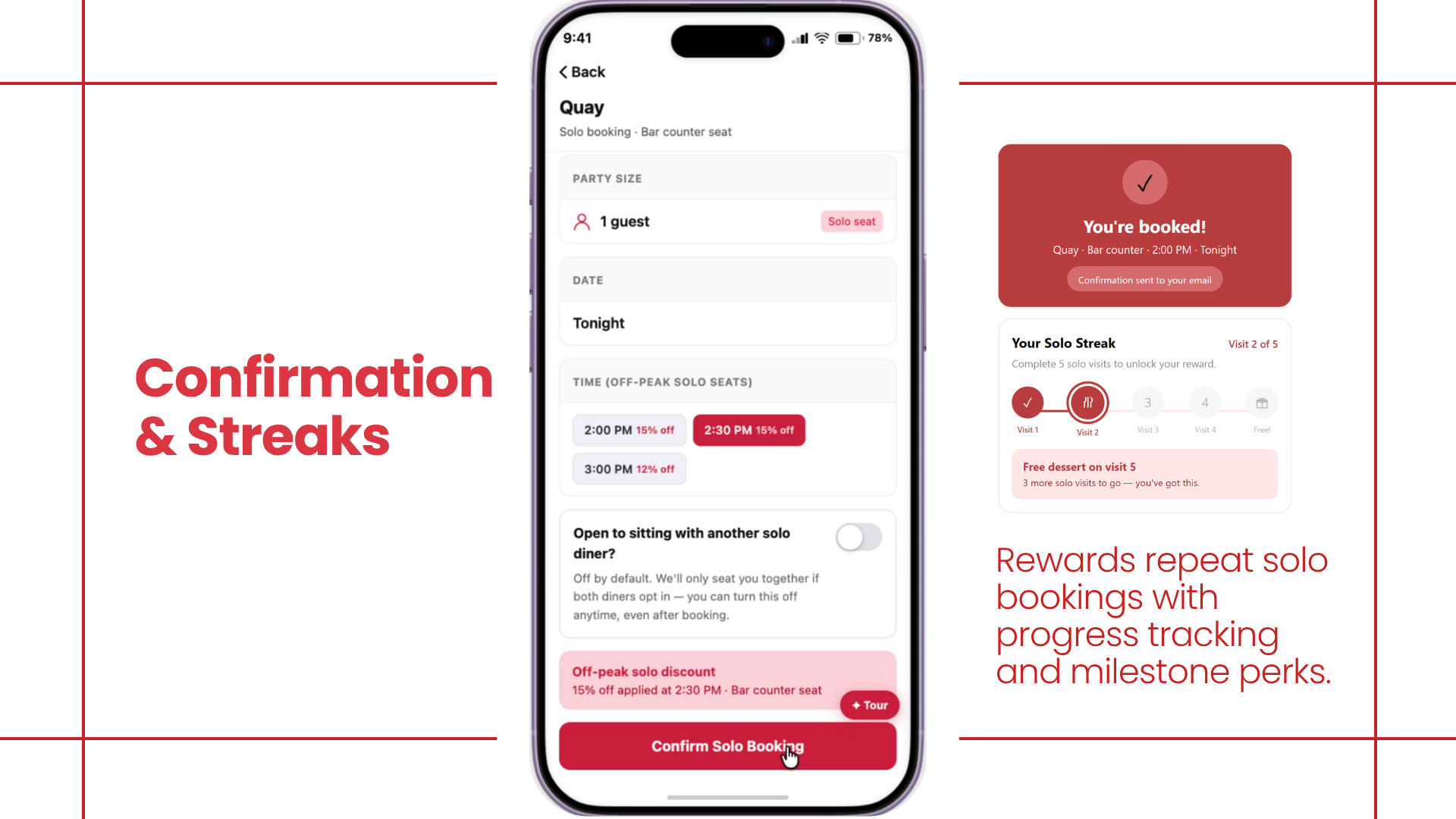
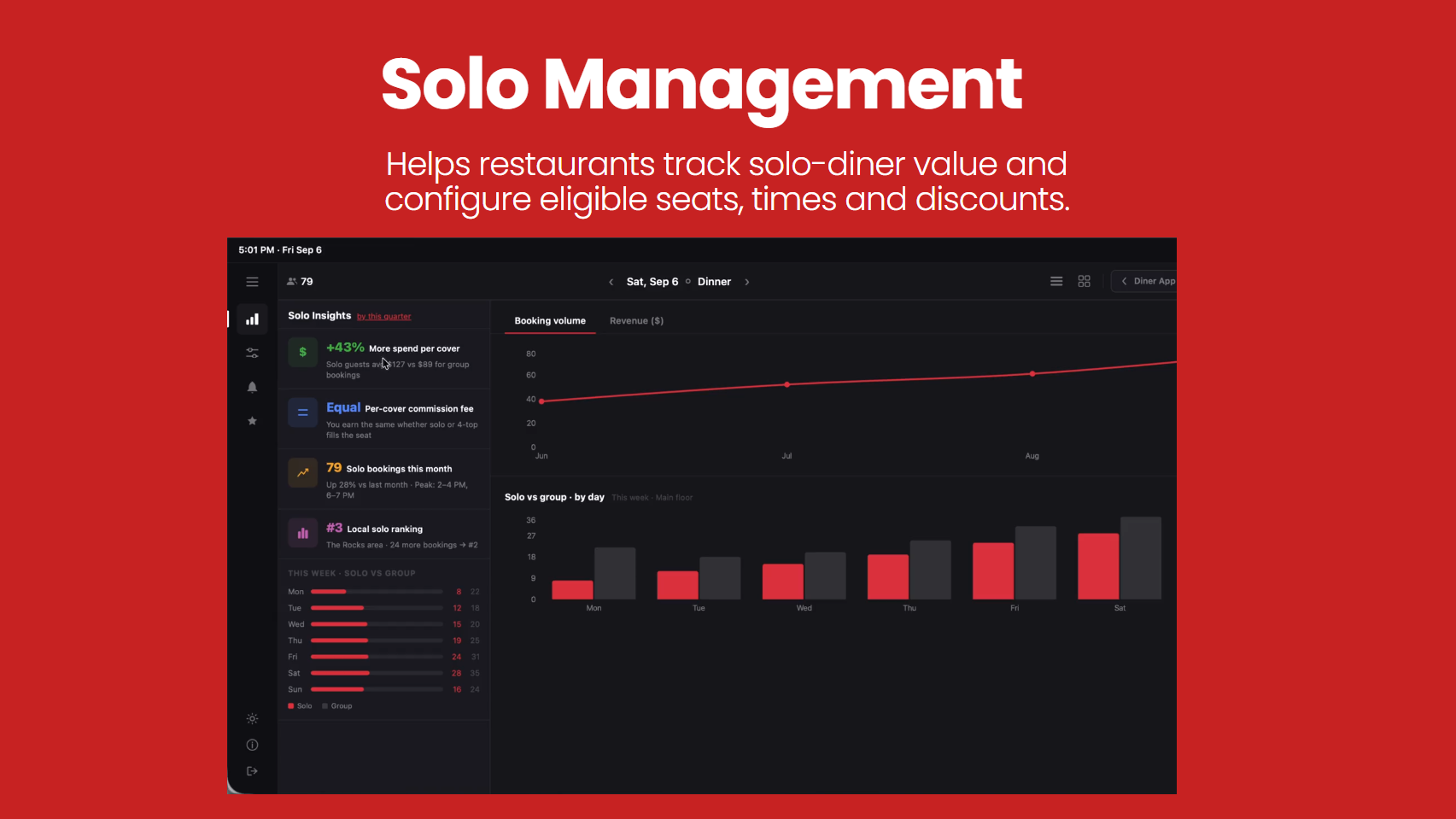
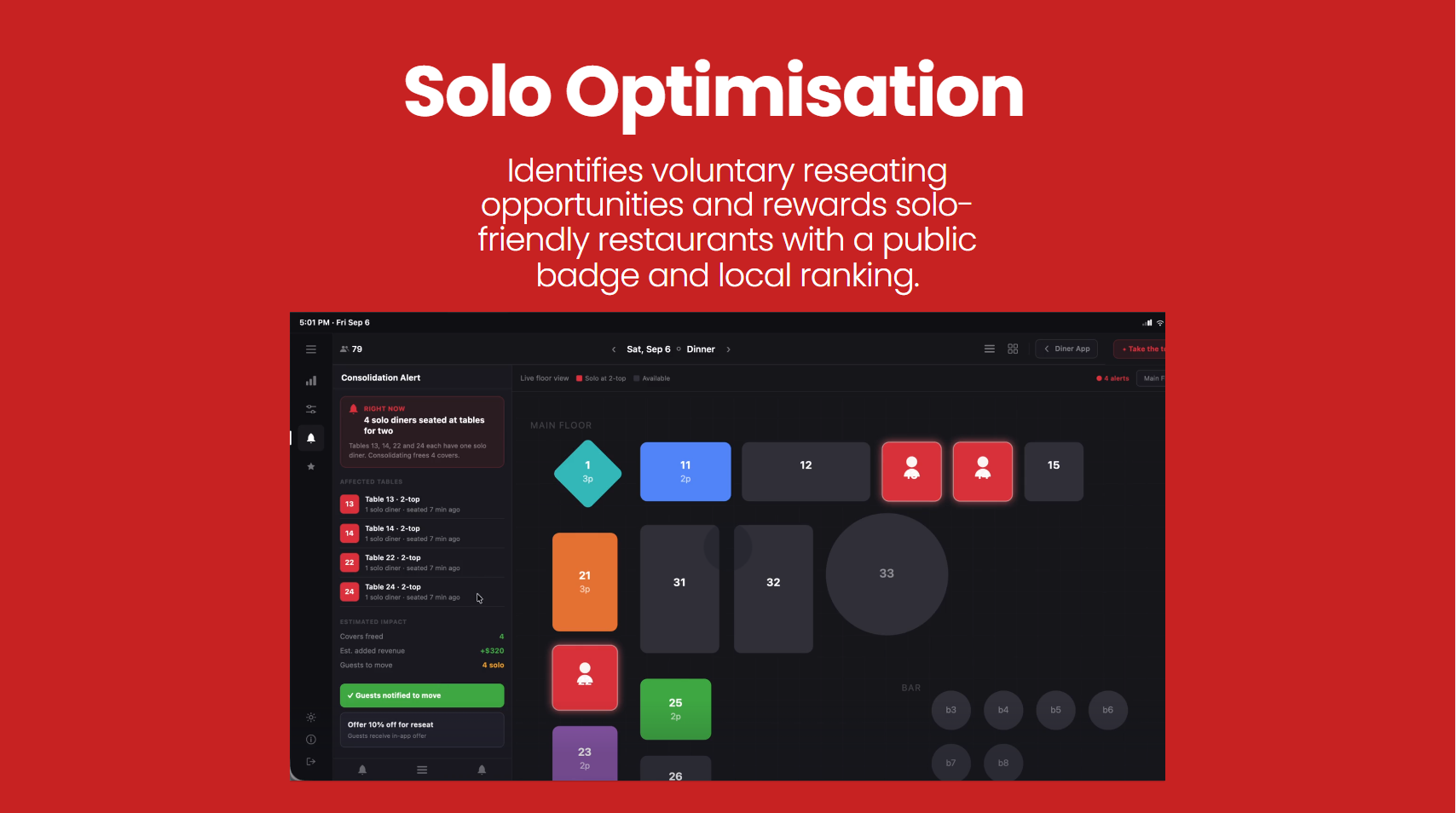
One Table is an OpenTable add-on that incentivizes businesses to actively welcome solo diners as repeat, profitable customers rather than a weaker table to tolerate. It defaults bookings to solo-friendly, redesigns the empty pre-food wait our research flagged as the real pain point, and gives businesses a reason to compete for solo diners the same way they compete for groups. It skips matchmaking mechanics and "just be brave" messaging entirely, both were tested and ruled out by our research.
How we built it
We grounded the concept in research: a 78-response survey, a 25-source online ethnography study, and a competitive analysis of five existing solo-dining products that all manage the symptom without challenging the stigma. From there we prototyped the booking and in-venue flow in Figma, designing the business-incentive layer as an OpenTable add-on rather than a standalone app.
Challenges we ran into
Our first instincts, matchmaking apps and bravery-framing tools, were exactly what the data ruled out, so we had to let go of ideas we liked before the research was even done. We also had to keep stigma and structural cost (like sharing-format pricing at buffets or KBBQ) as two separate problems instead of solving the louder one and calling it finished.
Accomplishments that we're proud of
We're proud of building a research base solid enough to falsify our own early ideas instead of just brainstorming solutions. Landing on a testable hypothesis, that seating geometry drives how observed a solo diner feels, and that the intervention has to reach them before they leave home, is what let us design something businesses and diners both actually win from.
What we learned
We learned that belief change doesn't equal behavior change. 86% already believe solo dining is normal, yet 70% still act like it isn't, which reinforced our focus on designing for the specific moment behavior happens, not just raising awareness. We also learned the real barrier is often structural, not emotional, and separating that from the stigma is what kept the concept focused.
What's next for One Table
Next, we want to add safety features so the solo-diner incentive can't be misused, for example someone booking as a solo diner to get solo-specific perks, then bringing more people once seated. We'd also build a business-side flagging system so restaurants can flag accounts that repeatedly misrepresent party size, keeping the incentive credible for everyone relying on it.
Built With
- figma
- figmamake


Log in or sign up for Devpost to join the conversation.