-
-
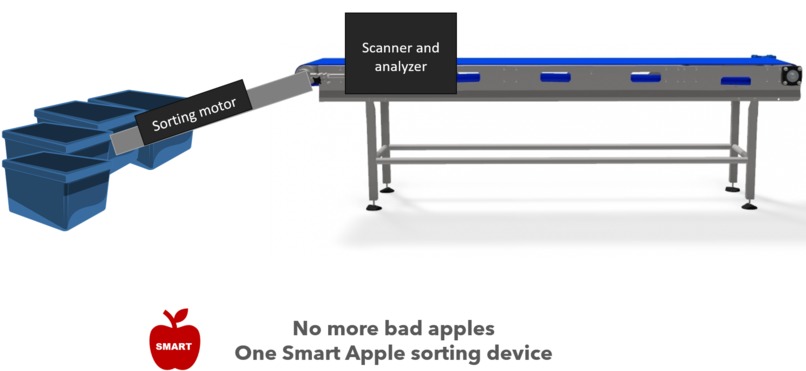
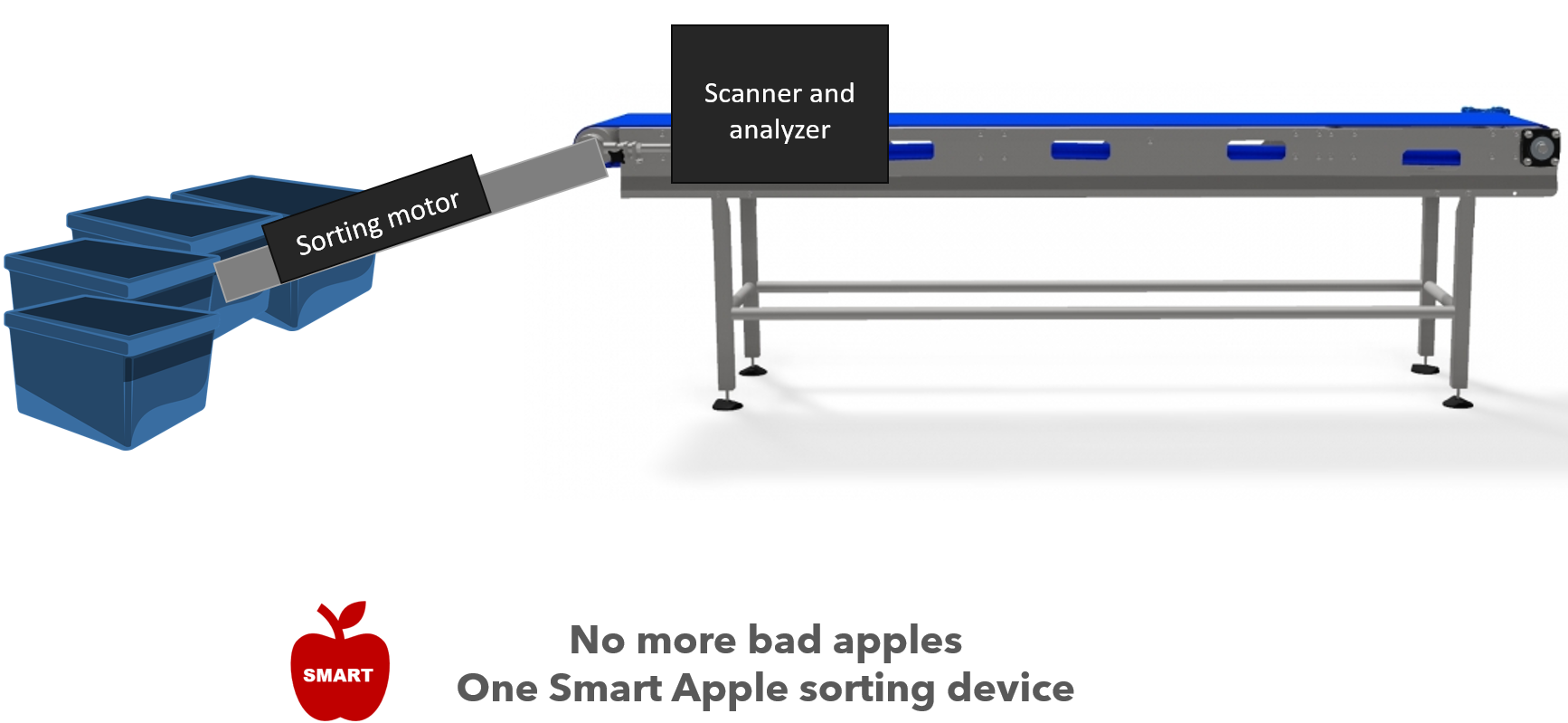
An overview of the One Smart Apple device
-
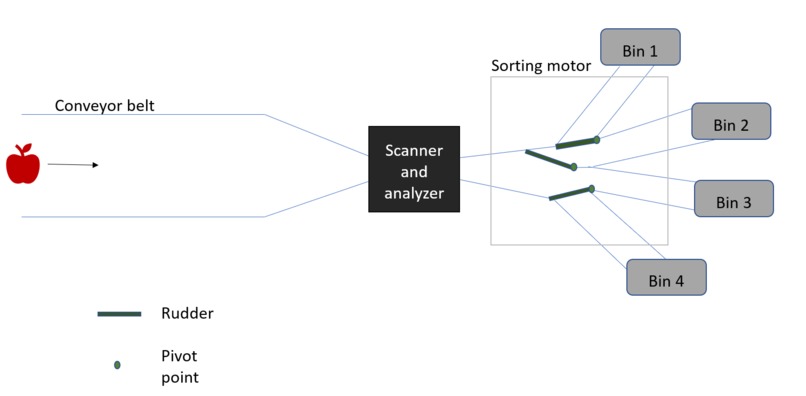
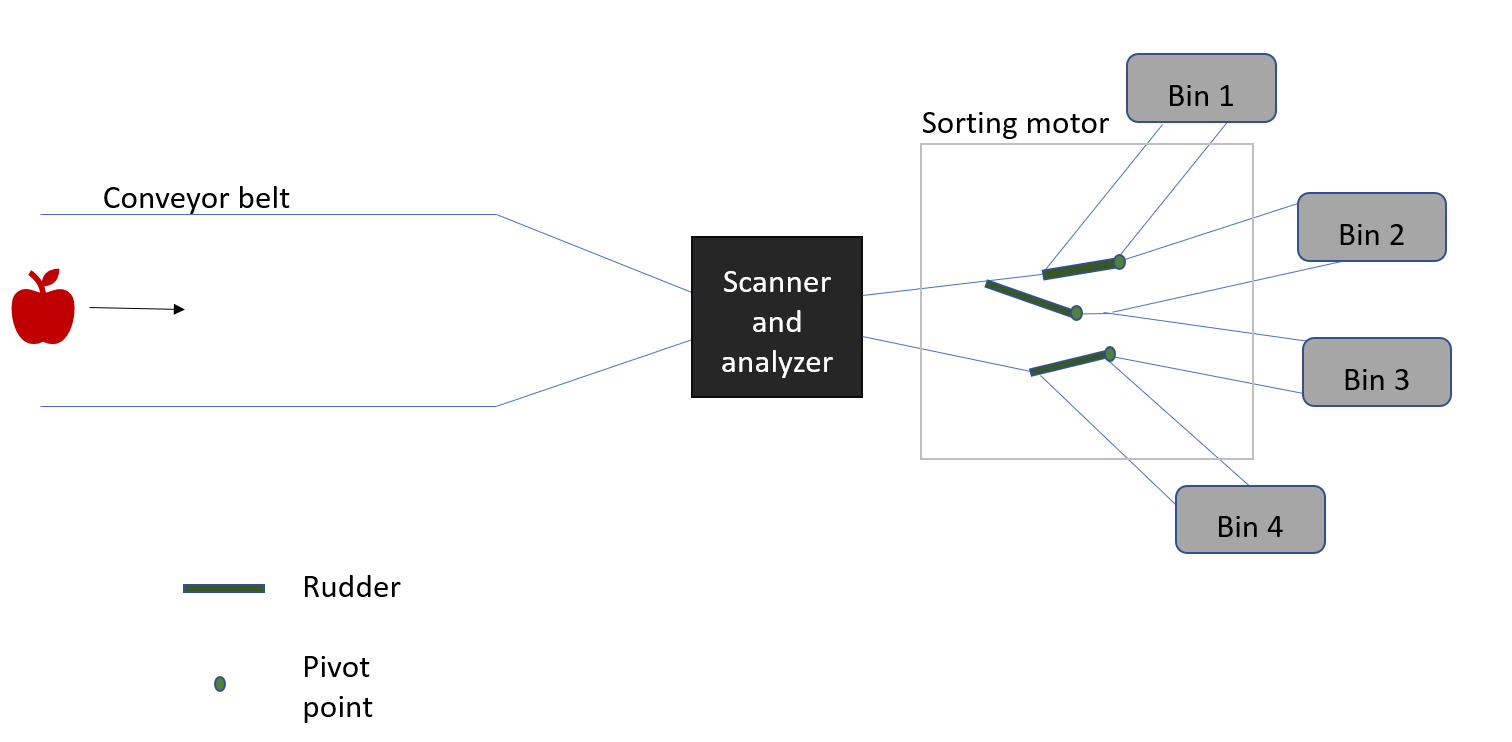
The process the apple undergoes physically along the conveyor belt- specifically the sorting motor.
Inspiration
Growing up one of the lessons we were taught was to not waste food. This simple lesson has stayed with me throughout my life and has led me to explore what implications this practice has. Through research I learned that food waste actually contributes to a lot more than just the waste of food. Rather wasting food also leads to the waste of various other resources including water and a contribution to gas emissions among others. I wanted to focus on apples specifically since picking and eating apples was the staple snack and fruit of my childhood, it's also easier to begin with a narrower and specific project scope. It is also the example fruit used in many circumstances and even in photos to represent food/fruit as a whole.
What it does
The "One Smart Apple" sorting device uses a DA meter, x-ray, and software to identify a variety of characteristics of an apple- size, ripe-ness, blemishes, among other aspects- to determine the potential and most sustainable use of that apple. By taking these factors (and additional facts such as smaller apples can last longer) into account, the device is able to translate that data into an action by the motor further down the conveyor belt to sort the apple into it's corresponding bin. By determining how long the apple lasts or the general quality, the specific apple that fits within the previously established criteria could be sent to it's optimal location be it long term, short term storage, composting (decreases food in landfills), low grade/clearance section level food, etc. This would maximize profits as well as promote sustainability.
How we built it
The device is comprised of a conveyor belt that transports the apples one by one through the scanner and analyzer. This component is comprised of the DA meter, X-ray detection, and AI software. The data is then process and communicated via Bluetooth signals to the motor component for sorting. Additionally a visual broadcast feature could be added to transfer the data, information, and visuals to a nearby computer screen if desired. The motor component and bluetooth receiver would be underneath the conveyor belt closer to the bins to control the movement of the rudder like components to allow for sorting.
Challenges we ran into
There was difficulty finding the amount of smart sorting devices currently in use and even apple sorting facilities since these can often be a part of the farm (which makes it difficult to know) or a separate plant.
Accomplishments that we're proud of
The idea of the process design to utilizing the different characteristics of the apples to send them to different places that would maximize the amount of apples used along with profit. Additionally these efforts contribute to a more sustainable practice and environment.
What we learned
Food waste contributes to a lot more waste than I previously recognized. I also learned a lot about the apple industry's farm to fork supply chain components.
What's next for One Smart Apple
The development of the software to process the x-ray and DA meter's data to determine the cutoffs for the different characteristics of the apples (there is literature to support and guide in this process) for sorting. This could include some testing and also a component to adjust the cutoff values if the owner would like to make changes. This would also include the reordering of the bins to the customers liking and even the addition/subtraction of bins based on need (this would have to be reflected in the motor sorting component as well but should be a relatively simple re-design based on need). Furthermore, another step includes the building of the physical device or like prototype by combining the components mentioned.

Log in or sign up for Devpost to join the conversation.