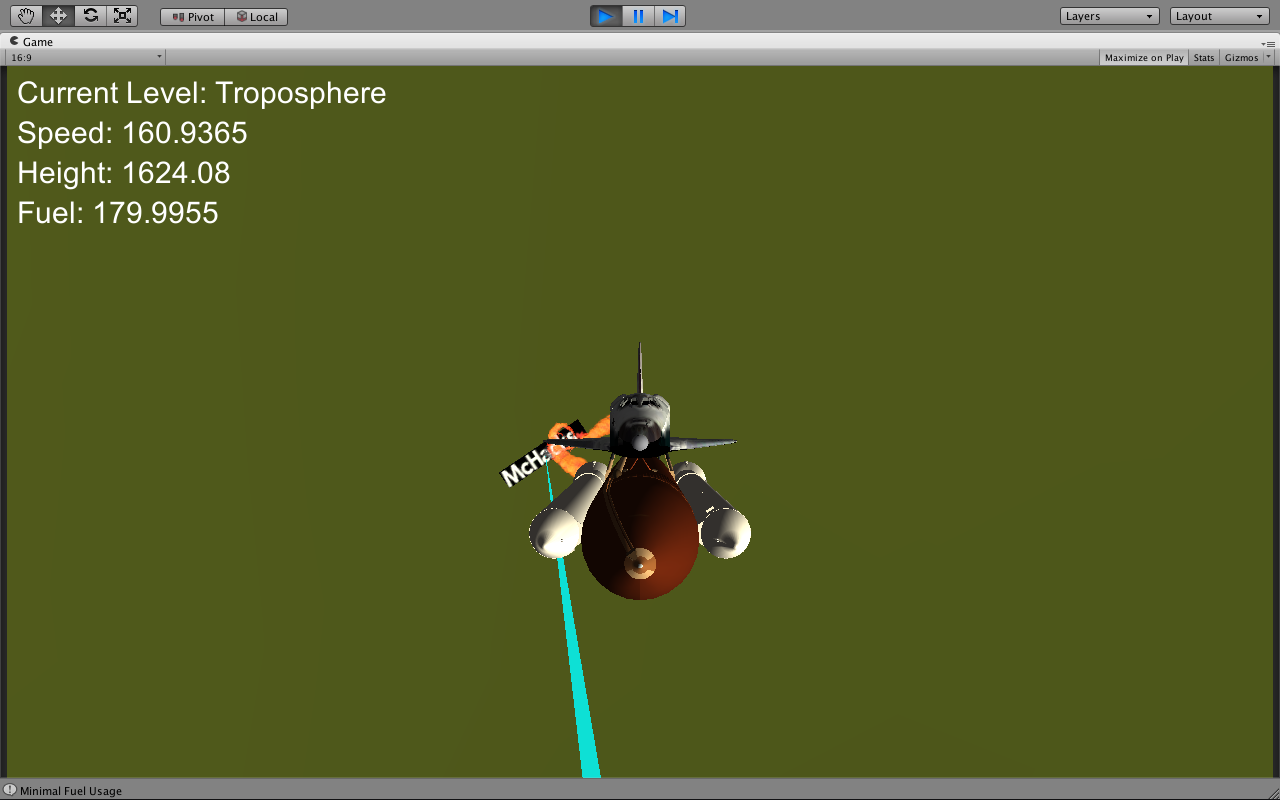
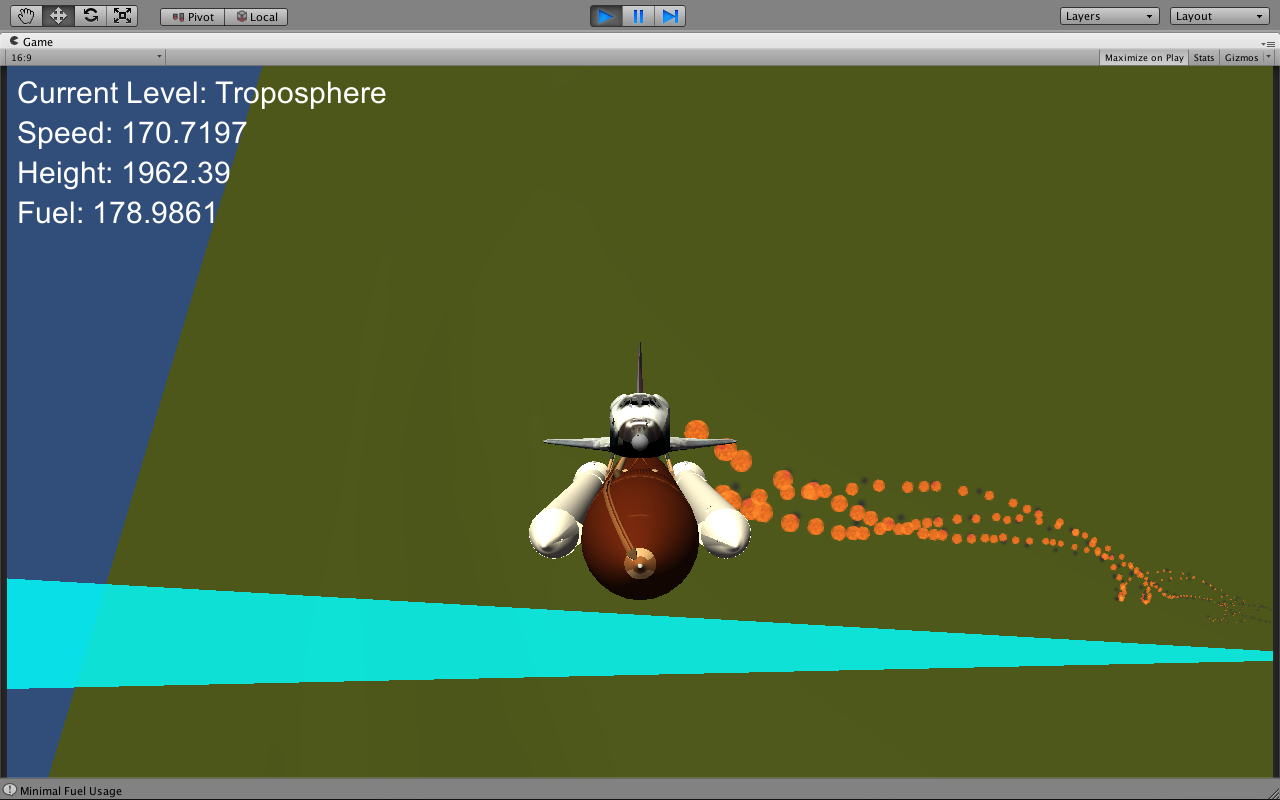
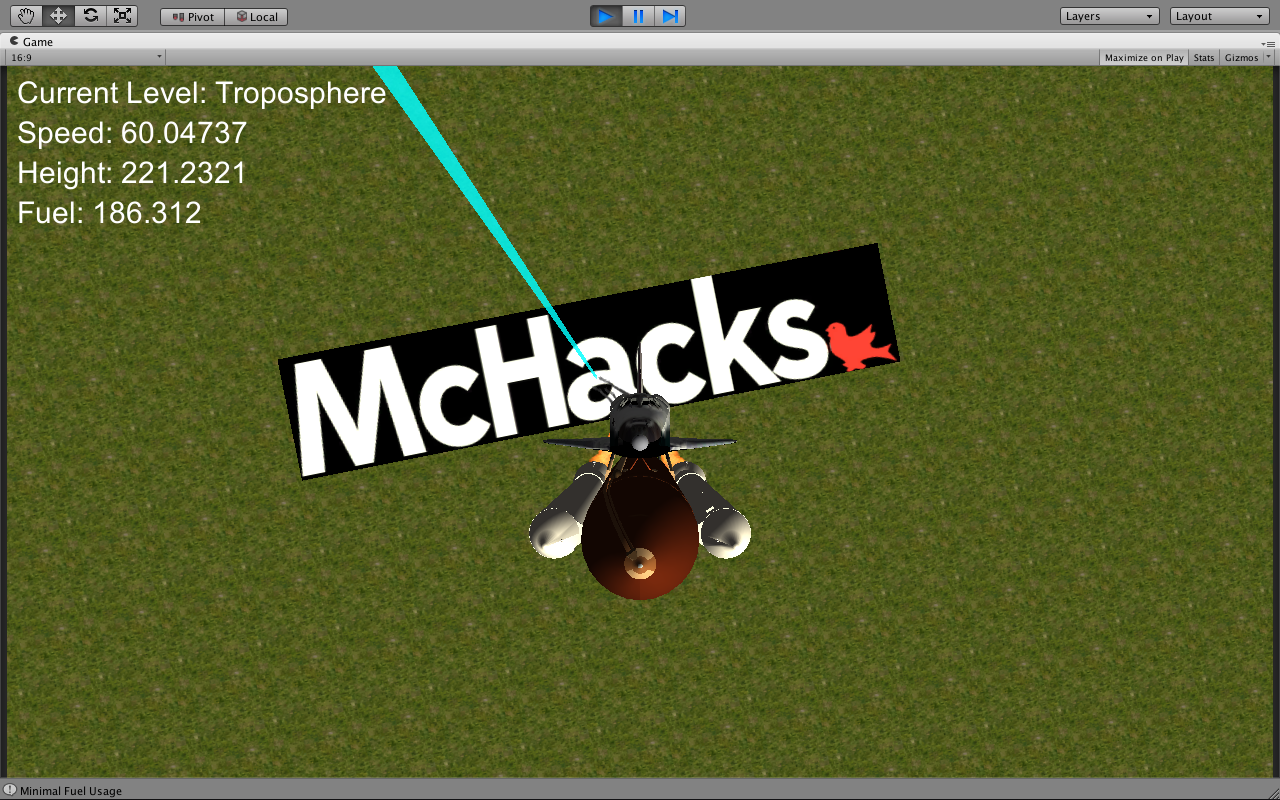
Ever wanted to man a space shuttle to the International Space Station and have the controls literally in your hands? Thanks to the power of the Unity Game Engine and the Leap Motion controller, you will now have that opportunity!
Your hands will guide the space shuttle as it tries to navigate its way to the ISS, but the key word is -try-. Too many errant moves and you'll find yourself crashing to the ground due to a lack of fuel. Navigate successfully and you'll be looking out at the stars... from space.
We utilized the mechanics of the Unity engine to create a realistic feel to the game, using self-created assets and open-source assets from NASA and other sources. With the ease of Unity, we were able to establish a prototype with in-game physics far more easily than hard-coding the project itself.
After extensive testing with the Leap Motion controller and the accompanying SDK, we modified an existing movement interface to create one that we feel the player can interact easily with and enjoy while they can attempt different movement tricks with the shuttle itself.
We believe the player can find much entertainment even if they don't wish to achieve the goal of making it to the ISS. By playing with the Leap Motion interface, the player can attempt outlandish stunts with the shuttle, such as attempting barrel rolls as it rockets into the troposphere.
The goal is to navigate to the ISS by using the controller to steady the shuttle as it takes off, but arrive there before you exhaust your fuel reserves.
The team wanted to undertake this idea for a myriad of reasons. The original goal was to establish a form of a solar system simulation for educational purposes. At the same time, we wanted to design a program that would utilize the abilities of both Unity and the Leap Motion controller to make the sim not only challenging, but fun as well.
When we went with the plan to create One Small Leap!, we wanted to establish three phases to fully encapsulate the feeling of space travel and act as a tool for astronomy education. Phase One is the prototype that you are currently viewing but with the added physics of booster thrust, atmospheric turbulence and wind effects to enhance the challenge of completing the goal. Phase Two was to implement the challenge of docking at the ISS at a specific point in order to test the player's accuracy. Phase Three was going to be a sandbox mode with the solar system in orbit, including the moon(s) of the planets, and allow the player to navigate freely across the cosmos. As a player approached a lunar body, there would be statistical information about it displayed, such as circumference, time to orbit about the sun, composition and other relevant information that the budding astronomer may wish to study.
As a team, we had a great time attempting to create One Small Leap!. A lot of time went into investigating how to further enhance our skills as Unity and Leap Motion developers, which made for an excellent experience.

Log in or sign up for Devpost to join the conversation.