-
-
-
-
-
-
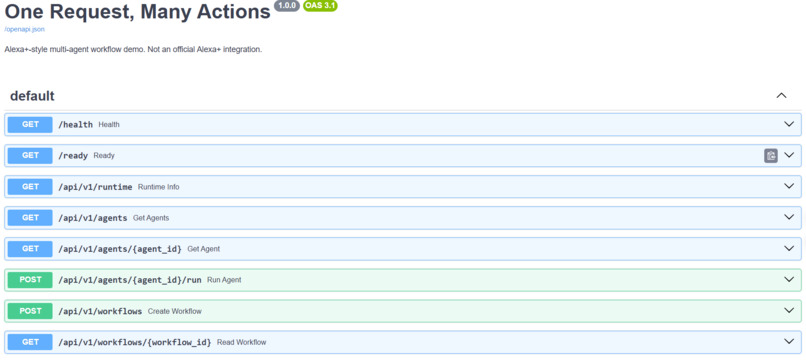
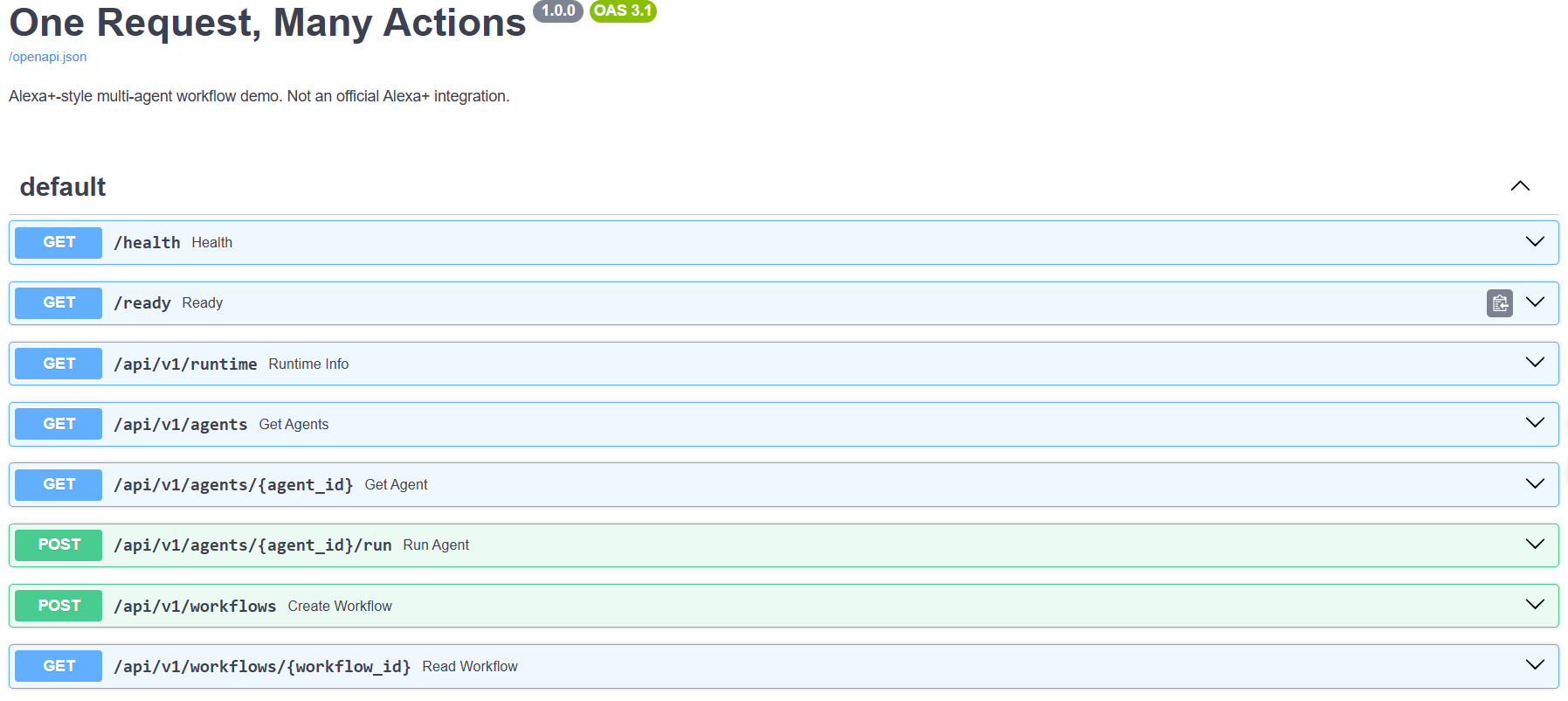
The FastAPI interface exposes endpoints for health checks, agent discovery, individual agent execution, and workflow creation and retrieval.
-
-
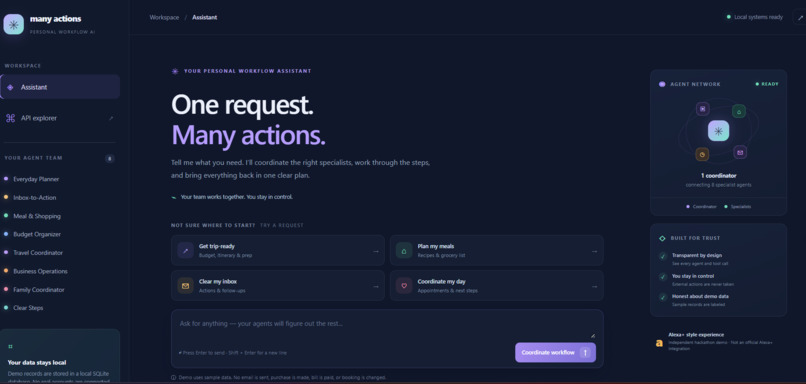
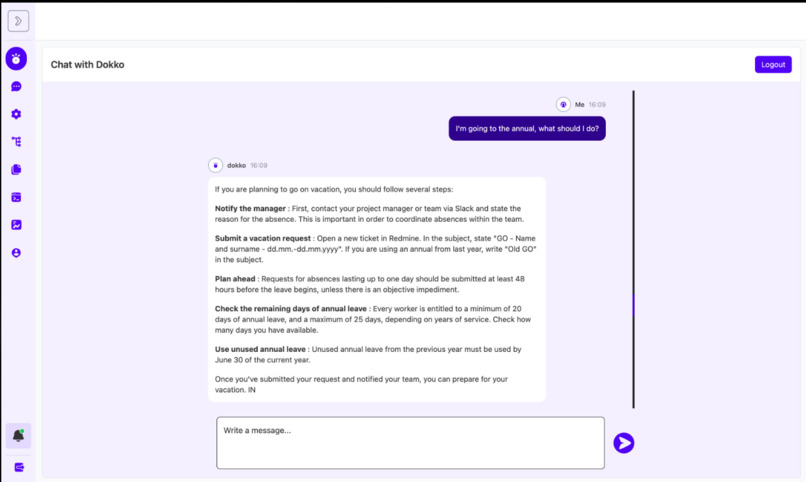
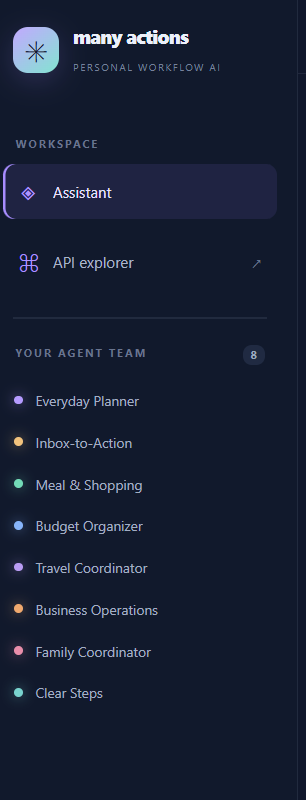
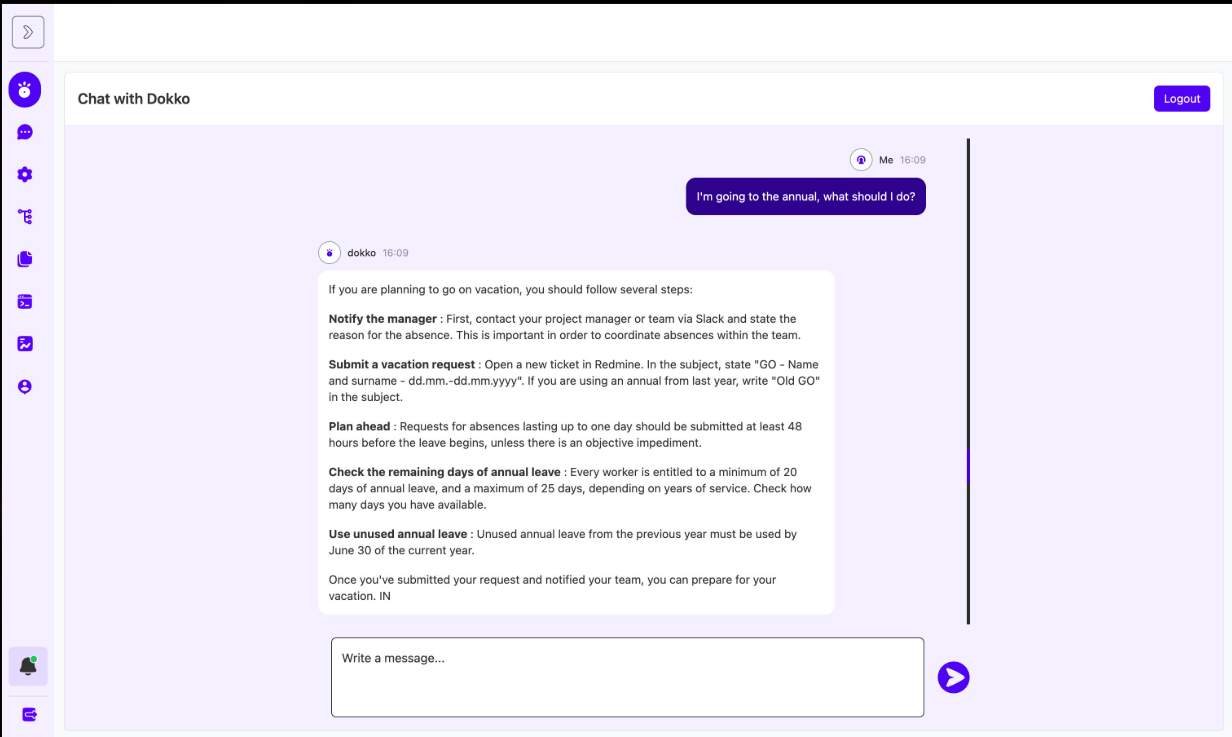
A conversational assistant interface demonstrates the natural-language interaction pattern that inspired this project
-
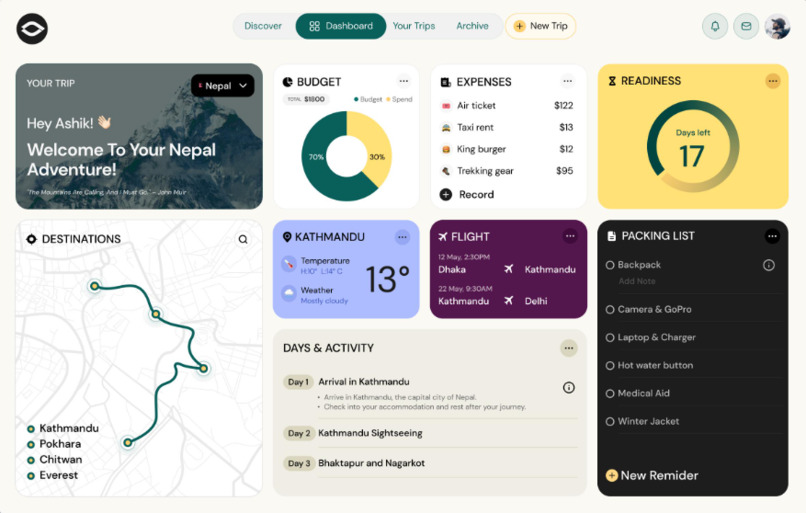
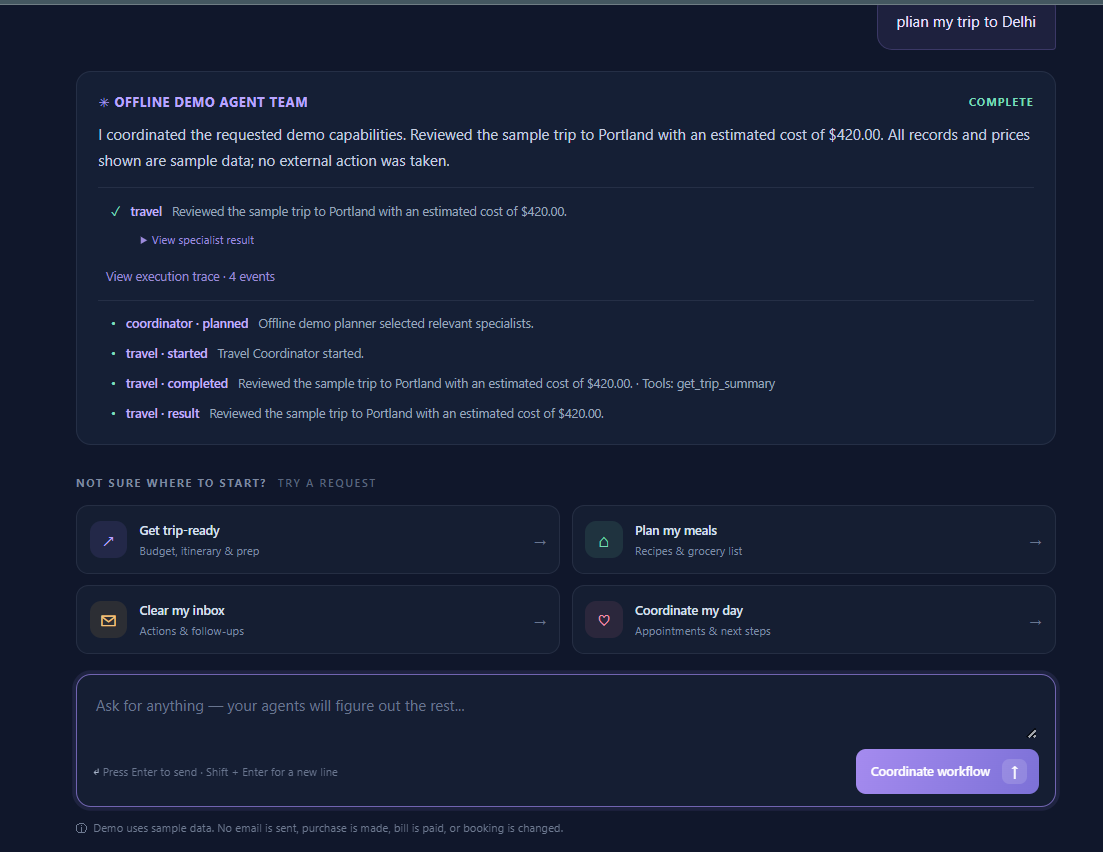
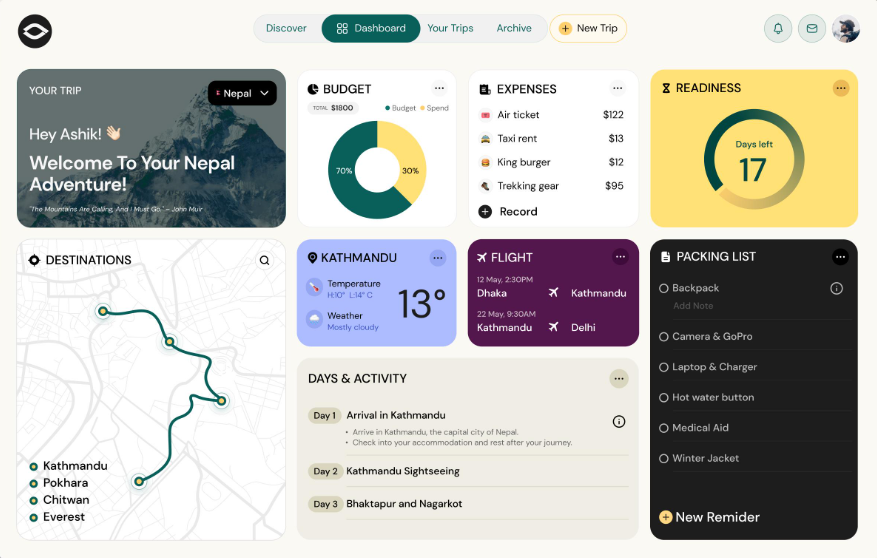
A travel dashboard concept showing how trip details, estimated budgets, expenses, destinations, activities, and packing lists.
-
-
-
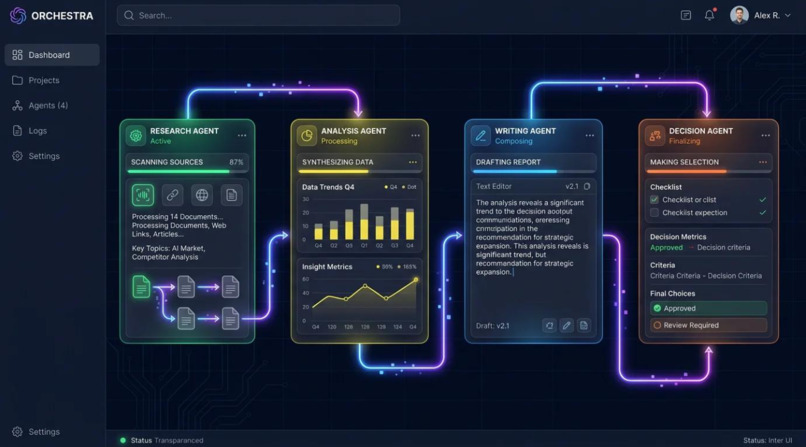
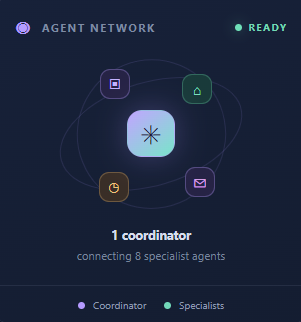
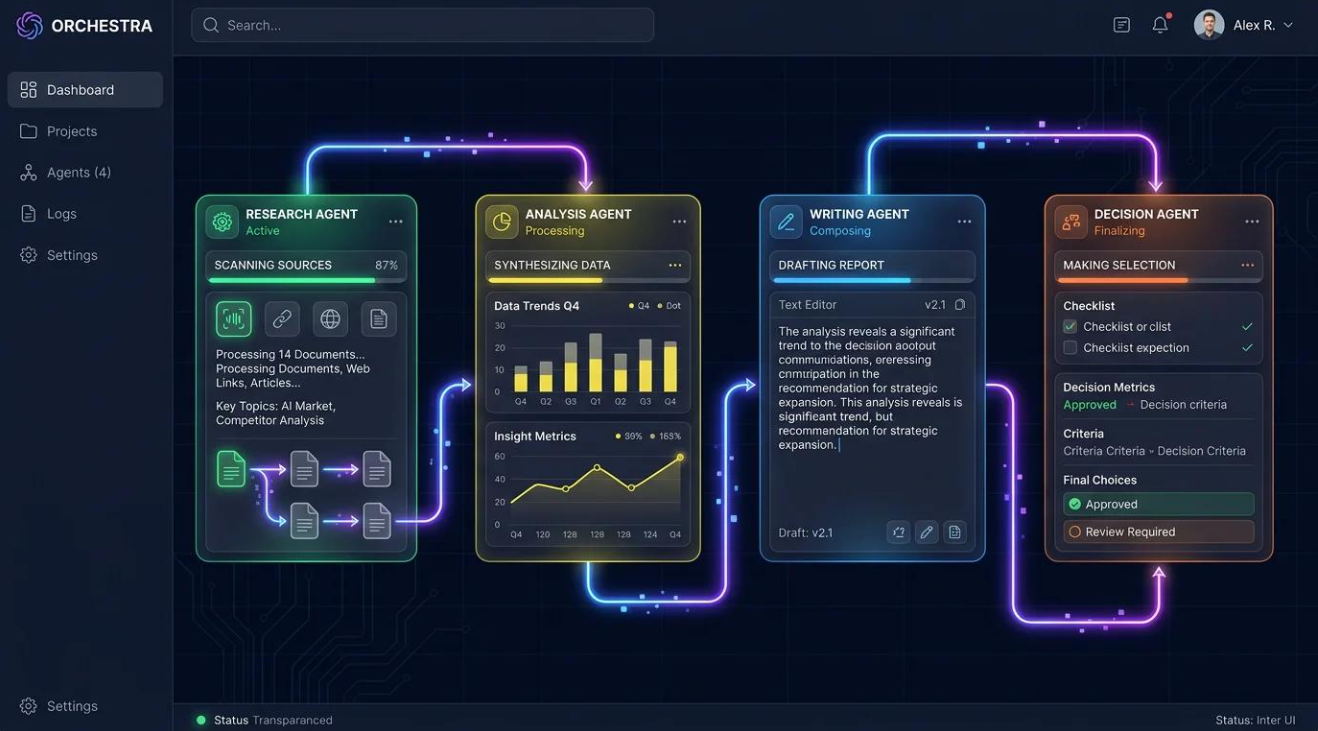
The visual concept illustrates how specialized agents can work through research, analysis, content generation, and decision-making stages.
Inspiration
Every day, we handle multiple small but time-consuming tasks—planning schedules, organizing travel, managing expenses, preparing shopping lists, and coordinating appointments. Although AI assistants can answer individual questions, handling a request that involves several connected tasks often requires repeated prompts and manual effort.
This inspired us to build One Request, Many Actions, an agentic AI assistant designed around a simple idea: users should be able to express their goal in natural language, and the system should coordinate the steps needed to help accomplish it.
What It Does
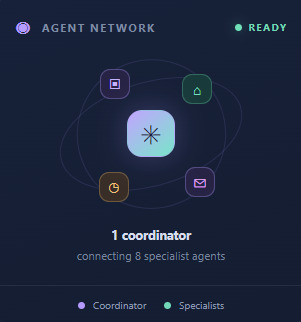
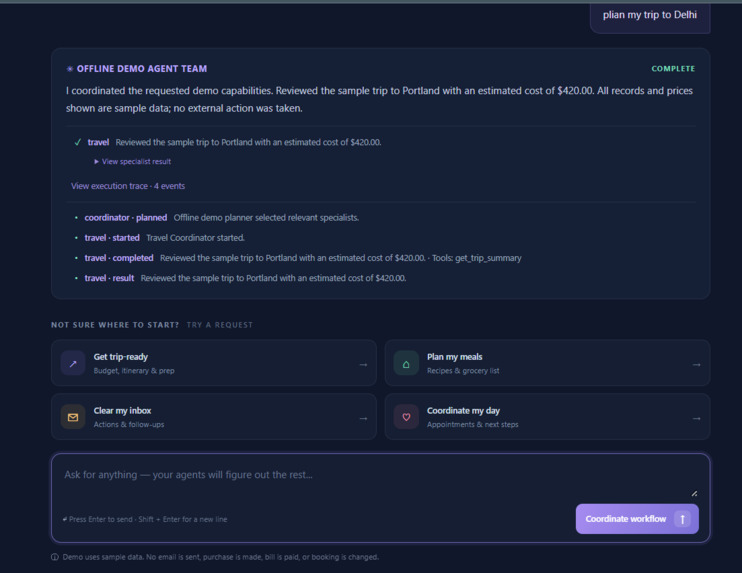
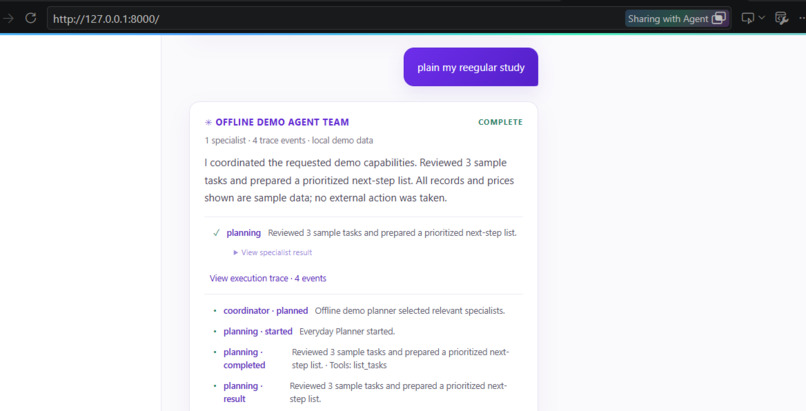
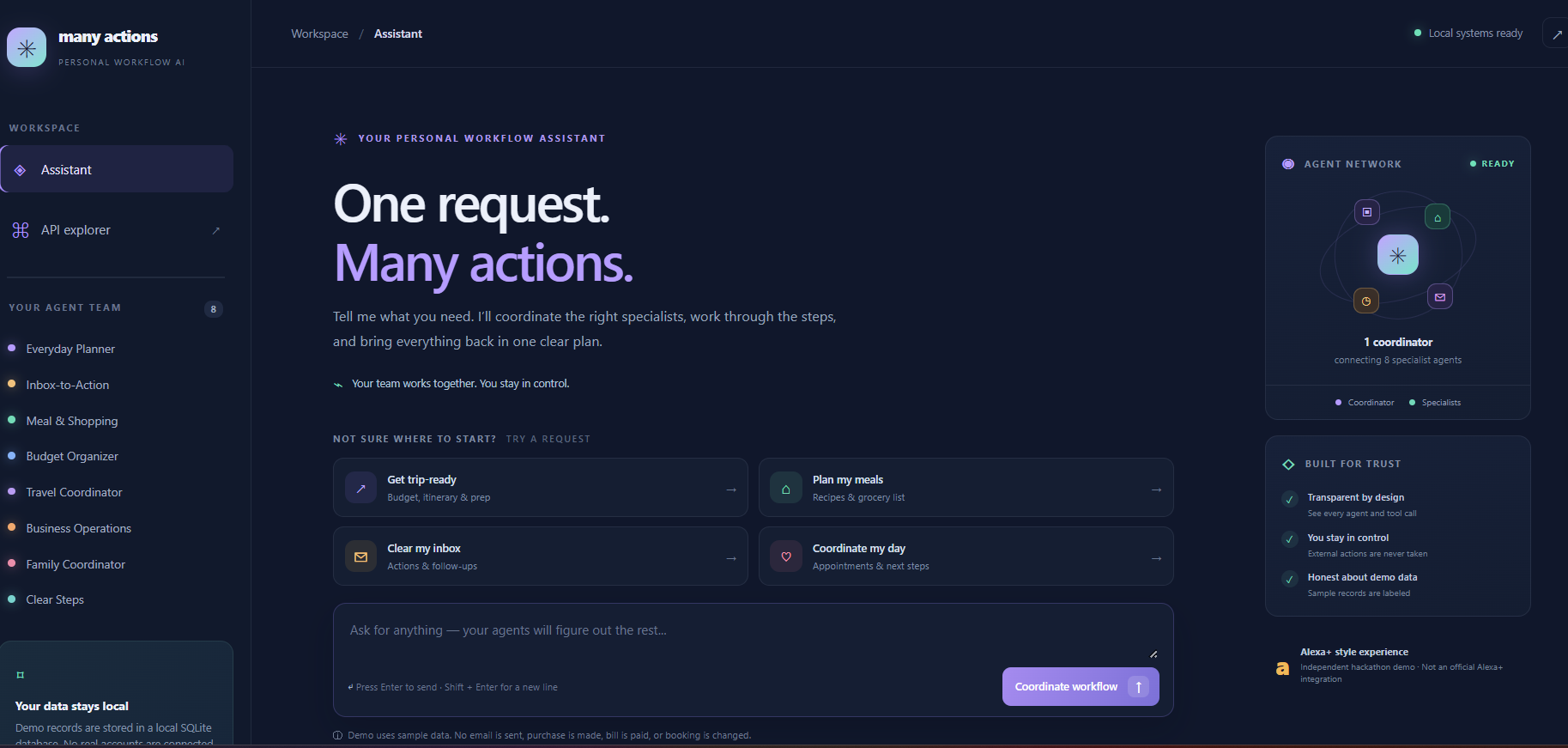
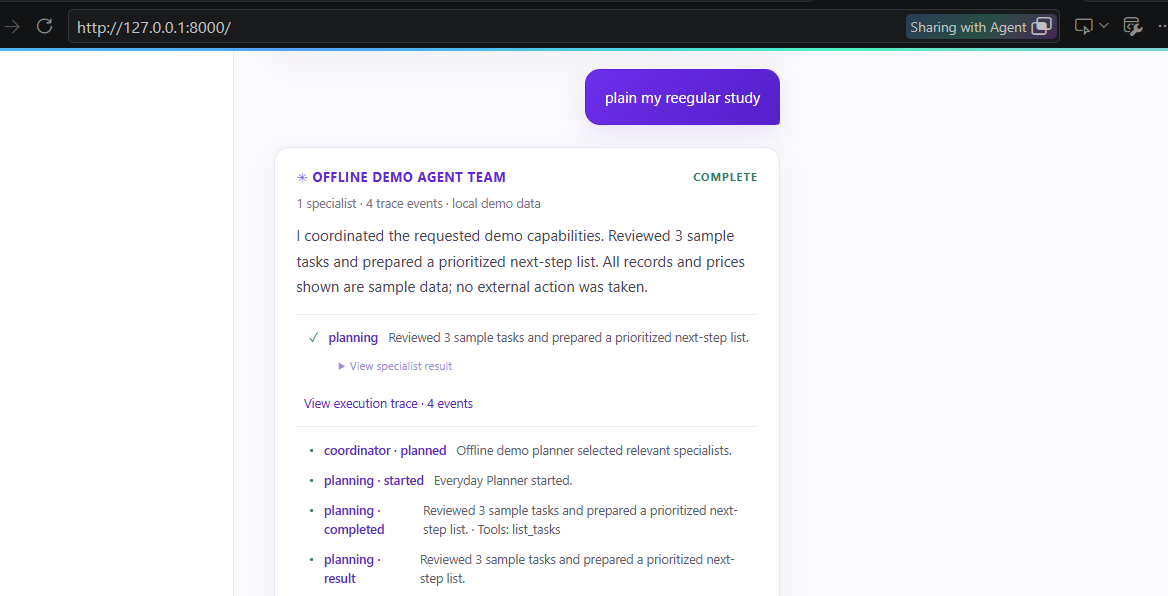
One Request, Many Actions is designed to turn a single natural-language request into a coordinated, multi-step workflow. Instead of treating every task separately, the system can route different parts of a request to specialized agents.
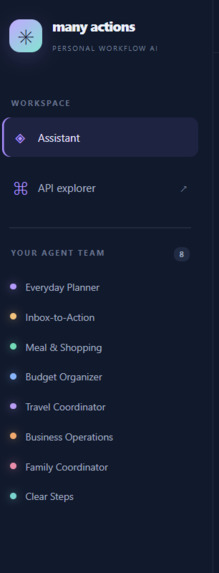
The planned specialist capabilities cover:
- Planning: Organizing tasks and breaking larger goals into manageable steps.
- Inbox Management: Helping organize messages and identify follow-up actions.
- Meals and Shopping: Creating meal plans and corresponding shopping lists.
- Finance: Supporting expense calculations and bill planning.
- Travel: Helping organize trip details and estimate budgets.
- Small Business: Assisting with routine operational tasks.
- Family Appointments: Coordinating schedules and reminders.
- Accessibility: Exploring more convenient ways for people to interact with digital tools.
The goal is to make AI assistance more connected, practical, and useful for everyday life.
How We Built It
The project is designed with a modular architecture so that each specialist capability can be developed and tested independently.
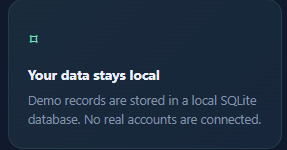
The application uses Python for its core logic, FastAPI for REST API endpoints, Pydantic for structured data validation, and SQLite for lightweight data persistence. Streamlit provides a web interface for interacting with the workflow. The architecture also incorporates the Model Context Protocol (MCP) to explore a standardized way for AI applications to discover and use tools.
A key design principle is to separate the coordinator, specialist agents, tools, and user interface. This makes the system easier to extend, debug, and evaluate as new capabilities are added.
The project is being developed toward a more capable agentic architecture in which an AI-powered coordinator can interpret requests, select appropriate specialists, manage dependencies between tasks, and combine their results into a single response.
Challenges We Faced
One of the biggest challenges was distinguishing a genuinely agentic system from a conventional application that simply calls predefined functions. Routing a request to a function is not the same as building an agent that can reason about a task, select tools, use context, and respond to intermediate results.
Another challenge was designing a common structure for different types of tasks. Travel planning, financial calculations, shopping lists, and scheduling all require different information, so the system needs structured inputs, clear outputs, and appropriate error handling.
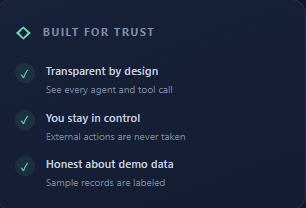
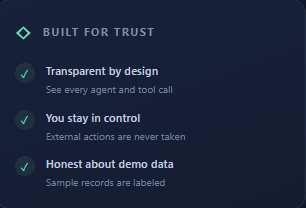
We also considered reliability and user control. Some actions—such as sending messages, changing appointments, or making purchases—should require user confirmation rather than being executed automatically. External integrations must also be handled honestly so that simulated functionality is not mistaken for a live connection.
What We Learned
This project helped us explore modular software architecture, API design, structured data validation, workflow coordination, and the role of MCP in connecting AI applications with tools.
We also learned that a useful AI assistant is not just about generating a good response. It must manage context, handle failures, communicate limitations, and make its actions understandable to the user.
What's Next
Our next steps are to strengthen the AI-driven orchestration, integrate and test specialist agents, connect real tools through MCP, improve workflow tracing, and expand the approval process for actions that affect the outside world.
Our long-term vision is simple: one request, coordinated intelligence, and many useful actions—while keeping users informed and in control.
Built With
- agentic-ai
- ai-agents
- fastapi
- gemini
- generative-ai
- google-adk
- httpx
- large-language-models-(llms)
- model-context-protocol-(mcp)
- multi-agent-systems
- natural-language-processing
- pydantic
- python
- rest-api
- sqlalchemy
- sqlite
- streamlit
- workflow-automation

Log in or sign up for Devpost to join the conversation.