-
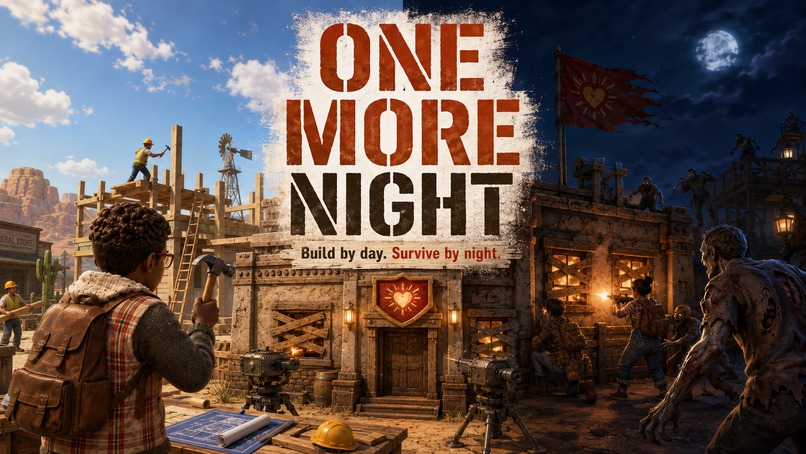
-
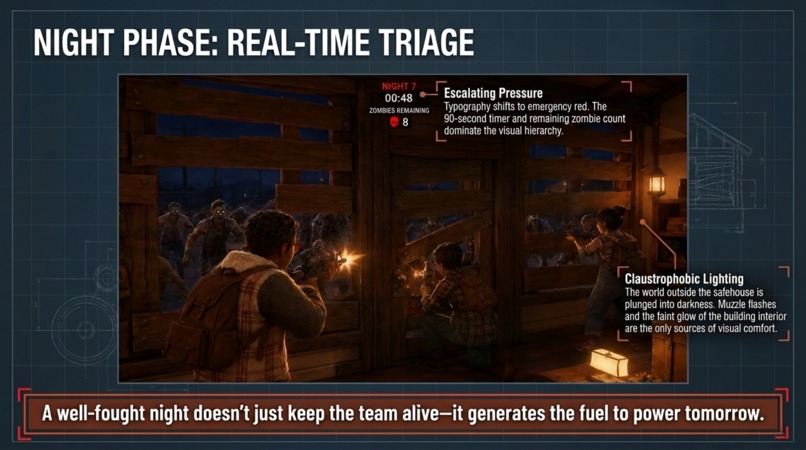
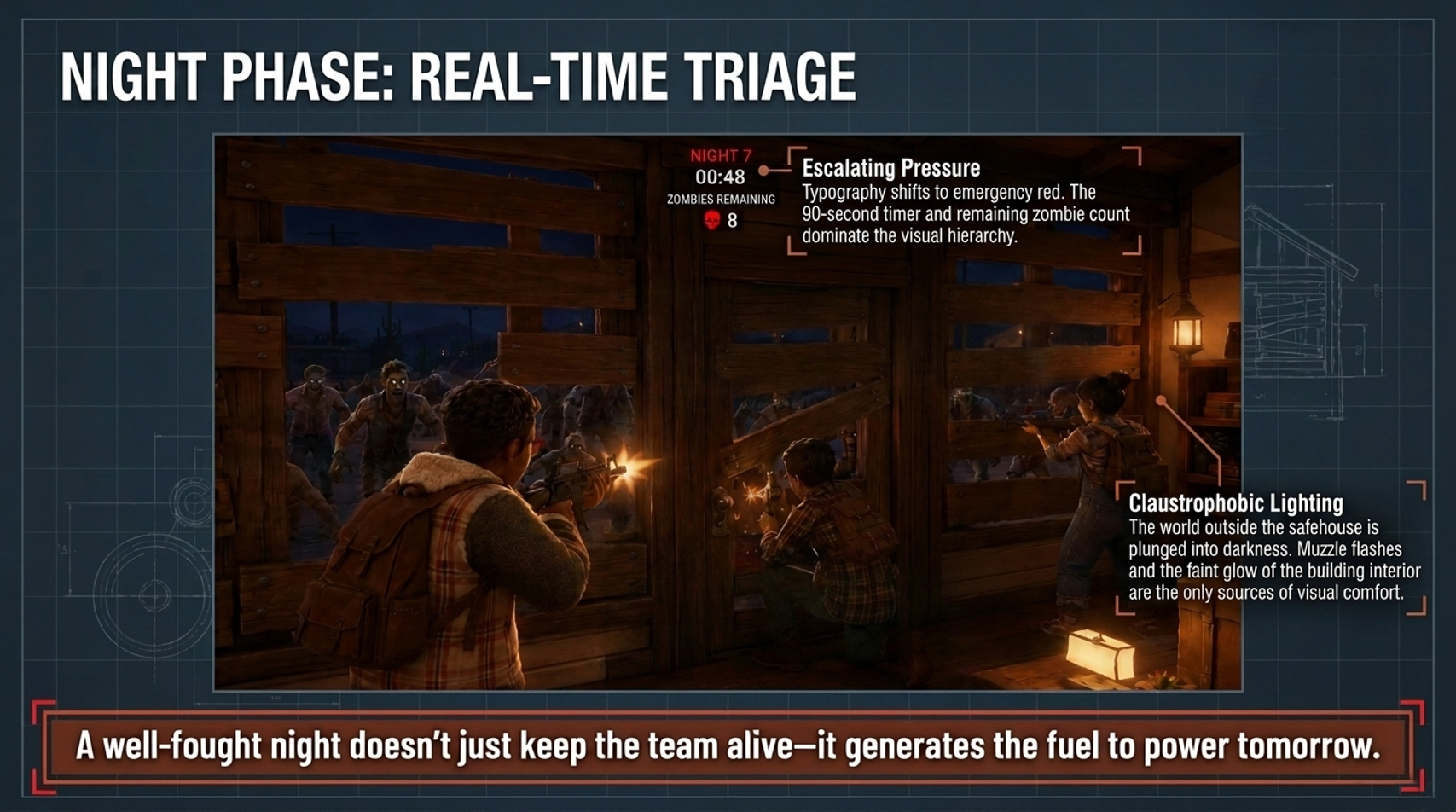
Night Phase: the town under siege. Every breach is a threat to the heart at the building's core.
-
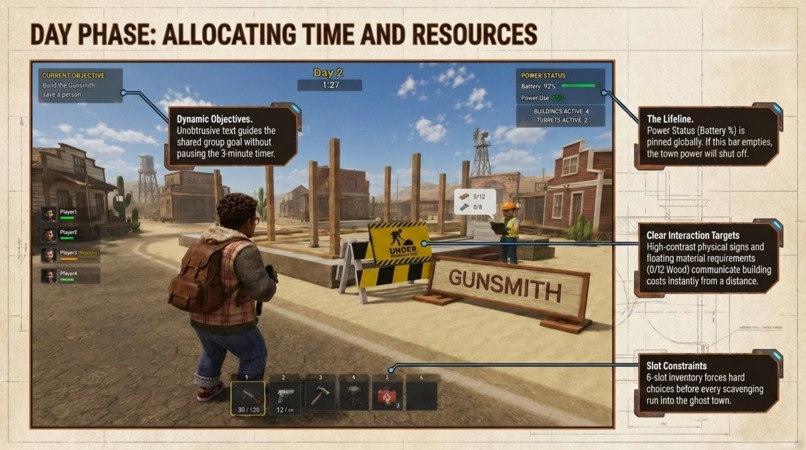
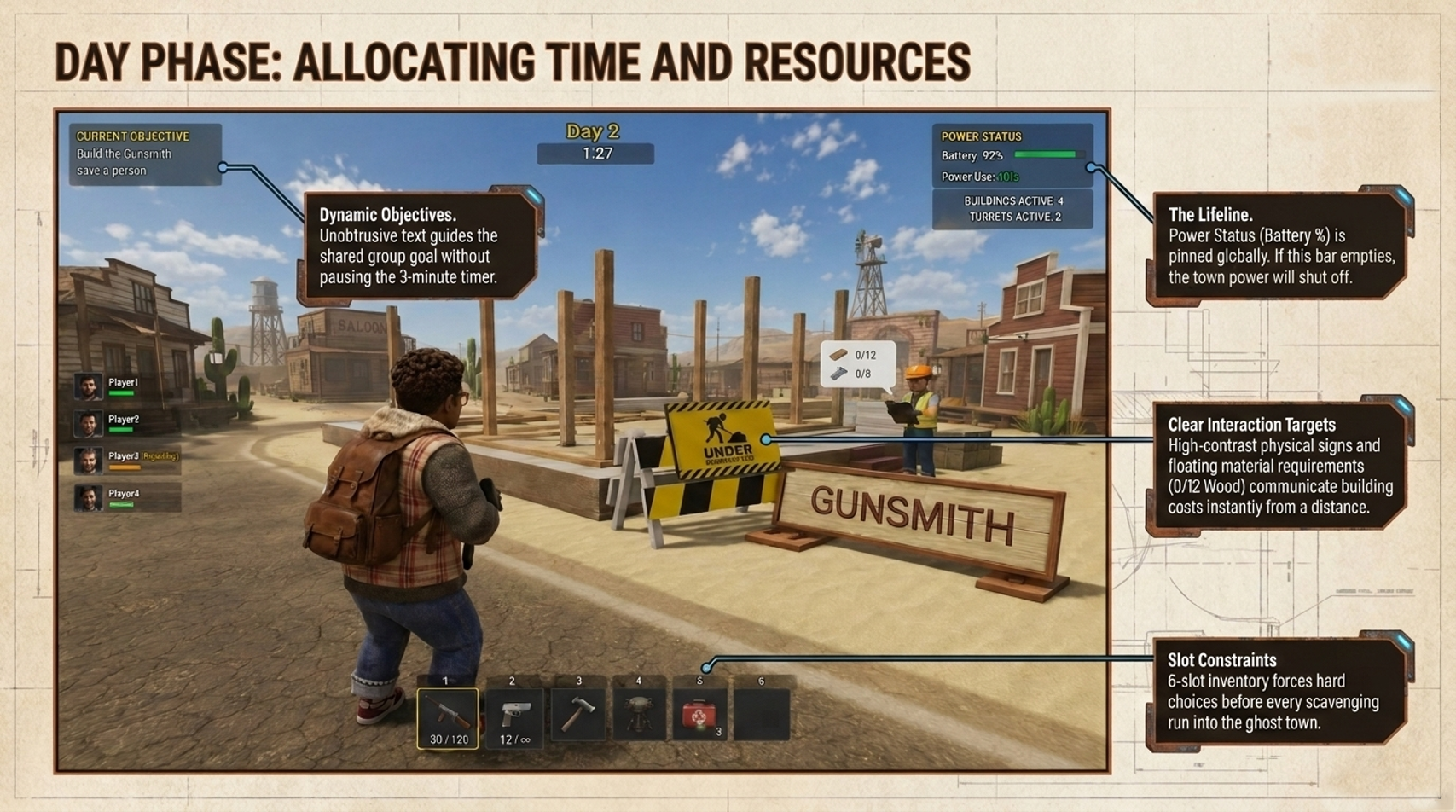
Day Phase: allocate time and resources. Build, scavenge, and watch the power meter before night falls.
-
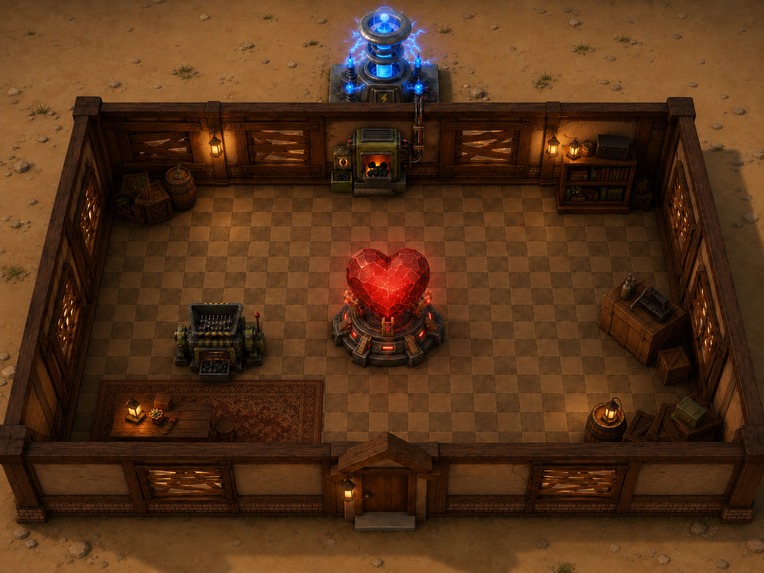
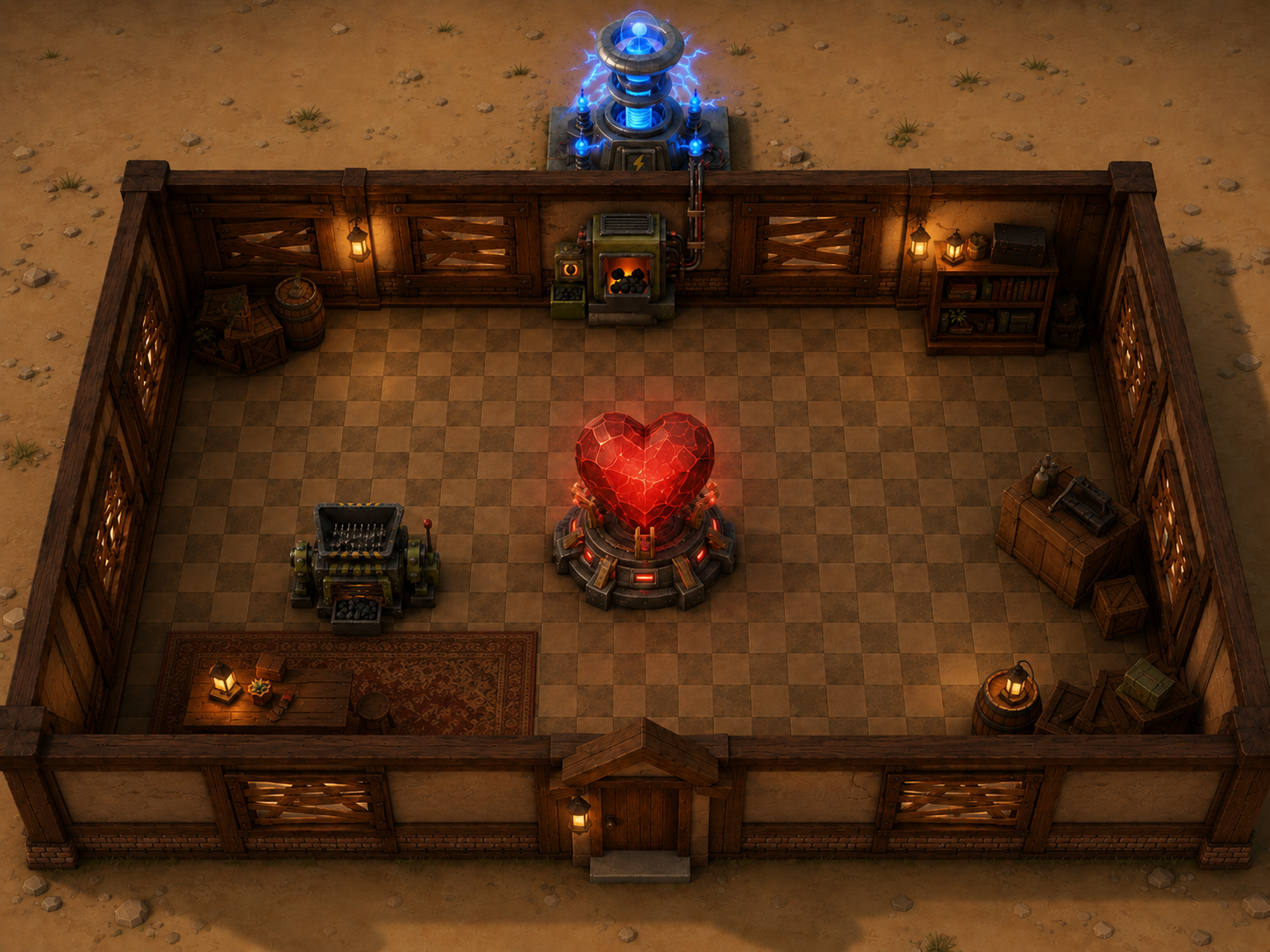
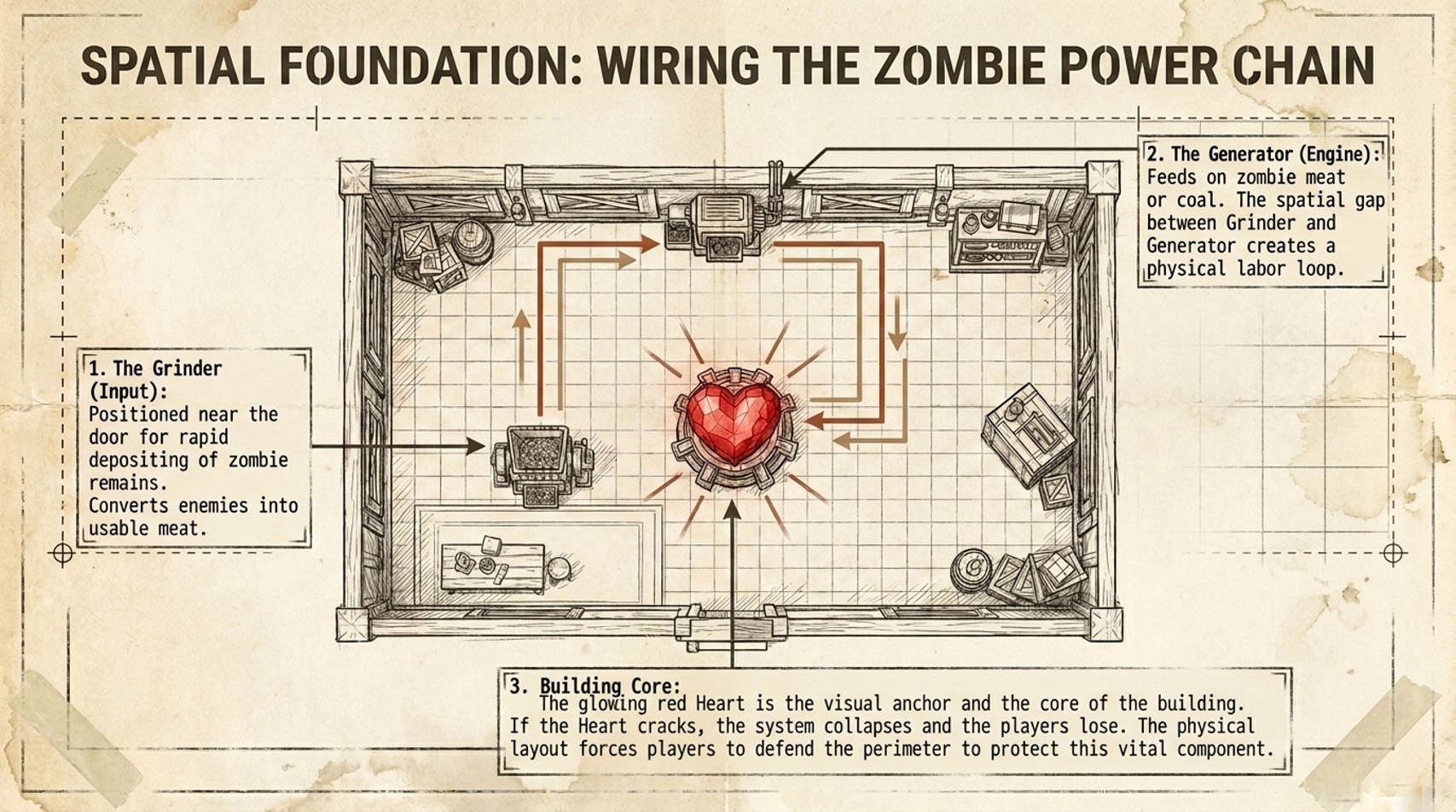
"Inside the starter safehouse: grinder, generator, battery, and the glowing building heart at the center.
-
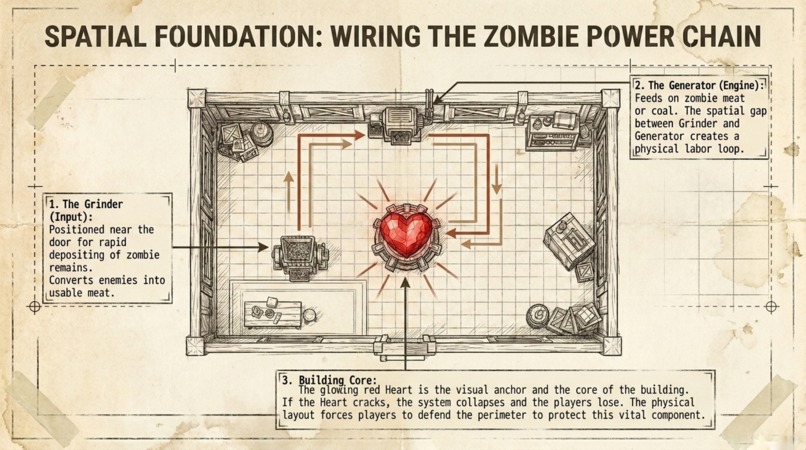
Spatial design of the Zombie Power Chain: grinder to generator, the loop that powers everything.
-
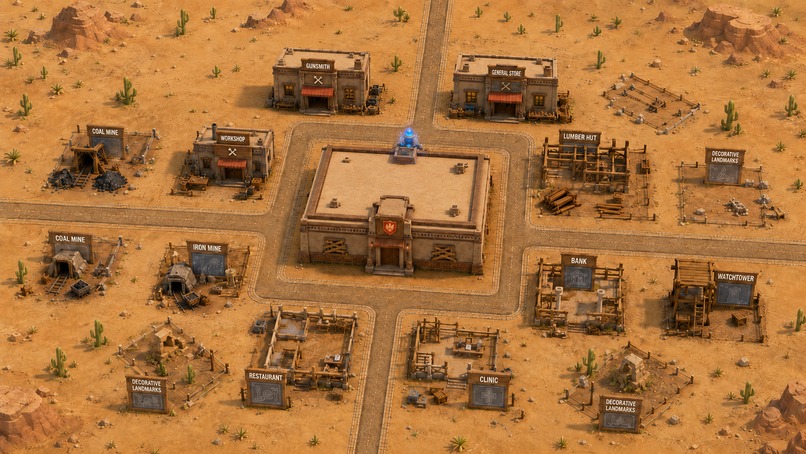
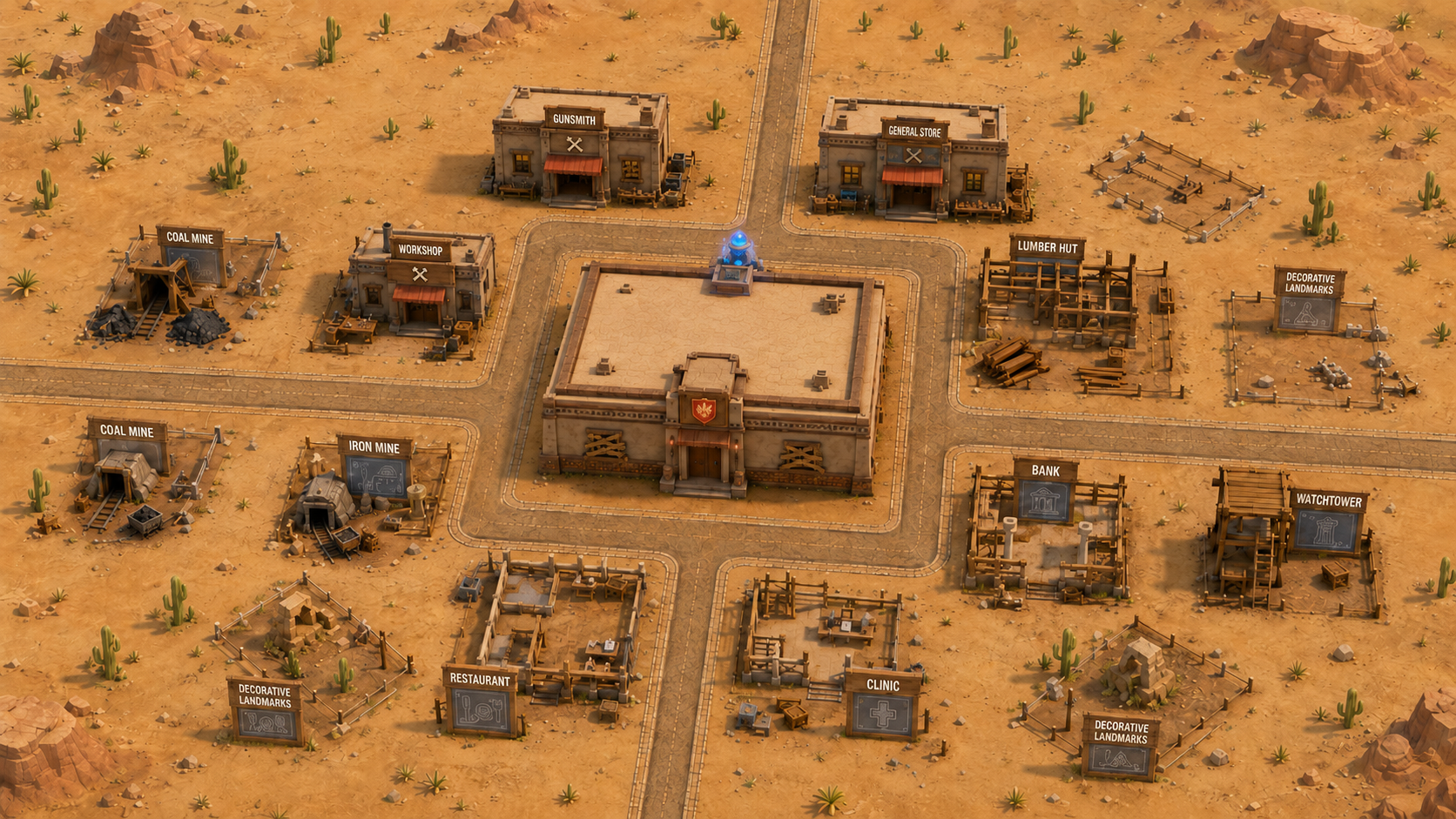
The full town in daylight, every building the team can rebuild, from the central safehouse outward.
-
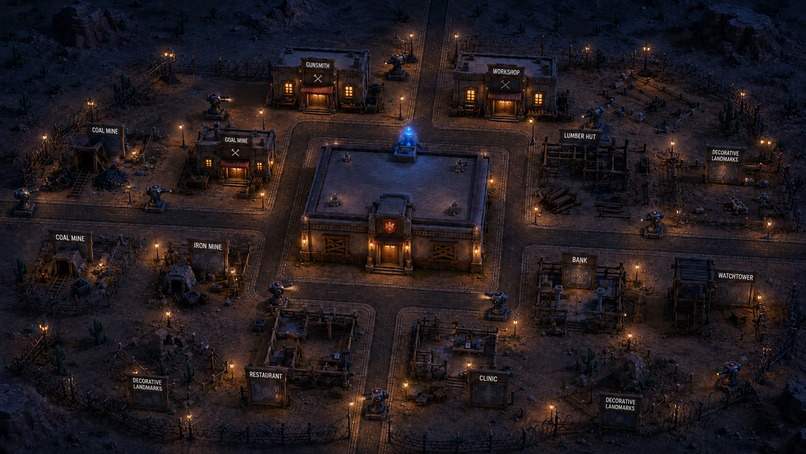
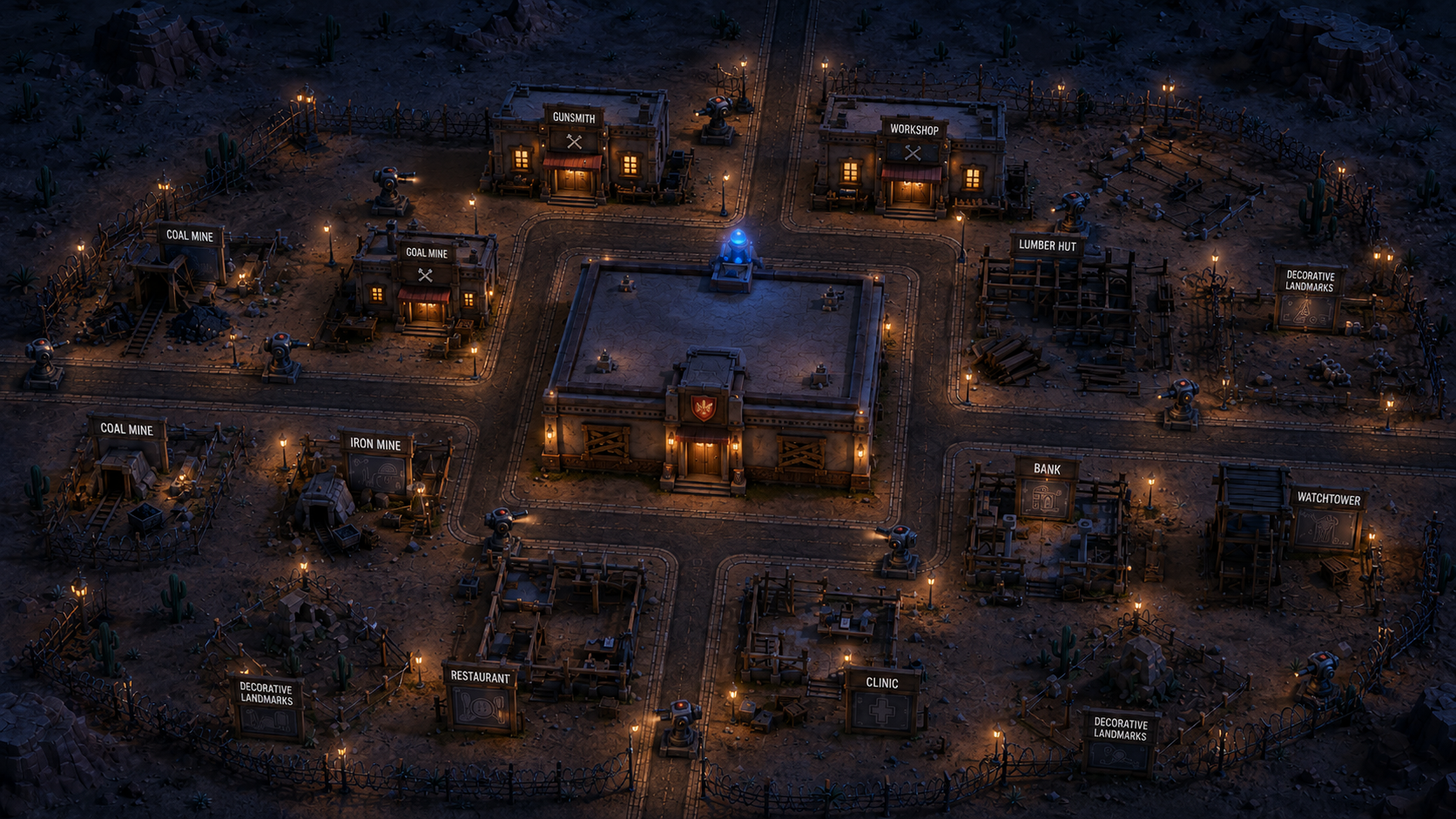
The town at night, buildings lit, turrets active, and the power grid holding back the dark.
-
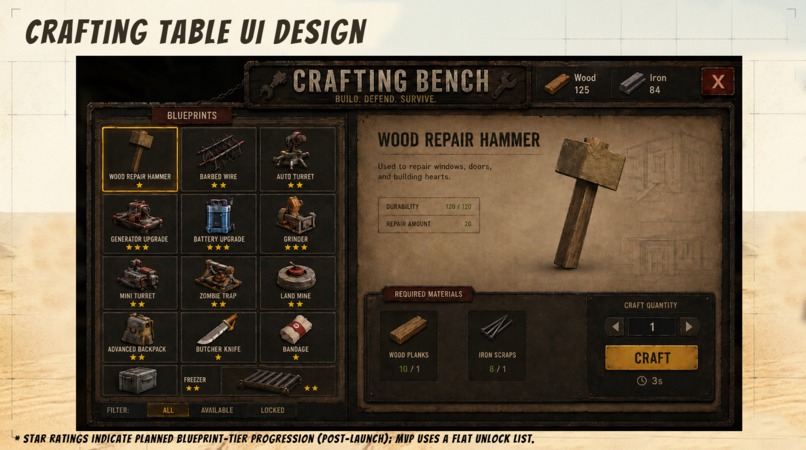
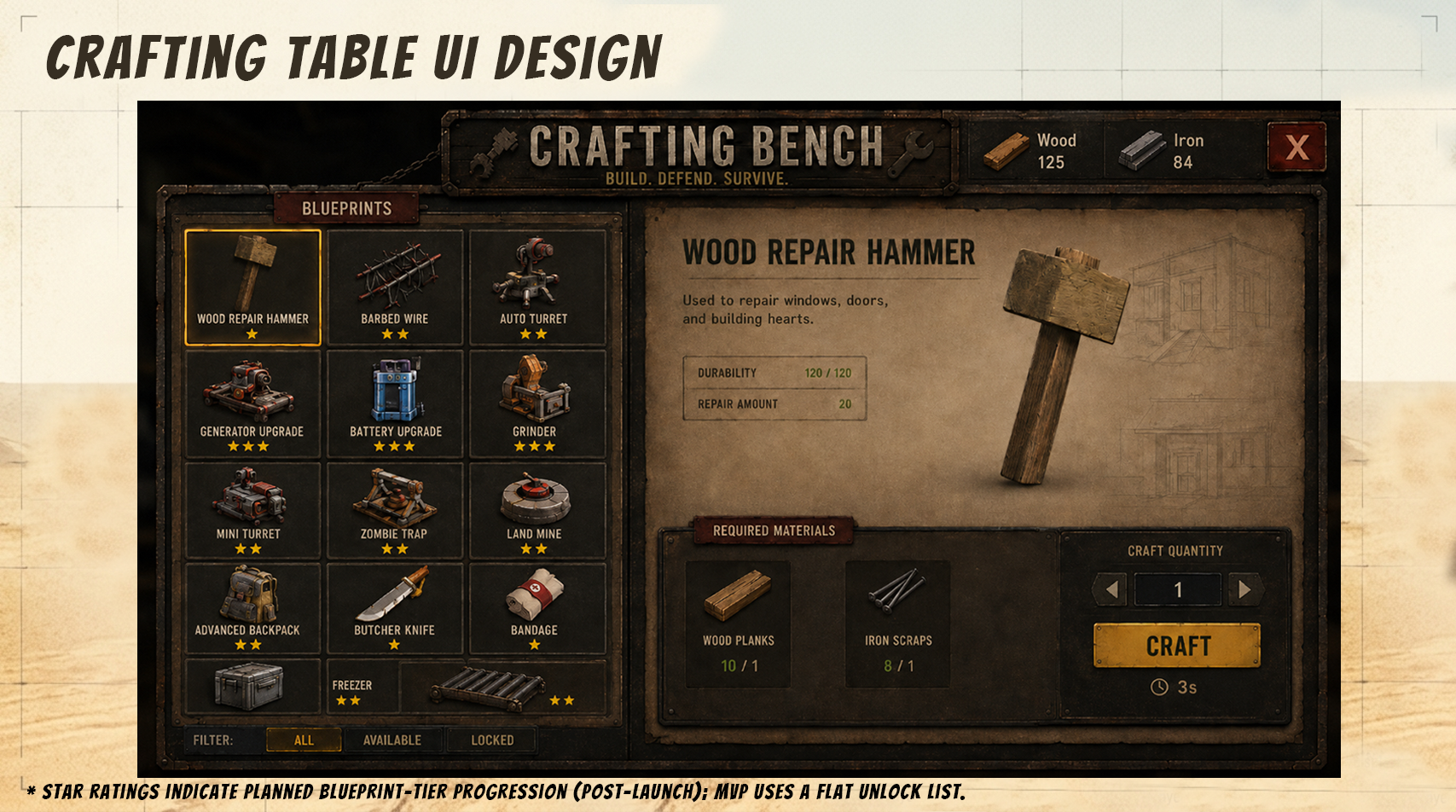
Crafting Bench UI, craft any found blueprint with wood and iron, from repair hammers to turrets and power upgrades.
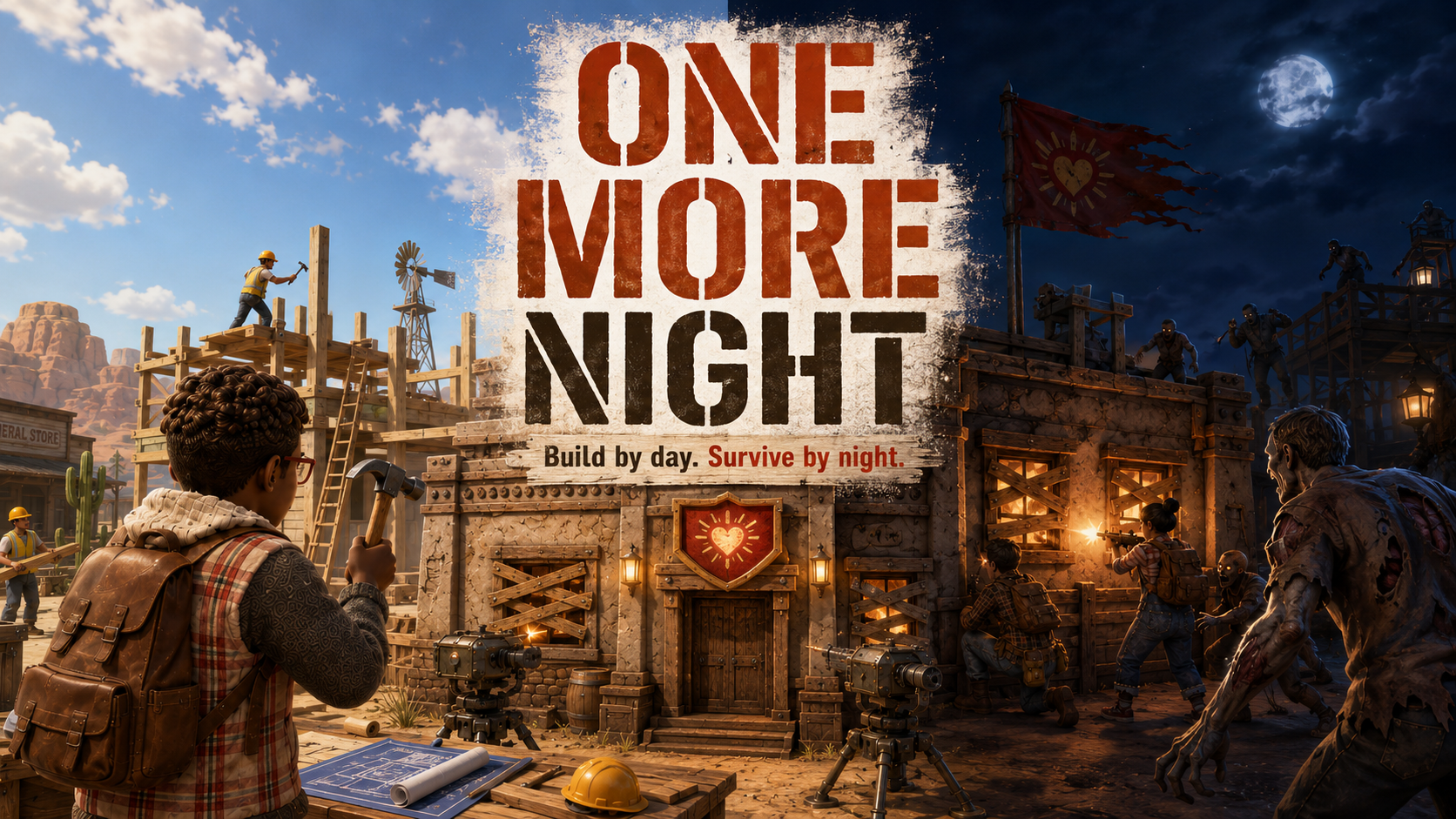
One More Night
Inspiration
Most zombie survival games treat the undead as a problem to be cleared away — something you shoot, avoid, and forget. I kept coming back to a simple question: what if the enemy was the most valuable resource in the game?
That question became the Zombie Power Chain, the mechanic the whole design is built around. Every zombie you defeat drops remains. You grind those remains into meat, feed the meat into a generator, and that powers your entire town, your lights, your auto-turrets, and the happiness that keeps your rescued citizens from walking away. Suddenly combat and economy stop being separate systems. A well-fought night doesn't just keep you alive; it fills the battery for tomorrow. The thing trying to destroy your town is the same thing keeping it running.
I also wanted a game my friends and I could actually play together on our phones, short sessions, real shared stakes, and the kind of "one more try" pull that makes you say just one more night at 1 a.m.
What it is
One More Night is a 1–4 player co-op survival game set in a sun-bleached, abandoned desert ghost town. You and your team rebuild the town by day and defend it against escalating zombie waves by night, working through a tight loop of timed phases:
- Day (3 minutes): scavenge, build, craft, rescue survivors, and feed the power chain.
- Night (1:30): defend the building hearts in real time as waves hit from every direction.
The hook is growth as vulnerability — every building you add increases constant power demand, so expanding makes you stronger and more fragile at the same time. You're never safe; you're just managing the tension better than last run.
How I built it
This is a design competition, so the project is a complete pre-production package rather than a playable build. It consists of four artifacts that all describe the same game and were cross-checked against each other for consistency:
- Game Design Document — the full system design and the rationale behind every major choice.
- Player Journey Map — a stage-by-stage breakdown of the first 15 minutes, including an emotional-arc chart showing the "sawtooth" rhythm of tension and relief.
- Visual Concept Package — a photorealistic visual identity covering the day/night palette, UI mockups, the safehouse spatial layout, and the enemy roster.
- Production Plan — an honest, phased build sequence from a Phase 1 first-playable through full meta-progression, with clear MVP scoping.
The design is scoped for mobile and intended to be built in Meta Horizon Worlds. Visual assets were generated using AI image tools and refined through manual compositing, color correction, and layout design; the concept direction, system design, and UI logic are original.
What I learned
The biggest lesson was that coherence is a feature you have to actively maintain, not something that happens on its own. Designing four artifacts that all describe one game surfaced contradictions constantly — a mechanic phrased one way in the design doc and another way in the journey map, a UI mockup implying a system the design didn't actually include. Catching those and reconciling them taught me more about my own design than writing any single document did.
I also learned the discipline of cutting. The strongest version of a system is often the one with the fewest moving parts. I stripped a tiered crafting-progression system down to a flat unlock list, collapsed a separate happiness-effectiveness modifier into a simple binary "stay or leave" gate, and removed several quality-of-life buildings from the MVP entirely. Every cut made the core loop easier to understand and easier to justify.
Challenges I faced
The hardest challenge was keeping the core loop legible. The Zombie Power Chain connects combat, resource processing, power, and citizen retention into one interdependent system — which is exactly what makes it interesting, but also what makes it easy to overcomplicate. I had to repeatedly ask whether each new mechanic clarified the loop or just added weight, and cut the ones that added weight.
The second challenge was scoping honestly. It's tempting to design everything at once. Forcing myself to define a true MVP — one zombie type, the manual power chain, fixed timers — and to clearly separate what proves the loop works from what makes it deeper was uncomfortable but necessary. The "If I Had More Time" section and the production plan's "Cut from MVP" list were where I had to be most honest with myself about what's essential versus what's aspirational.
What's next
Beyond the MVP, the roadmap includes an expanded zombie roster (Runners, Brutes, Bloaters, Spitters, and a Rotten King boss), named citizens with backstories, a full food-and-cooking layer for the Restaurant, cosmetic progression, and asynchronous community challenges. The foundation is designed so each of these layers on without disrupting the core power-chain loop that makes the game work.
Built With
- chatgpt
- claude
- gemini
- notebooklm
- powerpoint
- word


Log in or sign up for Devpost to join the conversation.