-
-
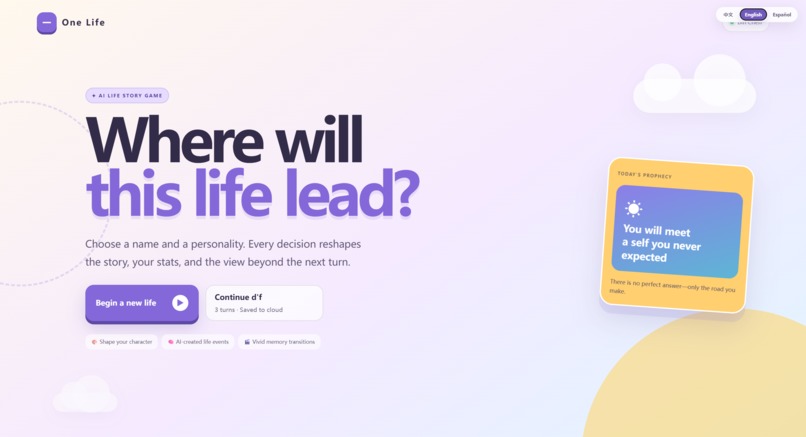
Front page
-
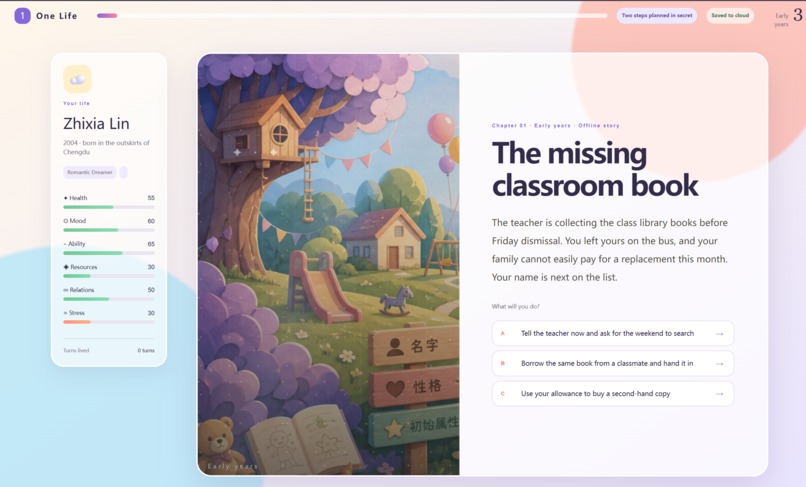
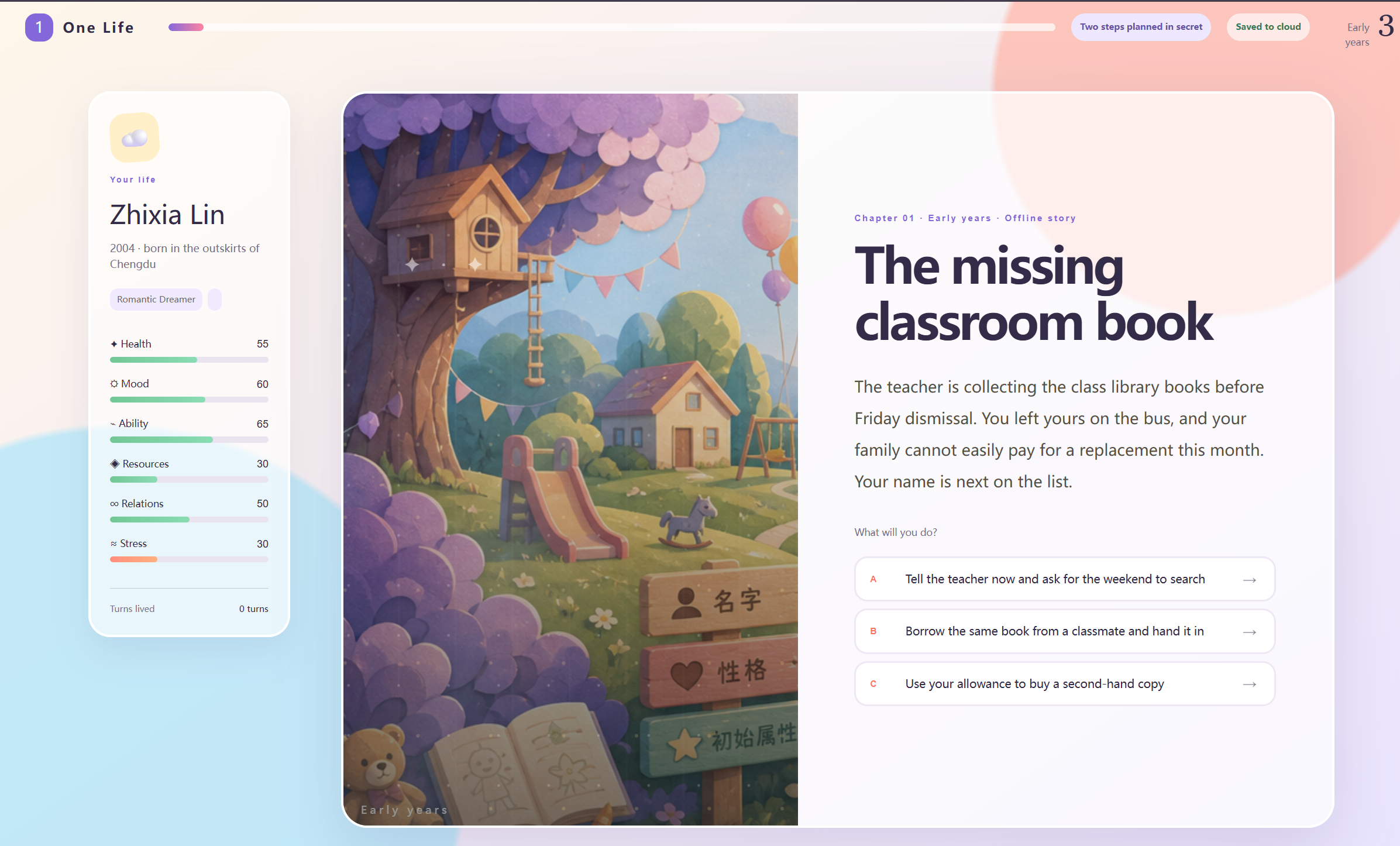
A concrete choice in real life
-
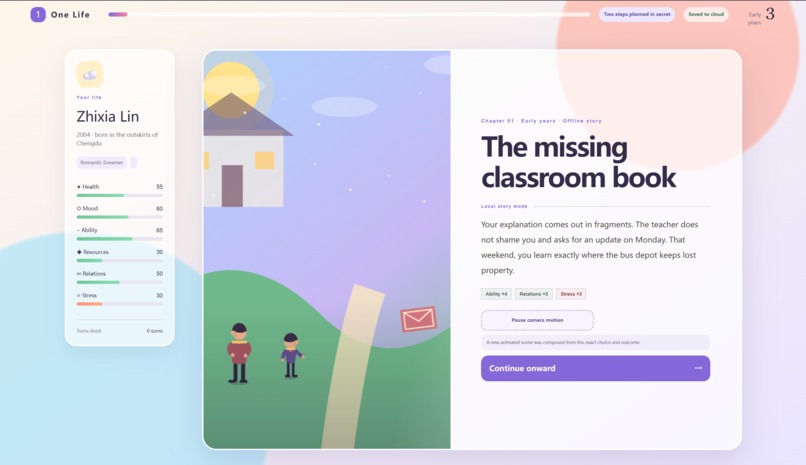
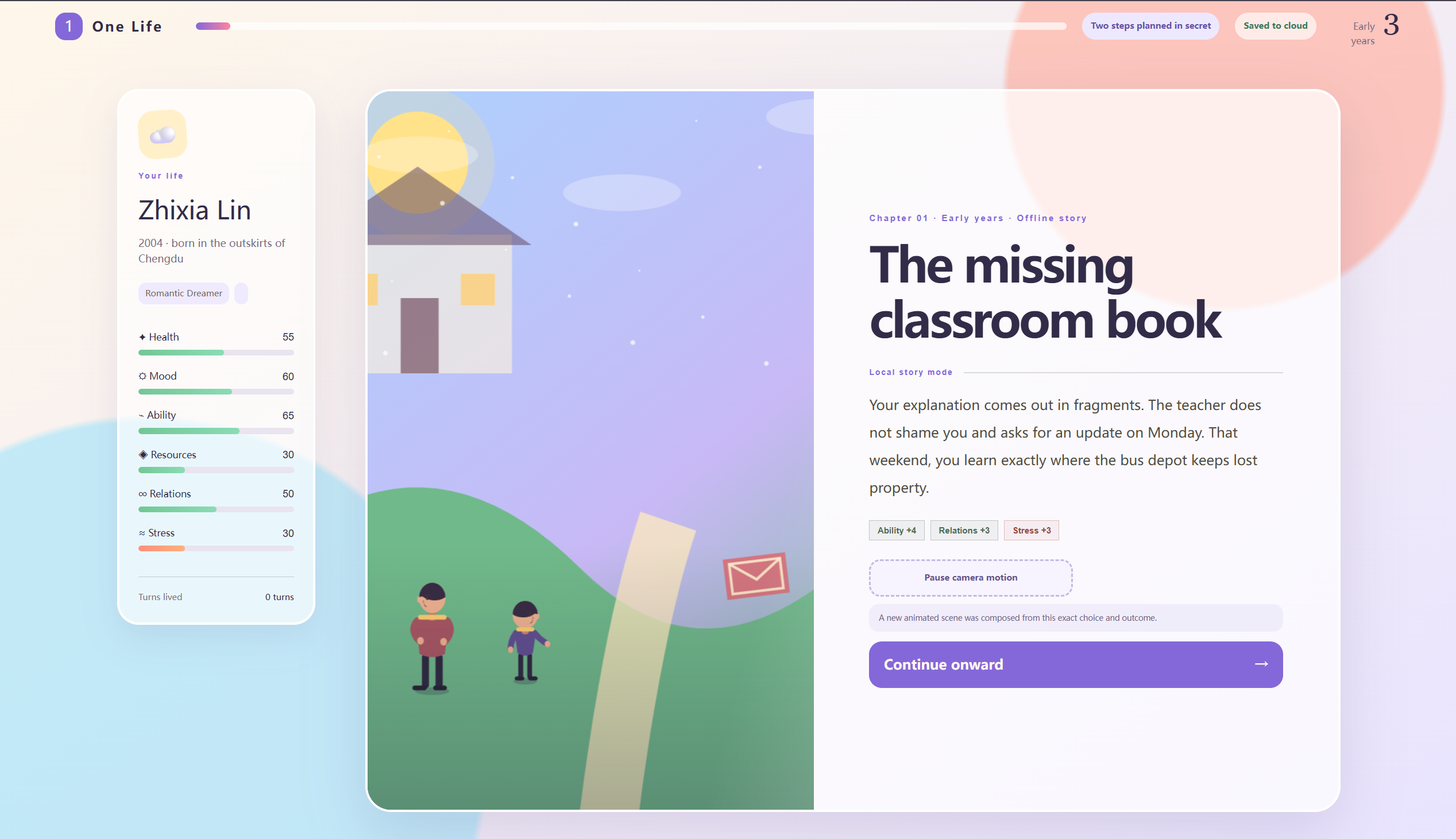
The consequences of making a choice
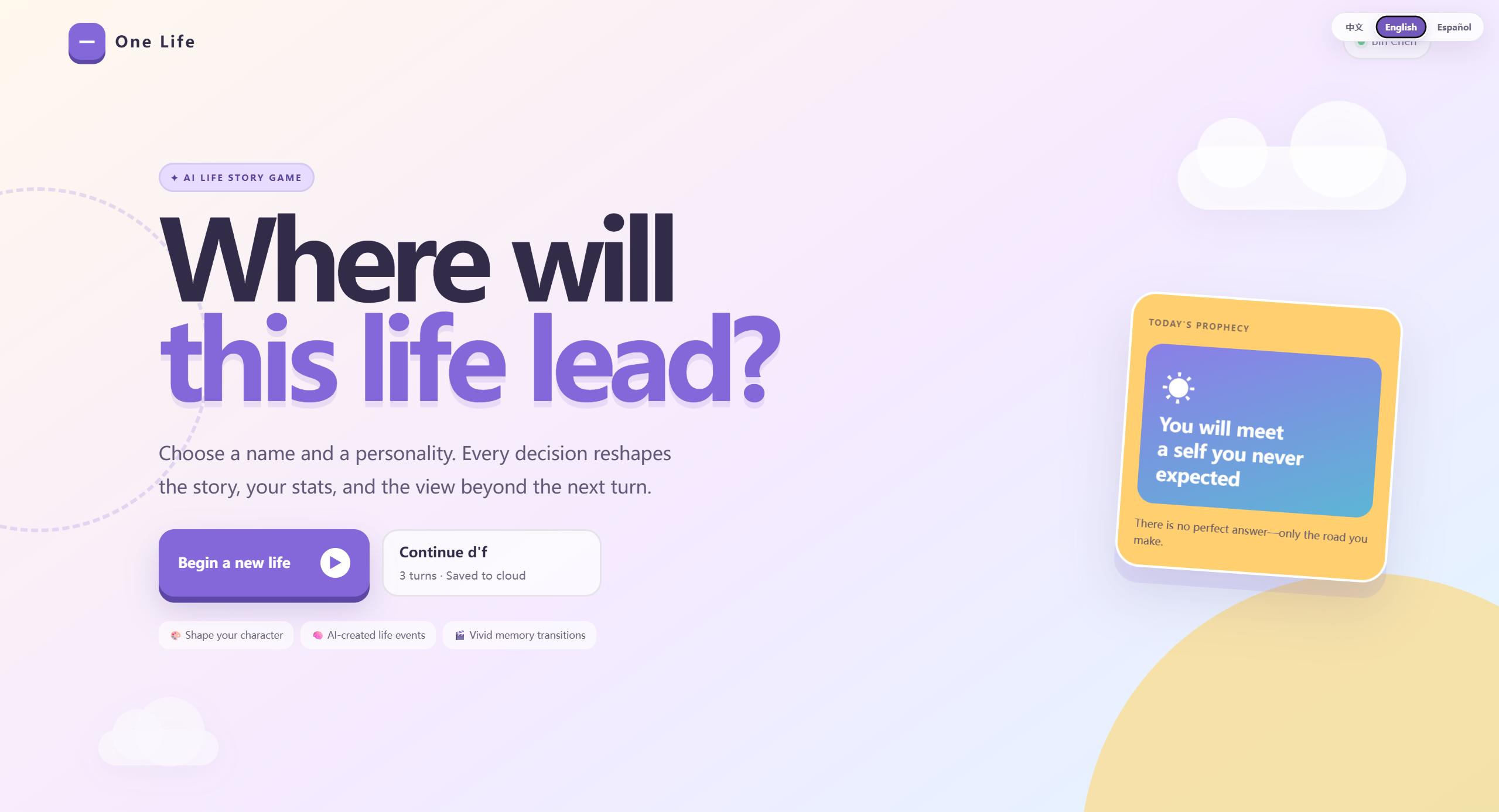
Inspiration
Many life simulators focus on extraordinary adventures or abstract statistics. We wanted to explore something more familiar: the difficult choices people face in everyday life, such as changing jobs, paying rent, supporting family members, maintaining relationships, and balancing stability with personal goals.
What it does
One life is an AI-powered life choice simulator. Players create a character and experience different stages of life. At each stage, they face a concrete situation with multiple choices. Every decision affects the character's stage, such as finances, health, relationships, stress, and future opportunities.
How we built it
The project is built with Next.js, React, TypeScript, Vinext, and OpenAI's Responses API.
GPT-5.6 Sol is used in two core parts of the application:
- It generates structured future life events based on the character's current state and previous choices.
- It simulates the consequences of each decision, including narrative outcomes, state changes, and possible future effects.
How we used Codex
Codex accelerated our workflow throughout development obviously. We used it to understand and modify the codebase, implement the interface and API routes, improve multilingual support, run builds and tests, diagnose deployment issues, and manage the GitHub workflow.
An especially important iteration happened after we review: the initial questions felt too abstract. We decided that every situation should represent a recognizable everyday problem. Then, Codex helped us revise the event system and interface around that product decision.
We ultimately finalized the product direction, interaction design, real-life scenarios, visual style, and copy. All AI-assisted code and content underwent our review and revision.
Challenges we faced
One challenge was keeping generated events specific and believable while maintaining continuity across a character's life. We solved this by giving GPT-5.6 structured character state, choice history, and strict output requirements.
Another challenge was creating meaningful trade-offs rather than obvious right and wrong answers. We understand that choices needed to affect several parts of the character's life and create consequences that could appear again later.
What we learned
We realized that a strong AI experience depends on more than calling a model; structured inputs, output validation, and careful human review are essential for producing a consistent experience.
We also learned that realistic details make decisions more engaging. A question about rent, overtime, family care, or changing jobs can create a stronger emotional response for people.
What's next
We plan to expand the range of life stages, improve long-term continuity between decisions, add clear explanations of how choices in one's life affect later events, and conduct user testing to evaluate whether the situations feel realistic and meaningful.
Built With
- api
- cloudflare
- codex
- d1
- gpt
- gpt-5.6
- image
- next.js
- openai
- react
- typescript


Log in or sign up for Devpost to join the conversation.