-
-
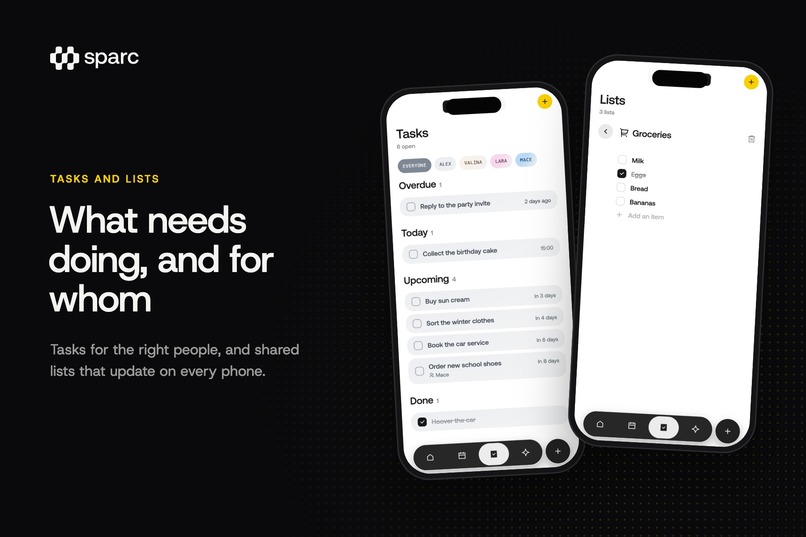
Tasks & Lists
-
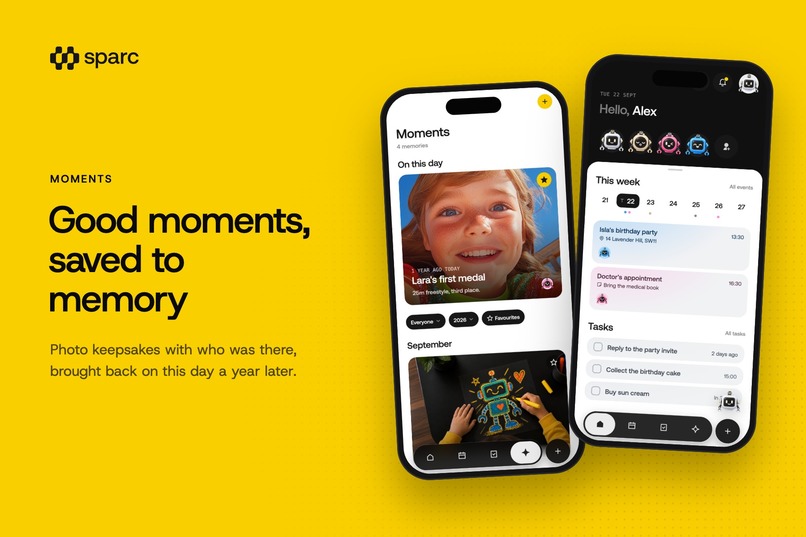
Moments
-
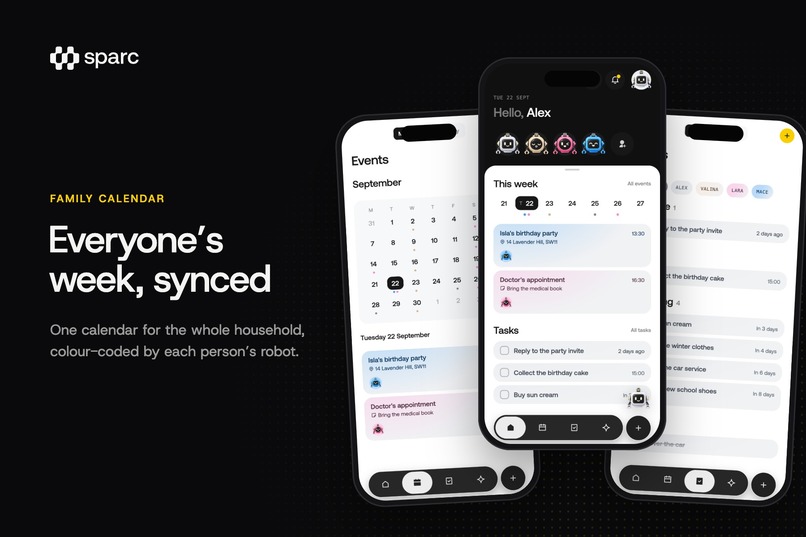
Everyone's week, synced
-
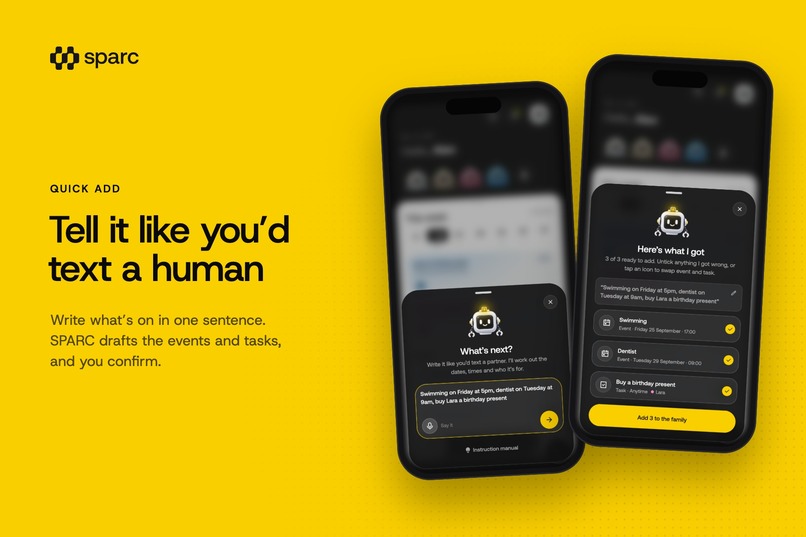
Robot Companion (Say it)
-

SPARC Icon
-
Home
-
Events
-
Tasks
-
Lists
-
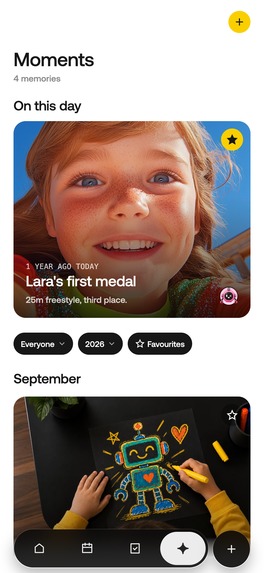
Moments
-
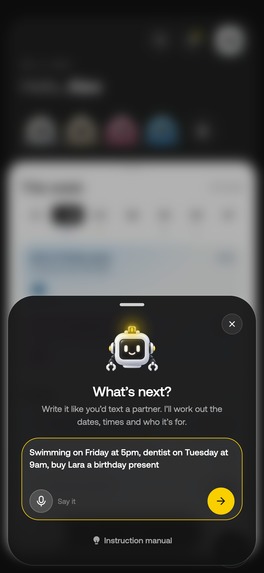
Robot Companion (Say it)
-
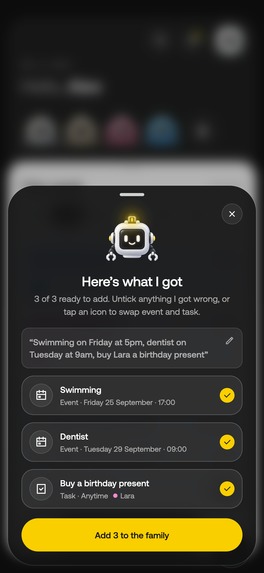
Confirmation
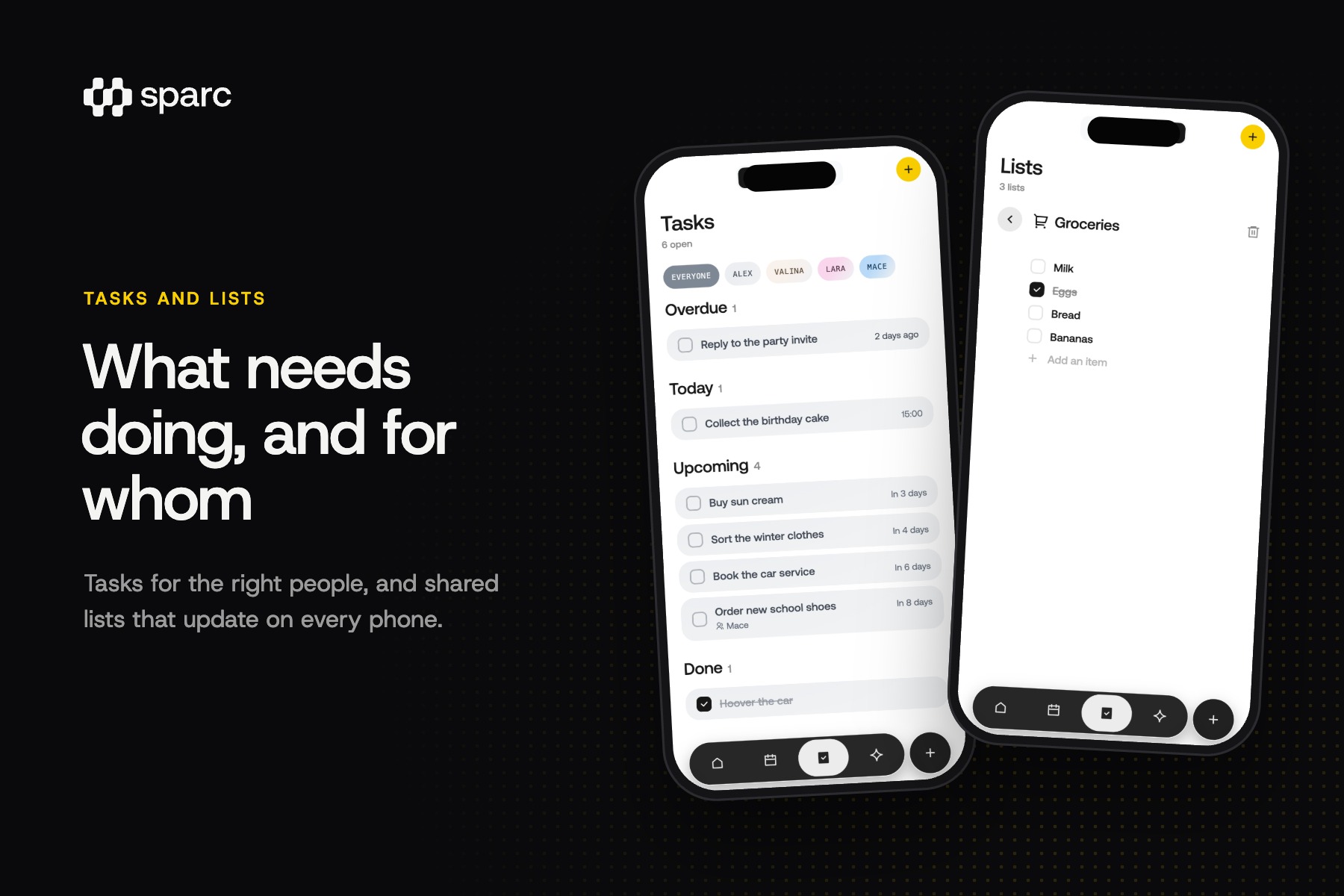

Inspiration
A family's week never lives in one place. It's in one person's head, two group chats, a screenshot of the school newsletter and a note on the fridge. Something always slips: the dentist, the swimming kit, whose turn it is to pick up.
Every family app I tried was either a corporate calendar with a cartoon skin, or a social feed pretending to be a planner. I wanted something calm that the whole household could actually use, including the kids who can't read yet and the grandparents who just want to see what's on.
What it does
SPARC* (Shared Planner And Robot Companion) keeps the family's whole week in one place:
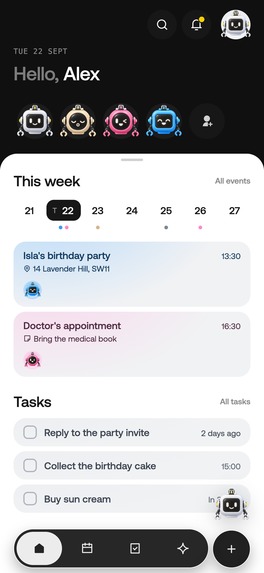
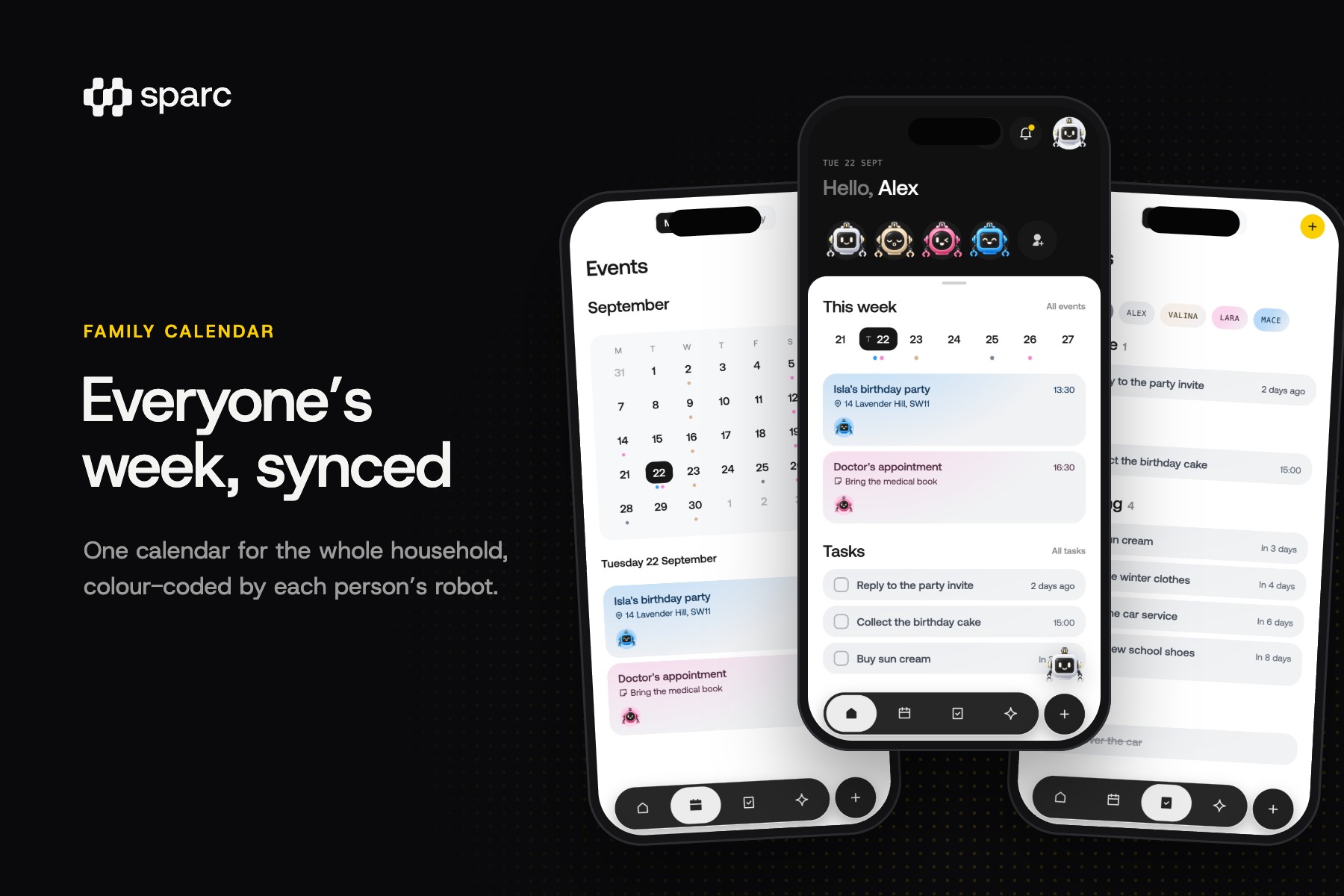
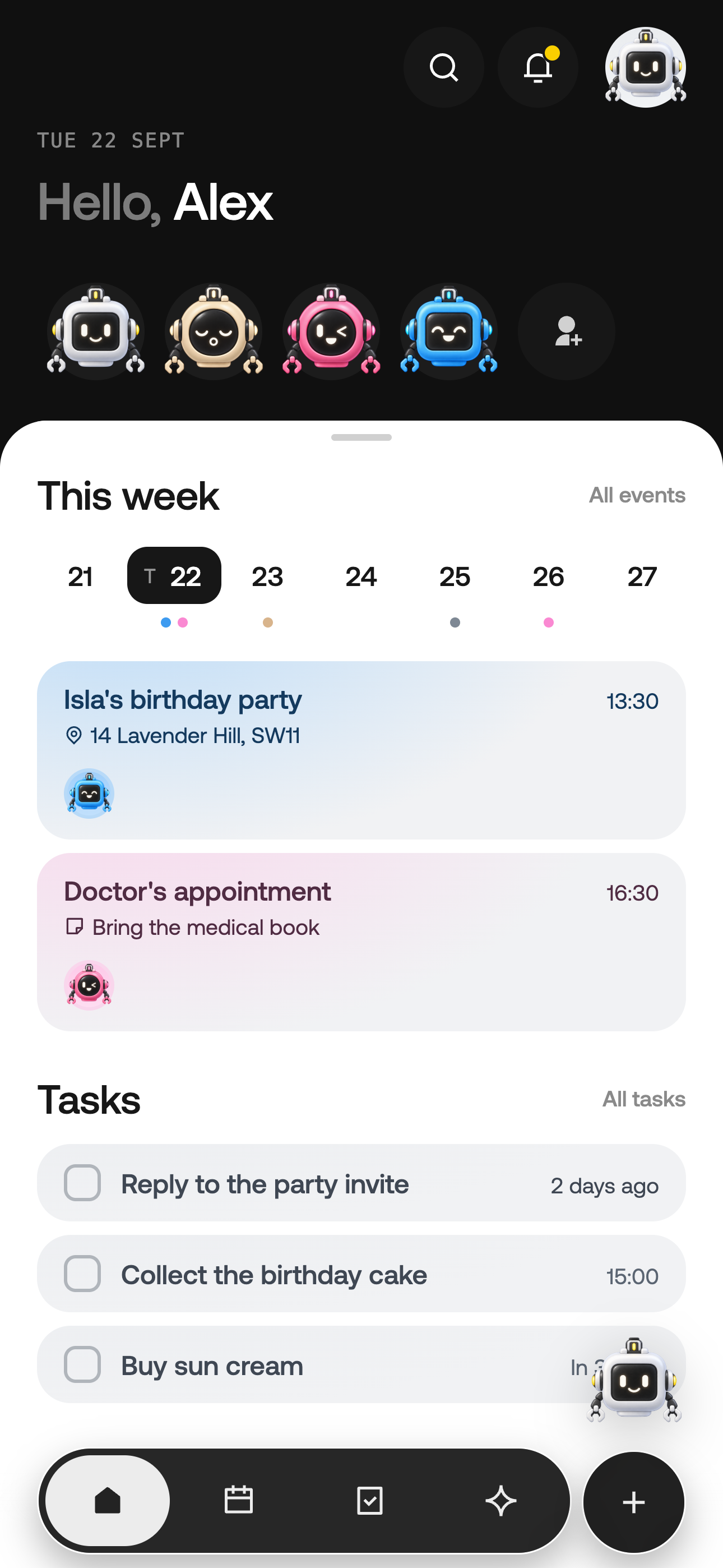
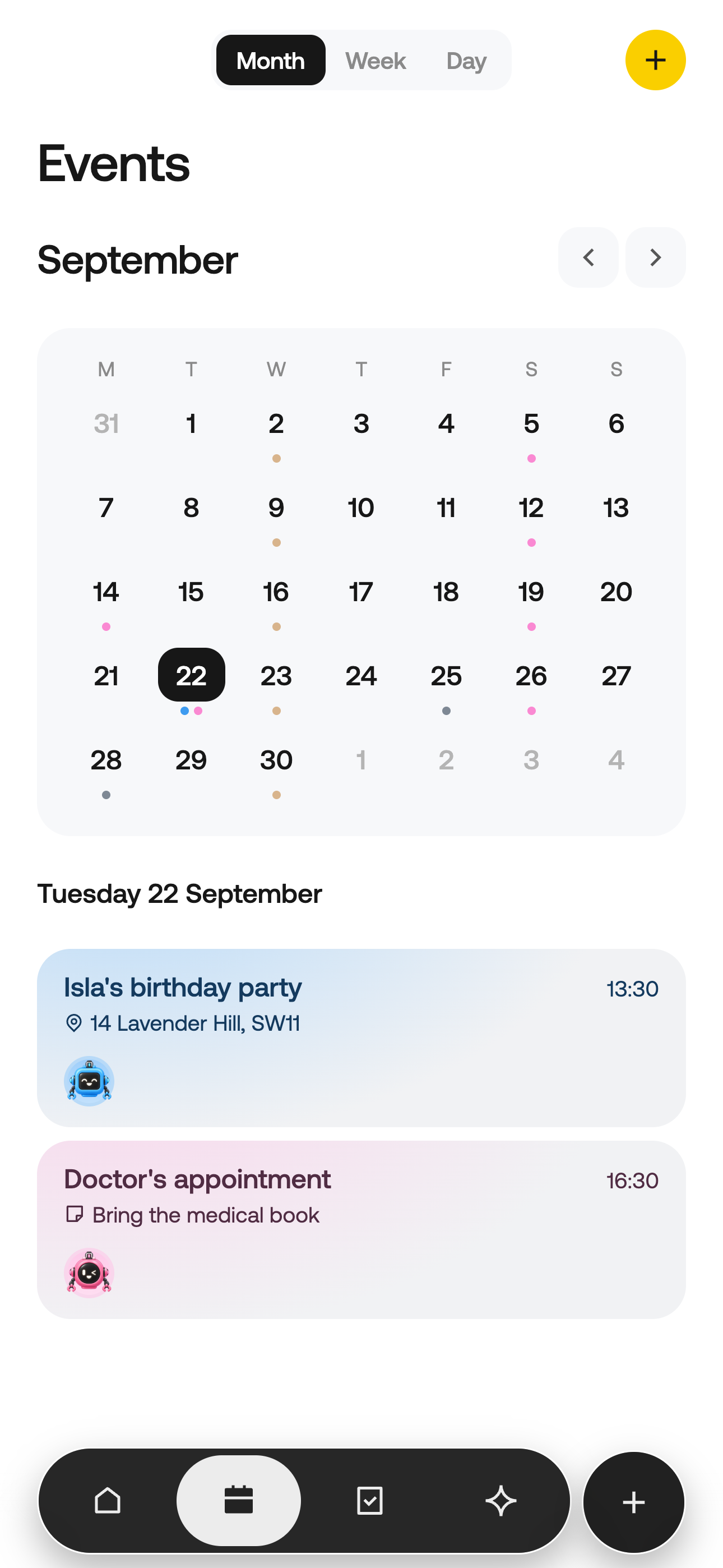
- Robot avatars: everyone picks one of 12 robots, and its colour marks their events, tasks and lists. Kids find themselves on the calendar before they can read.
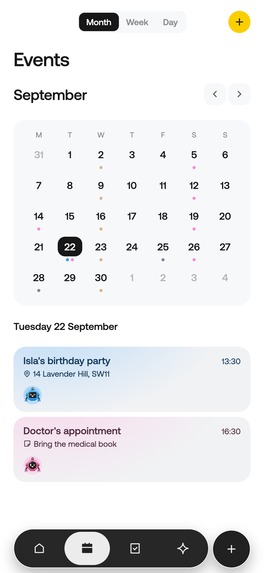
- Family calendar: month, week and day views, colour-coded by person, with repeating events and birthday countdowns.
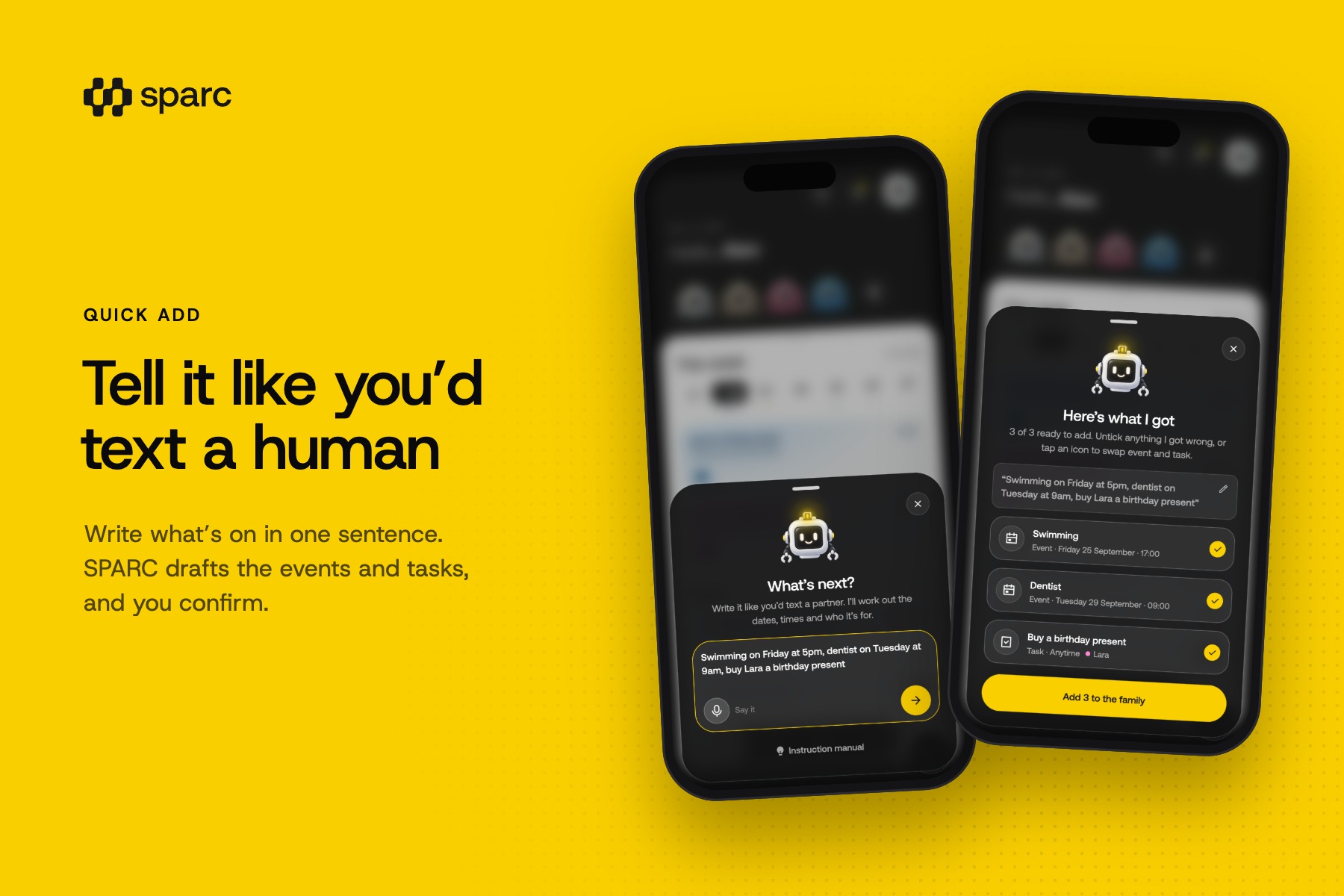
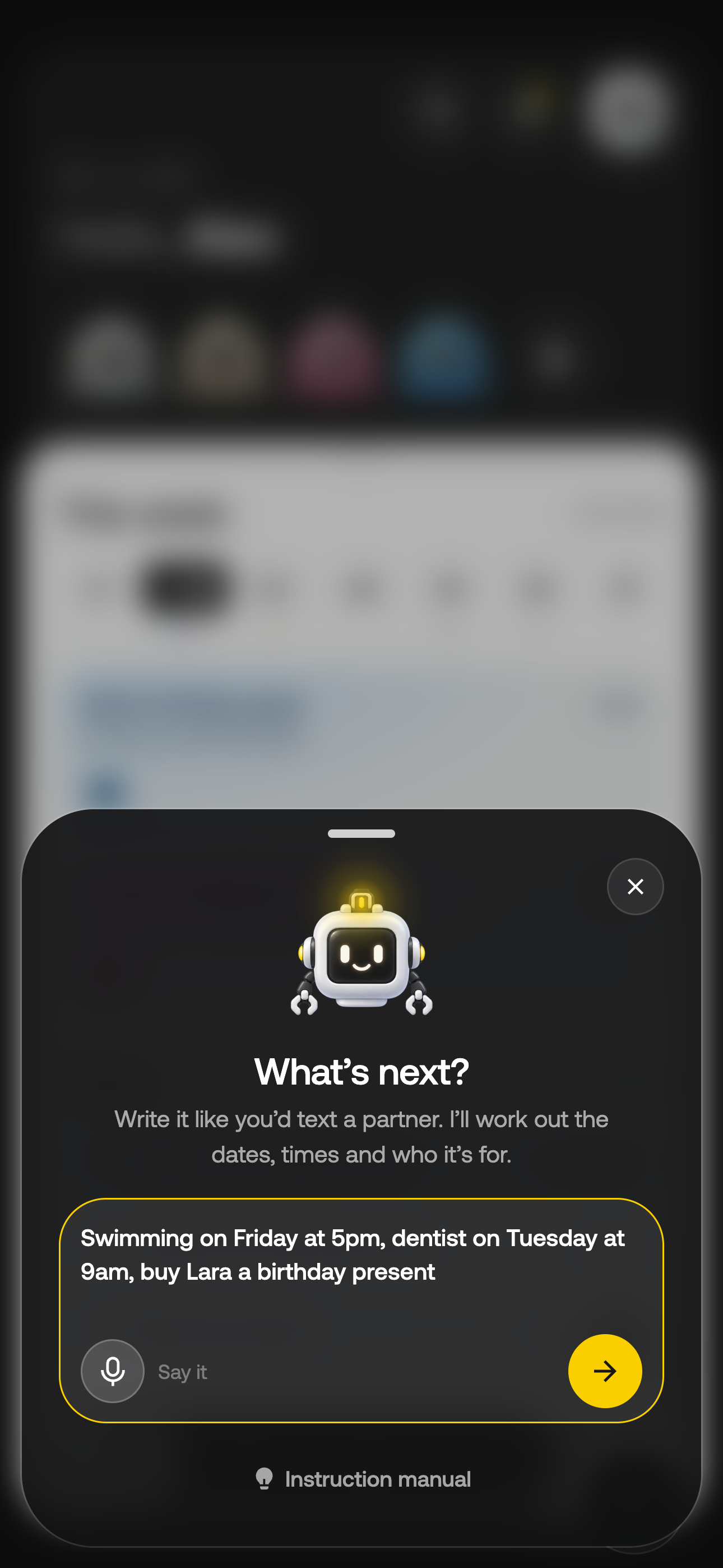
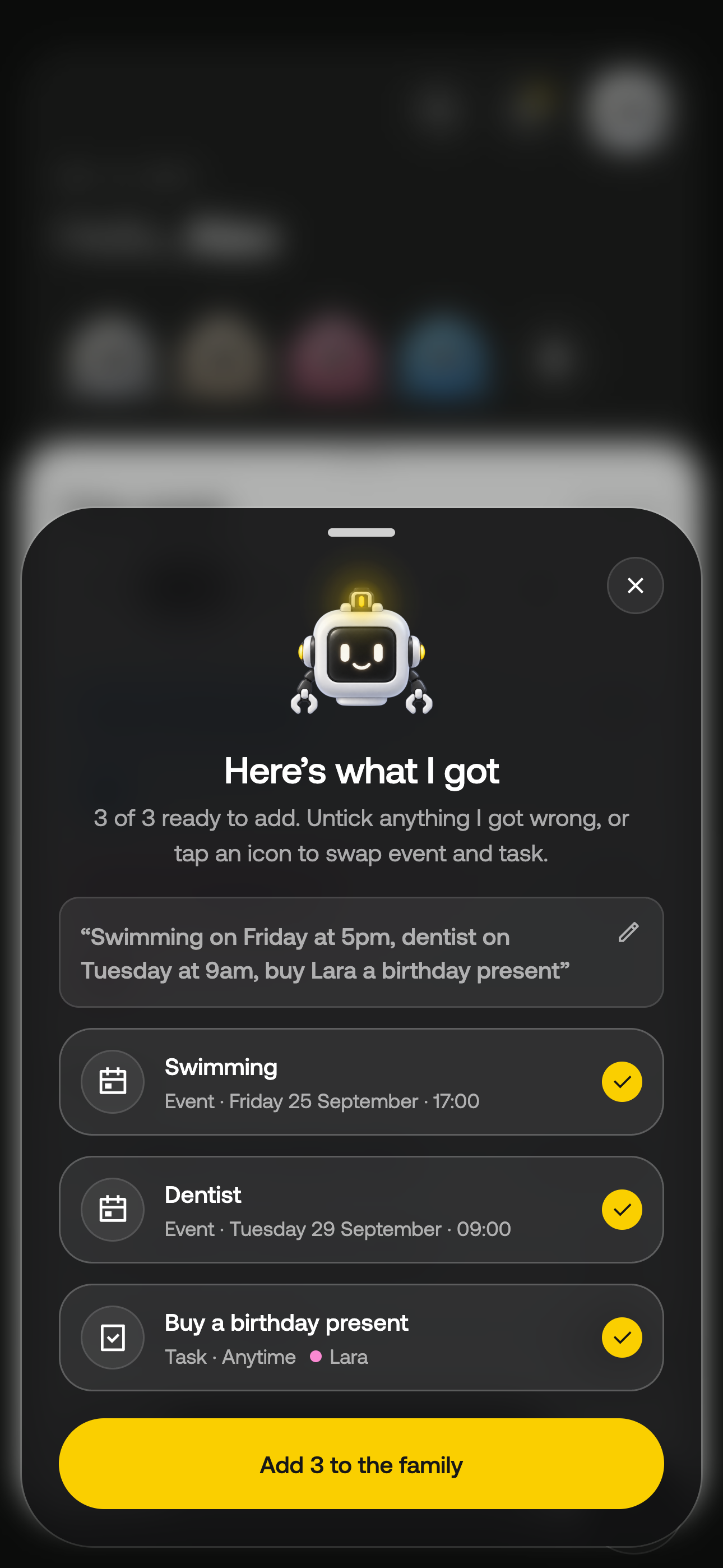
- Quick Add: type or dictate "Swimming Friday at 5, dentist Tuesday at 9" and SPARC turns it into events and tasks for the right people. You confirm before anything is saved, and if a time is ambiguous it asks instead of guessing.
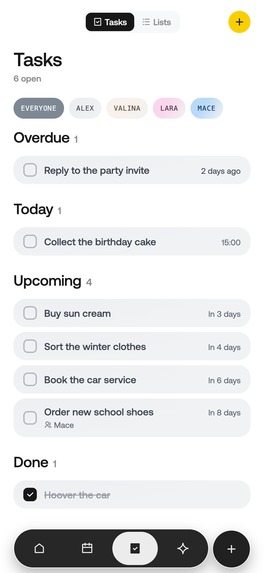
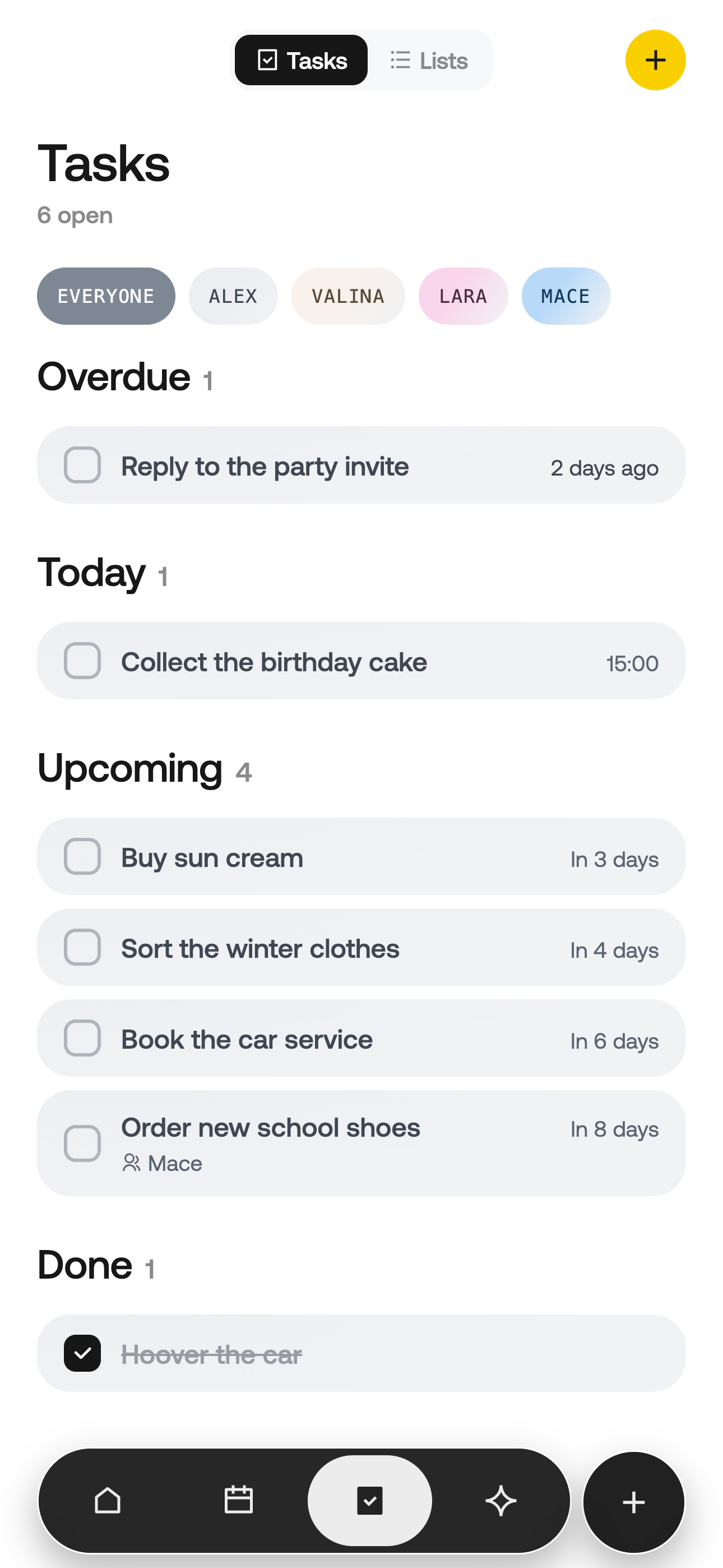
- Tasks that show who they're for, grouped into overdue, today and upcoming.
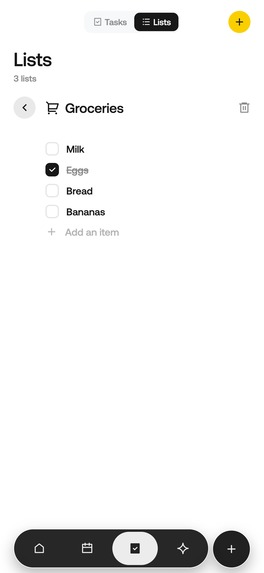
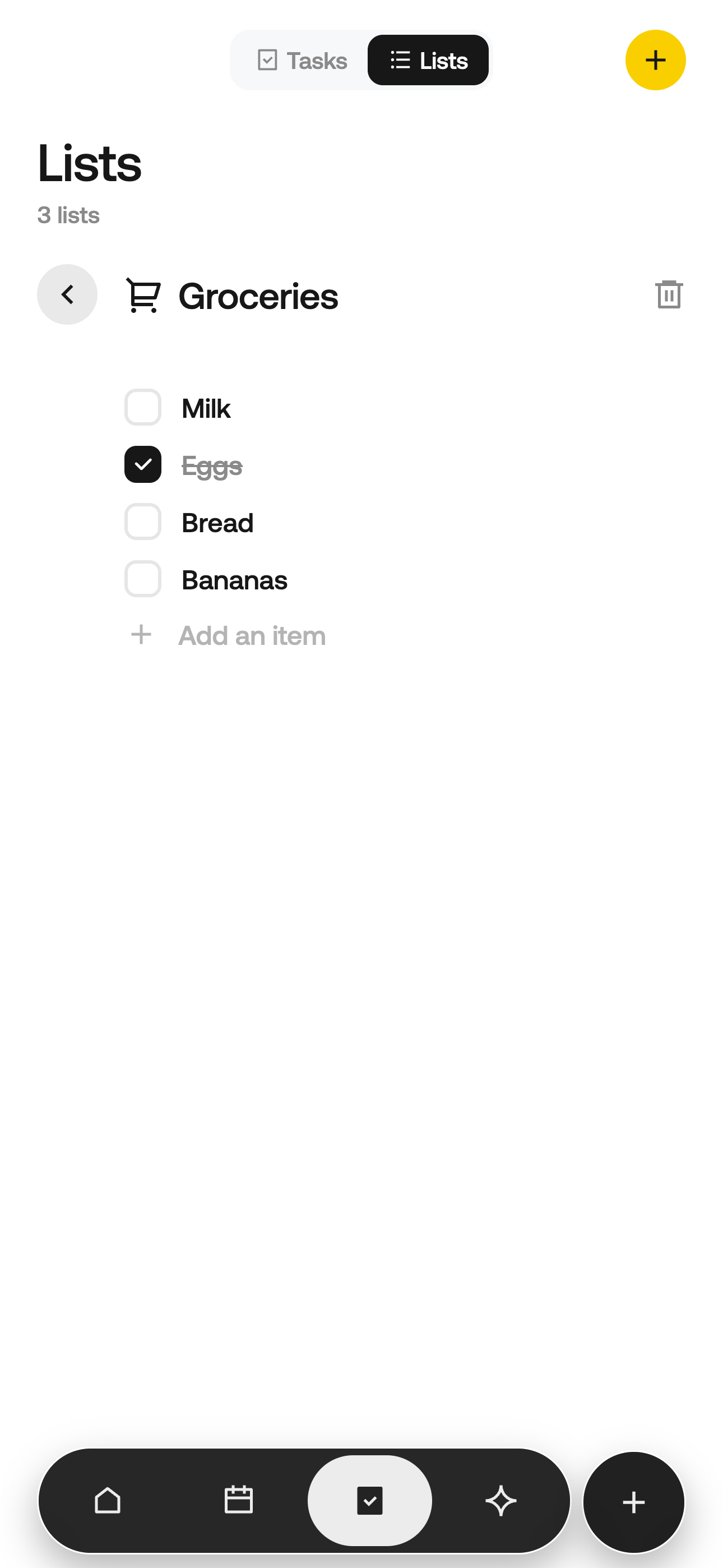
- Shared lists for shopping and packing that update live on every phone.
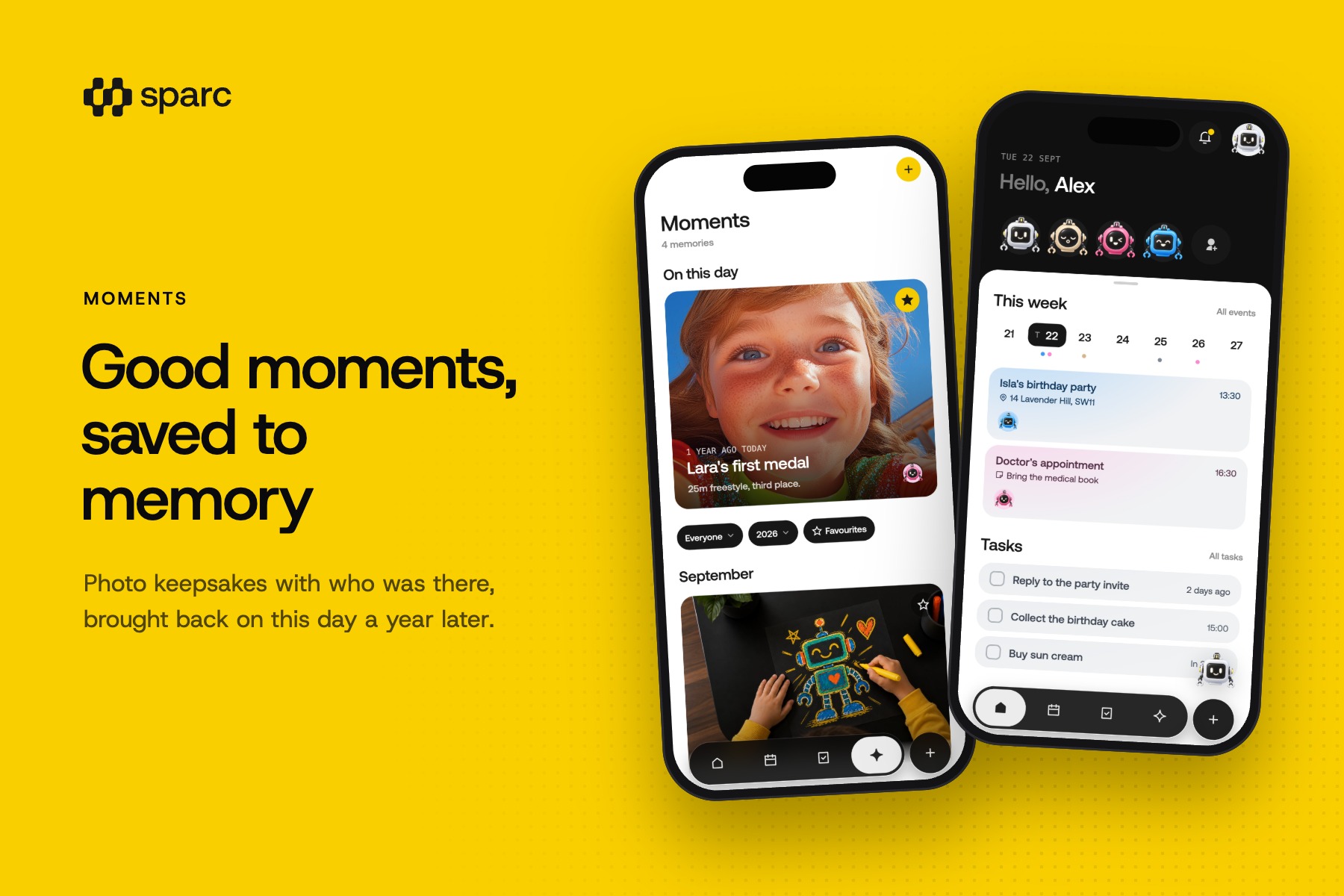
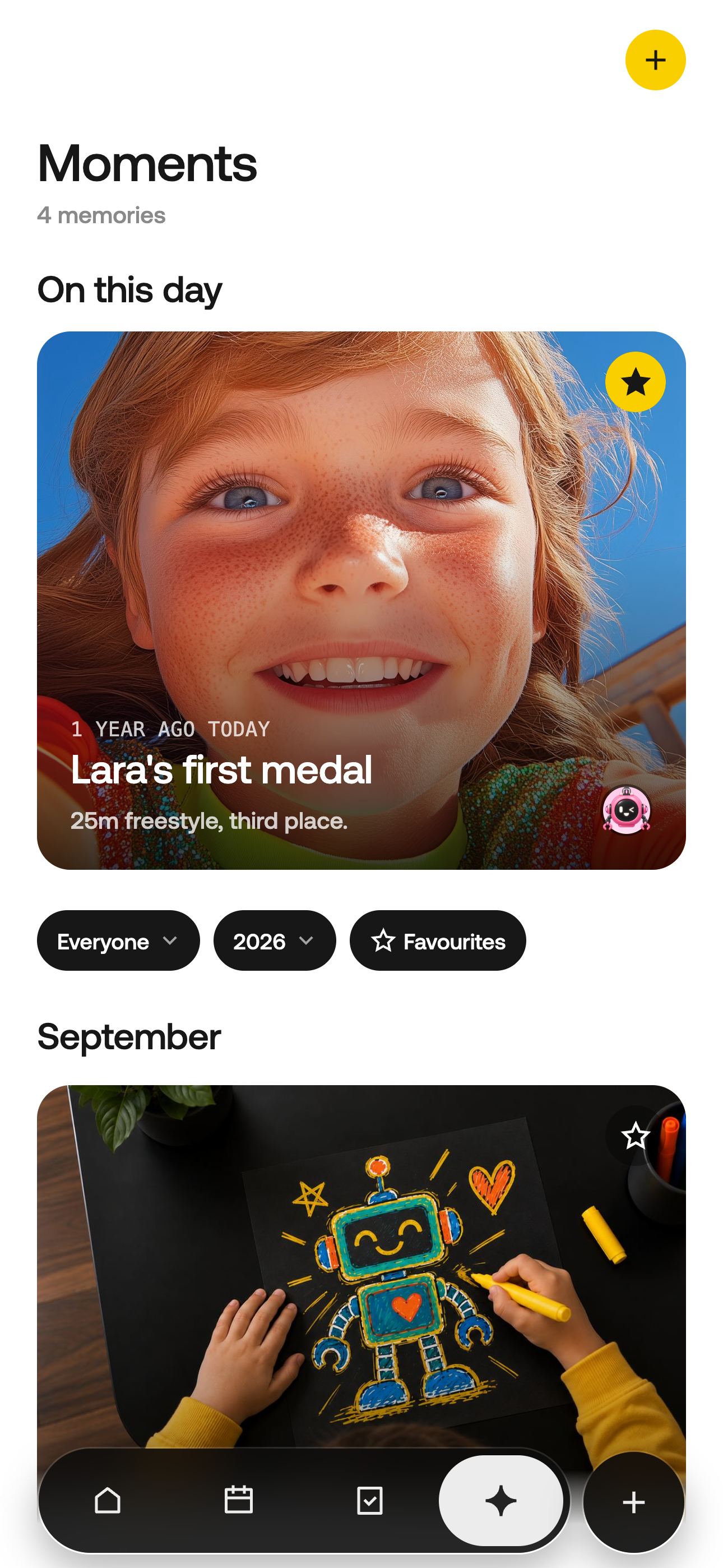
- Moments: photo keepsakes with who was there, brought back "on this day" a year later. A memory book, not another camera roll.
- Roles for every age: adults edit, while children and grandparents can follow along view-only.
No feed, no ads, and it's free on the App Store, with plans to monetise it in 12 weeks. Founding users get to keep some of the Plus perks.
How I built it
React Native with Expo (SDK 54, TypeScript), built and updated over the air with EAS.
- Supabase for passwordless email sign-in, Postgres, photo storage and realtime sync between family members' phones.
- Row-level security on every table, so a family's data is only ever visible to that family, and plan limits are enforced in the database, not the app.
- Supabase Edge Functions for invites, welcome emails and account deletion, with Resend sending the emails.
- Quick Add runs on the device: a natural-language parser that turns a sentence into dated events and tasks without sending anything to a server.
- PostHog (EU) for privacy-respecting usage analytics: how the app is used, never what's in it.
Challenges
- Keeping children's data private: I built a hosted AI version of Quick Add, then removed it before launch. The text people type includes their children's names, and I didn't want that leaving the phone. The on-device parser now handles real sentences, including tricky ones like "buy sun cream" (which isn't Sunday).
- A crash only in release builds: a single permissions setting removed a required iOS key, and the app crashed on every launch in TestFlight but never in development. Tracking it down meant reading native module start-up code.
- Designing for every age: the same screen has to work for a parent planning the week, a five-year-old looking for their robot, and a grandparent who only wants to see what's happening.
- App Store compliance: honest privacy labels, notifications off until people choose them, and full account deletion inside the app.
Accomplishments that I'm proud of
- Shipped to the App Store in about ten weeks, solo, from the first commit to a live, approved app.
- A planner the whole family can use. Kids find themselves on the calendar by their robot's colour before they can read, and grandparents can follow along without being able to change anything.
- Choosing privacy over a shortcut. I built an AI version of Quick Add and removed it before launch, because the sentences people type include their children's names. The on-device parser that replaced it handles real family sentences, and asks instead of guessing when a time is unclear.
- Privacy enforced by the database, not just promised. Every table has row-level security, so one family's data can't reach another, and plan limits are checked on the server.
- No feed, no ads, no dark patterns. Notifications are off until people choose them, the privacy label is honest, and accounts can be fully deleted from inside the app.
- Twelve robot characters that give the app its personality and make a busy week feel lighter, not heavier.
What I learned
That the best family tool is the one that asks the least of you. And that privacy decisions are product decisions: removing AI made the app better, not worse.
What's next for SPARC
- SPARC Plus later this year: unlimited editing adults, more moments and the robot companion, priced per family rather than per person.
- Android on Google Play (a beta is available now).
- On-device AI for Quick Add when it can run entirely on the phone.
Built With
- css
- deno
- eas
- expo.io
- html5
- ios
- netlify
- postgresql
- posthog
- react
- react-native
- resend
- supabase
- typescript

Log in or sign up for Devpost to join the conversation.