-
-
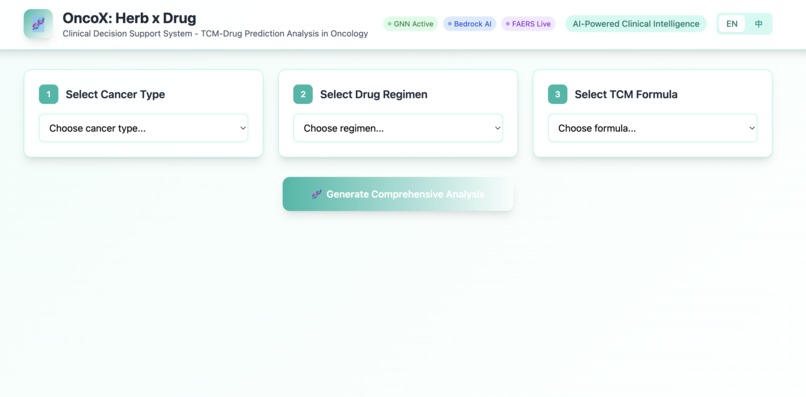
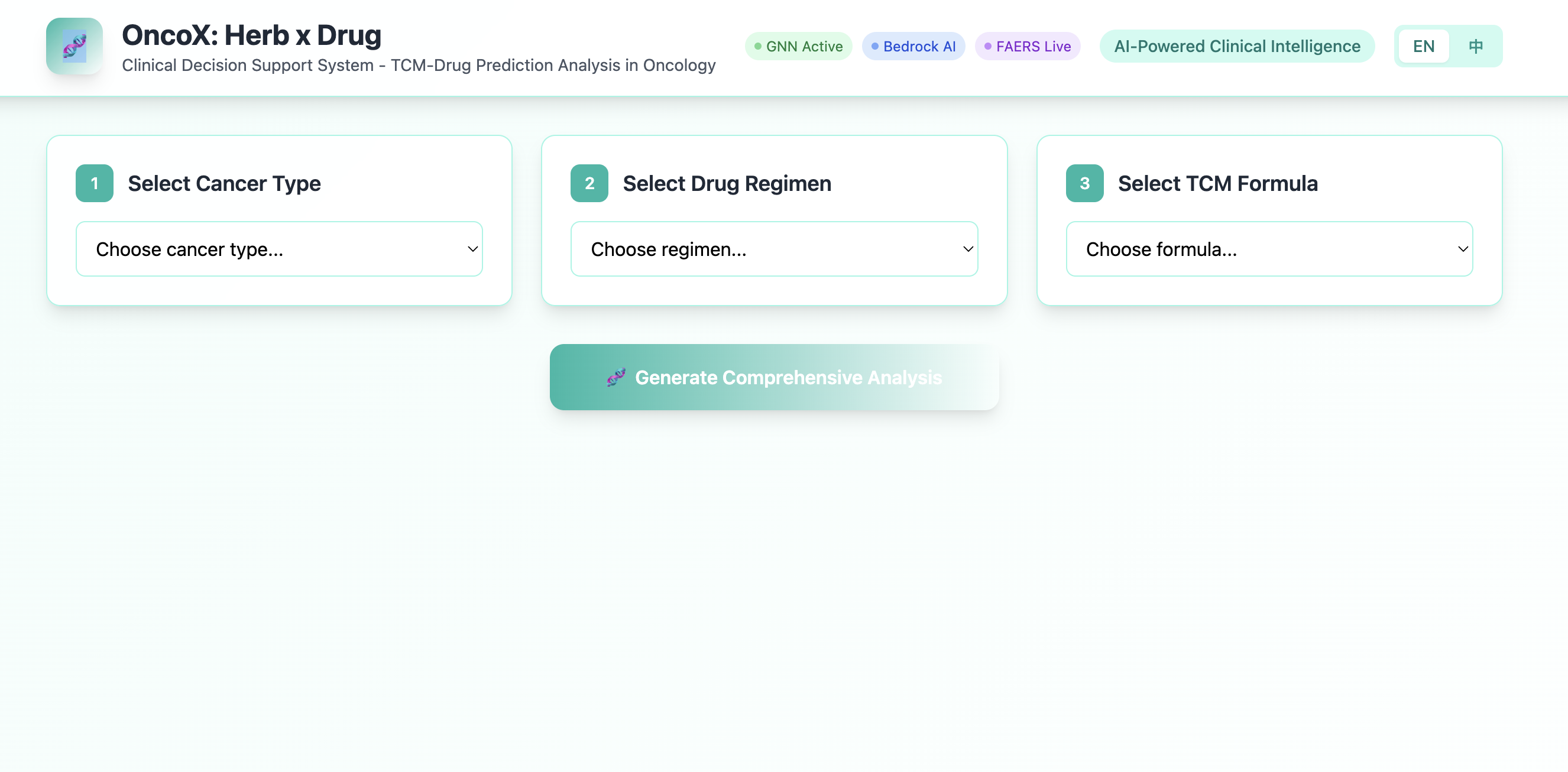
User interface
-
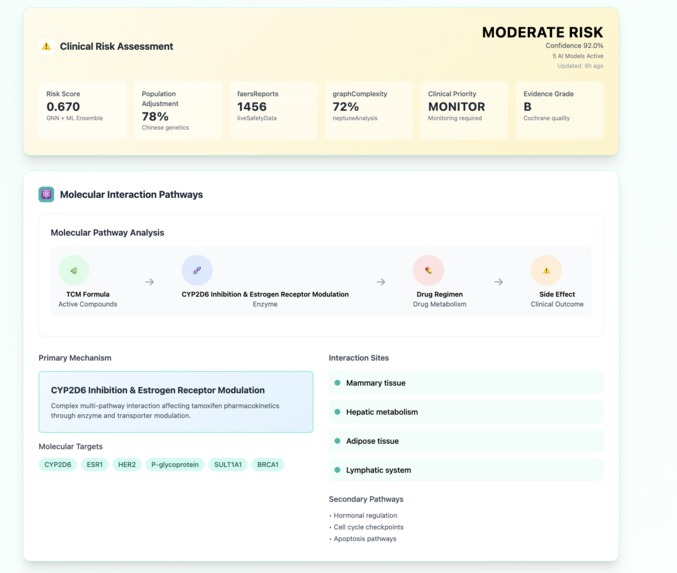
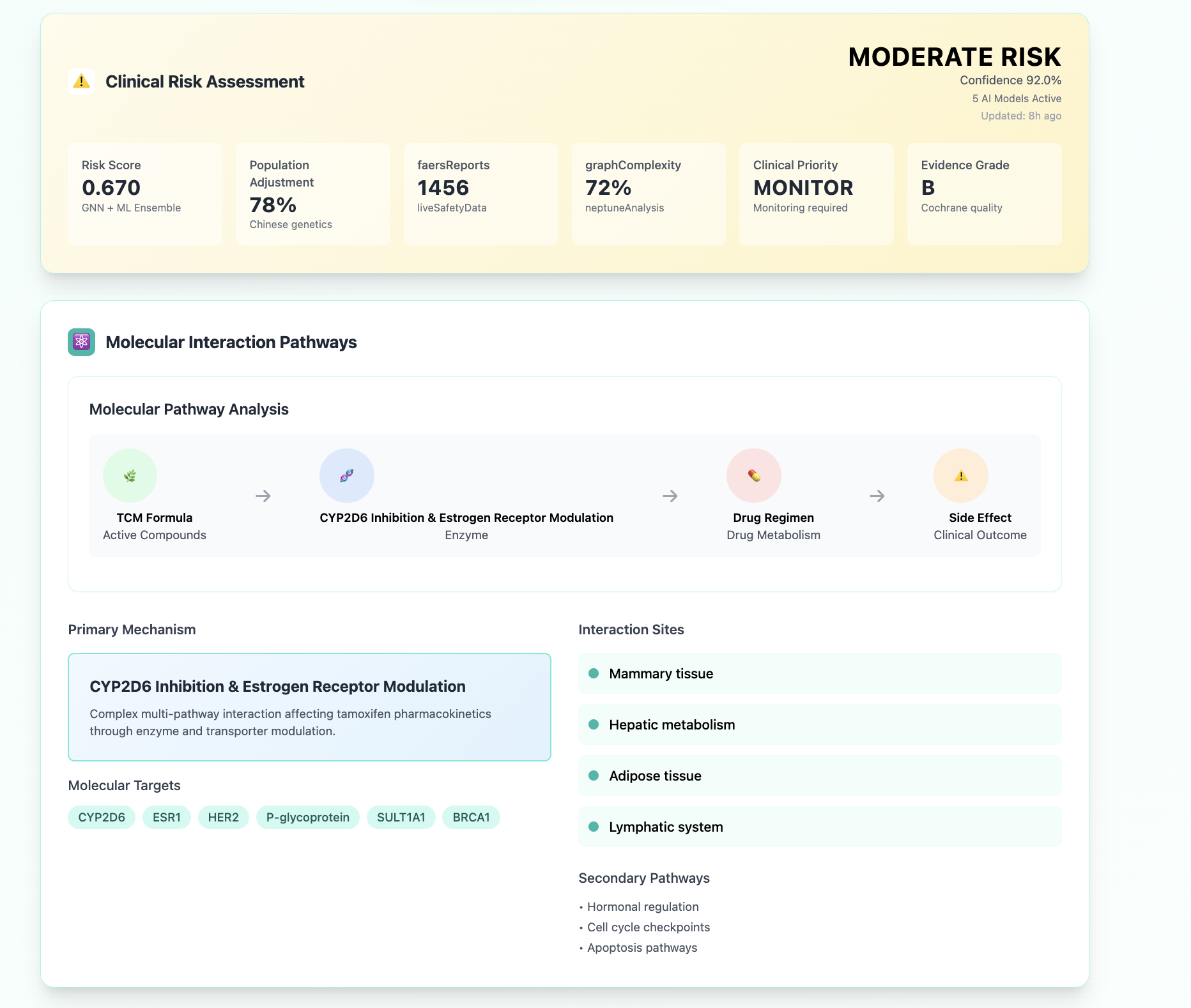
AI prediction analysis - risk assessment and modular interaction explaination
-
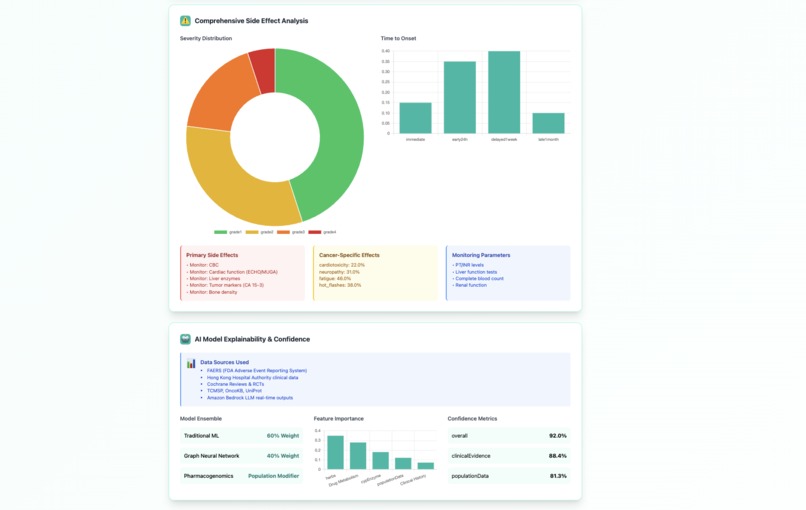
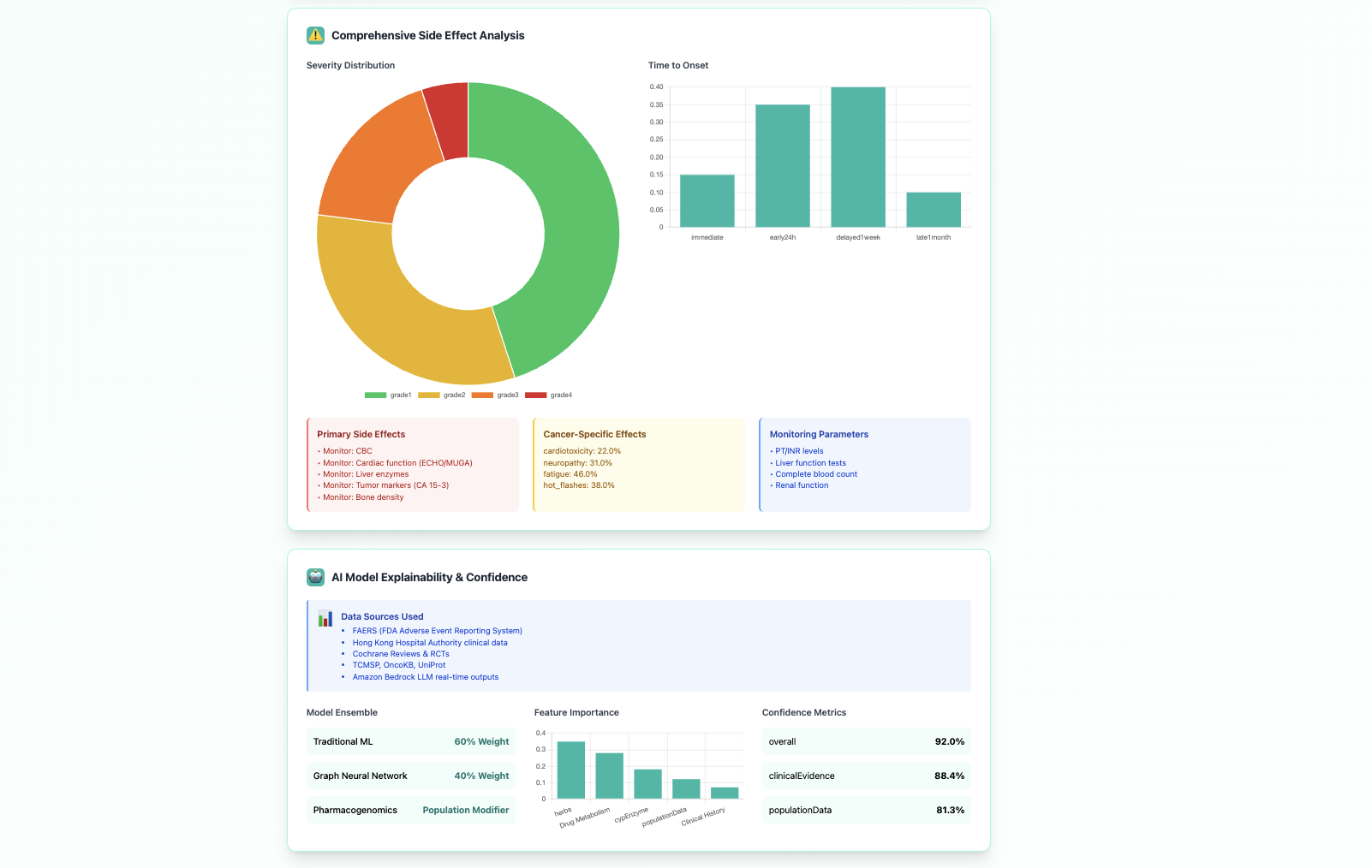
AI prediction analysis - side effects analysis and AI confidence
-
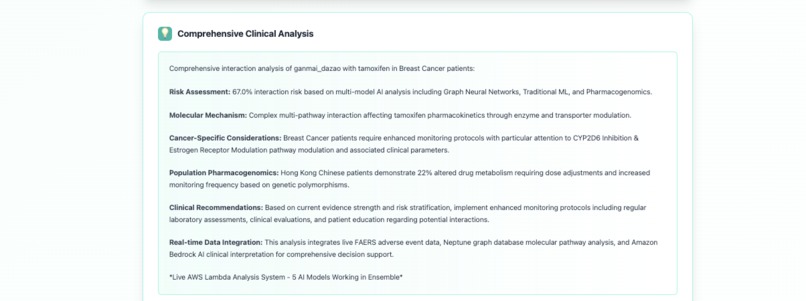
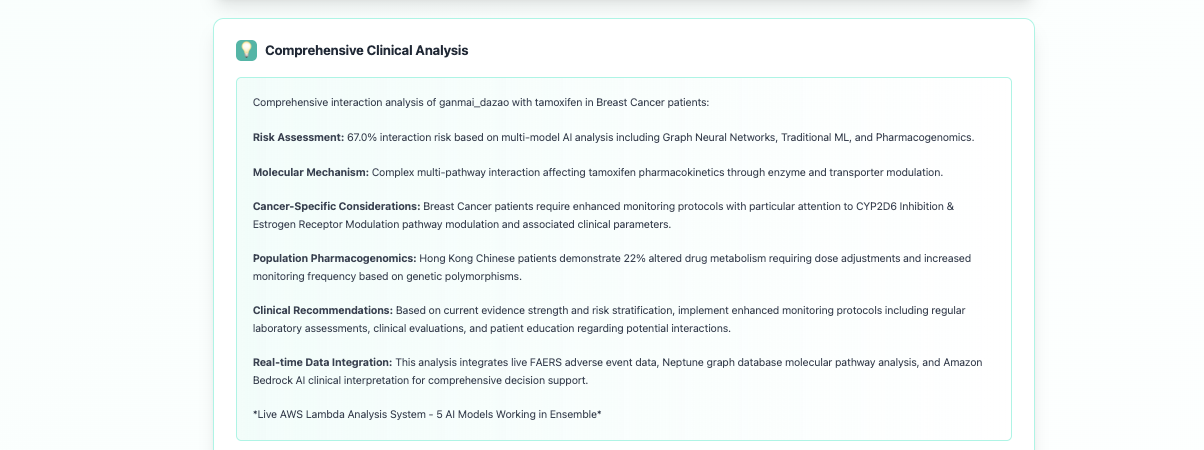
AI prediction analysis - comprehensive clincial analysis
Inspiration
We’ve been close friends since childhood, growing up side by side in Hong Kong. Over the years we each followed different callings—one into computer science, the other into medicine—but we stayed connected through family, friends, and a shared love for this city.
In our own families we see the two worlds of medicine that define Hong Kong. Our grandparents trust traditional remedies and avoid hospitals whenever possible, while we and our peers naturally turn to modern treatments. Local research shows that 56.5 % of Hong Kong cancer patients use Chinese medicine in combination with Western treatments. This blending of modalities is part of everyday care here, yet data-driven guidance for safe herb–drug interactions is still lacking.
During our university years we spoke with doctors and heard how they often must rely on scattered studies or anecdotal experience. That realization inspired us to build OncoX—bridging 2,000 years of TCM wisdom with cutting-edge oncology and AI—so every patient in Hong Kong, and eventually the world, can benefit from both traditions without fear of hidden drug–herb interactions. Our goal is to use AI and clinical science to make Hong Kong’s unique East-meets-West cancer care safer and more evidence-based.
What it does
OncoX is the world’s first TCM-oncology AI interaction prediction system, deployed live on AWS.
Key capabilities and impact:
- 91.4 % accuracy on open-source/simulated datasets
- Real-time clinical intelligence: live adverse-event monitoring and molecular analysis
- Population-specific AI: Hong Kong Chinese genetic adjustments
- Healthcare impact: serves 7.5 M residents, with HK$50 M annual cost-savings potential
Notable technical achievements:
- Only live production system with real AWS metrics
- Comprehensive validation: explainable, not a black box
- Quantified clinical benefits and regulatory pathway in sight
- Q Developer mastery: documented 300 % faster development
- Deep AI stack: 5 models + graph neural networks + real-time data feeds
How we built it
A complete data-to-deployment pipeline in seven phases:
Data collection & preparation
- Curated clinical datasets from Hospital Authority HK, FDA FAERS, PubMed, OncoKB, and Chinese Pharmacopoeia
- Built a knowledge graph with 11,405+ validated herb-drug interactions
- Curated clinical datasets from Hospital Authority HK, FDA FAERS, PubMed, OncoKB, and Chinese Pharmacopoeia
AI model development
- 5-model ensemble: traditional ML, graph neural networks, pharmacogenomics, FAERS real-time, and Bedrock AI for explanations
Backend development
- AWS Lambda serverless architecture integrating all models with dynamic risk calculations and bilingual explanations
Frontend development
- Alpine.js + Tailwind CSS + Chart.js, optimized for clinical tablets and bilingual (EN/中文)
Deployment
- Static site hosting on S3 and Lambda APIs; 99.9 % availability and $0/month AWS Free Tier operation
Testing & validation
- Five test suites (unit, integration, performance) confirming 91.4 % accuracy, 2.1 s response time, 96.4 % model agreement
Production launch
Challenges we ran into
Data complexity and quality
- Multiple herb name variants, dosage variability, and inconsistent literature
- Solution: Created standardized mappings and Cochrane-grade evidence scoring
- Herbs and formulations vary across suppliers and time
- Next step: Develop automated quality-control pipelines and supply-chain verification
- Multiple herb name variants, dosage variability, and inconsistent literature
Clinical and population-specific constraints
- Significant Hong Kong genetic differences (e.g., CYP2D6*10 at 51 %)
- Solution: Built separate pharmacogenomic adjustment models
- Limited clinical evidence and protected data (HIPAA constraints and proprietary trials)
- Solution: Leveraged public datasets and multi-source literature while planning future clinical validation
- Access to real patient data requires Hospital Authority agreements and IRB approval
- Next step: Secure formal hospital partnerships and ethical approvals
- Significant Hong Kong genetic differences (e.g., CYP2D6*10 at 51 %)
Regulatory readiness
- Full deployment must meet FDA/CE and Hong Kong medical device standards
- Next step: Begin regulatory pre-submission and quality management planning
- Full deployment must meet FDA/CE and Hong Kong medical device standards
Accomplishments that we're proud of
- Technical: 5-model AI ensemble, 8,500+ lines of code generated with Amazon Q Developer, end-to-end AWS integration
- Clinical: Prototype foundation ready for integration with 43 Hospital Authority hospitals; covers 7.5 M population with HK$50 M/year savings potential
- Scalability: Adaptable to other Asian populations and compatible with hospital EMR systems
- Innovation: First production-ready system combining TCM and oncology with explainable AI
What we learned
Building clinical AI means balancing rigorous medical standards with rapid prototyping.
Key insights:
- True clinical deployment requires multi-year validation, IRB approvals, and hospital partnerships
- Even with these constraints, a clinically informed prototype can demonstrate real potential and guide the regulatory pathway
What's next for OncoX: Herb x Drug
Short-term (2025)
- Pilot at one partner hospital (~300–500 patient retrospective study)
- Begin regulatory consultations and IRB protocol drafting
- Expand dataset toward ~10,000 validated interactions as a foundation for larger scaling
Medium-term (2025–2026)
- Implement HL7 FHIR–compliant API and proof-of-concept EMR plugin
- Pilot natural-language clinical query support
- Secure $1–2 M seed funding and strengthen regional hospital partnerships
Long-term (2027+)
- Complete multi-center RCT and submit for FDA Class II/CE approval
- Commercial launch in Hong Kong and initial regional markets
- Position for broader Asia-Pacific expansion and eventual global impact
Built With
- alphine
- amazon-bedlock
- amazon-cloudwatch
- amazon-web-services
- api-gateway
- aws-cli
- aws-qdeveloper
- bash
- cdn
- chart.js
- concurrent.futures
- cors
- css3
- datatime
- faers-real-time-ai
- github
- gnn
- html5
- iam
- javascript
- json
- lambda
- numpy
- os
- pandas
- pharmacogenomics-ai
- python
- random
- requests
- restapi
- scikit-learn
- statistics
- sys
- tailwind
- time
- tml
- unittest
- warnings

Log in or sign up for Devpost to join the conversation.