-
-
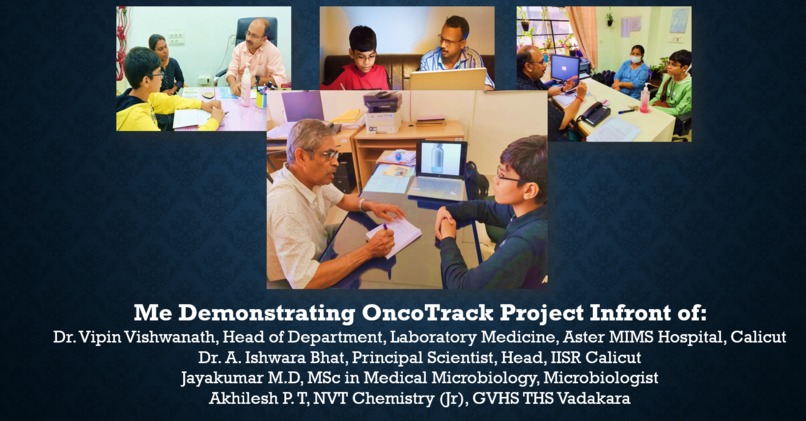
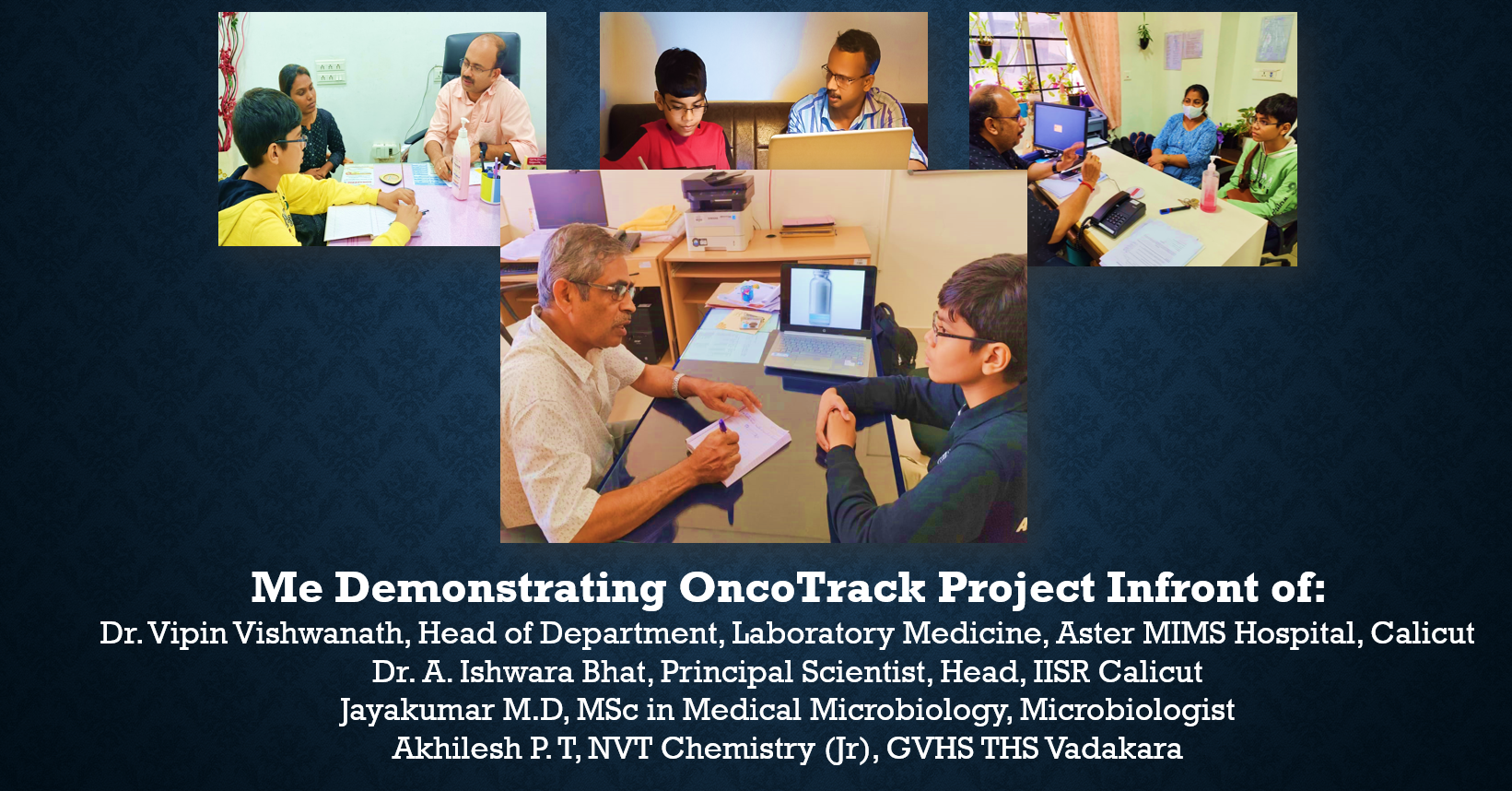
Me Demonstrating OncoTrack Project Infront of different scholars
Inspiration
Cancer remains one of the greatest medical challenges of our time. Every second, every minute, every hour, and every day holds immense value for patients undergoing treatment. The reality is that delays in diagnosis and therapy can have life-changing consequences. Personally, I experienced this urgency when a beloved family member was diagnosed with hepatic cancer. During their treatment, the doctor recommended targeted cancer therapy. This is a process where cancer cells are analyzed in a laboratory to identify genetic mutations that determine whether certain treatments may be more effective for the patient.
While this sounded promising, the reality was disheartening—it required nearly two to four weeks to obtain the test results before treatment could even begin. For a cancer patient, waiting that long feels like an eternity. It was in that moment I wondered: We live in an era powered by artificial intelligence and advanced computational tools, so why can’t we use these technologies to accelerate such a critical process?
This question became the spark for OncoTrack, a project I created at the age of thirteen to make genetic mutation analysis faster, more accessible, and more useful for doctors and patients.
Building the Tool
OncoTrack is designed to analyze genetic mutations and suggest possible therapies almost instantly. At its core, the tool uses the Genome Reference Consortium Human Build 38 (GRCh38), which is the most recent and accurate human reference genome assembly dataset. The system works by aligning a patient’s DNA sequence against this reference genome, identifying mutations, and then connecting those findings with potential therapies.
The process begins when a doctor enters the required details into the tool. Instead of asking for broad regions, OncoTrack requires scientific specificity. The doctor provides the gene name (for example, KRAS), the exon number, and the FASTA DNA sequence of the patient. For those who wish to make the analysis more personalized, the system also accepts optional inputs such as the patient’s age, gender, cancer type, and even additional notes from the physician.
Once the data is submitted, the tool retrieves the corresponding reference sequence from GRCh38 dataset, accurately aligns it with the patient’s sequence, and identifies mutations with precision. Within seconds, the results are displayed. If the doctor then clicks on “Generate Report,” the system produces a comprehensive document that goes beyond simple mutation detection. It explains the mutation found, places it in the context of the patient’s metadata, analyzes the implications for treatment, and suggests which targeted therapies may be most effective and available. What traditionally took weeks can now be condensed into a single click.
Challenges and Learnings
Developing OncoTrack came with its share of difficulties. The first major challenge was achieving high alignment accuracy between patient DNA sequences and the reference genome. Even small errors could lead to incorrect mutation detection, which in a real-world scenario could have serious consequences. Another challenge was the sheer complexity of genetic data. Training an AI system to not only detect mutations but also connect them to relevant treatment options required persistence and careful dataset curation.
Despite these hurdles, OncoTrack achieved a success rate of nearly 96% when tested with multiple mock patient datasets across various mutations. This success did not come easily, but it highlighted the potential of AI when applied thoughtfully in the field of medicine.
From this project, I learned more than just technical skills. I discovered how critical time is in healthcare, how data quality directly impacts AI accuracy, and how technology, when applied carefully, can reduce human suffering. Most importantly, I learned that even as a student, I could contribute meaningfully to one of humanity’s toughest challenges.
Future Vision
The current version of OncoTrack is only a minimum viable product (MVP) and has minimal frontend design. Yet, its potential stretches far beyond what it can do today. With further development, the tool could be scaled using larger, more refined genomic datasets, making the predictions even more accurate. It could be expanded to cover a broader range of genes and mutations across many different cancer types. Integration with clinical treatment databases would allow the tool to recommend therapies in real time and even suggest clinical trials for patients who may benefit.
Ultimately, the vision is to make OncoTrack a bridge between raw genomic data and actionable clinical decisions—helping doctors start the right treatment faster, giving patients the time they desperately need, and offering hope in situations where every moment counts.
Built With
- biopython
- chatgpt
- flask
- grch38-dataset
- ncbi-entrez
- openrouter
- oss-20b
- python
- render


Log in or sign up for Devpost to join the conversation.