-
-
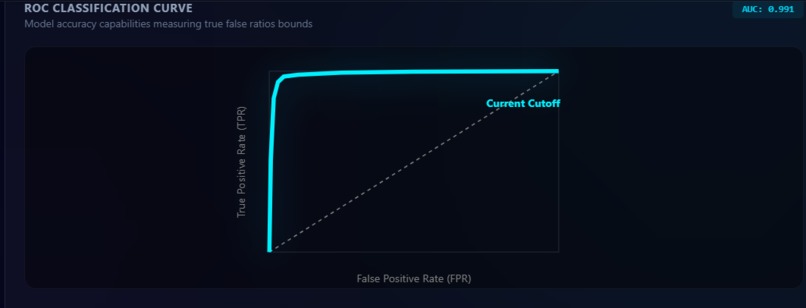
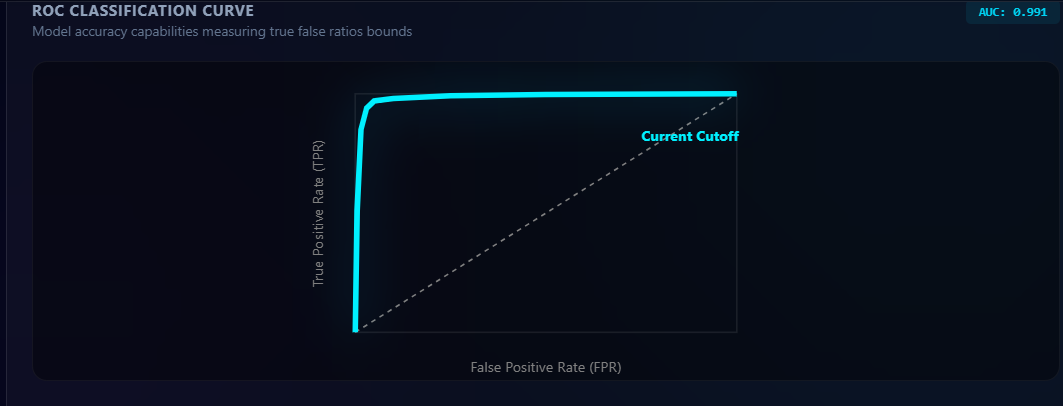
ROC curve performance evaluation demonstrating high sensitivity and specificity of the AI pathogenicity prediction model.
-
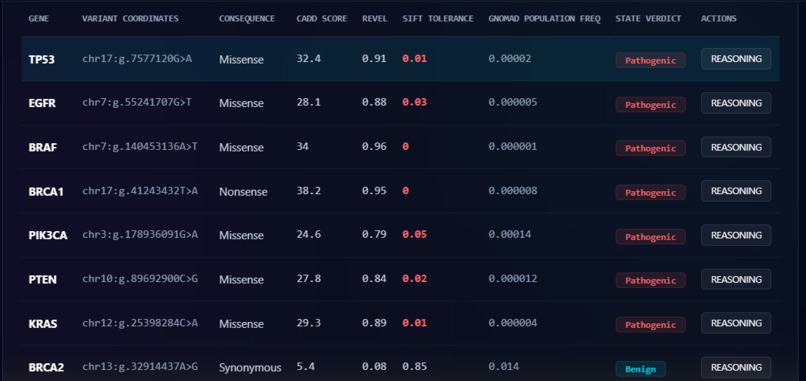
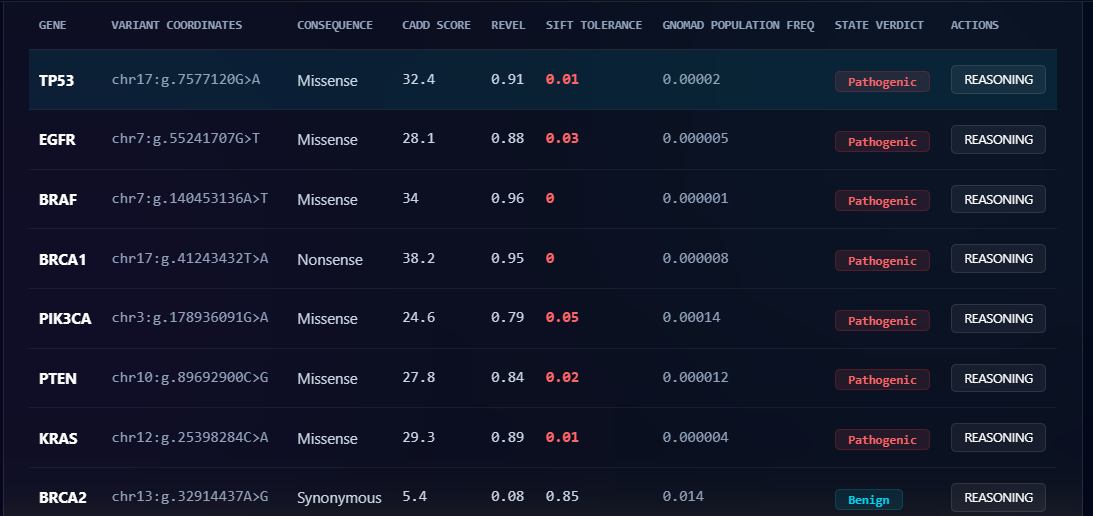
Machine learning-based pathogenic variant classification using multi-omics evidence integration.
-
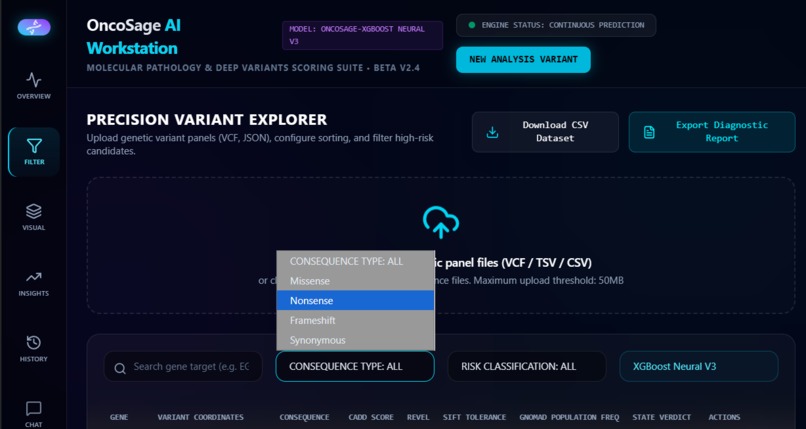
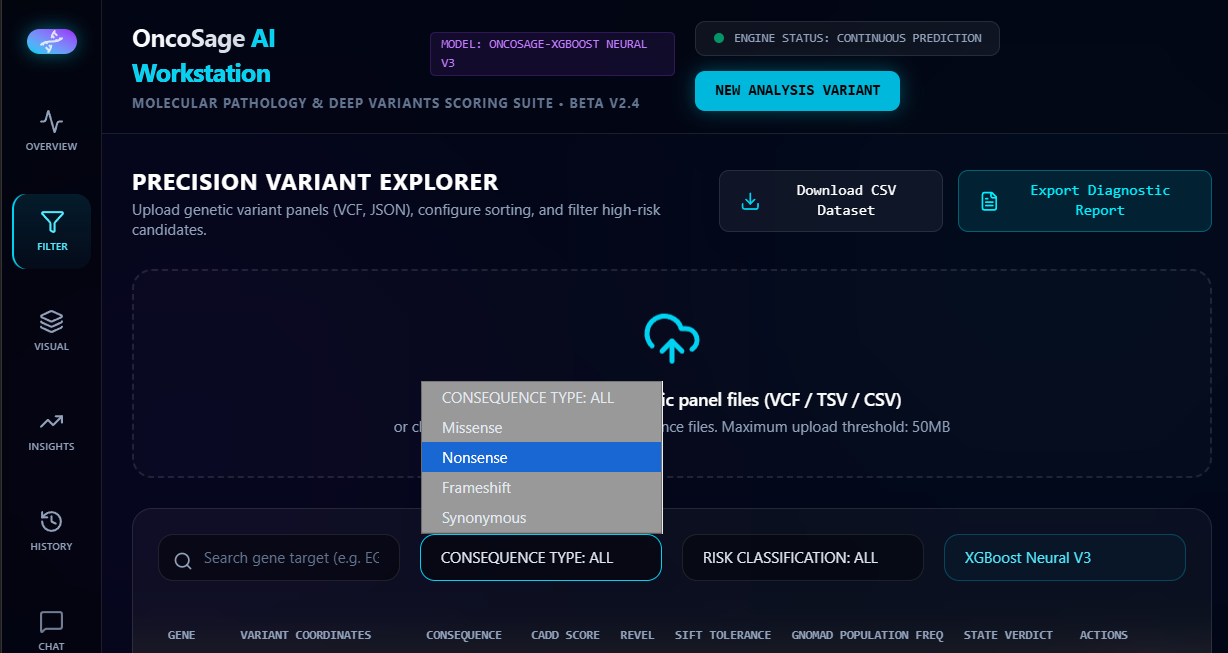
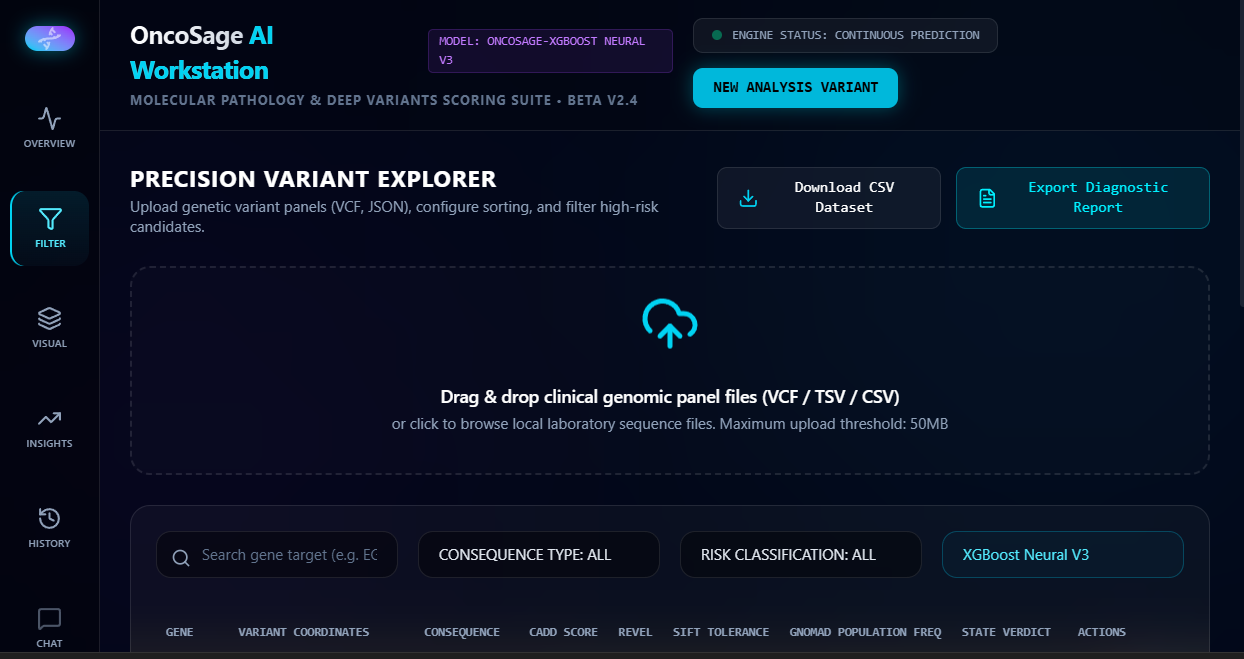
Dynamic mutation consequence filtering for targeted cancer genomics investigation workflows.
-
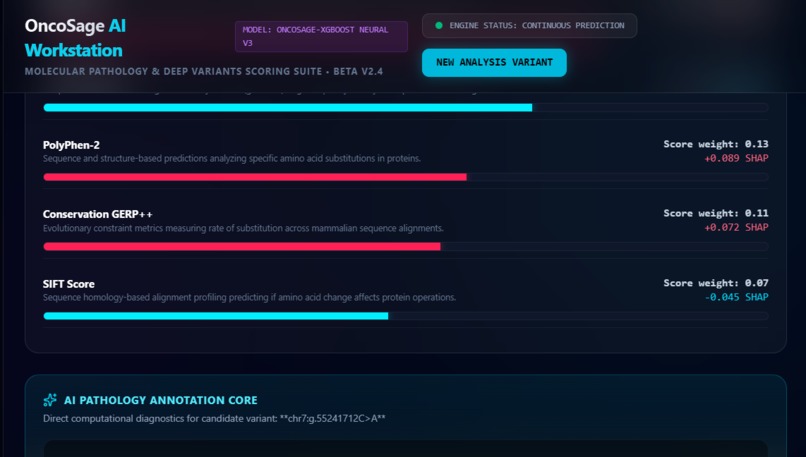
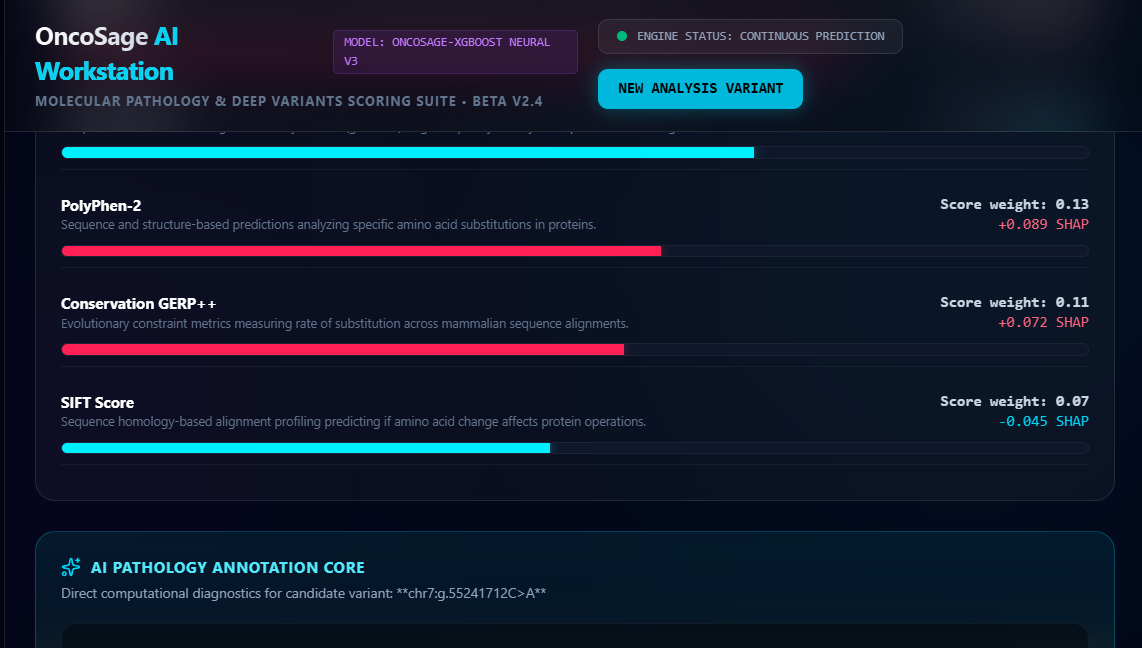
Explainable AI feature contribution analysis using SHAP-based pathogenicity interpretation.
-
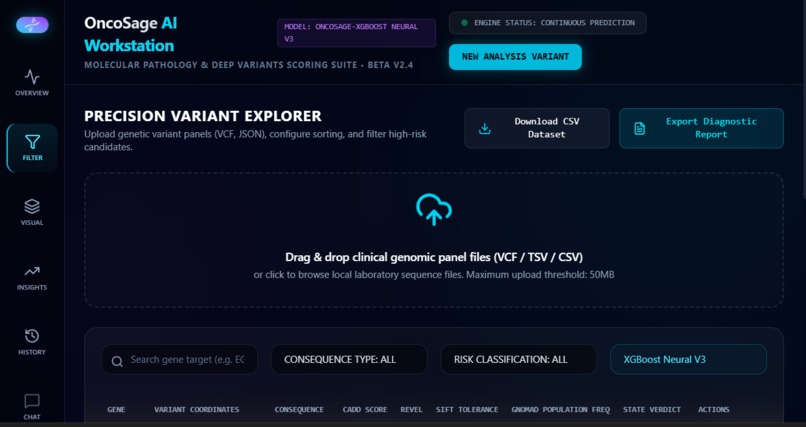
Interactive molecular variant exploration dashboard with real-time AI-driven genomic analysis
-

AI-powered precision oncology platform for genomic pathogenicity prediction and cancer variant interpretation.

Inspiration
What it does
How we built it
Challenges we ran into
Accomplishments that we're proud of
OncoSage AI — AI-Powered Precision Oncology Platform
Inspiration
Cancer genomics produces massive amounts of mutation data, but identifying which genomic variants are truly pathogenic remains a major challenge in precision medicine. Researchers and clinicians often spend significant time manually interpreting variants, making the process complex and time-consuming.
As a bioinformatics student passionate about artificial intelligence, cancer research, and genomic data analysis, I wanted to build a system that could intelligently predict pathogenic variants and simplify genomic interpretation using machine learning and visualization techniques.
This inspired the development of OncoSage AI — an intelligent genomic variant analysis platform designed to support precision oncology research.
What it does
OncoSage AI is an AI-powered bioinformatics platform that:
- Predicts pathogenic genomic variants using machine learning
- Analyzes cancer-associated mutations
- Performs genomic feature analysis
- Visualizes mutation patterns interactively
- Supports precision oncology research
- Helps prioritize clinically significant variants
The platform transforms raw genomic data into meaningful biological insights through predictive analytics and visualization.
How we built it
The project was developed using Python and machine learning techniques for genomic data analysis.
Technologies Used
- Python
- Pandas
- NumPy
- Scikit-learn
- Matplotlib
- Plotly
- Google Colab
- GitHub
Machine Learning Models
- Random Forest
- Logistic Regression
- XGBoost
Workflow
- Data preprocessing and cleaning
- Feature engineering of genomic variants
- Pathogenicity classification using machine learning
- Model performance evaluation
- Interactive genomic visualization
- Variant interpretation and insights generation
The system uses feature-based genomic analysis to distinguish pathogenic mutations from benign variants and provide interpretable outputs.
Challenges we ran into
One of the biggest challenges was converting biological genomic information into machine-learning-compatible features.
Another challenge was handling variant complexity and selecting meaningful genomic features that improve pathogenicity prediction accuracy while keeping the system interpretable and visualization-friendly.
Balancing bioinformatics concepts with AI implementation required extensive research into cancer genomics, variant interpretation, and predictive modeling.
Accomplishments that we're proud of
- Built an AI-powered genomic analysis platform
- Implemented pathogenicity prediction workflows
- Combined bioinformatics with machine learning and visualization
- Created an interpretable precision oncology support system
- Improved understanding of genomic feature engineering
- Developed an innovative healthcare AI research project
What we learned
Through this project, we gained deeper knowledge in:
- Cancer genomics
- Variant pathogenicity interpretation
- Machine learning model development
- Feature engineering for genomic data
- Precision oncology workflows
- Data visualization for biological datasets
- AI applications in healthcare and bioinformatics
This project strengthened our understanding of how artificial intelligence can accelerate genomic research and support precision medicine.
What's next for OncoSage AI
Future improvements include:
- Deep learning integration
- Real-time genomic analysis
- Explainable AI for variant interpretation
- Multi-omics data support
- Personalized treatment recommendation systems
- Cloud deployment for scalable genomic analysis
Our long-term vision is to transform OncoSage AI into an intelligent precision medicine assistant capable of helping researchers and clinicians interpret complex genomic information more efficiently.

Log in or sign up for Devpost to join the conversation.