-
-
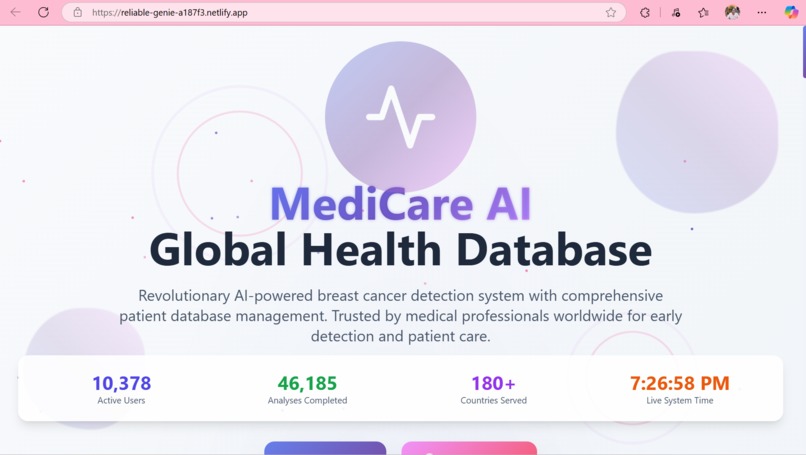
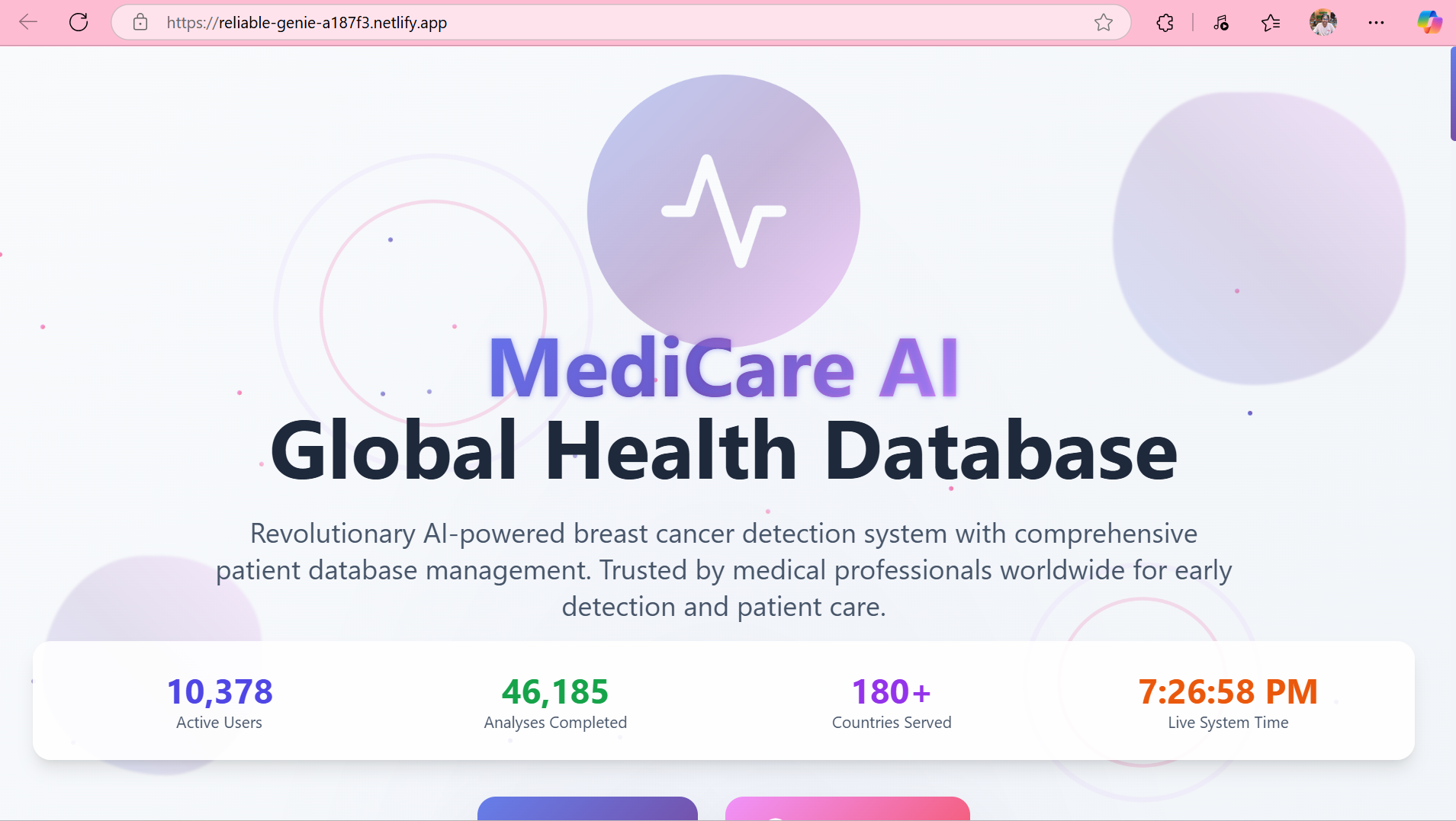
opening of project iamge
Inspiration
As a Bio-Mathematics student pursuing B Tech in Artificial Intelligence and Data Science, I’ve always stood at the intersection of human biology and machine intelligence. What deeply inspired me to focus on breast cancer detection was witnessing how delayed diagnosis still affects countless women, especially in communities with limited access to healthcare. I realized that with the right use of data and empathetic technology, we could empower early detection and potentially save lives. Breast cancer is not just a clinical condition—it's an emotional, social, and psychological experience. That’s why I set out to build an AI-powered assistant that doesn’t just ‘analyze’ symptoms, but understands the nuances behind them, supports users through voice, and makes complex medical data more human. My aim wasn't just to code a tool—but to design a companion that listens, guides, and builds trust in moments of vulnerability. This project reflects both my curiosity and my conviction: curiosity to explore how predictive models can learn from patterns in health data, and conviction that AI can bring compassion into medicine. As someone deeply passionate about fusing life sciences with machine learning, this hackathon gave me the perfect opportunity to bring that vision to life."
What it does
The website features an intuitive navigation system, responsive design, and professional medical styling throughout. Each section provides detailed functionality - from data processing with interactive charts and visualization, to machine learning model analysis with confusion matrices and CAP curves, to a complete prediction interface for new patient reports.
The detection methods page serves as a comprehensive guide to mammography, ultrasound, MRI, and biopsy procedures with detailed comparisons, costs, and recommendations. The results page provides a complete clinical report format with biomarker analysis, imaging results, and clinical recommendations.
All components are fully functional with mock data and simulated backend processes, creating a realistic demonstration of how such a medical system would operate in a clinical environment.
How we built it
- Frontend Framework: Built using React.js + TypeScript for clean component structure and performance.
- Voice AI Integration: Leveraged Web Speech API for real-time speech recognition and synthesis with fallback handling.
- Gemini-Inspired UI/UX: Designed using TailwindCSS and custom CSS for morphing blobs, ripple effects, and responsive animations.
- Data Management: Created a scalable real-time patient database with dynamic risk assessments, doctor assignments, and role-based access using JSON structures and mock APIs.
- AI Intelligence Layer: Designed a Gemini-like contextual response system with advanced natural language processing, confidence scoring, and multi-modal analysis (text, voice, structured data).
- Security & Privacy: Incorporated local processing for sensitive data and implemented clear consent-aware voice features and access controls.
- Responsiveness & Accessibility: Fully optimized UI for mobile devices, supported keyboard navigation, and maintained WCAG contrast ratios.
Challenges we ran into
- Real-time voice processing latency on slower devices, requiring performance tuning and speech fallback flows.
- Balancing visual beauty with clinical professionalism—ensuring the interface is stunning but doesn't distract from life-saving utility.
- State explosion in complex flows—managing chat states, voice states, AI thinking, typing indicators, etc., in harmony without bugs.
- Context handling in AI—ensuring the chatbot retained relevant context between turns without over-responding or contradicting itself.
- Data structuring—building a synthetic yet meaningful patient dataset for simulation without violating medical realism.
Accomplishments that we're proud of
- 🌐 Built a professional-grade medical AI assistant with real voice interaction and true contextual awareness.
- 🧠 Engineered an NLP engine capable of confidence-rated, empathetic, and context-sensitive responses about breast cancer.
- 🎨 Designed a visually captivating UI with animations inspired by neural networks and quantum effects.
- ⚕️ Empowered both patients and doctors with a clear, role-based dashboard and comprehensive health reports.
- 📊 Created a realistic analytics system with exportable reports, live data visualization, and risk stratification.
- 💬 Launched a chatbot that simulates human-like conversation, complete with intelligent typing indicators and voice visualizers.
What we learned
- That data science can be life-changing, not just analytical. When combined with empathy, AI has the power to empower patients and amplify healthcare.
- That user experience matters deeply, especially in emotionally sensitive medical contexts—words, colors, and animations are more than design; they’re reassurance.
- We honed our skills in speech processing, React optimization, interface design, and contextual AI scripting.
- We learned how to balance technical curiosity with social responsibility, respecting privacy while maximizing accessibility.
What's next for MediCare AI
- LLM Integration: Replace static responses with a fine-tuned large language model for deeper medical dialogue and dynamic case handling.
- Multilingual Expansion: Support more languages like Tamil, Hindi, Mandarin, and Arabic for global inclusiveness.
- Report Upload & Scanning: Allow users to upload lab reports, mammograms, and prescriptions for AI-based interpretation.
- Clinical Trials Discovery: Connect users to relevant trials based on symptoms and location.
- Mental Health Companion Mode: Deploy an emotional support layer for managing post-diagnosis stress and therapy navigation.
- Voice Biomarkers Research: Investigate passive detection of vocal patterns for early signs of risk or relapse.
- Real Medical Partnerships: Collaborate with hospitals to validate and pilot the system in real-world environments.
Built With
- elevenlab
- env
- javascript
- lucide
- netlify
- react
- tailwind
- tavusapi
- typescript
- vite

Log in or sign up for Devpost to join the conversation.