Inspiration
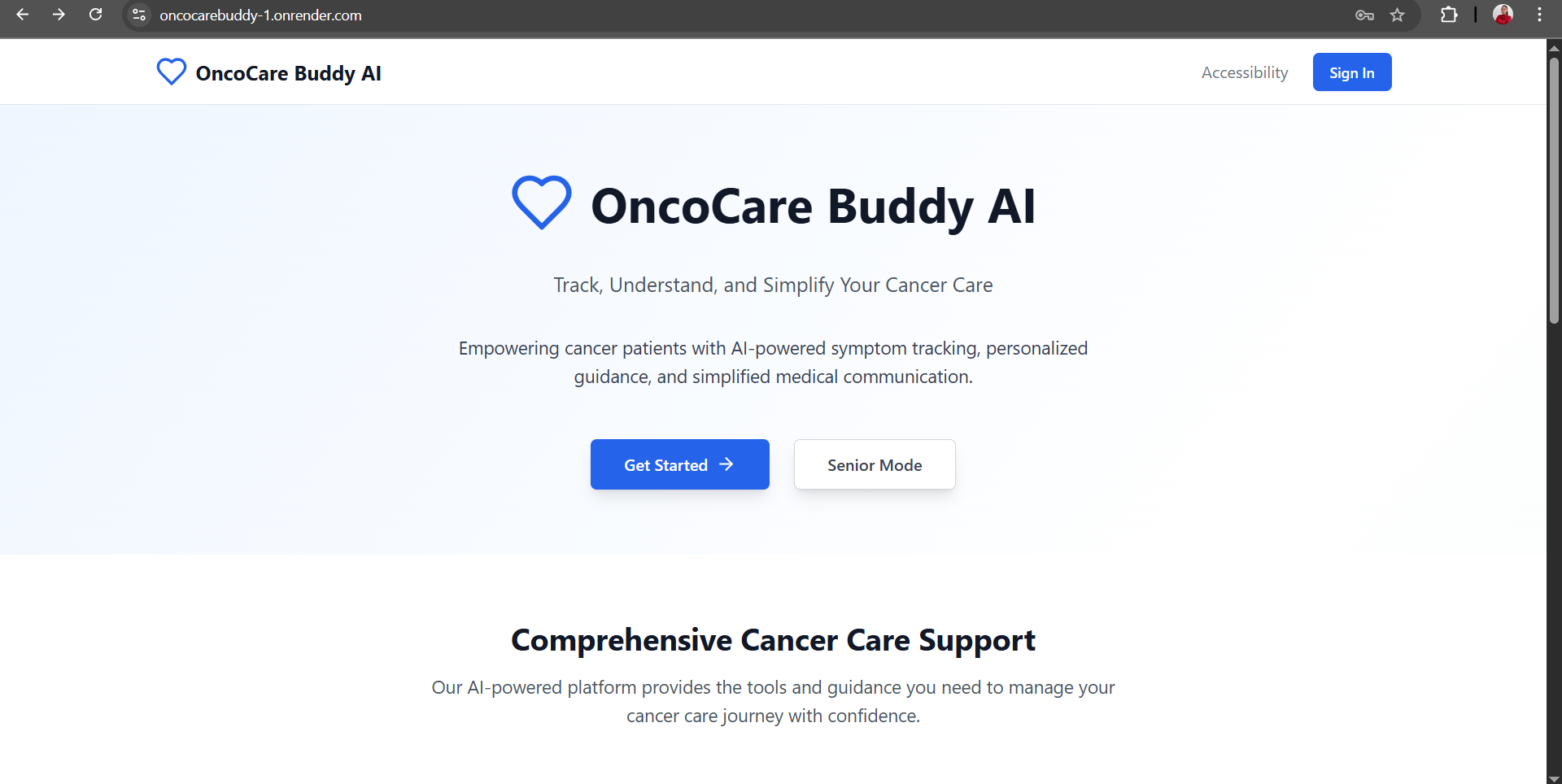
OncoCare Buddy AI was inspired by the profound need for a supportive, accessible, and empathetic digital tool for cancer patients. The journey through cancer is often isolating and overwhelming, marked by complex medical jargon, a constant struggle with physical symptoms, and significant emotional distress. Existing symptom trackers are often static and lack the human-like understanding required. Our goal was to create a "buddy" that is always available to provide real-time, personalized guidance and emotional support, helping patients feel more in control of their health and well-being.
What it does
OncoCare Buddy AI is a comprehensive companion that combines several powerful features:
- Symptom Guidance: Patients can log their symptoms (e.g., pain, fatigue, nausea) with a severity rating. The AI immediately analyzes the input and provides actionable, non-medical advice and recommendations.
- Medical Note Simplification: Users can input complex medical notes or doctor's instructions. The AI translates this information into simple, easy-to-understand language, empowering patients with clarity.
- Empathetic Chat Support: A dedicated chat interface provides compassionate, non-medical support. The AI is designed to respond empathetically to a wide range of questions and emotional needs.
- Accessibility Features: We've integrated a global read-aloud feature and a "senior mode" with larger text to ensure the application is accessible to users with visual impairments or other accessibility needs.
How we built it
We built the application using a full-stack approach:
- Frontend: The user interface was developed with React and TypeScript, styled with Tailwind CSS. We used React Router for seamless client-side navigation.
- Backend: The server is powered by Node.js and the Express.js framework. It acts as a secure intermediary between the frontend and the AI.
- AI Integration: The core intelligence is provided by the Groq API. We chose Groq for its incredibly fast inference speeds, which allows for near-instantaneous AI responses, crucial for real-time guidance and chat.
- Deployment: The entire application is deployed on Render, utilizing its continuous deployment feature to automatically update the live site with every push to our GitHub repository.
Challenges we ran into
- Ethical Boundaries: The primary challenge was ensuring the AI provides helpful, empathetic guidance without ever giving medical advice. We addressed this by carefully crafting system prompts and adding a clear, persistent disclaimer to all AI-generated content.
- Prompt Engineering: Fine-tuning the Groq prompts to consistently generate compassionate, relevant, and concise responses for a sensitive topic was challenging. We had to iterate on the prompts to achieve the right tone and quality of advice.
- Front-end Routing: We encountered a significant issue where direct navigation to a URL would result in a
404 Not Founderror on our deployed static site. We resolved this by configuring a rewrite rule on Render to always serve theindex.htmlfile, allowing React Router to handle the client-side routing.
Accomplishments that we're proud of
We are most proud of successfully integrating multiple AI functionalities—symptom analysis, note simplification, and empathetic chat—into a single, cohesive user experience. The global read-aloud feature is also a major accomplishment, as it makes the application truly accessible and useful for a wider range of patients.
What we learned
We gained valuable experience in full-stack development, from setting up a Node.js server and an Express.js API to building a responsive and dynamic React frontend. We learned how to work with the Groq SDK and leverage its unique speed for real-time applications. Most importantly, we learned the critical importance of ethical considerations and careful prompt engineering when building AI tools for sensitive applications like healthcare.
What's next for OncoCare Buddy AI
- Data Persistence: We plan to integrate a database (like MongoDB or PostgreSQL) to allow users to save their symptom logs and personalized guidance for long-term tracking.
- Mobile App: We will develop a native mobile application to provide a more convenient and accessible experience.
- Community Features: We'll add a forum or community feature where patients can connect and share experiences in a safe, moderated environment.
- AI Expansion: We will train a more specialized model to provide more advanced features, such as medication reminders, nutrition advice, and personalized wellness plans.

Log in or sign up for Devpost to join the conversation.