-
-
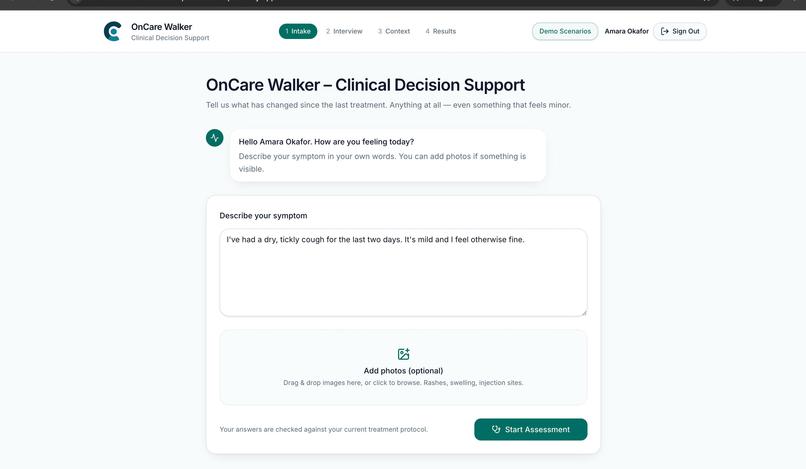
flow 1
-
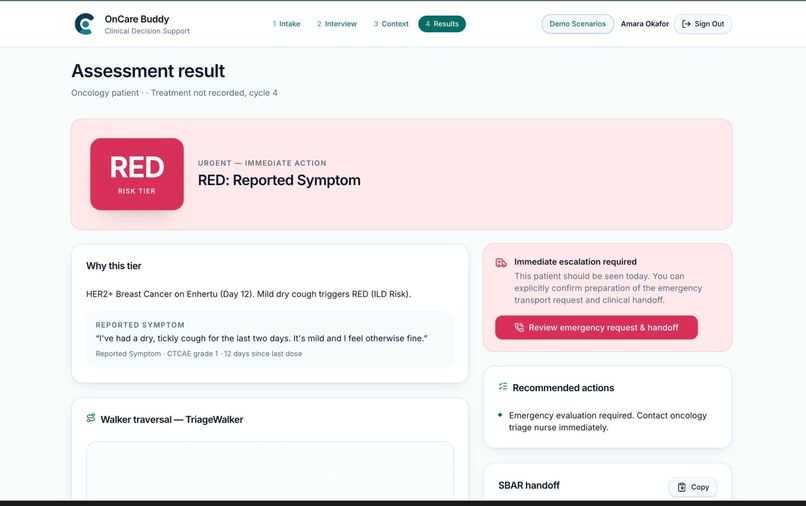
flow5
-
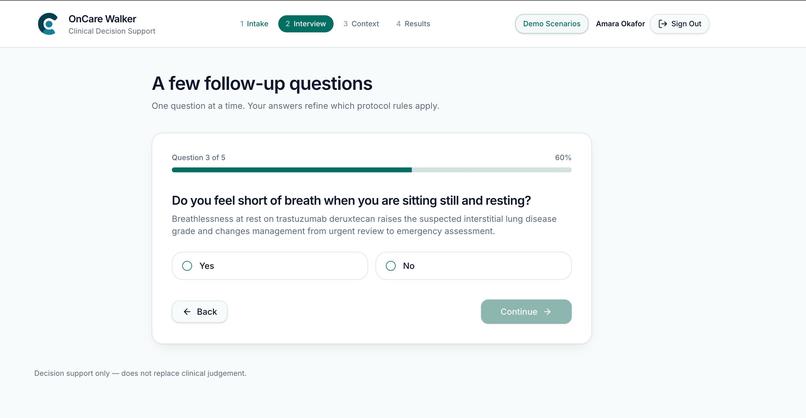
flow3
-
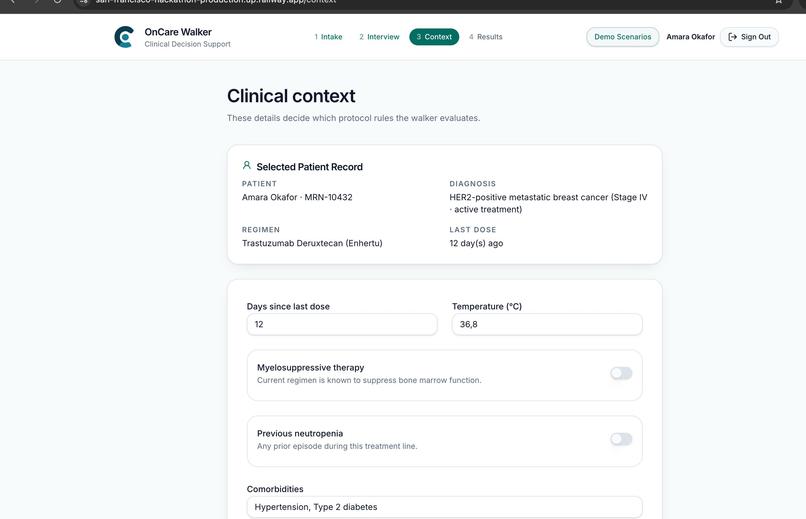
flow4
-
flow2
-
flow6
Inspiration
Cancer patients often experience symptoms between appointments, but many are unsure whether they should contact their care team. We discovered that dangerous side effects are frequently searched on Google before being reported to clinicians. We wanted to build a system that speaks the patient's language while thinking like an experienced oncology nurse.
What it does
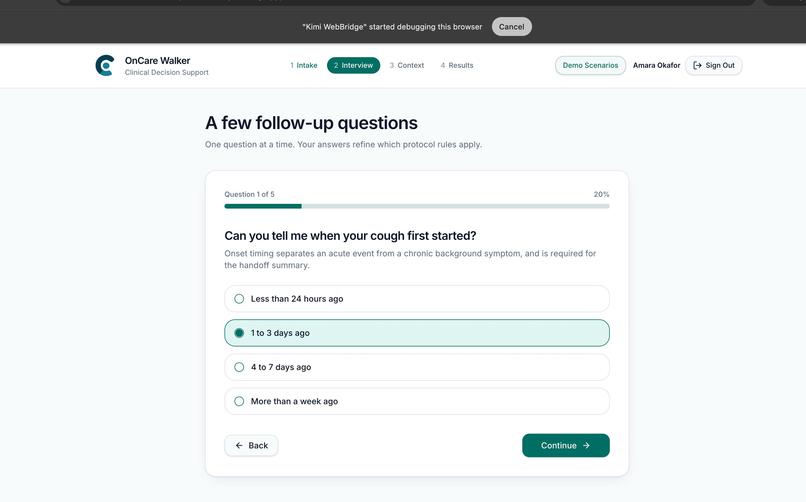
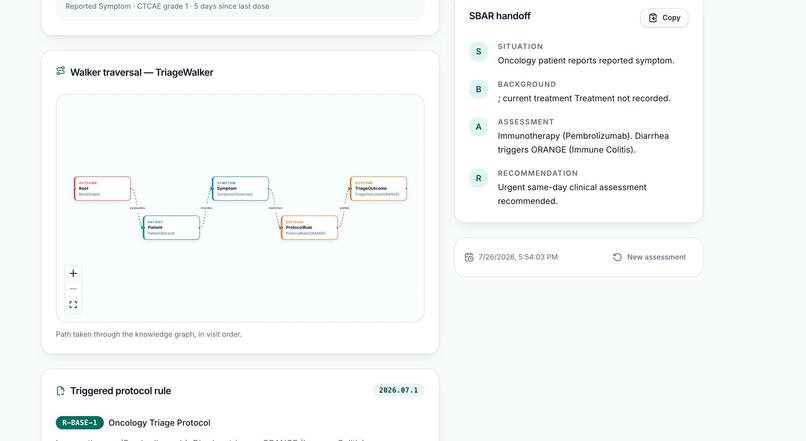
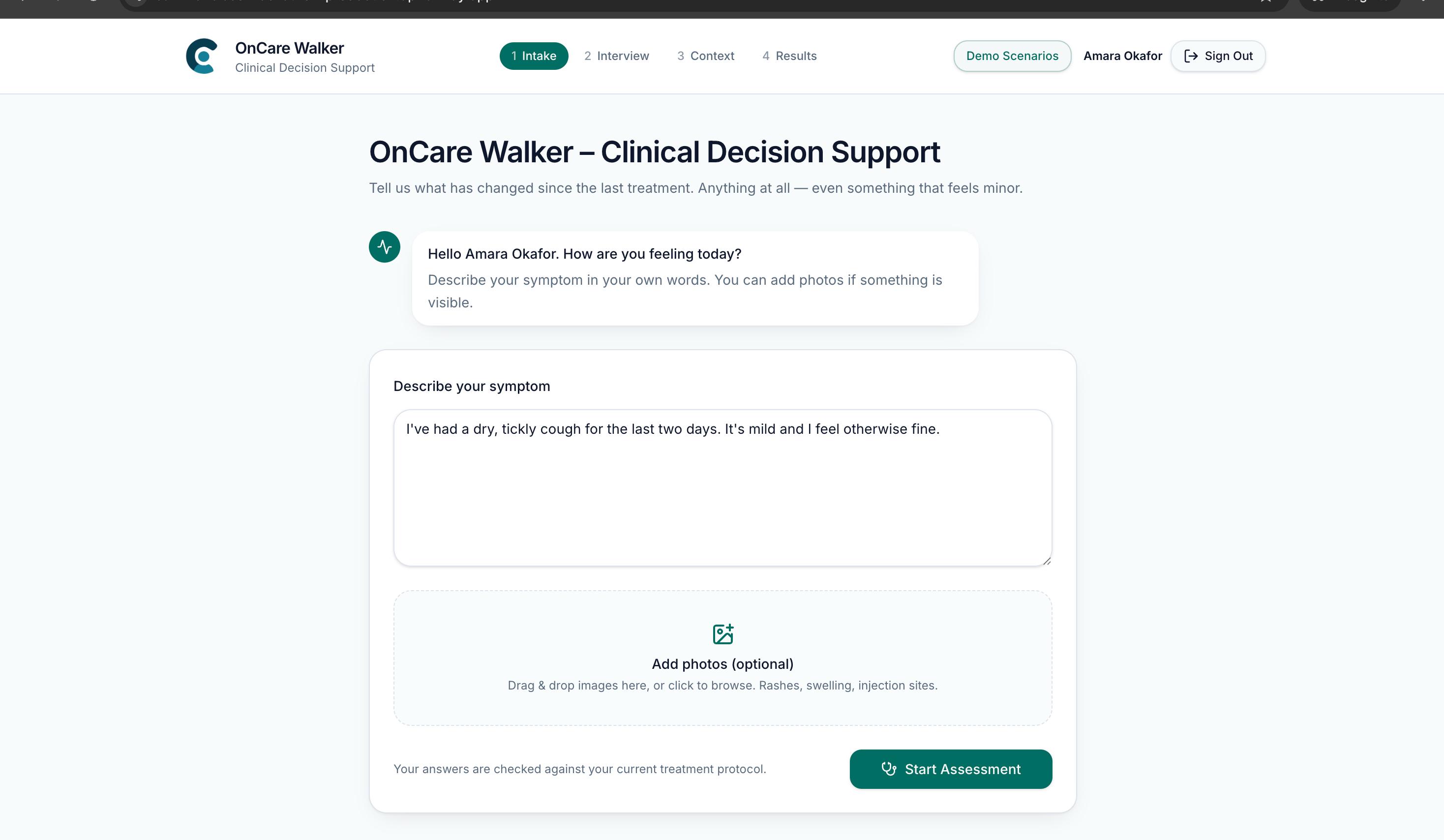
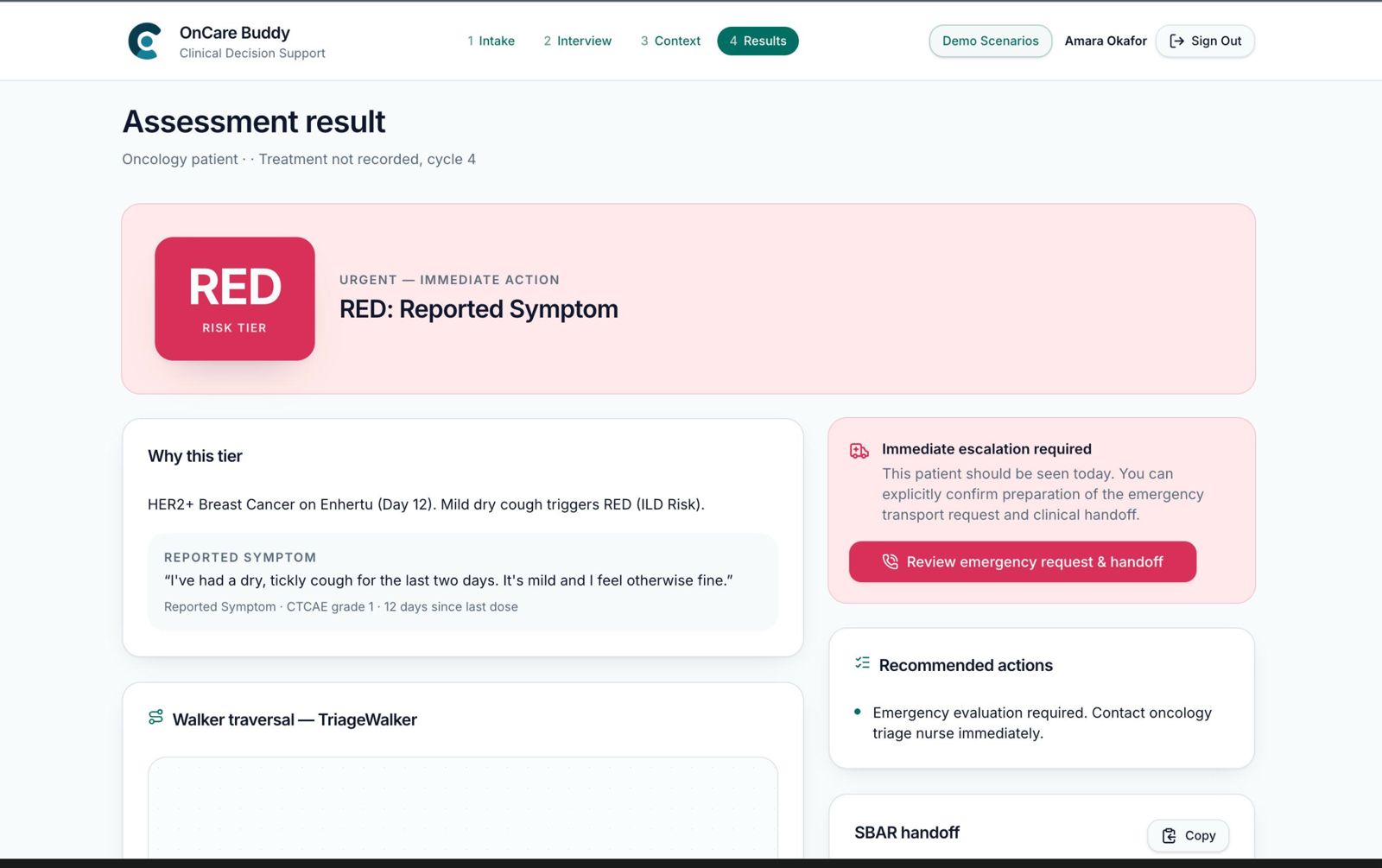
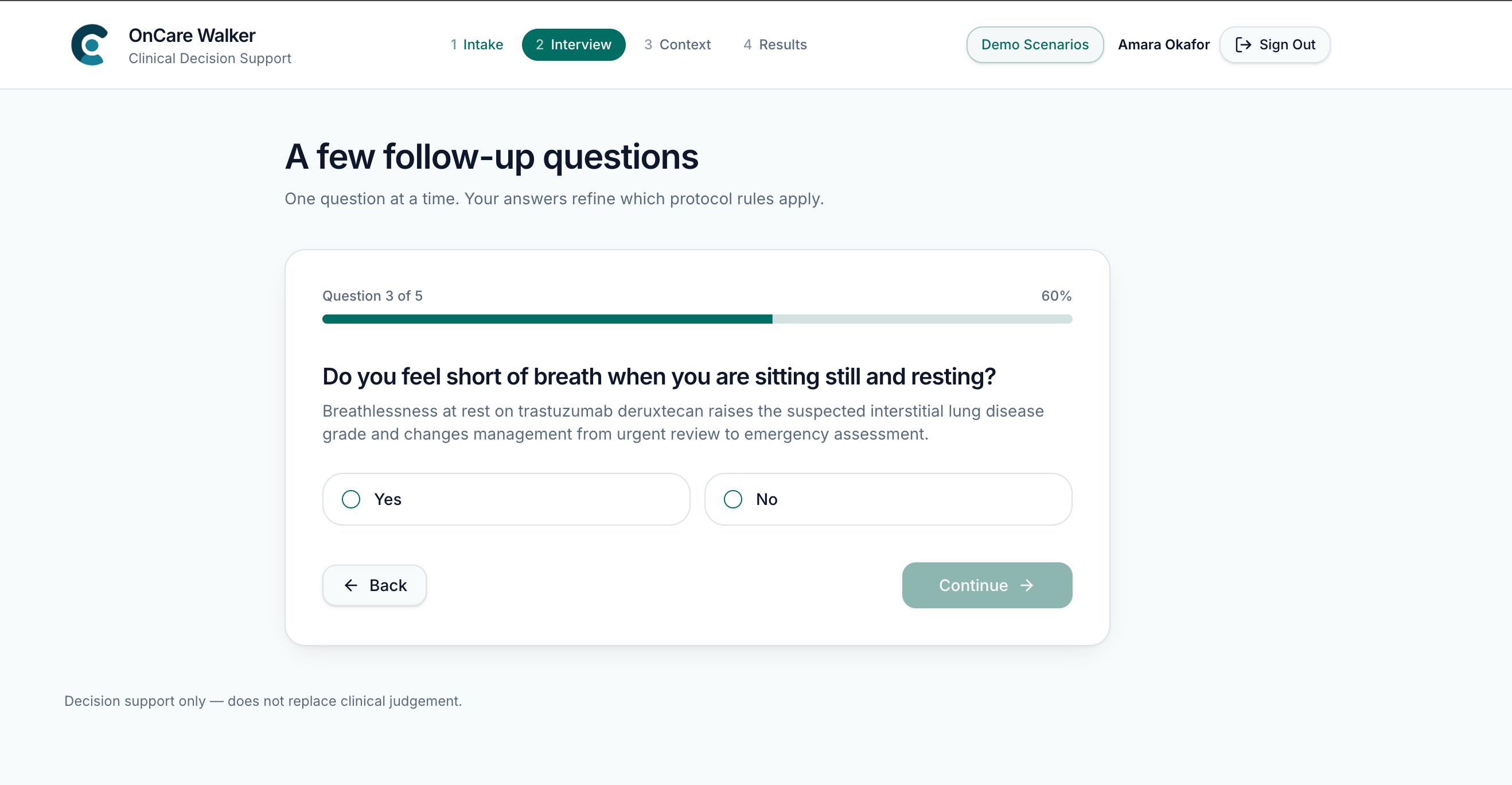
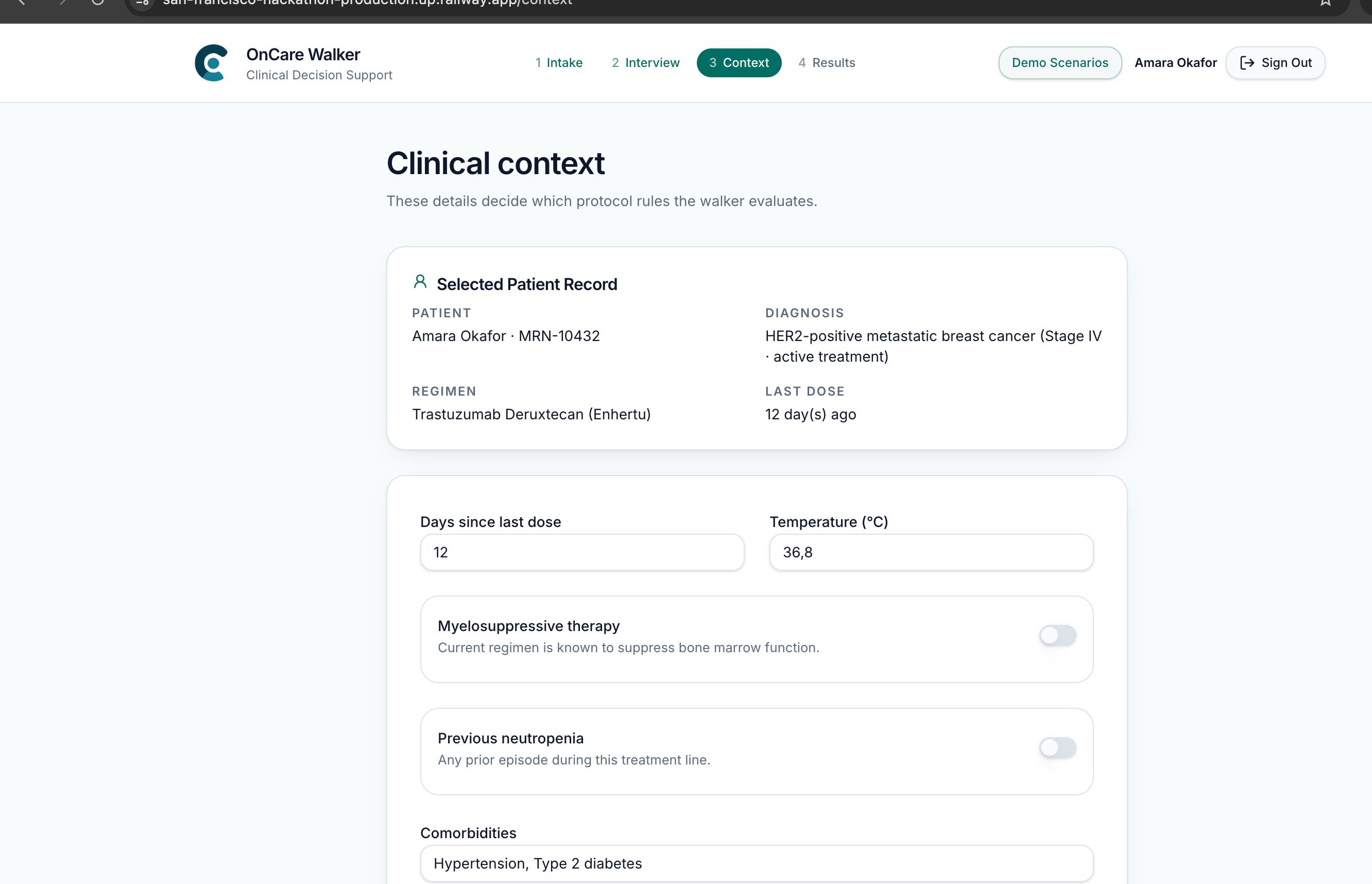
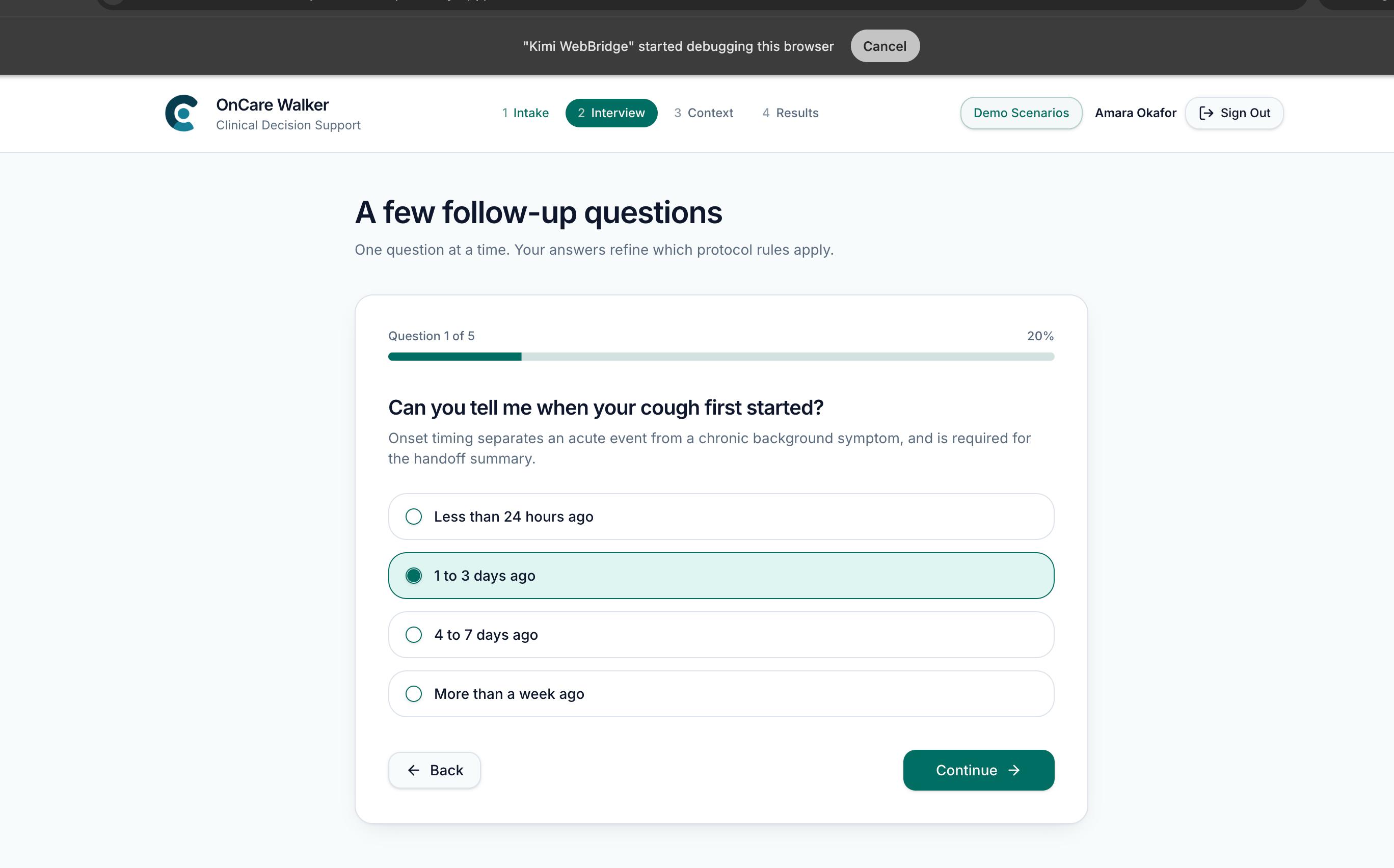
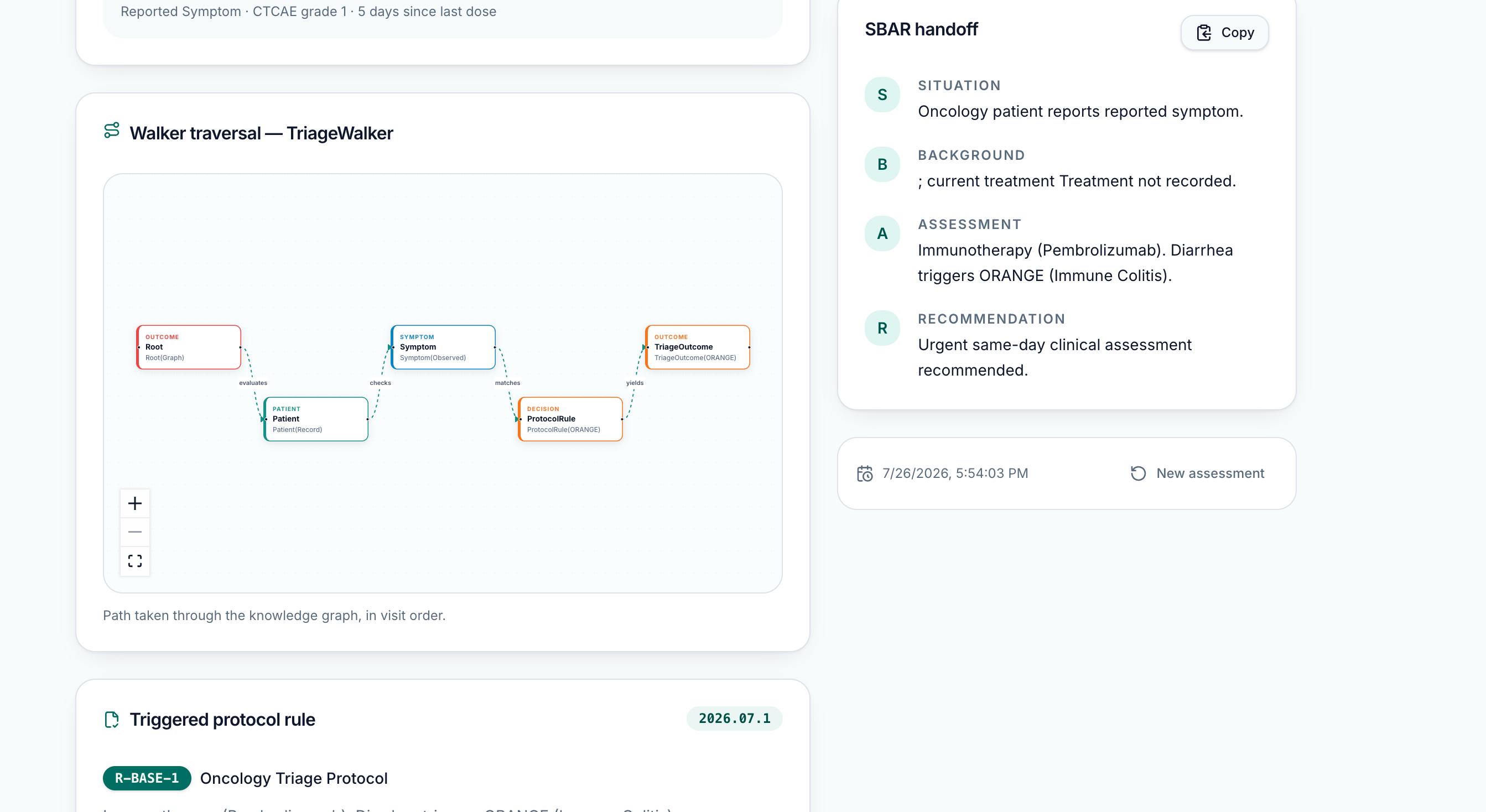
OnCare allows oncology patients to describe symptoms using natural language or photos. The AI dynamically asks follow-up questions, extracts structured clinical information, evaluates deterministic protocol rules through a medical knowledge graph, and determines whether the patient can safely continue monitoring or needs immediate escalation.
The result is an explainable, auditable triage assistant—not a black-box chatbot.
How we built it
Our architecture combines:
- AI conversational intake
- Multimodal input (text + images)
- Knowledge Graph for clinical reasoning
- Deterministic protocol engine
- Explainable decision rules
- SBAR handoff generation for clinicians
- Secure encrypted patient data
The AI collects information, while the protocol engine makes transparent clinical decisions based on oncology guidelines.
Challenges we ran into
The biggest challenge was balancing AI flexibility with clinical safety.
Rather than allowing an LLM to make medical decisions, we separated language understanding from clinical reasoning. AI extracts information, but deterministic rules produce every clinical recommendation. This makes every alert explainable, traceable, and reviewable.
Accomplishments that we're proud of
- Built an end-to-end conversational oncology intake.
- Created a graph-based clinical reasoning engine.
- Implemented explainable protocol-based alerts.
- Added multimodal symptom reporting.
- Generated structured SBAR handoffs for clinicians.
- Designed the system to evolve into predictive supportive care.
What we learned
Healthcare AI requires trust more than intelligence.
We learned that clinicians value explainability and reproducibility more than impressive conversations. AI becomes much more useful when it augments clinical workflows instead of replacing them.
What's next for OnCare
Our roadmap includes:
- Real telehealth integration
- Push notifications and scheduled monitoring
- Digital supportive care modules
- Predictive models trained on anonymized patient trajectories
- Research and clinician training platform
- Personalized supportive care recommendations
Built With
- agents
- css
- docker
- encryption
- fastapi
- graph
- graphrag
- healthcare
- knowledge
- multimodal
- neo4j
- oncology
- postgresql
- python
- rag
- railway
- react
- rest
- sbar
- tailwind
- typescript

Log in or sign up for Devpost to join the conversation.