-
-
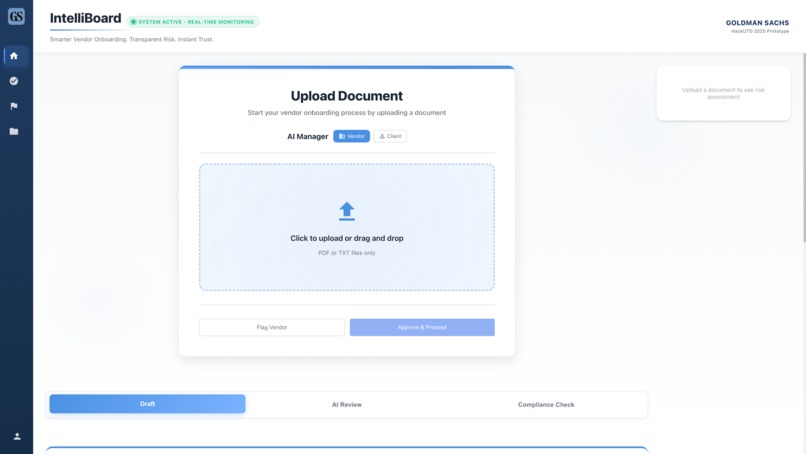
Home
-
-
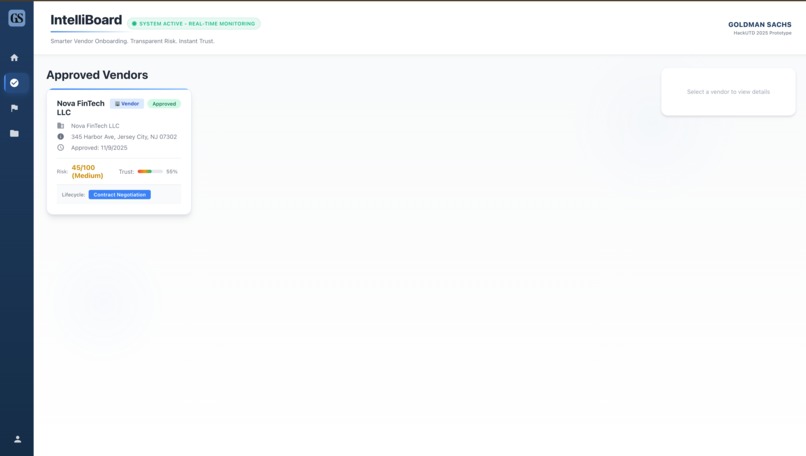
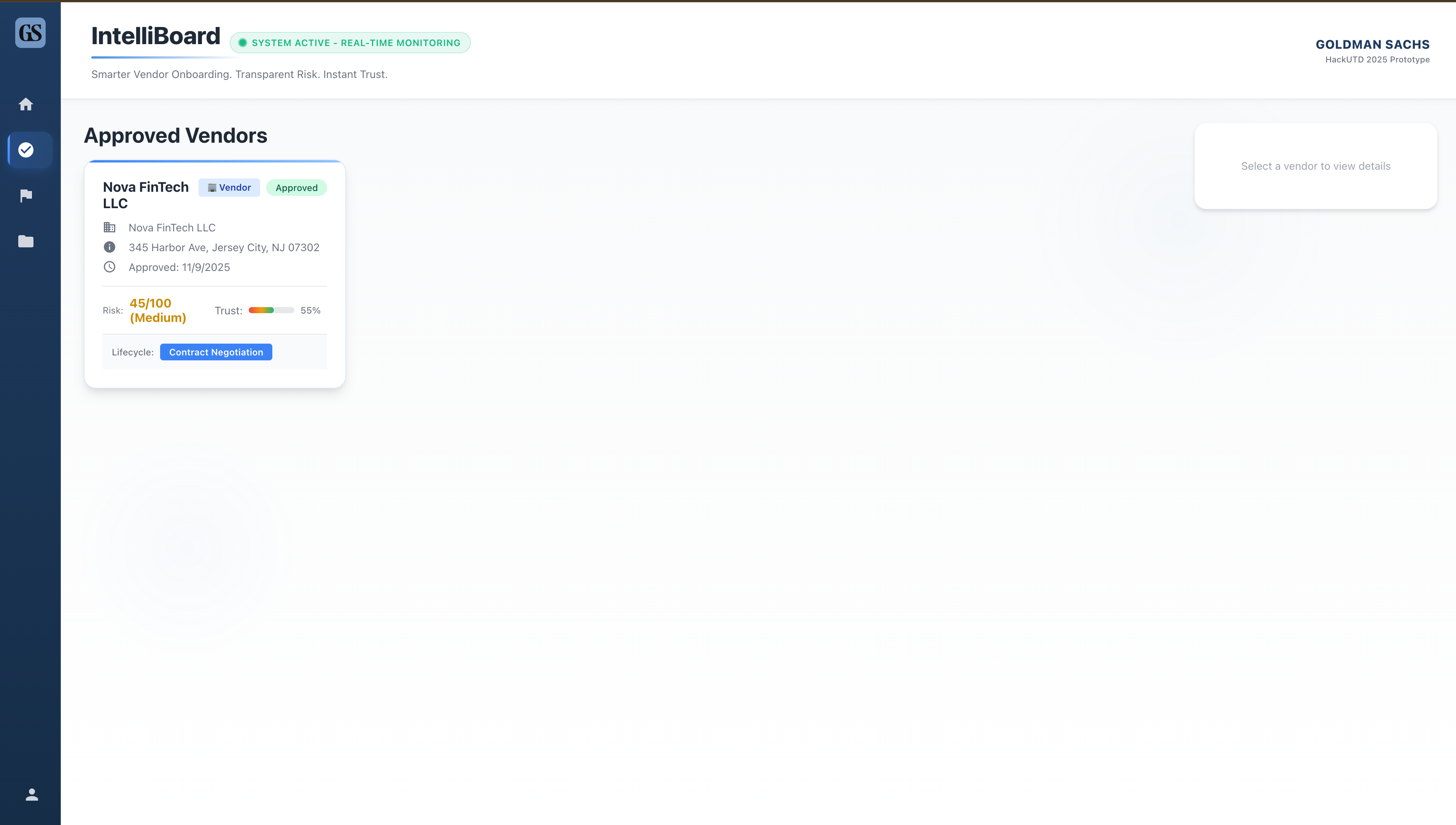
Approved Vendors
-
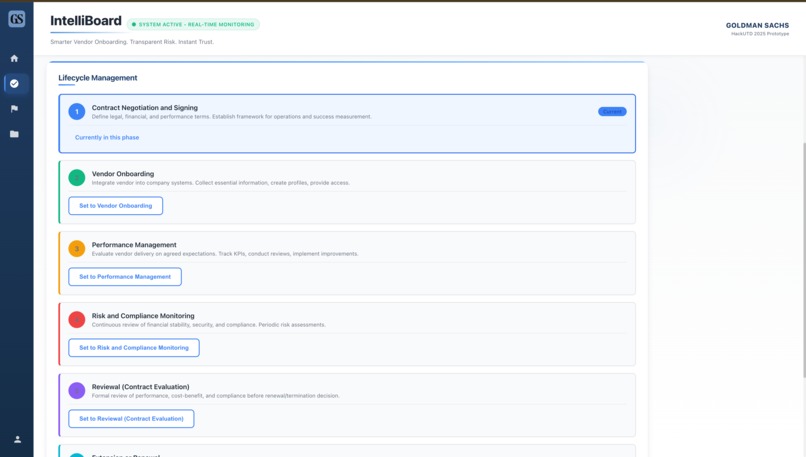
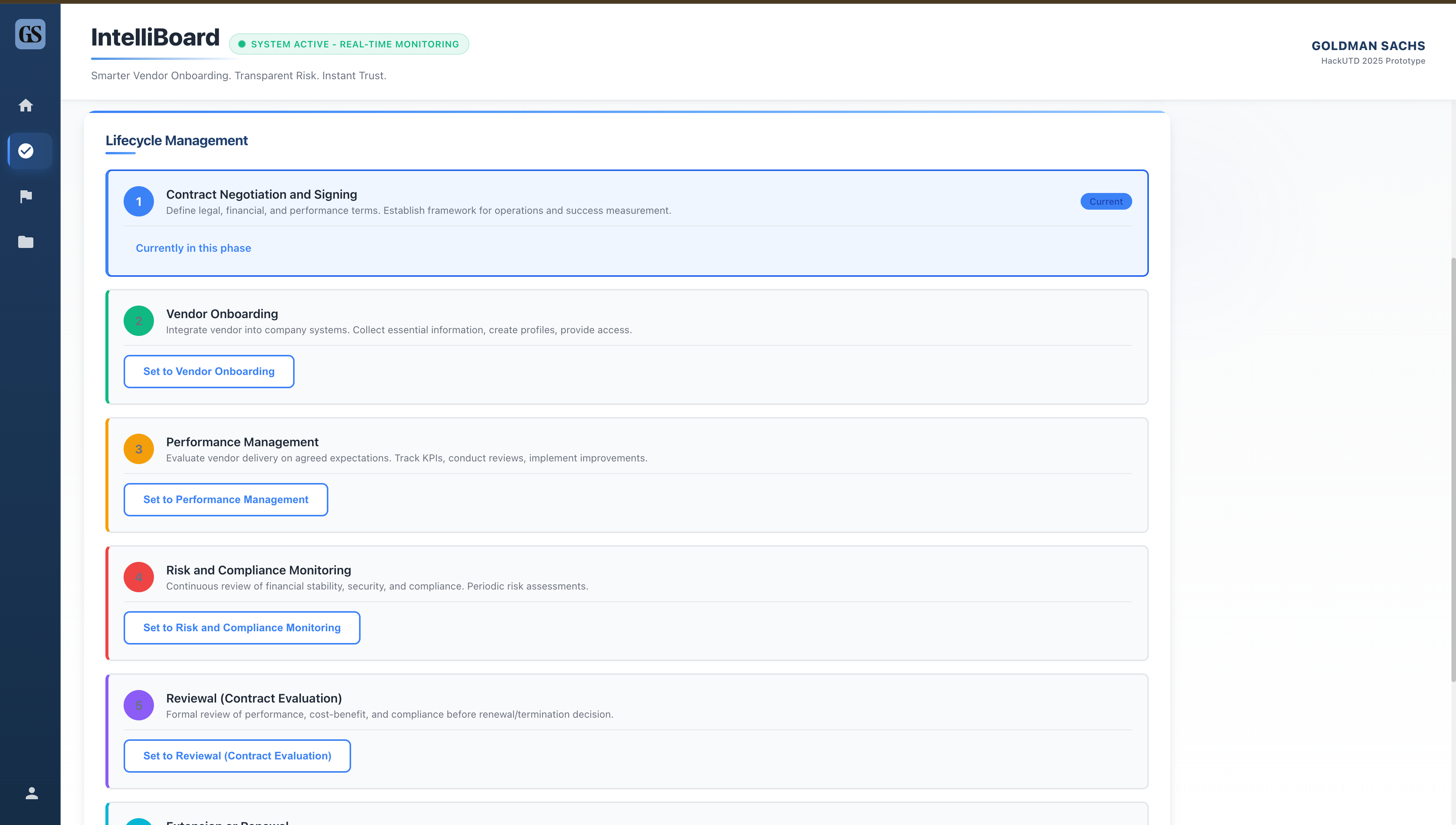
Lifecycle
-
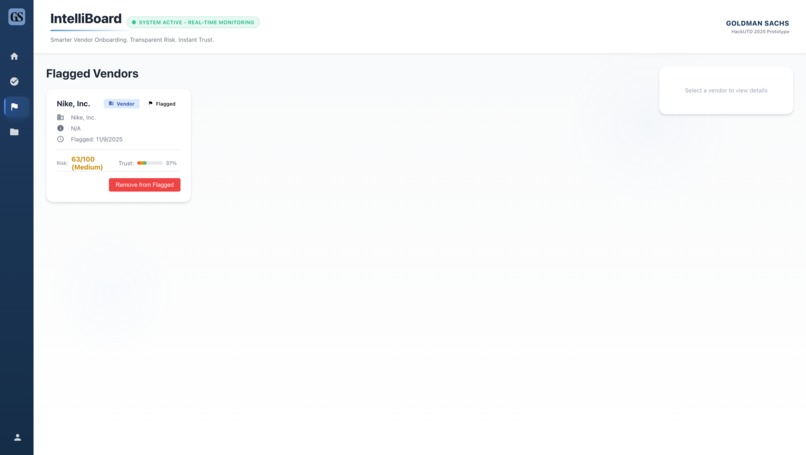
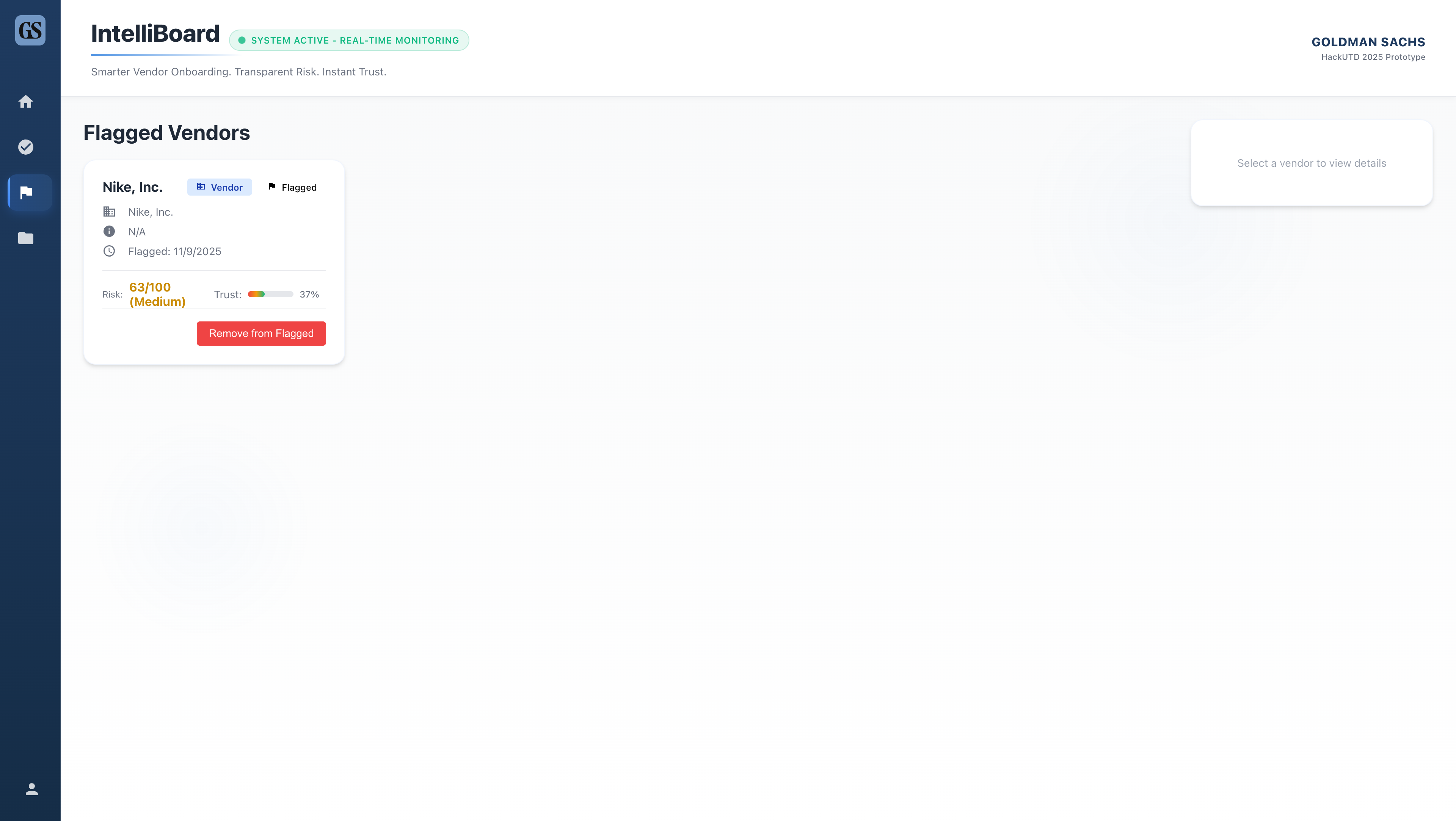
Flaged
-
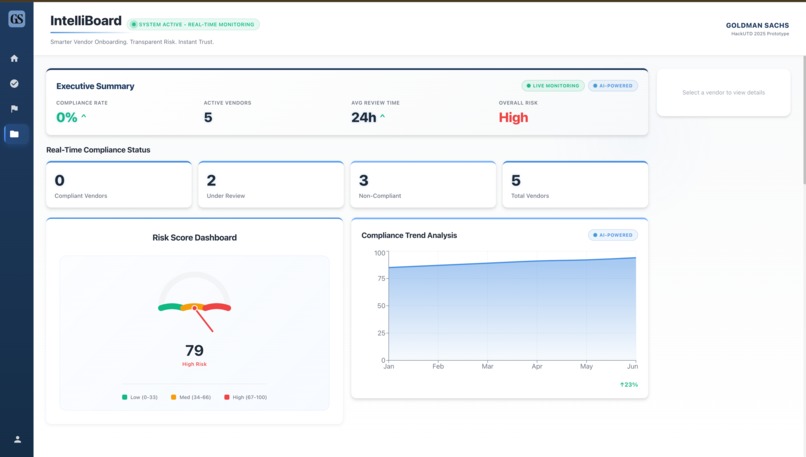
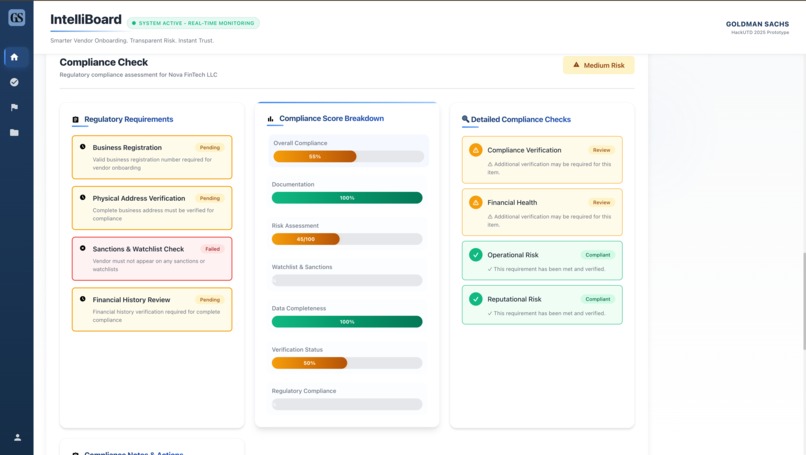
Compliance Dashboard
-
Inspiration
We noticed how vendor onboarding is usually slow, manual, and confusing. There are tons of disconnected steps: document uploads, identity checks, risk reviews, and companies have to juggle them across different tools. We wanted to build something that brings everything into one place and uses AI to speed it up.
What it does
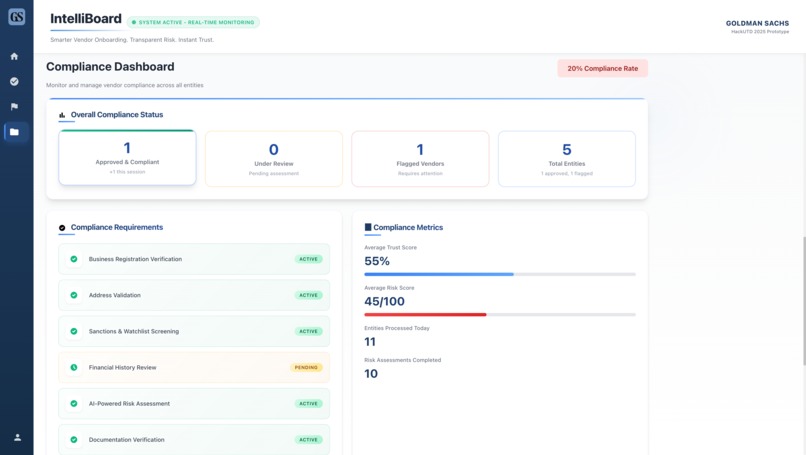
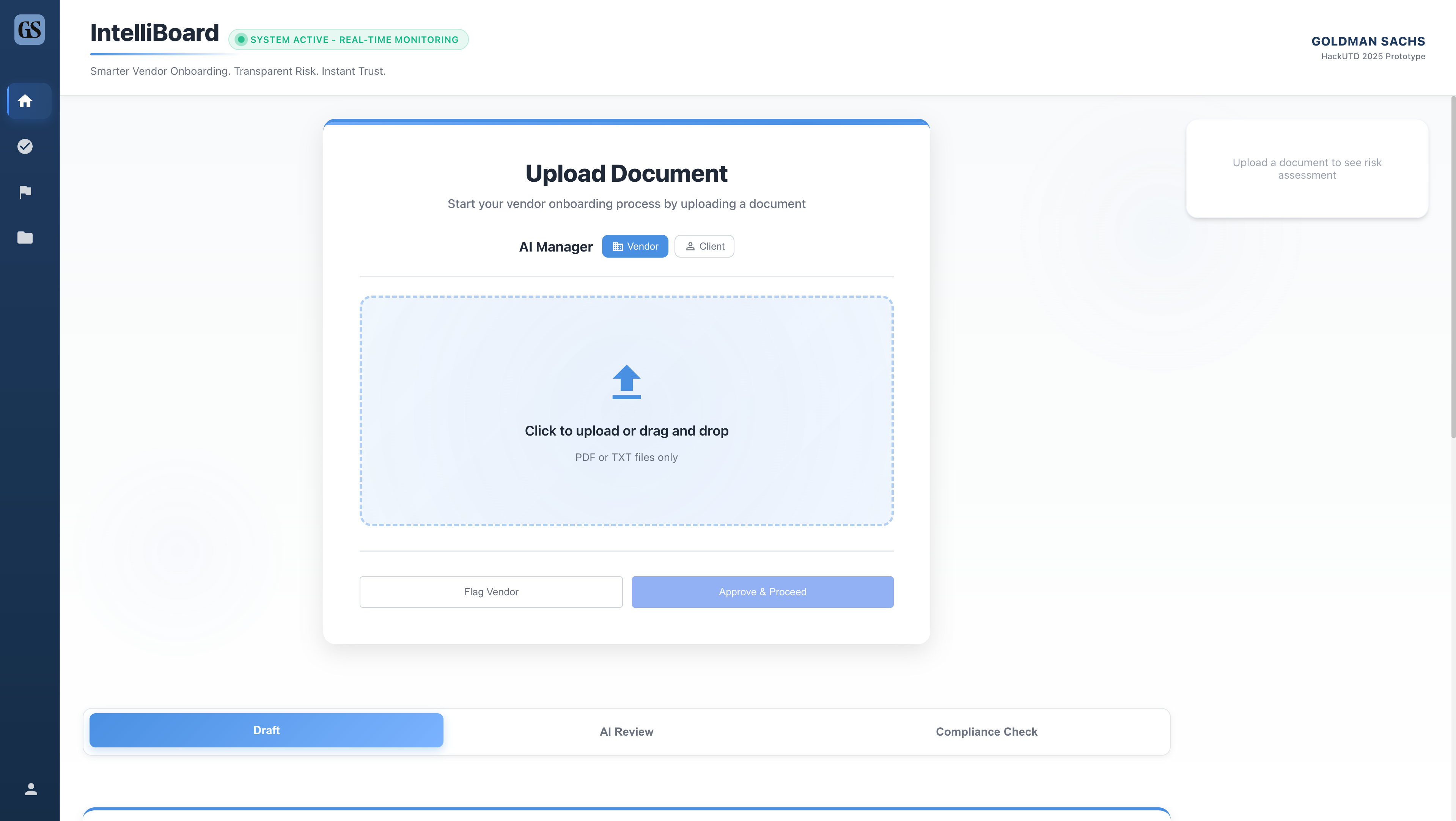
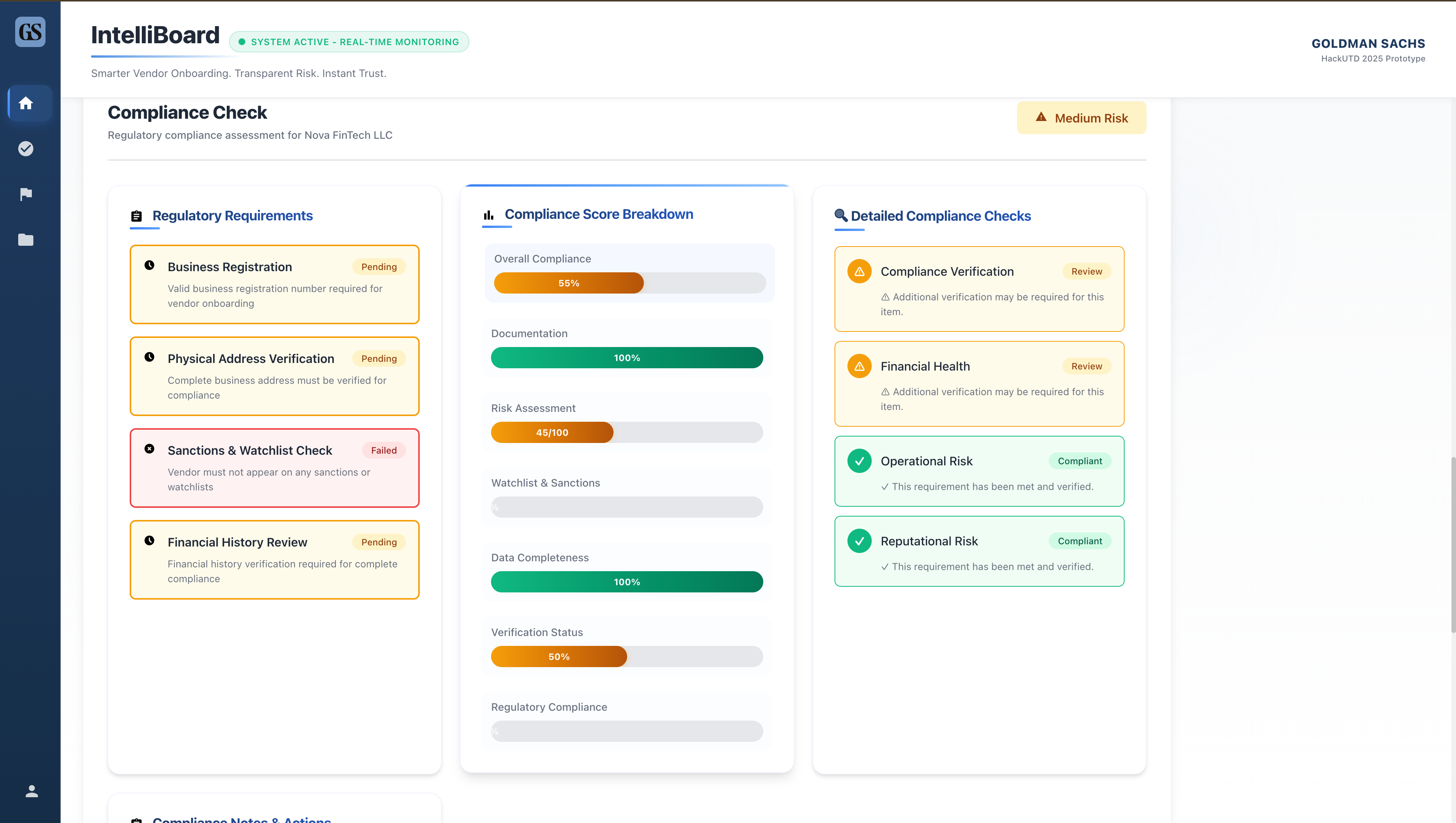
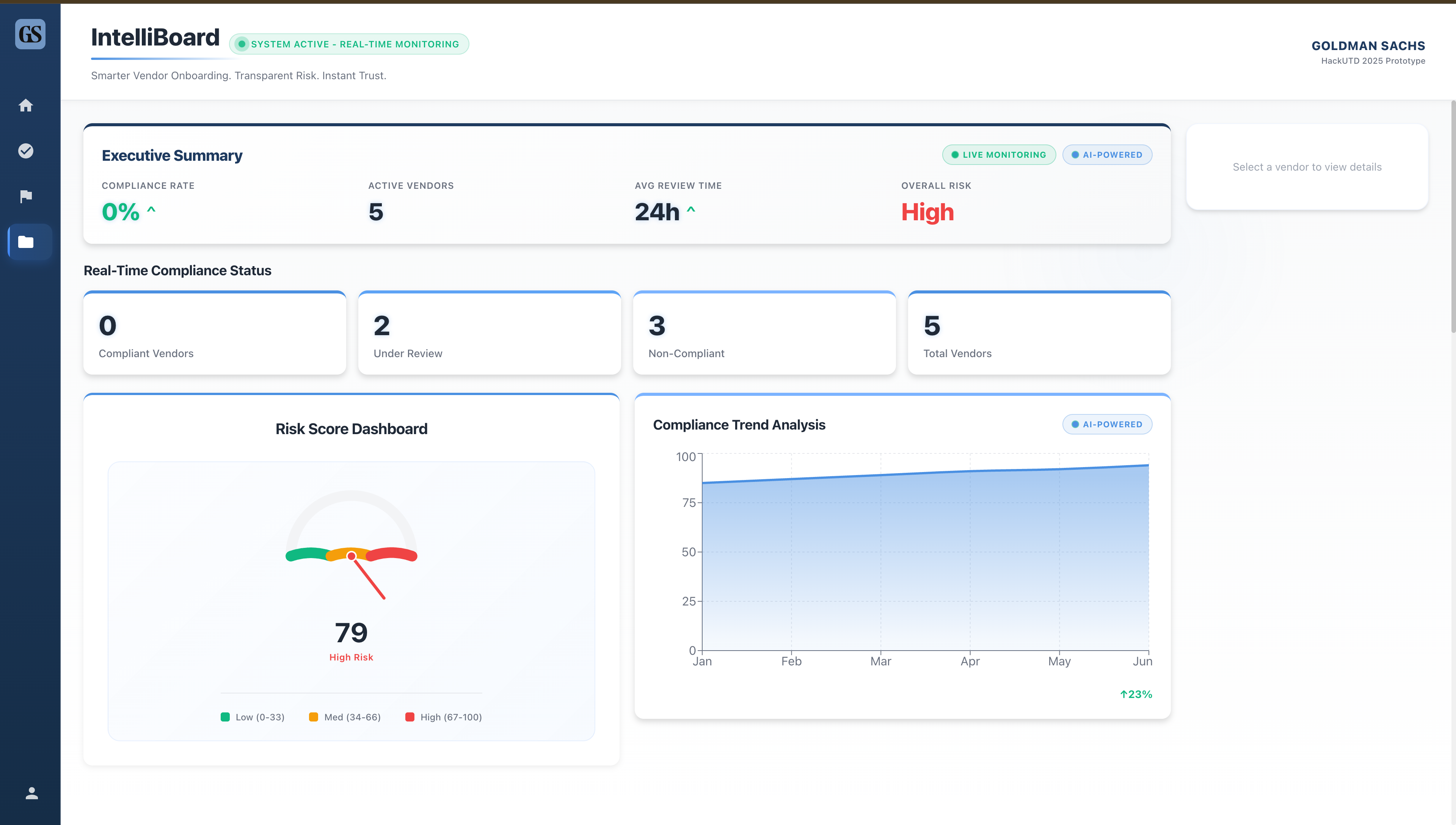
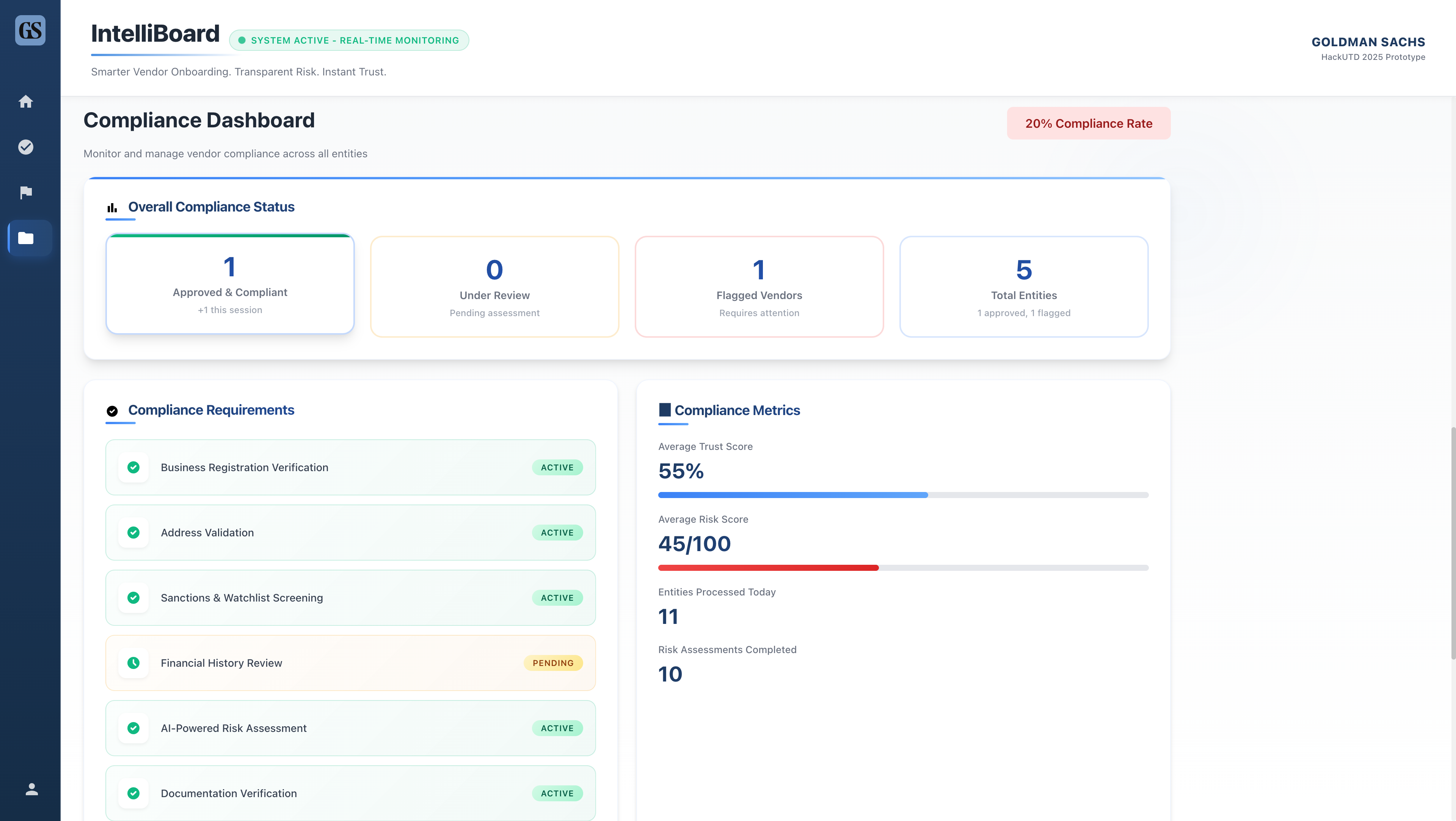
IntelliBoard automates the onboarding process from end to end. You can upload documents, and the system extracts fields, checks compliance, scores risk, and shows everything on a clean dashboard. Each vendor moves through stages like Draft, AI Review, Compliance Check, and Approved so you always know where they stand. We also made sure that sensitive information (like tax IDs, addresses, and identity details) stays local to the system and is never exposed publicly.
How we built it
We built a React + Vite frontend for the dashboard and a Flask/Node backend that handles the scoring logic, file processing, and API routes. Our AI/rule engine looks at signals like KYC completion, document consistency, bank/address matches, and fraud indicators. Everything is exchanged through simple REST endpoints to keep the system modular and easy to update. On the privacy side, any uploaded documents are processed locally, and nothing is stored longer than needed for the demo. The system is designed so that it can be extended with encrypted storage later.
Challenges we ran into
Getting the frontend and backend to communicate smoothly took some trial and error, especially with proxies and routing. Designing a meaningful risk-scoring system and keeping the UI updated across multiple lifecycle stages also took time. And of course, we ran into a few classic debugging fights with file uploads and API responses.
Accomplishments that we're proud of
We got a full onboarding pipeline working in under 24 hours - uploading a document, extracting info, generating risk scores, and updating the vendor’s lifecycle. The dashboard came together cleanly, and the rule engine turned out to be pretty flexible.
What we learned
We learned how to organize multi-step workflows, connect two separate servers, and design explainable risk metrics. We also improved in GitHub collaboration and learned how to break down features quickly under time pressure. And we got a better sense of how to think about privacy when handling sensitive onboarding data.
What's next for Onboarding
Next, we want to add more advanced checks like OCR, better fraud detection, watchlist integrations, and a more polished UI. We also want to deploy it to the cloud, add encryption for stored documents, and integrate role-based access control so only authorized users can view sensitive data.
Built With
- express.js
- flask
- json
- kyc-checks
- node.js
- python
- react
- restapi
- tailwindcss
- typescript
- vite


Log in or sign up for Devpost to join the conversation.