-
-
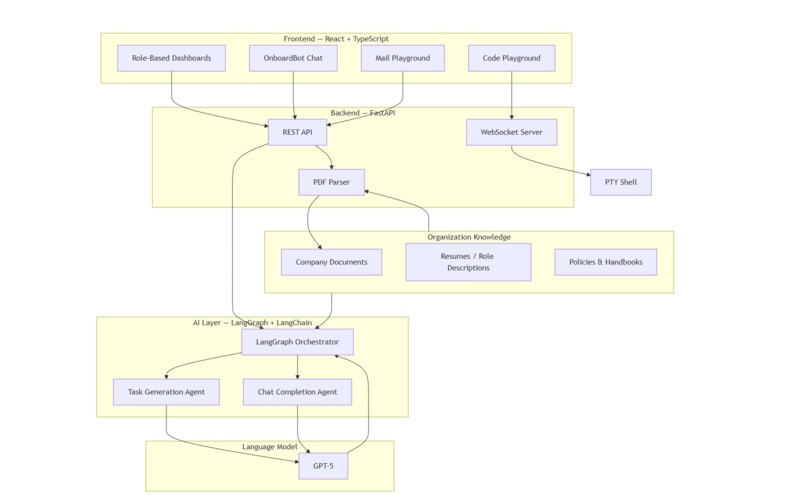
Real terminals, real AI, real architecture - no mock demos, no wrapper APIs.
-
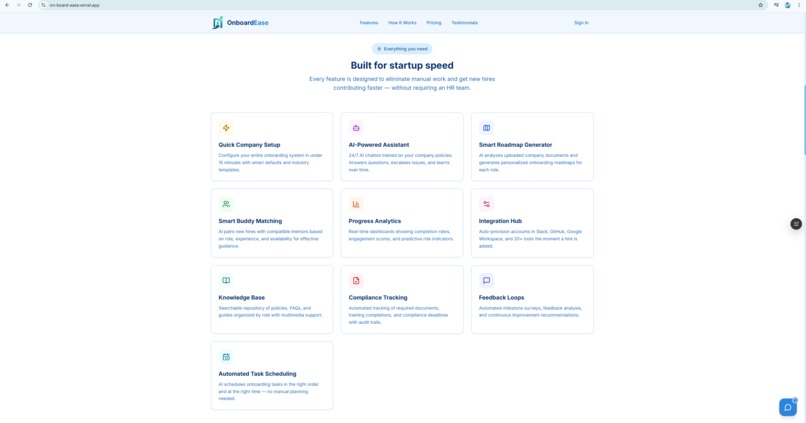
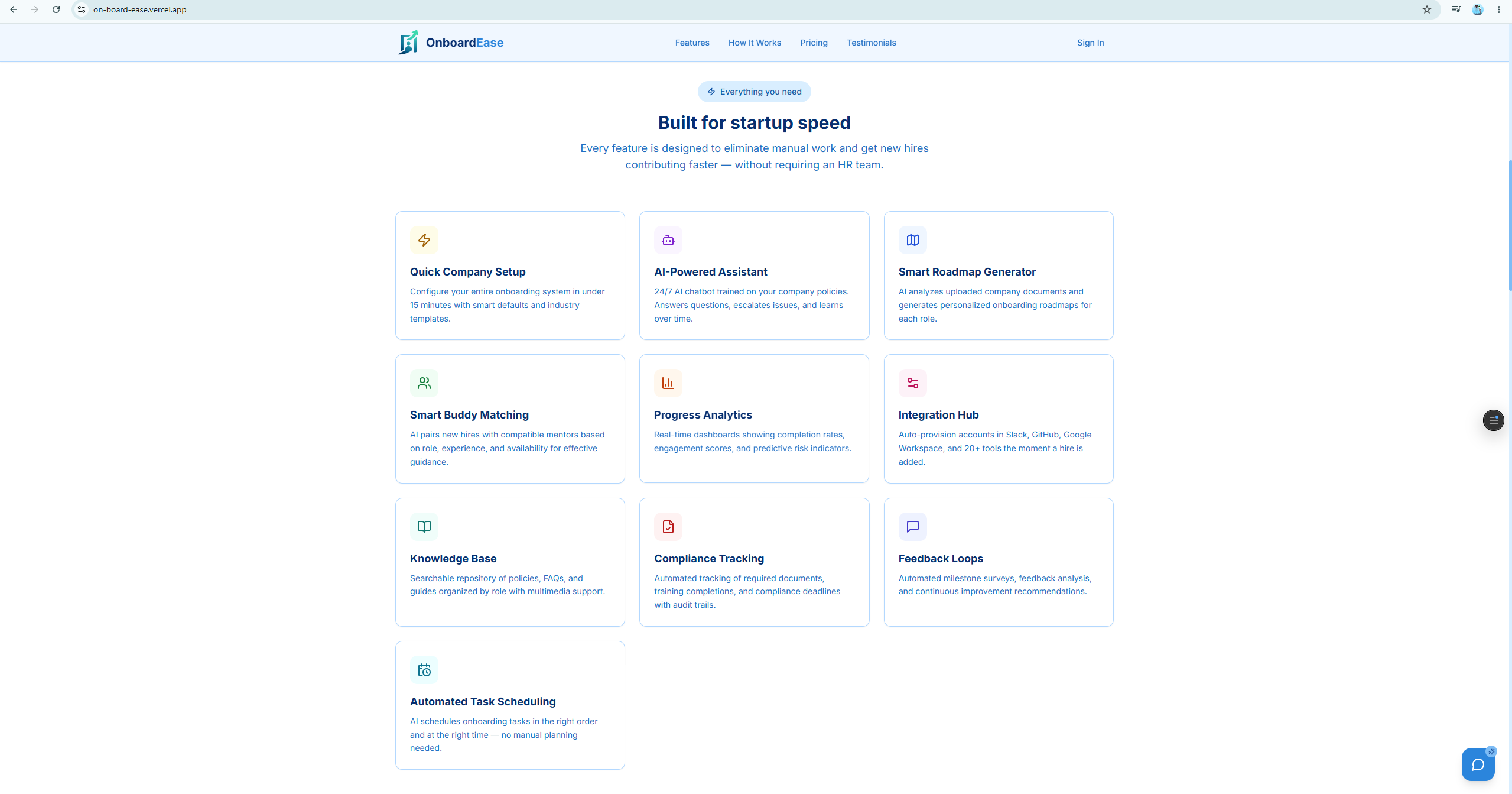
Product overview with feature highlights, social proof, and interactive demo preview
-
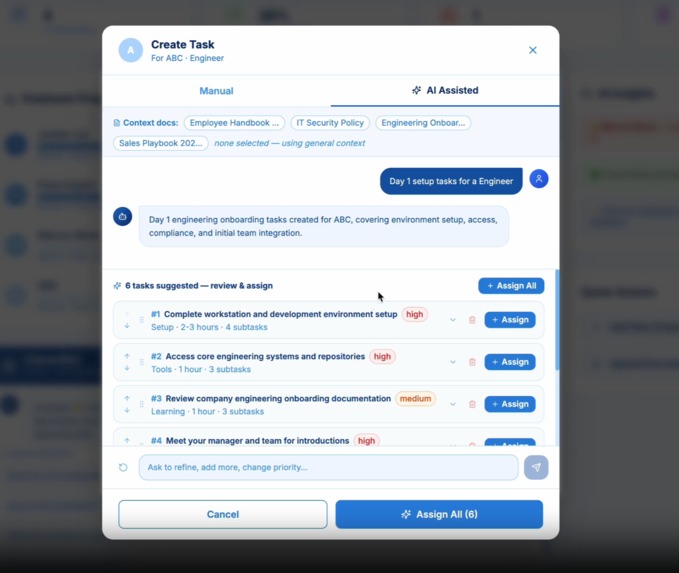
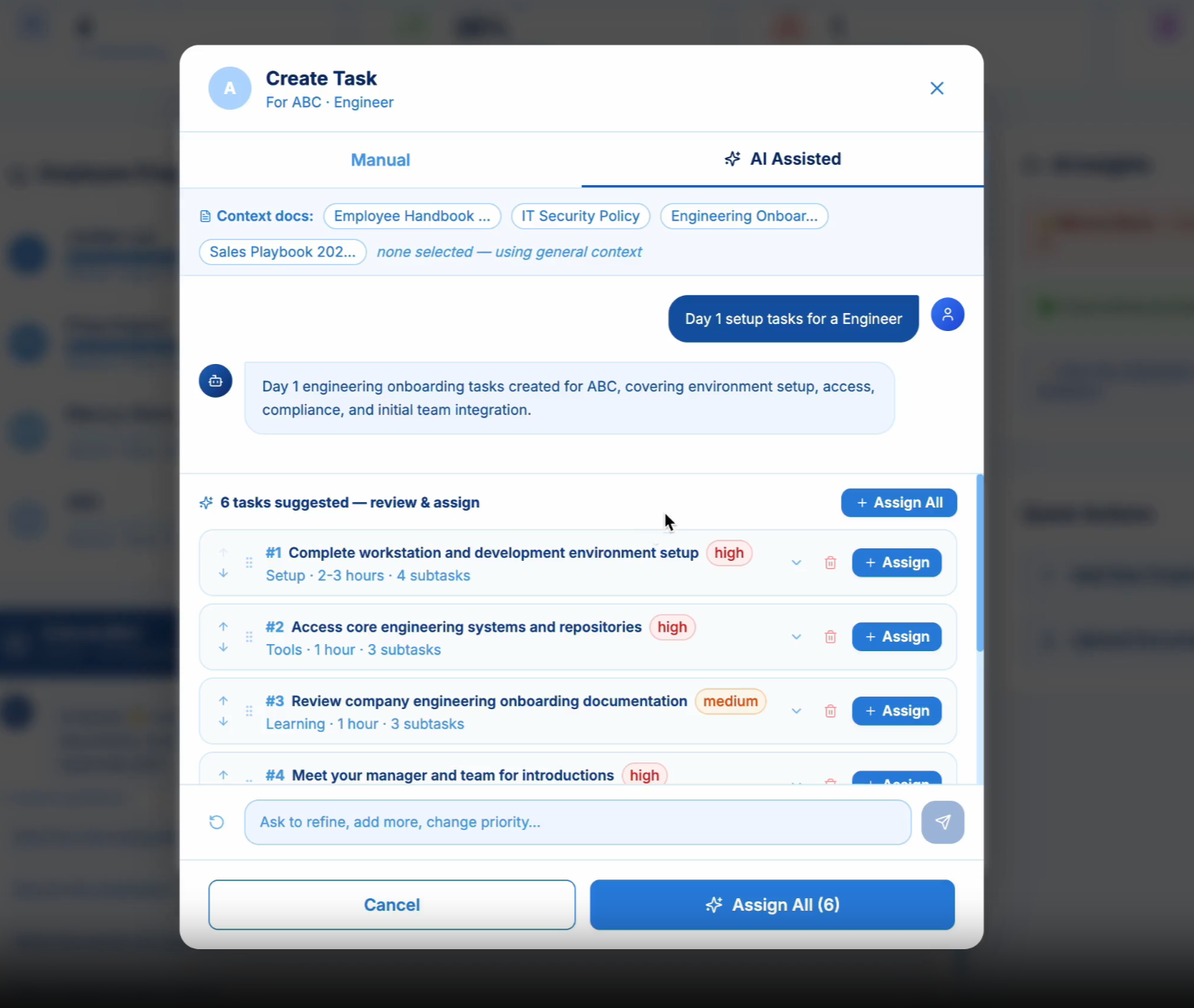
LangGraph-powered task generation interface with role context input and real-time plan output
-
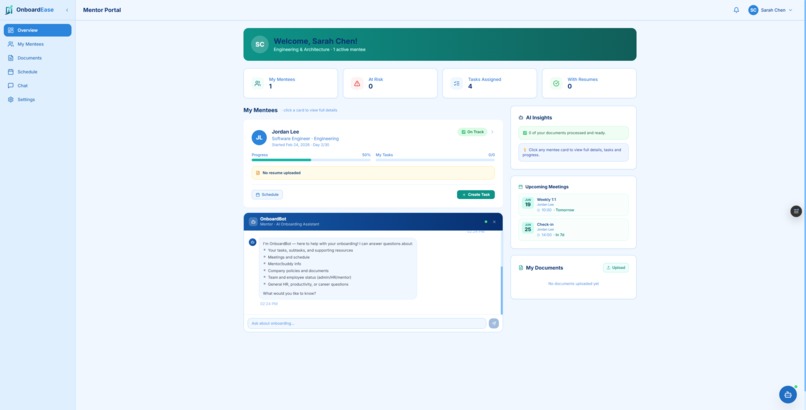
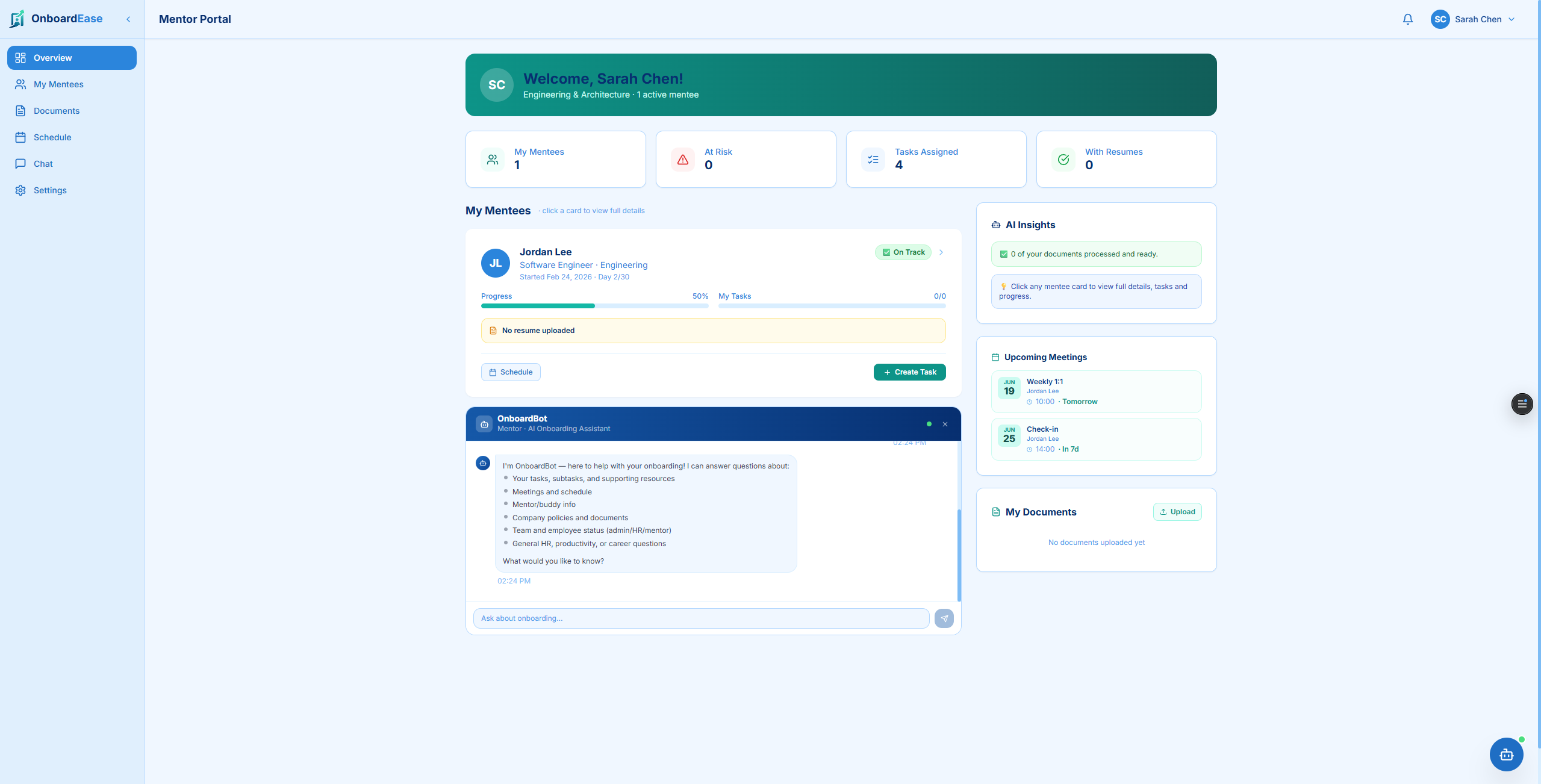
Real-time mentee tracking with task progress, engagement metrics, and AI-assisted insights
-
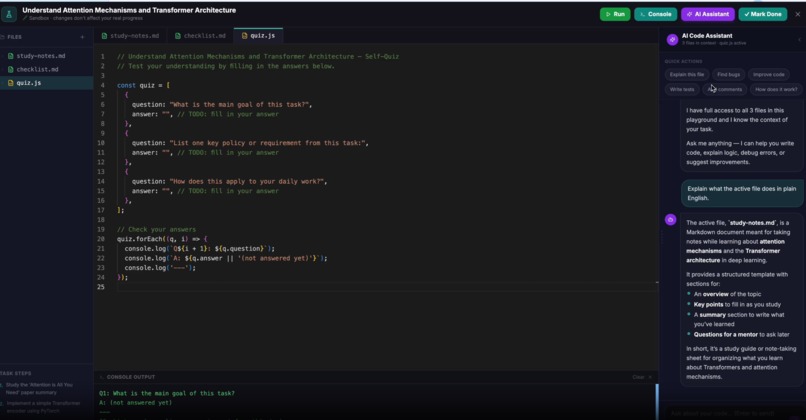
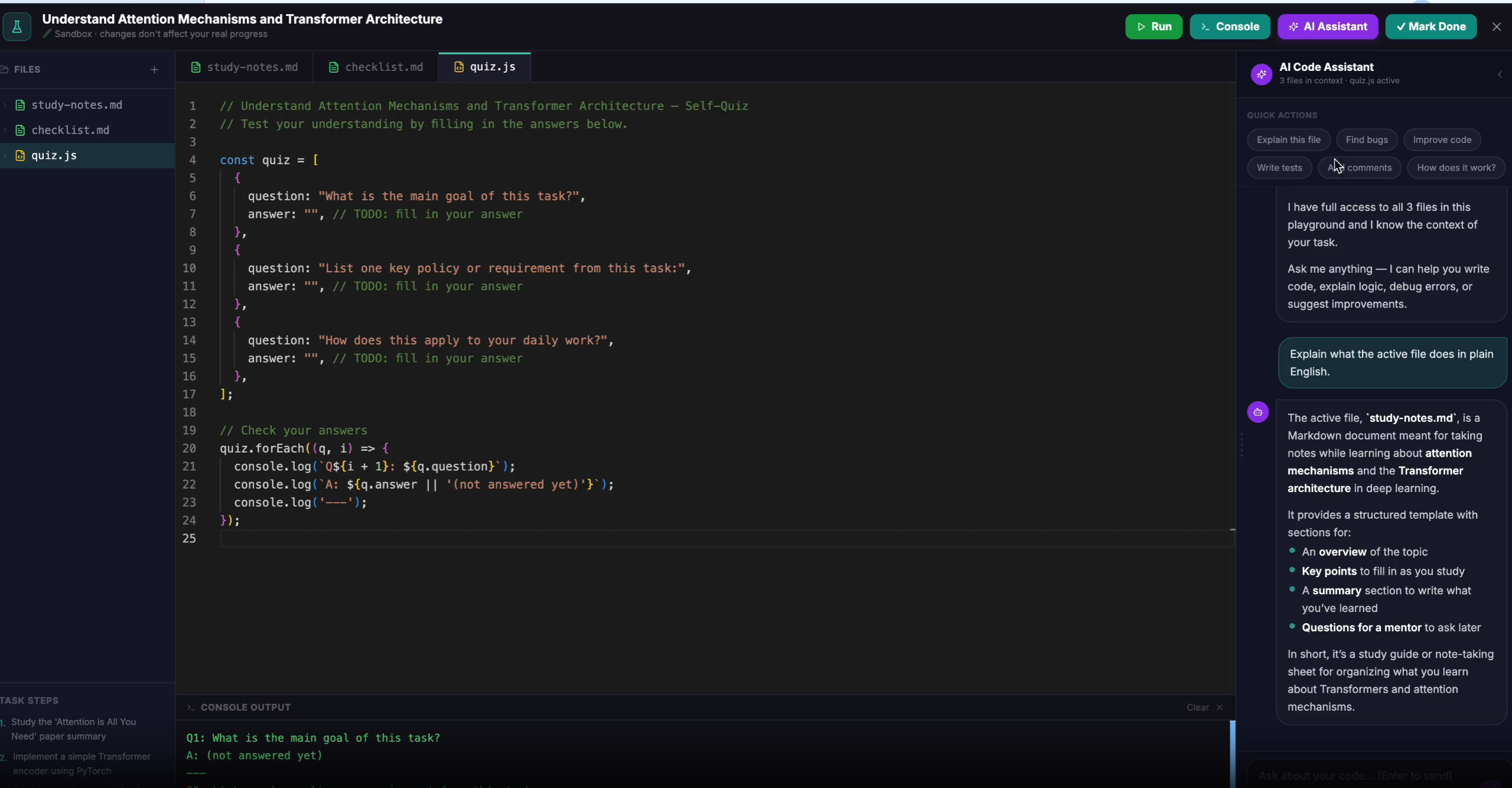
Monaco Editor + live PTY terminal for interactive technical onboarding exercises
Inspiration
Your new hire just sat through 47 slides about "company culture" and still doesn't know how to deploy to production. That's not onboarding. That's a PowerPoint hostage situation.
Companies burn $4,000+ per hire and 90 days of salary before a new employee ships anything meaningful. The problem isn't the people—it's the process. Passive PDFs, generic videos, and "shadow someone" handoffs with zero tracking, zero feedback loops, and zero proof that the person actually knows what they're doing.
We built OnboardEase because we got tired of watching smart people sit in conference rooms learning nothing while their first-month salary evaporated.
What it does
OnboardEase is an AI-powered onboarding operating system that helps organizations transform new hires into productive contributors faster.
The platform generates personalized onboarding plans using AI, adapts training based on a user's background and role, and provides interactive environments where employees can practice real-world tasks instead of simply reading documentation.
Through role-based dashboards, mentorship tracking, AI assistance, and hands-on learning environments, OnboardEase gives HR teams, managers, mentors, and employees a unified onboarding experience.
Target Users
| User Type | Challenge | How OnboardEase Helps |
|---|---|---|
| New Hire | Overwhelmed by scattered documents, unclear priorities, no single source of truth for what to do next | Personalized 30-day roadmap, AI assistant for instant answers, interactive code and email playgrounds, clear task sequencing with progress tracking |
| Mentor / Buddy | No visibility into mentee progress, unclear when to intervene, ad-hoc check-ins with no structure | Real-time mentee dashboard, task-level progress tracking, AI-generated mentee-specific task plans, structured collaboration tools |
| HR Manager | Manual task creation for every hire, repetitive document distribution, no scalable onboarding process | Bulk task generation from documents, AI-powered plan creation, organization-wide progress dashboards, automated workflow management |
| Team Lead | Slow ramp-up time for new team members, no metrics on onboarding effectiveness, inconsistent experiences across hires | Progress analytics, standardized onboarding templates, visibility into individual and team-level onboarding velocity |
| Administrator | Managing employees, mentors, documents, and configurations across the entire onboarding system | Full platform control — employee and mentor management, bulk operations, role configuration, system-wide analytics and settings |
How we built it
Technologies Used
Frontend
| Technology | Purpose |
|---|---|
| React 18 | Component-based UI with concurrent rendering |
| TypeScript 5.6 | Type-safe development across the entire frontend |
| Vite 5 | Fast build tooling, HMR, and dev server with proxy support |
| Tailwind CSS 3.4 | Utility-first styling for rapid, consistent UI development |
| React Router v6 | Client-side routing with role-based route protection |
| Monaco Editor | VS Code-grade in-browser code editor for the playground |
| xterm.js 6 | Terminal emulator rendering real PTY shell sessions |
| Axios | HTTP client for API communication |
| Lucide React | Consistent, modern icon system |
Backend
| Technology | Purpose |
|---|---|
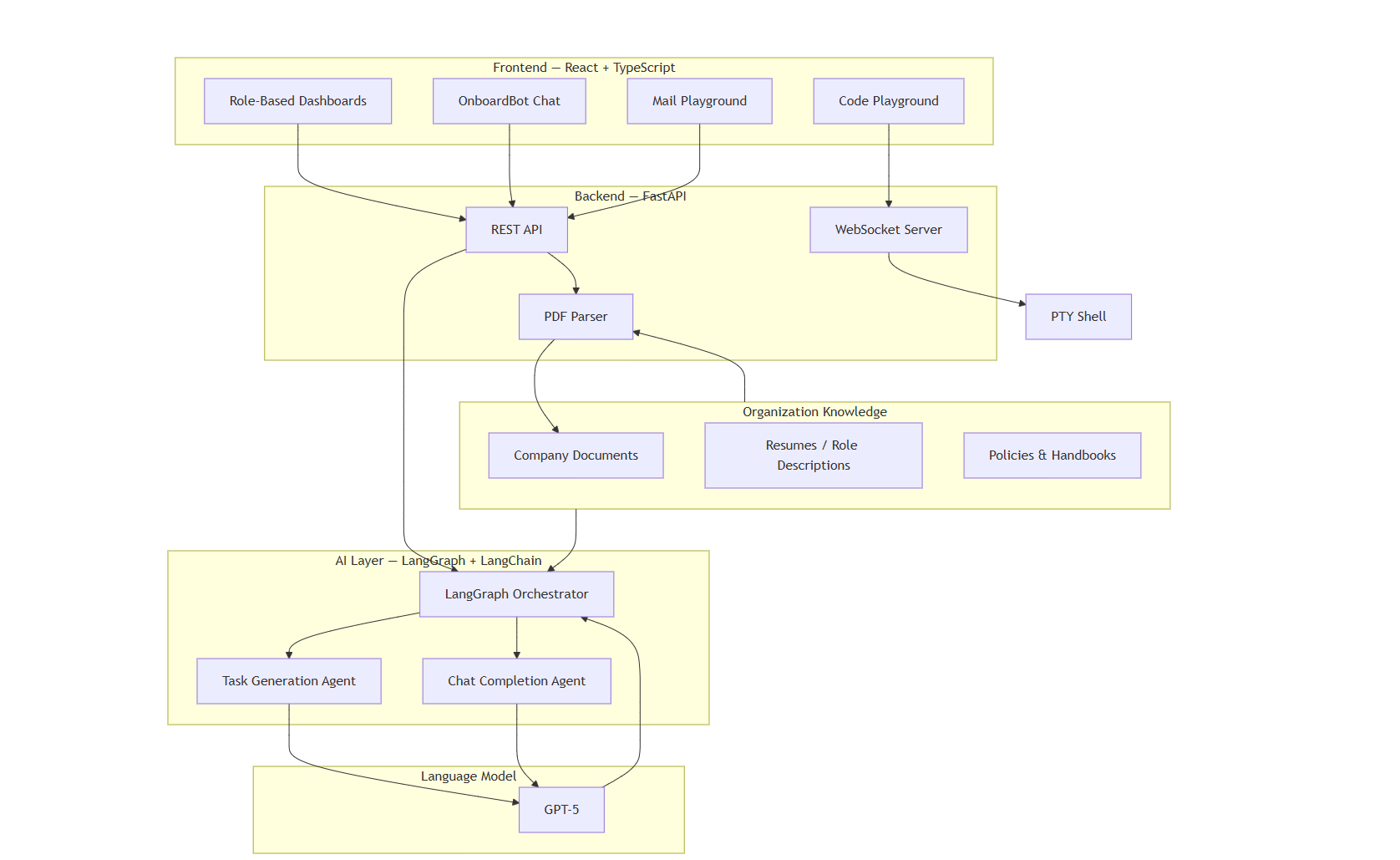
| FastAPI 0.115 | High-performance async REST API and WebSocket server |
| Uvicorn | ASGI server for production-grade request handling |
| WebSockets | Real-time bidirectional communication for PTY terminal |
| Pydantic 2.9 | Request/response validation and serialization |
| PyPDF2 | Resume and document parsing for AI ingestion |
| ptyprocess | Real PTY shell process management for the code playground |
| python-dotenv | Environment configuration management |
AI & Automation
| Technology | Purpose |
|---|---|
| LangGraph 0.2 | Agentic workflow orchestration for multi-step AI tasks |
| LangChain 0.3 | LLM abstraction layer, prompt management, and chain composition |
| GPT-5 | Core language model for task generation, chat, and document analysis |
| AIML API | Model inference endpoint for OnboardBot and email simulation |
Infrastructure & Tooling
| Technology | Purpose |
|---|---|
| Node.js 18+ | Frontend runtime environment |
| Python 3.12+ | Backend runtime environment |
| PostCSS + Autoprefixer | CSS processing pipeline |
| ESLint + TypeScript Compiler | Code quality and type checking |
Challenges we ran into
Real PTY in the browser is a security nightmare. We couldn't just expose a shell to every new hire. We had to build session isolation, command filtering, and environment sandboxing into the WebSocket layer while maintaining the native terminal feel.
LangGraph state management for multi-role workflows. Getting an AI agent to generate a sales onboarding plan vs. a dev onboarding plan required completely different tool schemas and context windows. We had to build dynamic graph routing that switches agent behavior based on role metadata without spinning up separate models.
Resume parsing accuracy. PyPDF2 extracts raw text, but resumes are messy—columns, tables, graphics. We built a preprocessing pipeline that normalizes layout, extracts structured entities (skills, experience, education), and feeds clean context into the LangGraph task generator.
Role-based dashboard complexity. Four distinct user types with completely different permissions, data views, and action sets. We used React Context for global state but had to carefully design component isolation so a New Hire dashboard never accidentally exposed admin-level employee management APIs.
Accomplishments that we're proud of
We built a system where a new developer can go from "never seen this codebase" to "fixed a bug and got AI code review" in under 10 minutes. No setup scripts, no local environment configuration, no "ask IT for access."
The PTY terminal works. It's not a mock terminal. It's not a pre-recorded demo. It's a real bash shell in the browser, and it feels exactly like local development.
We replaced the entire onboarding lifecycle with measurable execution. HR doesn't guess if someone is ready—they see a skill score. Managers don't wonder if mentoring is working—they see completion velocity. New hires don't fake understanding—they prove it by shipping.
What we learned
Onboarding isn't an HR problem. It's an engineering problem. If your new hire can't push code on day three, your onboarding is broken.
We also learned that AI agents are only as good as their context. LangGraph is powerful, but without clean document ingestion and structured resume parsing, it generates generic garbage. The magic isn't the model—it's the pipeline that feeds the model.
Finally, we learned that UX matters more than features in B2B tools. A mentor will not use a dashboard that takes 8 clicks to check progress. We optimized every workflow to be discoverable in 2 clicks or less.
What's next for Onboard-Ease : STOP MAKING NEW HIRES READ PDFs.
Stop making new hires read PDFs.
We're expanding the simulation engine to support custom scenario authoring—let companies build their own deal simulations, crisis management drills, and code challenges without writing code. Next: AI voice onboarding for remote hires, SSO integration for enterprise deployment, and analytics APIs that plug into existing HRIS systems.
The goal is simple: every new hire should be productive by day three, not day ninety.
Built With
- aiagents
- fastapi
- gpt-5
- langchain
- langgraph
- monaco-editor
- react
- typescript
- websockets
- xterm.js

Log in or sign up for Devpost to join the conversation.