-
-
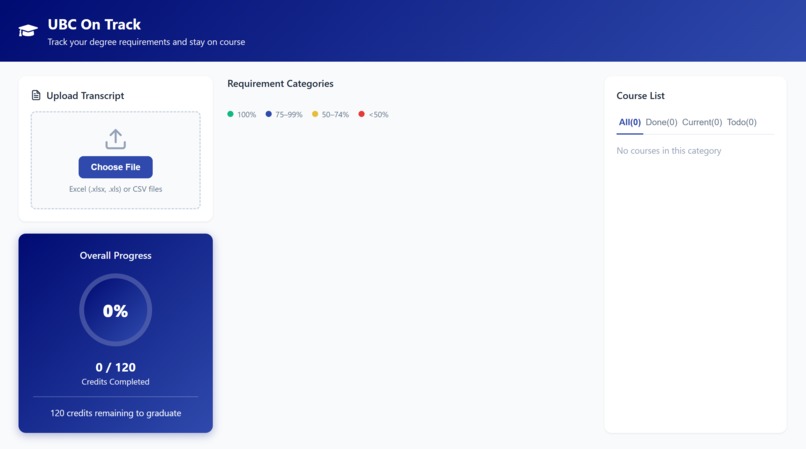
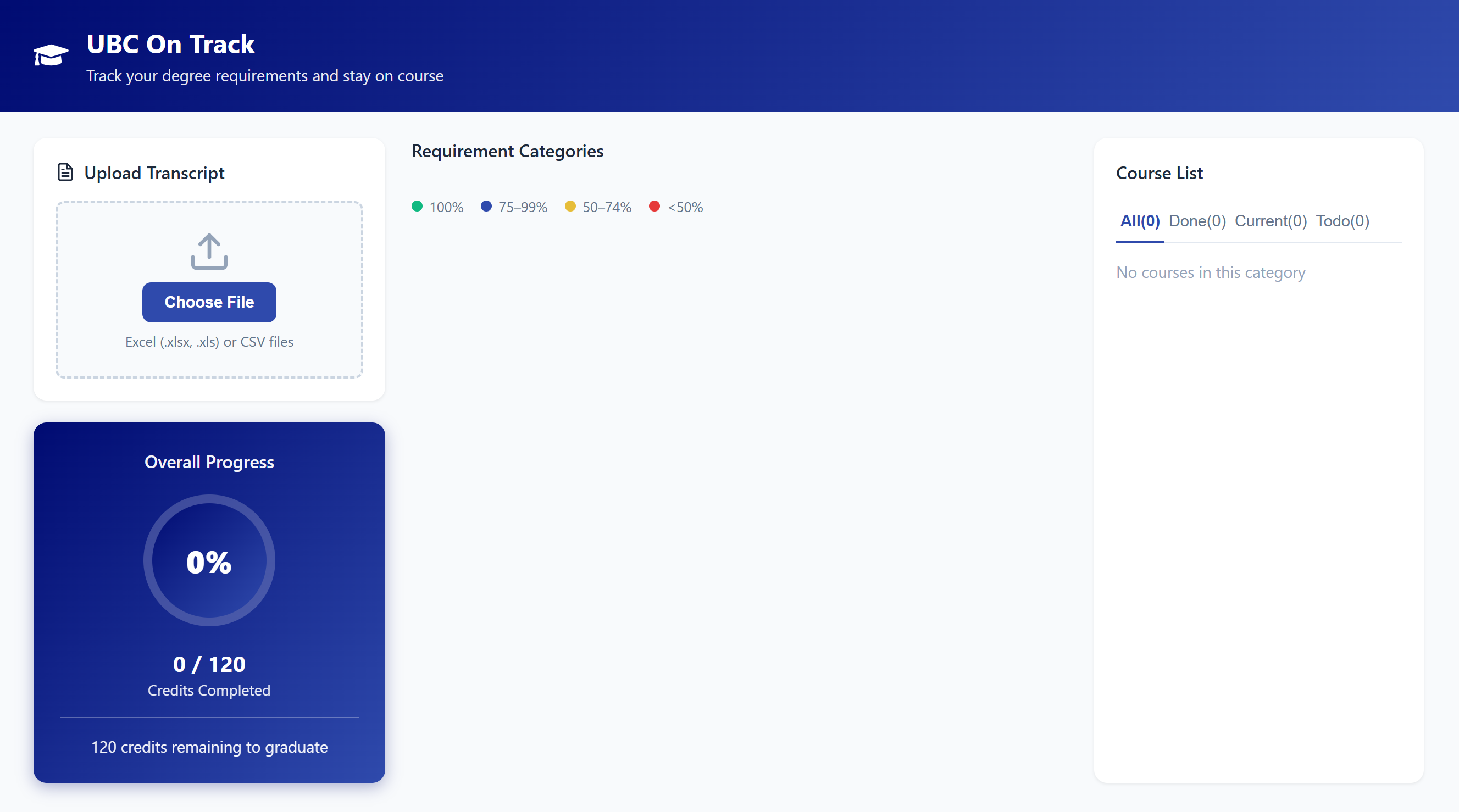
Starting Page
-
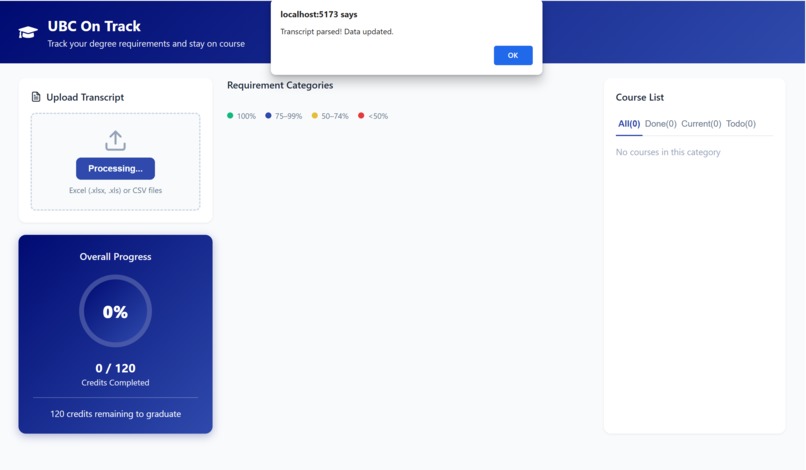
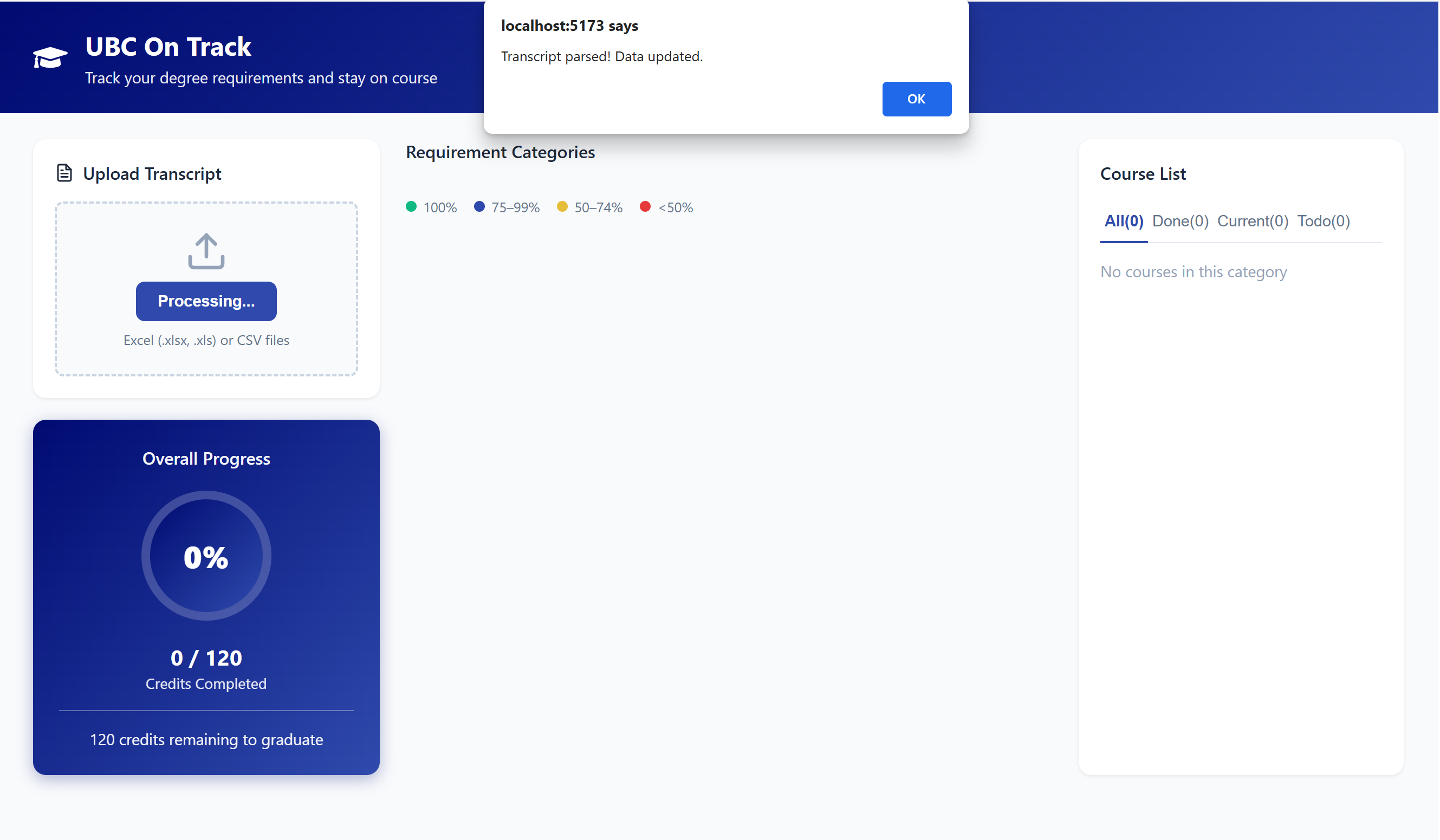
File Uploaded
-
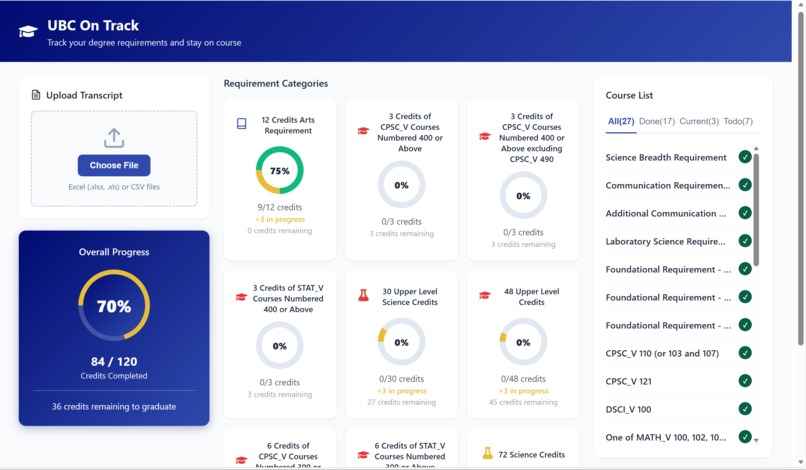
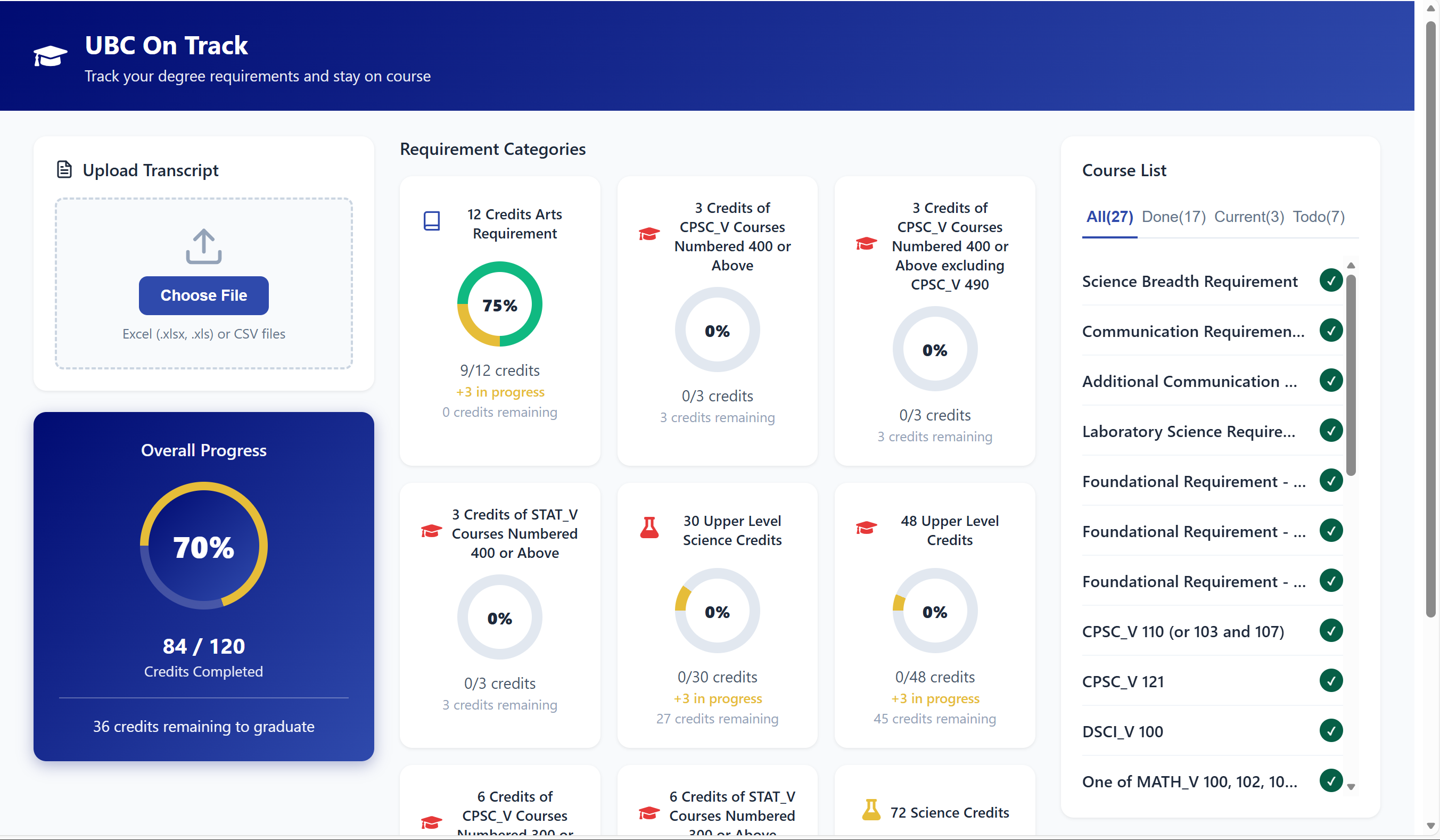
Degree Progression
-
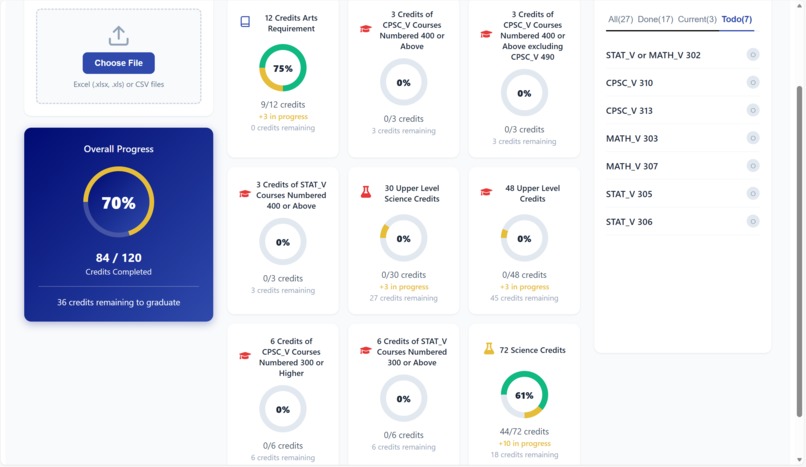
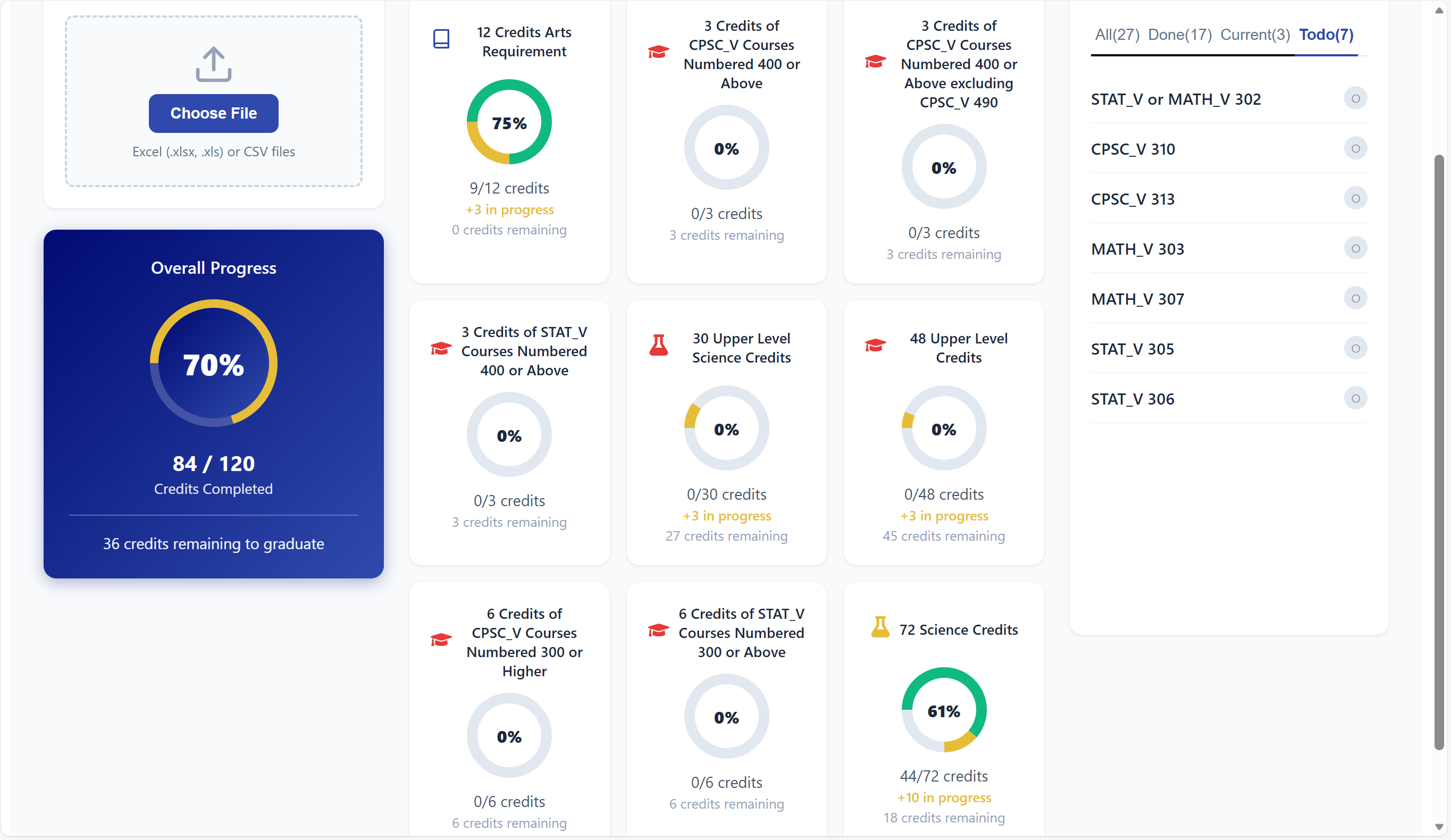
Degree Progression Continued
Inspiration
Workday is a powerful enterprise tool, but for a student trying to plan their future, its "Academic Progress" UI is a nightmare. It’s a wall of redundant text, buried menus, and non-intuitive tables that make course planning much more difficult. We built this to liberate student data from the "Workday fog" and turn it into a dashboard that actually makes sense at a glance.
What it does
Our app acts as a "Workday Skin" and intelligence layer. A student simply exports their "View My Academic Progress" Excel sheet from Workday—a file that is normally a mess of 80+ rows of unstructured data—and uploads it to our platform. Our Python backend instantly parses the Workday-specific status labels to generate a visual, interactive dashboard featuring credit-tracking analytics and "Requirement Cards" that tell you exactly what you need to graduate.
How we built it
- React & TypeScript: For a fast, responsive UI that replaces the slow, multi-click experience of Workday.
- Python: Specifically used to "untangle" the Workday Excel export, handling the edge cases of how Workday lists "Satisfied" vs. "In Progress" courses.
- CSS3: Utilized modern layout techniques and conic-gradients to build lightweight, custom visualizations without the bloat of external libraries.
Challenges we ran into
The most significant technical hurdle was overcoming Workday’s "vague" requirement logic. Currently, when a complex requirement like Science Breadth or Upper-Level Electives isn't met, Workday simply marks it as "Unsatisfied" without clarifying which specific credits are missing. We sidestepped this by including this in the list of incomplete courses section.
Accomplishments that we're proud of
We’re proud of creating a "Zero-Learning-Curve" interface. While Workday requires a manual to navigate, our dashboard is intuitive. We successfully mapped complex degree logic (like science breadth and upper-level requirements) into a simple, horizontal-scrolling UI that feels like a modern consumer app rather than a tabled database.
What we learned
We learned that the biggest hurdle in academic planning isn't a lack of data, but a lack of clarity. Navigating the "Workday fog" taught us how to build a robust Python data pipeline capable of handling, real-world data exports and transforming them into a structured JSON state. Ultimately, this project showed us how a "user-first" interface can turn a stressful administrative task into a clear, actionable roadmap for graduation.
What's next for On-Track
Currently, On-Track can't accurately count total degree credits remaining just based on the data available, which is something we want to fix. We plan to add a "Course Shopping" feature where students can see how potential Workday course registrations would impact their degree progression before they even enroll in them. We also want to suggest courses based on prerequisites and similar courses.

Log in or sign up for Devpost to join the conversation.