-
-
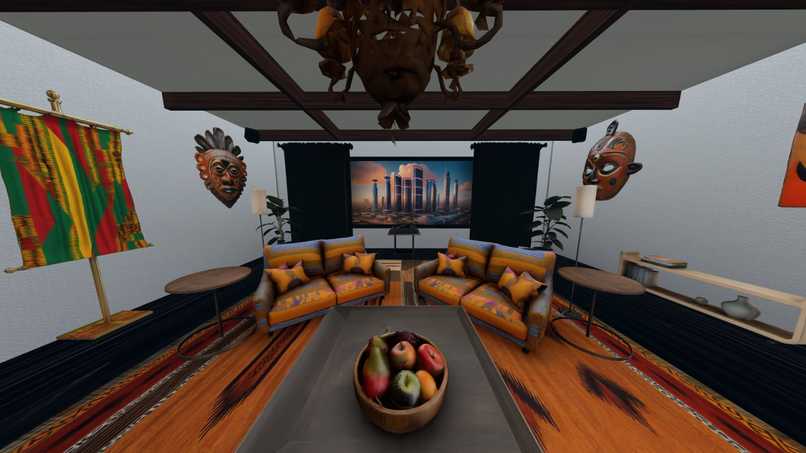
The stage is Cozy
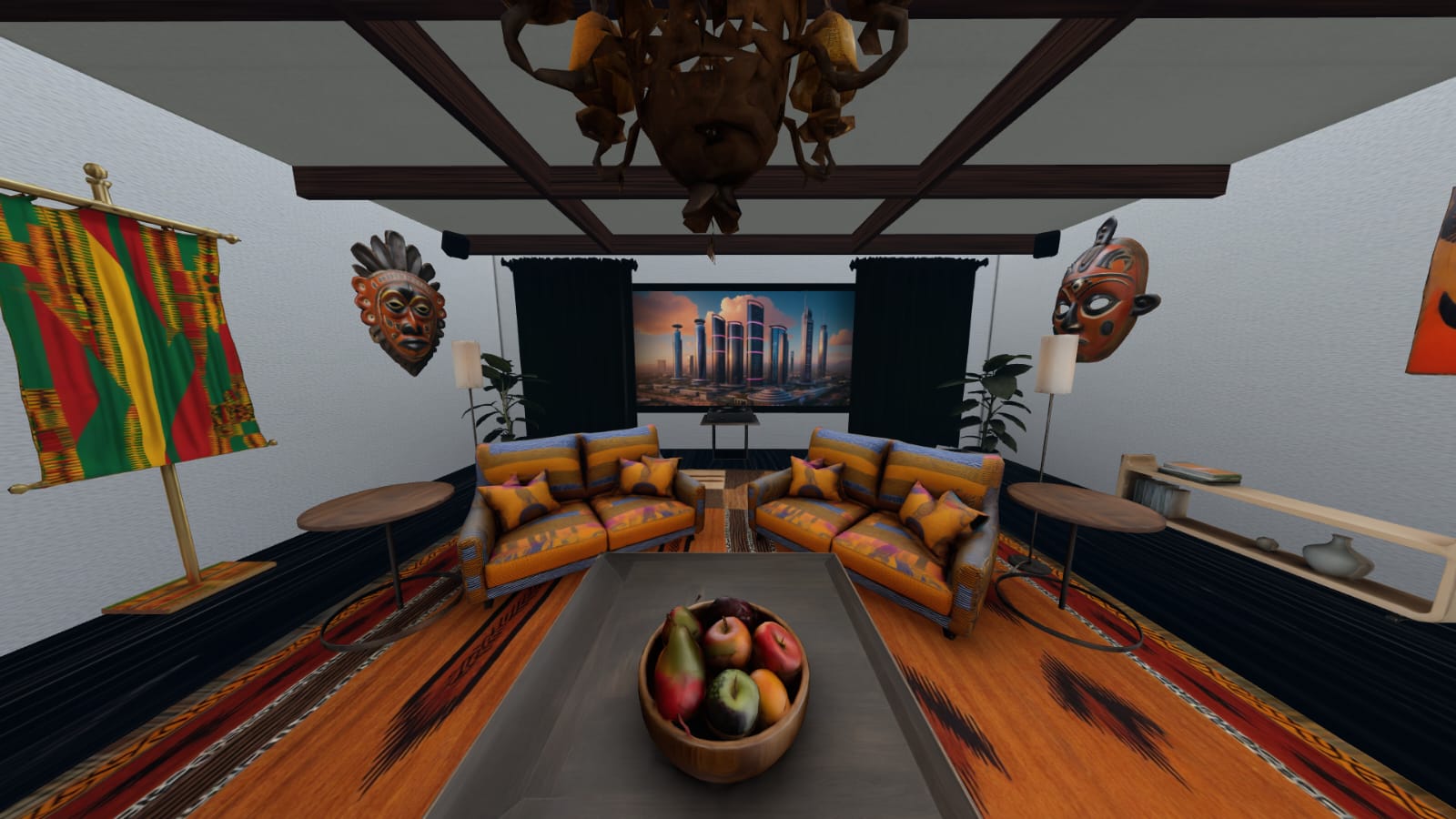
Inspiration
This project was born from a desire to build a bridge to the diaspora. As an artist, I often feel that my people are not represented the way they should be, so I use my gifts and talents to paint not just feelings, but also the visions in my head.
Having spoken at TED Talks and at schools internationally, I’ve seen the power of sharing stories and connecting with others face-to-face. But I wanted to bring that same energy into the metaverse, creating a place where I could connect with people globally without ever leaving my home.
The podcast studio is my way of blending art, culture, and technology into a space that feels both professional and deeply personal.
What it does
The podcast studio provides a dedicated metaverse environment where conversations, interviews, and creative storytelling can take place. It’s an immersive room designed to feel like a real podcast studio, with walls, floor, lighting, and space for microphones, chairs, and a central desk.
Most importantly, it creates a stage for global voices a digital place where communities can connect, share perspectives, and feel represented.
How we built it
I began with an empty studio shell, keeping it simple with clean walls, a wooden floor, and neutral lighting.
From there, I prepared an asset list including microphones, chairs, a podcast desk, lighting rigs, and an "Cozy Apt".
To challenge myself, I used Horizon Worlds Meta Gen AI to generate all assets and textures, refining prompts until they matched the vision.
I followed a phased build plan: starting with the environment, then layering furniture, equipment, lighting, and finally interaction scripts.
This workflow gave me a flexible foundation while ensuring I could add personality and details later without sacrificing performance.
Challenges we ran into
Optimization vs. realism: I wanted the studio to feel authentic, but I had to be careful with object counts and texture complexity.
Lighting balance: Too few lights made the room flat, too many affected performance. Finding the right mood took iteration.
Spatial design: Making sure 2–4 avatars could sit naturally at the desk without clipping into walls required repeated testing.
Prompt precision: Using Meta Gen AI forced me to sharpen my descriptions — small wording changes could drastically change the generated results.
Accomplishments that we're proud of
Building a fully empty, customizable studio shell that serves as a creative canvas.
Successfully using Meta Gen AI for every asset, proving to myself that AI can extend artistic vision when guided carefully.
Designing a world that is both functional and symbolic: a space where voices can connect across borders.
Staying true to my mission of representation and cultural storytelling in a new digital medium.
What we learned
That environment-first design is crucial, a solid shell makes everything else easier.
That AI is a powerful creative partner but requires clear communication through prompts.
That immersion is built from details like lighting, small props, and spatial layout.
That building in Horizon Worlds is not just technical, it’s deeply personal when tied to real-world purpose.
What's next for On the Horizon
Add interactive elements: a “Record” button that lights up the “On Air” sign and plays ambient audio.
Refine branding and décor, adding cultural elements that reflect my identity and community.
Create a rotation of themes: a neutral studio, a live-event stage, and a creative showcase environment.
Use the space to host real conversations with people globally turning the studio into a living bridge of dialogue and representation.
Built With
- ai
- gen
- meta


Log in or sign up for Devpost to join the conversation.