-
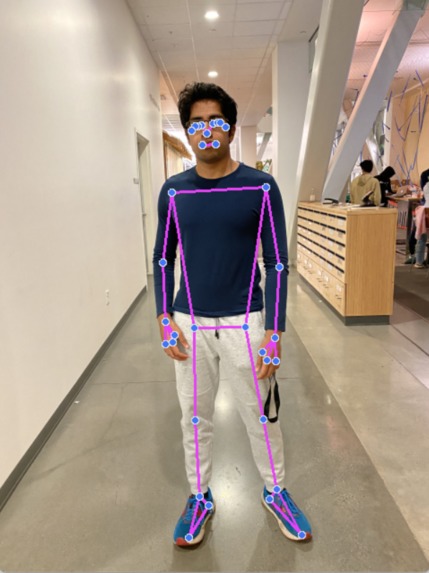
Target User- Body Pose Estimation
-
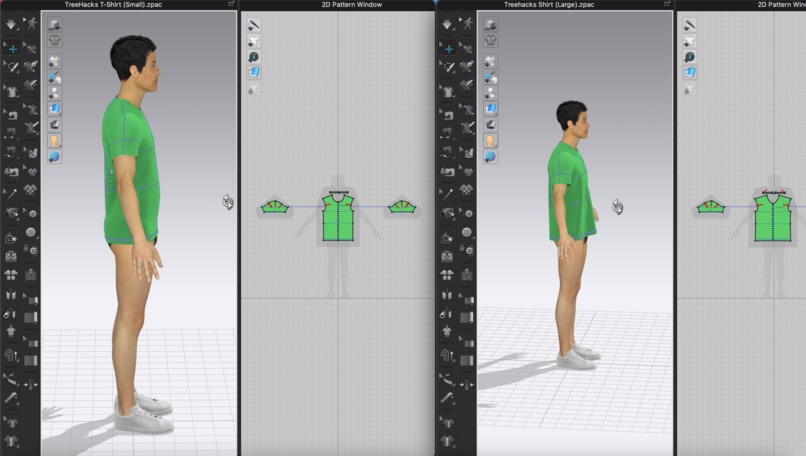
Small T-shirt Vs Large T-Shirt on Default Model
-
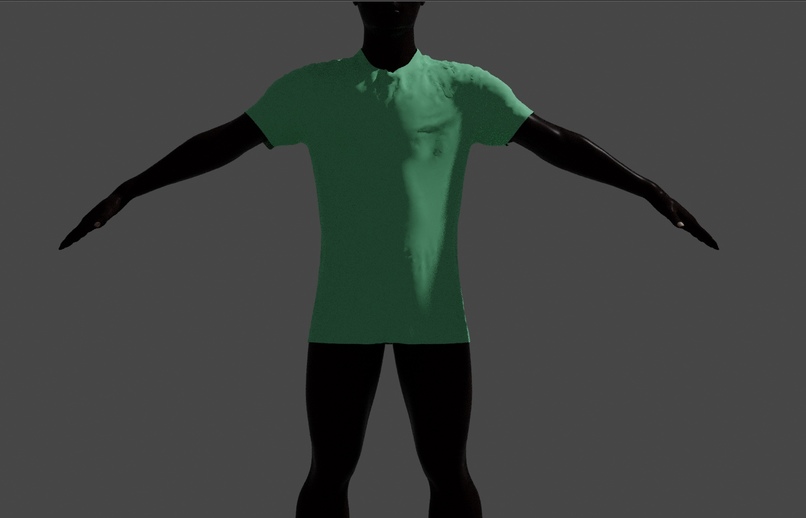
Small T-Shirt Fitted on Target User
-
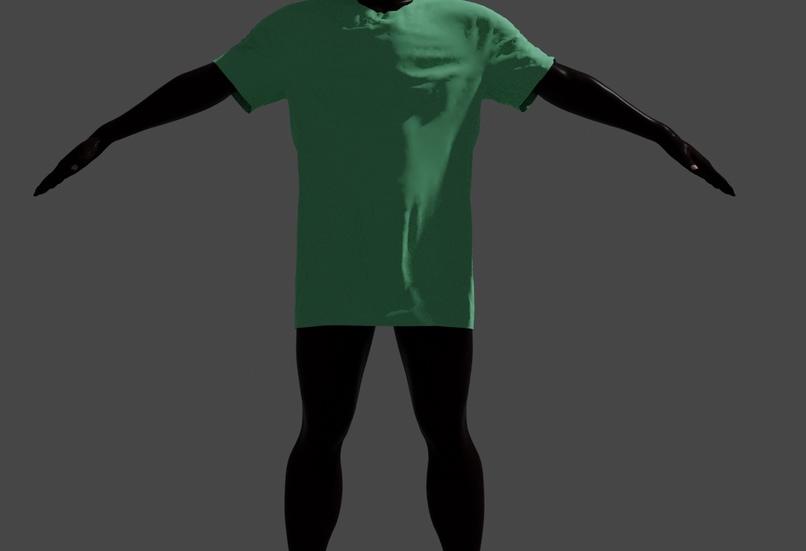
Large T-Shirt Fitted on Target User


Inspiration
Clothing returns for items bought online lose retailers money and hurt the planet. The average online shopping return rate is 30%, and only around 50% of these returns actually end up back in inventory. The rest is discarded in landfills - one truckload a second, to be exact - costing retailers $550B a year and a countless toll on the environment. Over half of the returns come from poor fitting - in fact, according to Medium, “88% of consumers are frustrated with regards to sizing inconsistency.” Retailers and customers alike are in desperate need of a product that allows them to try on clothes they found online before buying and returning them. A few emerging products exist that allow users to see themselves under overlaid images of clothing, but no products currently exist that allow users to accurately predict fitting for retail clothing prior to purchase. These problems inspired us to create Omniwear.
Our group was inspired by the recent global trends towards e-commerce fashion in the wake of the Covid-19 pandemic. We realized that the e-commerce fashion shopping experience is currently inferior to the in-person due to a lack of interactiveness of clothing items - unlike online shopping, in-person it is possible to try-on clothing items and experiment with different styles prior to purchase. Due to decreased interaction between products and customers in e-commerce, there is a much higher return rate for clothing and customers are dissuaded from experimenting with new brands. Our mission is focused on bridging the gap between the in-person and online shopping experiences for fashion to improve the customer experience while also saving money for brands.
What it does
Our software uses a laptop camera to take different key body measurements of the user. Then, with these measurements, we create a 3d, dimensionally-accurate avatar of the user. Then, we take 3d models of real-world garments and use our software to conform the garments around the avatar, effectively simulating the clothing fit. The user can switch between different sizes of the same garment in order to preview which size fits their body the best.
How we built it
- Capture image of user from camera
- Use computer vision and ML to estimate user body measurements
- Load 3d models of clothing and person based on specified measurements
- Render, simulate, and return image to user
Challenges we ran into
The first challenge we ran into was with our body pose estimation program- we were able to get a few of the necessary measurements from the user's body, but there were still certain measurements we could not figure how to consistently extract in an accurate manner. To get around this issue, it required a deeper exploration of certain characteristics of human anatomy. Using standardized body ratios for men and women, we created a system for accurately inferring key measurements that we were unable to directly extract. Secondly, for pose-estimating the model, we were led astray with the premise of optimizing a version of the model optimized for browsers, but we ultimately decided that we wanted to do our image processing and inference on the back-end, not the front-end.
Accomplishments that we're proud of
We are proud of the fact that we are able to calculate a substantial number of measurements from a single image using inferences from standardized body ratios.
We are proud of the fact that our fitting is accurate, considering that an accurate virtual fitting platform does not currently exist on the market.
What we learned
In terms of technical development, we learned how to infer body measurements from pose estimation. We also learned how to rig, light, simulate high quality clothing visualization. We learned how to translate real-life garments (in this case, the Treehacks tshirt) into their 3d digital representation. Furthermore, we learned how to design a process that requires the least information and effort from the user.
What's next for Omniwear
We plan on taking this idea to the next step and begin trial versions with paying customers. We will develop a second version of this software that includes more clothing items, increased accuracy, and increased speed. Furthermore, we will utilize larger data sets in order to ensure that our product is accessible to users of all different body types.

Log in or sign up for Devpost to join the conversation.