-
-
Project Overview Thumbnails
-
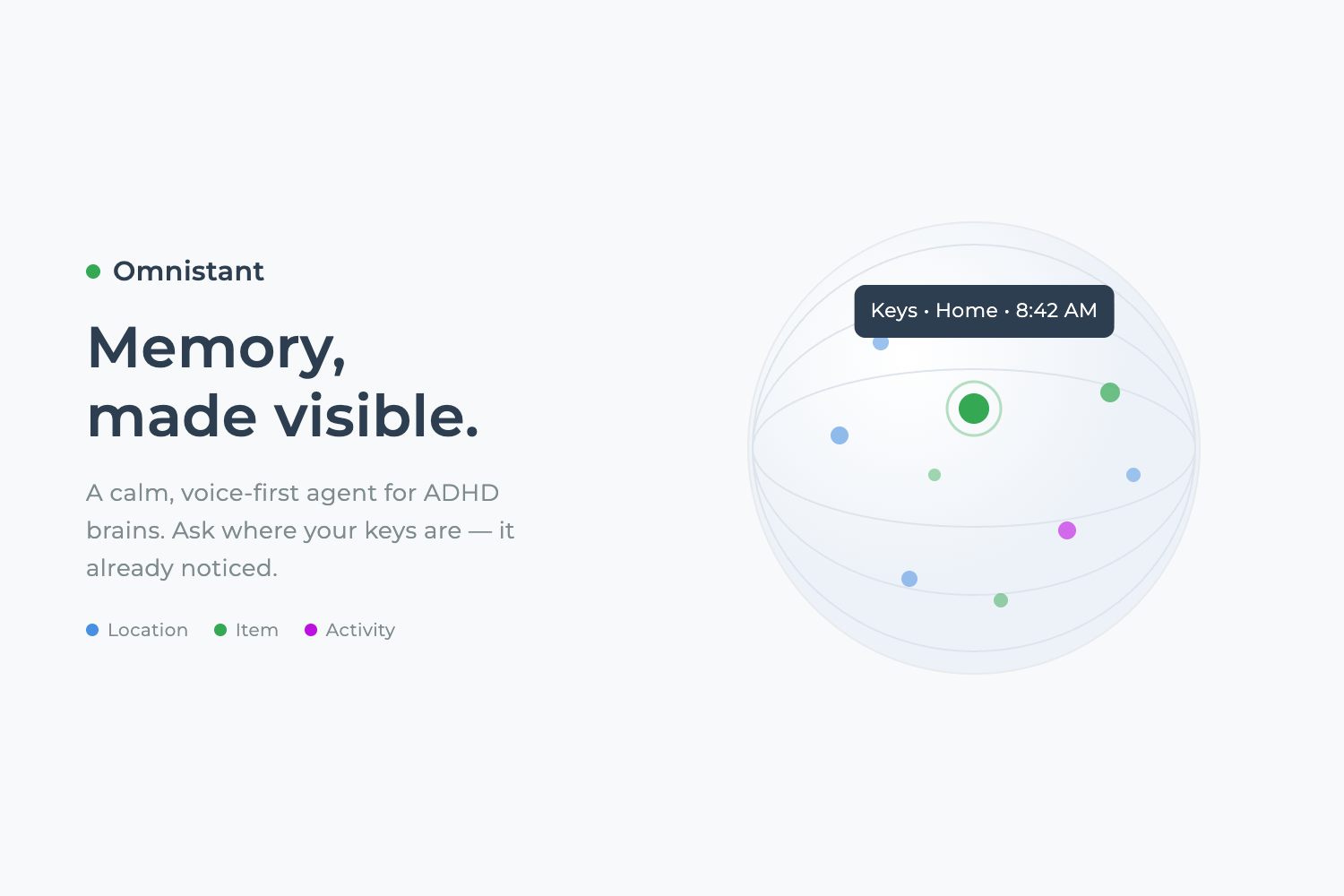
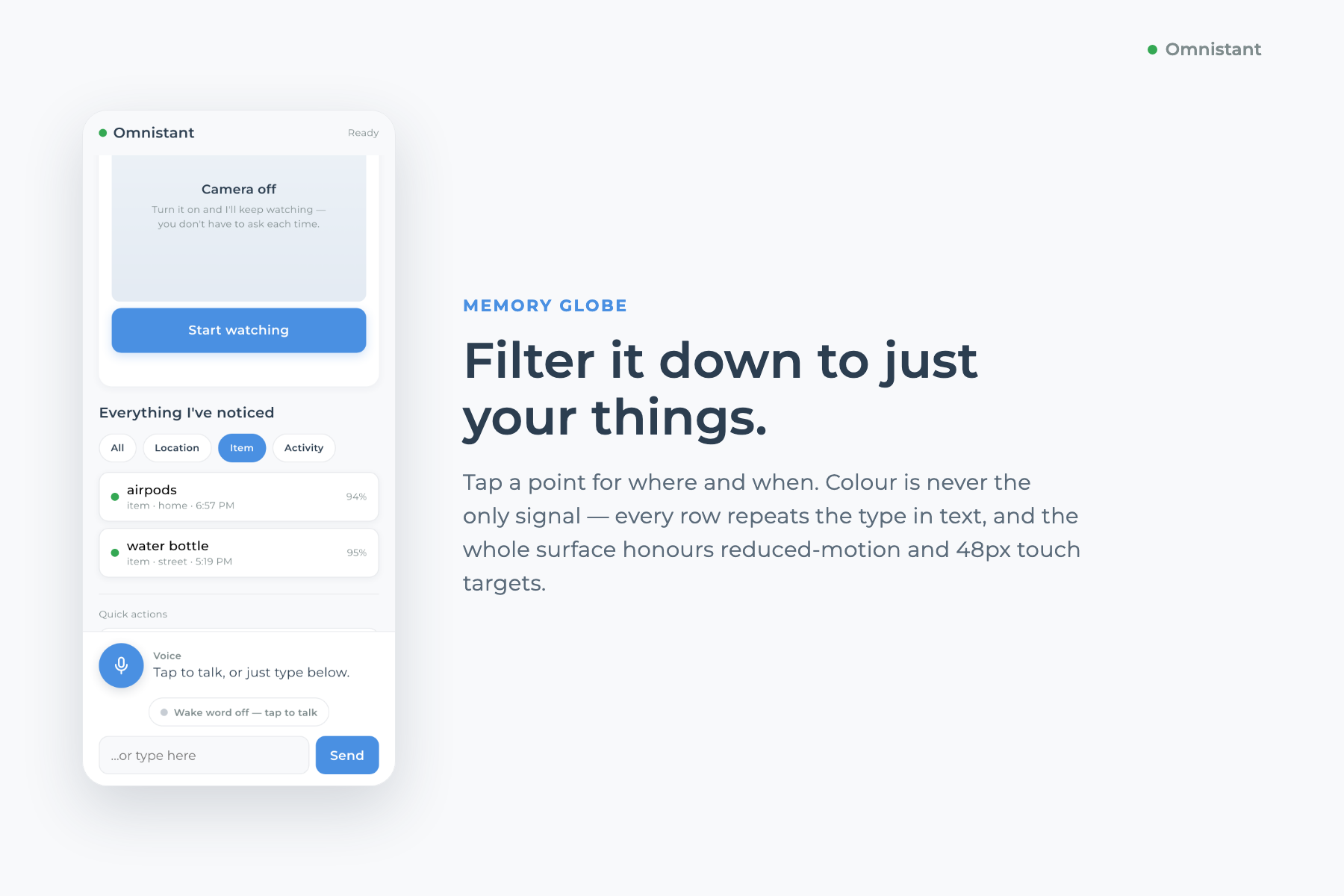
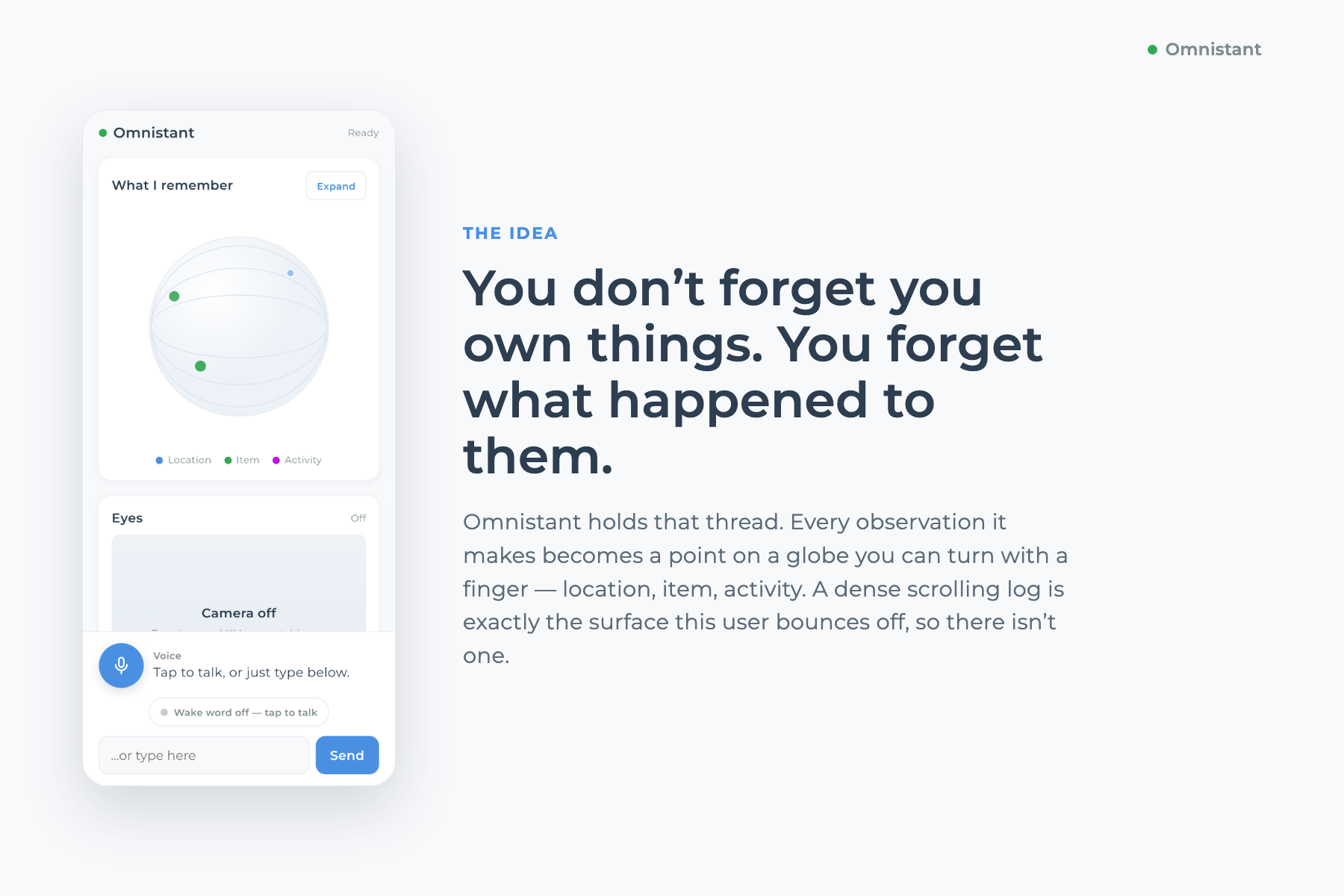
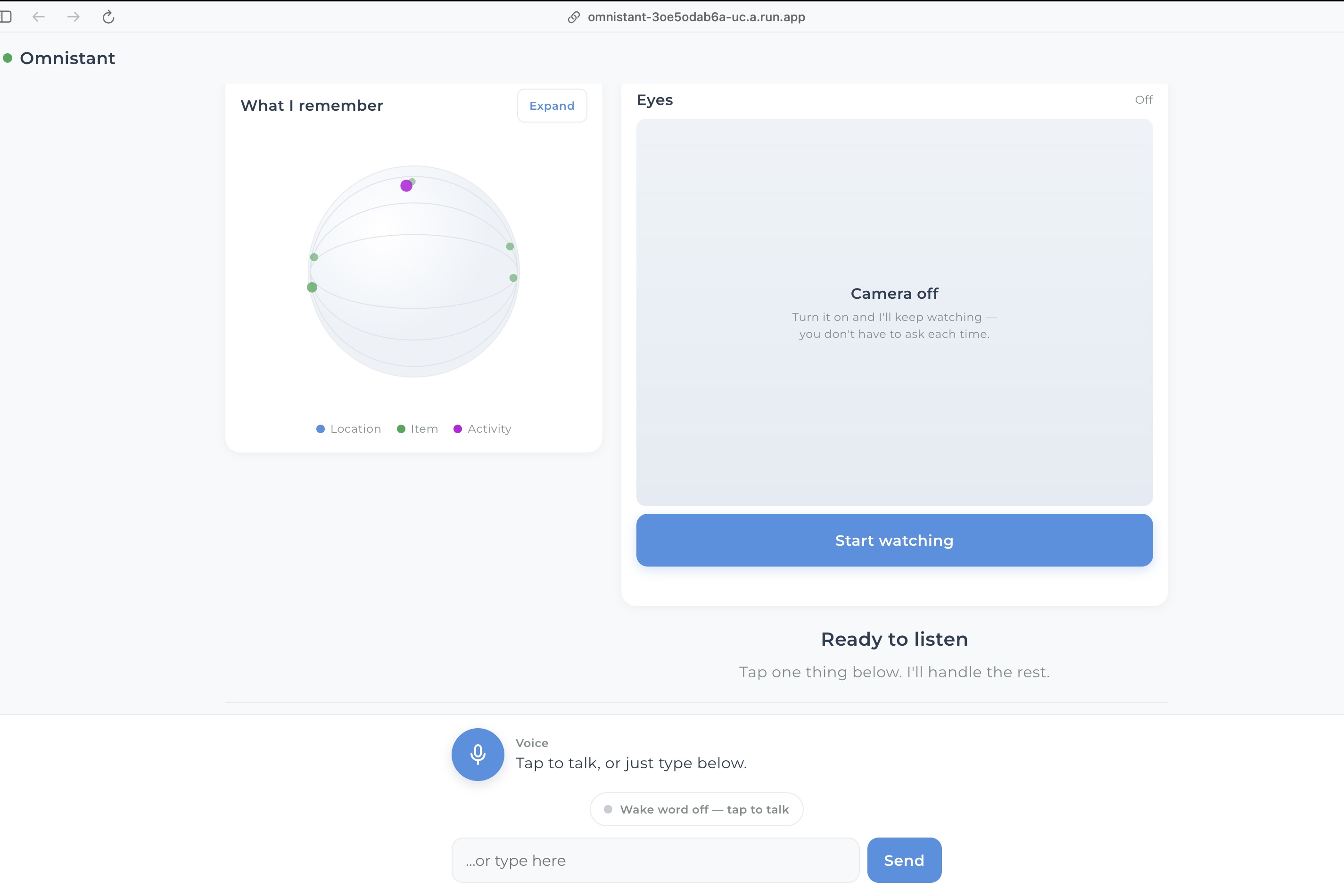
Memory Globe
-
Memory
-
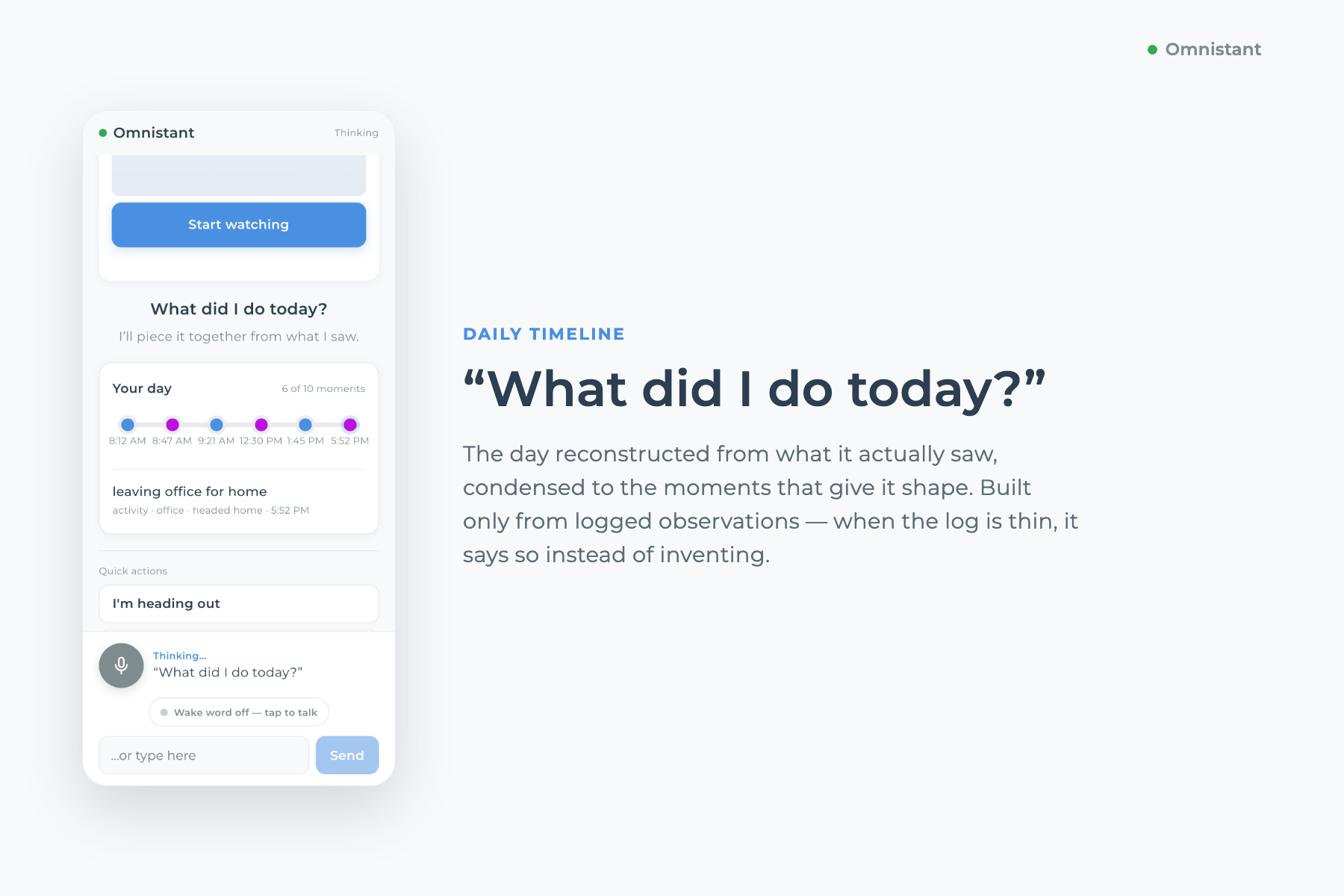
Timelines
-
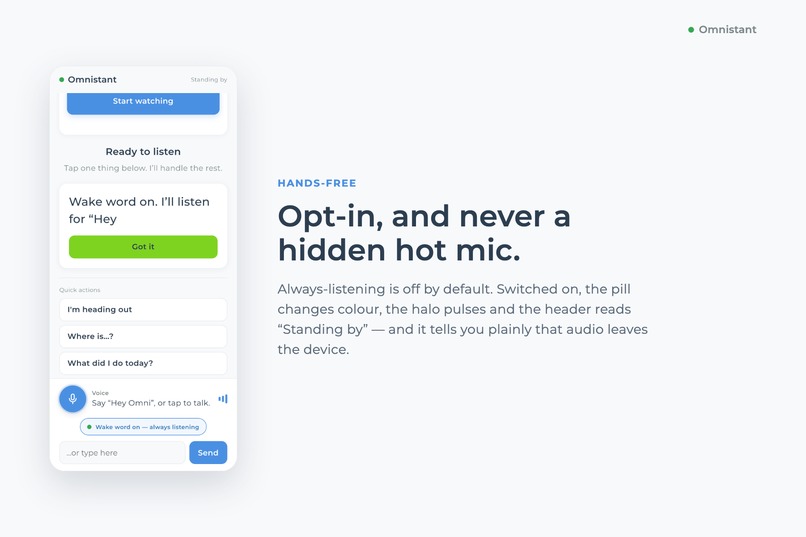
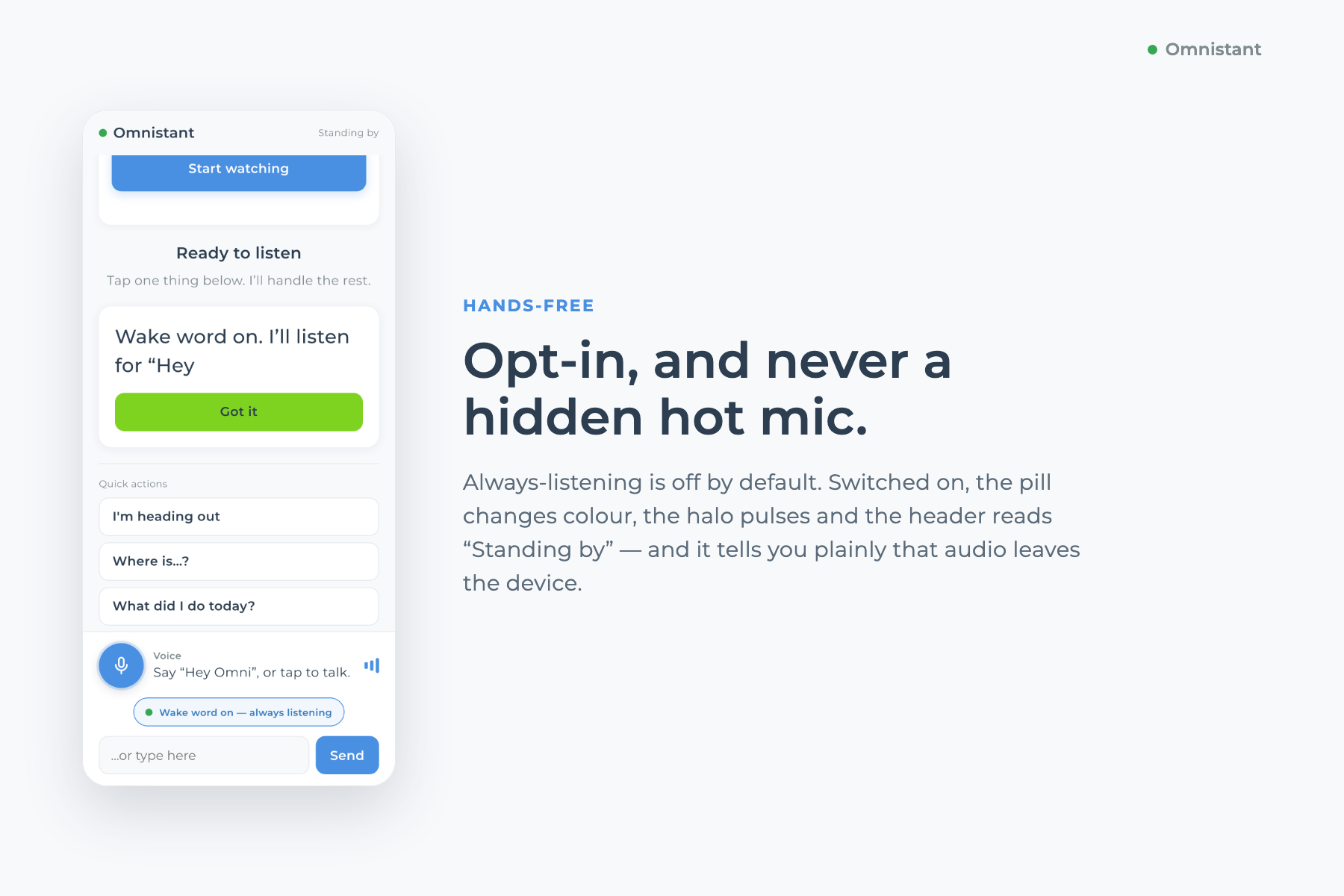
Wake Name Activated
-
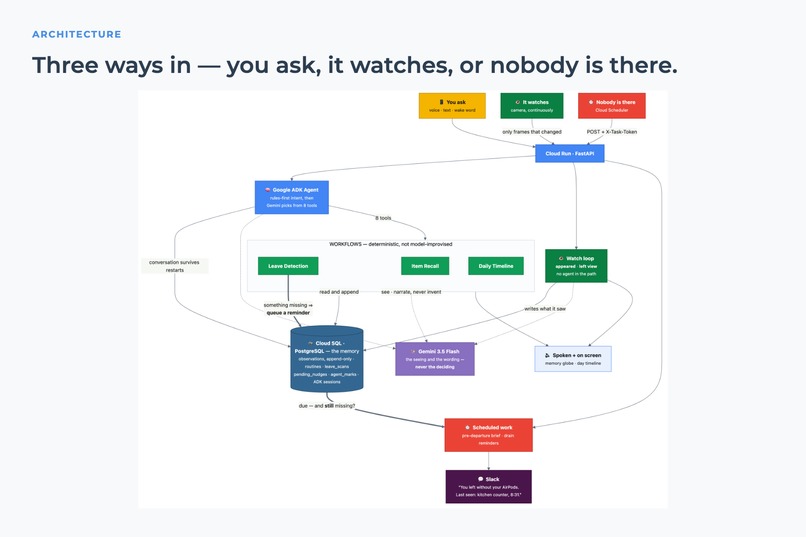
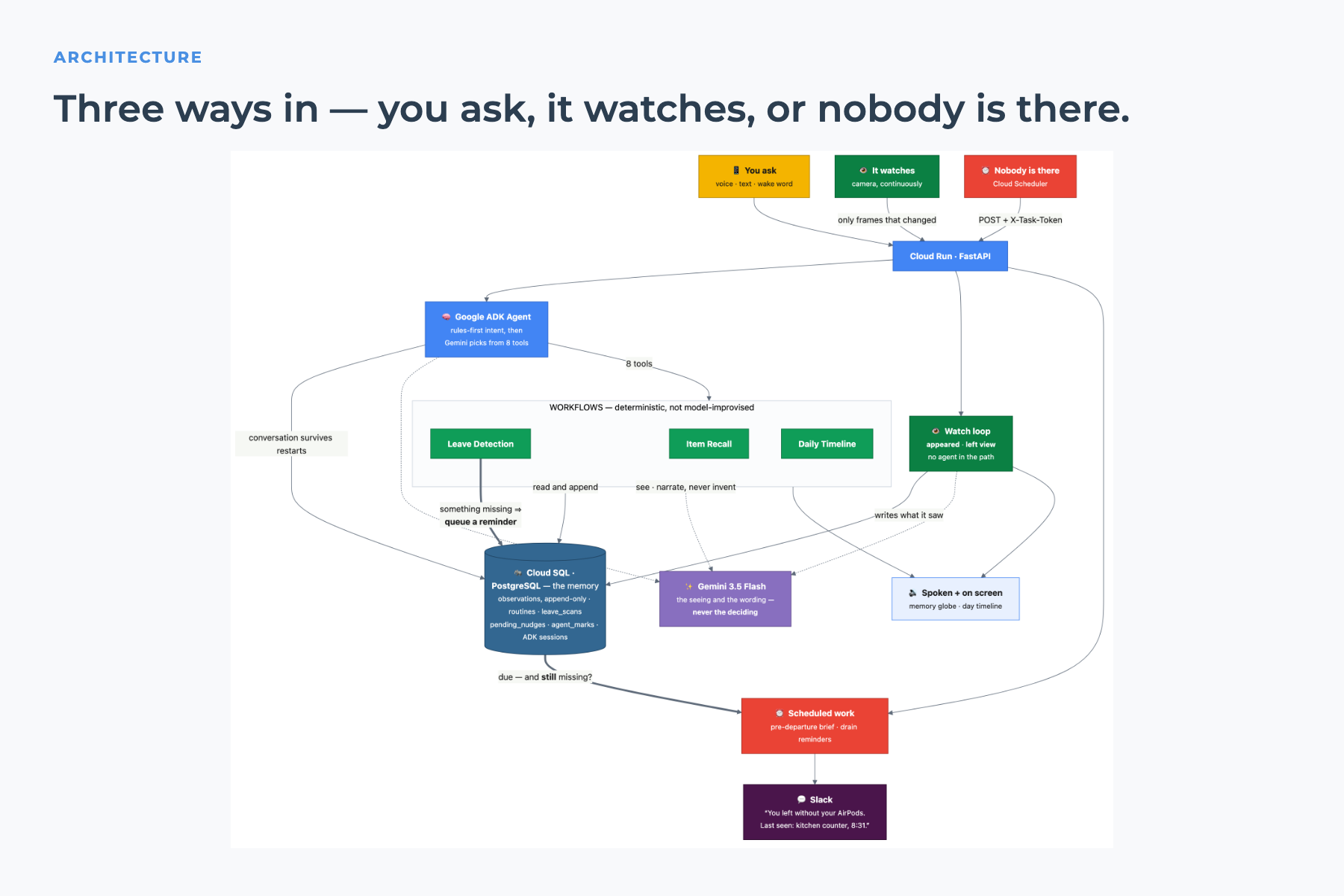
Architecture
-
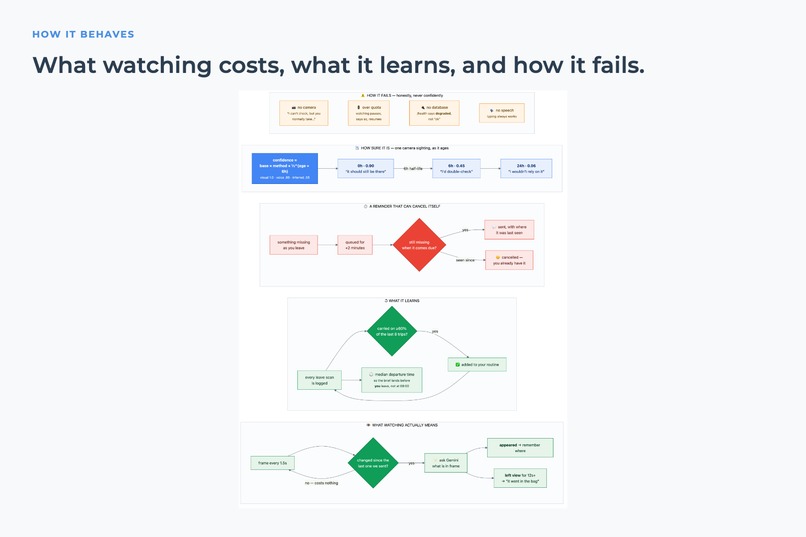
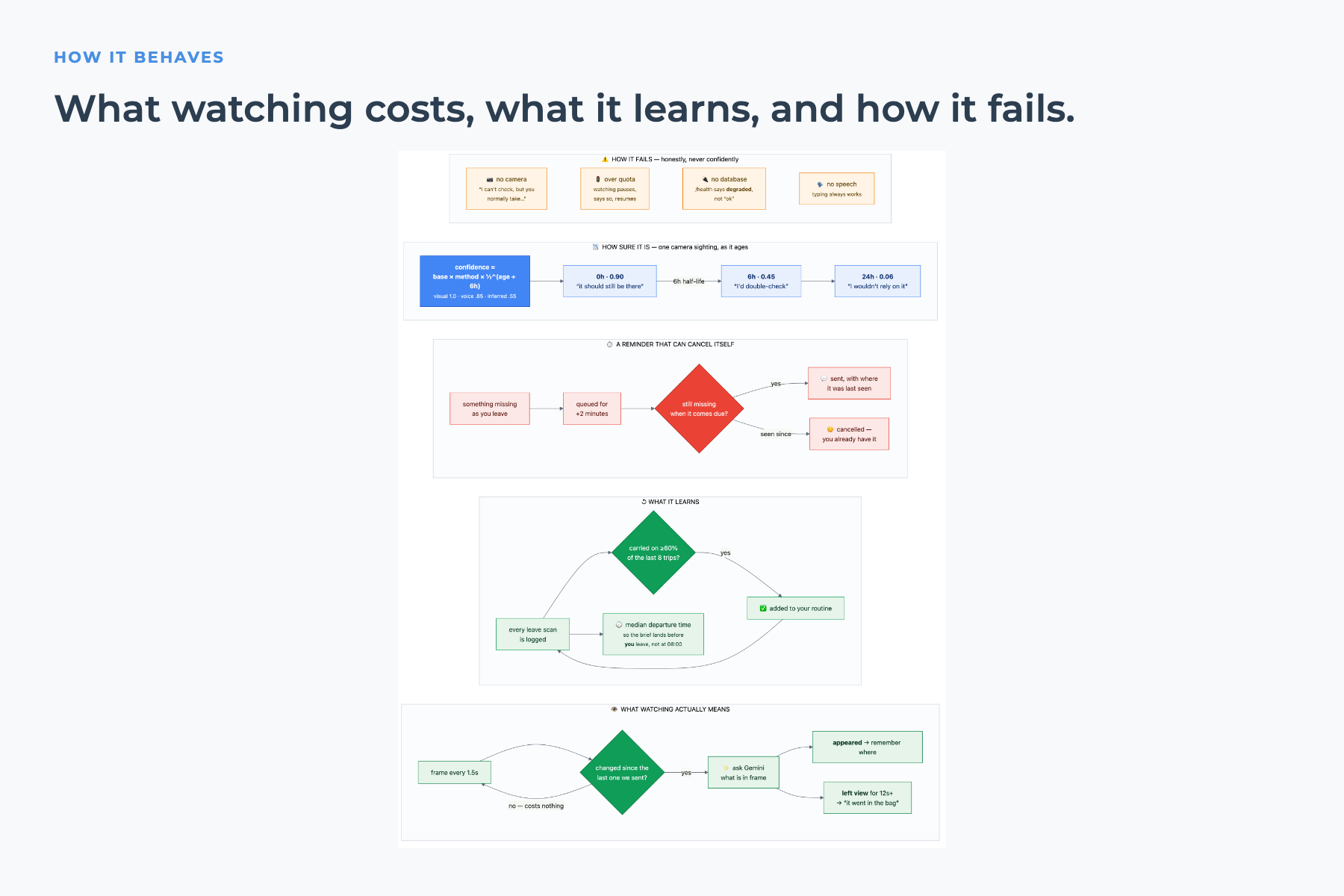
Behaviour
-
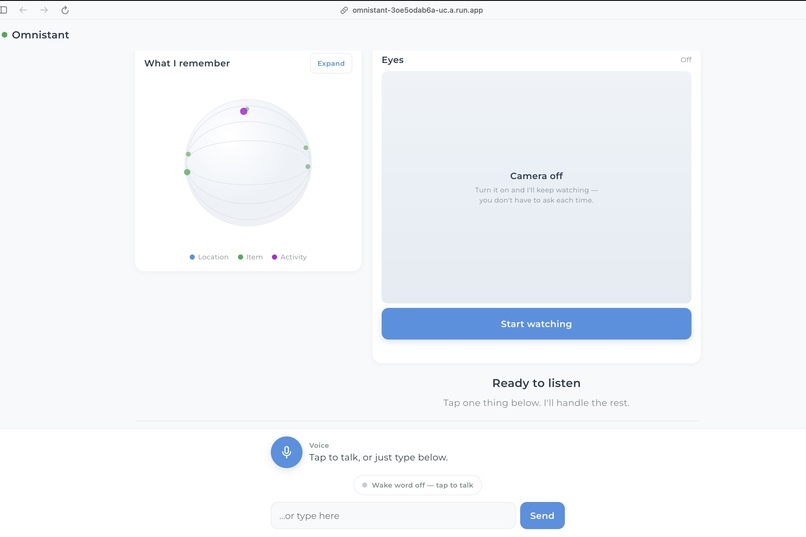
Compact View
-
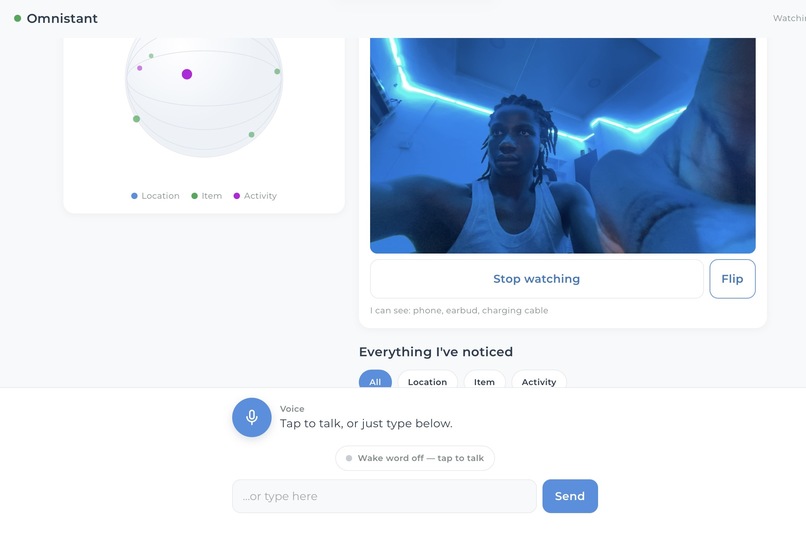
Live activity and item capturing
-
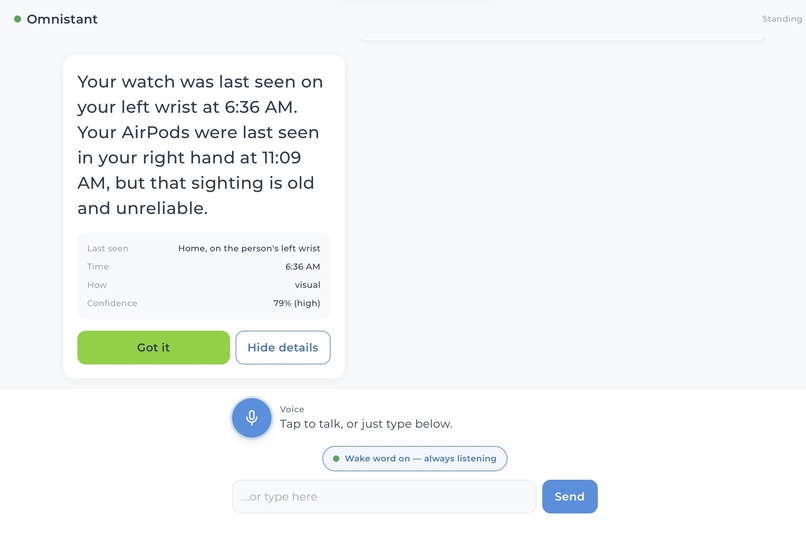
Detailed instant feedback on item
-
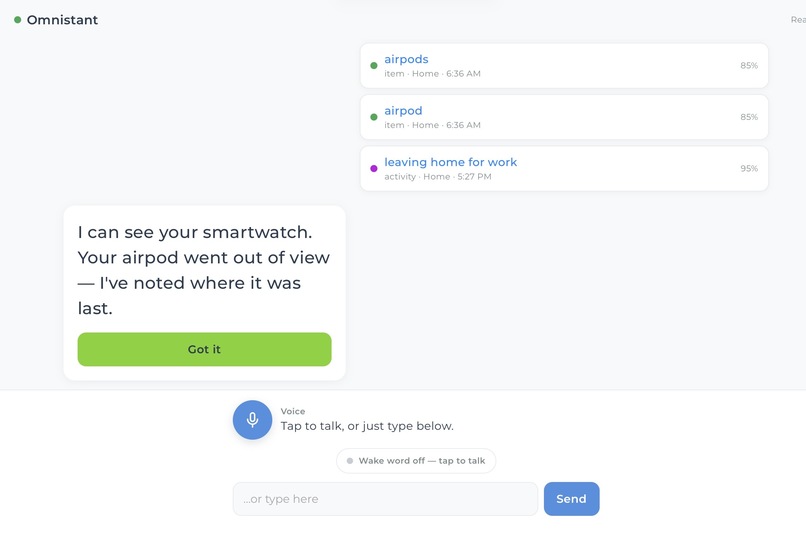
live feedback
-
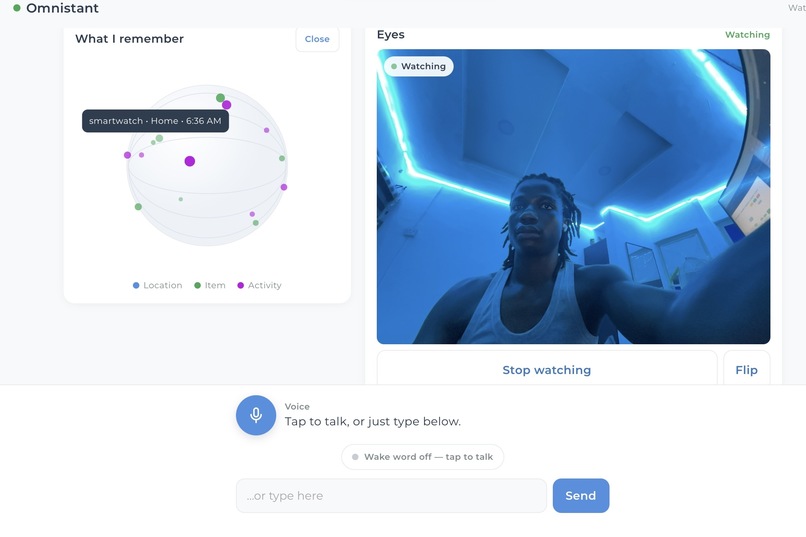
Globe activity with confidence
Inspiration
People with ADHD don't forget that they own things. They forget what happened to them. The wallet isn't lost, the memory of setting it down is.
Every existing tool answers the wrong question. Reminder apps need you to remember to set a reminder. Trackers only work on things you remembered to tag. Both require the exact faculty that isn't available at the moment you need it.
So the agent has to be the one paying attention.
What it does
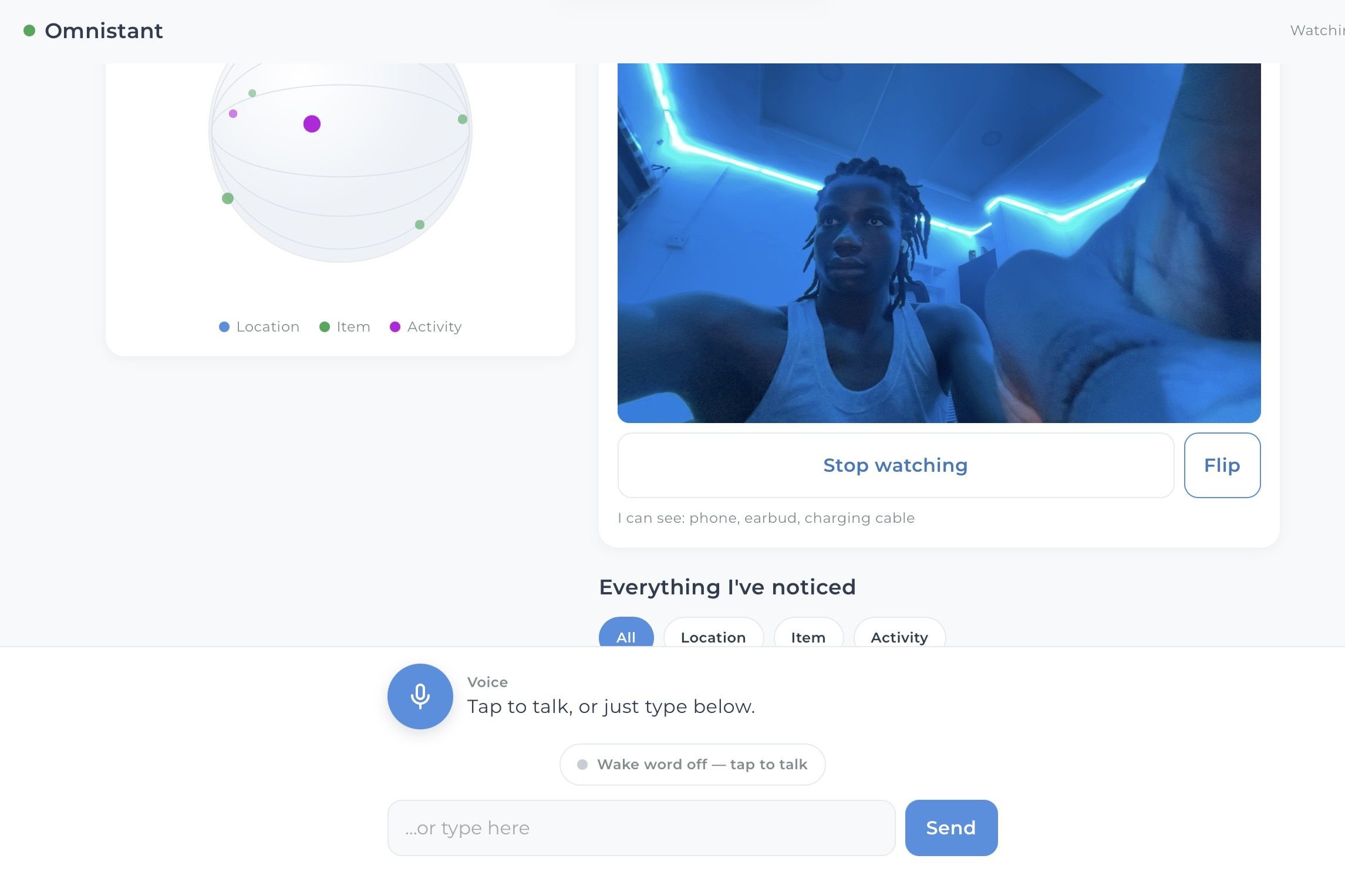
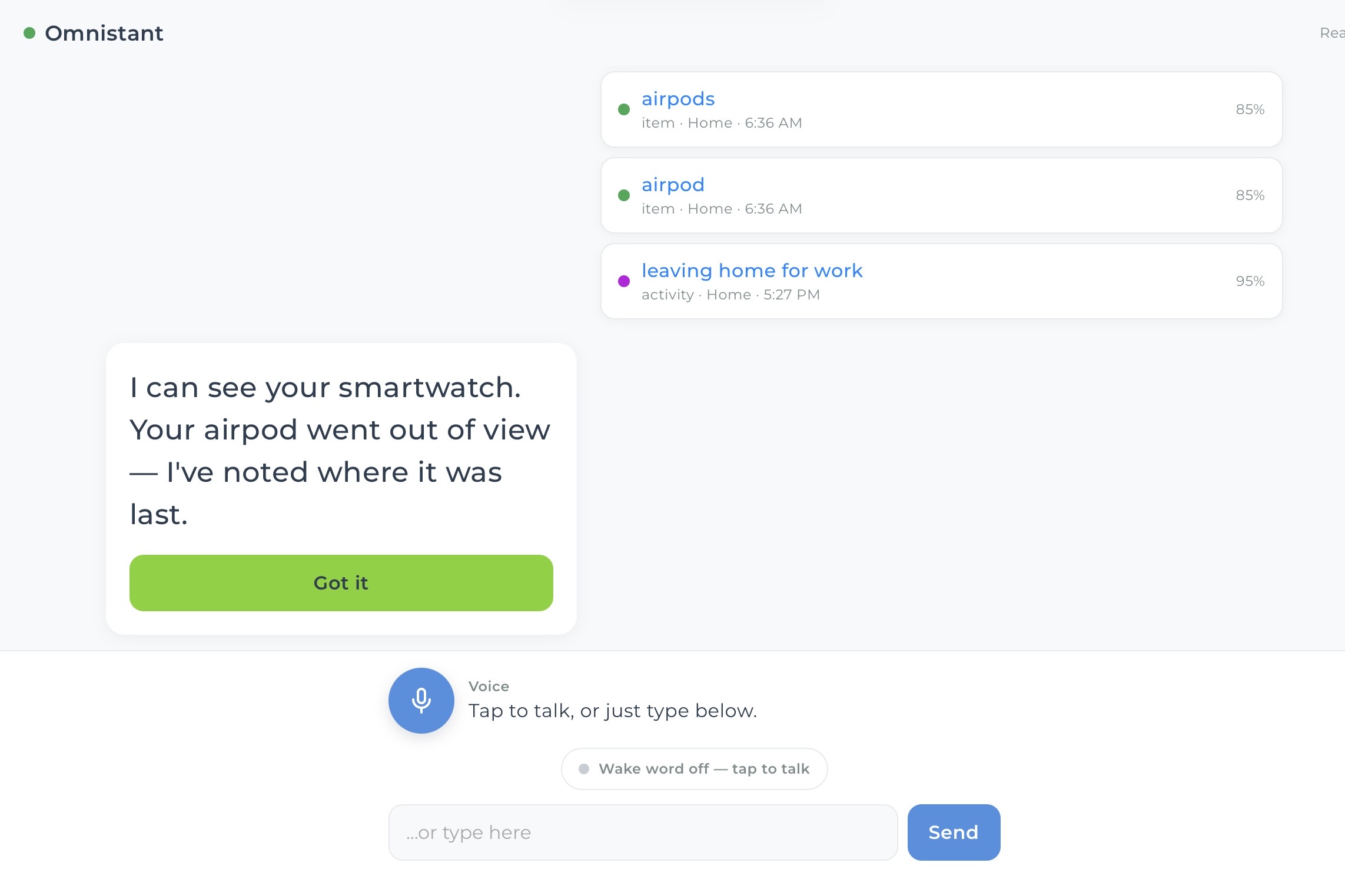
It watches. Turn the camera on and Omnistant keeps looking — not one photo when you ask, but a running picture of what's in front of it. It notices when something appears, and it notices when something that was there is gone. That second one is how it captures you putting your AirPods in your bag: not by seeing the bag, but by seeing the AirPods stop being on the desk.
It catches you at the door. Say "I'm heading out" and it compares what the camera can actually see against what you normally carry to that destination. Anything missing comes back with where it was last seen.
It adapts. Nobody configures a packing list. A destination it has never heard of starts from a sensible default; after that it learns from you. Any item you actually carried on 60% of your recent trips to a place is promoted into that routine on its own — the check for work grows to include your badge because you keep taking your badge, not because someone typed it in. It learns when that trip happens too, from the times you actually left, which is what decides when the pre-departure brief is worth sending.
Say "I'm going to work right now from home" and it reads the whole list back — badge included — then keeps watching rather than answering once. What the camera can see is ticked off as it sees it; what it still can't account for is exactly what follows you out the door.
It follows you out. Two minutes after you leave, if something is still missing, it posts to Slack — with the location, so you can decide in one glance whether it's worth turning back:
You left without something You headed to work about 2 minutes ago without your AirPods. Last seen: home, on the kitchen counter, 8:31 AM.
That reminder cancels itself. If the agent has seen the item since the scan that raised it, nothing is sent. Telling someone they forgot the keys they're holding is exactly the noise that gets an assistant muted.
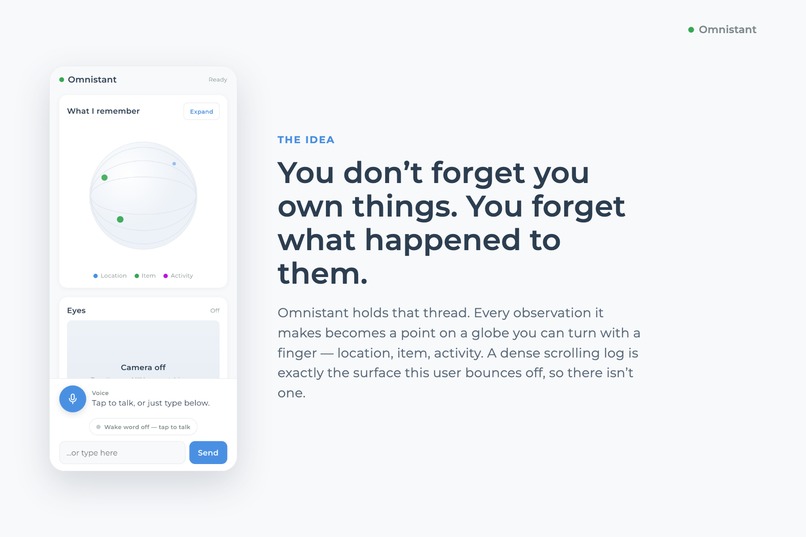
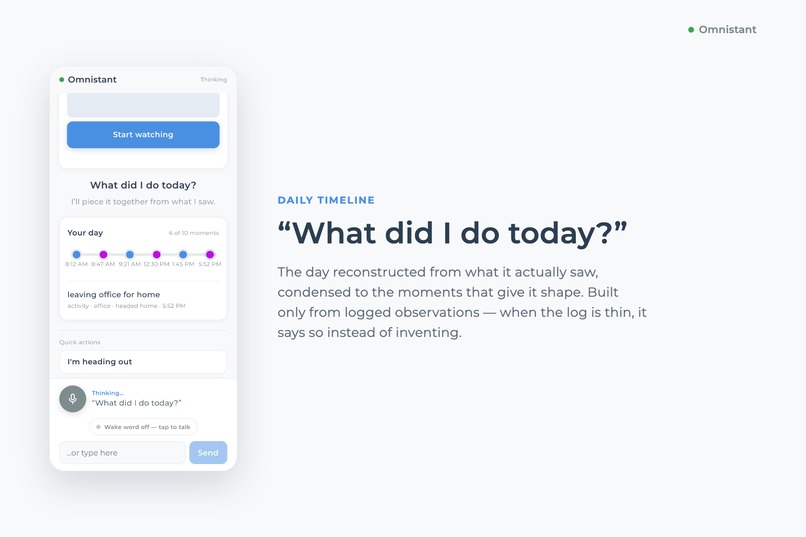
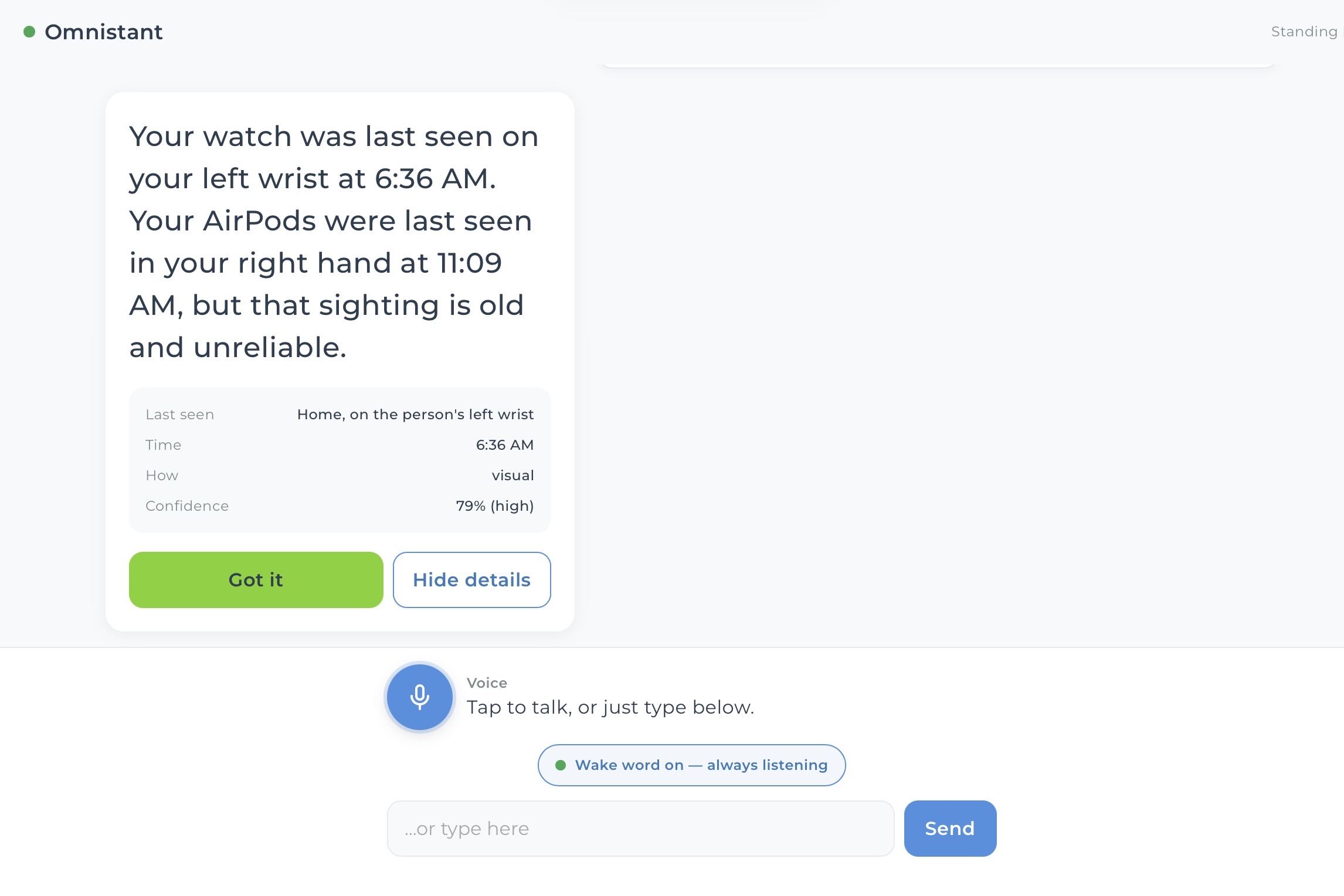
It remembers. "Where are my AirPods?" is answered from a log of real sightings, each with a confidence that decays as it ages — a sighting from ten minutes ago is an answer, one from yesterday is a lead, and it says which. "What did I do today?" reconstructs the day as a glanceable bar, not a list.
It acts with nobody there. A pre-departure brief fires in the 25 minutes before you leave — at the time this routine has actually been observed to happen, learned from your own departures, not a fixed hour someone guessed.
How we built it
Google ADK orchestrates the agent; Gemini 3.5 Flash does the seeing and the wording. The critical decision is what it doesn't do: Gemini never sources a fact. Every claim — what's missing, when something was last seen — is computed by a deterministic workflow over an append-only PostgreSQL log. Tools are the surface the model can reach; workflows are where decisions get made. There is no code path where a model's guess becomes a stored fact.
Continuous watching is only affordable because most frames are never sent. Each tick is compared locally against the last frame actually transmitted — a 32×24 greyscale fingerprint, mean luma delta. A still desk costs zero API calls; only real movement earns one.
Sessions are Postgres-backed, so conversations survive restarts and instance changes. Delayed reminders are rows with due times, drained by a scheduler job, because Cloud Run scales to zero and nothing can sit in memory waiting.
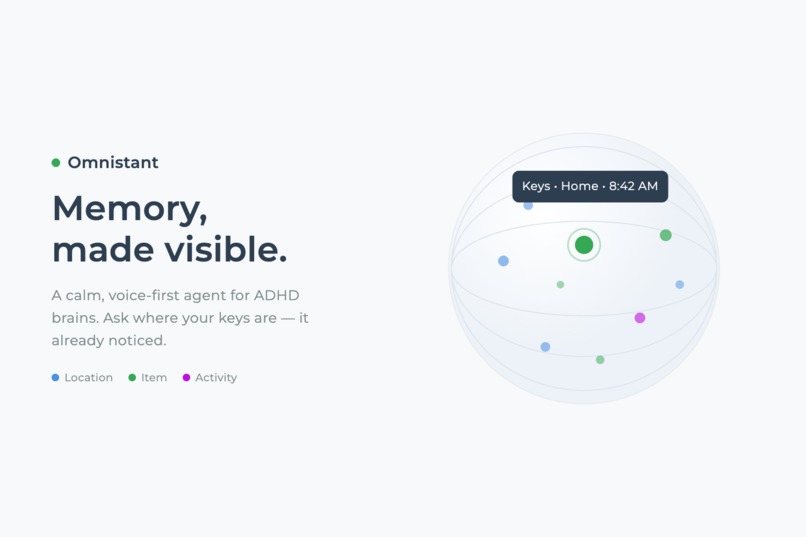
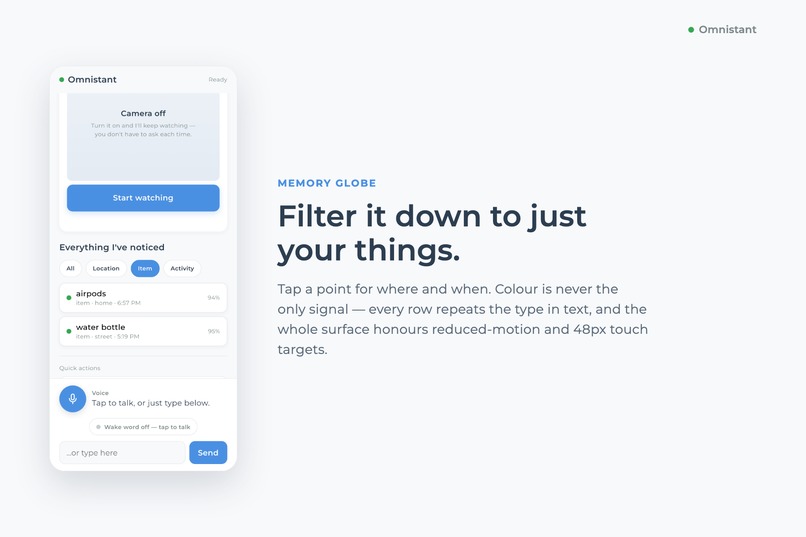
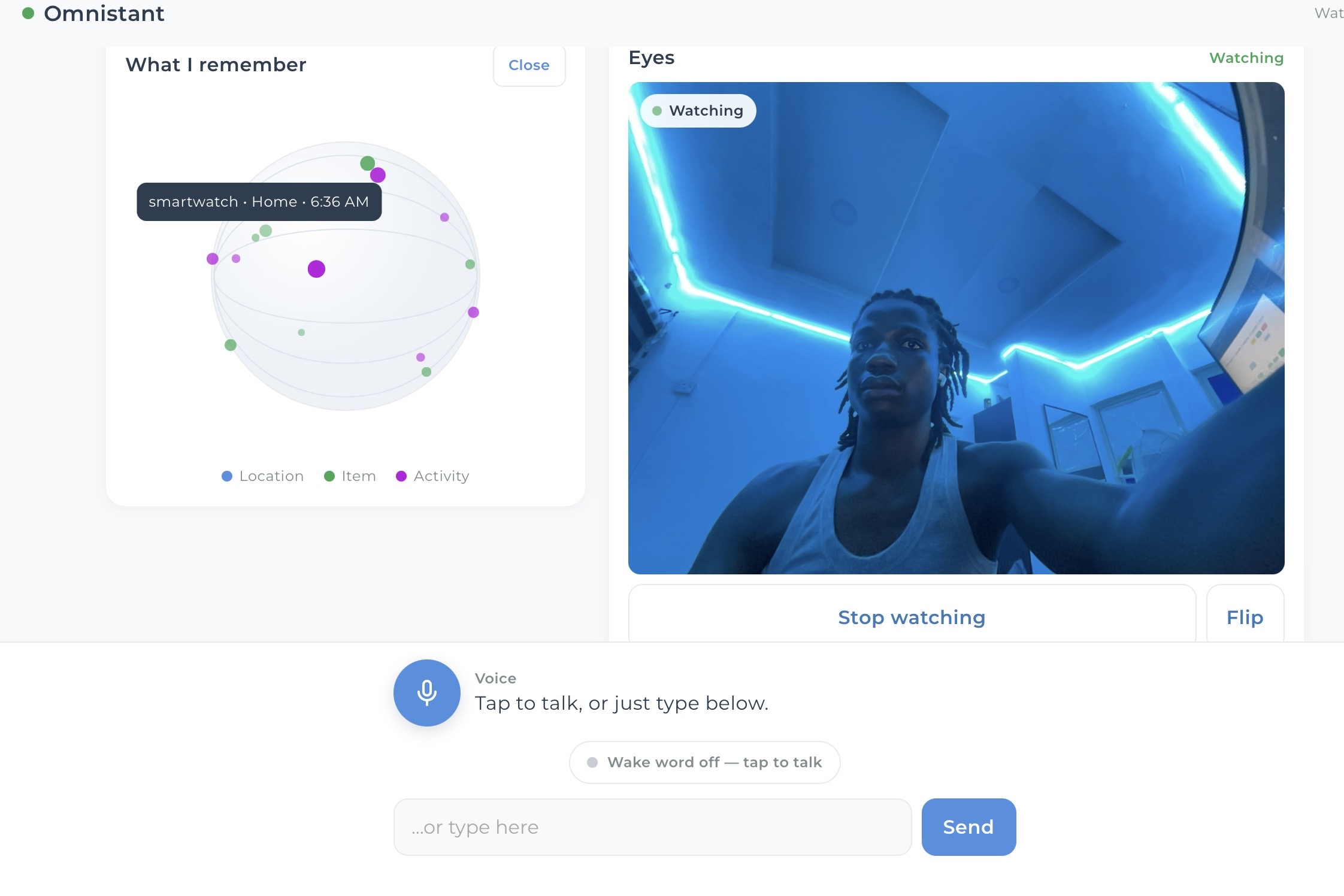
Cloud Run, Cloud SQL, Cloud Scheduler, Secret Manager. Vanilla-JS mobile frontend: a draggable memory globe, Camera API, Web Speech API, opt-in wake word.
Challenges
Four bugs that all failed quietly, because the system degrades gracefully:
- Recall matched a leave-scan's
missinglist. Asking "where are my keys?" returned a sighting at the exact moment the agent had established they were nowhere. - Voice input died instantly. Speech synthesis and recognition compete for the audio device, so the agent answering aloud killed the mic — precisely the conversational path.
- The wake word never fired. "Omni" is an invented word, so recognition never returns it twice the same way. Worse,
"Hey, Omni!"failed even when the words were right: stripping the comma left a double space and the match missed. - Durable sessions shipped broken.
requirements.txtwas stale, so production silently fell back to in-memory — the fix undone by packaging.
That last one was caught by making /health name the backend in use instead of saying "up". There are regression tests for all four.
What we learned
Graceful degradation hides bugs. Every subsystem here falls back rather than crashing, which is right, and it means a broken deploy looks healthy. Health checks have to report which backend is live, not whether something answered.
A reminder's value decays with distance. Five minutes on foot is 400m and an easy turn-back; five minutes driving is 3km and isn't. Arriving early costs a glance at a phone. Arriving late costs the thing for the day.
What's next
A native mobile app. This is a phone-first product built as a web app, deliberately: a hackathon is short, and the browser let us ship the whole loop — camera, voice, continuous watching, deployment — inside the time available. It also cost us two things worth naming. There is no background location, so the agent only knows you're leaving because you told it; and there is no background execution, so the eyes close when the tab does. Going native closes both, and turns "I'm heading out" from something you say into something it notices.
Meta Ray-Ban smart glasses, if this finds funding and traction. That is the form factor the product actually wants. Everything here is built around a camera that sees what you see, and a phone you have to hold up is a worse version of glasses you already wear. Head-mounted capture removes the last bit of friction we could not design away: remembering to point something at your desk. It is a bet on distribution and hardware access rather than a next sprint — but it is the direction every architectural decision here already points, which is why the vision layer is one module behind an interface rather than something welded to the browser's camera.
Then multi-device sync and routines learned per day-of-week — a Tuesday gym bag is not a Saturday one.
Built With
- cloud-scheduler
- cloud-sql
- css3
- docker
- fastapi
- gemini
- google-adk
- google-cloud-run
- html5
- javascript
- mediadevices-api
- postgresql
- pytest
- python
- redis
- secret-manager
- slack-api
- sqlalchemy
- uvicorn
- web-speech-api

Log in or sign up for Devpost to join the conversation.