Inspiration
Last week, we both saw something on Twitter that was…interesting. A startup had released a product they called the AI Doctor. A doctor that knows everything about you, with perfect memory so it doesn’t forget, measures in place to stop hallucinations, your doctor was now automated. They said the future of medicine is here. And the more we both looked into it, the more annoyed we felt. It was just an app that looked and functioned exactly like ChatGPT, powered by GPT, that just looked like they added a system prompt and called it a day. And we wondered, why in this day and age is so much of AI development focused on replacing what humans currently do? That’s why this hackathon, we wanted to build an app that played to artificial intelligence’s strengths to build something that humans can’t do: see the future…or more specifically, see your medical future
What it does
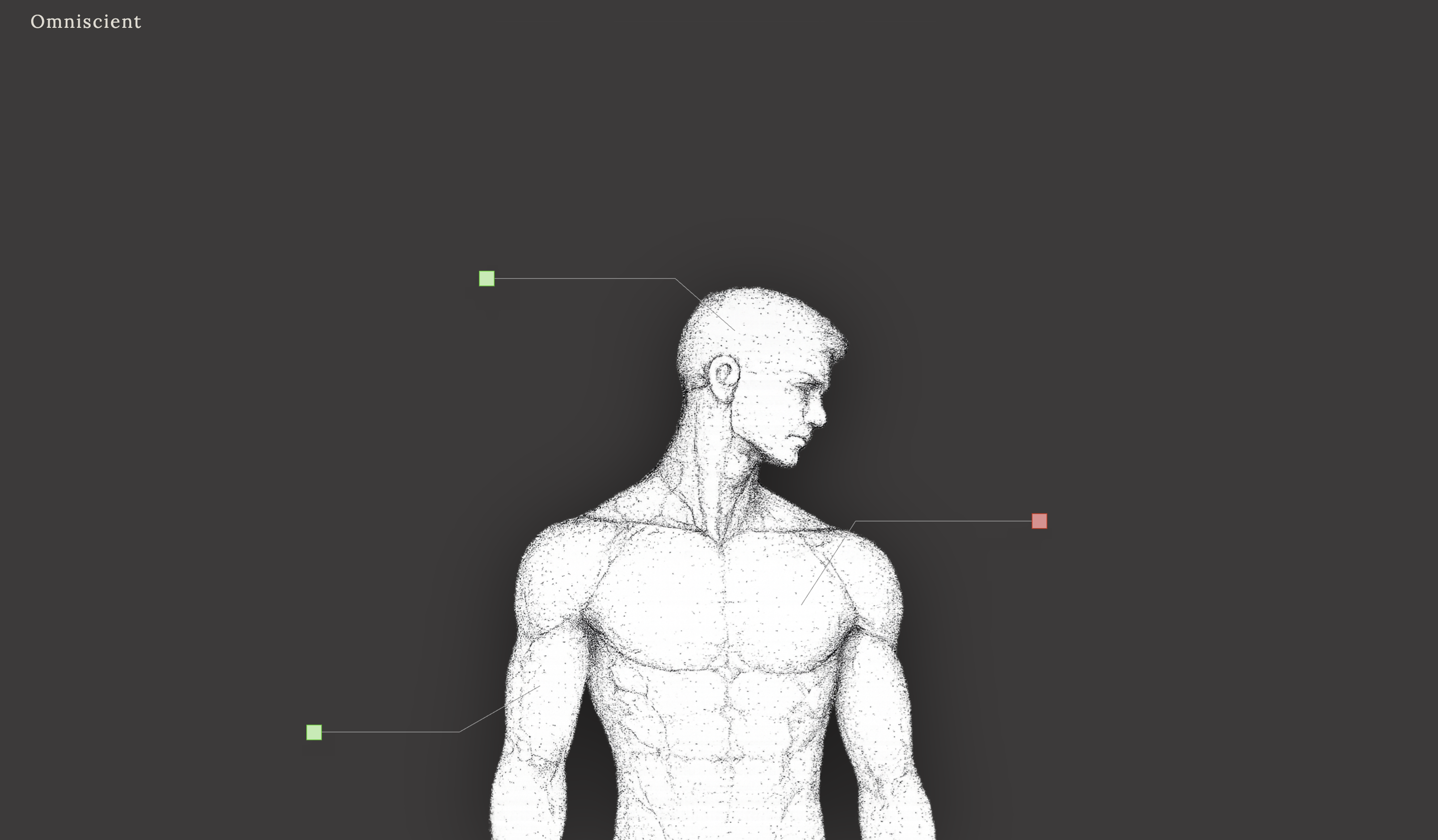
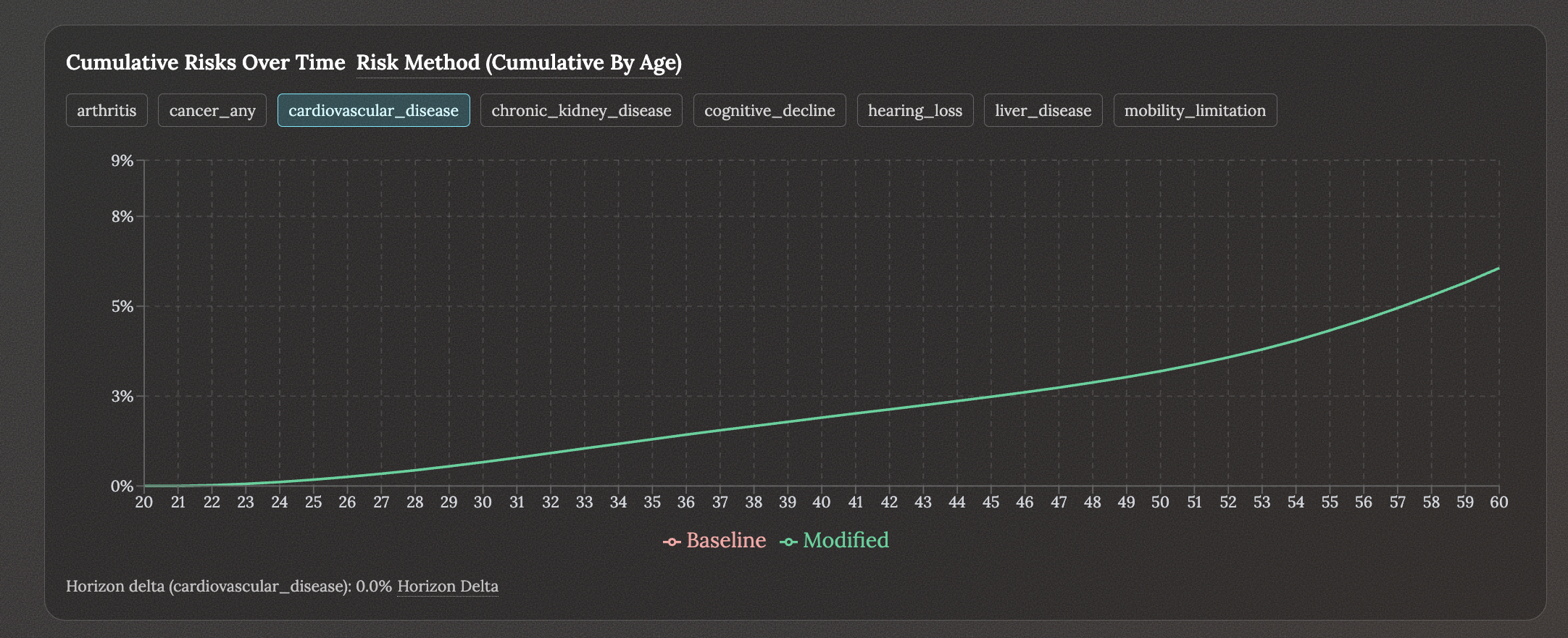
See your medical future. Our goal was to cut out a lot of the noise and fears people tend to have about their health, fitness, diet, aging, and focus purely on the numbers. With modern technology, why shouldn’t people have a simple way to know the potential medical risks they face, and maybe even find what they could do to maximize their healthspan—the portion of their lifespan that they spend in good health. In practice, the app models various potential health risks over time and suggests various methods to reduce these risks.
How we built it
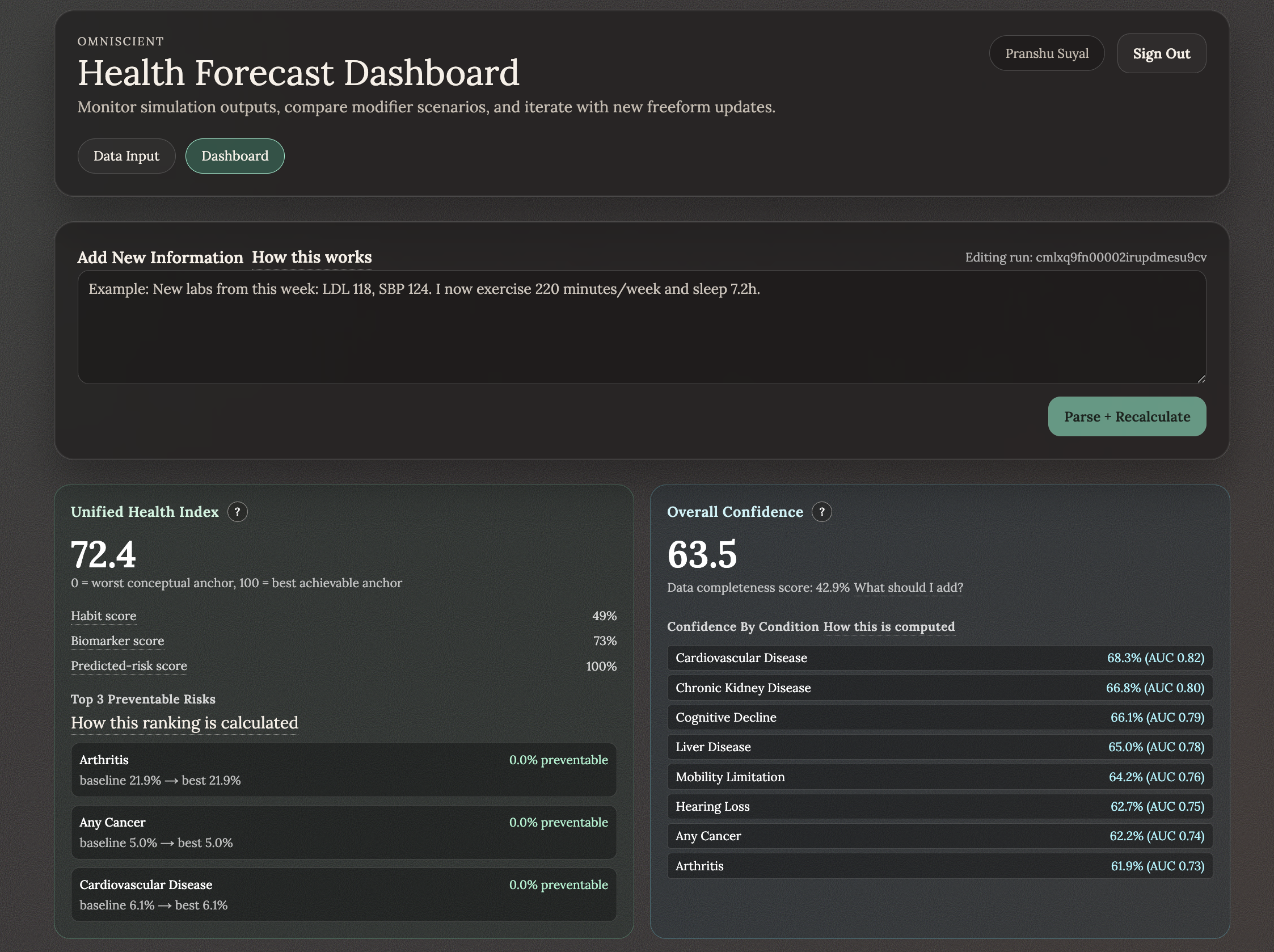
Our design philosophy was to approach the project like building a simulation engine rather than a chatbot. We wanted a cohesive set of models backed by data instead of a GPT wrapper. We first acquired data on hundreds of thousands through the NHANES dataset, then established a two stage model setup. We'd model certain dynamic variables (i.e., blood work variables) as they changed over time through a continuous mean-reverting Gaussian Markov process. Modeling variable state changes using probabilities like this worked well because the only available data was not longitudinal, so population-based inference was necessary (and possible due to the size of the dataset). The second stage would take static parameters (like height, sex, race, ethnicity, etc.) as inputs along with the dynamic variables outputted through Stage 1 for each time step (one year), and using logistic regression over NHANES data predict risk for various adverse chronic health issues (cardiovascular, arthritis, joint mobility, memory loss, etc.). In the default state, behaviors would be treated as static over time; however, the user would have the option to toggle certain interventions of various severities (breaking bad habits, boosting good habits, medication, and surgery). Finally, we developed a Unified Health Index to represent a person's long-term health for any set of conditions, relying on the combination of risk predictions and positive/negative behaviors.
Challenges we ran into
The greatest challenge was trying to model risk over time using only publicly available snapshot data without compromising on accuracy. We needed to use a unique model architecture and strongly account for uncertainty at every step of the way. It was also important to avoid making predictions with certainty, which was why we struggled through the process of creating accurate confidence scores that could be informed by underlying model AUC along with depth of user inputs.
Accomplishments that we're proud of
We're very proud of having successfully built a true health engine backed by data, incorporating the natural language abilities of LLMs while allowing different model types to stick to their strengths.
What we learned
We learned how to create model pipelines when the data doesn't really want to work with your plans, and build methods around traditional limitations in machine learning and mathematical modeling.
What's next for Omniscient
There is much more that can be done to improve Omniscient. From potentially improving confidence and accuracy with longitudinal data, to identifying patterns in users' genetic data, to incorporating a greater number and variety of interventions, Omniscient could turn into a tool that helps anyone truly know what's in store in their future.
Built With
- next
- openai
- prisma
- python
- typescript
- vercel
- zod

Log in or sign up for Devpost to join the conversation.