


Inspiration# About OmniQuery
What Inspired This Project
The inspiration for OmniQuery came from a frustrating real-world experience. As someone who has worked with business data analysis, I constantly witnessed the same painful scenario: analysts spending 60% of their time not actually analyzing data, but hunting for it across scattered Excel files, PDF reports, Word documents, and various databases.
I watched teams manually correlate sales data from spreadsheets with customer feedback from documents, often missing critical insights simply because the data lived in different silos. When Google announced the Agent Development Kit Hackathon with the "Data Analysis and Insights" theme, I realized this was the perfect opportunity to solve this universal problem.
The vision was simple yet ambitious: What if you could just ask a business question and get intelligent answers from ALL your data sources automatically?
What I Learned
Building OmniQuery was an incredible learning journey that pushed me deep into several cutting-edge technologies:
Thanks to Google ADK, building this multi-agent system became remarkably easy:
Multi-Agent Architecture:
- Agent Coordination: Each agent specializes — document parsing, SQL queries, hybrid reasoning — and works in sync
- Communication Patterns: Agents exchange context and findings to build a unified response
- Query Distribution: Queries are intelligently routed to the right agent based on data type and complexity
Whether it's coordinating across AI agents or managing data workflows, ADK makes everything modular, scalable, and fast to build.
Google Cloud Integration
- BigQuery for Analytics: Mastering large-scale data processing and how to dynamically create tables from uploaded CSV/Excel files
- Cloud Storage: Implementing efficient document storage and retrieval for PDFs and Word documents
Cross-Source Data Intelligence
- Schema Detection: Automatically understanding data structures across different file formats
- Semantic Relationships: Building systems that can find correlations between structured data (sales numbers) and unstructured data (customer feedback)
- Context Preservation: Maintaining data lineage so users know which sources contributed to each insight
Natural Language Processing
- Intent Classification: Teaching the system to understand whether a query needs SQL analysis, document search, or hybrid reasoning
- Query Optimization: Converting business questions into appropriate technical queries for each data source
- Result Synthesis: Combining findings from multiple agents into coherent, actionable insights
How I Built It
Architecture Design
I started with a multi-agent architecture using Google's Agent Development Kit, designing four specialized agents:
Intent Classifier Agent → Routes queries to appropriate specialists
├── SQL Agent → Processes structured data (Excel, CSV, databases)
├── Document Agent → Analyzes unstructured data (PDFs, Word docs)
├── Hybrid Agent → Combines insights from multiple sources
└── Error Handler → Provides fallbacks and alternative approaches
Backend Development
- FastAPI Framework: Built a robust REST API with endpoints for file uploads, query processing, and metadata management
- File Processing Pipeline: Implemented automatic detection and processing for different file types:
- PDFs and Word docs → Text extraction and embedding generation
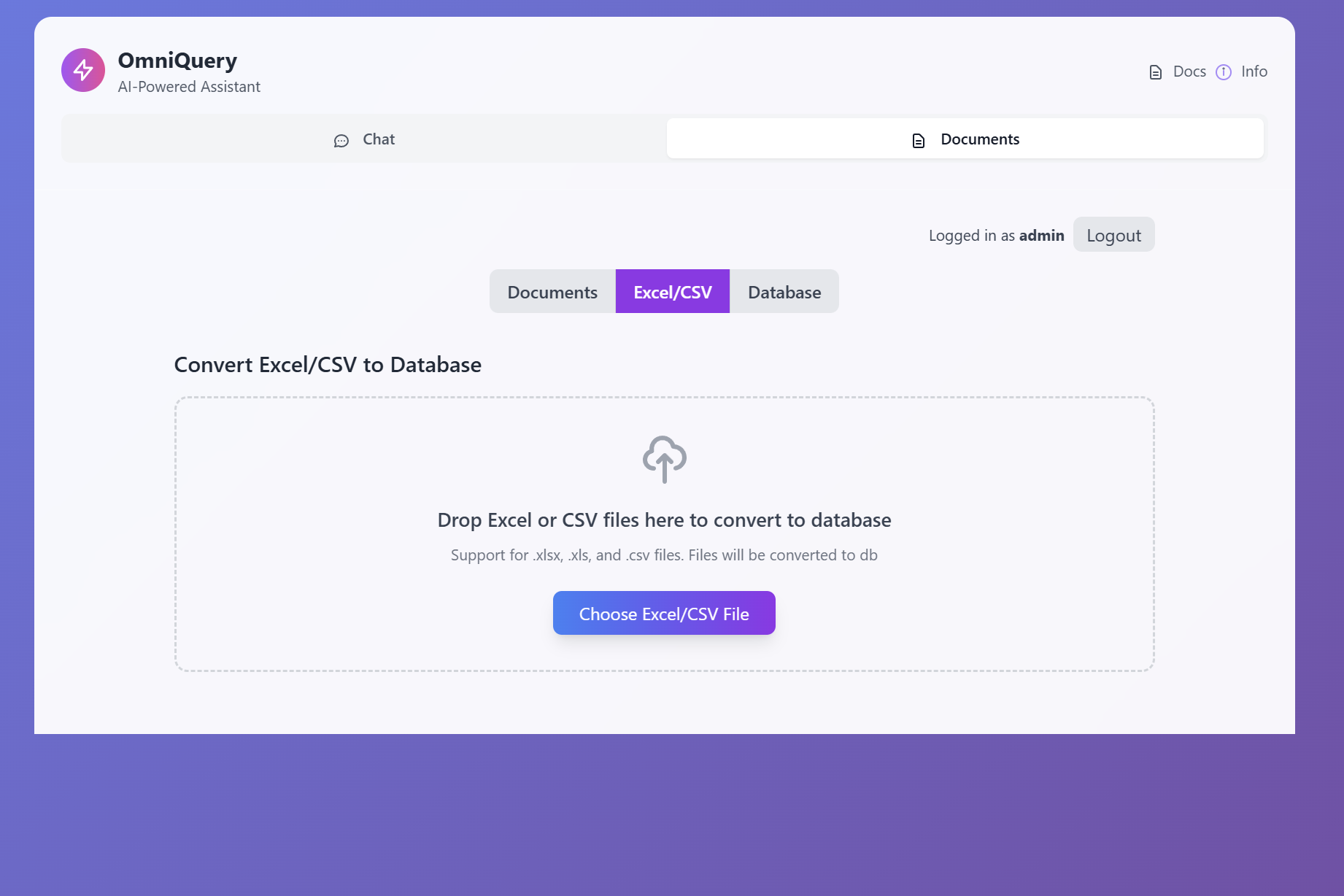
- Excel and CSV → Schema detection and BigQuery table creation
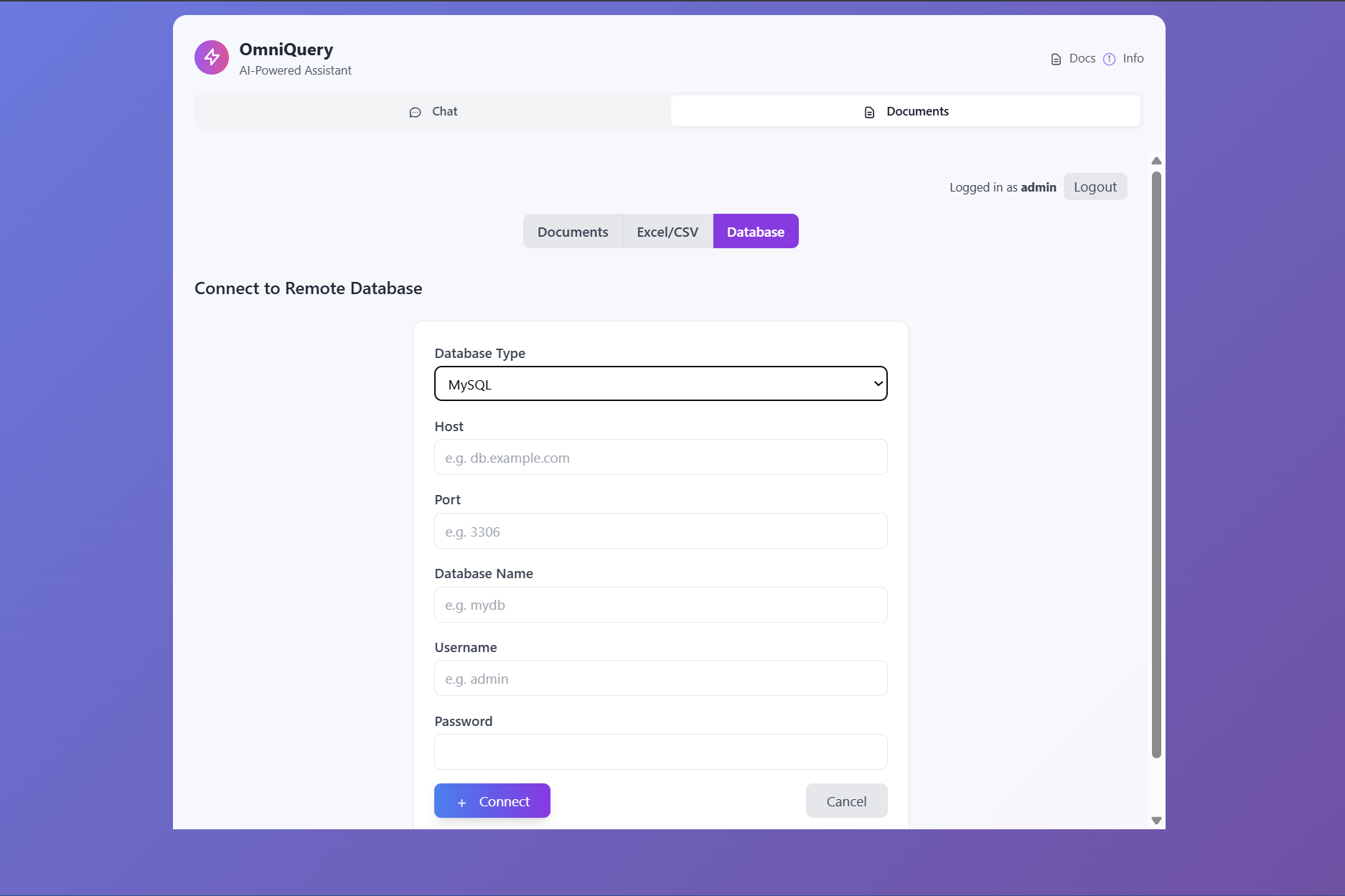
- Database connections → Dynamic query generation and execution
Data Integration
- Google Cloud Storage: Organized file storage with separate buckets for structured and unstructured data
- BigQuery Integration: Automated table creation with intelligent data type detection
- FAISS Vector Search: Implemented semantic search for document content
- Metadata Management: Built system for users to add column descriptions and context
Agent Communication
- Message Passing: Implemented efficient communication protocols between agents
- Context Sharing: Designed shared memory system so agents can build upon each other's findings
- Result Aggregation: Created intelligent synthesis that combines findings from multiple sources
Frontend Interface
- Vue.js Application: Built clean, intuitive interface for file uploads and natural language queries
- Real-time Processing: Implemented status updates showing which agents are processing the query
- Visualization: Created simple charts and summaries for easy insight consumption
Challenges I Faced
1. Agent Coordination Complexity
Challenge: Getting multiple agents to work together smoothly without conflicts or duplicate work.
Solution: Implemented a central coordinator that manages agent lifecycles and ensures proper handoffs. Created shared context objects that agents can read from and write to, maintaining state consistency.
2. Cross-Format Data Correlation
Challenge: How do you correlate a number in an Excel cell with a sentiment mentioned in a PDF document?
Solution: Built a semantic mapping system that understands business concepts across formats. For example, mapping "revenue decline" in structured data with "customer complaints" in documents based on temporal and contextual relationships.
3. Query Intent Recognition
Challenge: Understanding whether "show me customer feedback" means analyze sentiment from documents, query structured survey data, or both.
Solution: Developed a sophisticated intent classifier that analyzes query context, available data sources, and user history to make intelligent routing decisions.
4. Performance Optimization
Challenge: Processing large files and complex queries while maintaining sub-30-second response times.
Solution: Implemented intelligent caching, parallel processing across agents, and progressive result delivery. Users see initial findings quickly while deeper analysis continues in the background.
5. Schema Intelligence
Challenge: Automatically understanding data relationships across different file formats and sources.
Solution: Built a machine learning pipeline that analyzes column names, data patterns, and user-provided metadata to infer relationships and suggest correlations.
6. Time Constraints
Challenge: Building a comprehensive system within hackathon timeframes while ensuring demo-ready functionality.
Solution: Focused on core MVP features first, then iteratively added intelligence. Used hardcoded responses for demo while building the actual processing pipeline in parallel.
Technical Innovations
Intelligent Source Selection
The system automatically determines which data sources are most relevant for each query, reducing processing time and improving accuracy.
Dynamic Schema Learning
As users upload more data and add descriptions, the system gets smarter about understanding business concepts and relationships.
Collaborative Agent Intelligence
Unlike traditional single-model approaches, our agents build upon each other's findings, creating insights that wouldn't be possible from any single source.
Natural Language Business Interface
Users can ask complex business questions without knowing SQL, document search syntax, or data locations.
Impact and Future Vision
OmniQuery represents a fundamental shift from manual data hunting to intelligent insight discovery. By breaking down data silos and enabling natural language interaction with all business data, we're democratizing advanced analytics.
The project demonstrates the power of Google's Agent Development Kit for building sophisticated multi-agent systems that can tackle real-world business challenges at scale.
Future enhancements include predictive analytics, automated report generation, and integration with more enterprise systems. The foundation we've built can scale to handle any type of data source while maintaining the simplicity of natural language interaction.
This hackathon project taught me that the future of business intelligence isn't about better dashboards or faster queries—it's about systems that understand your business and can find insights you didn't even know to look for.
Built With
- bigquery
- faiss
- fastapi
- google-agent-development-kit-(adk)
- google-cloud
- google-cloud-iam
- google-generative-ai-(gemini)
- javascript
- langchain-community
- langchain-google-genai
- pypdf
- python
- tailwind-css
- vue.js-3


Log in or sign up for Devpost to join the conversation.