-
-
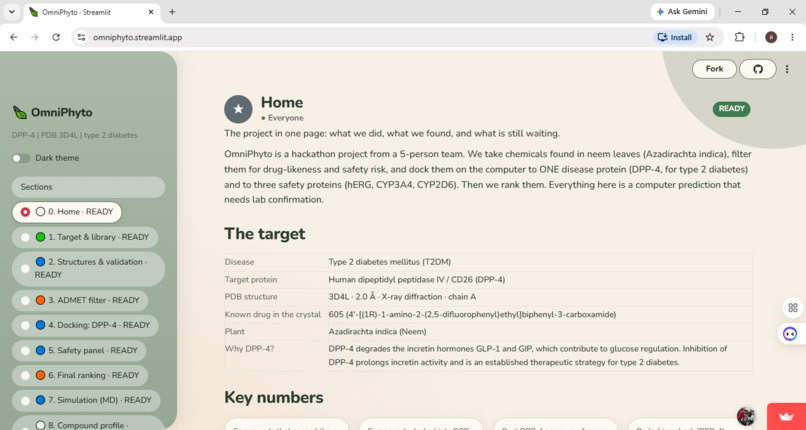
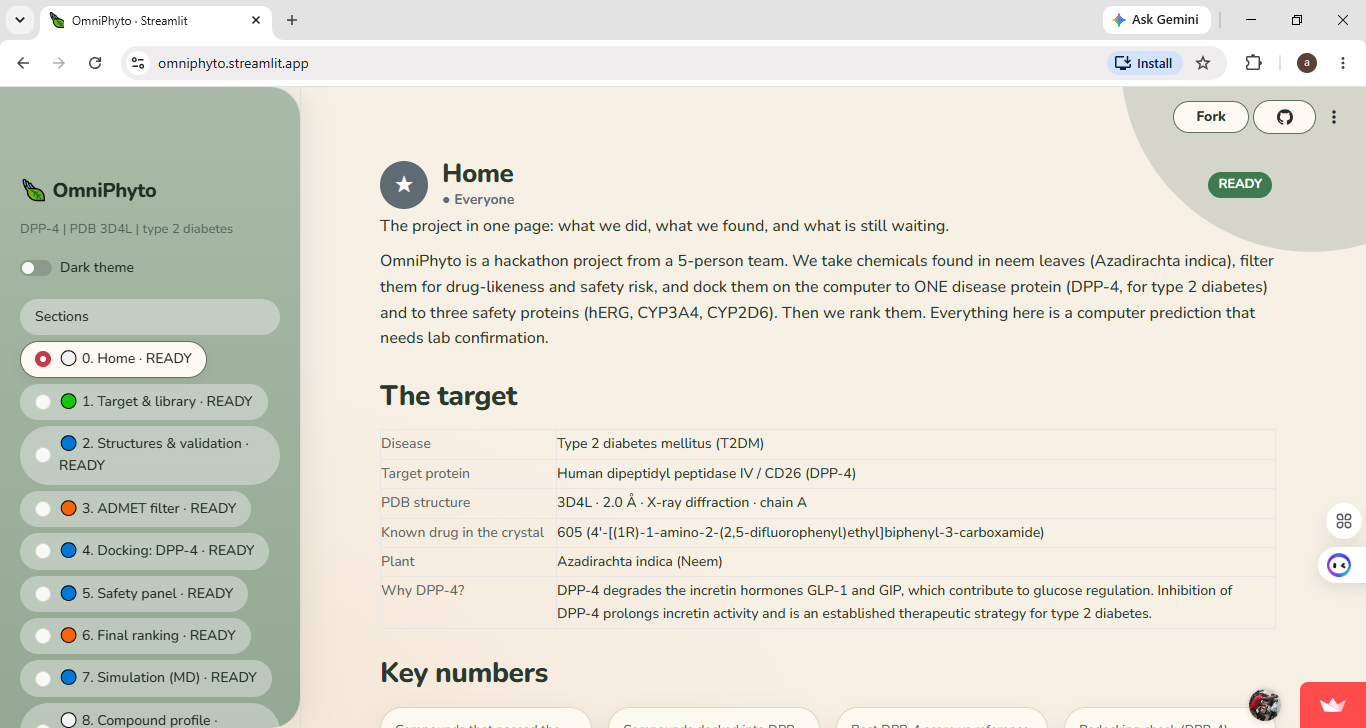
Homepage
-
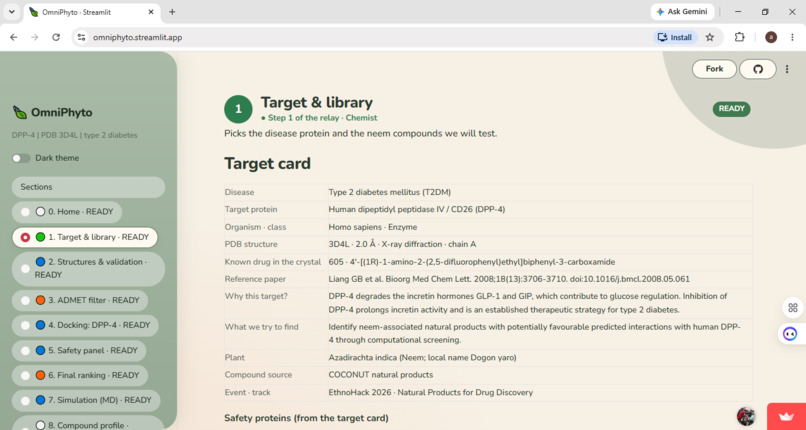
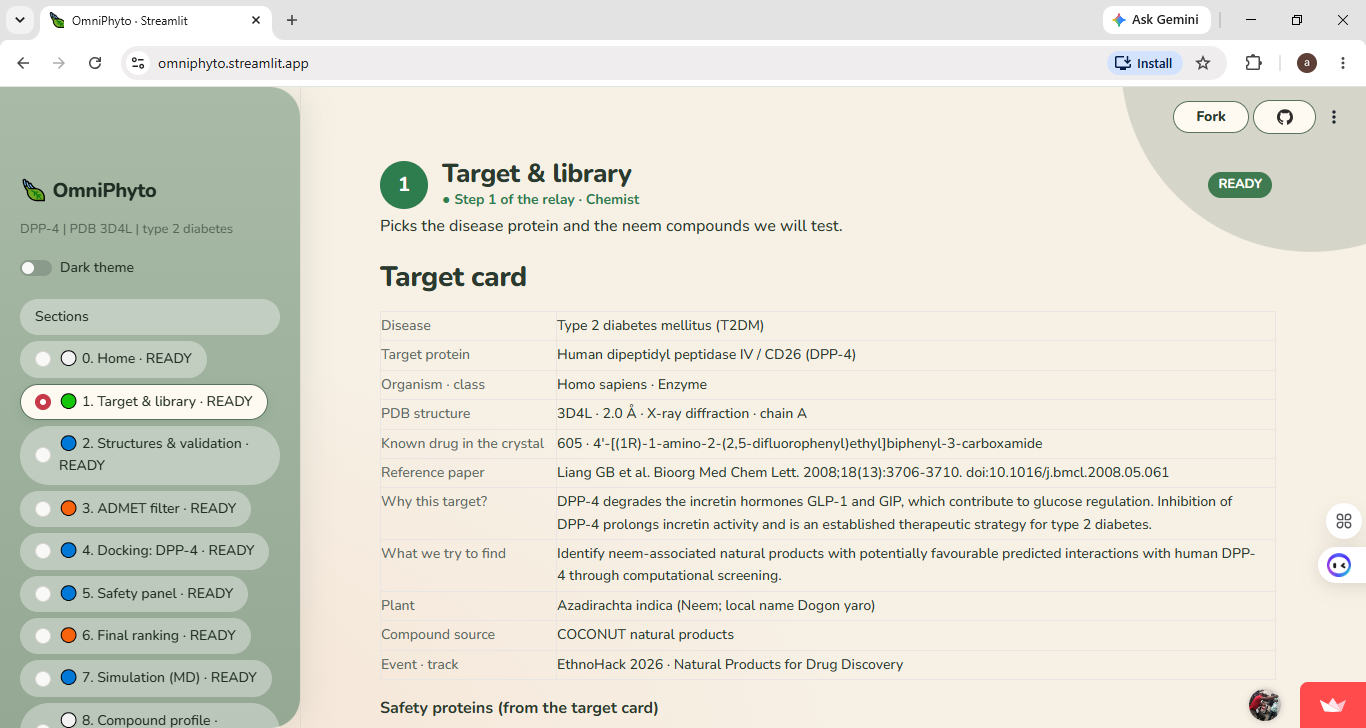
Target and library
-
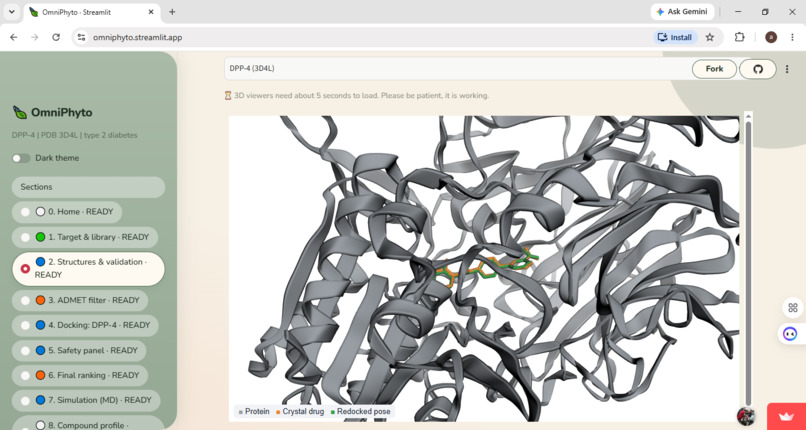
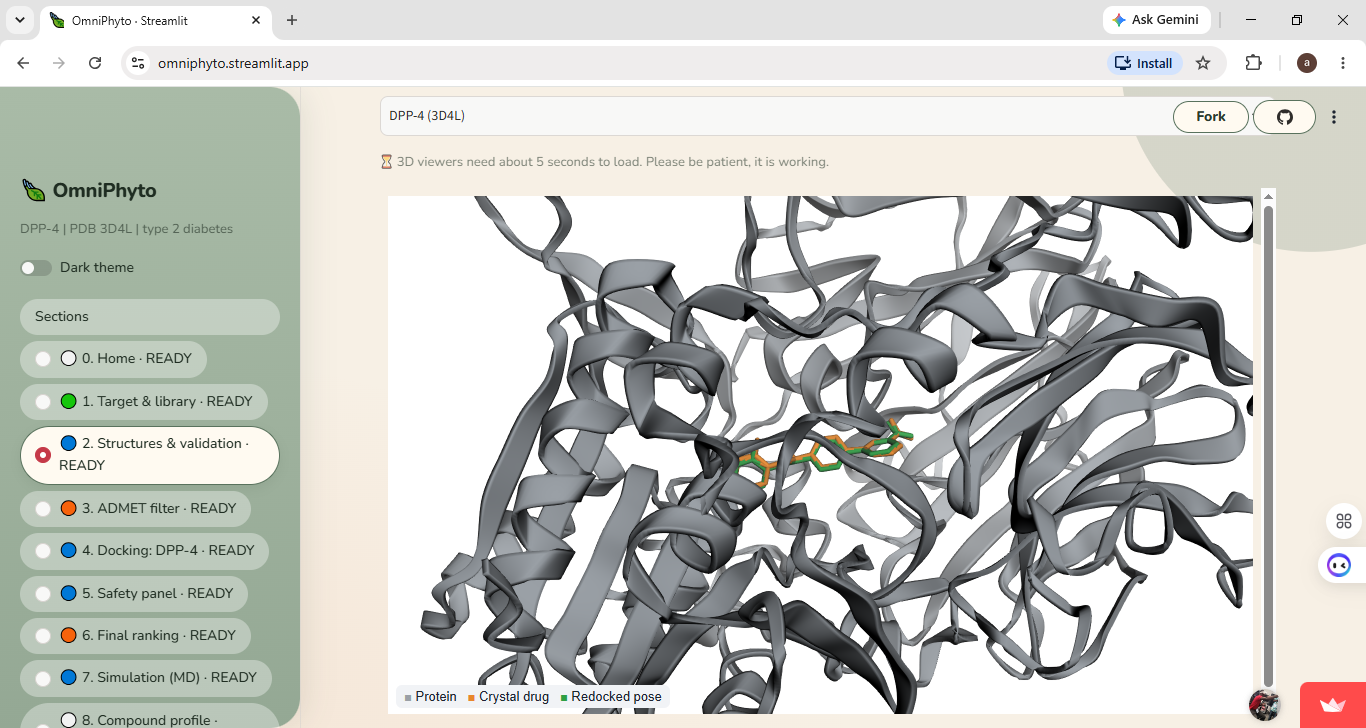
Validation pose
-
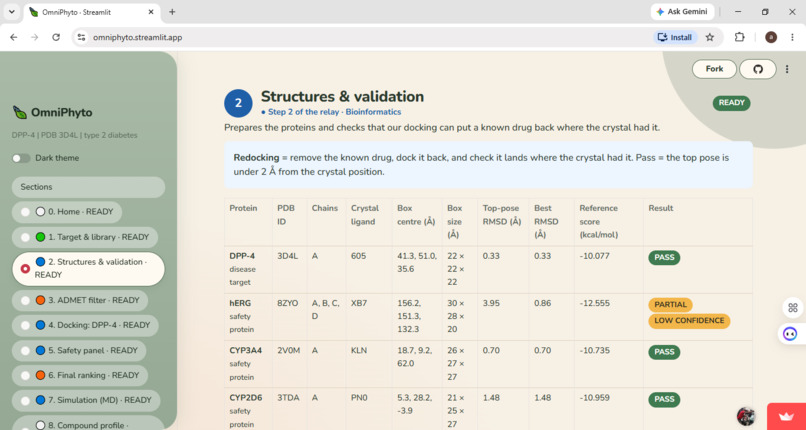
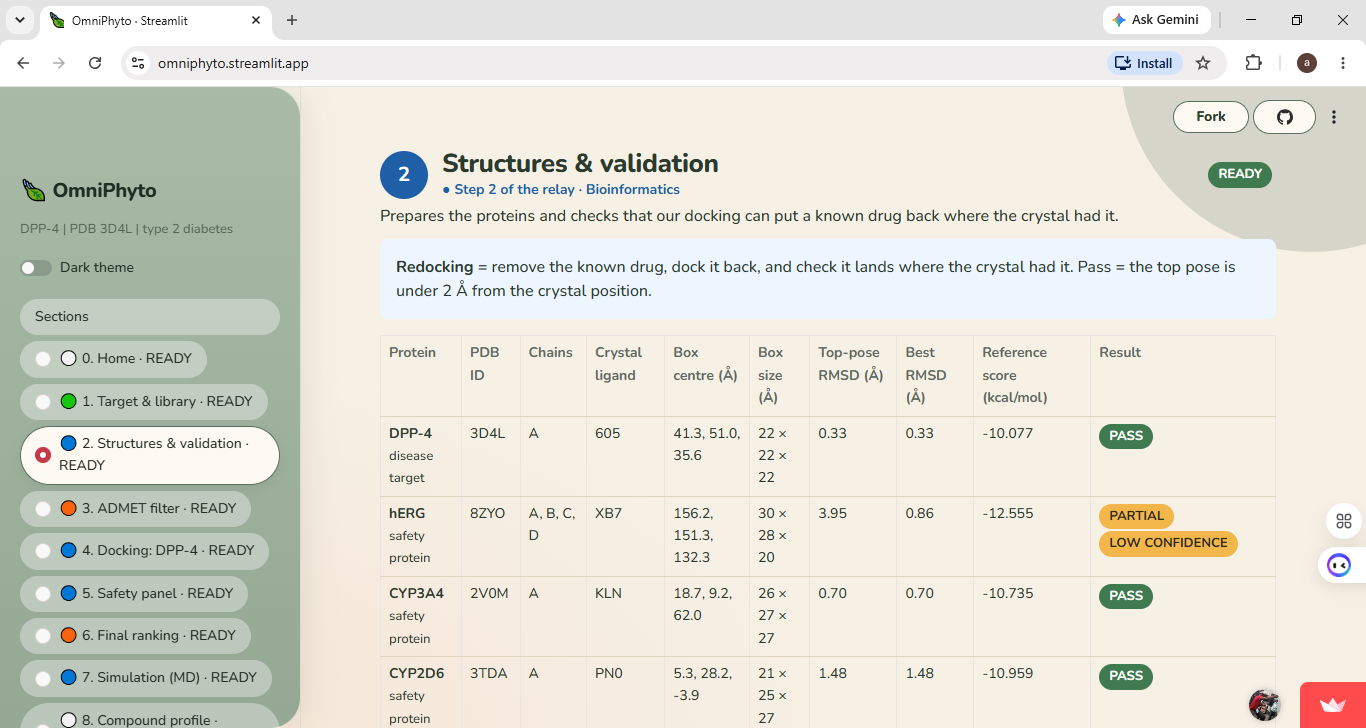
Validation Table
-
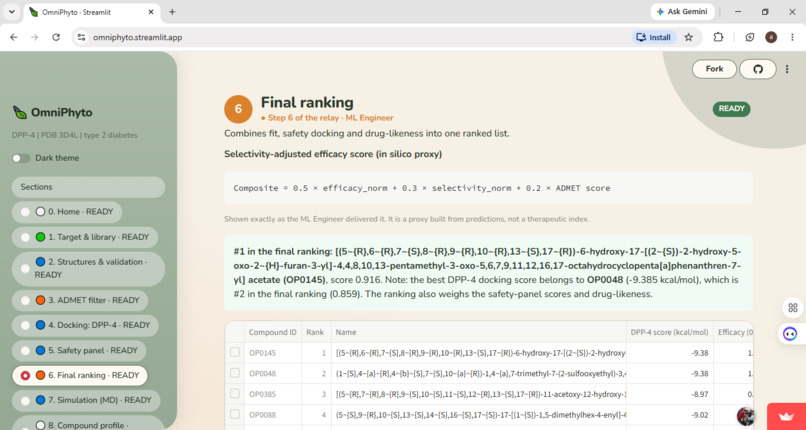
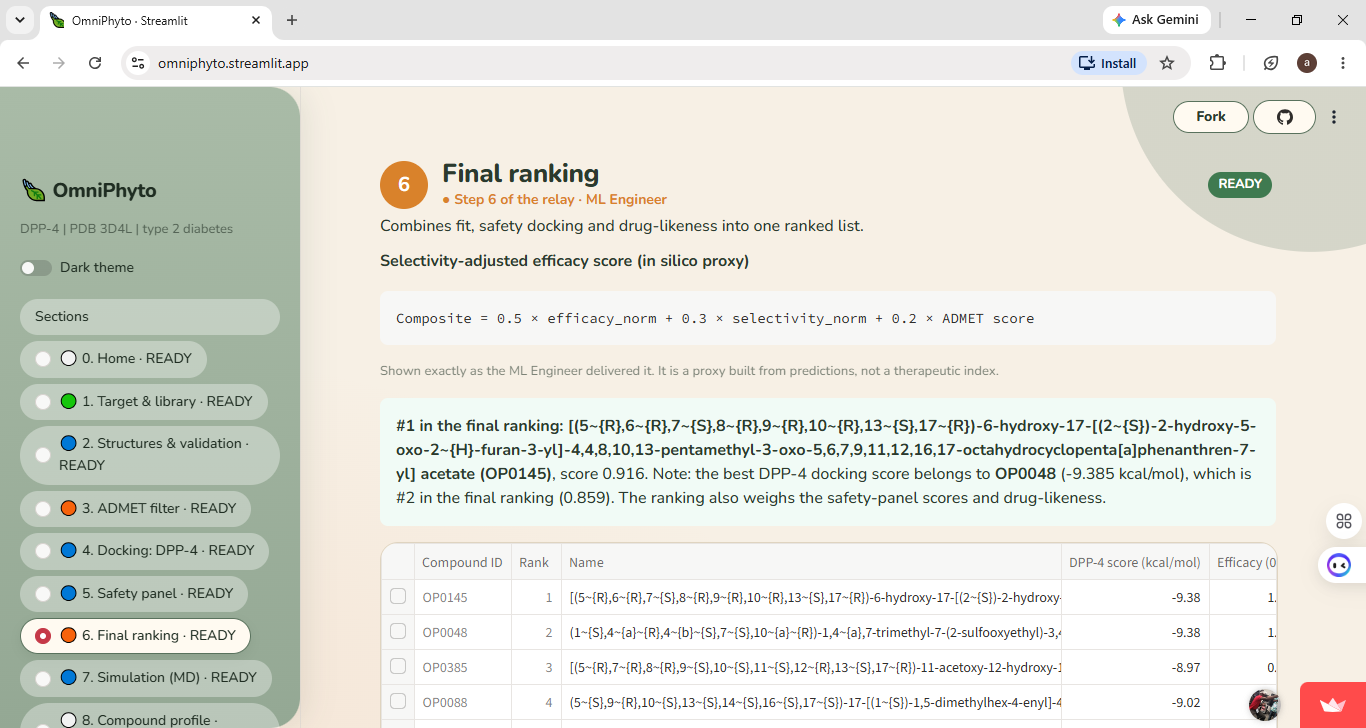
Final Ranking
Inspiration
The traditional drug discovery pipeline is notoriously slow, resource-heavy, and hindered by a steep computational learning curve. We were inspired to build OmniPhyto to democratize this process. We wanted to eliminate the technical friction and environment setup stress that often bogs down researchers, allowing medicinal chemists to seamlessly transition from in silico screening straight to wet-lab validation. By automating target docking, safety screening, and toxicity identification, we aim to drastically reduce the time it takes to discover safe, effective therapeutic compounds.
What it does
OmniPhyto is an automated, end-to-end computational phytomedicine platform. It takes a library of chemical compounds and systematically screens them through a rigorous multi-stage pipeline: Therapeutic Docking: Screens compounds against a primary disease target (e.g., DPP-4) to predict binding affinity (Delta G). Safety & Toxicity Screening: Performs inverse docking against critical anti-targets (like hERG, CYP3A4, and CYP2D6) to flag potential cardiac or hepatic toxicity early. ADMET Filtering & MD: Evaluates absorption, distribution, metabolism, excretion, and toxicity profiles, capped off with Molecular Dynamics (MD) simulations to assess the structural stability of the potential drug candidates.
How we built it
We engineered OmniPhyto using a robust, decoupled architecture to seamlessly bridge data mining, heavy biochemical computation, and user-friendly web design:
Data Sourcing & Environment Setup: The pipeline begins with a custom Python script executed in a Jupyter Notebook, which our chemist used to programmatically query and pull natural compound datasets directly from the COCONUT database. To maintain strict, reproducible dependencies across our team's different machines, we managed our Python 3.11 environments using Miniforge and orchestrated all version control and deployment via GitHub.
Cheminformatics & Docking Backend: For the core biochemical processing, we leveraged RDKit and Open Babel to handle complex chemical format conversions, 3D coordinate embedding, and energy minimization. These prepared ligands were then processed by AutoDock for batch molecular docking against our primary therapeutic disease target, the DPP-4 protein structure (PDB ID: 3D4L).
Molecular Dynamics (MD) Engine: To evaluate structural stability without bottlenecking our main pipeline, we offloaded the computationally expensive MD simulations to a Kaggle Notebook, strategically utilizing their free GPU accelerators.
Frontend Interface: We wrapped the computational backend into an accessible, interactive web dashboard using Streamlit. We customized the UI styling with Nunito typography for a clean, modern aesthetic, and integrated py3Dmol to render real-time, interactive 3D visualizations of the docked protein-ligand complexes.
Challenges we ran into
Building a bioinformatics tool requires merging two very different worlds: biology and software engineering. Our biggest hurdle was cross-disciplinary translation, the developer had to understand complex biochemical pipeline logic (like grid box coordinates and RMSD validation), while the bioinformatics side had to adapt to software architecture issues.
Additionally, orchestrating a distributed compute environment was a major technical challenge. We had to connect a heavy computational docking backend on Colab, an MD simulation engine on Kaggle, and a lightweight web frontend on Streamlit. Managing environment configurations and data handoffs across these different platforms led to multiple deployment iterations before we achieved a stable, unified build.
Accomplishments that we're proud of
We are incredibly proud of successfully bridging the gap between computer science and biochemistry to produce a functional, professional-grade bioinformatics tool. For our team, it was a massive milestone to successfully integrate and run Molecular Dynamics (MD) simulations within a hackathon timeframe. Above all, we proved that individuals from completely different disciplines can synthesize their expertise into a cohesive, highly technical product.
What we learned
We learned that in cross-functional teams, communication is the ultimate bottleneck and the ultimate key to success. Translating biological needs into code required immense patience and clarity. We also learned the hard truth of software development: building a resilient, deployment-ready pipeline takes significantly more time, energy, and structural planning than writing a local script.
What's next for OmniPhyto
Our immediate next step is to fully integrate and scale the remaining computational engines (like automated MD trajectory analysis) directly into the cloud architecture to make the platform publicly accessible. Ultimately, we plan to validate our pipeline's hits in the wet lab and author a peer-reviewed publication detailing OmniPhyto's methodology and its impact on computational drug discovery.
Built With
- autodock
- autodock-vina
- biopython
- coconut-database
- github
- google-colab
- joblib
- jupyter-notebook
- kaggle
- openbabel
- py3dmol
- python
- rdkit
- scikit-learn
- streamlit


