-
-
First image
-
-
Inspiration
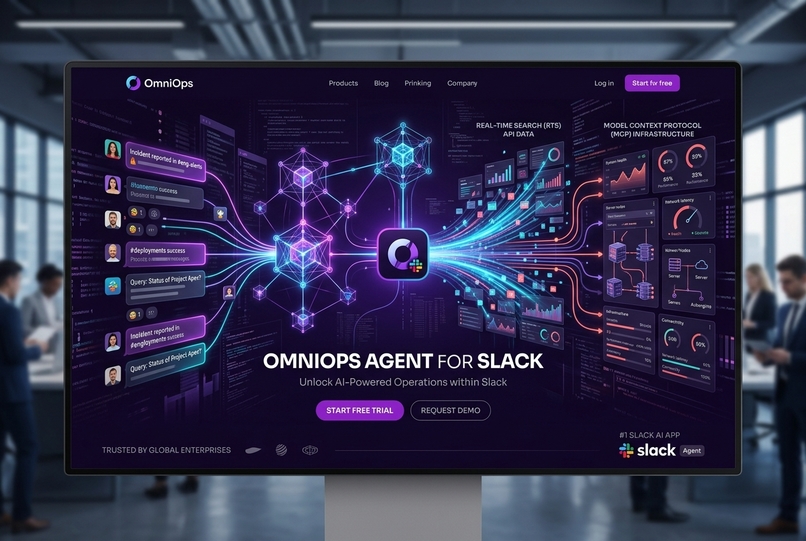
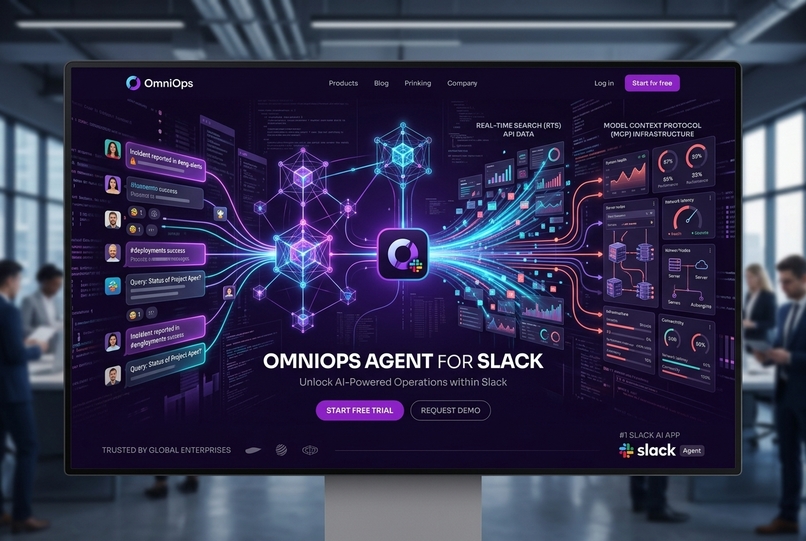
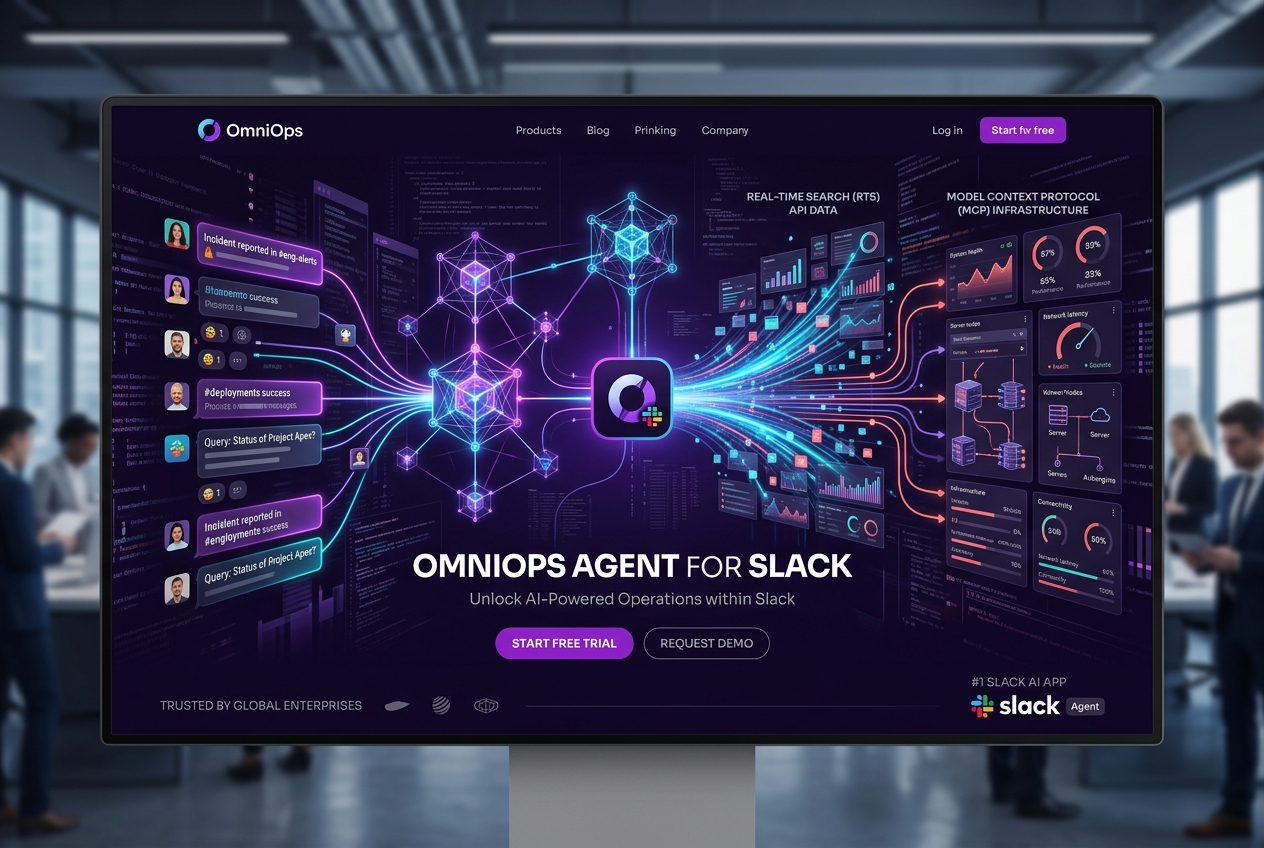
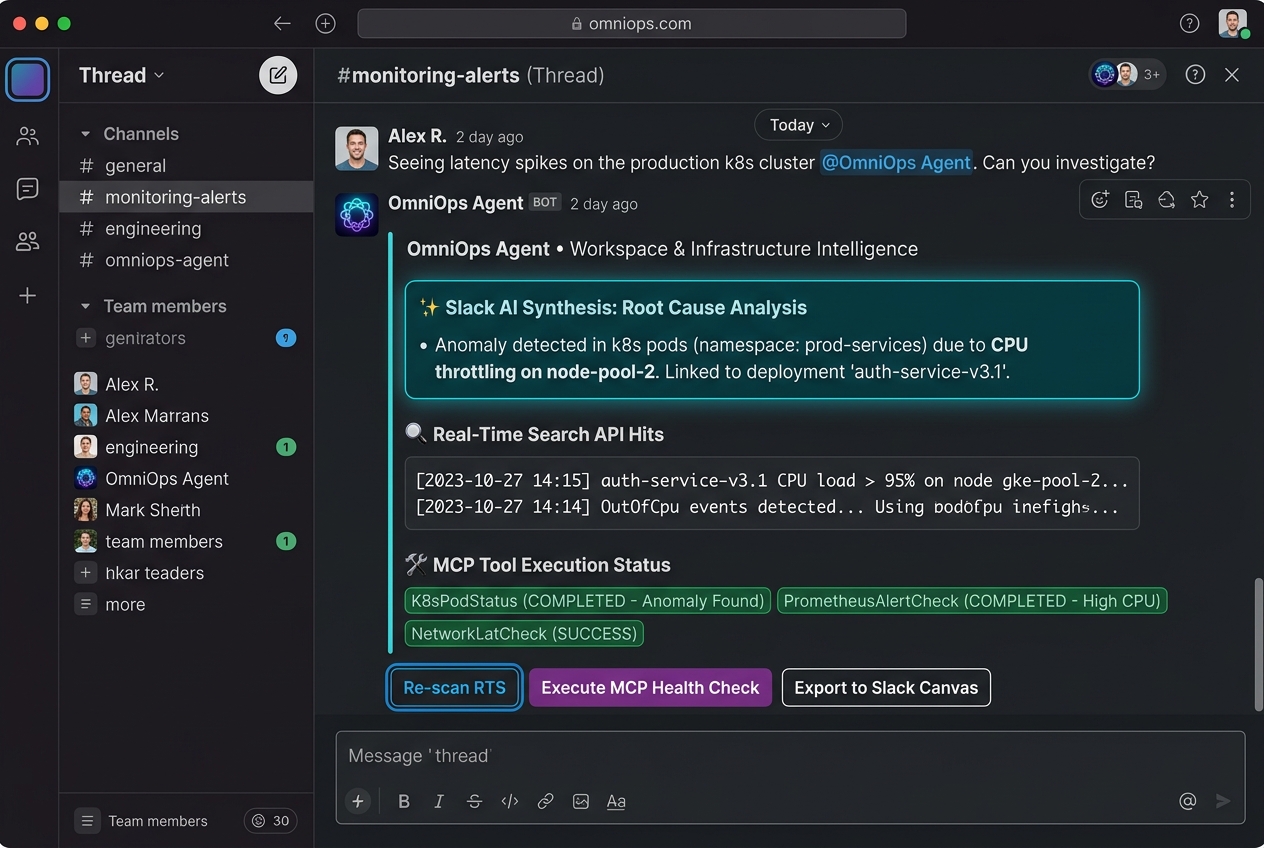
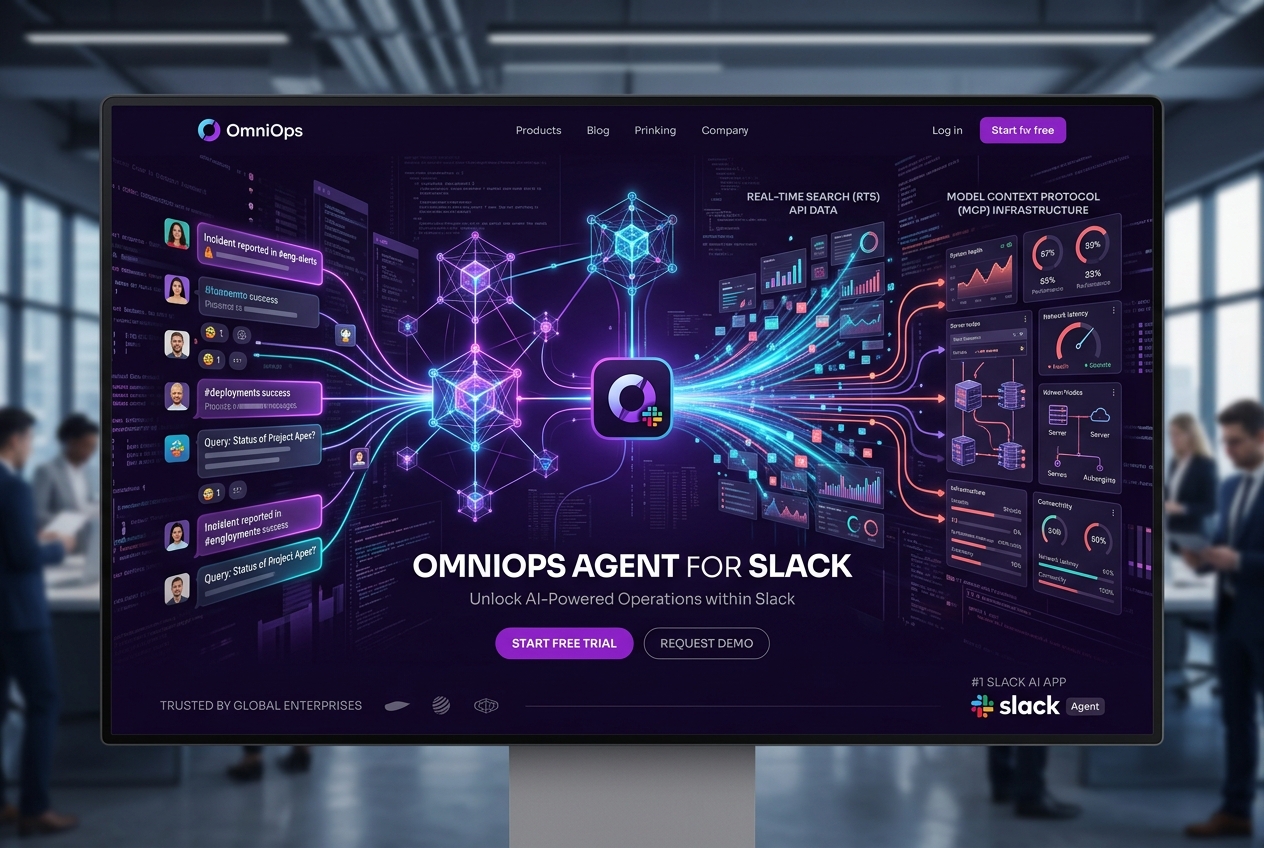
Imagine engineering teams wasting precious minutes during high-severity production incidents scouring dozens of Slack channels, message threads, and postmortem files to compile historical context while manually checking GitHub releases, deployment pipelines, and Kubernetes metrics. We’ve built OmniOps Agent to turn Slack into an autonomous ITOps cockpit. The OmniOps Agent combines Slack AI, the Real-Time Search (RTS) API, and Model Context Protocol (MCP) servers to generate actionable reports directly in Slack threads that can automatically diagnose incidents and verify live infrastructure metrics.
What it does
OmniOps Agent is an intelligent workplace assistant triggered via @omniops "mentions" or the "/omniops slash command":
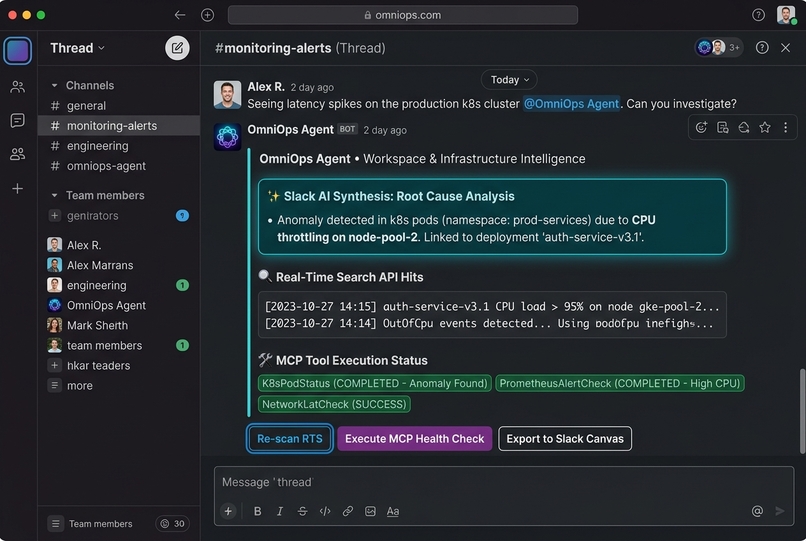
- Real-Time Workspace Context (RTS API): Instantly searches across workspace channels, message threads, and uploaded documents using `search.messages "and" to find historical resolutions and related incident discussions.
- Infrastructure Tooling via MCP Protocol: Connects via Model Context Protocol (MCP) to external tools (
github_get_deployment_status,ops_query_service_health,ops_trigger_rollback) to pull live commit metrics and cluster telemetry. - Slack AI Intelligence Synthesis: Uses AI capabilities to generate concise root-cause summaries and step-by-step mitigation plans.
- Rich Block Kit & Canvas Integration: Displays intuitive Block Kit UI cards with interactive action buttons (Re-scan RTS, Execute MCP Check, Export to Slack Canvas).
How we built it
- Framework & Runtime: Node.js & TypeScript powered by ``running in Socket Mode for instant bidirectional communication.
- Real-Time Search Integration: Built a custom `RealTimeSearchService "wrapping" search endpoint to query and rank workspace discussions dynamically.
- Model Context Protocol (MCP): Implemented a standard JSON-RPC 2.0 MCP client and a standalone MCP HTTP server (
@modelcontextprotocol/sdk) enabling extensible multi-tool function calling. - UI/UX Design System: Formatted with Slack Block Kit Builder, implementing modal dialogs, status spinners, parameter inputs, and direct links to Slack message threads.
Challenges we ran into
**Coordinating asynchronous data streams: combining real-time workspace search queries (RTS API) with external tool calls (MCP protocol) and rendering the combined output in Block Kit UI in <3 seconds.
- Robust fallbacks: Agent diagnostics context will be provided even when workspace tokens and external endpoints are still being configured.
Accomplishments that we're proud of
- 3-Way Technology Synergy: Successfully stacked all 3 featured hackathon technologies (Slack AI, MCP Protocol, and Real-Time Search API) into a seamless end-to-end agentic workflow.
- Production-Grade UX: Delivered a polished experience with interactive slash command modals, single-click action buttons, and automated Slack Canvas exports.
What we learned
A standardization of external tool integrations around Model Context Protocol (MCP) enables building Slack agents to be extremely modular. Seamlessly connect any enterprise system (Jira, GitHub, Datadog, Postgres) to the Slack agent without having to rewrite core reasoning logic.
What's next for OmniOps Agent
- Slack Marketplace Listing: Submitting to the Slack Marketplace for enterprise distribution.
- Automated Incident Triggers: Webhooks for PagerDuty and Opsgenie to auto-spawn diagnostic channels.
- Advanced Predictive Maintenance: Using Slack AI to analyze deployment patterns and predict potential outages before they affect users.
Built With
- express.js
- json-rpc
- model-context-protocol
- node.js
- real-time-search-api
- slack
- slack-agent-builder
- slack-ai
- slack-bolt
- typescript

Log in or sign up for Devpost to join the conversation.