-
-
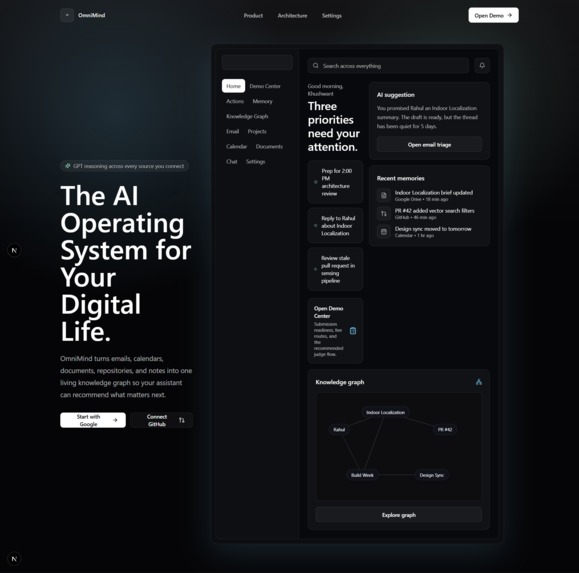
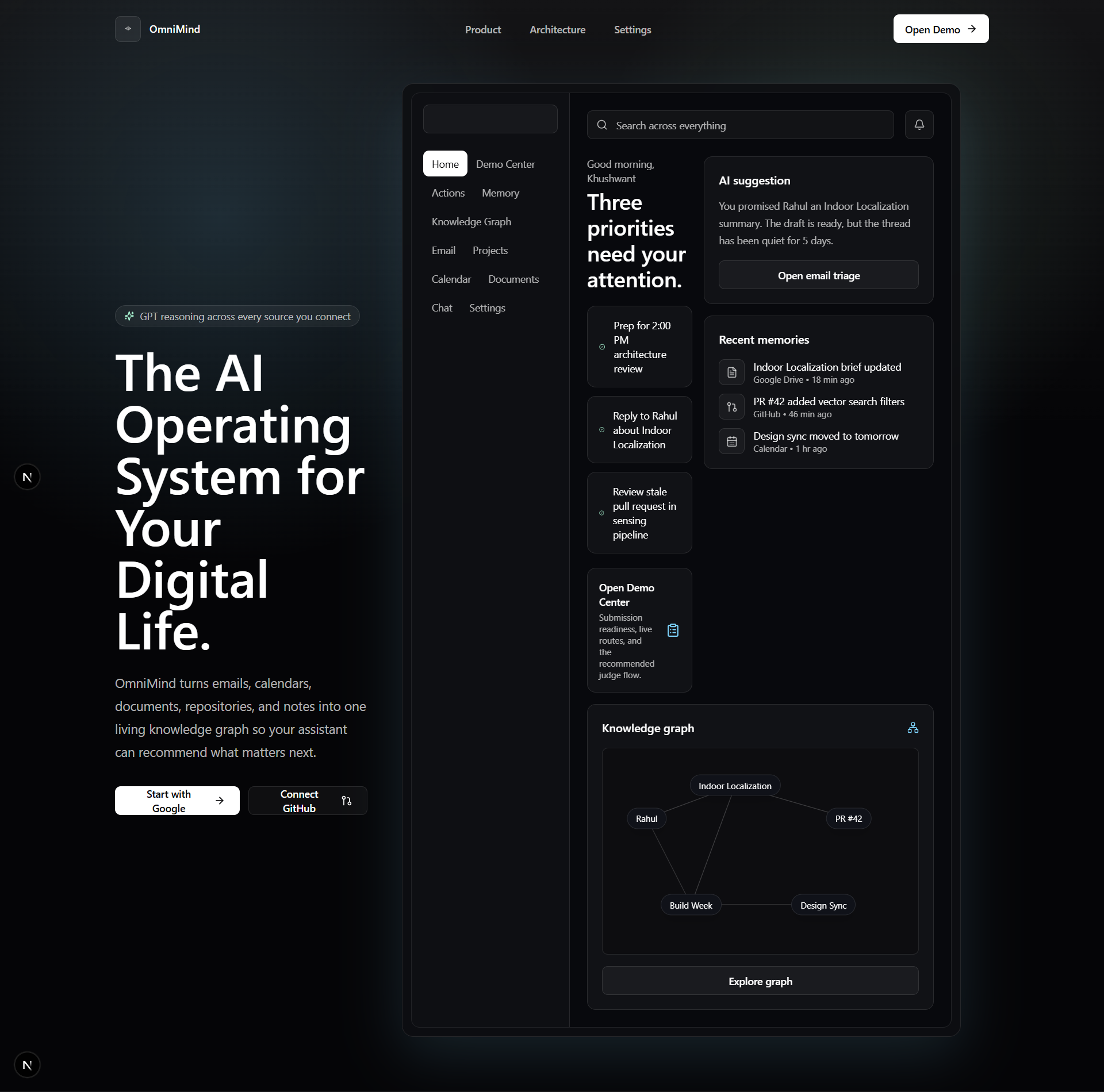
OmniMind transforms fragmented digital information into a unified AI reasoning layer, helping users understand what matters next.
-
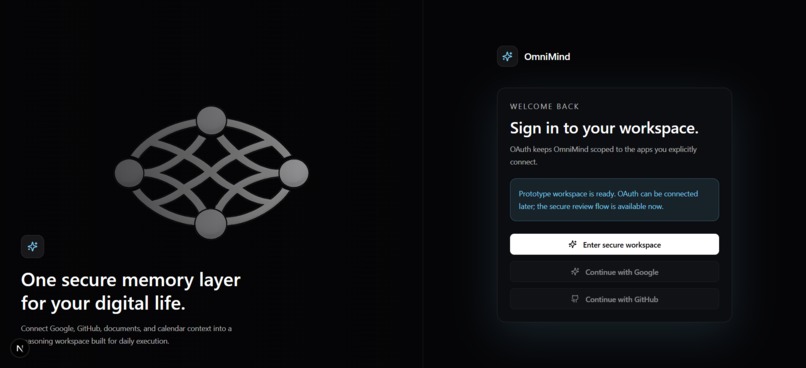
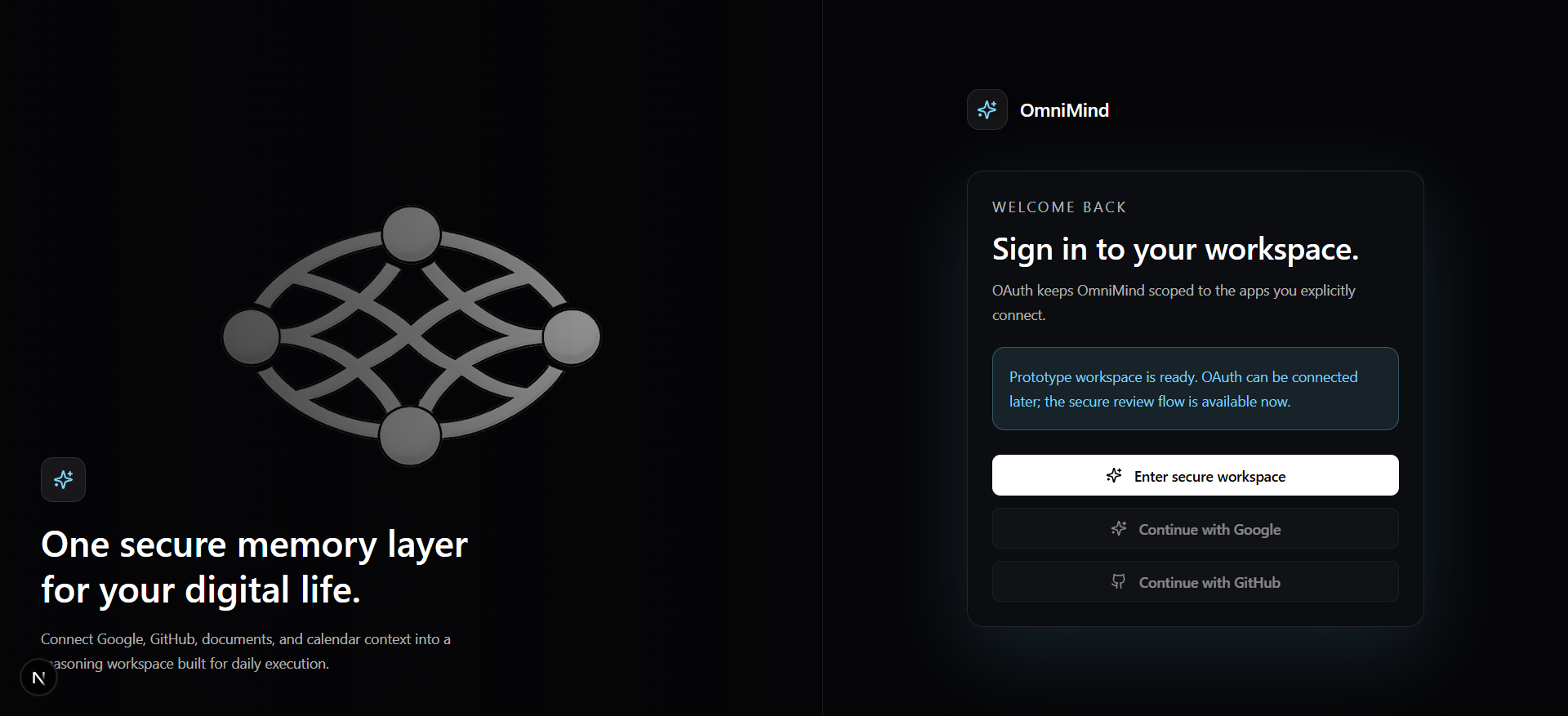
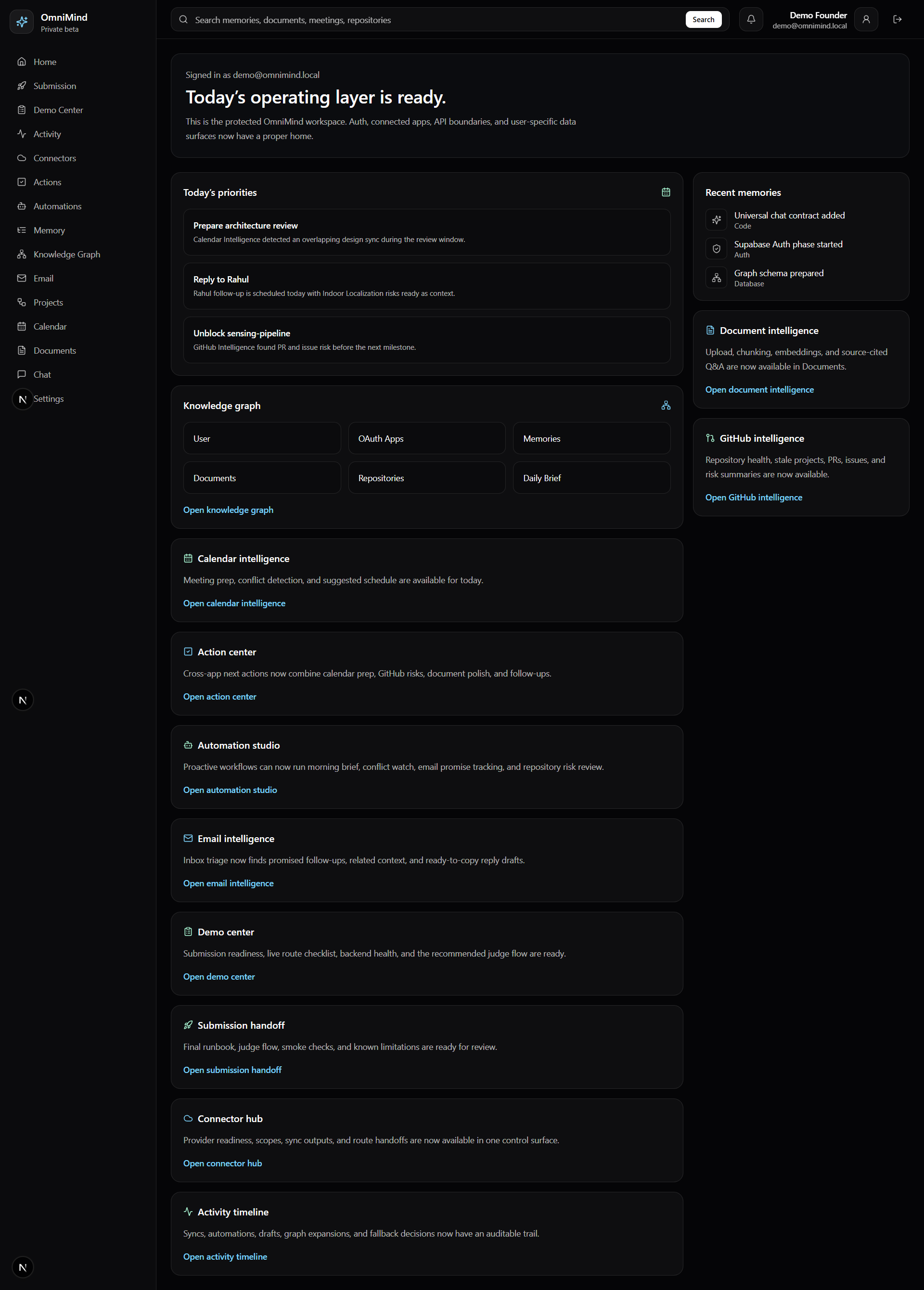
A secure workspace designed for connected AI reasoning across your digital tools.
-
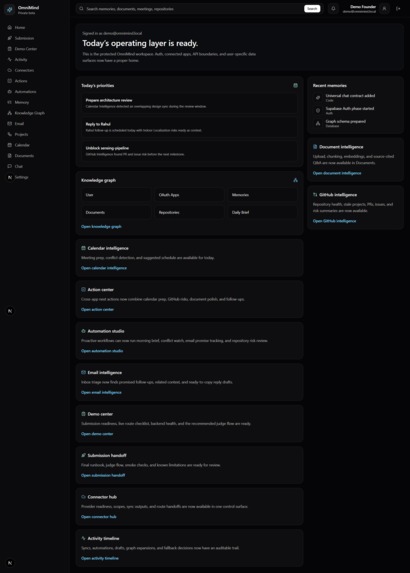
A unified workspace providing instant visibility into conversations, actions, documents, and connected knowledge.
-
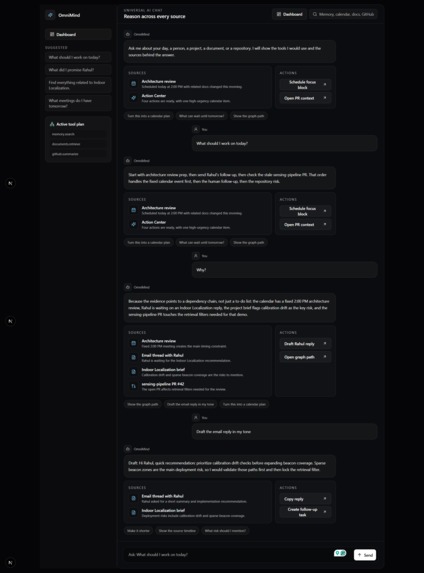
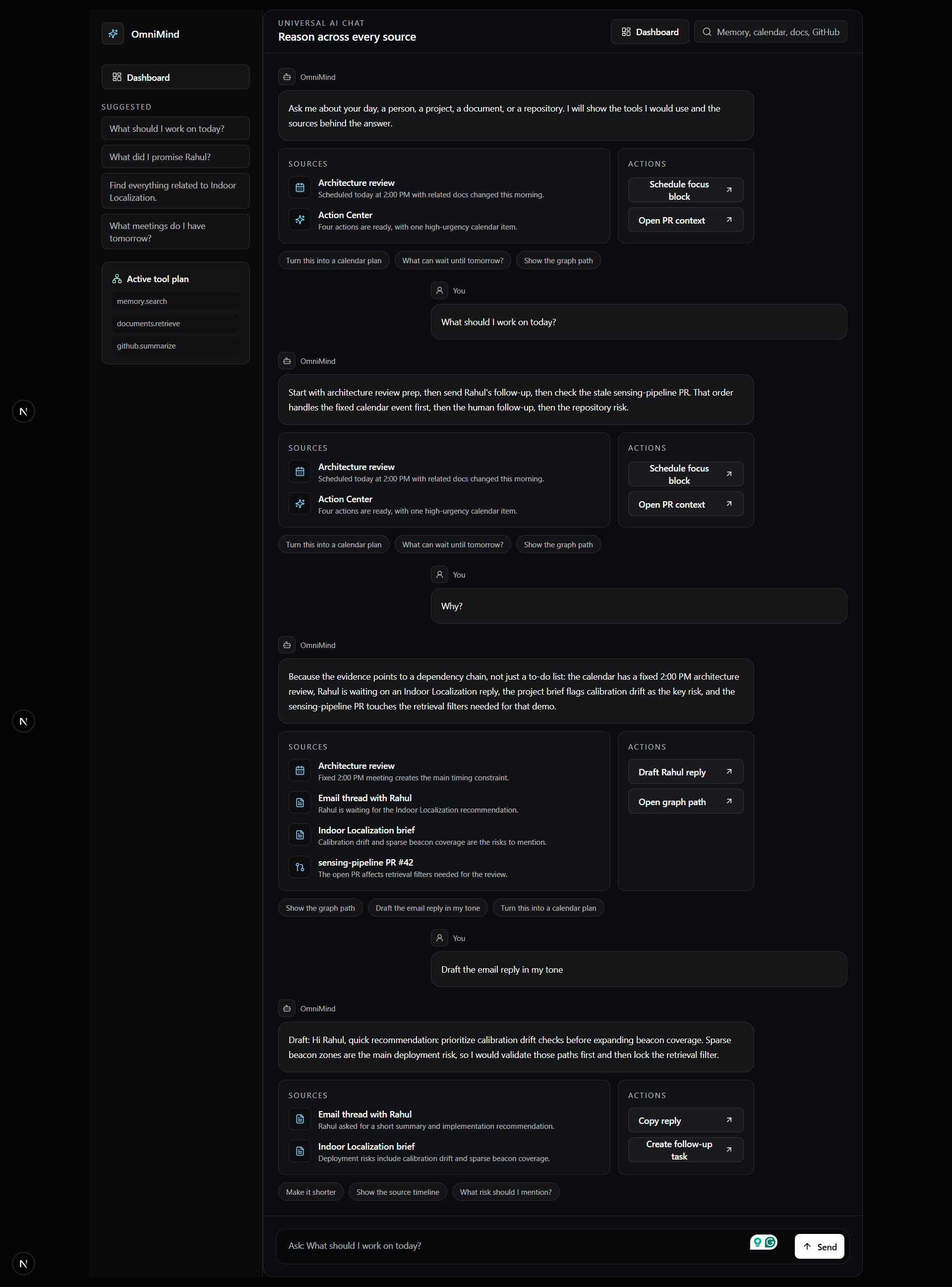
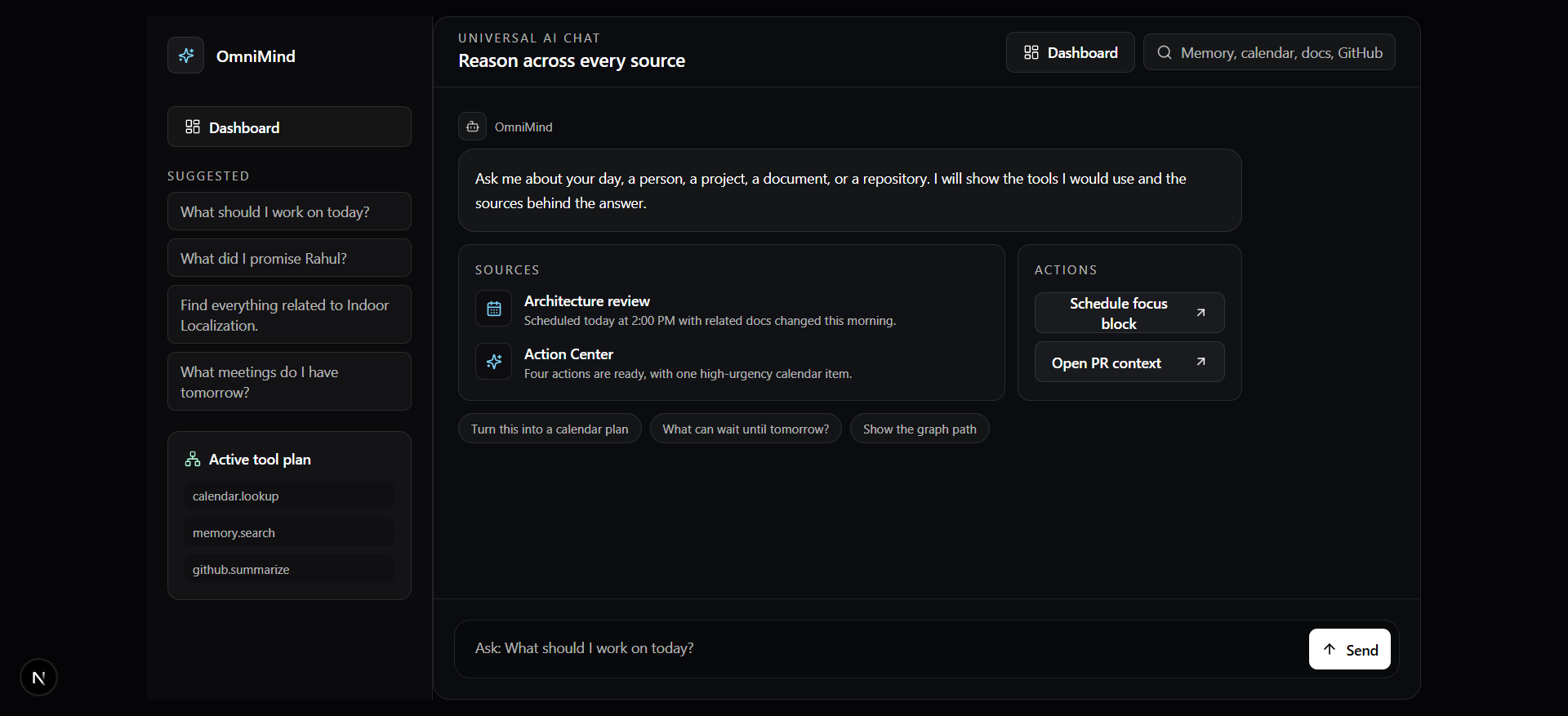
Ask natural language questions and receive evidence-backed recommendations powered by connected context.
-
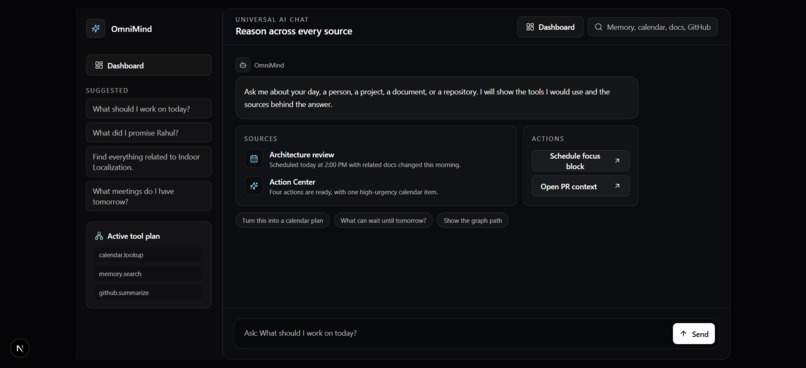
OmniMind explains not only what to do, but why—reasoning across emails, calendars, repositories, and documents.
-
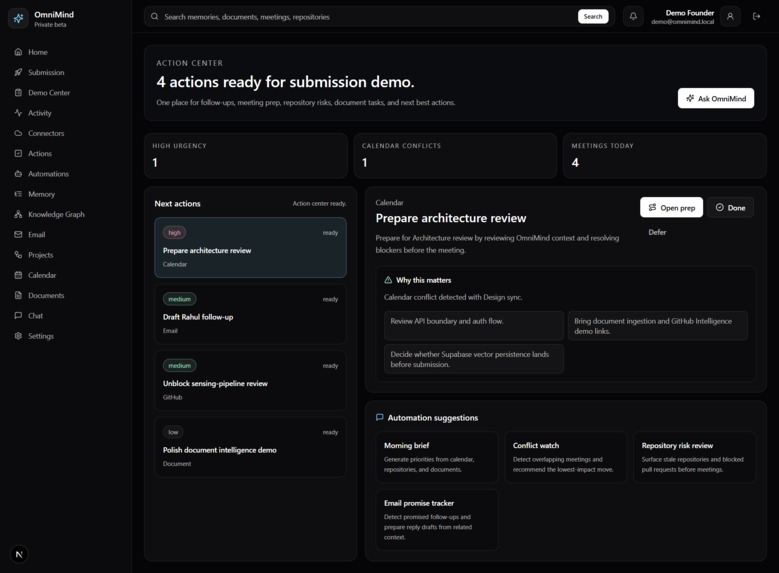
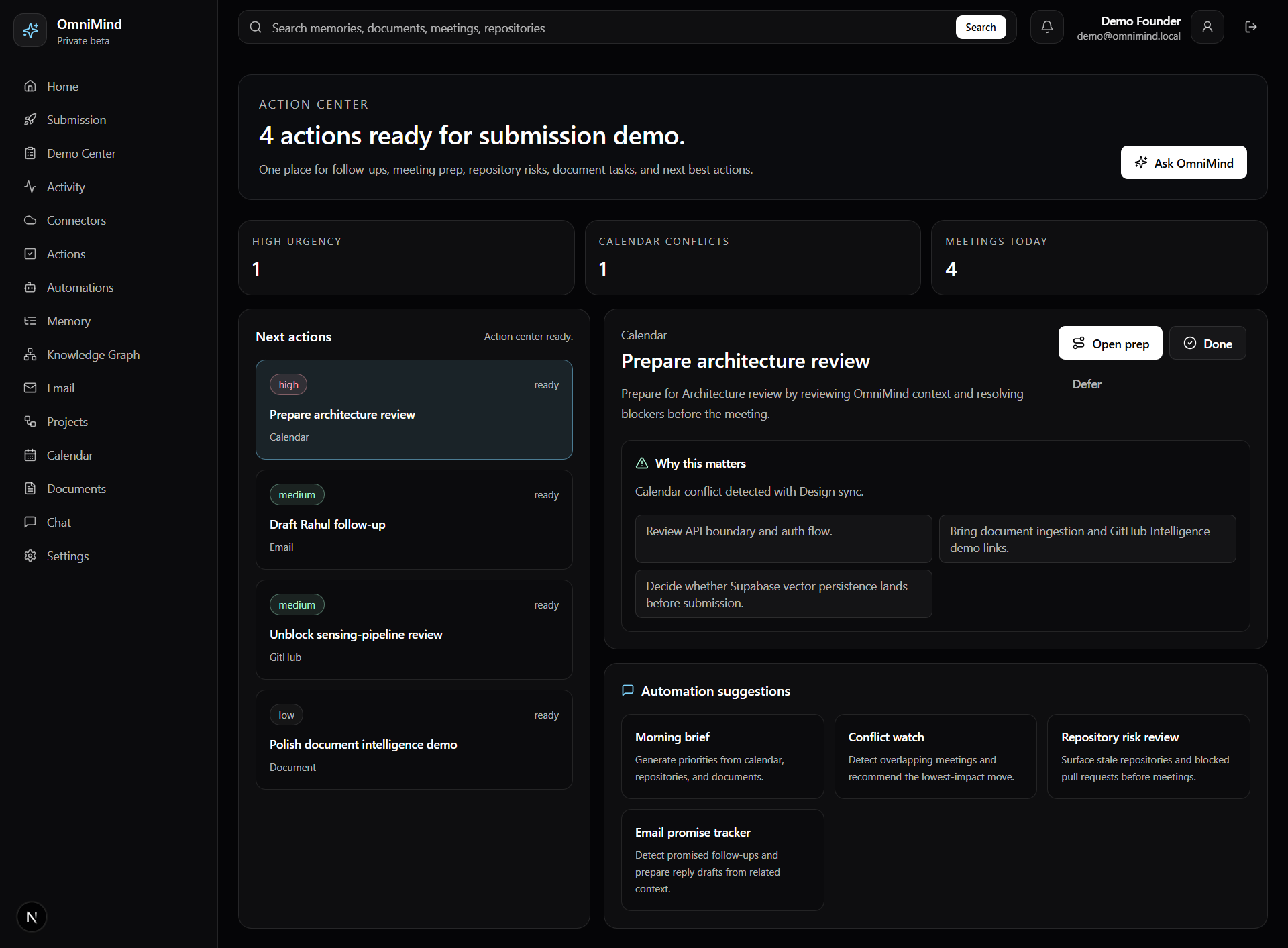
An AI-generated action queue that prioritizes work using evidence from multiple connected sources.
-
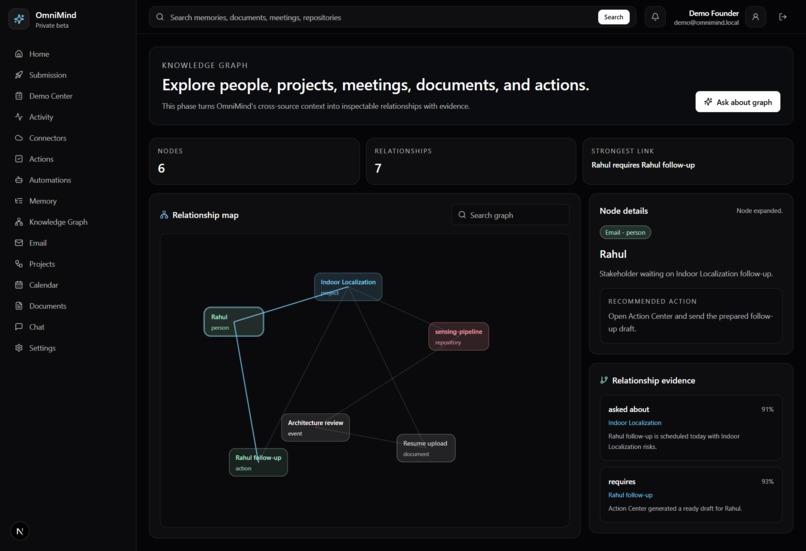
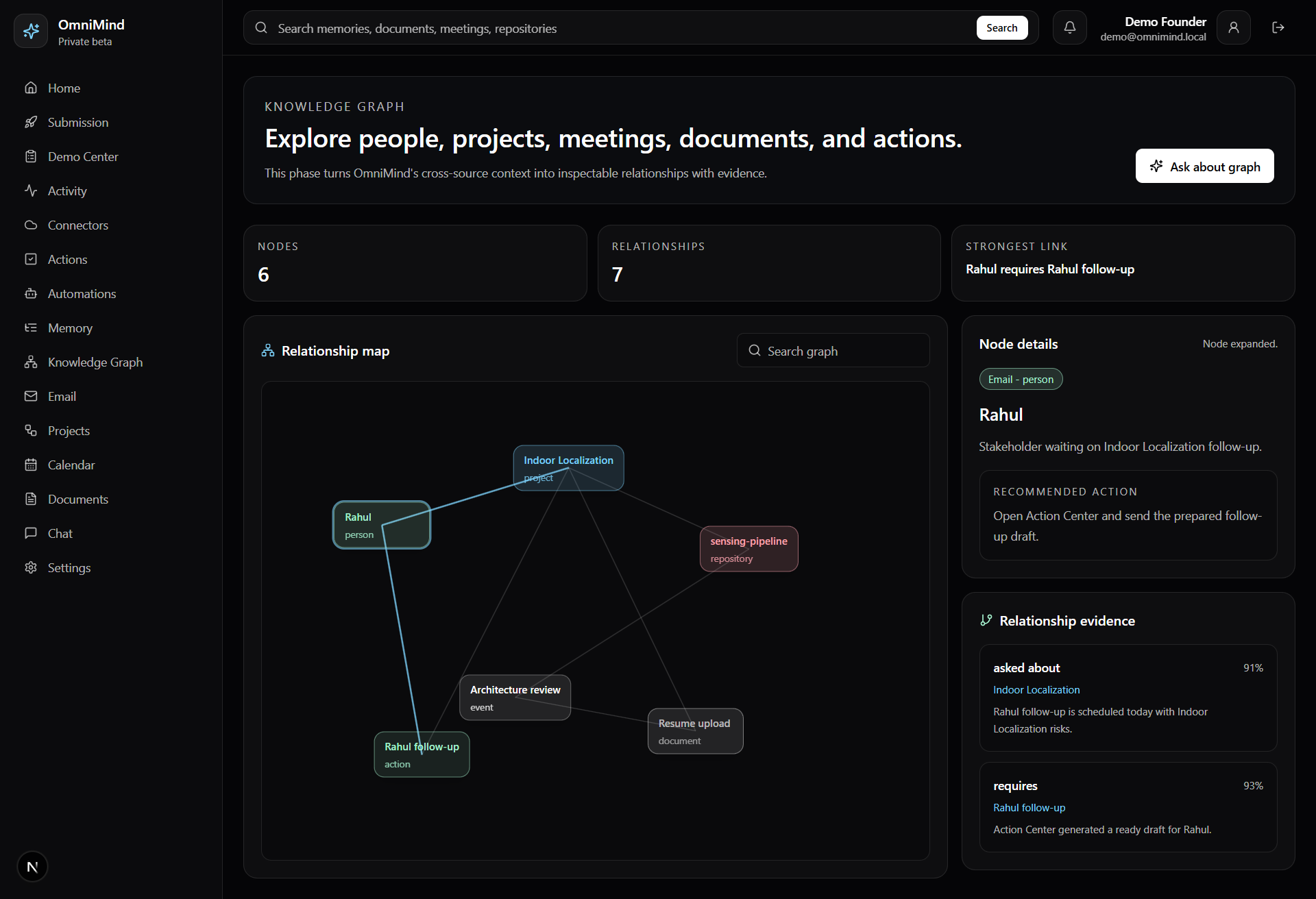
A unified knowledge graph that reveals relationships between projects, documents, meetings, and conversations.
-
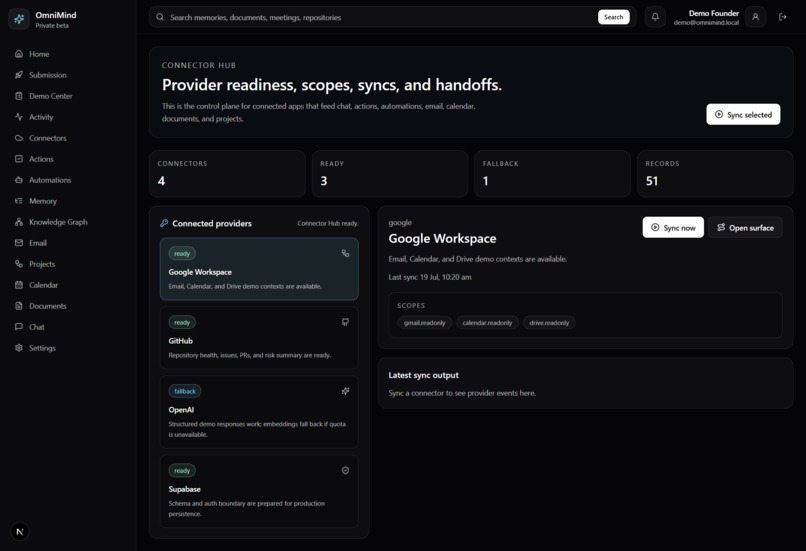
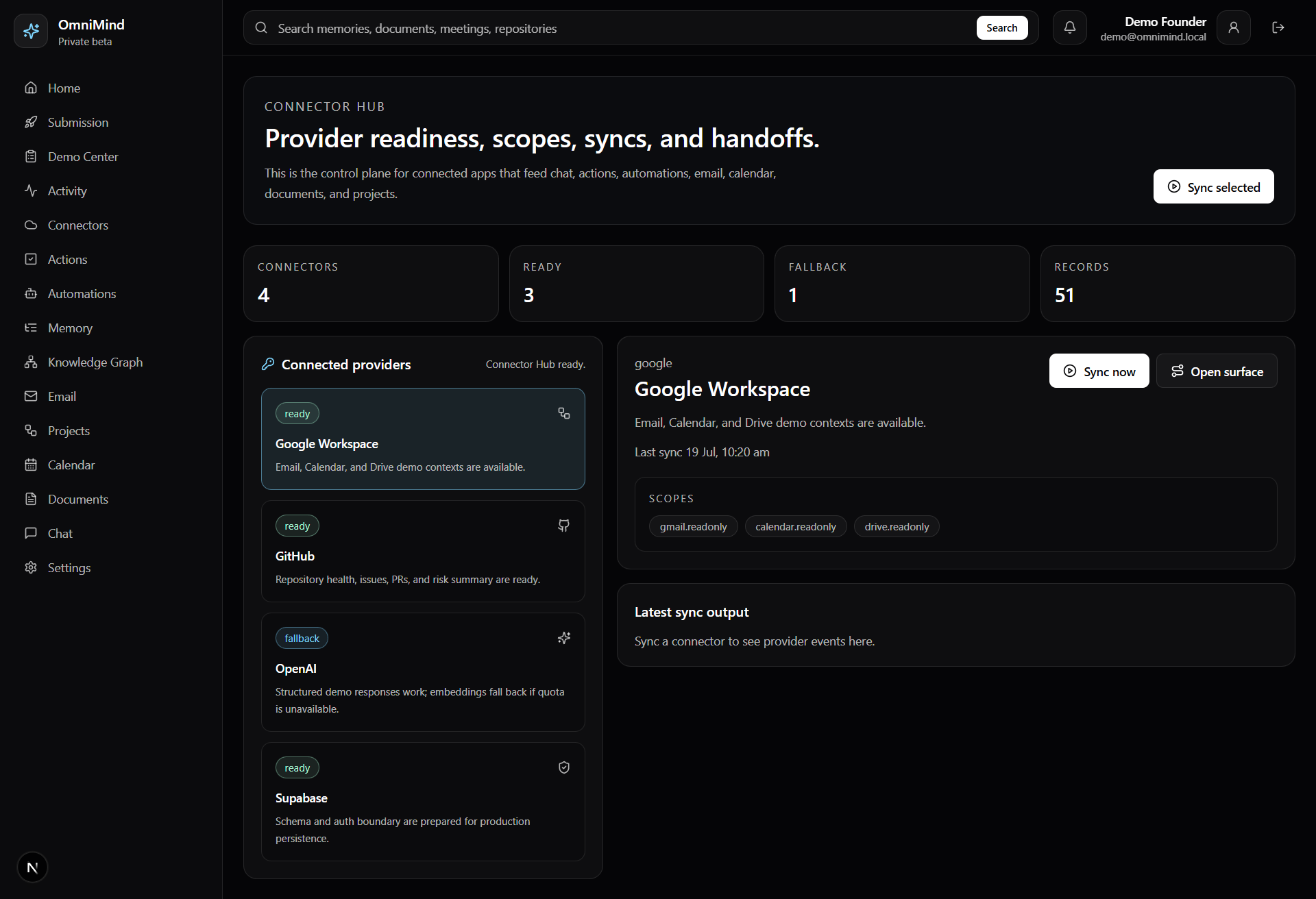
Connect Gmail, GitHub, Calendar, Drive, and more to create a single reasoning layer across your digital workspace.
-
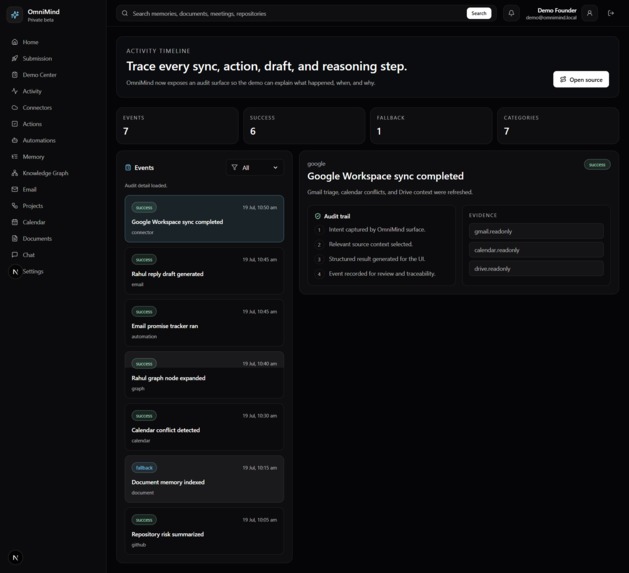
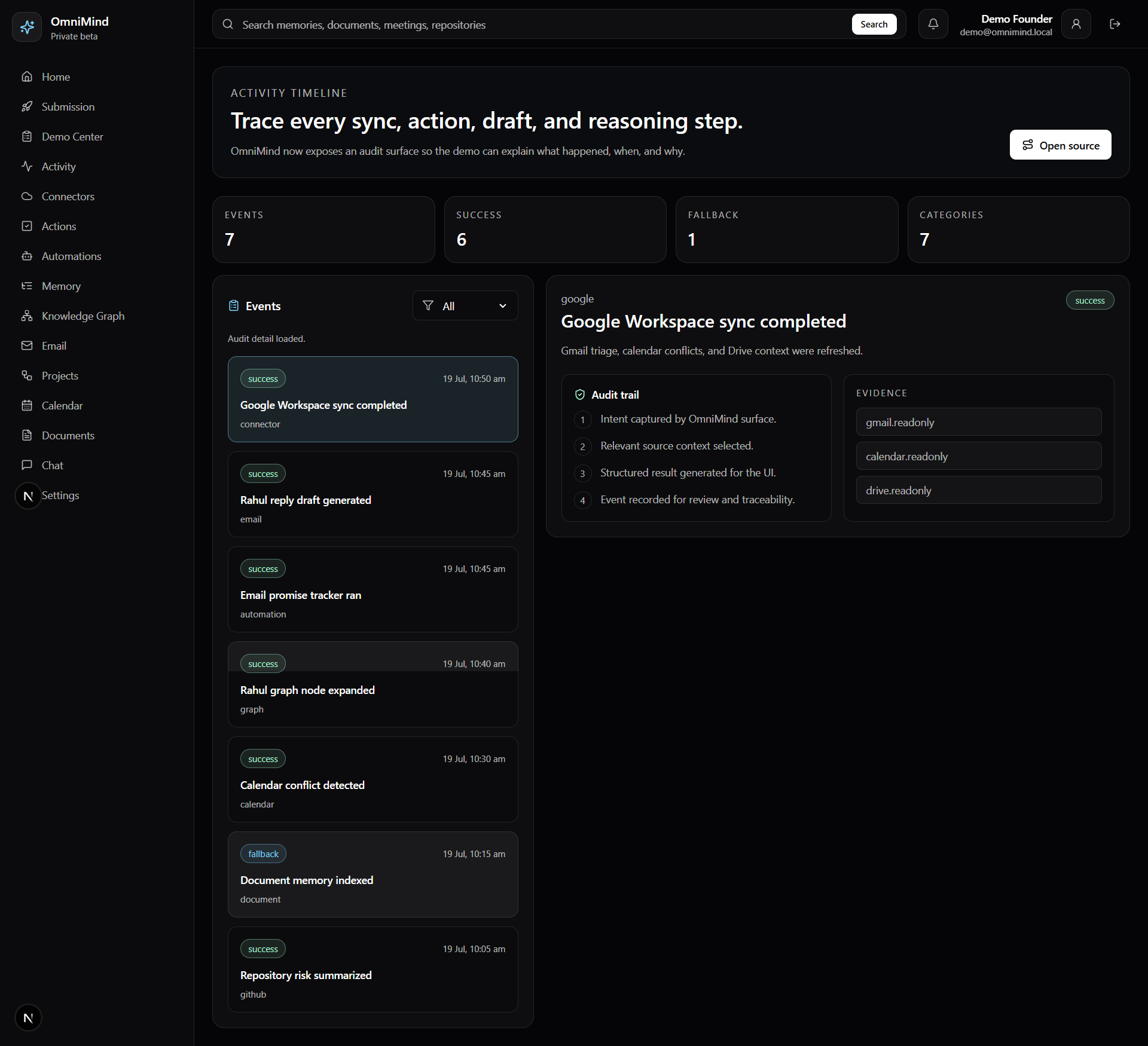
Every recommendation is traceable through a transparent activity timeline, making AI decisions explainable and auditable.
-
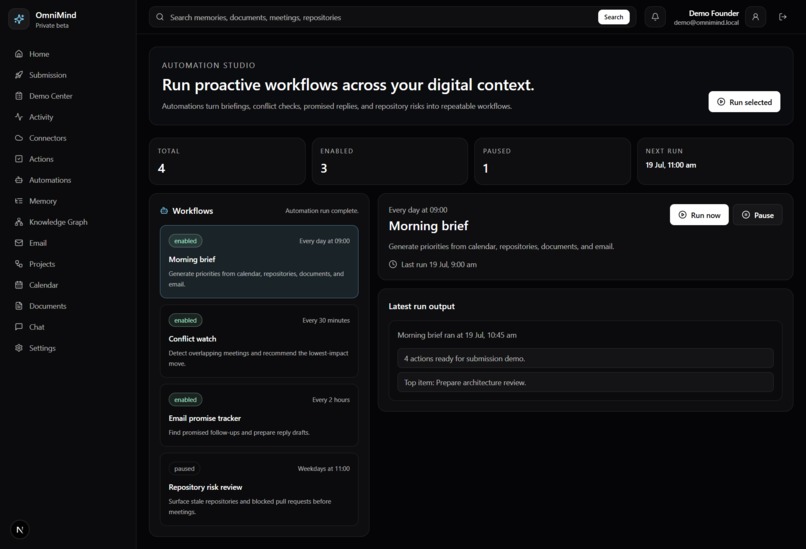
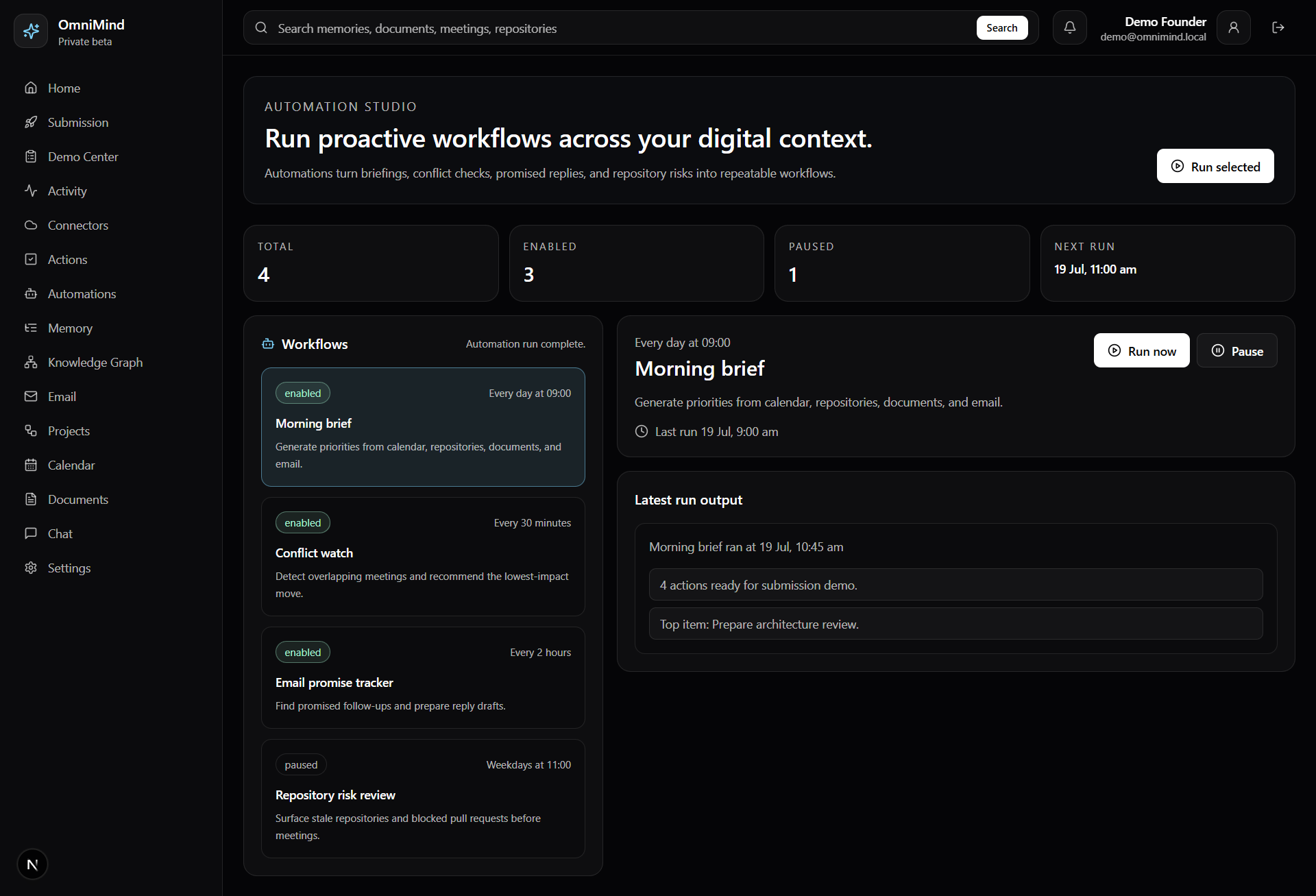
Automations proactively monitor deadlines, commitments, and repository activity before they become blockers.
-
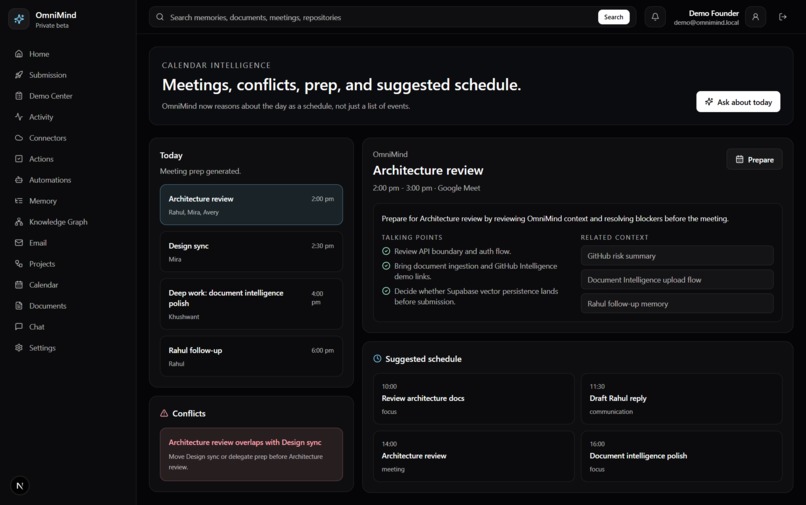
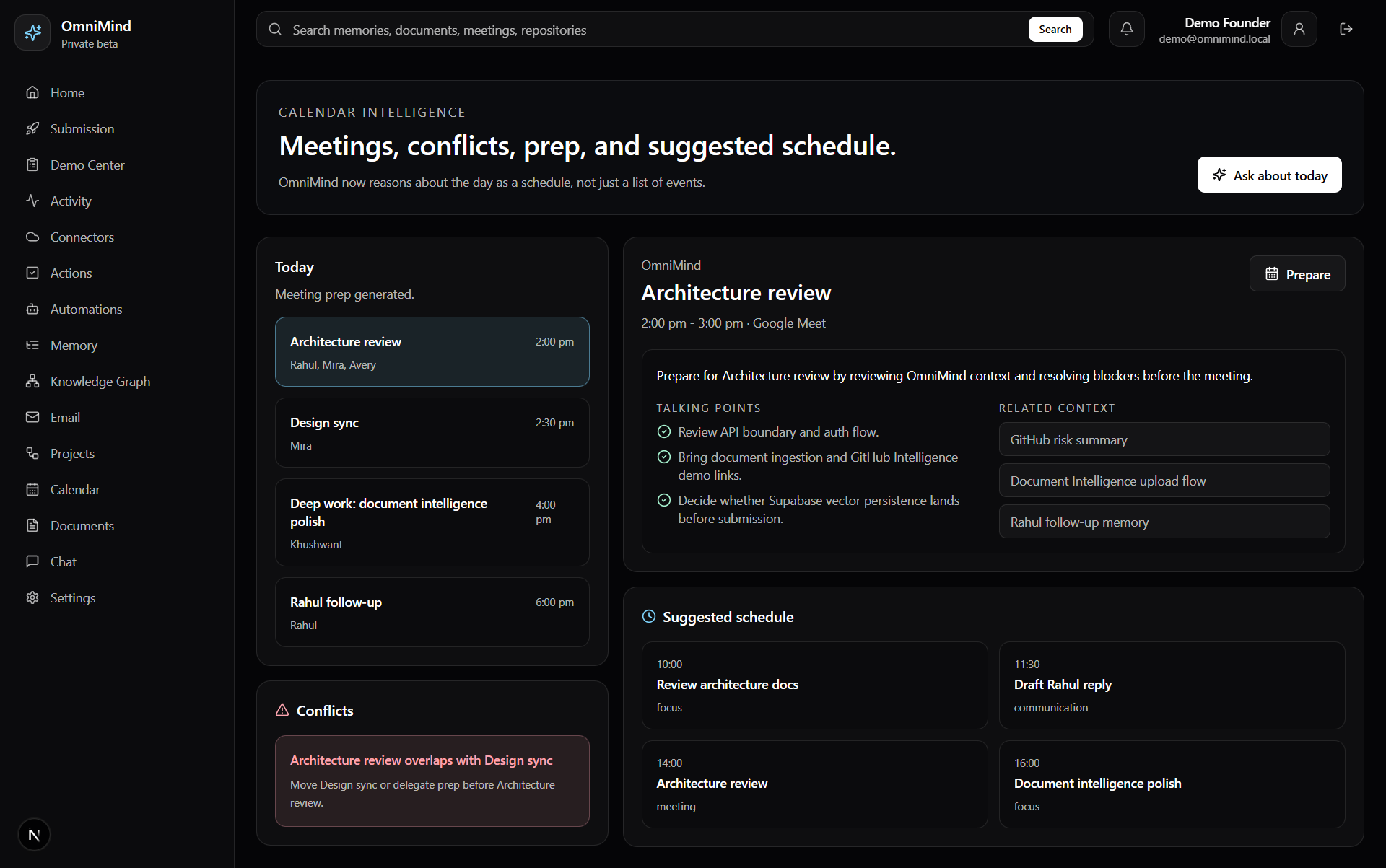
Calendar Intelligence analyzes schedules, meetings, and deadlines to help prioritize what matters most.
-
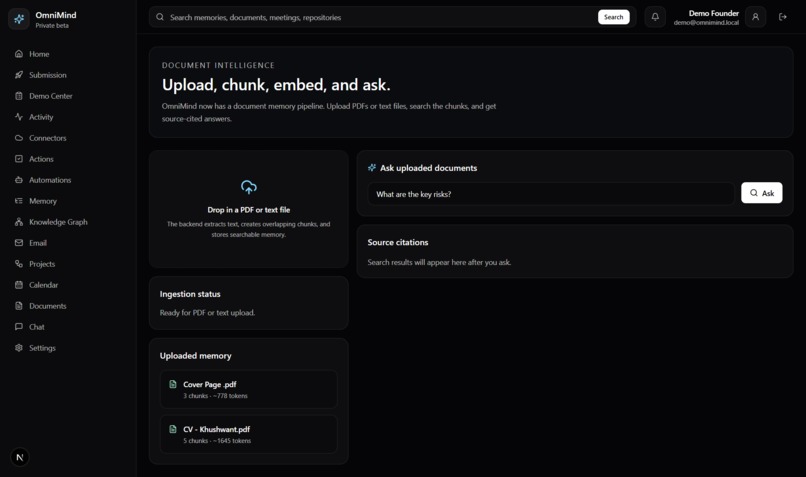
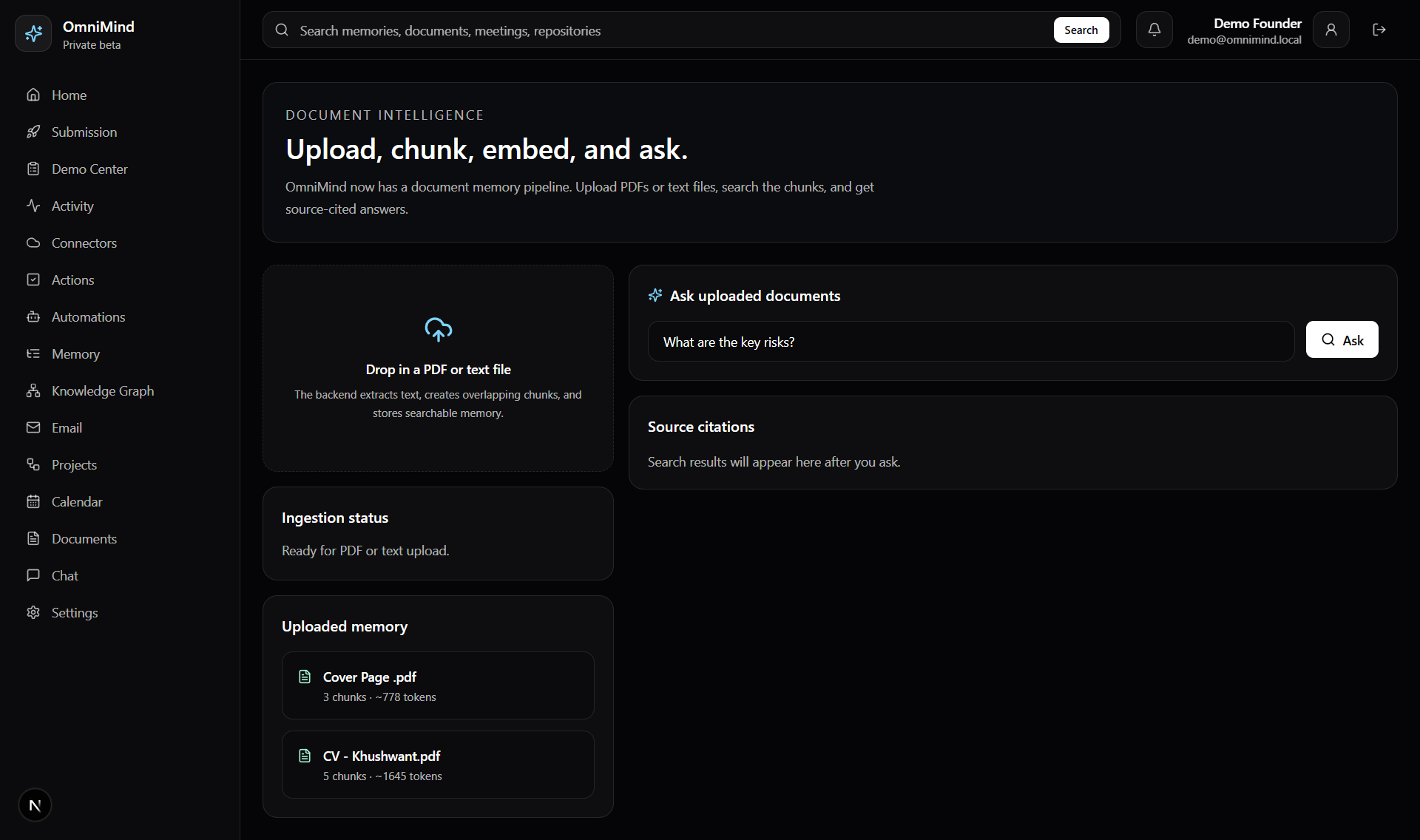
Document Intelligence understands project knowledge and retrieves relevant context when it's needed.
-
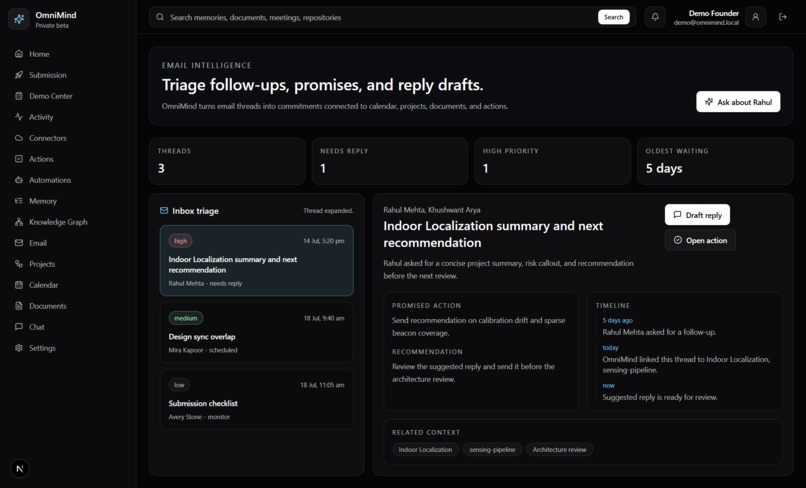
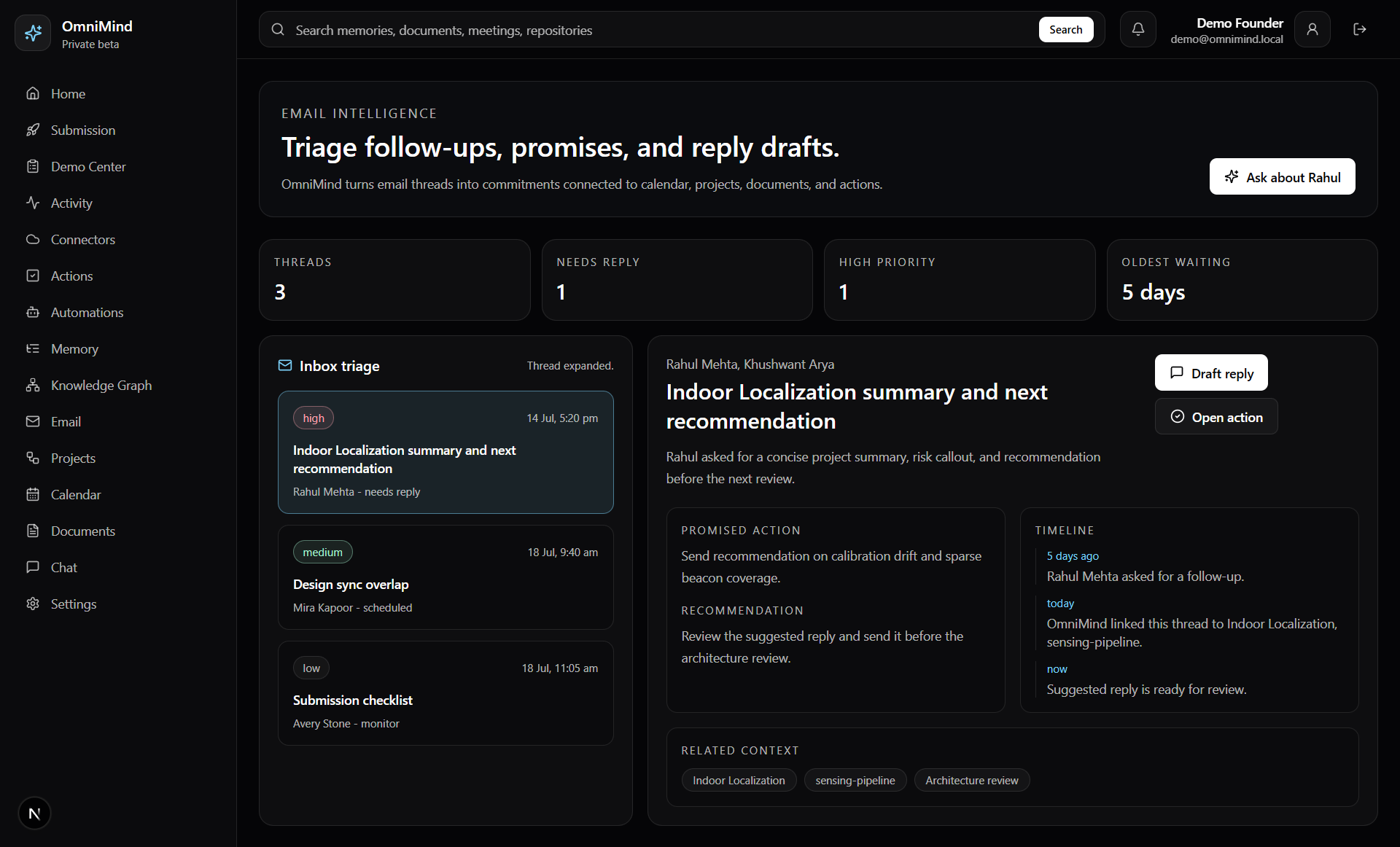
Email Intelligence identifies important conversations, pending replies, and commitments across your inbox.
-
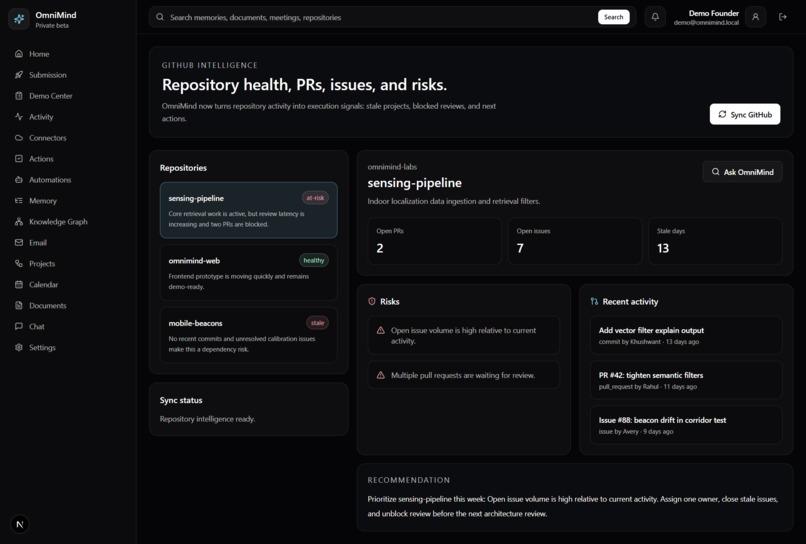
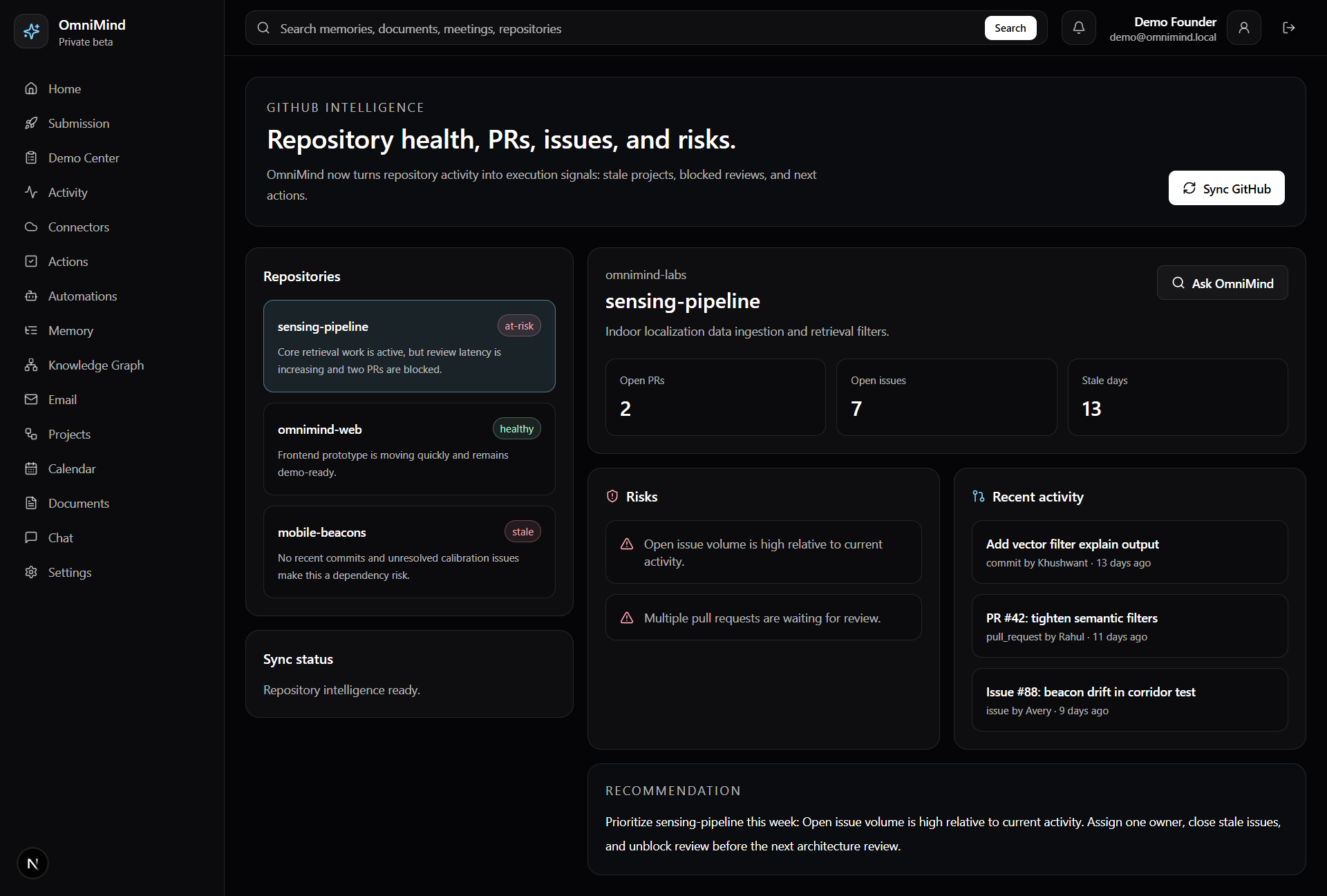
GitHub Intelligence connects repositories, pull requests, and project activity to provide development-aware recommendations.
Inspiration
Every day, our work is scattered across emails, calendars, GitHub repositories, cloud storage, documents, notes, and messaging platforms. While each application stores valuable information, none of them understand how everything is connected.
As a result, we spend more time searching for information than actually using it. Existing AI assistants can summarize documents or answer questions, but they still work in isolation and lack an understanding of our complete digital workspace.
We wanted to build an AI that doesn't just retrieve information—it understands how information is connected.
That idea became OmniMind.
What it does
OmniMind is an AI operating system for your digital life.
Instead of treating emails, documents, repositories, meetings, and files as isolated pieces of information, OmniMind connects them into a unified reasoning layer that understands relationships across your digital workspace.
Users can ask natural language questions such as:
- "What should I work on today?"
- "Which deadlines am I most likely to miss?"
- "Show everything related to my indoor localization project."
- "Summarize discussions about my latest feature."
- "Generate today's work plan based on my meetings, emails, and pending tasks."
Rather than simply returning search results, OmniMind explains why it recommends something by combining evidence from multiple sources, helping users make better decisions instead of just finding information.
How we built it
OmniMind combines OpenAI's reasoning capabilities with semantic search, vector embeddings, structured outputs, and a unified knowledge graph.
Information from connected services is processed into embeddings, indexed in a vector database, and linked together to create a shared understanding of the user's digital workspace.
When a question is asked, OmniMind retrieves relevant context from multiple sources, reasons across those relationships, and generates grounded, evidence-backed recommendations instead of isolated answers.
The application was built using Next.js, React, TypeScript, Tailwind CSS, FastAPI, Python, Supabase, PostgreSQL, and pgvector, with OpenAI powering the reasoning experience.
Challenges we ran into
The biggest challenge wasn't connecting APIs—it was teaching the system to reason across thousands of disconnected pieces of information.
Balancing retrieval quality, response speed, and contextual accuracy required multiple iterations of prompt design, semantic retrieval, ranking strategies, structured outputs, and reasoning workflows.
Another challenge was designing an interface that makes sophisticated AI reasoning feel simple, transparent, and trustworthy through evidence-backed recommendations.
Accomplishments that we're proud of
We're proud that OmniMind goes beyond being another chatbot.
Instead of simply answering questions, it understands relationships between projects, documents, meetings, repositories, and conversations to generate meaningful, explainable recommendations.
We also built features like evidence-backed decision making, a unified action queue, activity timeline, connector management, and proactive automations that demonstrate how AI can become a true operating layer instead of another search interface.
What we learned
This project reinforced that retrieval alone isn't enough.
The real value comes from reasoning.
When AI understands relationships instead of isolated documents, it can uncover hidden connections, prioritize work intelligently, explain its recommendations, and help people make better decisions rather than simply returning information.
What's next for OmniMind
Our long-term vision is to build the operating system for knowledge work.
Future versions will integrate with Slack, Notion, Jira, Linear, Microsoft Teams, Discord, Google Workspace, Figma, and additional productivity platforms.
We also plan to introduce proactive AI that continuously detects forgotten commitments, predicts missed deadlines, recommends next actions, and organizes a user's digital workspace without requiring manual prompts.
Our goal is simple:
Stop searching. Start understanding.
Built With
- css
- drive
- embeddings
- fastapi
- github
- gmail
- gpt-5
- next.js
- oauth
- openai
- pgvector
- postgresql
- python
- react
- supabase
- tailwind
- typescript
- vercel


Log in or sign up for Devpost to join the conversation.