-
-
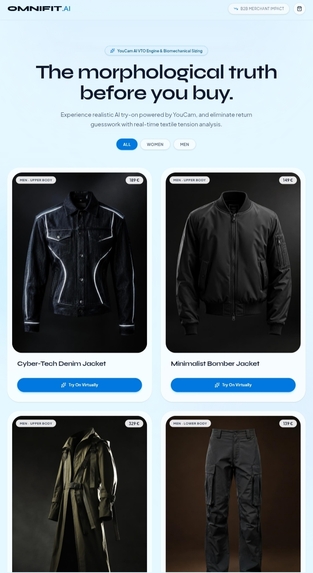
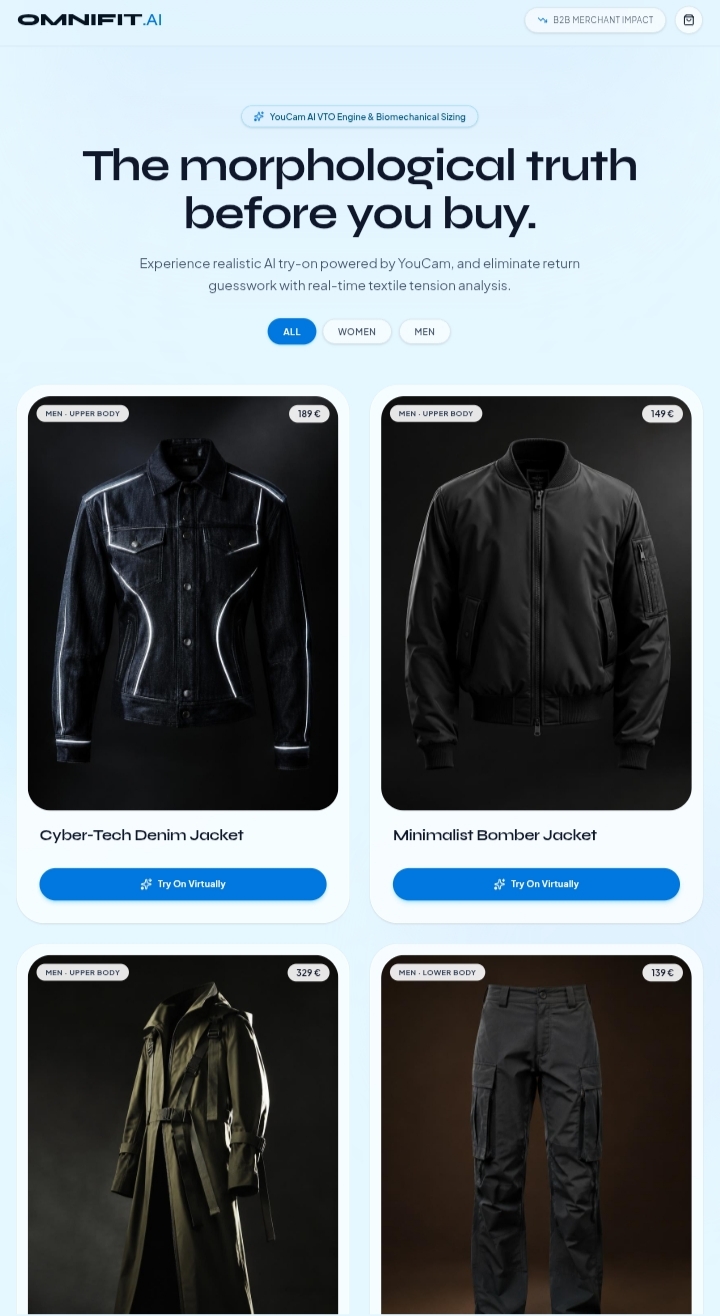
OmniFit AI digital catalog with instant virtual try-on access across multi-gender collections.
-
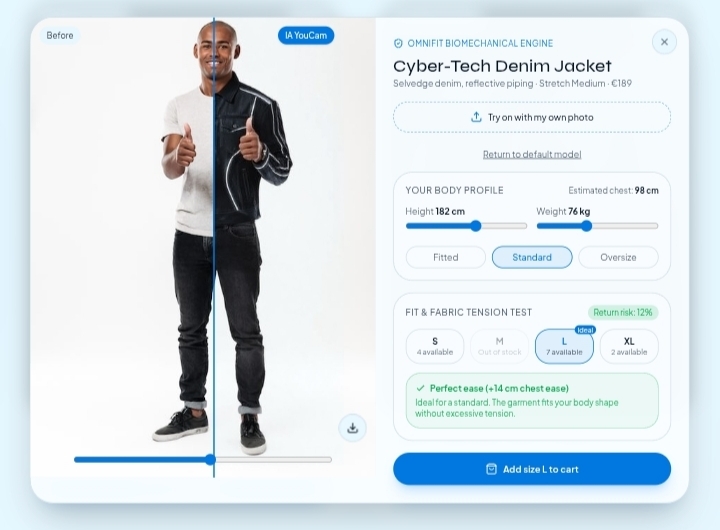
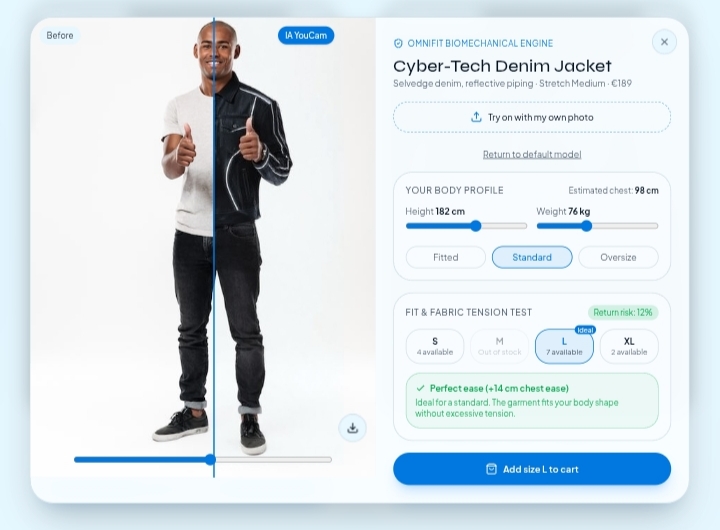
Photorealistic garment try-on powered by YouCam AI Cloth v2 with an interactive before-after slider.
-
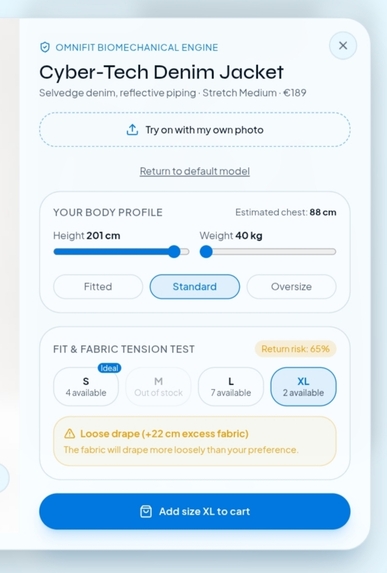
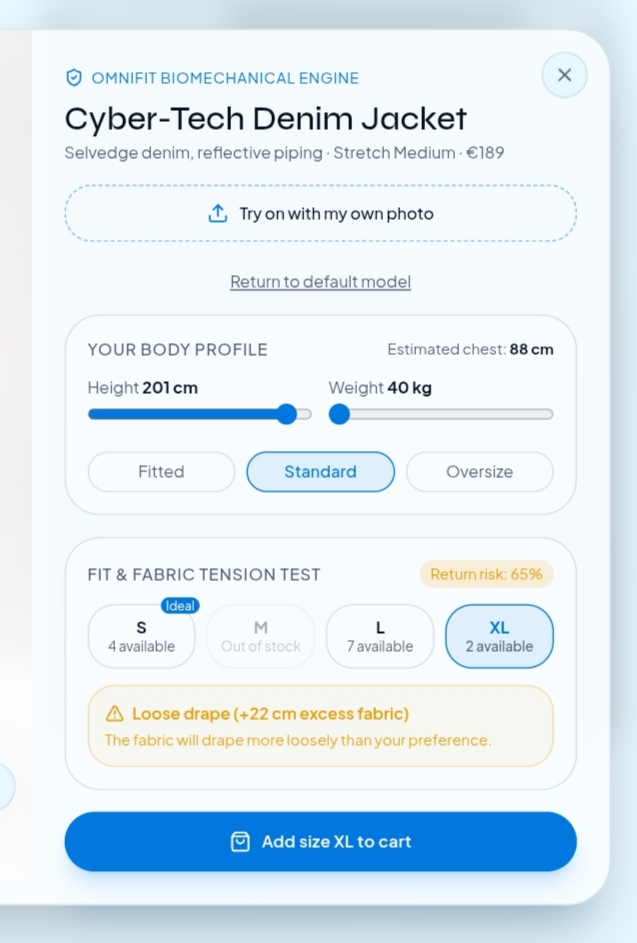
Real-time biomechanical tension engine computing anatomical ease and return risk probabilities.
-
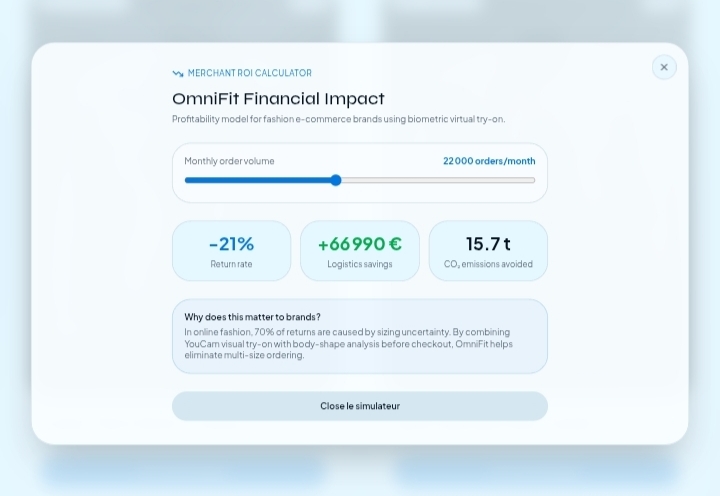
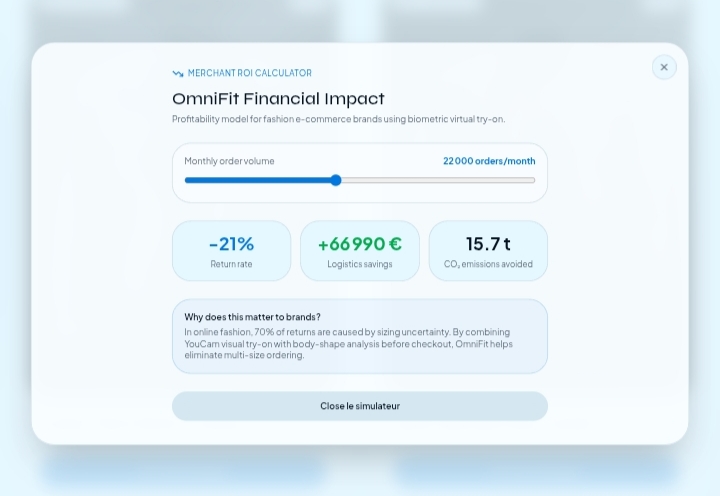
B2B merchant dashboard calculating logistics cost savings and carbon footprint reduction.
Inspiration
Fashion e-commerce suffers from a multi-billion dollar problem: over 38% of apparel bought online is returned, primarily due to sizing uncertainty. Consumers practice "bracket shopping": ordering sizes M, L and XL at the same time and sending two back.
Most Virtual Try-On (VTO) tools act like digital stickers: they show how a garment looks, but cannot tell the shopper whether the fabric will pinch at the shoulders or pull tight at the chest. We built OmniFit AI to turn YouCam's visual try-on into an actionable, precision-sizing buying decision.
What it does
OmniFit AI bridges high-fidelity generative fashion AI with textile engineering:
- Zero-friction photorealistic try-on: shoppers pick any garment (tops, outerwear, dresses, skirts, pants) and see it draped onto their own photo or onto sample models, using the YouCam AI Cloth API (v2), with a before/after slider.
- Real-time biomechanical fit engine: in 3 clicks (height, weight, fit preference), our mathematical model computes body circumferences (chest, shoulders, ease allowances) and the stretch tolerance of the fabric.
- Tension and return-risk diagnostic: shoppers test different sizes (S to XL) and instantly see how each one fits. For example, a size that is too tight (chest tension -2.4 cm) shows a return risk of 68%, while the optimal fit shows a return risk of 2.1%. Note: the fit engine is a heuristic model built from simple textile ease rules; its risk scores are estimates, not validated return rates.
- B2B merchant impact calculator: an interactive dashboard estimates the return on investment for fashion brands: reverse-logistics savings (about EUR 14.50 per avoided package) and CO2 emissions prevented (about 3.4 kg per parcel). These are estimates based on the assumptions of our model, not measured data. Note: the merchant figures (cost per parcel, CO2 per parcel) are editable assumptions used to illustrate the ROI, not measured results.
How we built it
- Virtual try-on engine: direct integration with the Perfect Corp. YouCam AI Cloth API (v2), with asynchronous server-side polling, task tracking and secure handling of images.
- Biomechanical sizing model: a custom TypeScript engine that calculates stretch coefficients (low, medium, high), ease allowances and tension at several points of the garment.
- Frontend: TanStack Start (React 19), Tailwind CSS v4 with a custom, airy cloud-blue design, and Lucide icons.
- Backend and storage: Lovable Cloud (a managed backend) with edge server functions that protect the YouCam API secrets and manage temporary rendering files.
Challenges we ran into
Hardware and environment constraints. We built and shipped a complete AI platform entirely from a smartphone. Managing the code, testing responsive layouts, debugging asynchronous API responses and running git workflows on a phone screen demanded real discipline. We recorded the demo video in a local internet cafe with limited bandwidth and equipment, which pushed our resourcefulness to the limit.
Asynchronous API architecture. The YouCam AI Cloth API (v2) works asynchronously: job creation, processing, status polling. Turning this multi-second pipeline into a smooth experience required a robust server-side polling mechanism with live progress feedback instead of a static loading spinner.
Bridging 2D AI rendering with textile physics. Converting photorealistic 2D try-on results into sizing advice meant translating complex fabric behavior (elasticity thresholds, ease, tension) into instant calculations that a non-technical shopper can understand at a glance.
Accomplishments that we're proud of
- A live, fully working end-to-end integration with the real YouCam API, running on real user photos in seconds.
- Going beyond a "toy try-on demo": a concrete solution to e-commerce reverse logistics that makes immediate financial sense for merchants.
- A complete AI e-commerce product built and delivered from a smartphone and a local internet cafe, showing that good software can be built with determination and modern cloud tools.
What we learned
- Fit, not appearance, drives returns. A try-on that looks good but ignores how the garment fits only solves half of the problem.
- Asynchronous AI APIs need honest, visible progress; otherwise users think the app is broken.
- Clearly labeled estimates build more trust than confident numbers we cannot prove, so the merchant figures are shown as estimates.
- Constraints help: building from a phone pushed us toward a smaller, cleaner and faster design.
Limitations
Try-on quality depends on the photo and the YouCam API. The sizing model has not been validated against real return data. Built with AI-assisted tools (Lovable, Claude); I tested the results and corrected issues myself.
What's next for OmniFit AI
- Ready-to-install Shopify and WooCommerce widgets (a 3-line drop-in script for existing fashion stores).
- 3D avatar pose estimation from a single smartphone photo.
- Collaborative sizing profiles for gift shopping.
- Validation of the fit engine against real return data from a partner store.
Built With
- ai
- ecommerce
- fashion-tech
- lovable
- react
- tailwind-css
- tanstack-start
- typescript
- youcam-api

Log in or sign up for Devpost to join the conversation.