Inspiration During natural disasters such as earthquakes, building collapses, and floods, rescue teams often face difficulties reaching people trapped in narrow, damaged, or dangerous areas. We were inspired to develop a robot that can move in multiple directions and assist rescue teams in such challenging environments. Our goal is to create an affordable and efficient robotic platform that can improve mobility and support future disaster rescue operations.
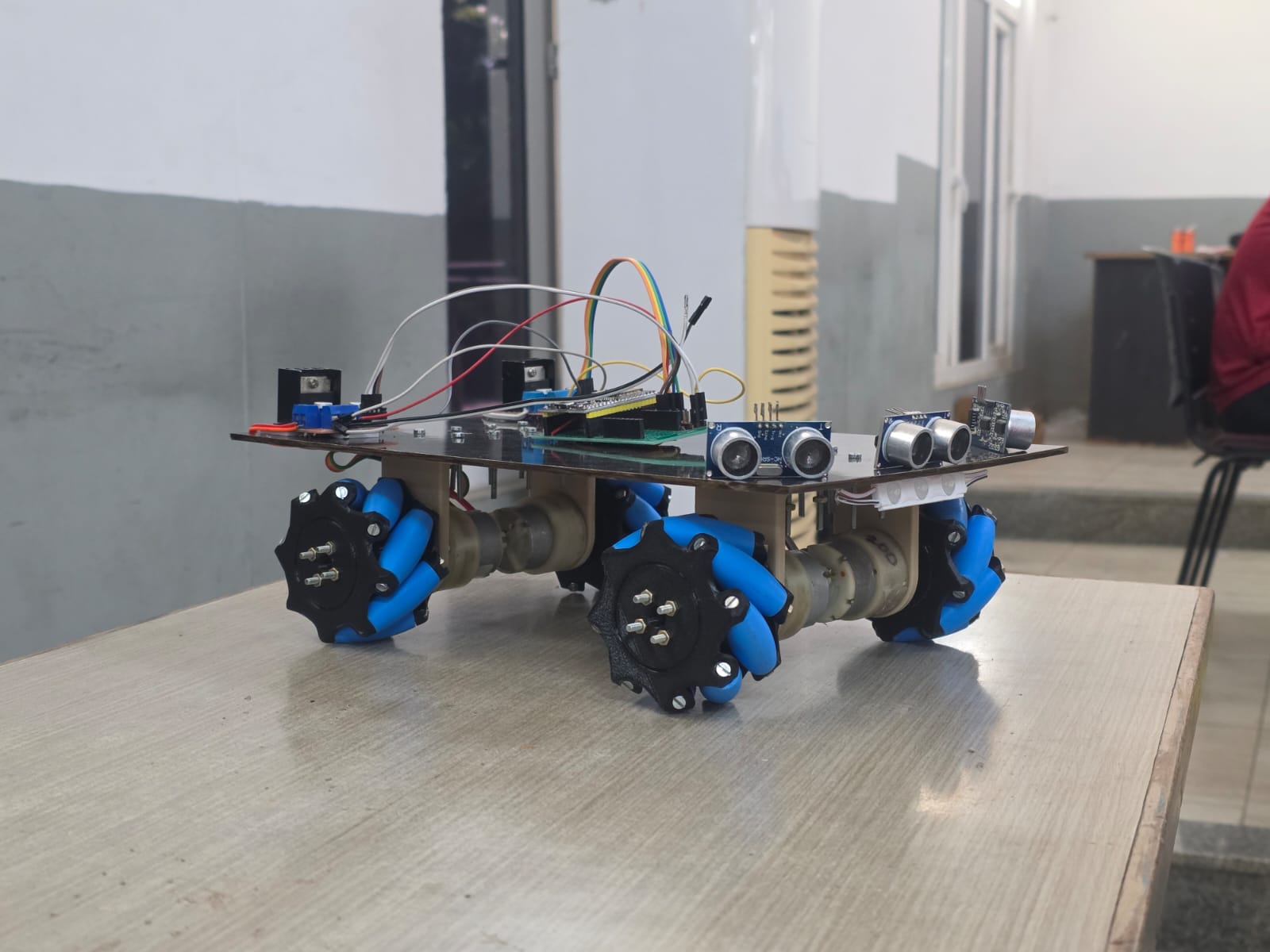
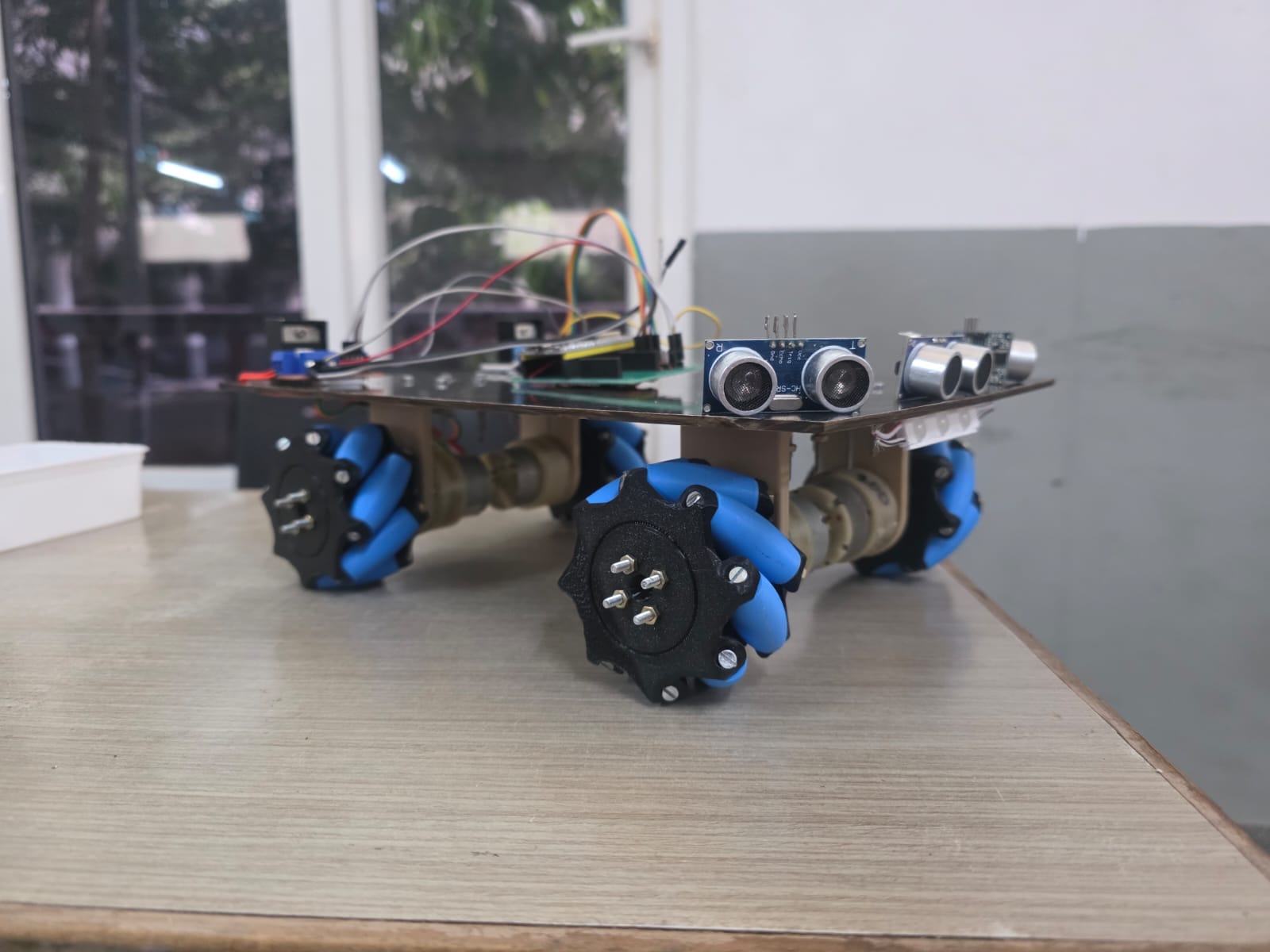
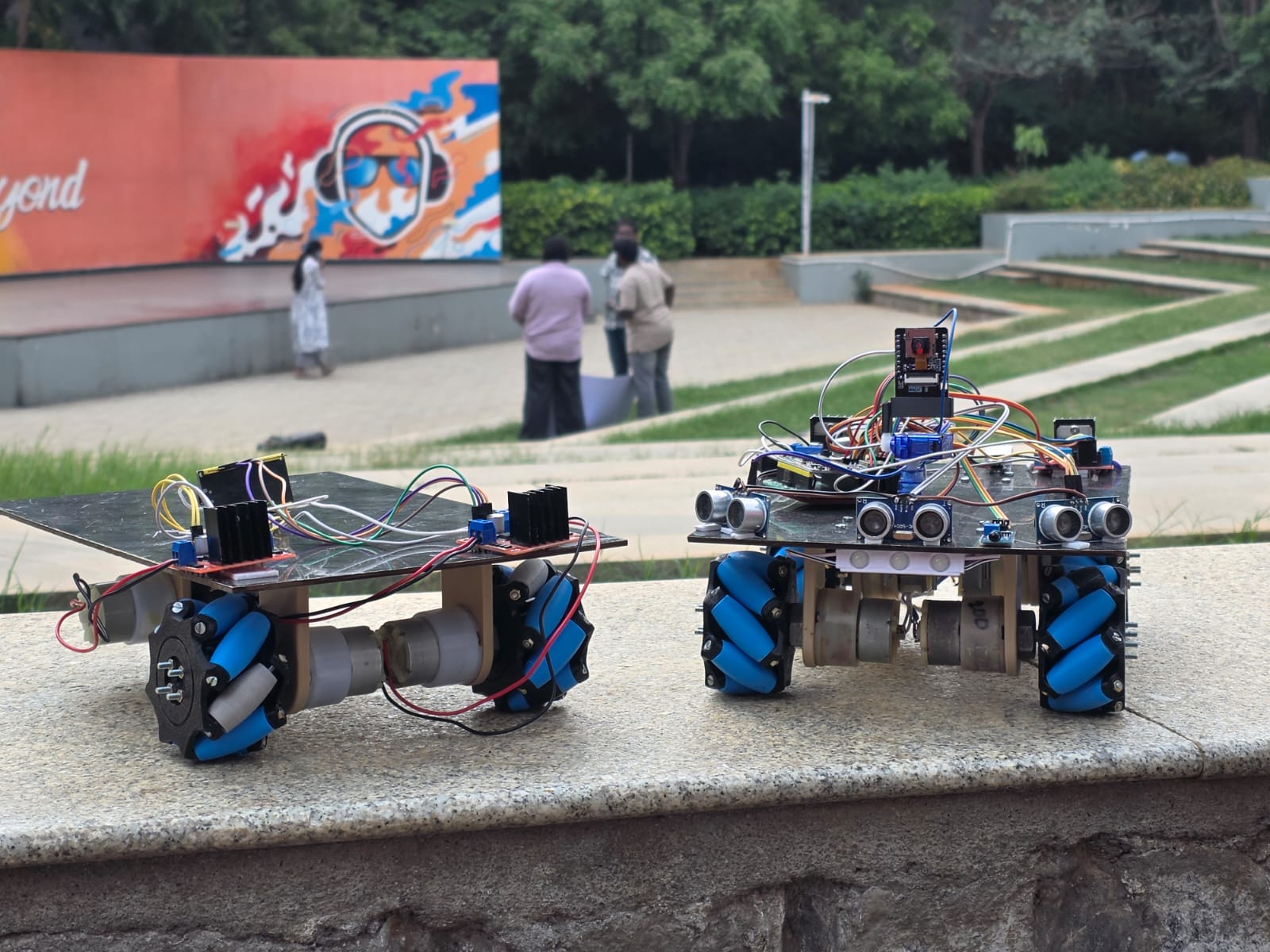
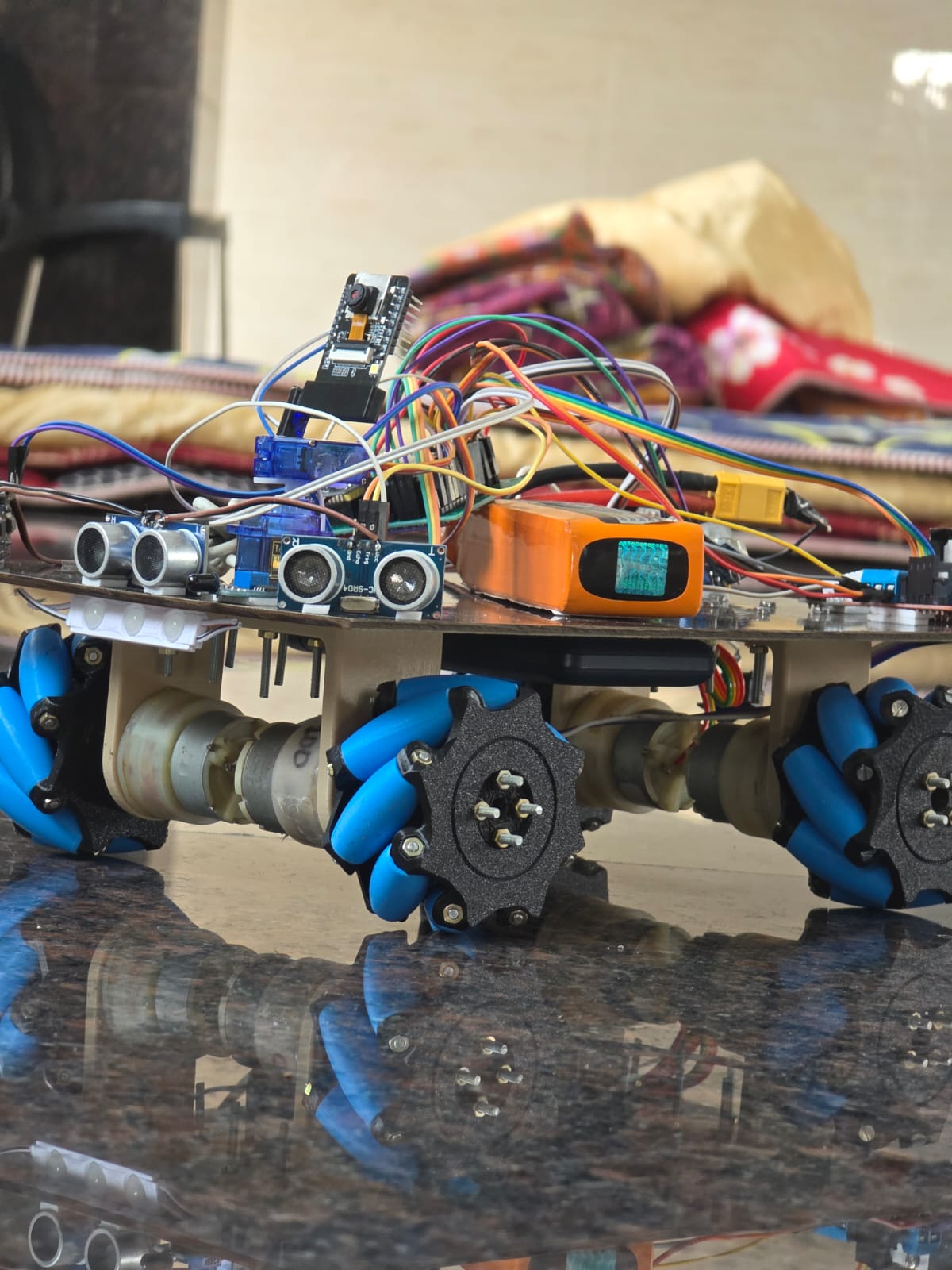
What We Built We developed a Mecanum Wheel Disaster Rescue Bot, a mobile robotic platform designed for omnidirectional movement. Unlike conventional robots, which generally need to turn before changing direction, this robot uses specially designed Mecanum wheels to move forward, backward, sideways, and diagonally. This capability helps the robot navigate confined spaces and maneuver around obstacles.
We designed the robot structure using SolidWorks and fabricated the Mecanum wheels using 3D printing technology with PLA and TPU materials. PLA was used for structural strength, while TPU was used for flexible wheel components. The project combines mechanical design, prototyping, and robotics to demonstrate the potential of multidirectional mobility in disaster response applications.
How We Built It
- Problem Identification: Studied the mobility challenges faced by rescue teams in confined and hazardous environments.
- CAD Design: Designed the robot components and wheel structure using SolidWorks.
- 3D Printing: Fabricated the Mecanum wheels using PLA and TPU materials.
- Mechanical Assembly: Assembled the wheel mechanism and developed the mobile robot platform.
- Mobility Concept: Applied the Mecanum wheel arrangement to enable movement in multiple directions.
- Testing and Improvement: Evaluated the mechanical design and identified areas for improving stability, movement, and overall performance.
Challenges We Faced One of our main challenges was designing and fabricating Mecanum wheels with suitable roller geometry and alignment. Selecting appropriate 3D-printing materials was also important because the wheels needed to balance strength, flexibility, and durability. Another challenge was understanding how the individual wheel rotations work together to produce different movement directions. We addressed these challenges through CAD modelling, 3D-printed prototyping, and iterative design improvements.
What We Learned Through this project, we gained practical knowledge of SolidWorks modelling, additive manufacturing, material selection, mechanical assembly, and omnidirectional robot mobility. We also improved our teamwork, problem-solving, and engineering design skills. The project helped us understand how mechanical engineering concepts can be applied to develop solutions for real-world challenges.
Future Scope In the future, the robot can be enhanced with a wireless control system, obstacle detection sensors, a camera for remote monitoring, and a robotic arm for handling lightweight rescue supplies. Additional testing in simulated disaster environments can help evaluate its mobility and reliability. Our long-term vision is to develop a cost-effective robotic platform that can support rescue teams in locating and assisting people in difficult-to-access areas.
Conclusion The Mecanum Wheel Disaster Rescue Bot demonstrates how innovative wheel design and 3D printing can contribute to disaster-response robotics. By focusing on multidirectional movement, affordability, and modular design, this project provides a foundation for developing more advanced rescue robots that can assist emergency responders in the future.
Built With
- 3d-printing
- additive-manufacturing
- cad-design
- disaster-response
- engineering-design
- mecanum-wheels
- mechanical-design
- mechanical-engineering
- omnidirectional-mobility
- pla
- rapid-prototyping
- robot-design
- robotics
- search-and-rescue
- solidworks
- tpu


Log in or sign up for Devpost to join the conversation.