-
-
Home
-
-
-
-
-
-
Inspiration
Understanding an unfamiliar codebase is one of the hardest parts of software development.
Whether you're starting a new job, contributing to an open-source project, or coming back to a repository you haven't touched in months, figuring out how everything fits together usually takes much longer than making the actual change.
AI coding assistants are great once you know where to look, but they don't help much with building that initial mental model of a project.
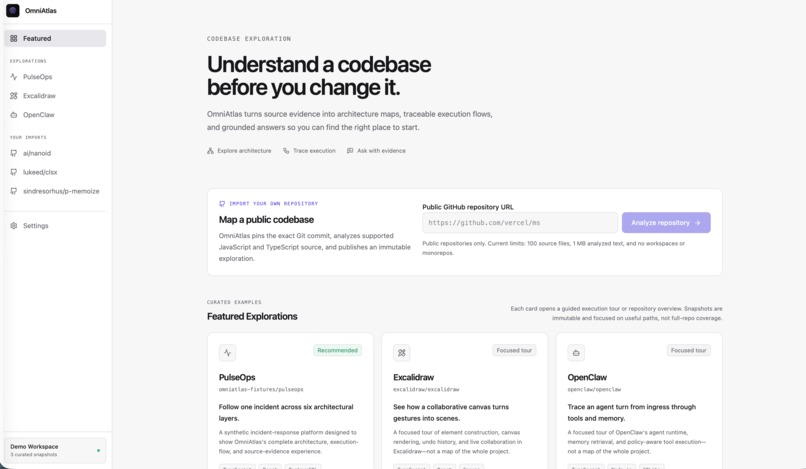
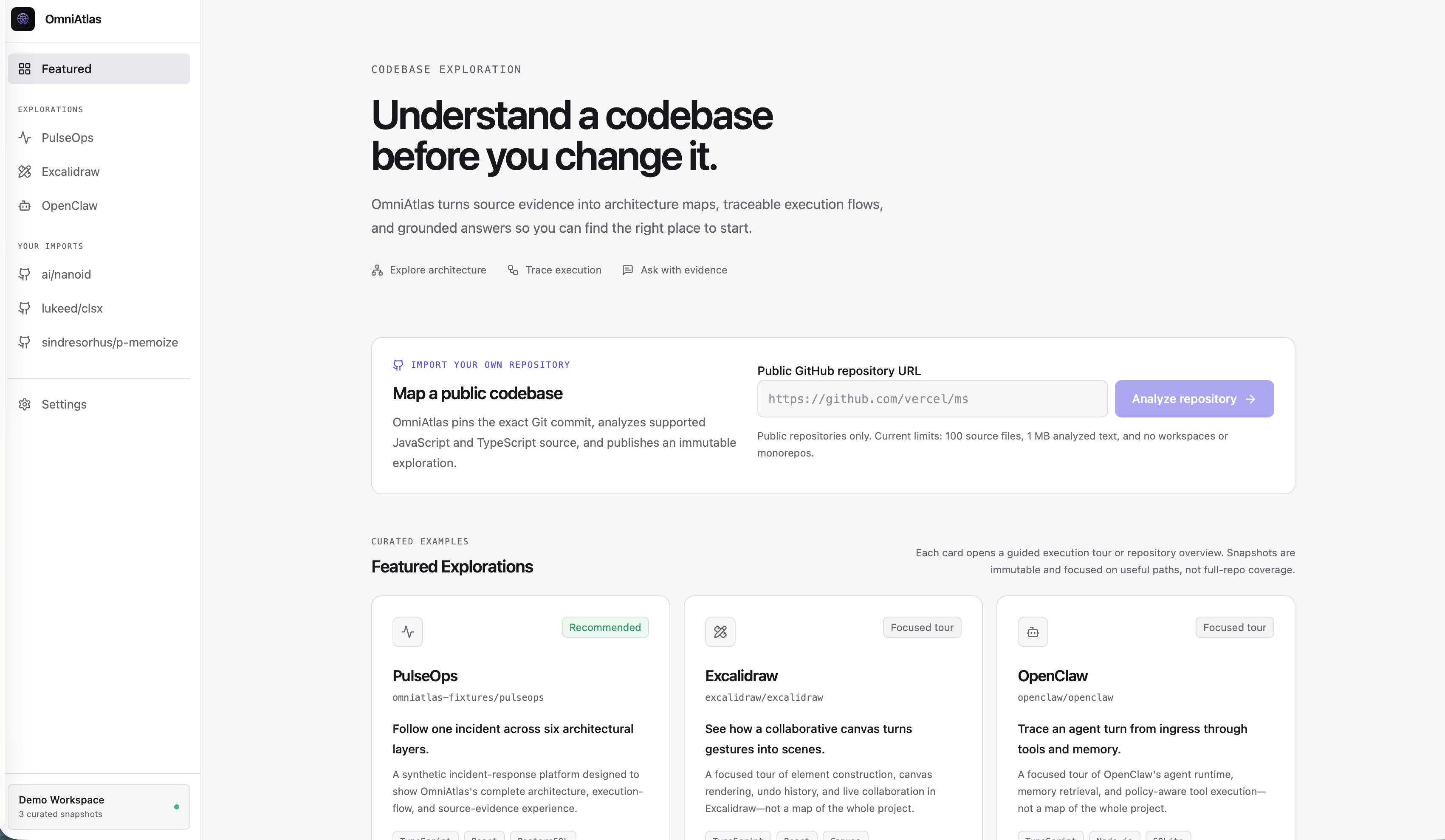
OmniAtlas was built to make that first step easier by turning a GitHub repository into something you can actually explore, understand, and ask questions about.
What it does
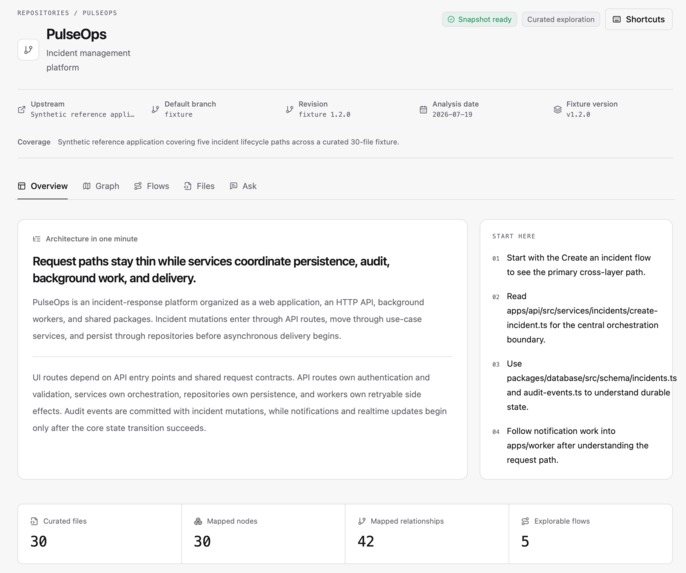
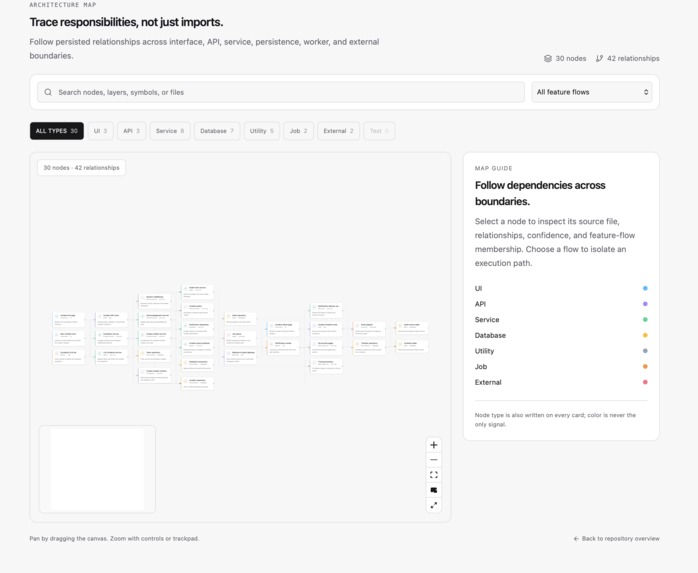
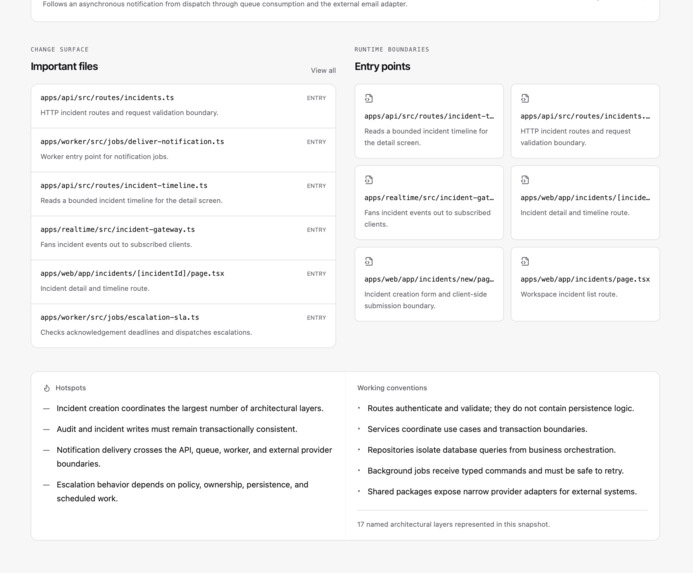
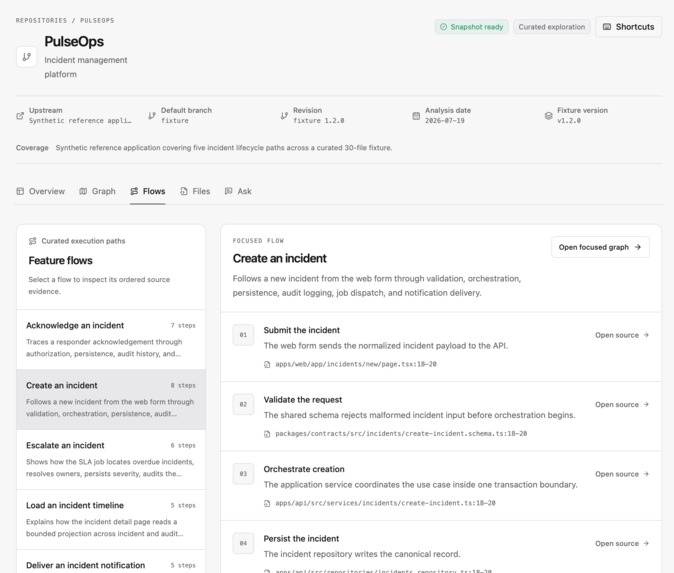
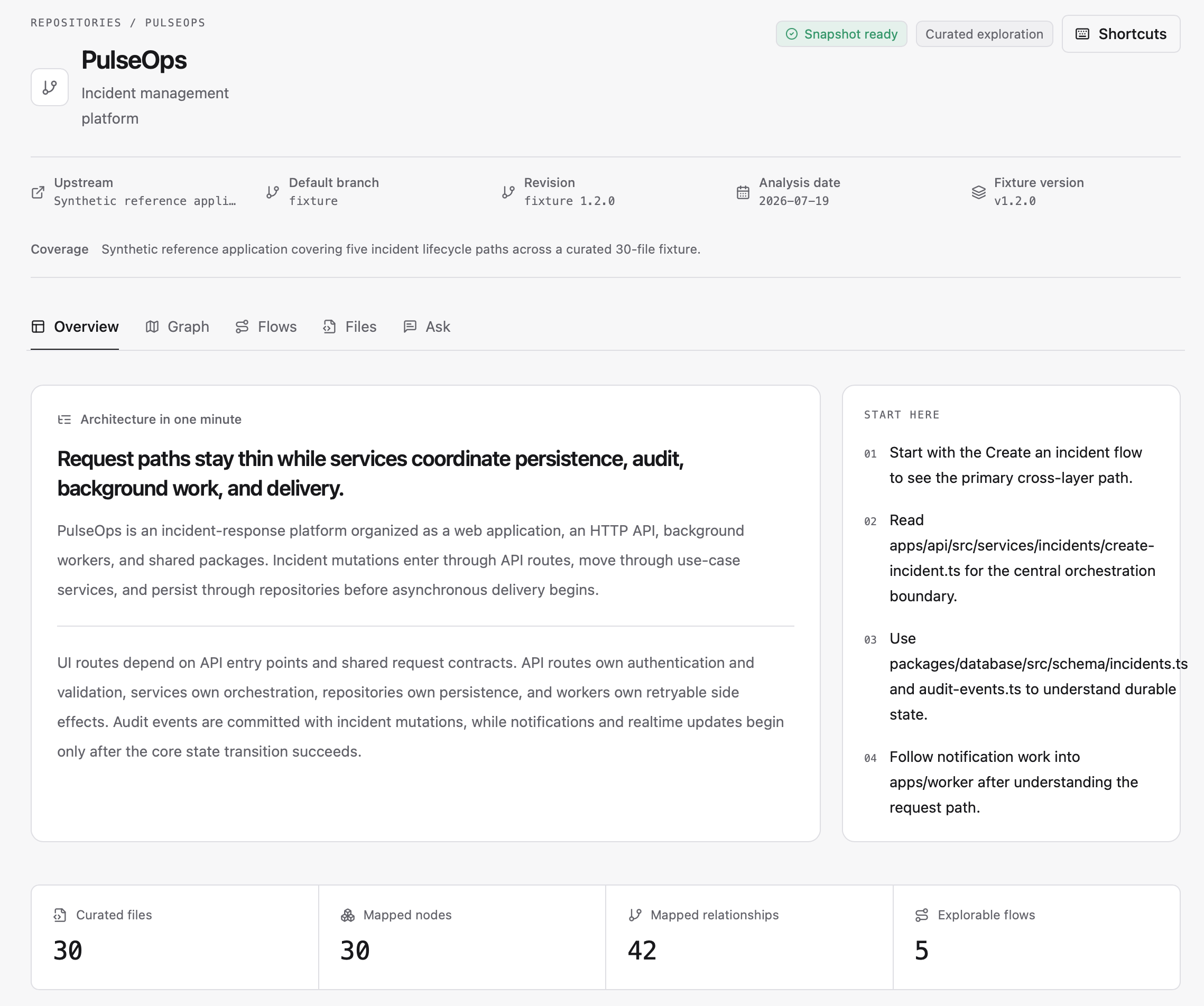
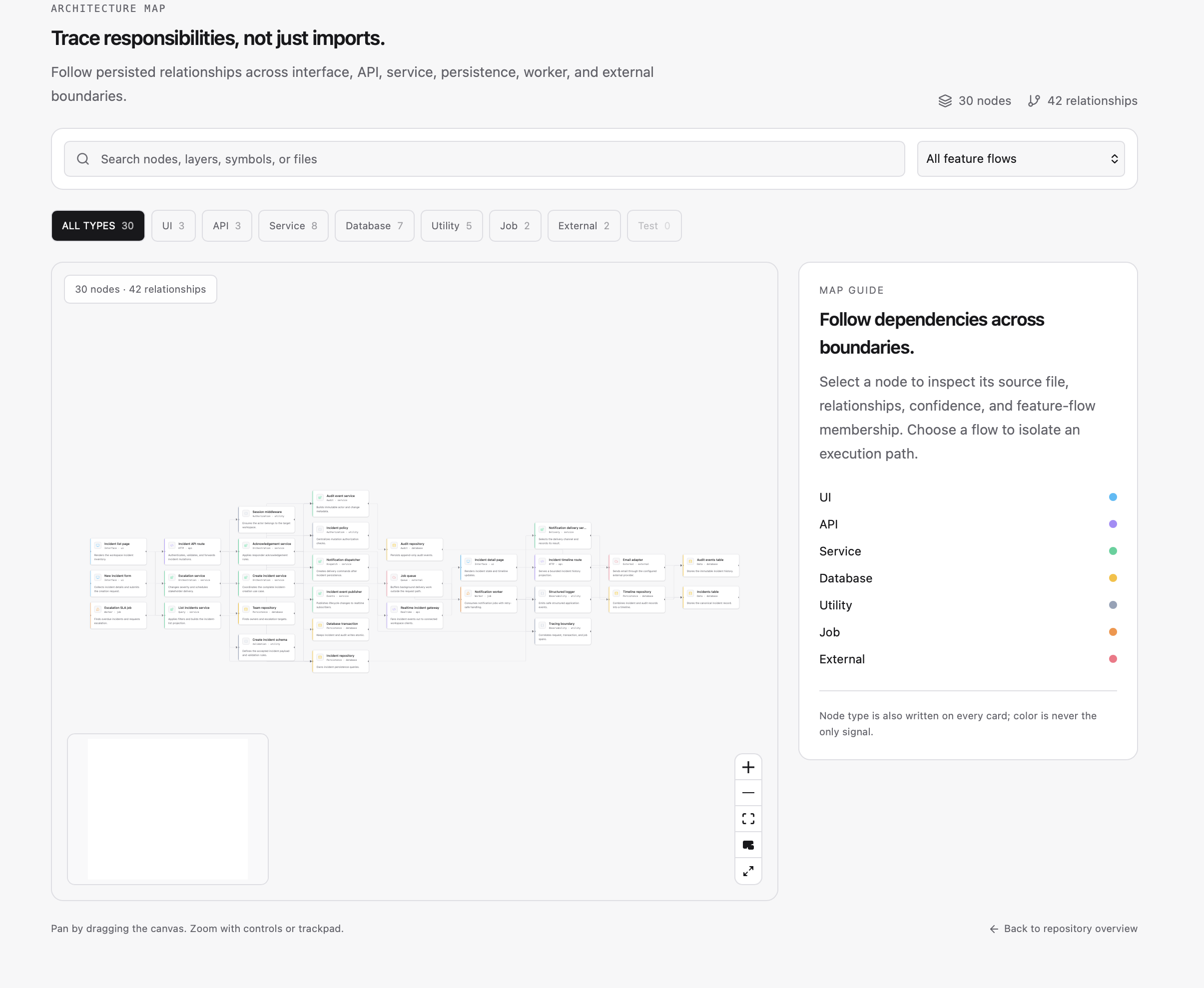
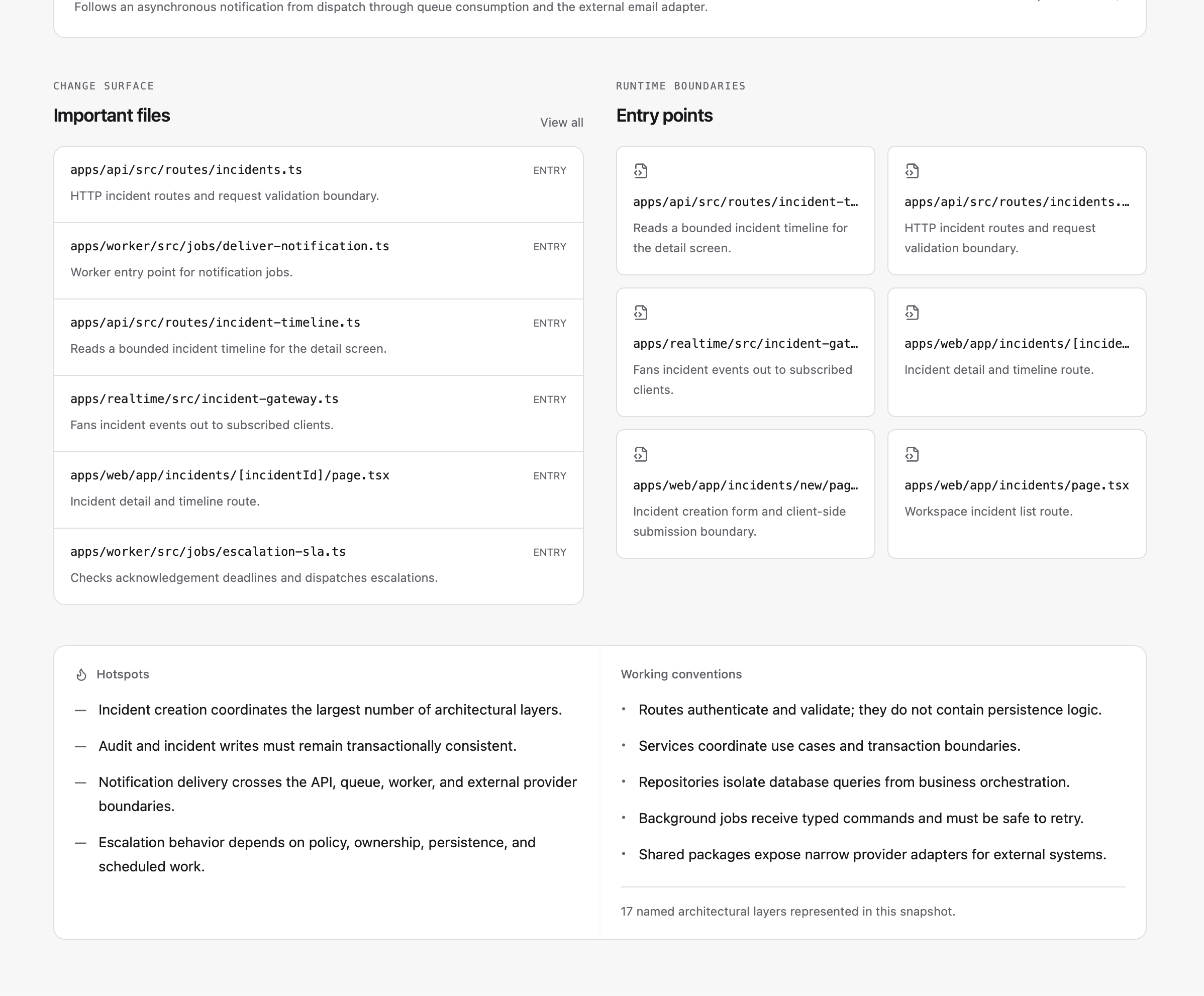
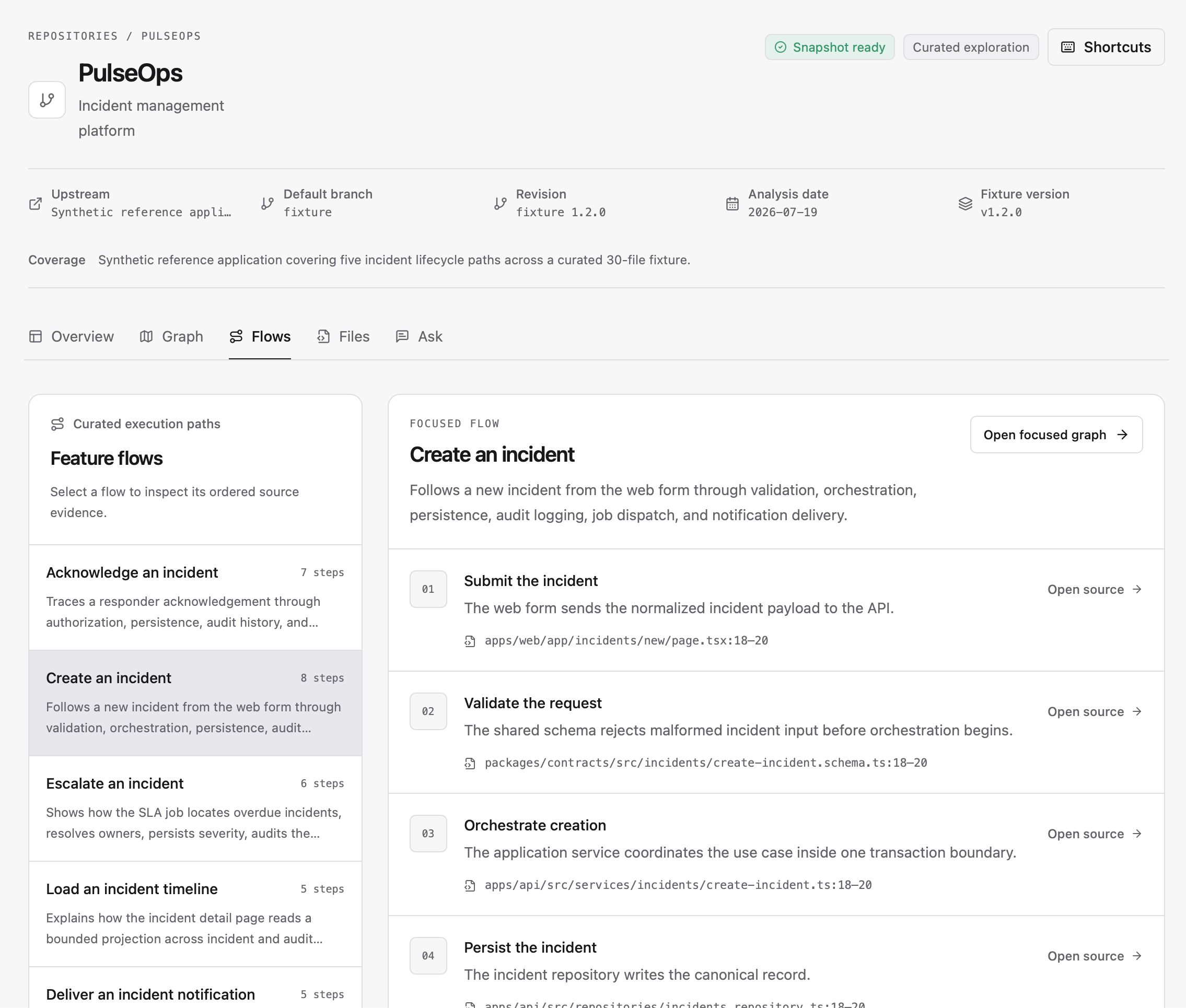
OmniAtlas analyzes a public GitHub repository and creates a deterministic snapshot of its structure, including files, symbols, imports, dependencies, and architectural relationships.
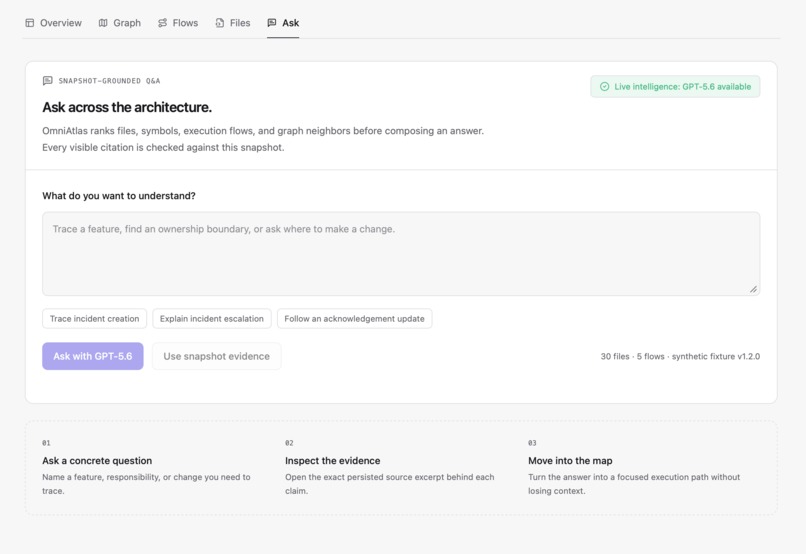
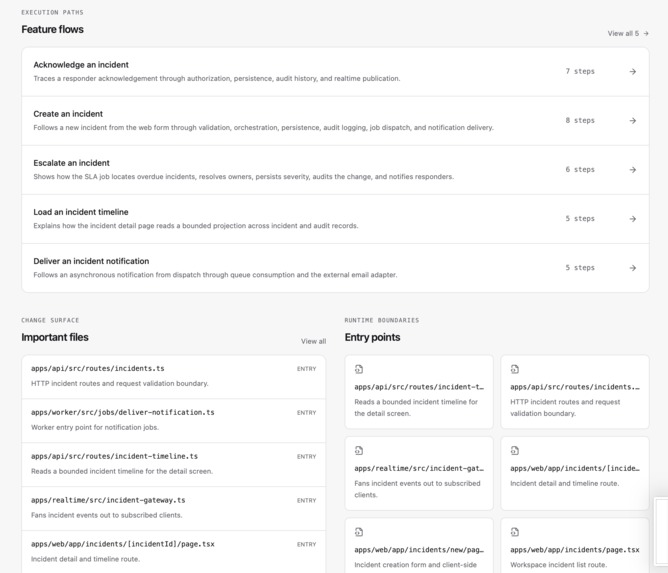
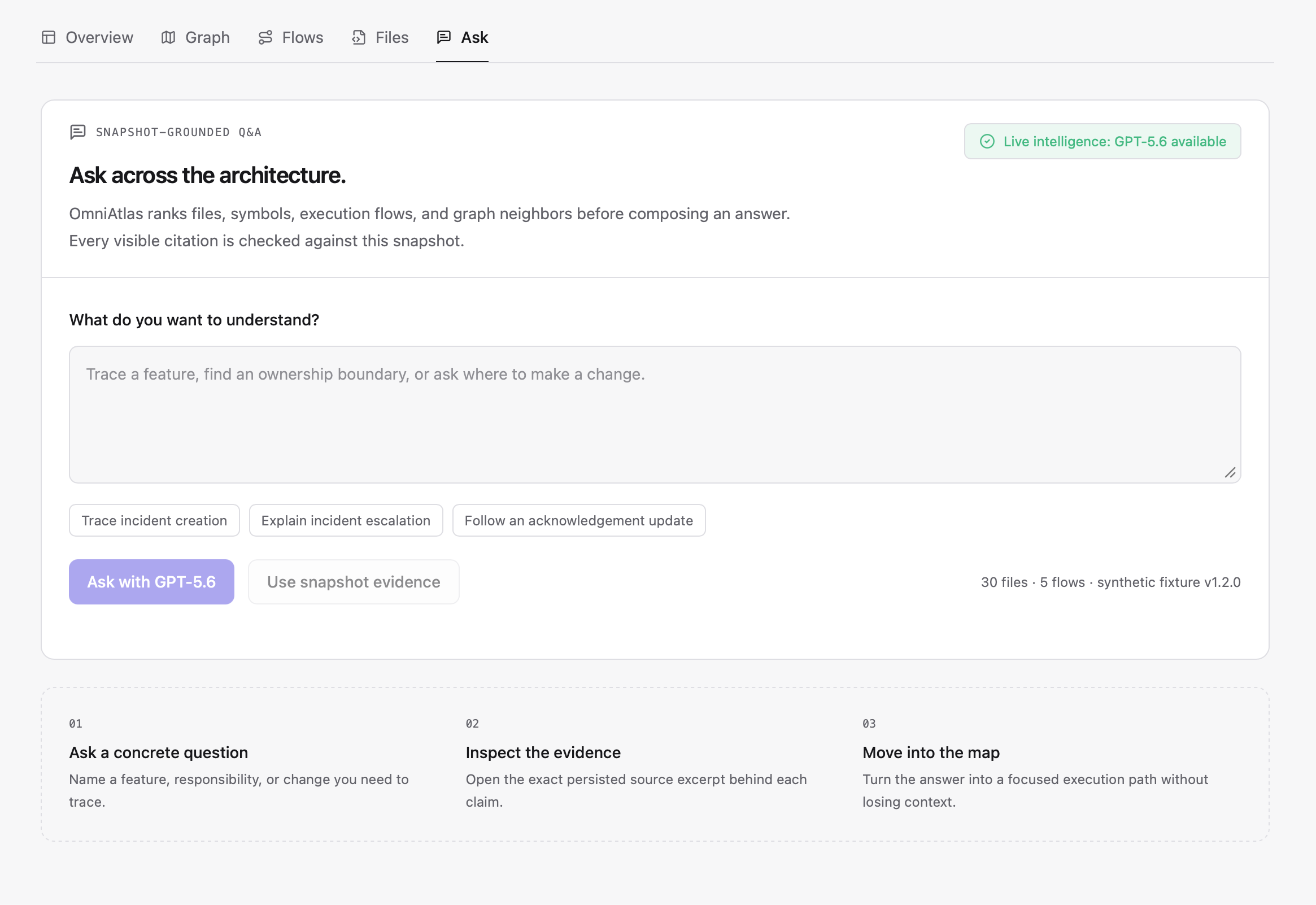
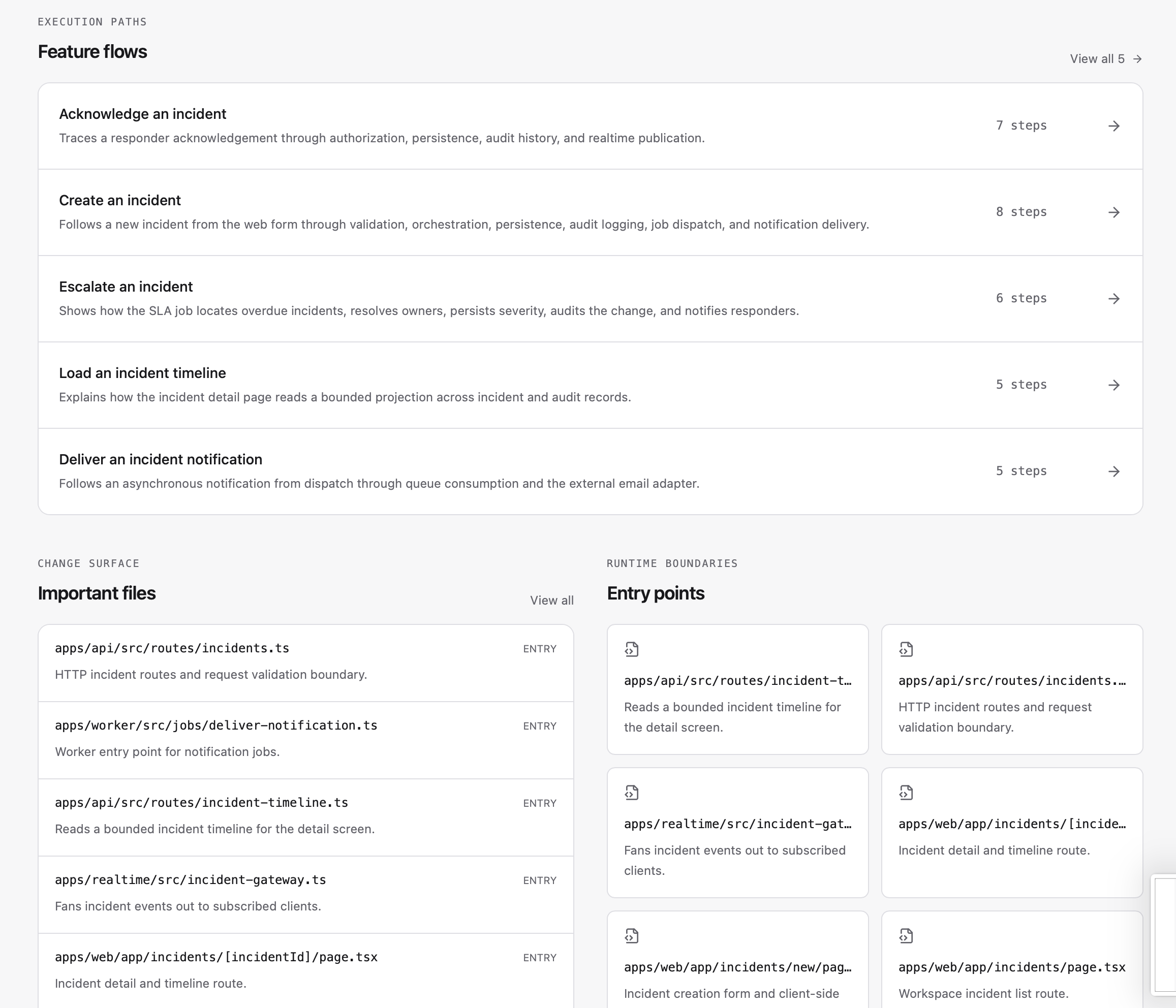
From there, developers can explore the repository visually, inspect important files, and ask questions backed by exact source citations instead of guessing or jumping between dozens of files.
Some examples include:
- Where should I start?
- How is authentication organized?
- Which files implement this feature?
- What depends on this module?
OmniAtlas also includes a few curated showcases that demonstrate deeper architecture exploration through guided tours of larger, more complex codebases.
How I built it
OmniAtlas is built with Next.js, TypeScript, PostgreSQL, Prisma, React Flow, and Inngest.
Every imported repository is analyzed into a commit-pinned snapshot of its structure. OmniAtlas uses that snapshot to power architecture exploration, repository search, and grounded AI answers with exact source citations.
GPT-5.6 answers questions using the analyzed repository snapshot, with every response verified against the underlying source code and linked back to exact citations. If there isn't enough evidence to answer a question, OmniAtlas simply says so instead of trying to fill in the gaps.
Codex was part of the project from start to finish. I used it to prototype ideas, debug problems, refactor code, write tests, and speed up day-to-day development. It handled a lot of the repetitive engineering work, which gave me more time to focus on the product itself.
Challenges I ran into
One of the biggest challenges was figuring out how to break a repository down into something that was actually useful to explore.
Early on, the analysis produced a lot of raw information, but it didn't help answer the question every developer has when opening a new codebase: "Where do I start?" A lot of time went into deciding what information mattered most, how to organize it, and how to present it without overwhelming the user.
Another challenge was balancing deterministic analysis with AI. I wanted OmniAtlas to be something developers could trust, so GPT-5.6 only works from the analyzed repository snapshot instead of trying to infer details directly from the codebase. If there isn't enough evidence to answer a question, OmniAtlas says so instead of making something up.
Finally, there was the challenge of supporting repositories of very different sizes. The experience needed to work well for a small utility library while still scaling to much larger applications, which meant putting careful limits around analysis and focusing on surfacing the most useful information first.
Accomplishments that I'm proud of
- Building something I'd genuinely use when jumping into a new codebase.
- Creating a workflow that goes from a GitHub repository to an interactive architecture explorer in just a few minutes.
- Keeping AI grounded in real source code instead of letting it guess or hallucinate.
- Building the entire project from the ground up while using GPT-5.6 and Codex as core parts of both the product and the development process.
- Shipping a polished end-to-end experience instead of just a technical proof of concept.
What I learned
One thing that surprised me was how much better AI performs when it has structure to work from instead of a raw codebase. Breaking a repository down first made a huge difference in the quality of the answers.
I also underestimated how useful Codex would be. I expected it to help write code, but I ended up using it constantly for debugging, refactoring, planning features, and working through implementation decisions. It became part of my normal development workflow.
What's next for OmniAtlas
The biggest area I'm excited about is improving the analysis itself.
Today's version intentionally stays within a defined scope so every result is fast, deterministic, and reliable. The next challenge is scaling that approach to much larger repositories while continuing to improve the quality of the architectural understanding.
Long term, I'd like OmniAtlas to support more languages and frameworks, build a deeper understanding of how applications are structured, and make even very large codebases easier to explore.
Help developers understand a new codebase in minutes instead of weeks.
Built With
- codex
- gpt-5.6
- inngest
- next.js
- postgresql
- prisma
- typescript

Log in or sign up for Devpost to join the conversation.