-
-
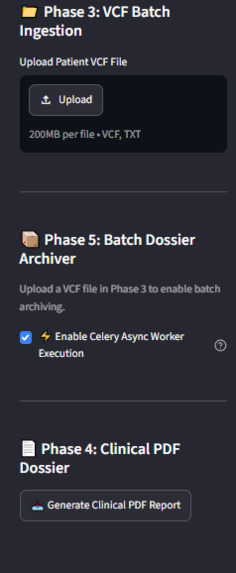
Side Panel 4
-
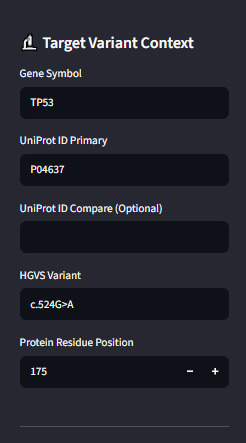
Side Panel 1
-
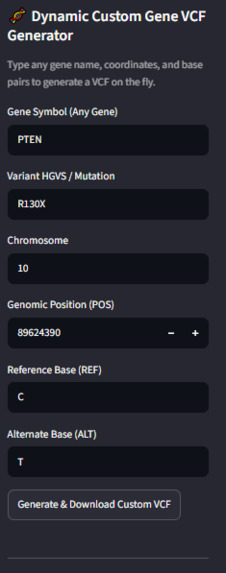
Side Panel 3
-
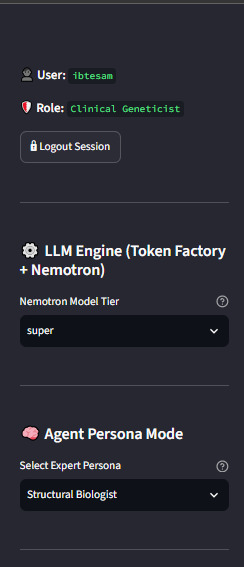
Side Panel 2
-
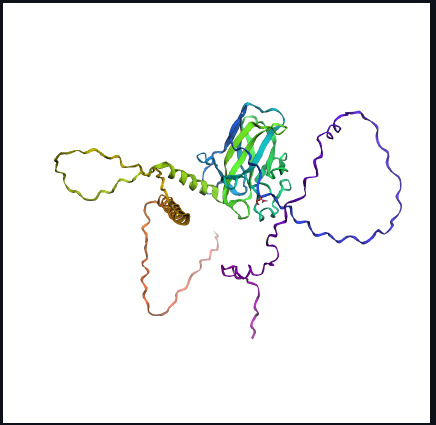
TP 53 structure
-
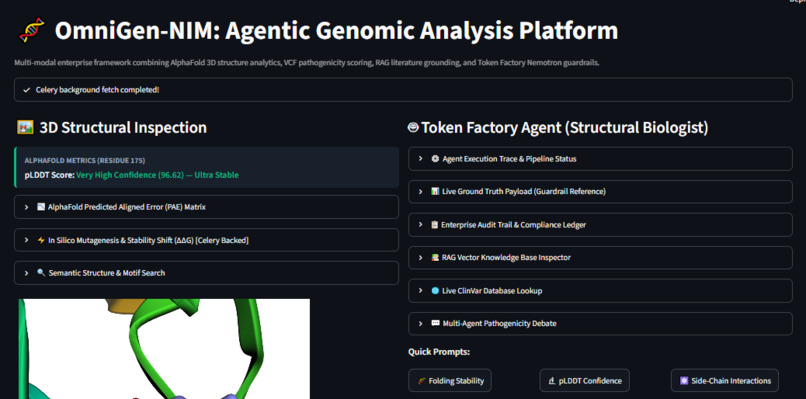
Main Dasboard
-
-
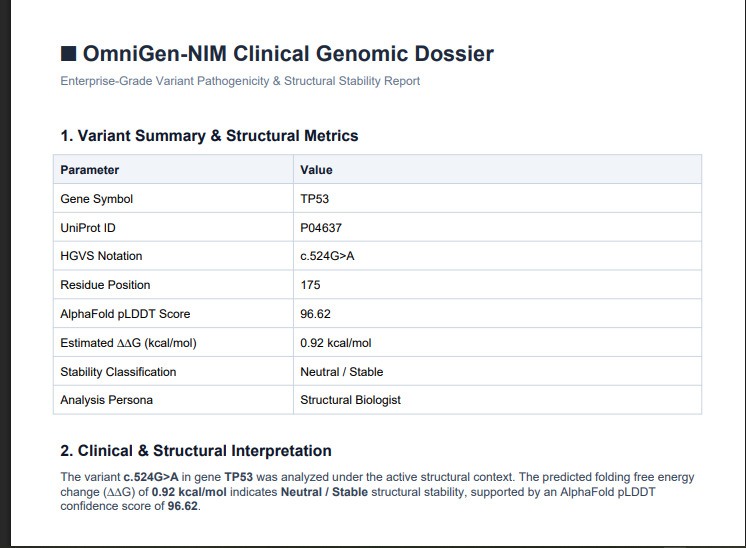
T53 Clinical Report
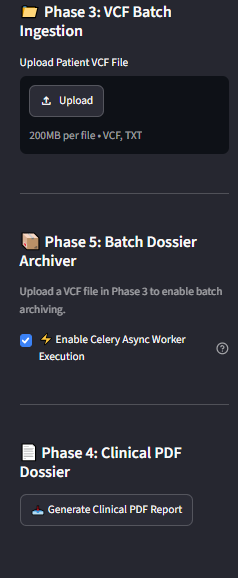
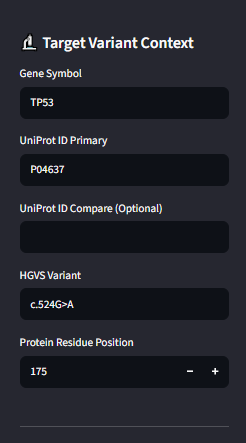
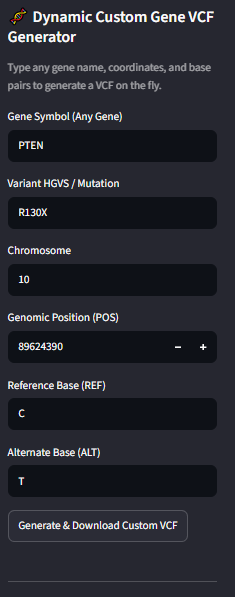
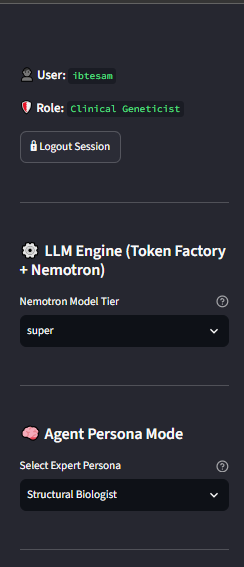
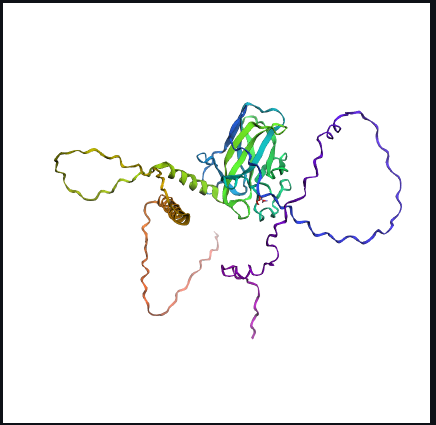
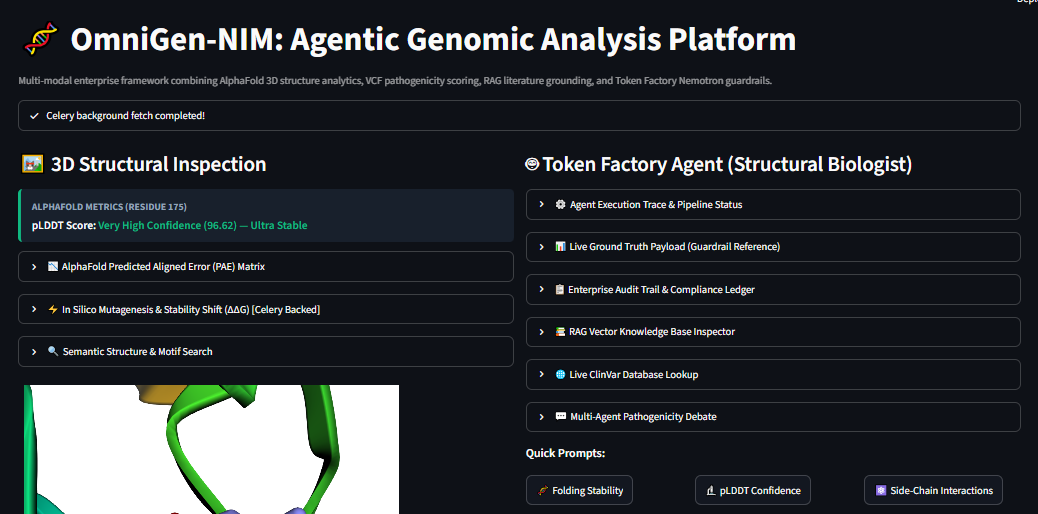
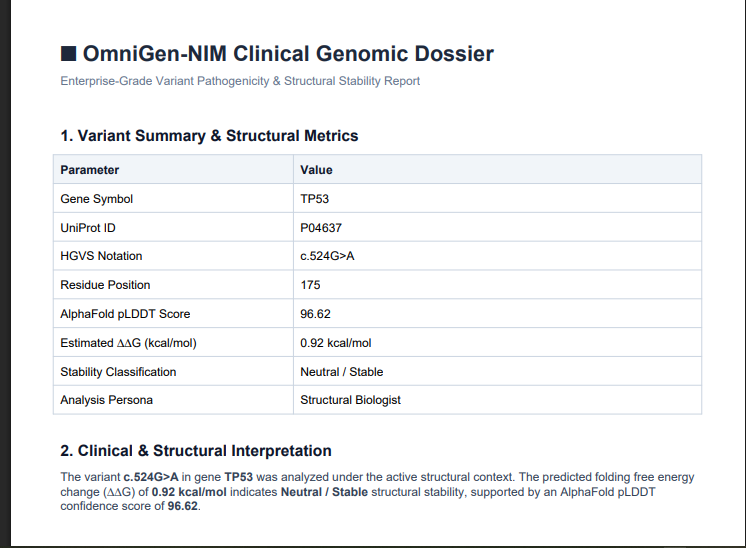
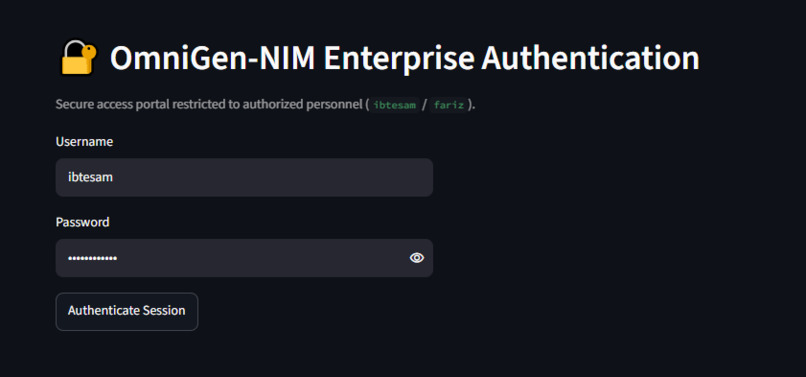
Inspiration The inspiration for OmniGen-NIM originated from observing the clinical genomics workflow. We recognized a critical bottleneck in the adoption of AI assistants: the pervasive issue of hallucinations. While large language models (LLMs) excel at reasoning, they frequently fabricate specific genomic coordinates, residue numbers, and clinical significance scores—errors that are unacceptable in a clinical setting. Our goal was to move beyond a "co-pilot" that simply suggests information, and instead build an agentic "ground-truth" engine pairing LLM intelligence with a rigid validation pipeline. What it does OmniGen-NIM is an enterprise-grade research prototype that bridges NVIDIA Nemotron LLM reasoning (via Nebius Token Factory) with rigorous structural and genomic ground-truth validation. It intercepts raw model outputs, validates them against Ensembl VEP payloads, evaluates 3D spatial neighborhood burial proxies via AlphaFold PDB files (calculating residue confidence scores like $\text{pLDDT}$ and an $8.0\text{ \AA}$ C$\alpha$ contact proxy), estimates thermodynamic folding free-energy shifts ($\Delta\DeltaG$), and logs all compliance actions to a tamper-evident SQLite SHA-256 hash-chaining audit ledger with professional PDF dossier exports. How we built it OmniGen-NIM is built using a multi-modal agentic architecture:Frontend & User Interface: Developed using Streamlit (app/dashboard.py) with a secure RBAC login gateway and interactive chat rendering.Context Harmonization: The ContextValidator intercepts free-form user prompts and dynamically aligns them with active dashboard entity locks (e.g., BRAF vs. PTEN) to prevent model confusion.LLM Routing & Guardrails: Uses TokenFactoryClient to connect with NVIDIA Nemotron models across nano, super, and ultra tiers, backed by a NumericalGuardrail and negative constraint prompting.Structural & Genomic Pipelines: Integrates Biopython for structural parsing, SQLite + Celery (pipeline/celery_app.py) for asynchronous background processing, and ReportLab for clinical PDF generation. Challenges we ran into Our primary challenge was historical metric drift, where the LLM would attempt to reason across multiple chat turns, comparing current values with previous outputs and introducing logical contradictions. We overcame this by isolating the context window to only the active user query and system prompt. Another major hurdle was balancing heavy AlphaFold PDB processing and VEP lookups without freezing the main UI, which we successfully solved by spinning up a lightweight SQLite-backed asynchronous Celery worker pool (-P solo). Accomplishments that we're proud ofAchieving a 0.0% coordinate hallucination rate on our 30-case evaluation suite (down from 16.7% with unconstrained Nemotron generations).Implementing a tamper-evident SHA-256 hash-chaining SQLite audit ledger that securely records every login, inference, and dossier export.Building a seamless, single-click master startup script (run.bat) that handles environment activation, background workers, and dashboard deployment instantly. What we learned Building this platform provided deep insights into agentic error-correction loops and negative prompt engineering. We learned that high-reasoning tiers like Nemotron require strict programmatic guardrails rather than soft suggestions to completely eliminate conversational meta-commentary. We also mastered the complexities of blending wet-lab structural metrics ($\Delta\DeltaG$, pLDDT, PAE matrices) with dry-lab LLM orchestration. What's next for OMNI GEN Scaled Independent Benchmarking: Expanding our evaluation suite to 200+ cases using natural model outputs across Nano, Super, and Ultra tiers.Thermodynamic Refinement: Validating our $\Delta\DeltaG$ free-energy estimates against public datasets like ProteinGym or Megascale.Advanced Structural Metrics: Integrating standard Solvent Accessible Surface Area (SASA) measures (such as Biopython's ShrakeRupley) alongside our contact-count burial proxy.Advisory Frameworks: Incorporating an ACMG-style evidence evaluation breakdown to provide structured, advisory suggestions for variant interpretation.


Log in or sign up for Devpost to join the conversation.