-
-
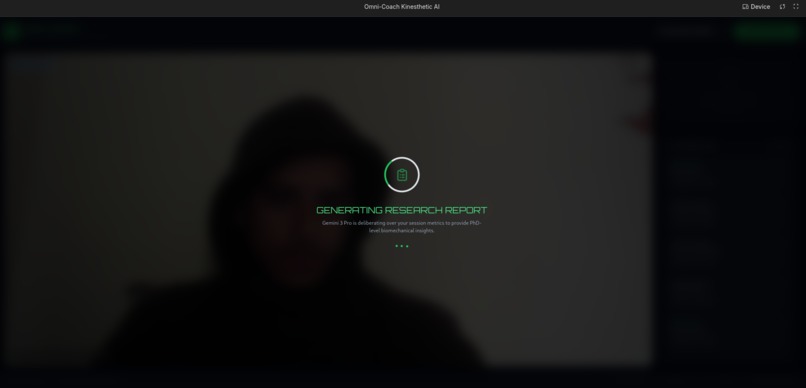
Generating report after workout
-
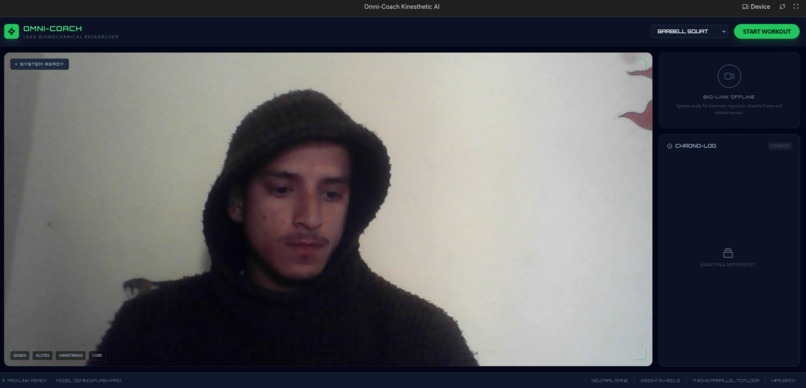
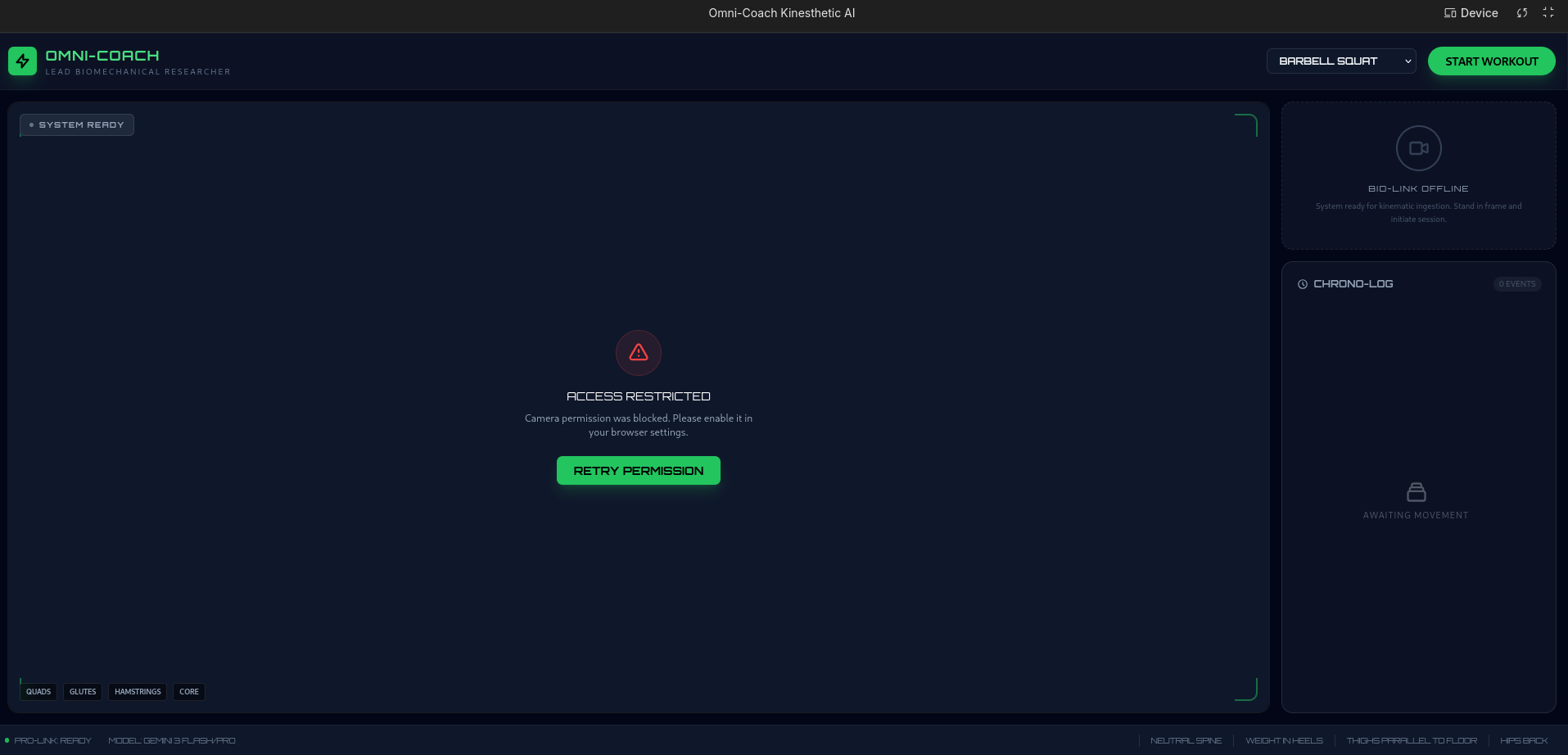
While interacting
-
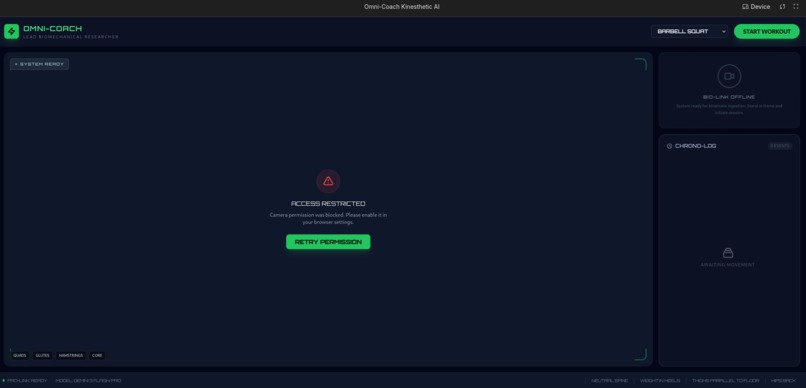
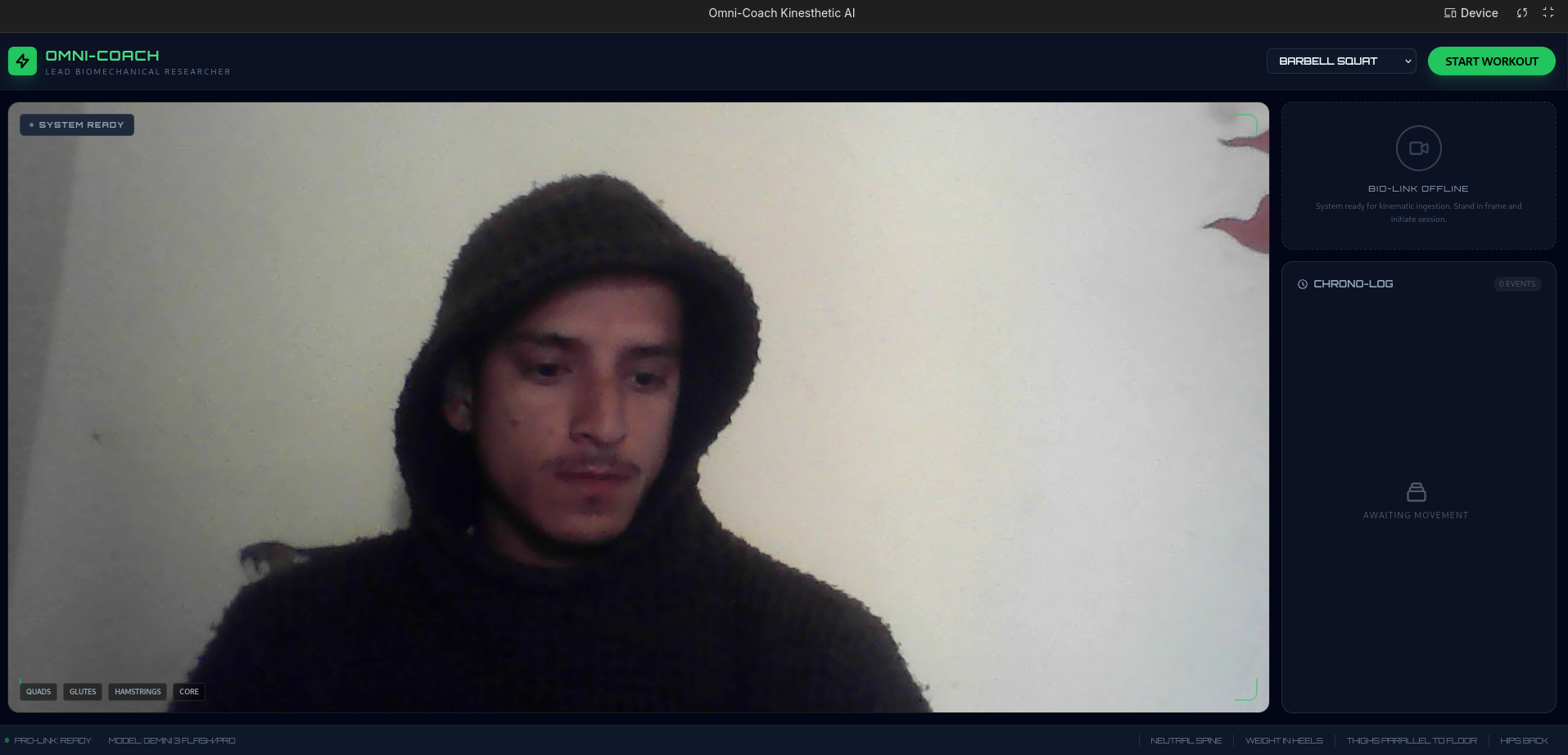
HomePage
-
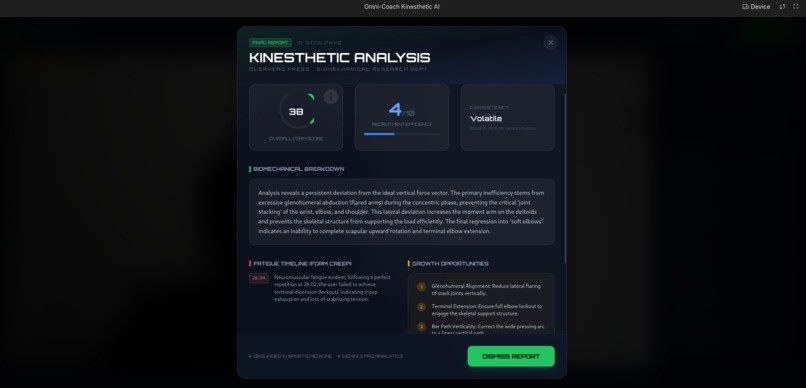
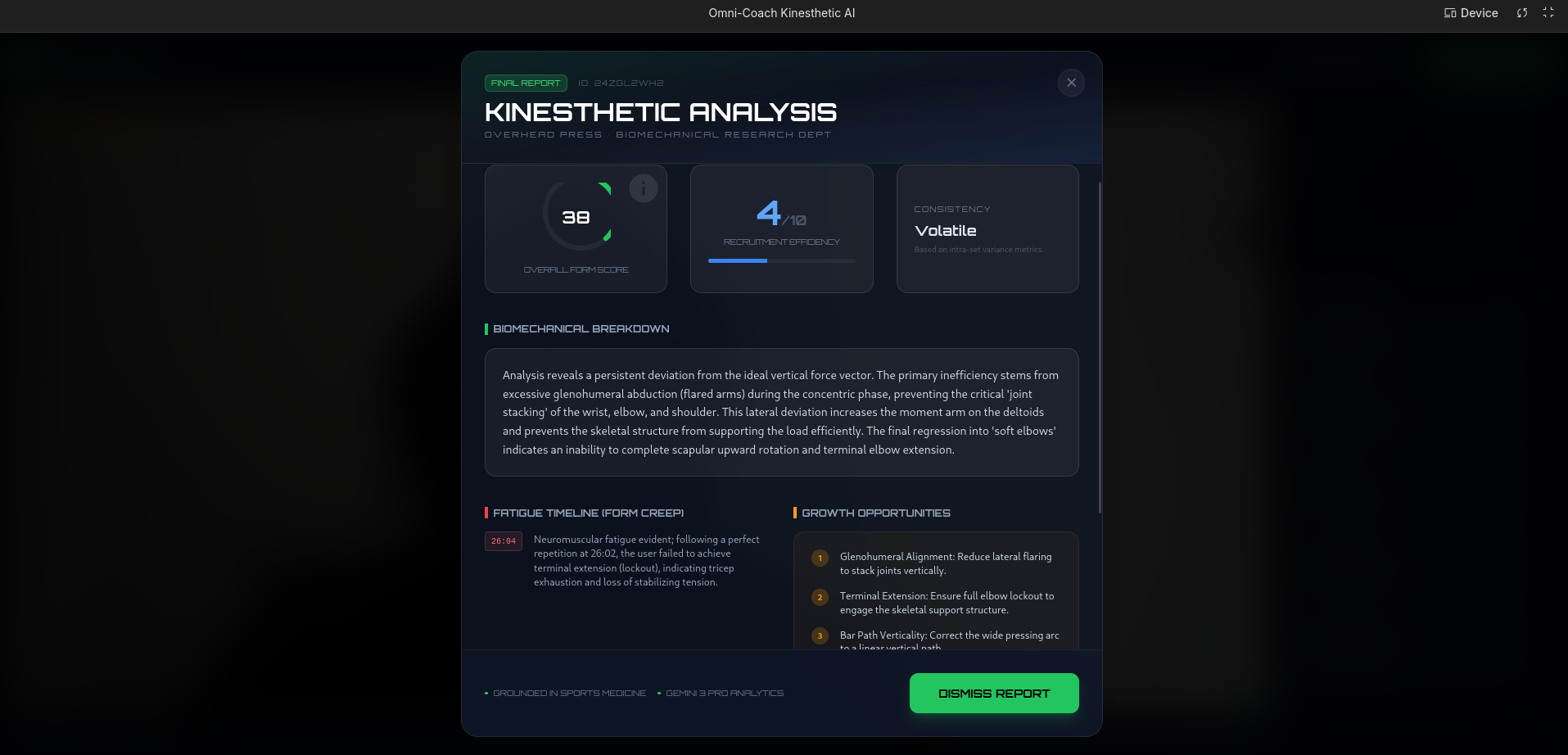
Generated Report
Inspiration
Elite athletic coaching is a luxury restricted to professional athletes, while standard fitness apps often rely on "dumb" pose estimation—tracking (x, y) coordinates without understanding the nuance or intent of a movement. We were inspired to build Omni-Coach to bridge this gap, creating an AI that doesn't just see where your joints are, but understands the biomechanical risks and kinetic potential of your body in real-time. We wanted to move beyond basic tracking into the realm of "Kinesthetic Intelligence."
What it does
Omni-Coach is a high-performance biomechanical analysis tool that acts as both a real-time coach and a lead researcher:
Live Mode (Gemini 3 Flash): Analyzes video frames with sub-second latency to provide "Micro-Cues" (e.g., "Drive through heels") and immediate Safety Alerts if it detects dangerous forms like spinal rounding or joint collapse.
- Deep Analysis (Gemini 3 Pro): Post-workout, it synthesizes the entire "Chrono-Log" of the session. Using high-level reasoning, it detects "Form Creep"—the exact moment fatigue caused biomechanical breakdown—and generates a PhD-level research report featuring internal and external coaching cues. ## How we built it The application is a high-frequency React 19 engine orchestrated by two distinct Gemini 3 models:
- Gemini 3 Flash: Used for the latency-first vision loop. We stream JPEG frames into the model to perform raw spatial reasoning without the overhead of traditional pose-estimation libraries.
- Gemini 3 Pro: Leveraged for the final "Kinesthetic Analysis Report." We utilize the Thinking Config with a dedicated token budget to allow the model to deliberate over the session history, identifying patterns of fatigue and recruitment efficiency.
- The UI: Designed with a "Cyber-Researcher" aesthetic using Tailwind CSS, featuring scanning overlays, biometric data streams, and a dynamic feedback HUD. ## Challenges we ran into The primary challenge was maintaining context over a long workout set without overwhelming the model's window. We solved this by implementing a "Chrono-Log" system—a lightweight text-based history of every biomechanical event detected by Flash, which is then summarized by Pro. We also had to navigate browser-level "NotAllowedError" camera permission hurdles in secure contexts, requiring a robust manual permission trigger and retry logic. ## Accomplishments that we're proud of We successfully implemented Proprioceptive Reasoning. Most AI models struggle to explain how a movement should feel, but by leveraging Gemini 3’s multimodal depth, we were able to generate "Internal Cues" (e.g., "Imagine ripping the floor apart with your feet") that are standard in professional sports science but previously impossible for AI to generate accurately from visual data alone. ## What we learned We learned that Gemini 3 is exceptionally capable of understanding three-dimensional depth from two-dimensional video frames. By prompting the model as a "Lead Biomechanical Researcher," we observed a significant increase in the precision of the feedback, moving from generic advice to research-grounded corrections like "posterior chain engagement" and "lumbar spine stabilization." ## What's next for Omni-Coach The next phase for Omni-Coach is "Physio-Mode." We plan to adapt the core engine for elderly rehabilitation and physical therapy. By detecting early signs of gait instability or joint degradation, Omni-Coach can transition from a gym tool to a proactive healthcare solution that prevents falls and tracks recovery progress for patients at home.


Log in or sign up for Devpost to join the conversation.