-
-
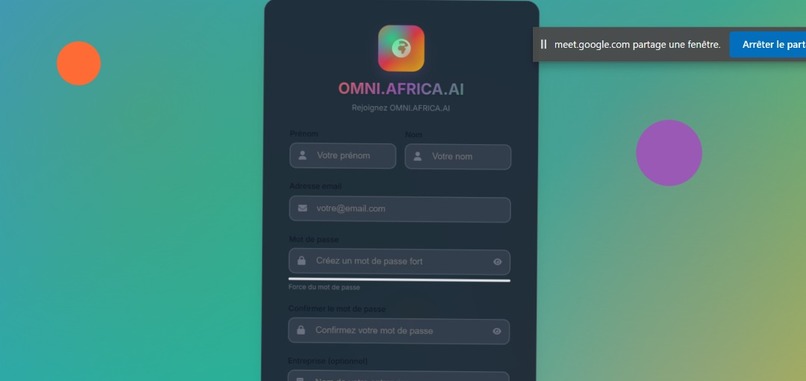
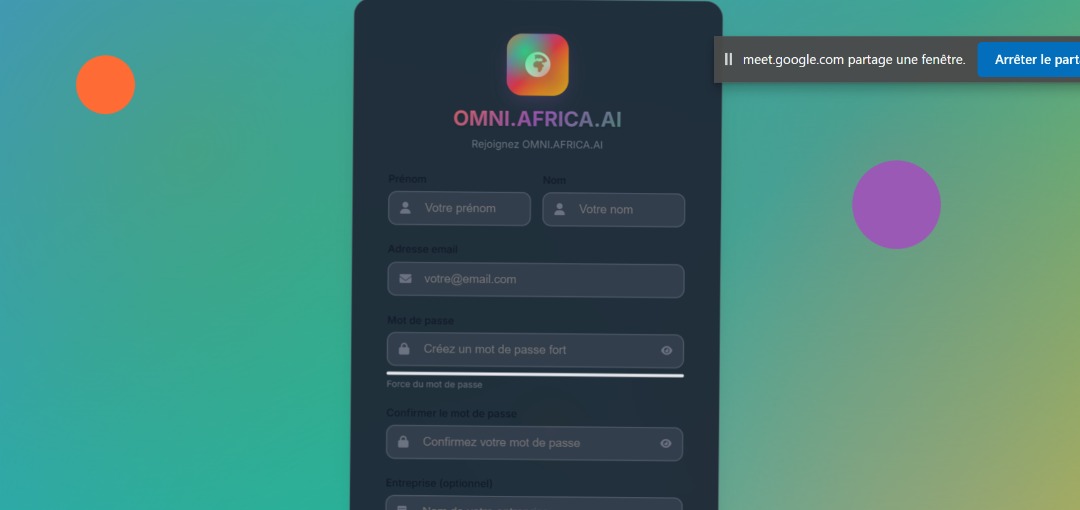
Interface d'inscription
-
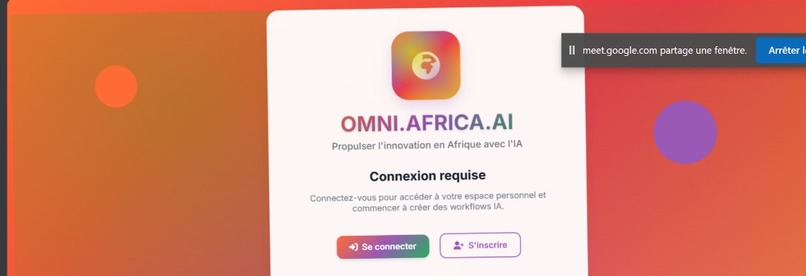
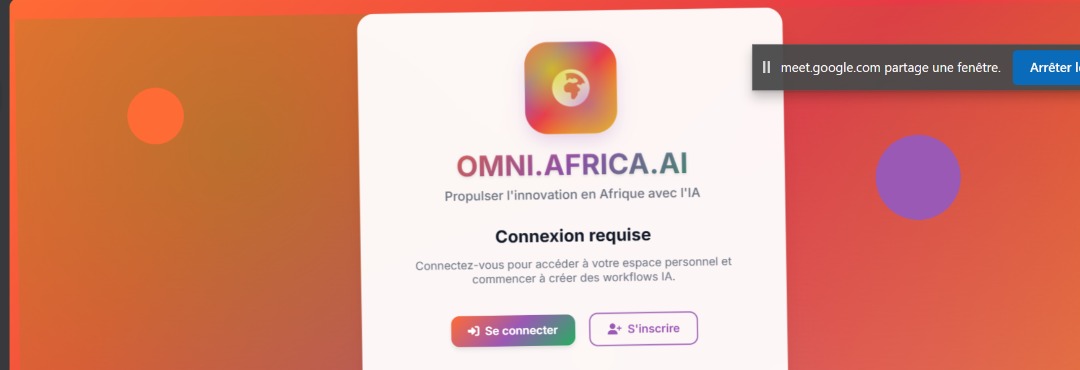
interface de connexion
-
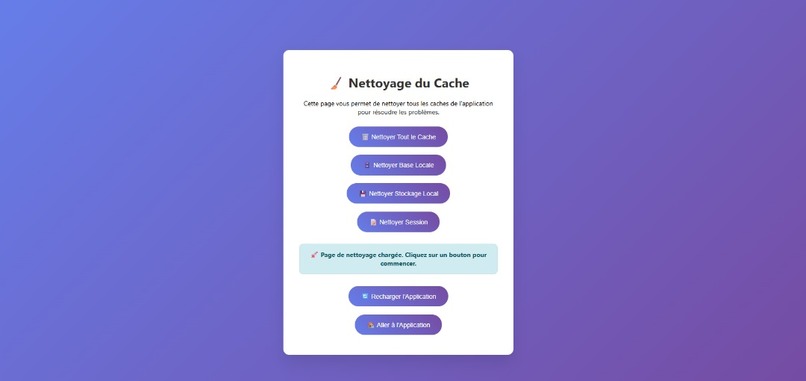
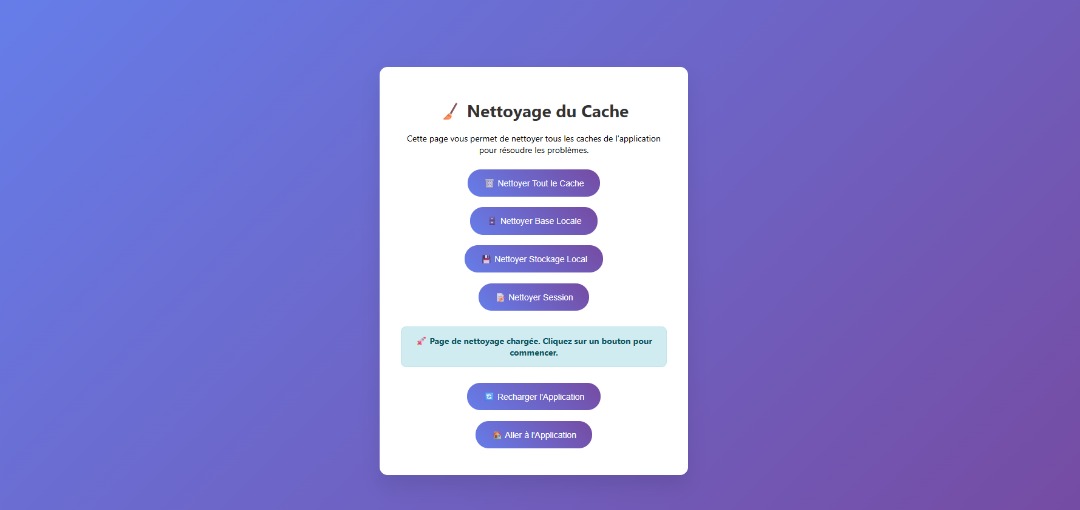
Interface de la fonctionnalité qui permet le nettoyage du cache.
-
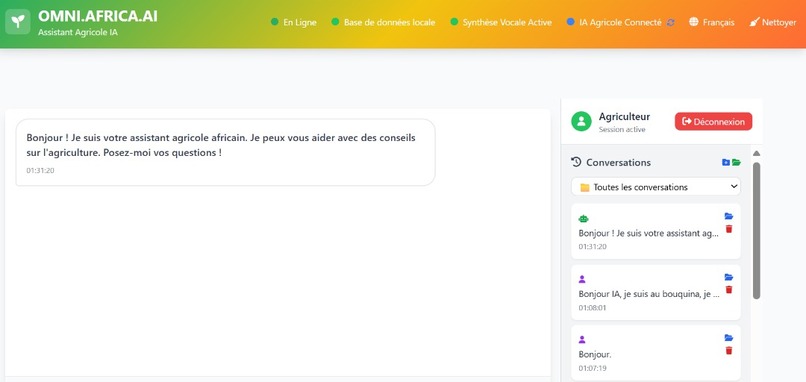
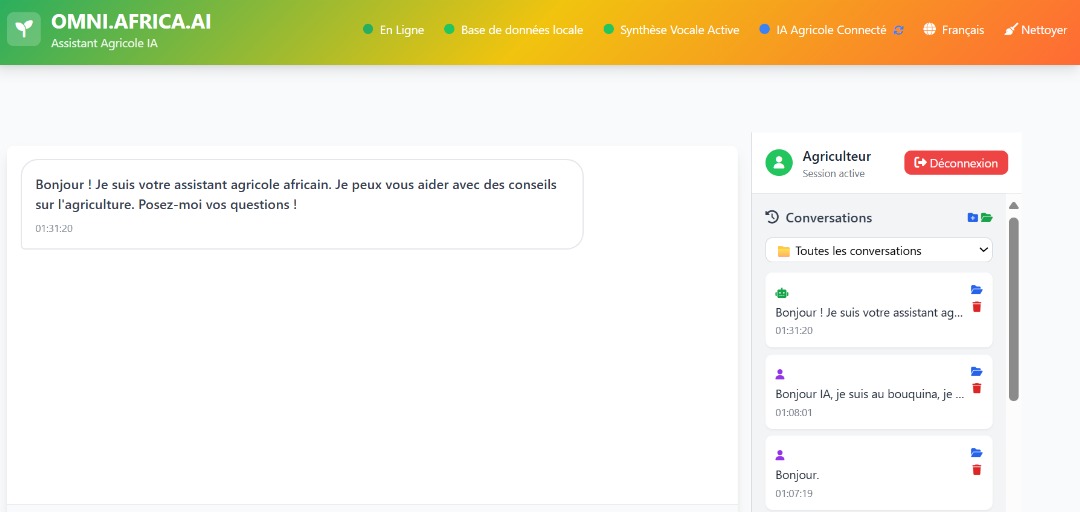
Cette image représente ce que l'utilisateur inscrit voit une fois qu'il accède à l'outil
INSPIRATION
Africa faces unique challenges, yet too many tech solutions demand constant internet access and ignore local realities. As a result, millions are excluded from progress.
OMNI.AFRICA.AI changes the game by offering an artificial intelligence platform that works without an internet connection, tailored to local languages, cultures, and real on-the-ground needs. Our mission: to deliver practical, respectful, and accessible tools — even offline — enabling anyone to learn, create, and transform their reality.
WHAT IT DOES Imagine a farmer in Mali asking for advice on maize cultivation in Bambara, or a woman in Côte d’Ivoire seeking cacao farming tips in Dioula. Our intelligent agricultural assistant uses multilingual voice recognition to understand these requests in over 50 African languages and dialects. It then provides personalized recommendations for more than 50 African crops, based on localized, verified data.
The AI analyzes local conditions (soil, climate, season) and filters out irrelevant noise, delivering actionable, context-specific advice. This proactive approach encourages users to be more intentional and strategic in their agricultural practices — increasing yields and reducing losses.
HOW WE BUILT IT
To build OMNI.AFRICA.AI, we selected tools that deliver high performance and usability — even in low-connectivity environments — to stay grounded in African realities.
At the heart of our AI is the Google Gemini API, enabling us to understand queries in multiple African languages and deliver intelligent responses. And if Gemini is ever unavailable, we’ve integrated DeepSeek API as a backup, ensuring the AI always works.
For the front-end, we used core web technologies: HTML5, CSS3, and JavaScript ES6+, making the app dynamic and intuitive. We used Tailwind CSS to ensure responsive design across any mobile device.
For our data layer, we chose Firebase Firestore, a flexible and powerful database. To enable offline access, we implemented IndexedDB to locally store critical data — creating our signature offline simulation mode.
Voice interaction is powered by the Web Speech API, enabling the assistant to listen and respond in natural language. To top it off, we used Font Awesome to ensure a clean, visually appealing interface.
CHALLENGES WE FACED
Building OMNI.AFRICA.AI was rewarding, but not without its hurdles. As a team, we overcame major challenges:
Learning AI & Ecosystems: For much of our team, working with AI and tools like Python was new territory. Learning and adapting to these technologies was a steep but fulfilling climb.
API Integration & Compatibility: A key obstacle was integrating APIs, especially Google’s. Configuring them properly and finding functional equivalents (like for Google Translate within Gemini) required extensive research and experimentation to ensure smooth system communication.
WHAT WE'RE PROUD OF
First and foremost, we’re proud of our team — the chemistry we’ve built despite being newly formed is incredible. We’re also deeply proud to see our solution working effectively, giving us hope that it can genuinely improve the lives of African farmers.
WHAT WE LEARNED
In one word: Everything. From mastering Google APIs to tackling real, pressing problems faced in Africa, the learning curve has been massive — and empowering.
WHAT'S NEXT FOR OMNI.AFRICA.AI
Today, OMNI.AFRICA.AI is a working proof of concept with highly promising results. Our roadmap focuses on turning it into a fully functional and scalable tool for Africa, across four key phases:
Phase 1 — AI Enhancement (1–2 months)
Integrate DeepSeek API as a fallback
Expand language support to Dioula, Baoulé, Bambara, and Wolof
Improve voice recognition for African accents
Launch Android/iOS mobile application
Phase 2 — Advanced Features (2–3 months)
Extend crop database to 100+ African crops
Add geolocation for regional recommendations
Integrate image recognition for plant diseases
Enable memory-based conversational interaction
Phase 3 — Full Ecosystem (3–6 months)
Build a community platform for farmers
Add predictive yield analytics
Integrate IoT (soil & weather sensors)
Create a marketplace for agricultural products
Phase 4 — General AI (6–12 months)
Launch AGI_ELP (General Intelligence Assistant for Enterprises)
Automate agricultural workflows
Develop advanced dashboards for cooperatives
Release public API for developers


Log in or sign up for Devpost to join the conversation.