Inspiration
A university student clicks "I Agree" on a 40-page privacy policy without reading it. A young freelancer signs a contract from a client because they urgently need the job. A tenant is told to leave an apartment immediately and has no idea whether the landlord has that right. A family has a dispute over money, but going to court is too expensive, stressful, and time-consuming.
These situations happen every single day.
The biggest problem is not that people do not have rights—the problem is that most people do not know their rights. Legal documents are written in complex language, professional legal advice is expensive, and many people are too intimidated to ask for help until it is too late.
That is the inspiration behind OMINI AI LAW.
We wanted to build an AI companion that makes the law understandable for everyone, not just lawyers. OMINI gives ordinary people access to legal knowledge in plain English, helping them understand contracts before signing, detect dangerous privacy clauses, learn their rights, and resolve disputes through an AI-powered courtroom experience. Our vision is simple: justice should be accessible, understandable, and available to everyone.
What it does
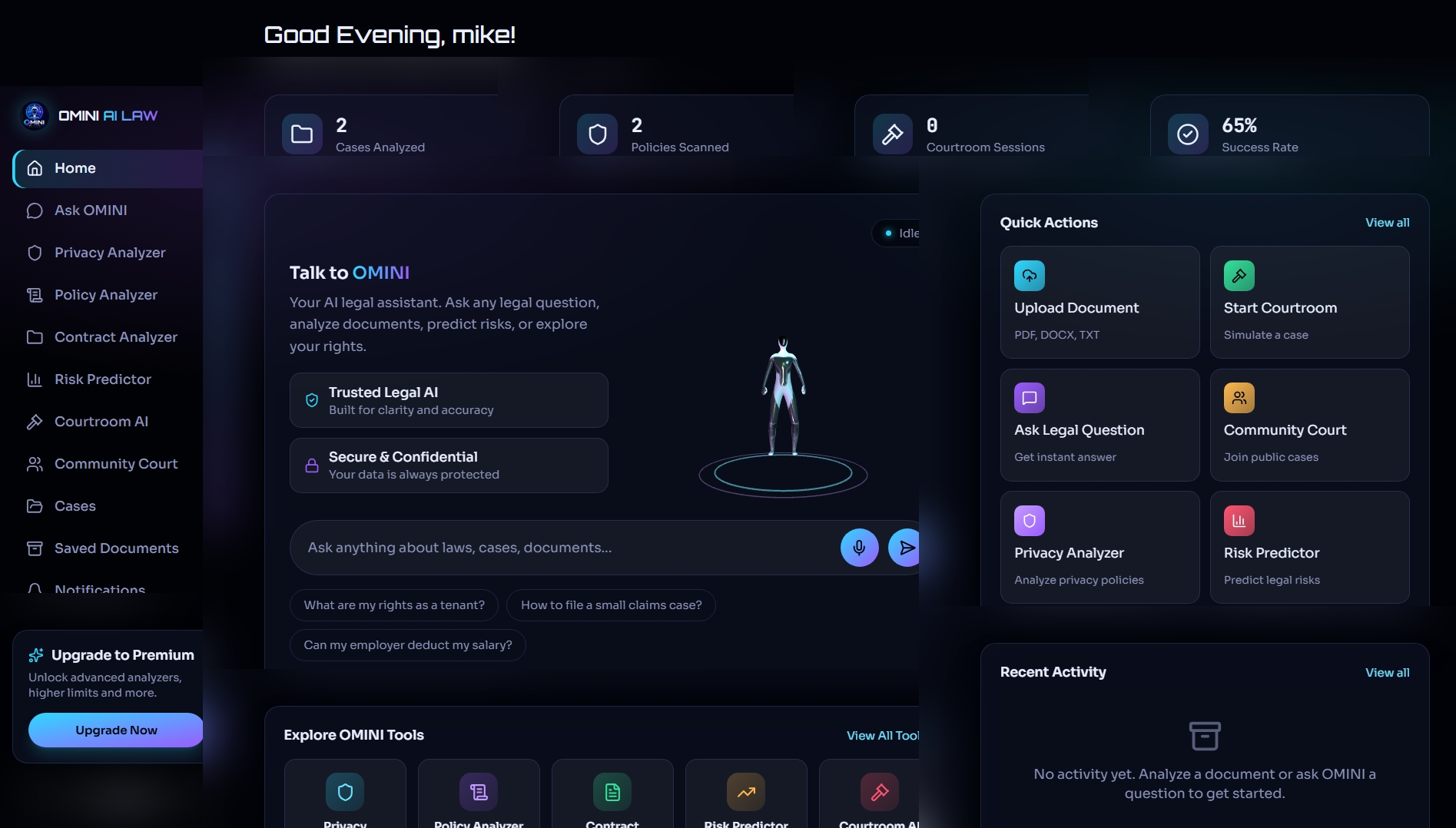
OMINI AI LAW is an AI Legal Operating System that combines legal education, document intelligence, and dispute resolution into one platform.
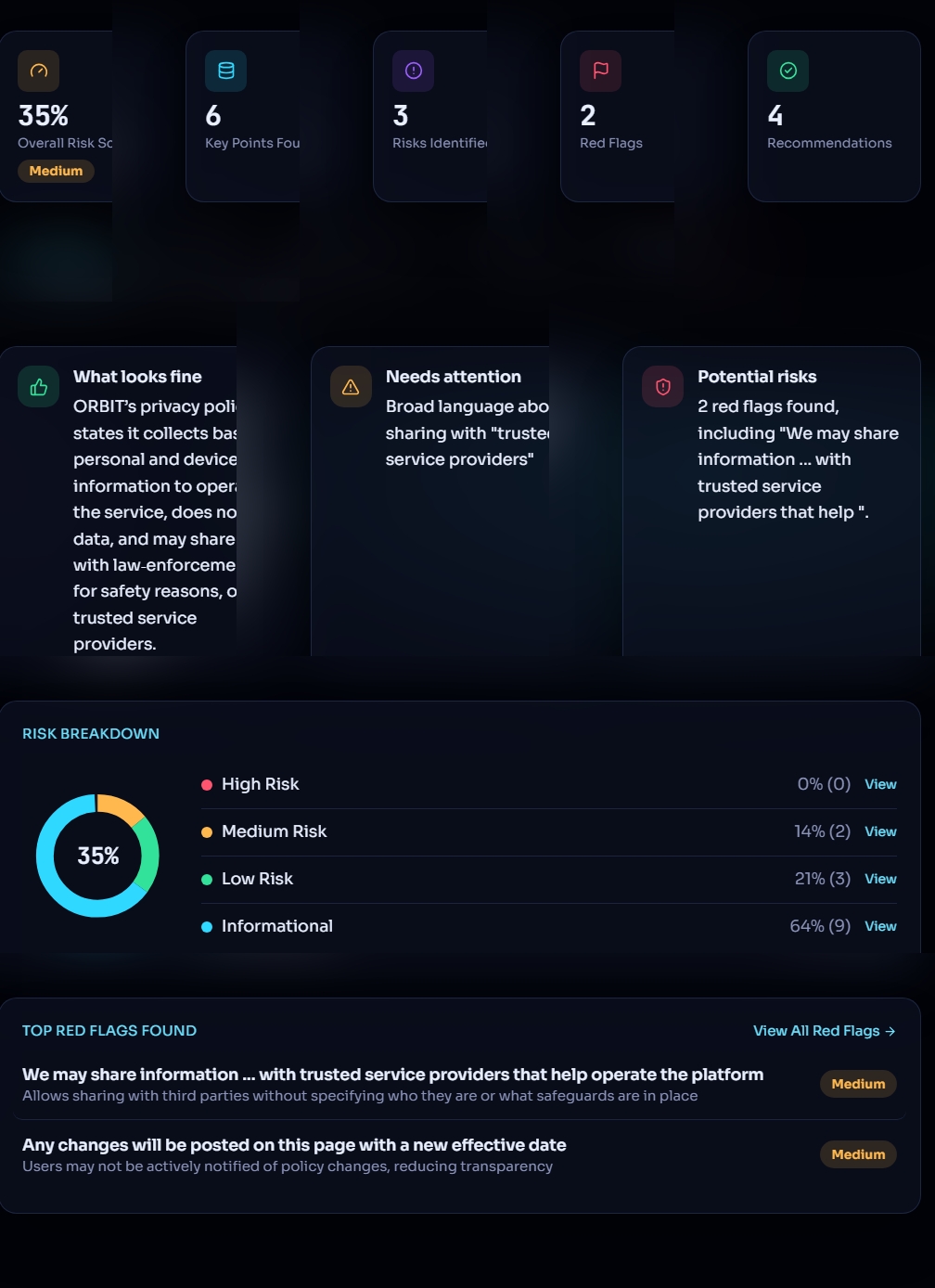
Users can ask legal questions in natural language and receive simple, easy-to-understand explanations instead of confusing legal terminology. OMINI analyzes contracts, privacy policies, employment agreements, rental agreements, and other legal documents, highlighting risky clauses, hidden permissions, obligations, deadlines, and potential consequences before users agree to them.
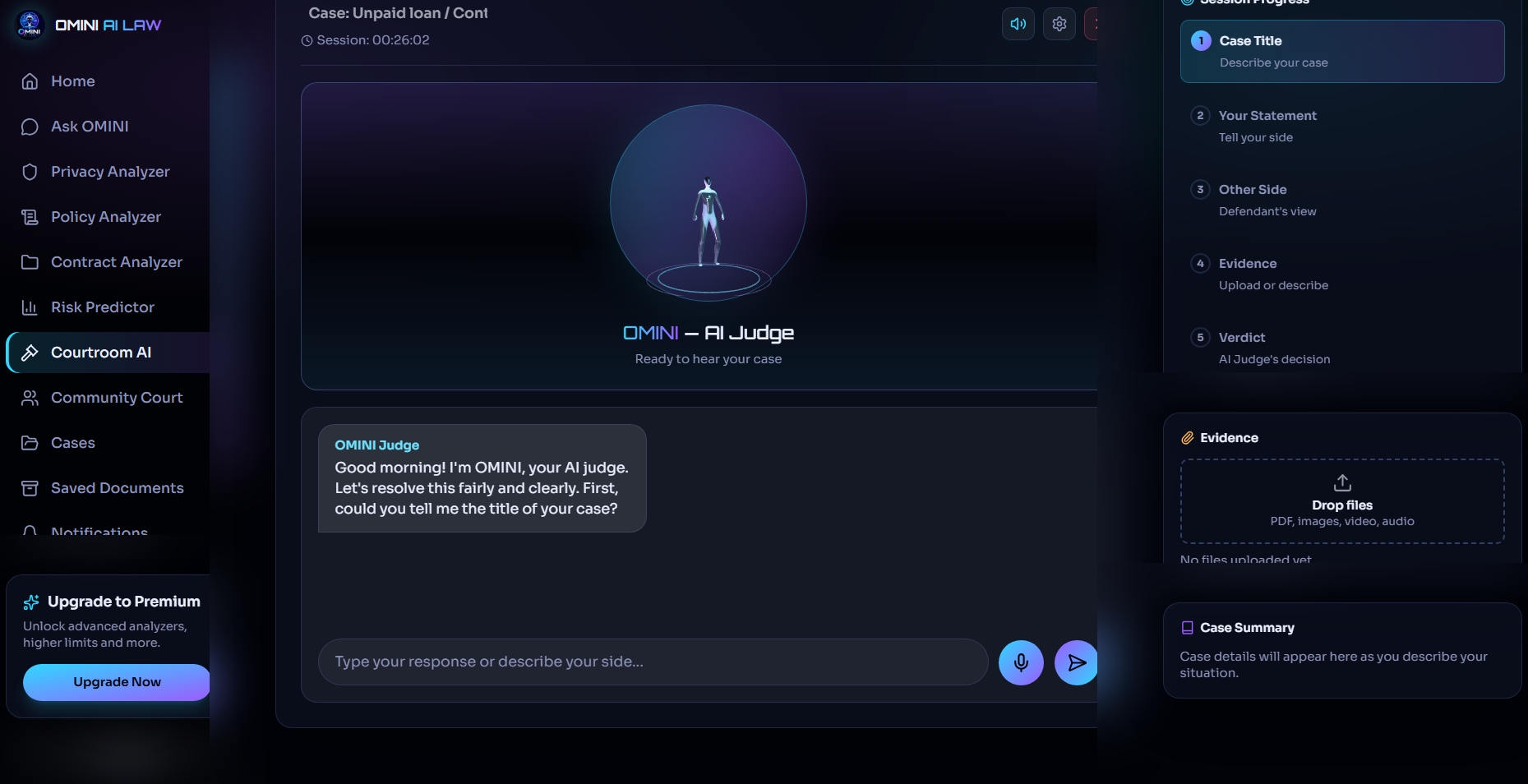
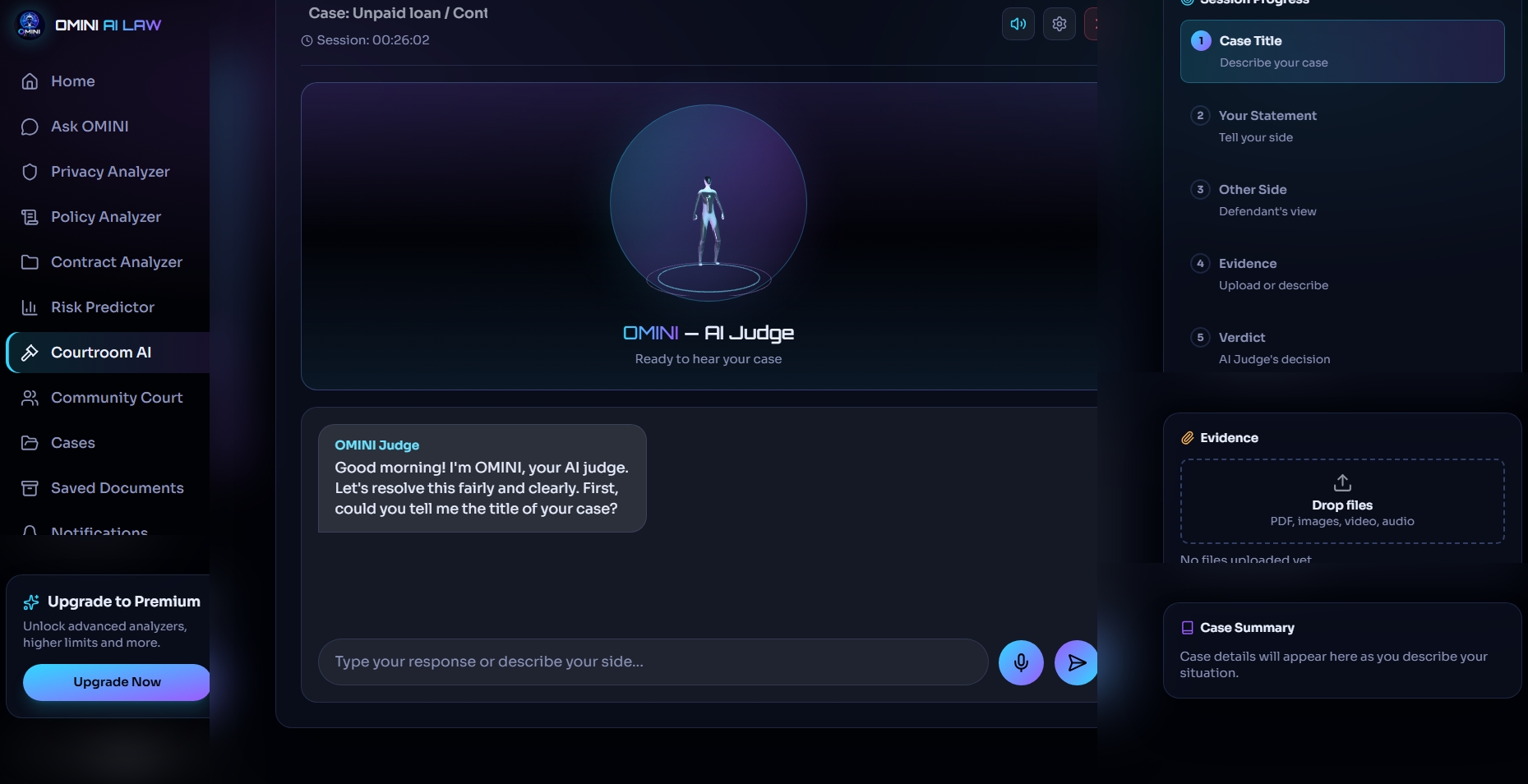
One of OMINI's most unique features is the Interactive Practice Courtroom, where users can simulate a real courtroom. The AI judge listens to both sides of a dispute, asks follow-up questions, requests evidence, evaluates the information fairly, and delivers a reasoned verdict.
OMINI also includes a Community AI Court, where multiple users—including victims, defendants, and witnesses—can join the same case using their usernames, upload evidence, participate in guided discussions, and receive an AI-generated judgment based on the conversation and submitted evidence.
Instead of replacing lawyers, OMINI empowers people to understand legal situations before taking action and helps them make informed decisions.
How we built it
We built OMINI using a modern AI-powered technology stack focused on accessibility and speed.
The frontend was built with HTML, CSS, and JavaScript, creating a clean, futuristic dashboard that feels like an AI operating system. The backend was developed with Python and Flask, allowing us to build authentication, legal chat APIs, courtroom logic, and document processing.
For artificial intelligence, we integrated the Groq API with a powerful language model to perform legal reasoning, summarize documents, analyze privacy policies, generate courtroom questions, and provide verdicts in natural language.
OMINI supports PDF, DOCX, and TXT document uploads, extracts their contents, and processes them into understandable legal insights. We used SQLite to manage users, chat history, uploaded documents, courtroom cases, and community court sessions. Finally, the application was deployed on Render, making it accessible online with a live public URL.
Every feature was designed around one goal: making complicated legal processes feel as easy as chatting with an AI assistant.
Challenges we ran into
Building an AI platform that deals with legal information presented several technical and design challenges.
One major challenge was creating a courtroom experience that feels structured and fair instead of becoming a simple chatbot conversation. We designed a multi-stage courtroom flow where each participant speaks in order, evidence is collected separately, and OMINI only delivers a verdict after reviewing all available information.
Another challenge was processing different legal document formats reliably. Privacy policies and contracts often contain long paragraphs, technical language, and inconsistent formatting, so extracting useful information while keeping explanations simple required careful prompt engineering and document parsing.
Managing live community courtroom sessions was also challenging because multiple users can participate with different roles, including witnesses, and the AI has to keep track of speaking turns, evidence submissions, and the overall progress of the case.
Finally, deploying the project securely required handling environment variables, protecting API keys, managing user authentication, and ensuring the application could run consistently in production.
Accomplishments that we're proud of
We are proud that OMINI became much more than an AI chatbot—it became a complete legal assistance platform.
We successfully built an AI assistant that explains legal concepts in plain English, analyzes contracts and privacy policies, identifies risky clauses, and provides practical recommendations that ordinary people can understand. We also created an AI-powered courtroom experience that guides users through a structured dispute resolution process, something rarely seen in consumer AI applications.
Another accomplishment is making OMINI useful for many different groups of people. Students can learn about their rights in school policies. Freelancers can review contracts before accepting jobs. Small businesses can understand agreements without hiring expensive legal consultants. Families and communities can resolve disputes in a guided AI courtroom before escalating conflicts.
Most importantly, we built a platform that makes legal knowledge feel approachable instead of intimidating.
What we learned
This project taught us that one of the biggest barriers to justice is understanding.
Many people lose opportunities, money, privacy, or even their rights simply because they did not understand the document they signed or the law that protects them. We learned that AI is most valuable when it translates complex information into language that everyone can understand.
We also learned how to combine conversational AI with structured workflows, document intelligence, authentication systems, and multi-user interactions to create a product that solves a real-world problem rather than simply answering questions.
Building OMINI showed us that technology can educate, empower, and increase confidence by helping people understand their legal rights before problems become emergencies.
What's next for Omini
OMINI is only the beginning of our vision.
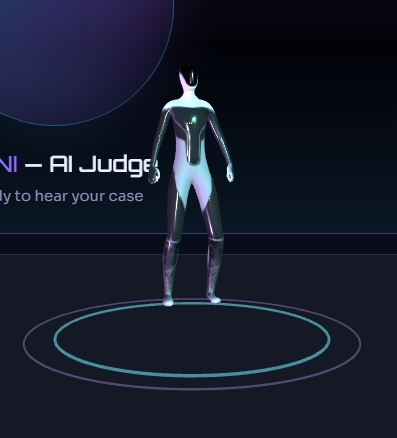
Our next goal is to introduce a fully interactive 3D Voice AI Judge that users can speak with naturally, making legal conversations feel like talking to a real legal advisor. We also want to expand the Community AI Court with live voice discussions, smarter evidence analysis, witness verification, and collaborative dispute resolution.
We plan to support more legal document types, multiple languages, and country-specific legal knowledge so OMINI can help users around the world understand the laws that affect them.
In the future, OMINI will evolve into a complete AI Legal Operating System for students, businesses, governments, law firms, and everyday citizens—giving anyone, anywhere, access to understandable legal guidance and helping create a world where everyone knows their rights before they need a lawyer.

Log in or sign up for Devpost to join the conversation.