🎧 Omi Mi:Coach – Your Real-Time AI Voice Coach
What if growth happened in the moment — not after the fact?
✨ Inspiration
This project was born from a simple frustration: self-improvement tools only help after the moment has passed.
You forget how you felt. You don’t reflect honestly.
And most importantly — they can’t help you in real time, when the emotion or problem is actually happening.
We asked ourselves:
What would it feel like to have a coach that doesn't wait for you to journal, but steps in quietly, kindly — while you’re still in the moment?
That idea became Omi Mi:Coach — a real-time AI that listens to your day, understands how you're doing, and gently speaks to you through your earphones with short, supportive guidance.
Imagine:
- You’re giving a pitch and rushing your words
- Or doubting yourself before a task
- Or losing focus mid-afternoon
Suddenly, a calm voice says:
"Slow down. You’re doing great. One step at a time."
No screen. No typing. Just presence.
That’s the power we wanted to build.
🛠️ How We Built It
We built Mi:Coach as a React Native mobile app using Expo and custom native configurations.
- Audio Input: We capture spoken moments in the background using real-time microphone access and transcription.
- Live Processing: Each phrase is transcribed and analyzed for:
- Filler words (like "um", "uh")
- Stress or emotional tone
- Negative thought loops
- Fast or inconsistent speech pace
- Coaching Logic: Based on those triggers, we generate or select one of many short, pre-written coaching tips.
- Voice Output: Tips are spoken through the user’s earphones using natural voice clips (generated with a high-quality TTS engine and stored locally).
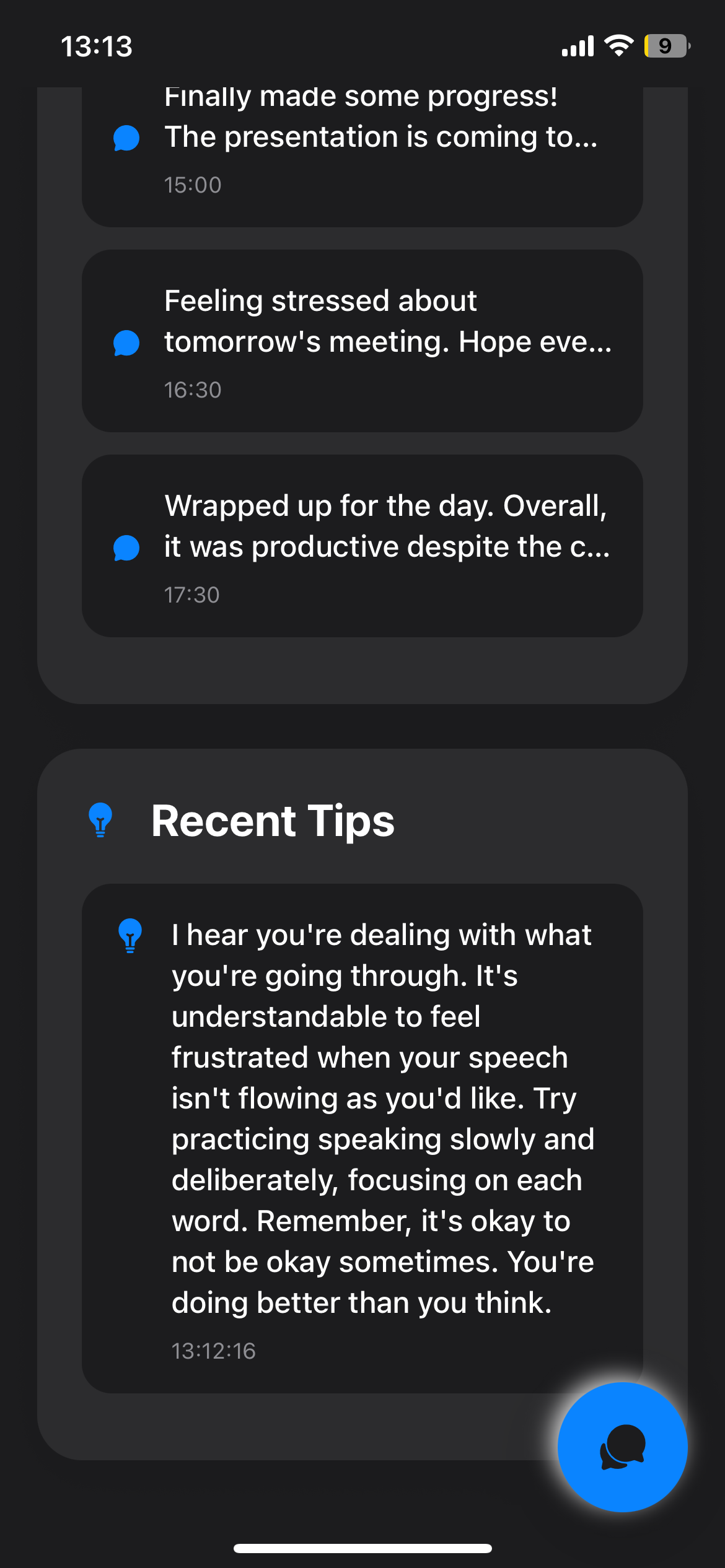
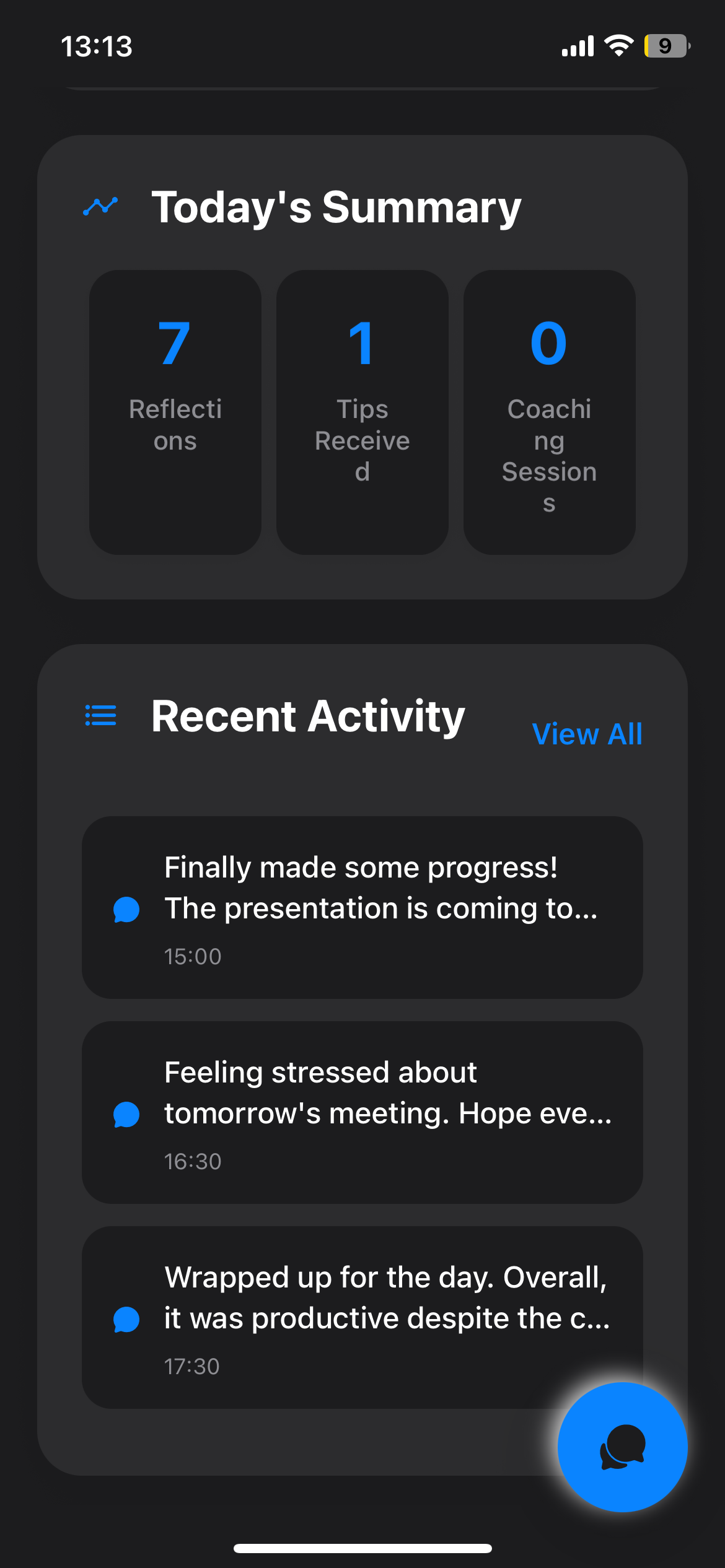
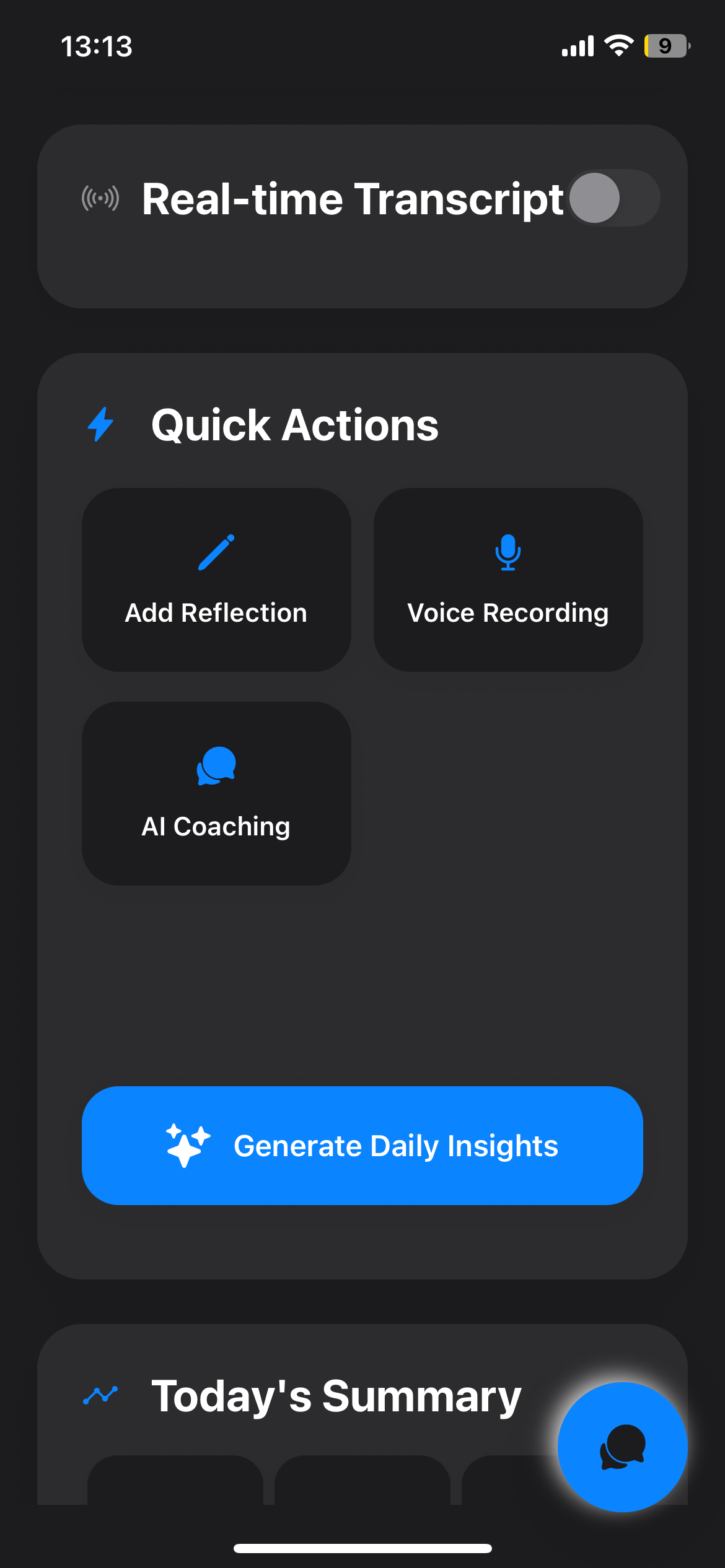
- UX: The app stays out of the way — a simple toggle turns on “Live Coaching Mode.” At the end of the day, the user can view a brief reflection.
🚧 Challenges We Faced
- Background audio: Recording while the app is inactive on iOS/Android required us to go beyond Expo Go and use native permissions and audio sessions.
- Latency: Delivering feedback fast enough that it feels live — without cutting off or being jarring — was a balancing act.
- Tone + trust: It’s easy for AI feedback to feel robotic or nagging. We had to design our voice responses very carefully to feel human, gentle, and safe.
- Privacy: Building a system that listens to you requires responsibility. We prioritized privacy-first design and avoided long-term storage of any audio data.
📚 What We Learned
- People don’t always want “smart assistants” — they want kind, quiet support in the background.
- Real-time feedback requires empathy: the timing, tone, and length of each message mattered more than the complexity of the AI behind it.
- Sometimes, the simplest guidance is the most powerful — “Breathe,” “You’re okay,” “Take a pause” — those tiny nudges create real change.
🚀 What’s Next
- Add mood-adaptive coaching styles (motivational, mindful, direct)
- Let users train their own voice coach based on tone, goals, and habits
- Explore offline-first versions for private, on-device use
- Launch a presentation mode — AI feedback for public speaking prep
- Build a dashboard for long-term trends and personal growth insights
💭 Final Thoughts
Omi Mi:Coach isn’t an assistant you talk to — it’s one that listens.
And in a world full of noise, distraction, and emotional pressure, sometimes all we need is a gentle voice in our ear that reminds us:
“You’ve got this.”


Log in or sign up for Devpost to join the conversation.