Inspiration
From the outset, we wanted to create a game centered around predicting the future. When we started thinking more about the actual mechanics, one of us mentioned prediction markets, and we were all sold on the idea.
What it does
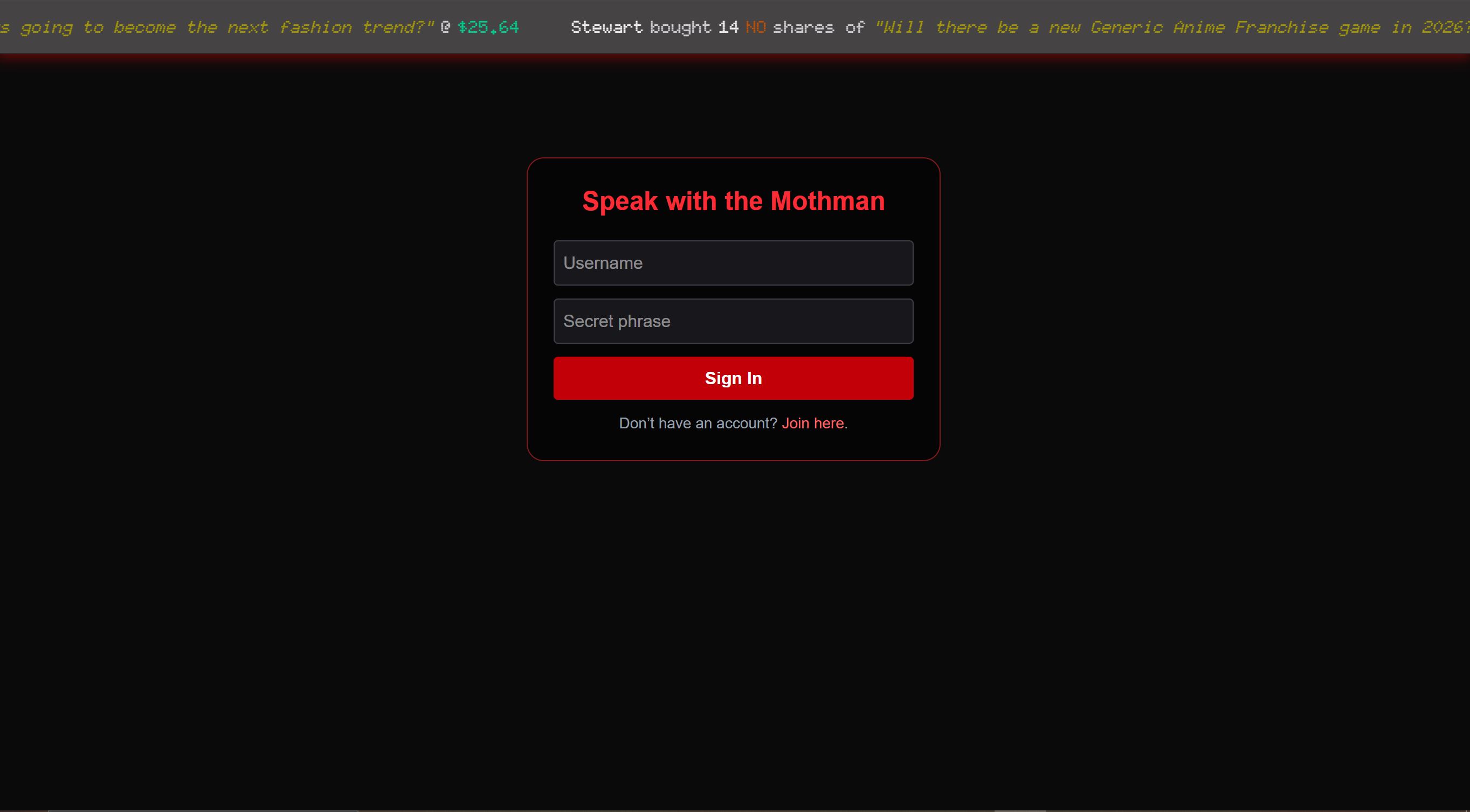
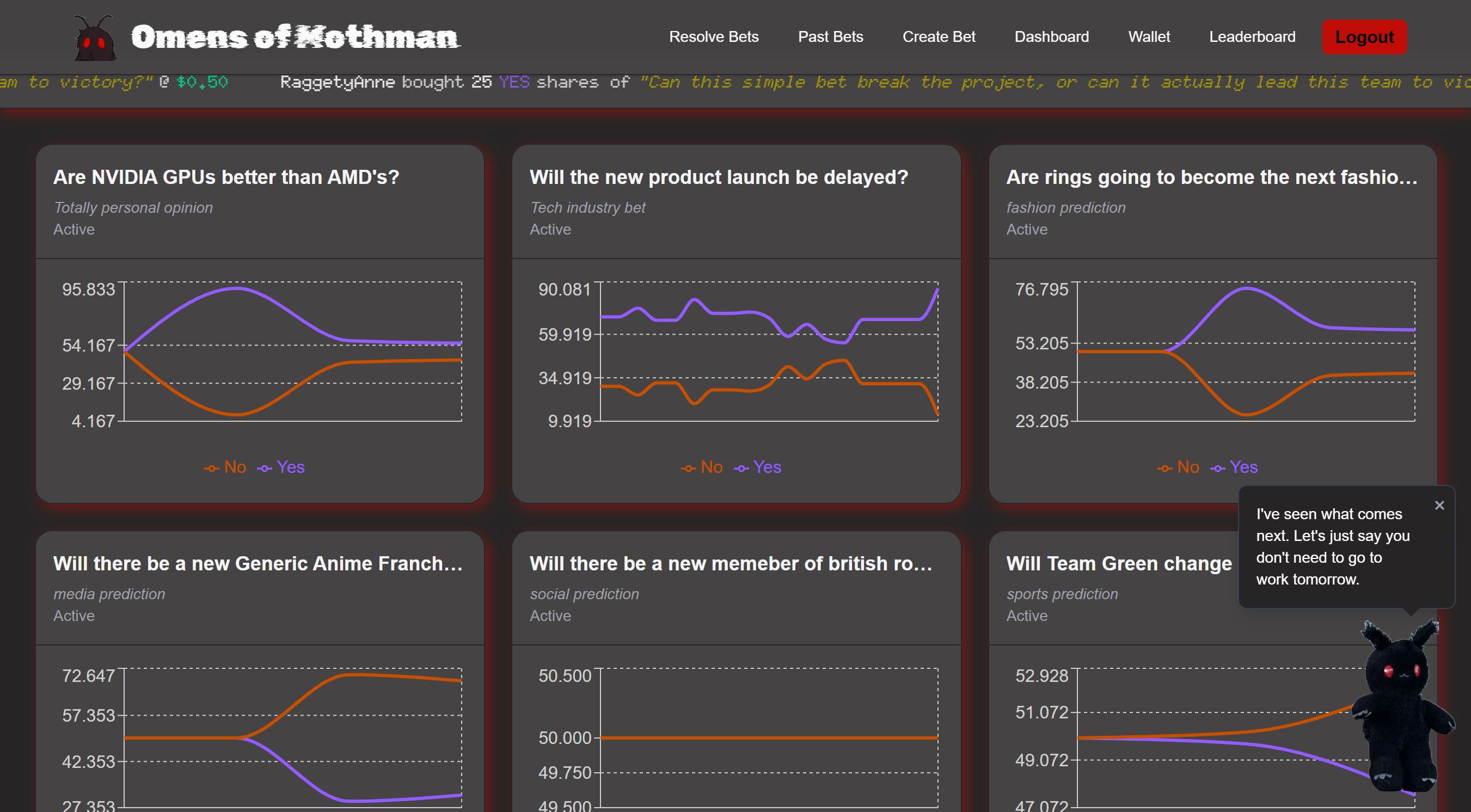
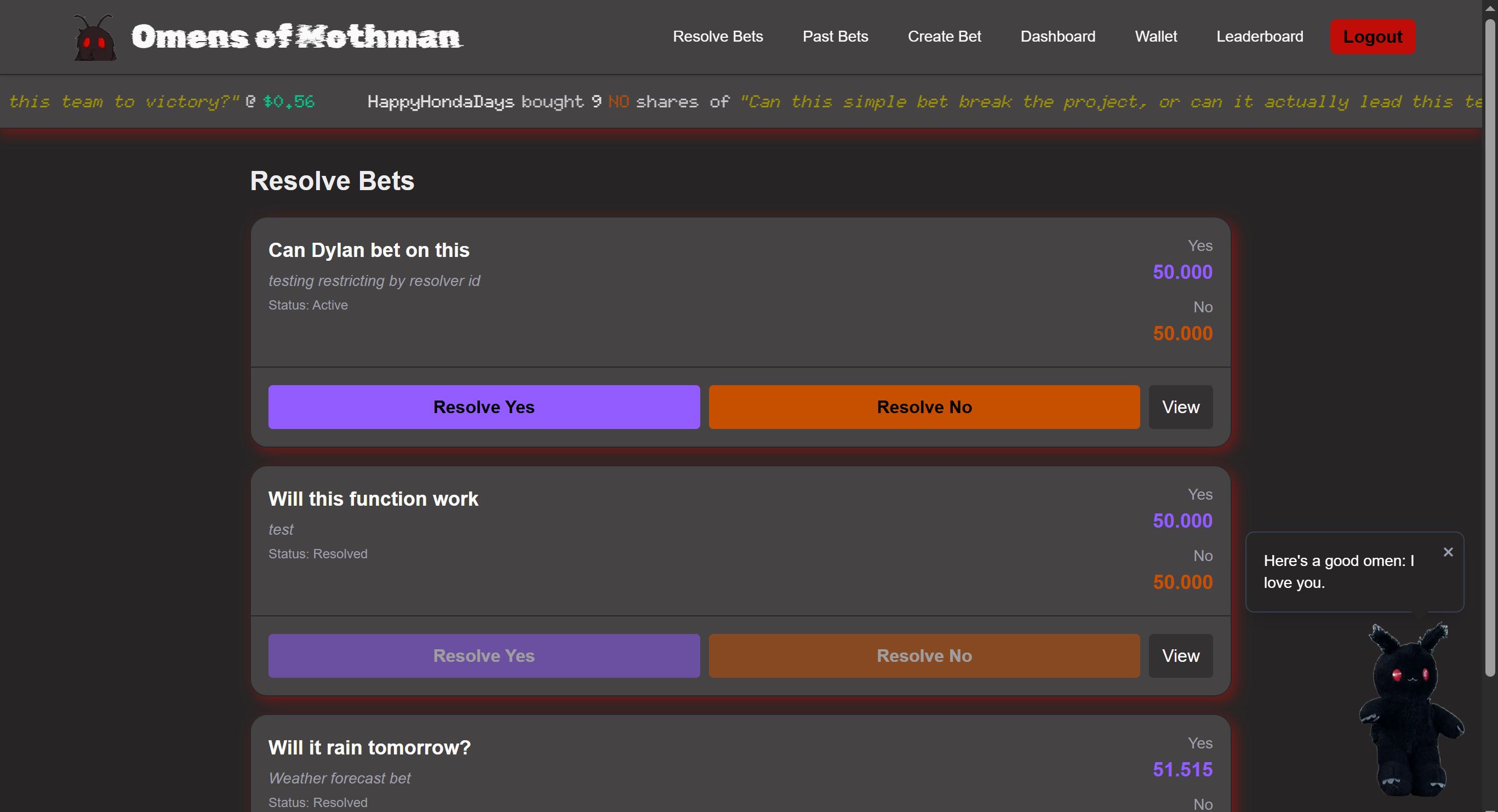
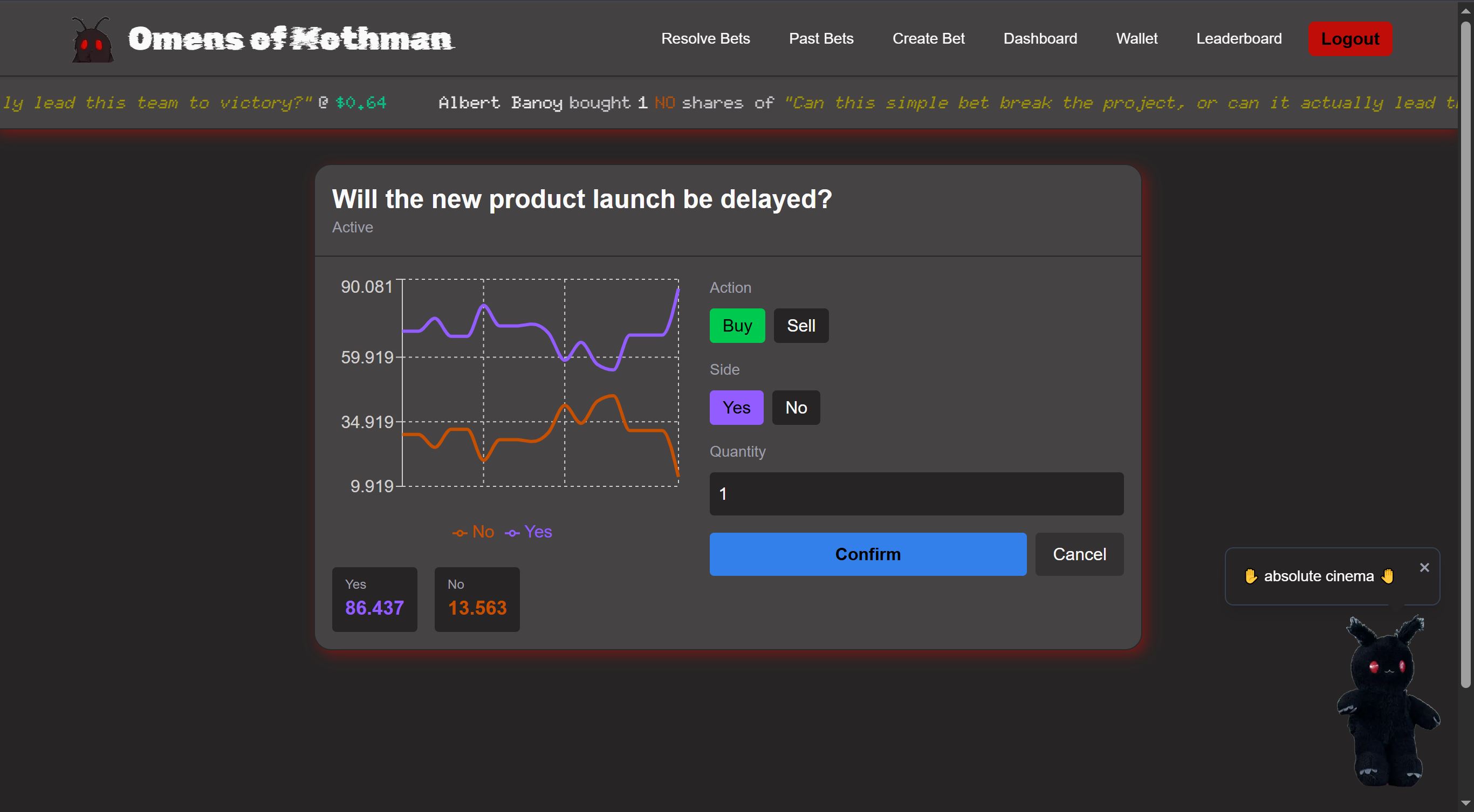
The game immerses players in a dynamic prediction market, where they can buy "Yes" and "No" possibilities of any event occurring. We calculate movements within the market pricing depending on how many of either "yes" or "no" of each bet is sold, and then lets the user buy at that current price. For resolving bets, it gets passed to the user whom is designated the resolver for it, who at any point, can resolve the bet to the yes or no outcome, triggering the payout for all who predicted the currect side.
How we built it
We built the game using the Next.js framework, utilizing HTML, CSS, Typescript and Javascript to code the game, and used Supabase as our DBMS.
Challenges we ran into
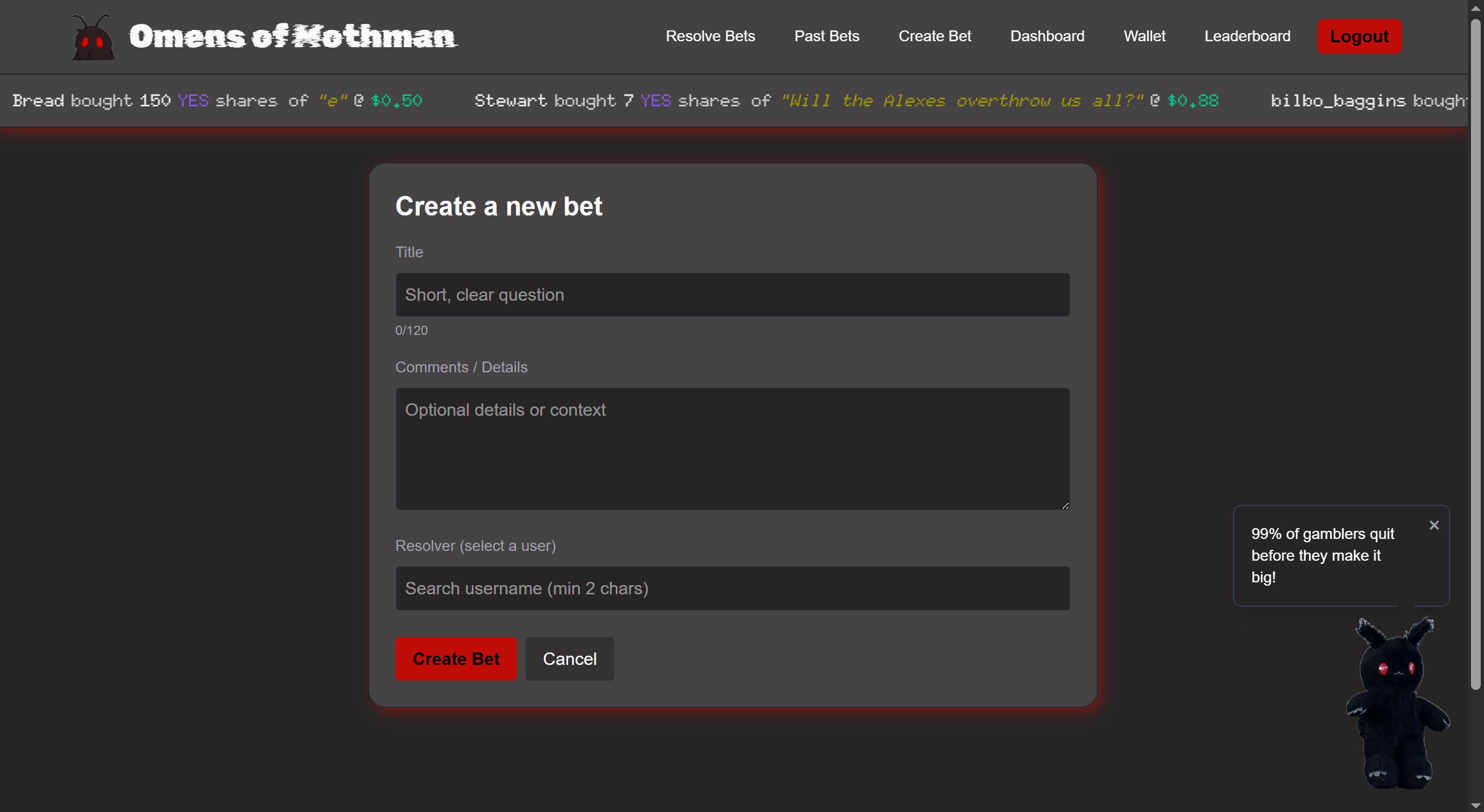
We ran into several challenges throughout this process. One of our biggest errors was with our pricing algorithm being too sensitive and allowing one user to flood the zone and drive up the price almost infinitely high. Another issue that occurred, is that as we did not have a character limit on bet titles, it could have up to 11 thousand characters, and when that occurred it caused our project to freeze. Finally, we were having an error that when hard refreshing, it signed the user out of the page, which we fixed by redirecting the user to login after a hard refresh.
Accomplishments that we're proud of
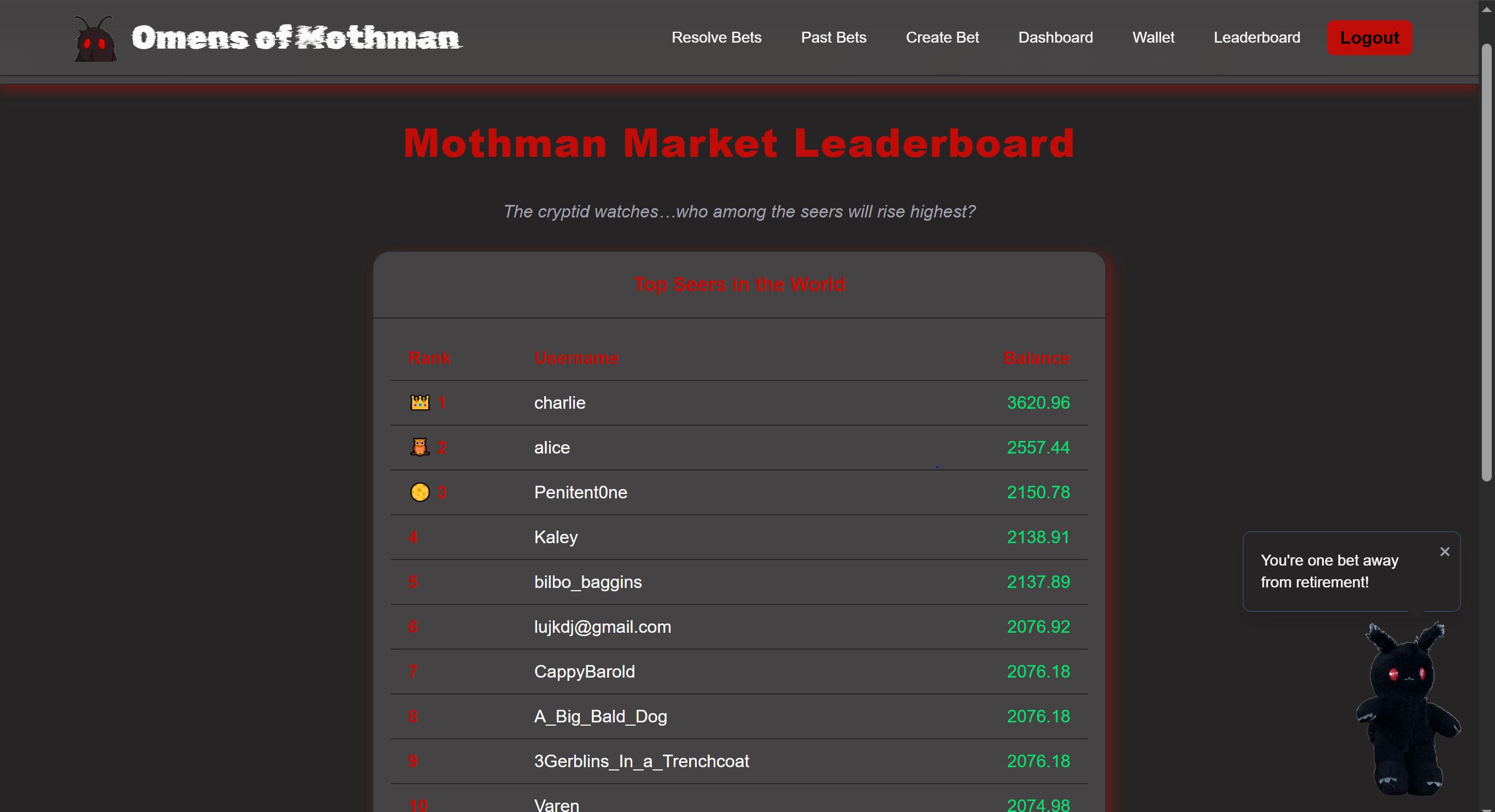
We are very proud in our great theming and intuitive UI that we developed, in addition to creating a somewhat balanced prediction market economy.
What's next for Omens of Mothman
We are considering the possibility to slowly roll out additional updates for the game, adding new content that we wanted to implement but did not have enough time for.
Built With
- css
- html
- javascript
- next
- postgresql
- supabase
- typescript
- vercel


Log in or sign up for Devpost to join the conversation.