Inspiration
Tarot has always been less about predicting the future and more about telling a story about yourself. A reading is a quiet ritual: you ask a question, shuffle, draw, and slowly a narrative appears. Flat screens never captured that ritual for me — tapping a button to "draw a card" feels like nothing. In VR, you can actually hold the deck, feel the shuffle, and watch a card turn over in front of you under a dark sky.
I wanted to build a tarot night that respects the ritual and fits into a short, seated moment: put on the headset, ask one question, and walk away a few minutes later with a story that feels personal.
What it does
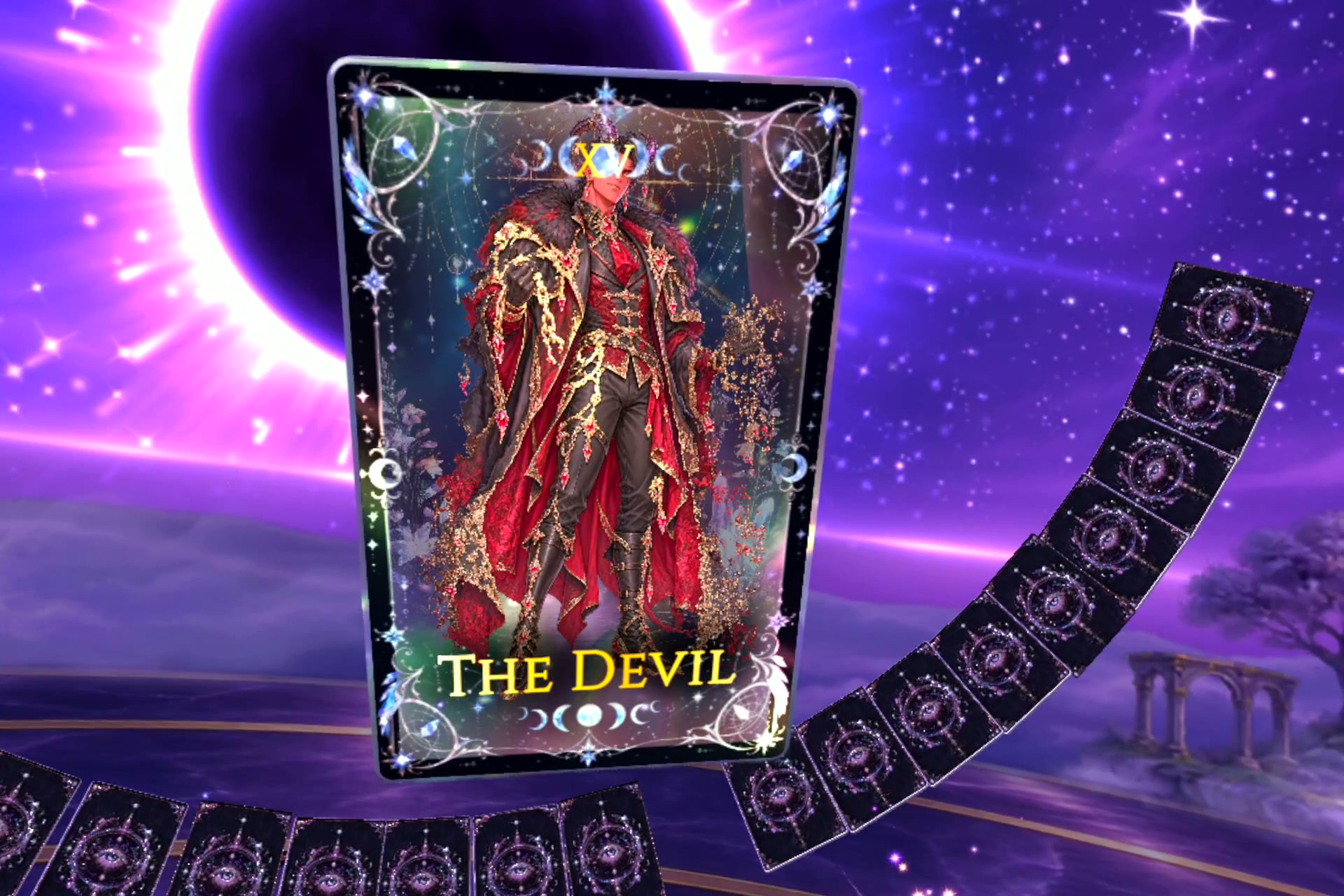
Omenglass: A Tarot Night takes place beneath a solar eclipse, at a table floating in a violet sky.
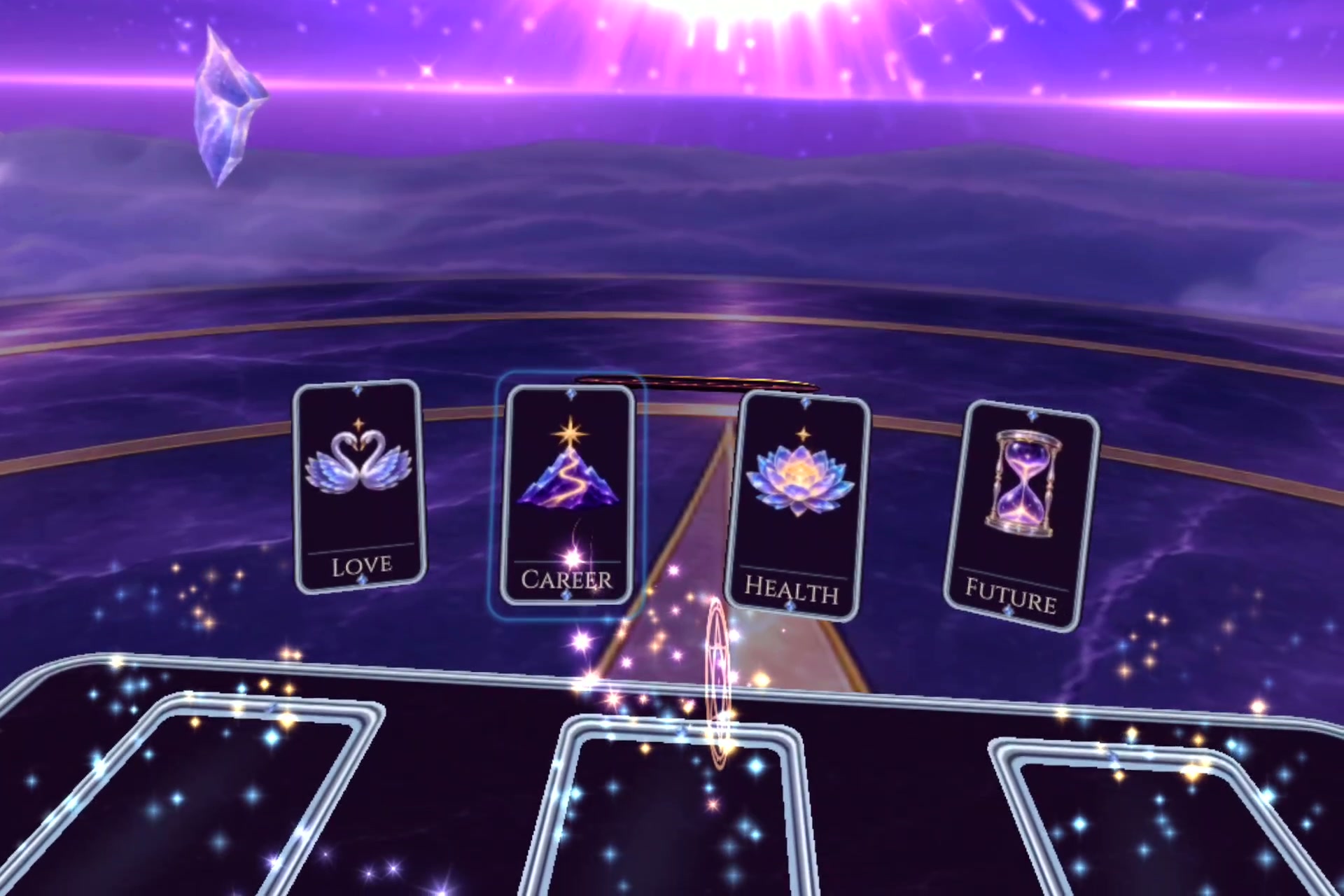
- Choose a theme – Love, Career, Health or Future – and pick one question to ask the cards.
- Summon and shuffle the deck with your hands, then draw from a sweeping arc of cards.
- Reveal three Major Arcana cards – your Past, your Present and your Future. Each reveal is staged as a moment: the card flips, light flares, and the music answers.
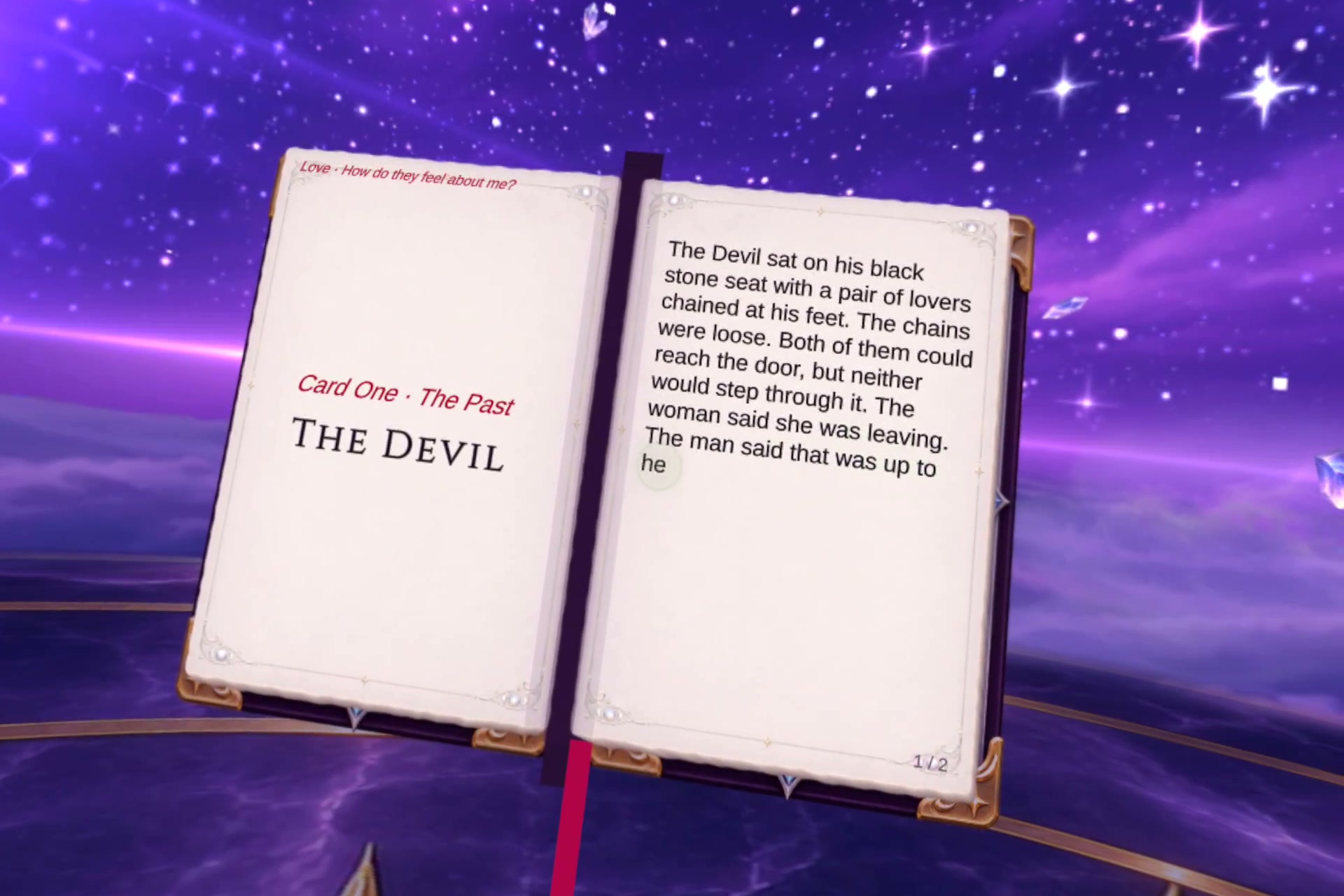
- Read your fate as a storybook. Each card opens a chapter of an illustrated book. Between chapters you make choices on the table, and every choice rewrites how the story continues.
- Get one answer. When all three cards are down, the book closes the story with a summary of your reading.
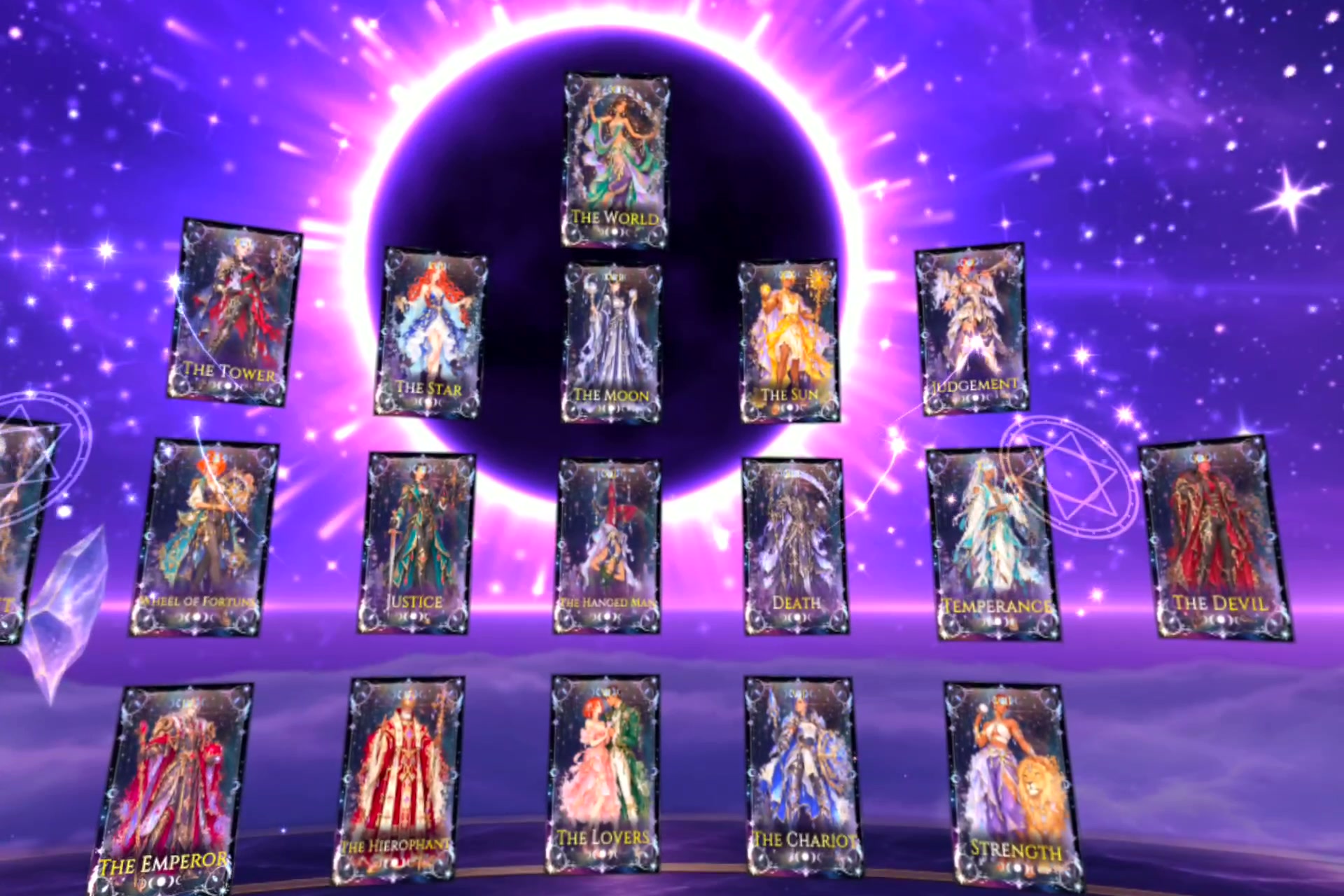
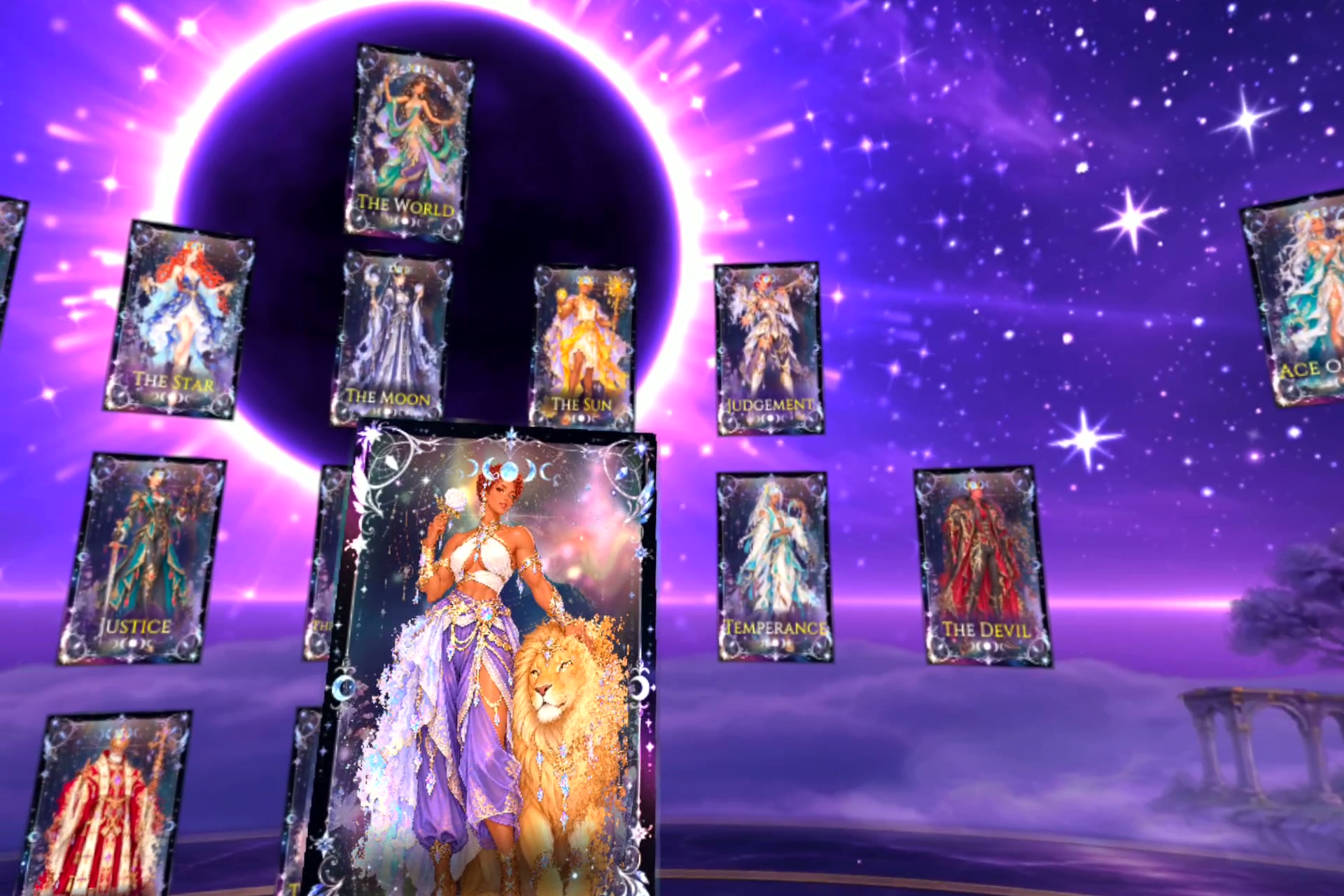
- Explore the Major Arcana gallery, where every card you have met floats around the eclipse.
A full reading takes only a few minutes, works seated, and is designed to be played entirely with hand tracking.
How I built it
- Engine: Unity, targeting Meta Quest, using Meta XR SDK / Interaction SDK – version for hand tracking and hand interactions (grab, poke, pinch).
- Hands-first interaction: the deck, the cards, the choice tiles and the storybook are all physical objects you grab, flip and touch, so no controller is needed. Confirm: the whole flow can be completed with hands only.
- Narrative system: each Major Arcana card has story chapters for each theme and position (Past / Present / Future). The choices you make are fed into the following chapters, so the same three cards can produce different stories.
- Adaptive music: a small music director plays layered loops in sync – a calm "hall" layer while you explore and a more intense "draw" layer during the shuffle and reveals – and crossfades between them. Reveal stingers duck the music so every card has its own beat.
- Art: the eclipse environment, UI and card frames were built in Unity. Disclose honestly, e.g.: "The card illustrations were created with AI image tools and then curated and edited by me to fit a consistent art direction."
- Performance: e.g. baked lighting, texture atlasing, particle budgets to hold a stable frame rate on Quest hardware.
Challenges
- Making a card reveal feel magical without text walls. I iterated on timing, light, particles and sound until a single flip carried the moment by itself.
- Hand tracking reliability. Grabbing thin, flat cards with tracked hands is harder than with controllers. I tuned grab volumes, snapping and feedback so cards feel easy to pick up while seated.
- Branching stories that stay coherent. With many cards, themes and choices, keeping each story readable and consistent was a writing challenge as much as a technical one.
- Keeping a session short. A reading had to deliver a complete emotional arc in a few minutes – the "one bus stop" test.
What I learned
- In VR, ritual and pacing matter more than features: a slow, well-staged reveal beats ten extra menus.
- Hands-first design forces clarity. If an interaction needs explaining, it usually needs redesigning.
- Audio does a huge share of the storytelling. Layered, reactive music made the experience feel alive.
What's next
- More spreads (single-card daily reading, Celtic Cross) and the Minor Arcana.
- A daily reading ritual with a journal of past readings, so players have a reason to come back.
- Gaze-assisted interactions and accessibility options (larger text, high-contrast mode, seated-only comfort settings).
Target launch: Q2 2027 on the Meta Horizon Store.


