-
-
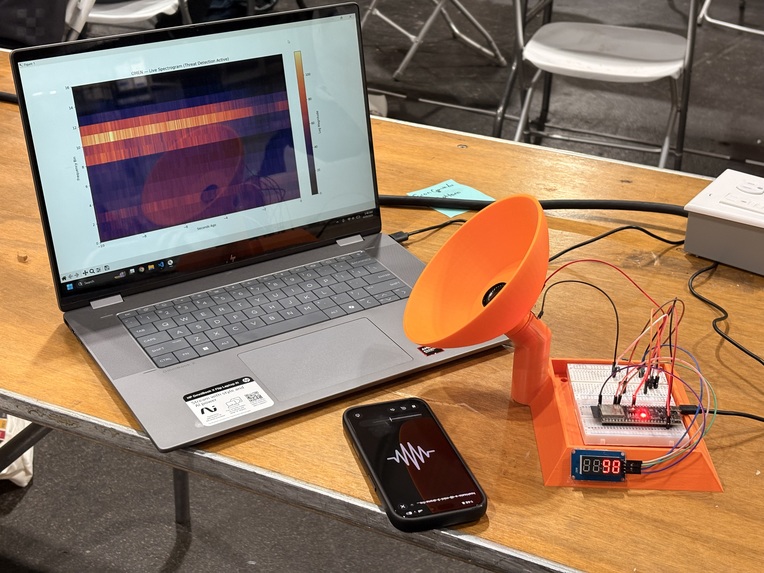
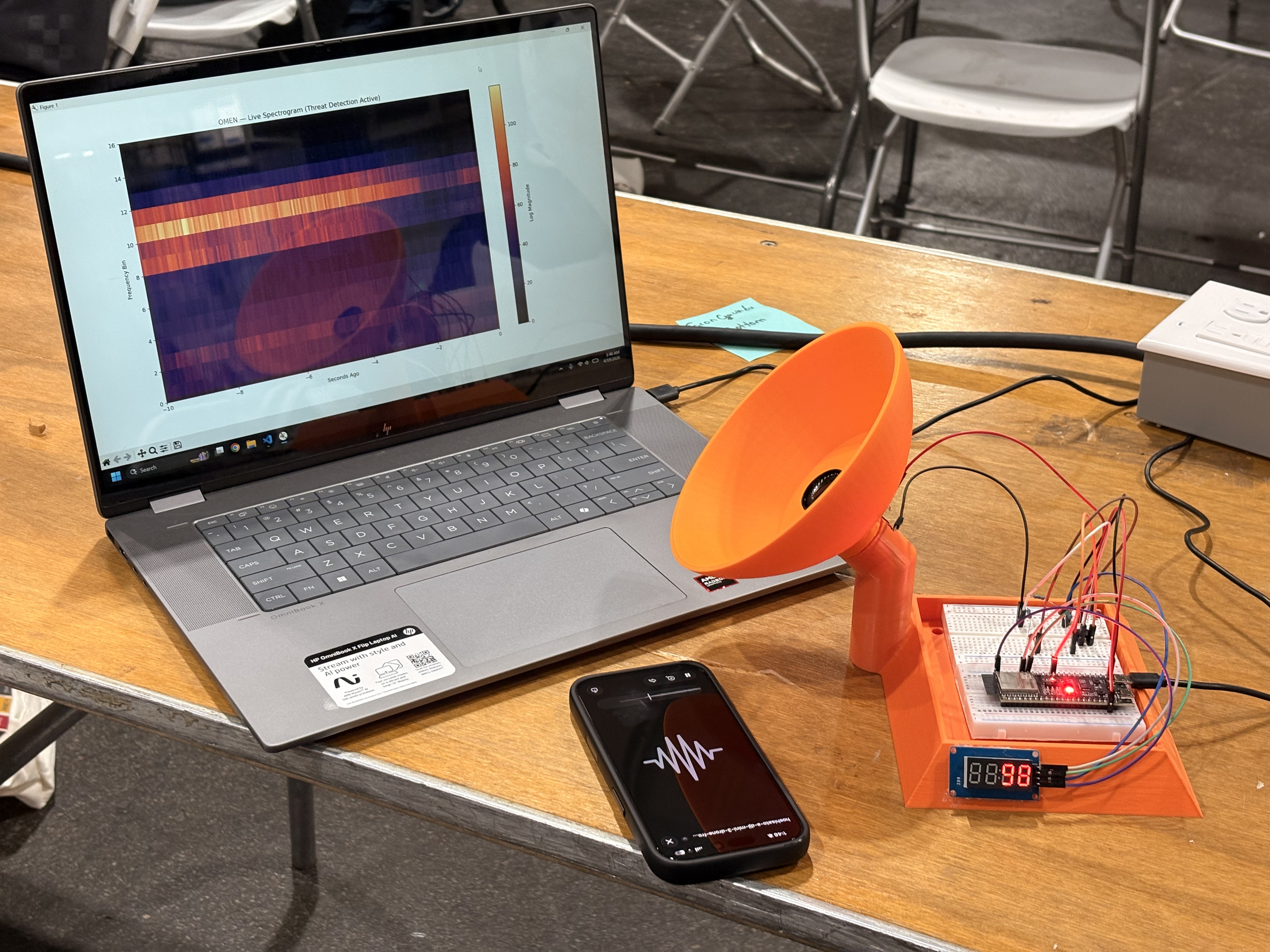
Drone Detector and Display Reacting to Drone Audio
-
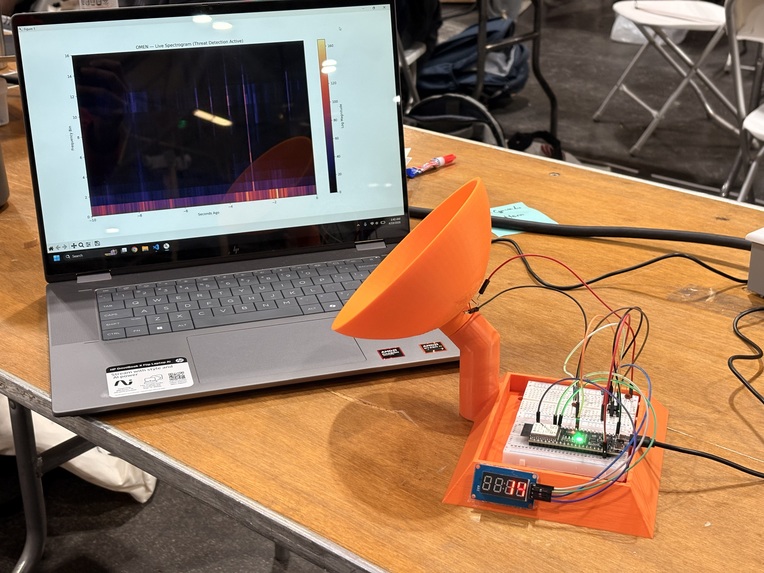
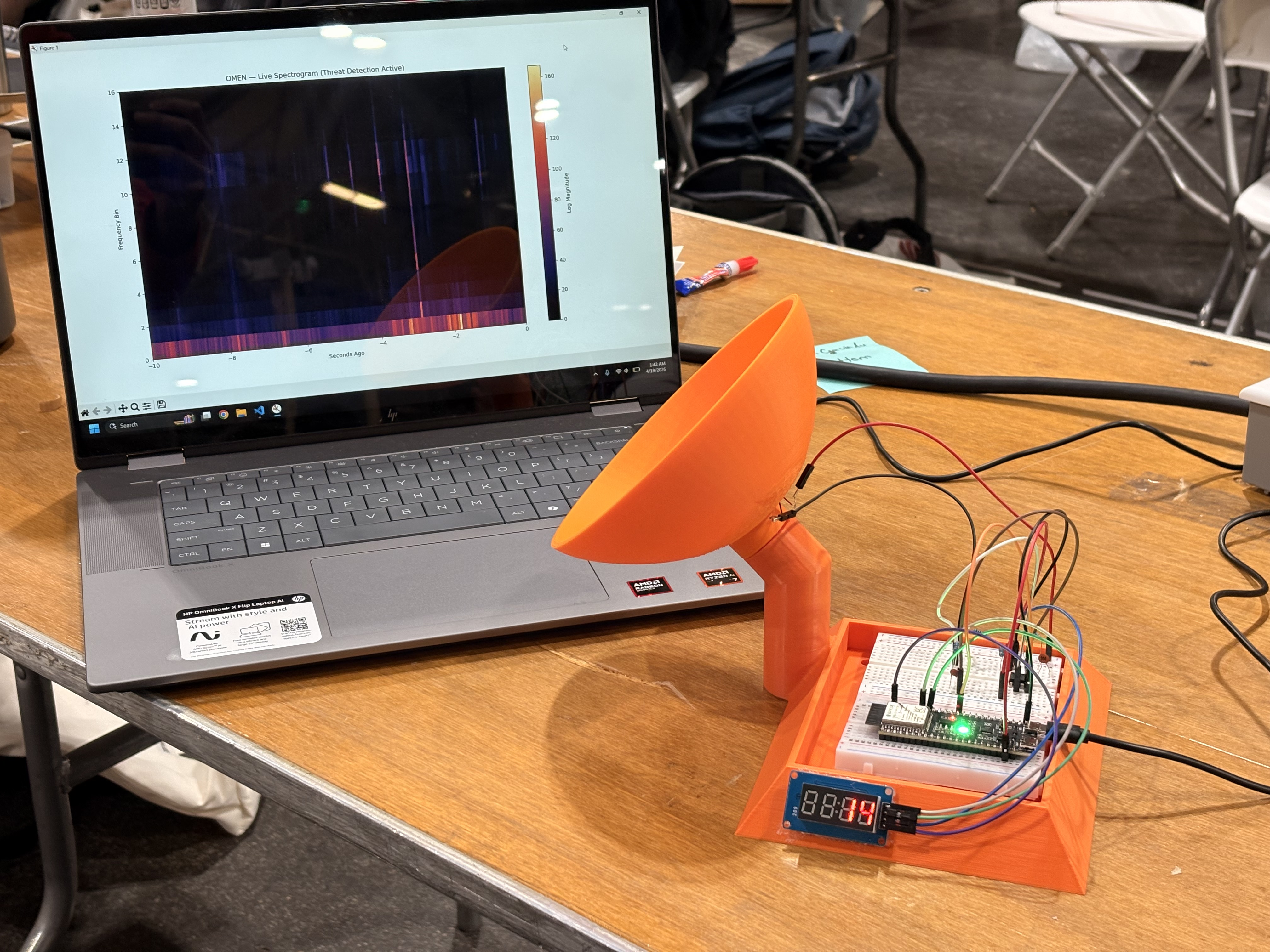
Drone Detector with Laptop Spectograph Display
-
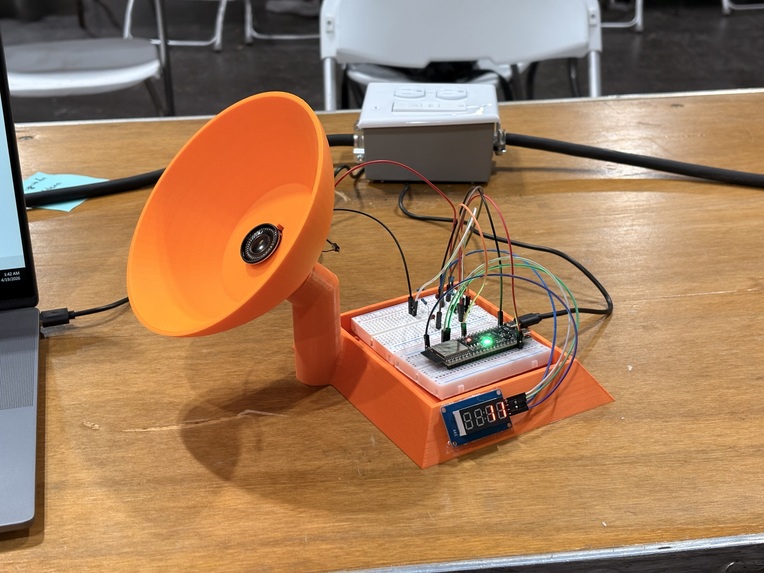
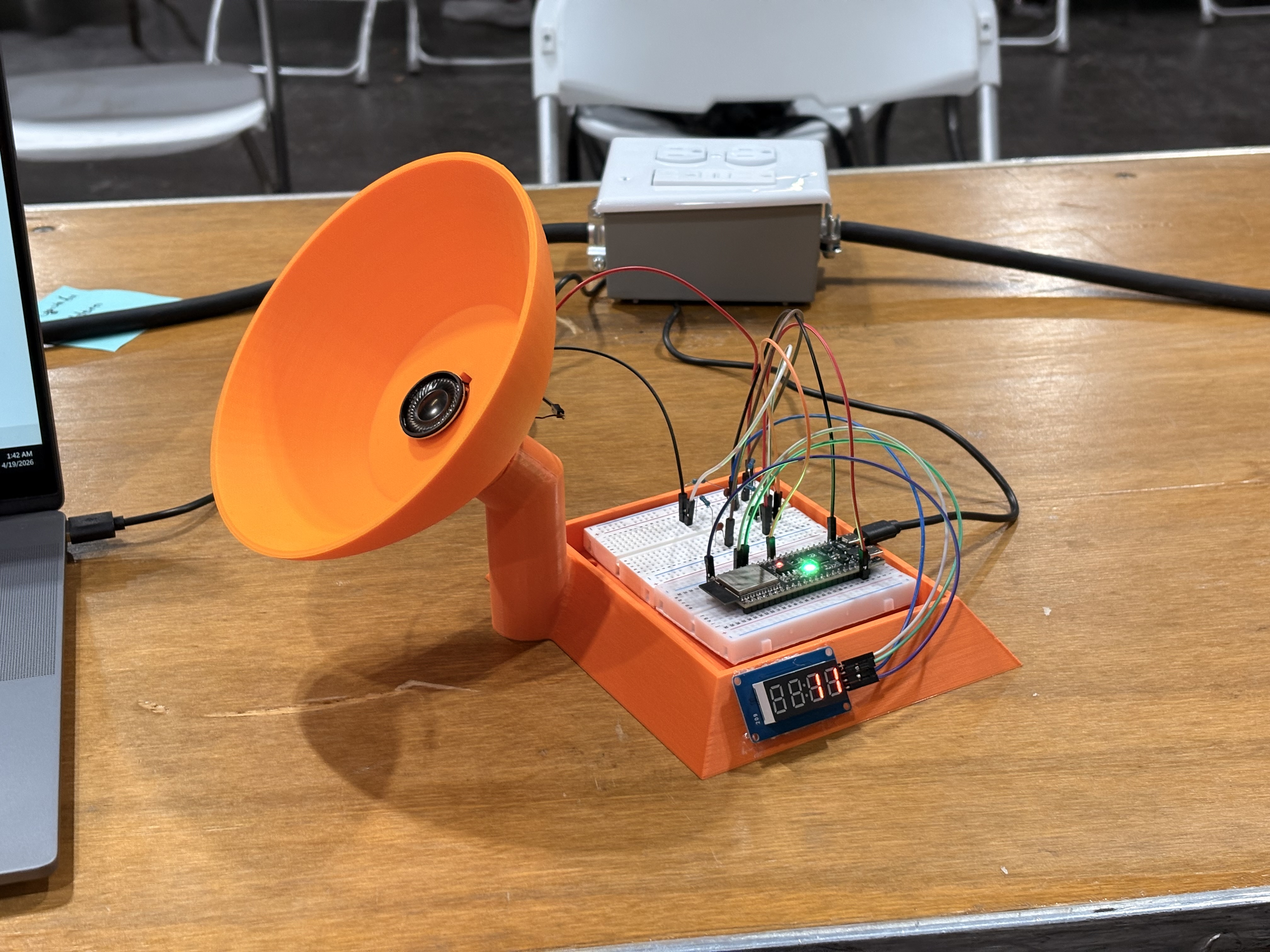
Drone Detector Electronics with View of Microphone
-
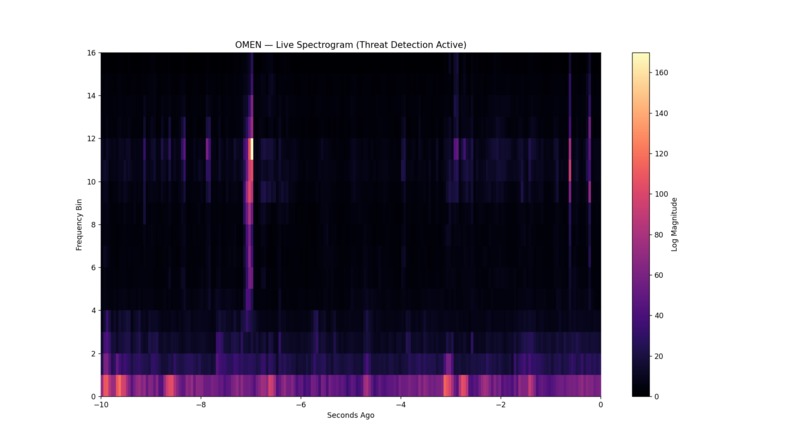
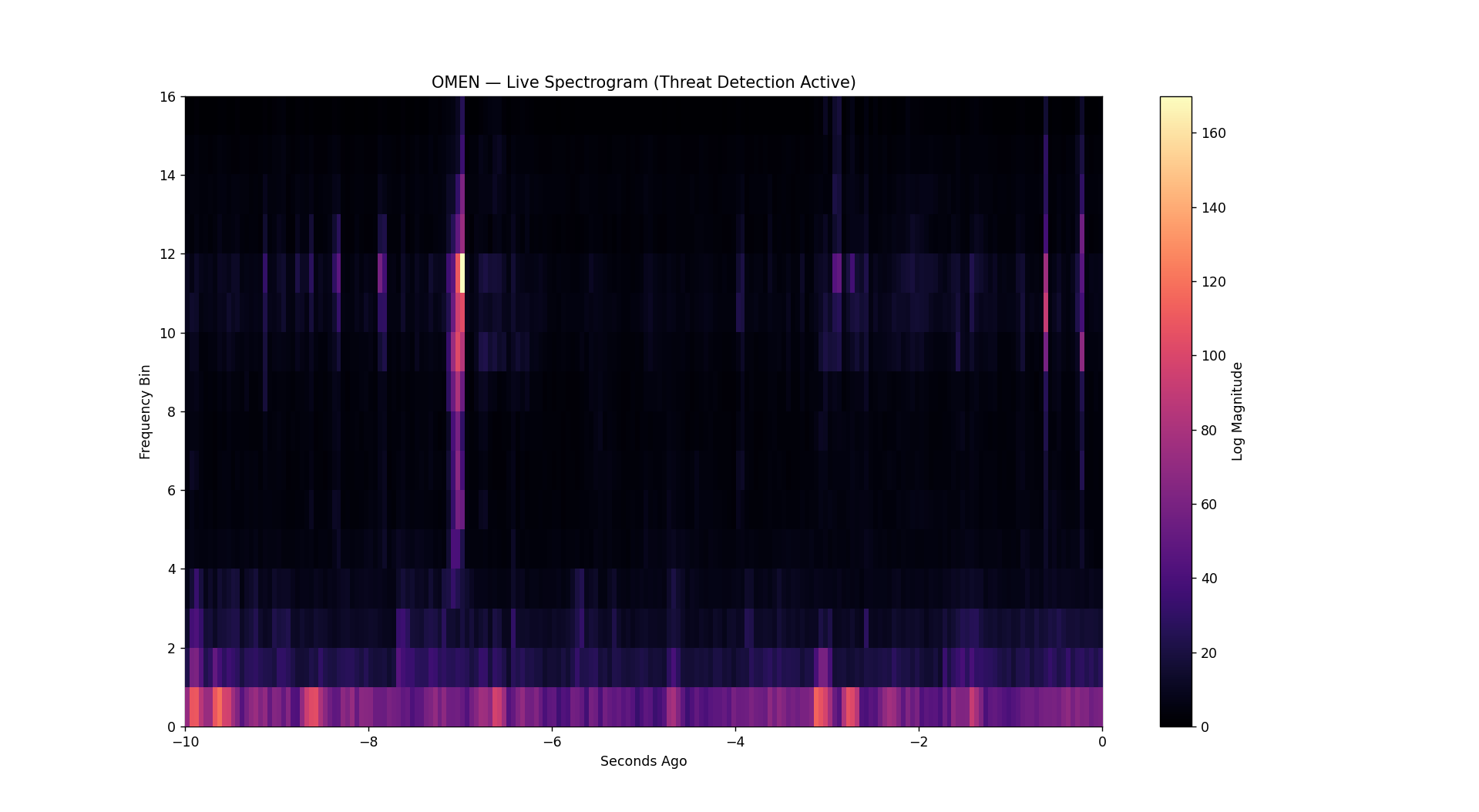
Optional Live Spectrograph of Frequency
The Problem
Drones are a massive threat to civilians in modern conflict zones, and the industry is only getting more violent. Millions of people suffer because of drone strikes and attacks they never see coming. Most people would turn to radar as a solution, but jets like the F-22 have radar cross-sections the size of insects, so actual drones are practically invisible to civilian radar. Because radar wasn't an option, we pivoted to audio detection to give people affordable, advanced warning to take cover from drones.
The Hardware
We kept this project focused entirely on functionality and affordability for war-struck regions. The total hardware cost was roughly $25, with the ESP32 development board being the most expensive piece, which could easily be swapped for cheaper hardware later. Makeshift Mic: We built a microphone from scratch using the acoustic properties of a magnetic speaker. Parabolic Reflector: To increase range, we built a calculated parabolic noise cone and placed our makeshift mic exactly at the focal point, acting as a physical amplifier to capture the maximum amount of directional sound.
The Software
Live FFT: To run our model on minimal compute, the ESP32 performs a live Fast Fourier Transform on the incoming audio. This frequency analysis filters out background noise and isolates the specific frequency zones where drone propellers operate. Local Neural Network: That frequency data is fed into a specialized drone detection model trained on over 20,000 drone and "background" audio files. Running entirely on-device, the neural network calculates a real-time confidence percentage that a drone is nearby and displays it on the board. No internet, no cloud, no latency.
Challenges
Our biggest hurdle was fighting the limitations of our own hardware. Getting a clean signal out of a makeshift speaker-mic is genuinely difficult, and we spent significant time on signal processing to compensate. We were also close to a fully solar-powered setup but were missing a few components and couldn't get it across the finish line in time.
Next Steps
- Finish the solar and battery integration. The system is low enough power that it should be able to run indefinitely once complete, which is especially useful for places with limited/no power.
- Upgrade to professional acoustic hardware to drastically increase detection range.
- Build a rotating noise cone for 360-degree coverage.

Log in or sign up for Devpost to join the conversation.