Inspiration
In every company, there are people who know how things actually get done. The problem is that knowledge never exists in a usable form. It lives in the heads of experienced employees, scattered across videos, notebooks, PDFs, Slack messages, and habits built up over years.
We ran into this problem head-on while documenting operational procedures for small businesses. And every single time, the bottleneck was writing the SOPs. Filming the process takes two minutes. Turning it into clean, usable documentation takes hours.
So we asked ourselves a simple question:
What if recording the work was enough?
That's where ManualForge came from.
Instead of asking people to become technical writers, we let them do what they already know how to do: perform the task while explaining it out loud. AI then takes that demonstration and turns it into structured operational knowledge.
What we built
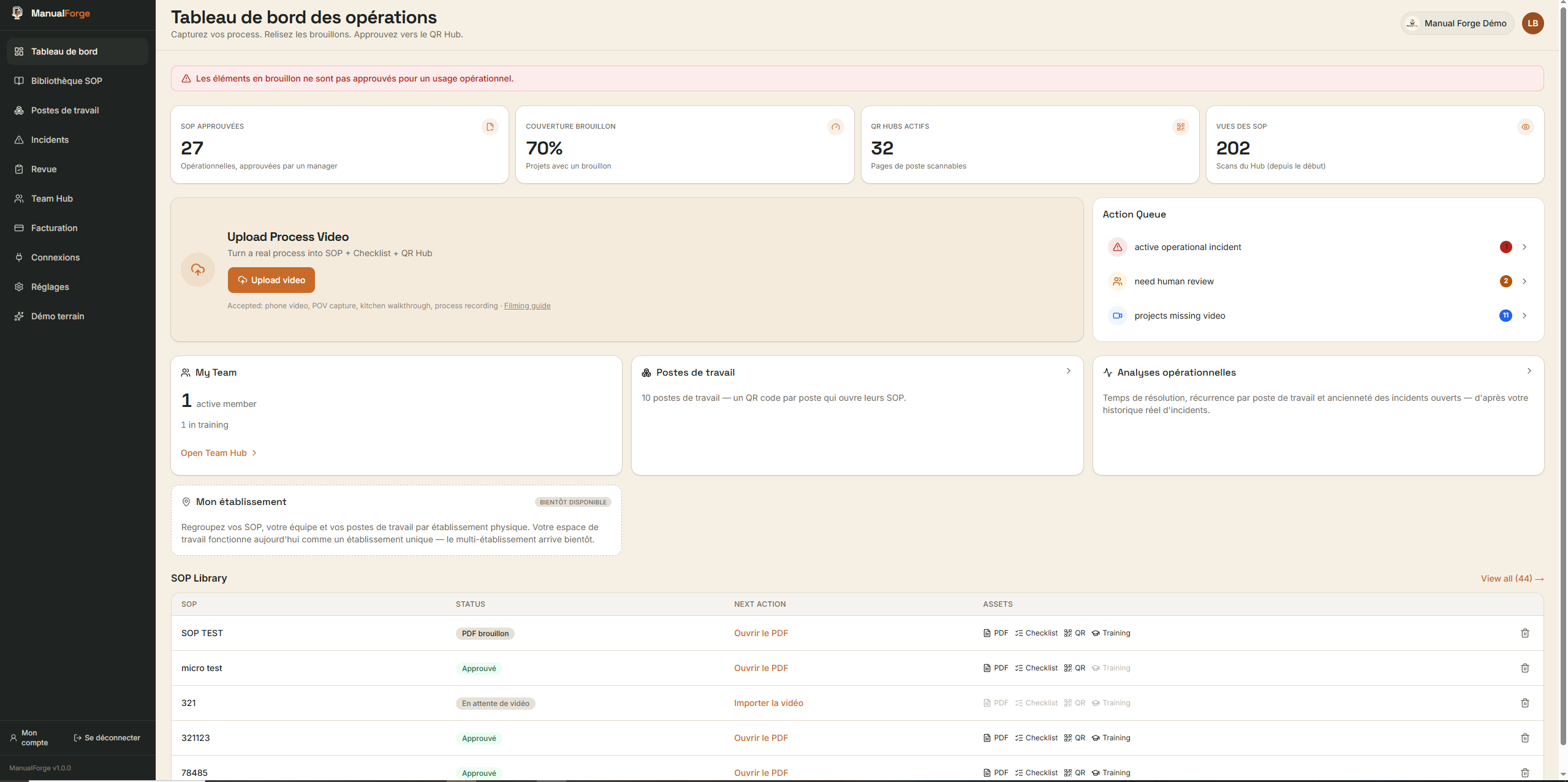
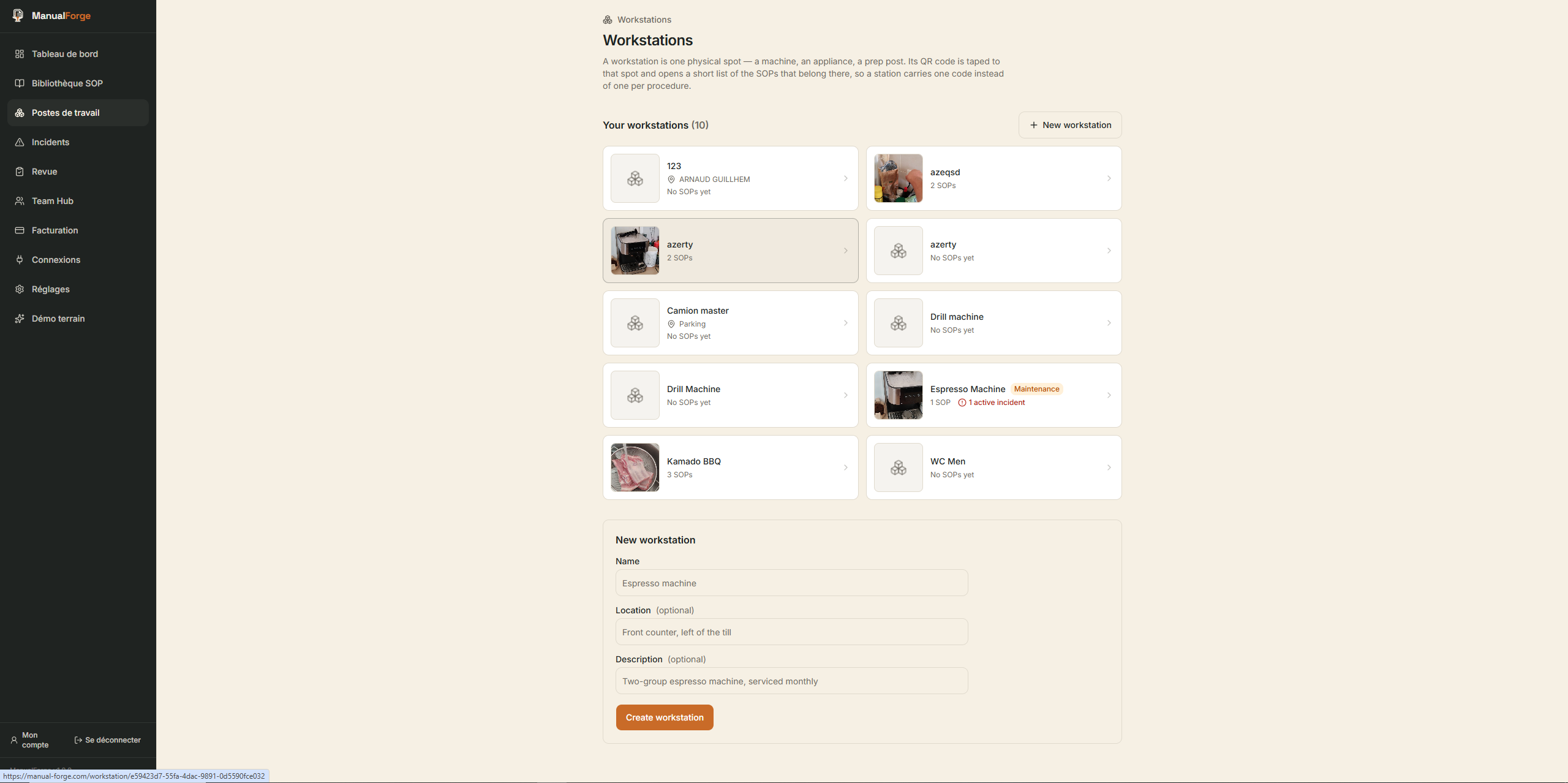
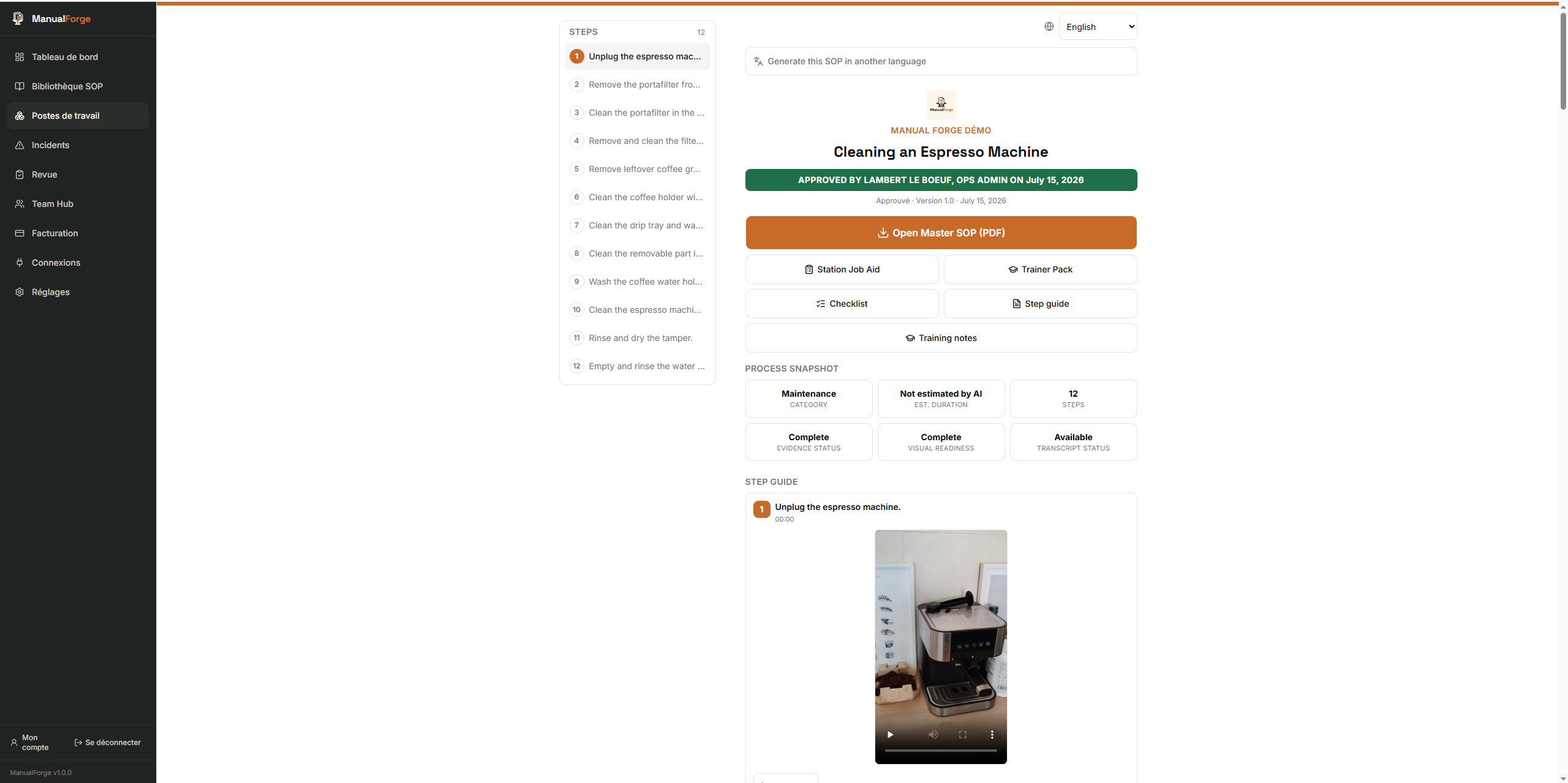
ManualForge turns a single process video into a full operational knowledge package.
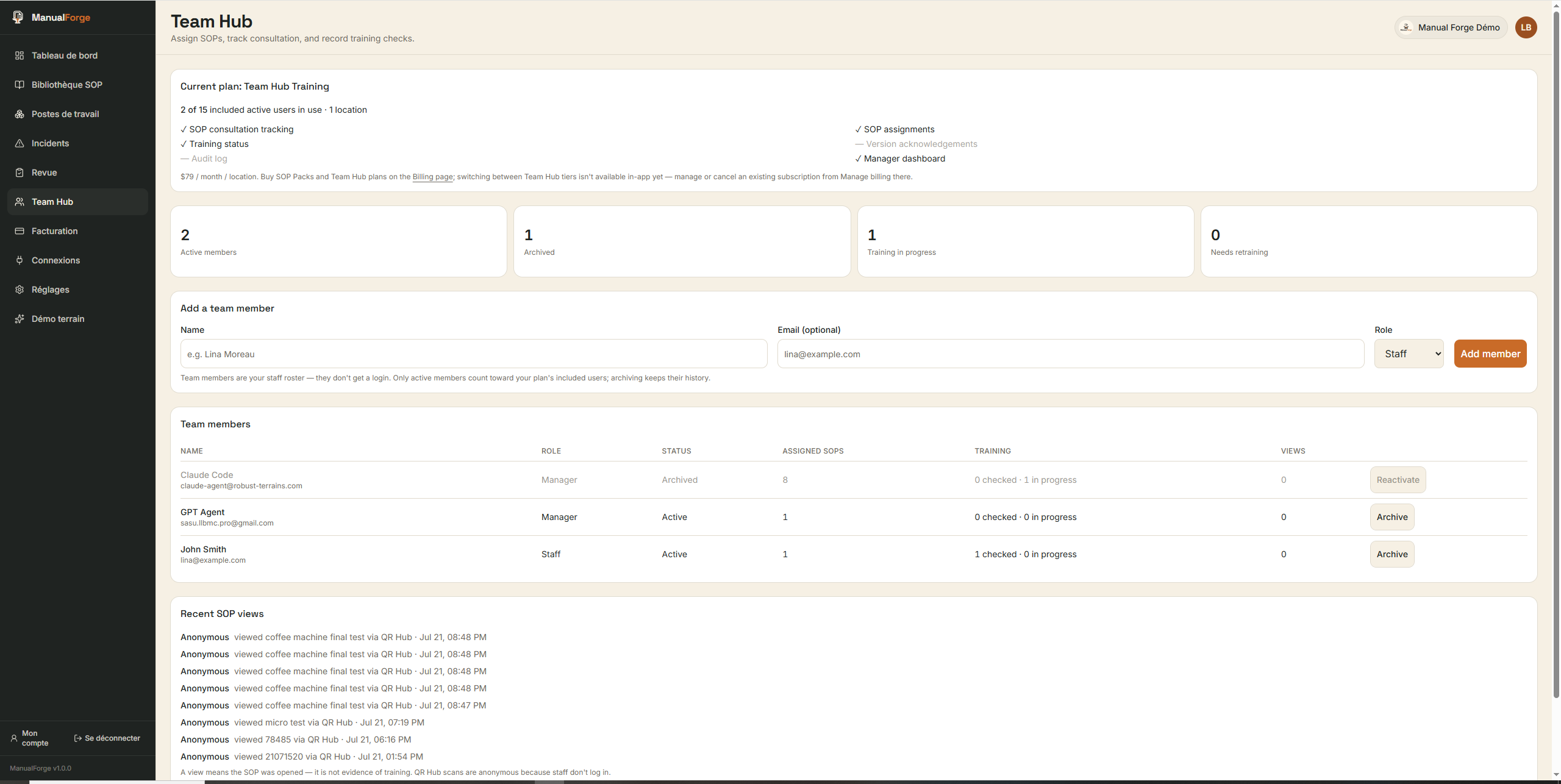
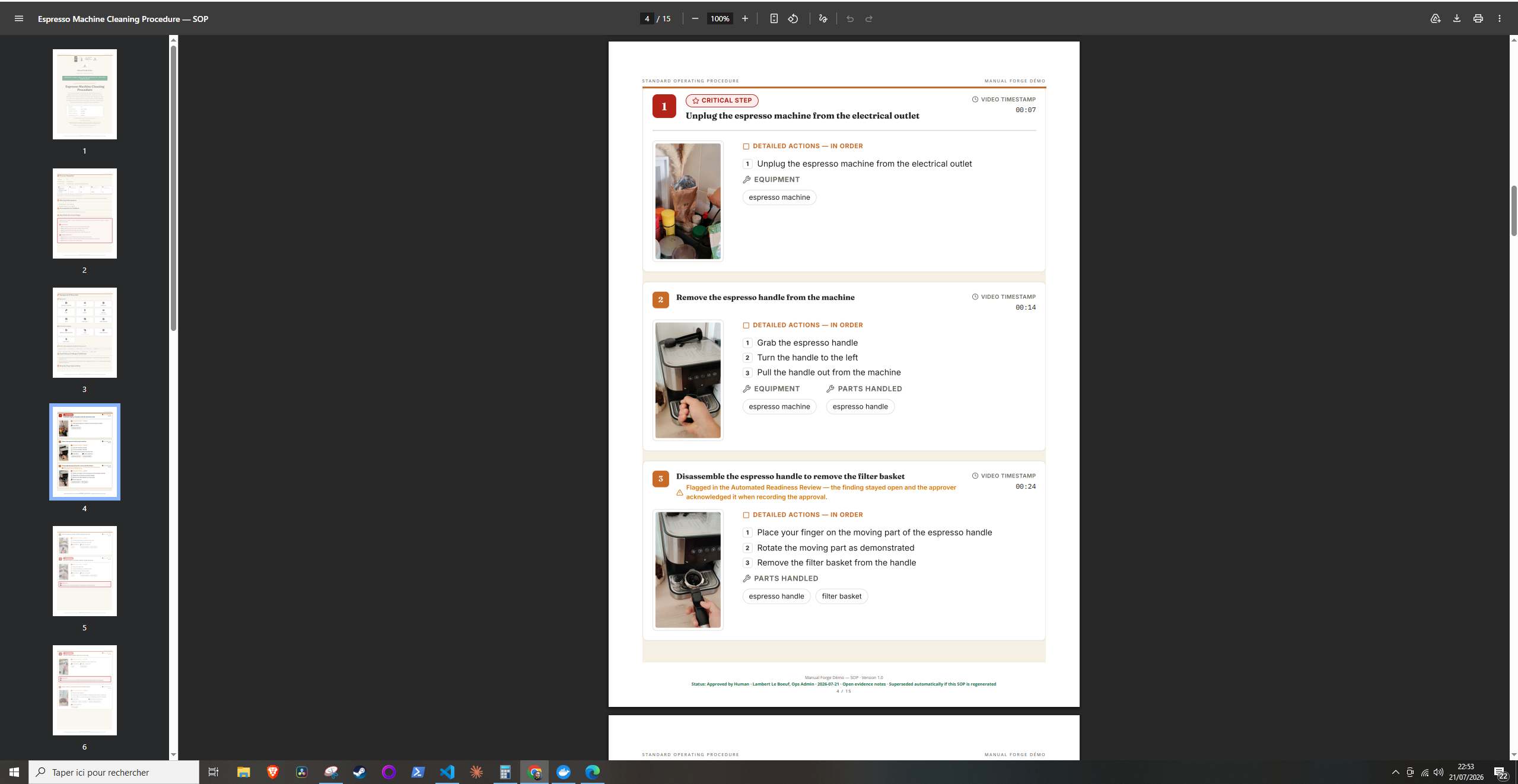
From one recording, the platform automatically generates:
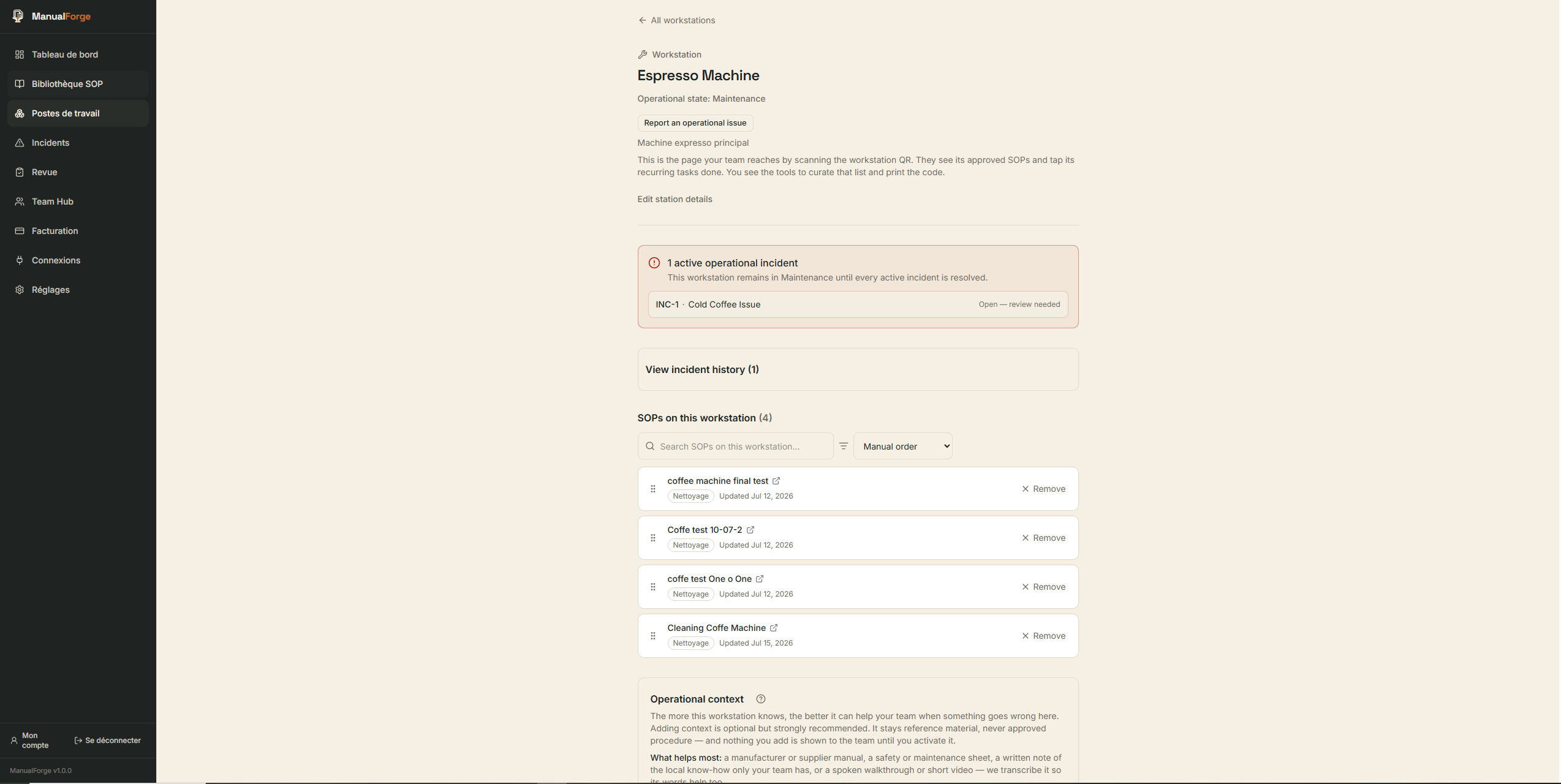
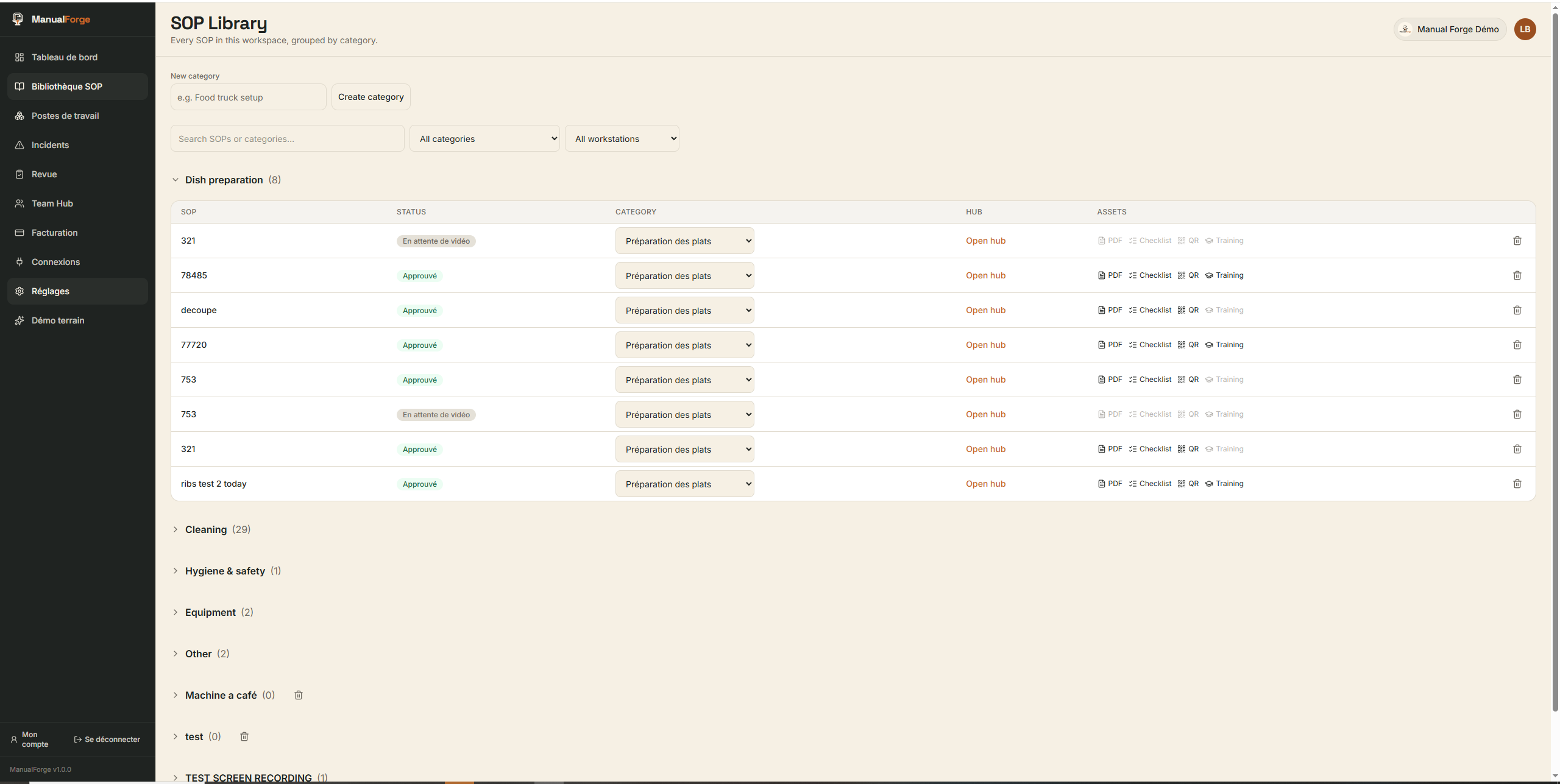
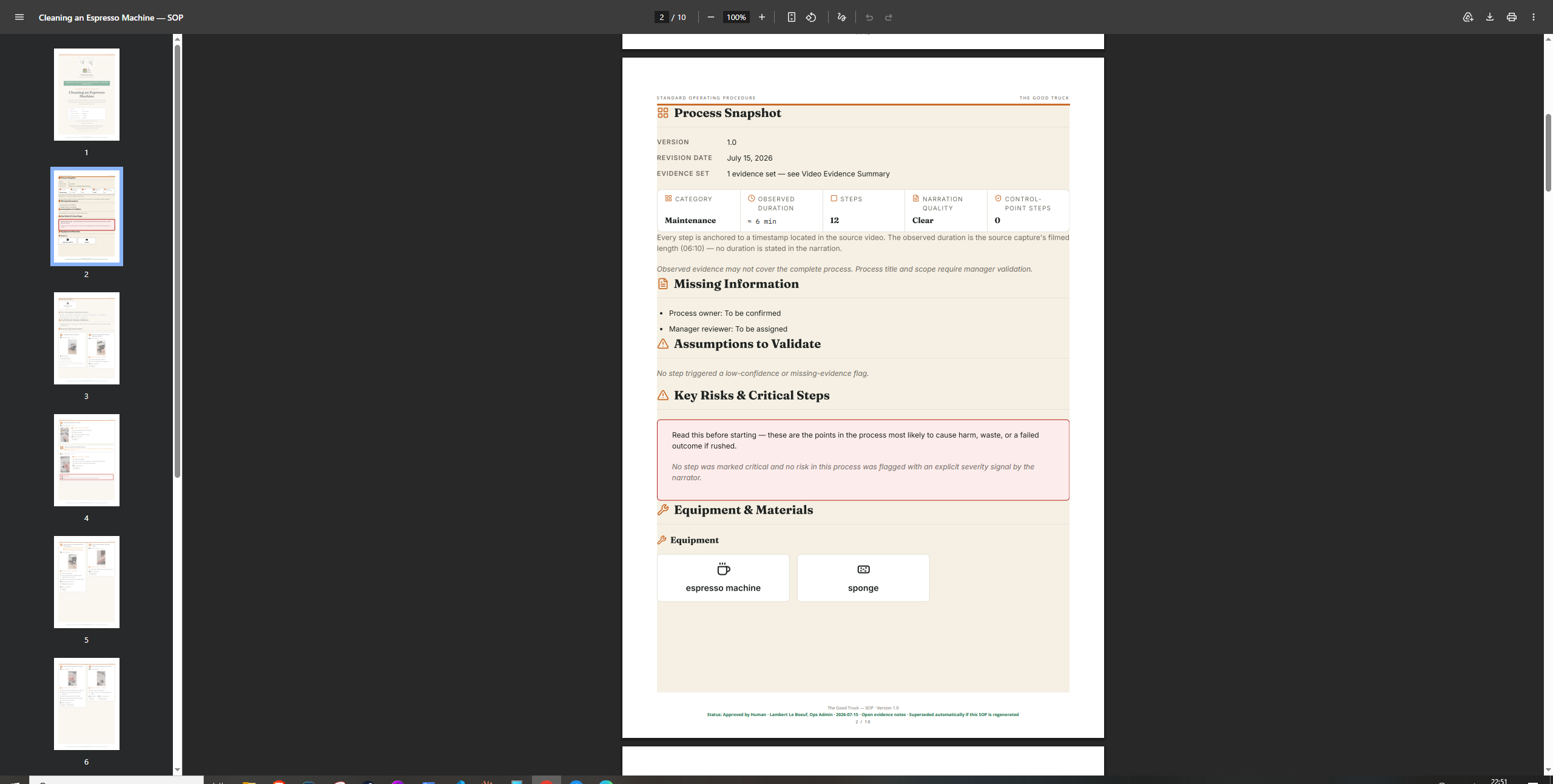
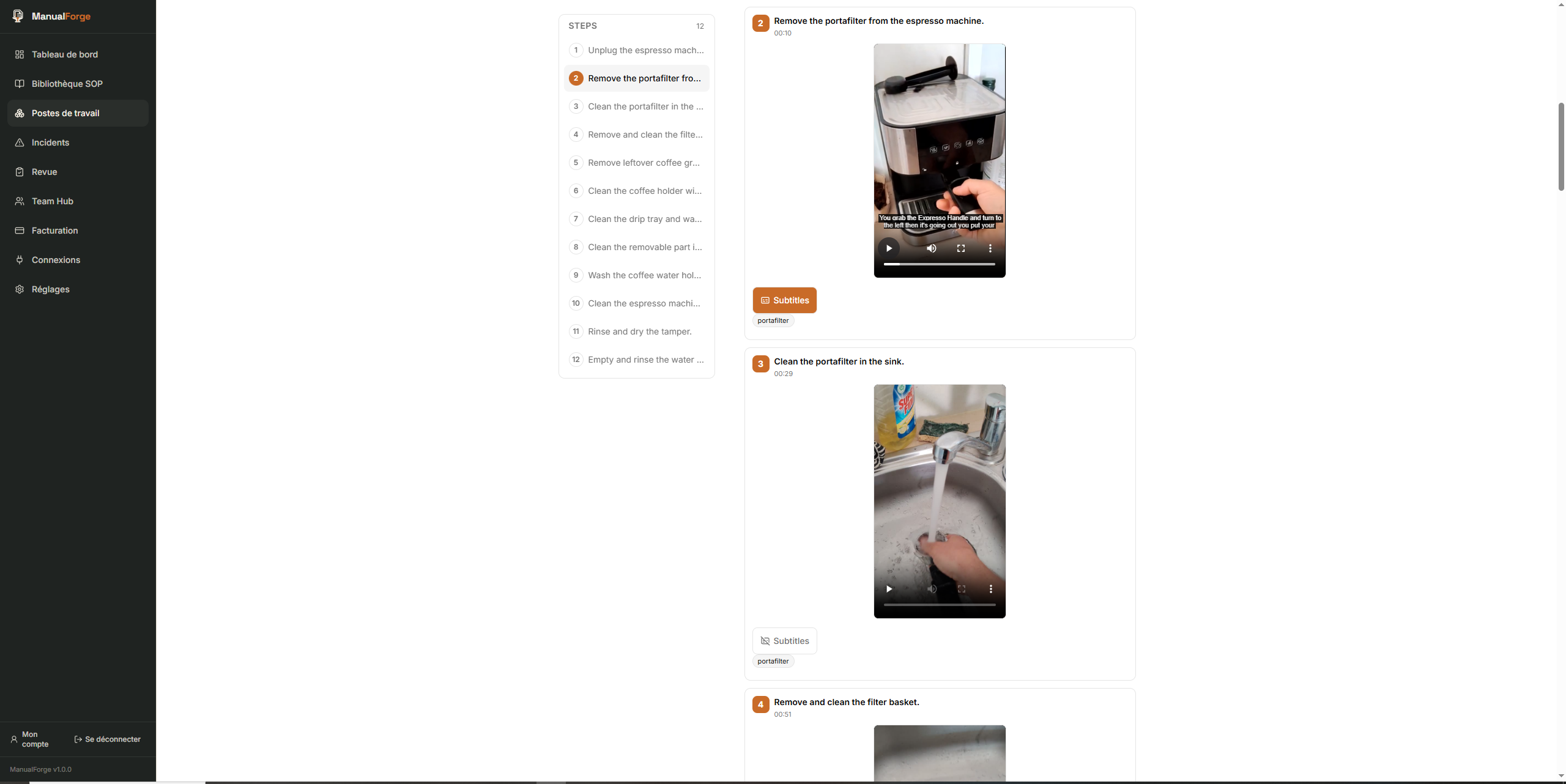
a professional SOP step-by-step screenshots a dynamic checklist training notes a QR-accessible knowledge page
The philosophy fits in one line:
Record once. Reuse forever.
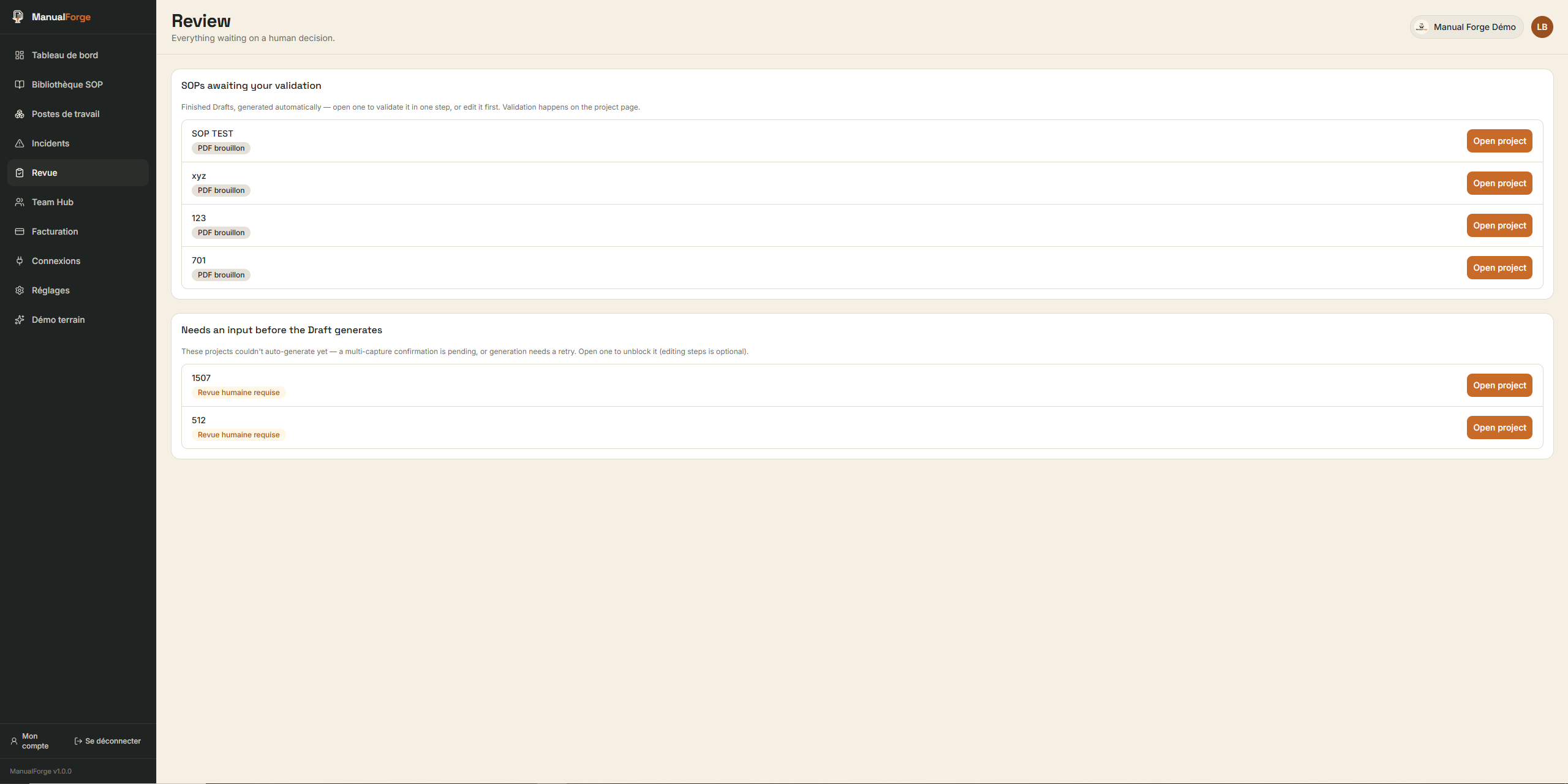
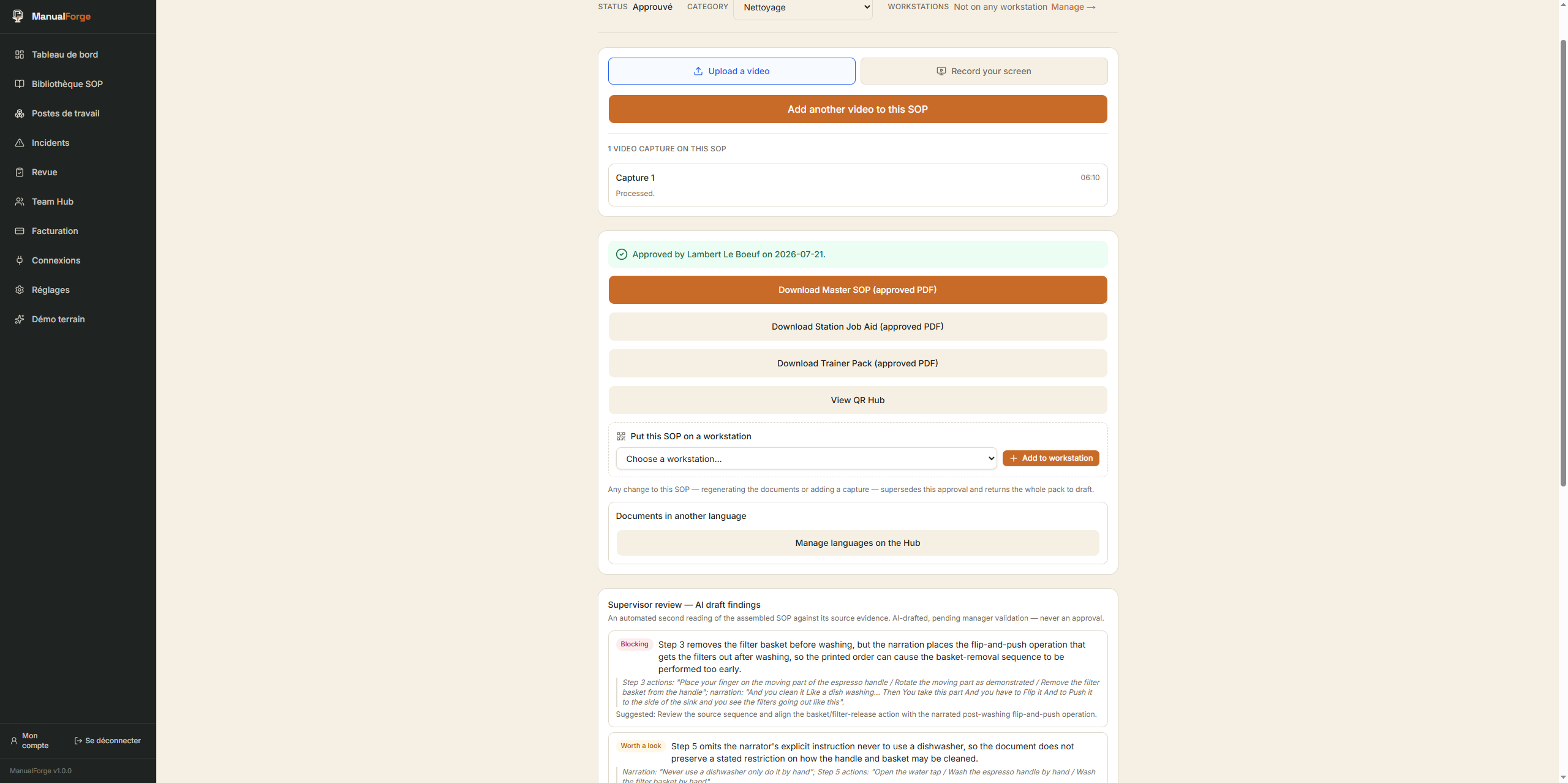
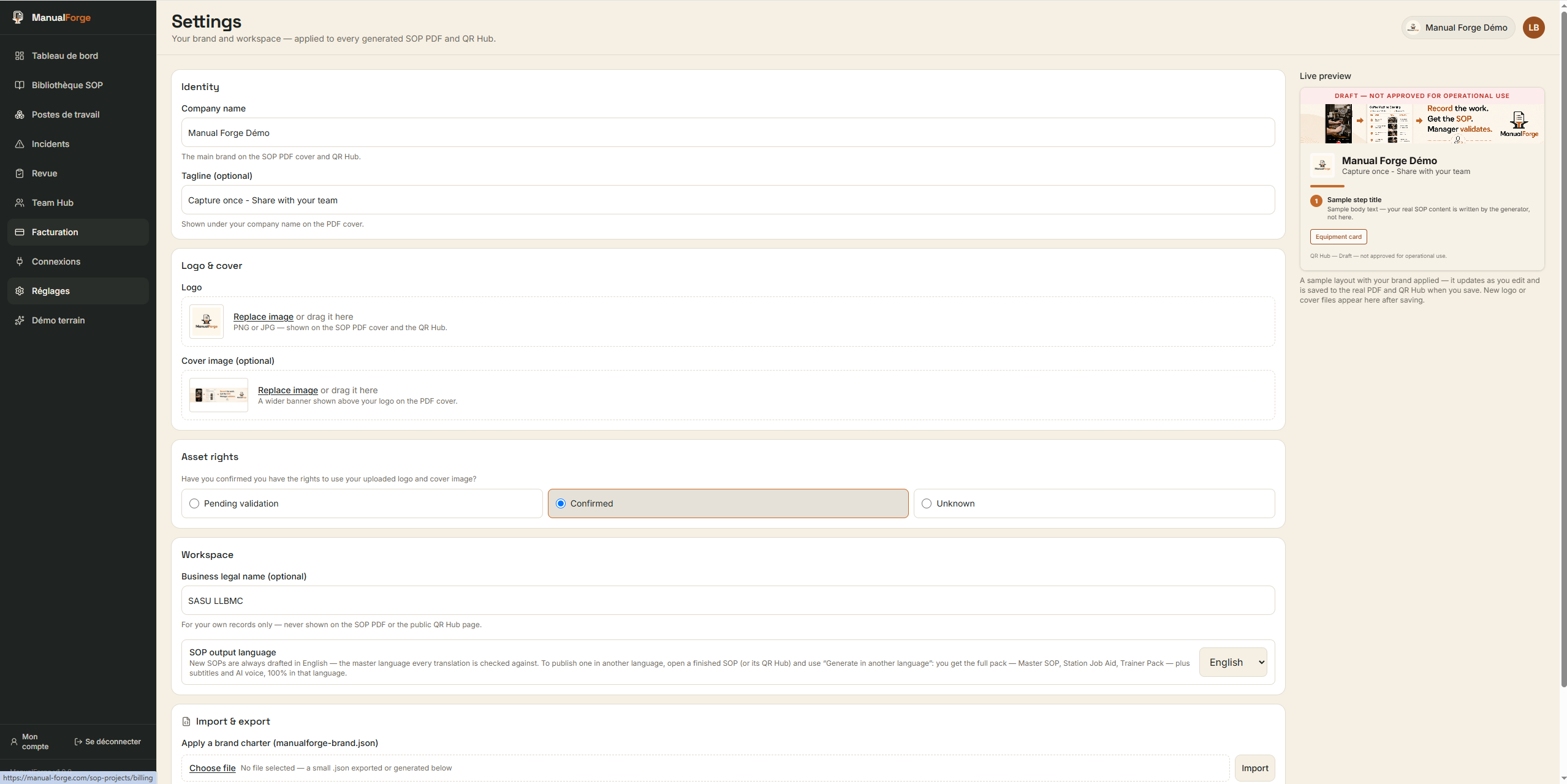
And we want to be clear about one thing: we're not trying to replace human expertise. Every document ManualForge produces is deliberately generated as a draft. A manager is still the one responsible for reviewing, validating, and approving a procedure before it becomes an operational standard.
We're not building autonomous documentation. We're building human-supervised knowledge creation at scale.
How we built it
The project stitches together several OpenAI capabilities into one pipeline.
A video gets uploaded and runs through a multi-stage process. The system:
extracts and prepares the media transcribes the narration identifies the operational steps generates structured SOP content produces screenshots and supporting assets assembles several documentation formats from that same source
Rather than generating a single document, we treat the video as the one source of truth from which multiple synchronized outputs are produced. That "understand once, render everywhere" logic is what keeps everything consistent — every asset comes from the same understanding of the process.
Challenges
The hardest part wasn't generation. It was trust.
Generating an SOP that looks convincing is fairly easy. Generating documentation that people are actually willing to rely on in real operations is a whole different problem.
That pushed us toward a few architectural decisions:
AI never approves a procedure. Every output is explicitly flagged as a draft until a responsible human validates it. The original video always stays the primary evidence. Documentation can be regenerated without ever losing the original capture.
The other challenge was resisting feature creep. A lot of AI products end up turning into chatbots that answer questions. We picked a different path: ManualForge focuses first on turning operational work into durable organizational knowledge, before we even think about adding a conversational layer on top.
What we learned
This project changed how we think about AI.
The real value isn't generating documents. The real value is preserving operational knowledge before it disappears.
A process video is a lot more than a recording. It's a piece of organizational memory. Once AI understands that memory, it can generate documentation, training material, checklists, and other knowledge products from that same source.
We think this is just the start. Today the output is a professional SOP. Tomorrow, that same operational memory could power searchable knowledge bases, training systems, execution checklists, and AI assistants that actually understand how a company works.
Our vision fits in one line too:
Film the work. Build your company's operational memory.
Built With
- ai
- automation
- claudecode
- codes
- codex
- computer
- enterprise
- generative
- gpt-5
- knowledge
- management
- multimodal
- openai
- operating
- operations
- procedures
- processing
- speech-to-text
- training
- video
- vision
- vscode
- workflow
- workplace

Log in or sign up for Devpost to join the conversation.