-
-
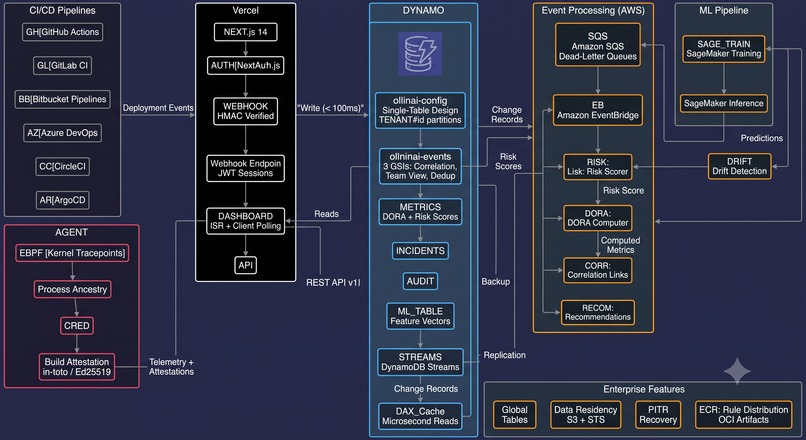
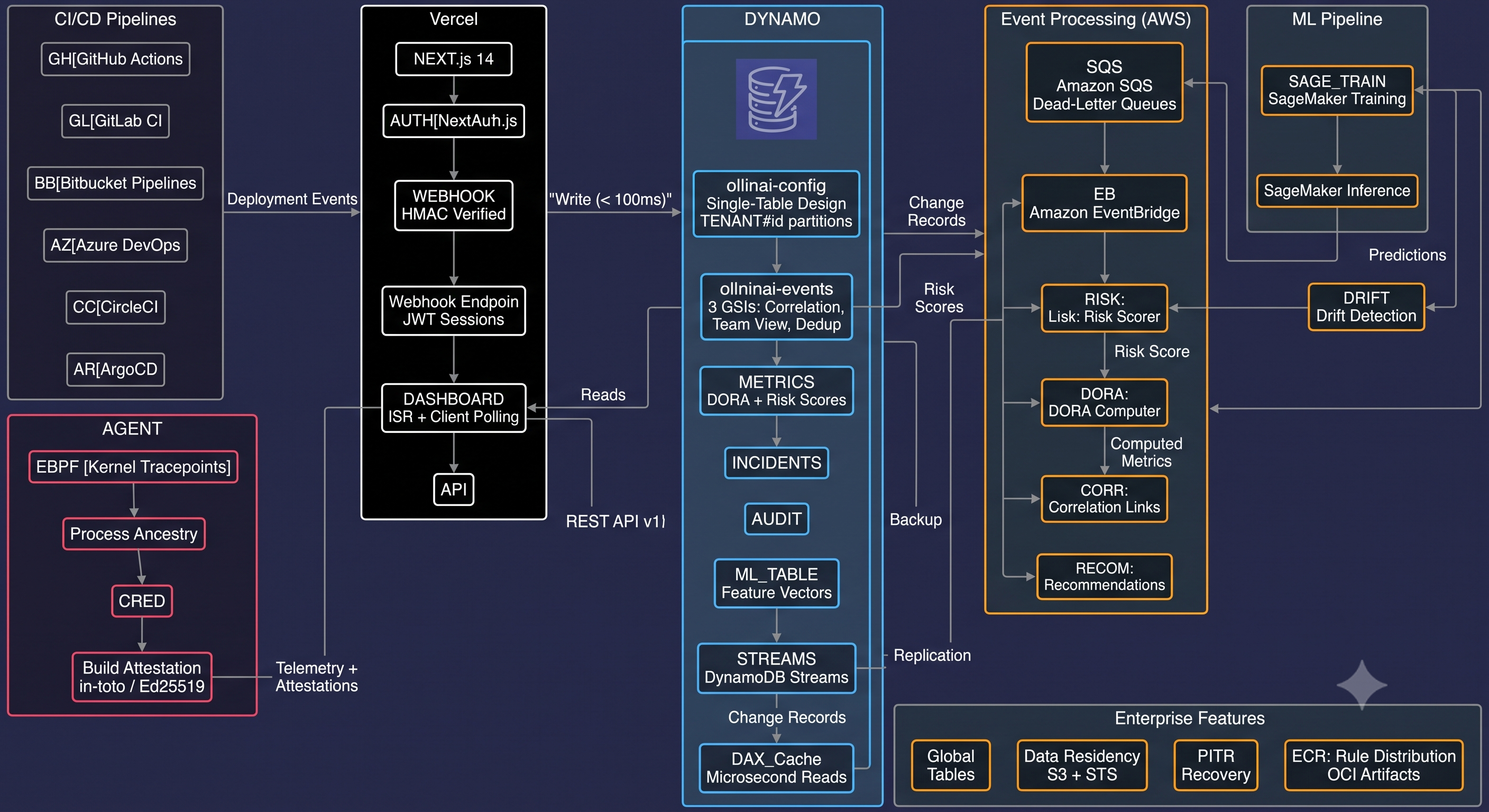
Architecture Diagram
-
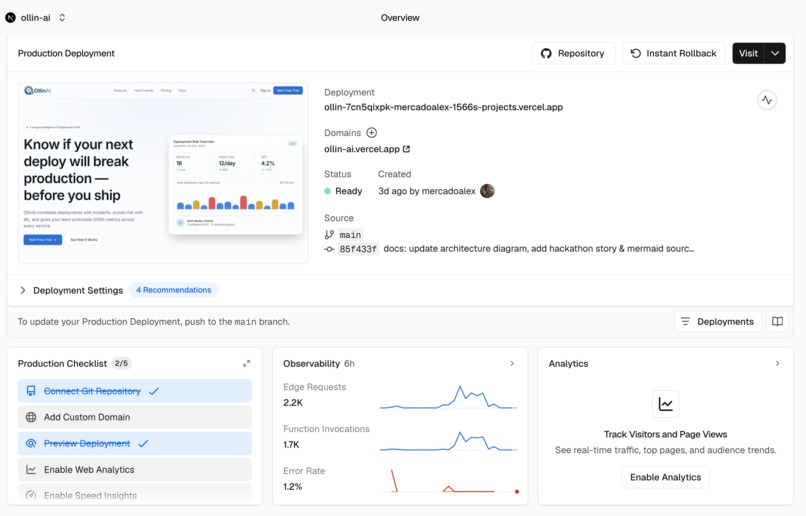
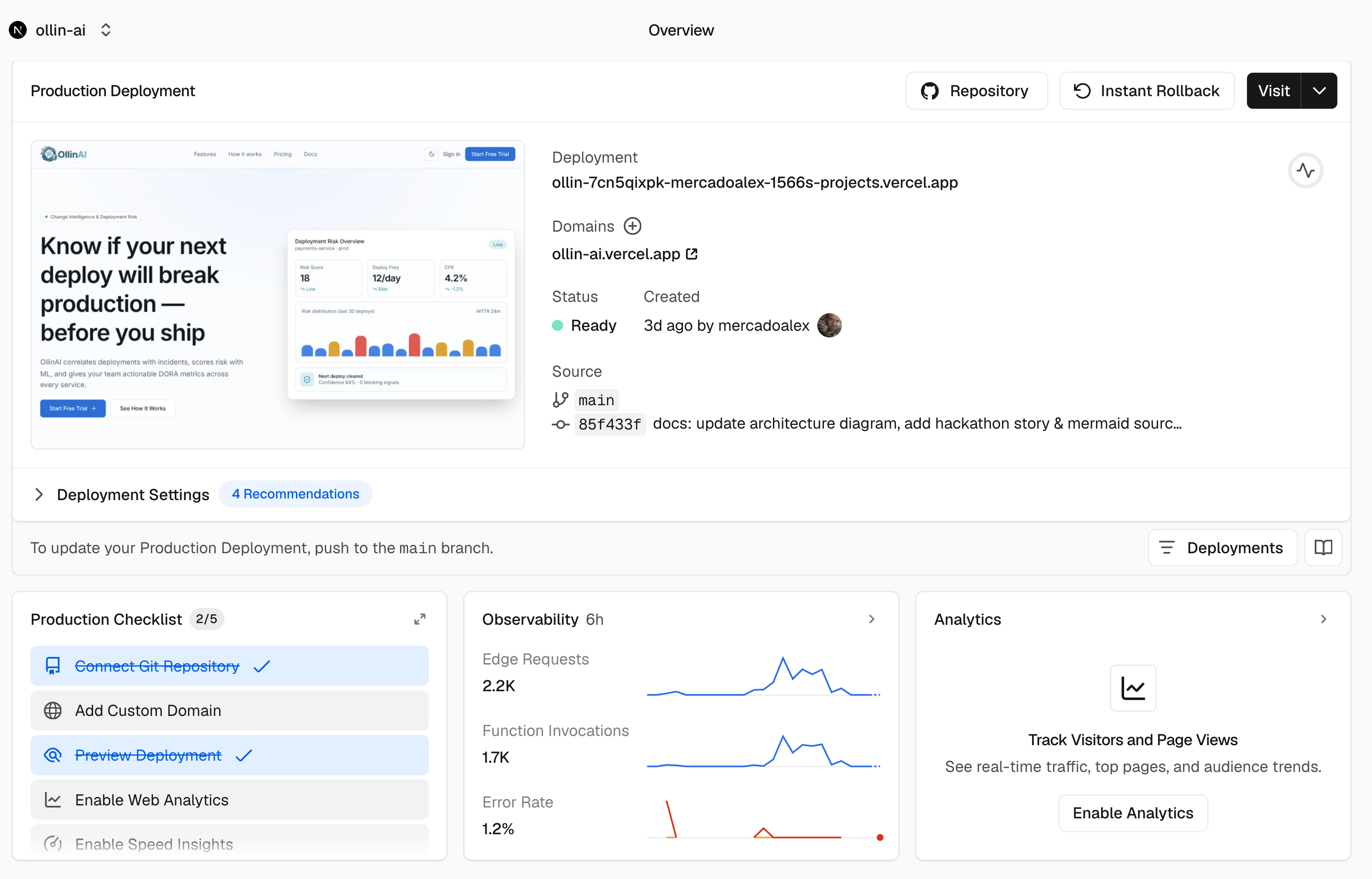
Overview- Vercel
-
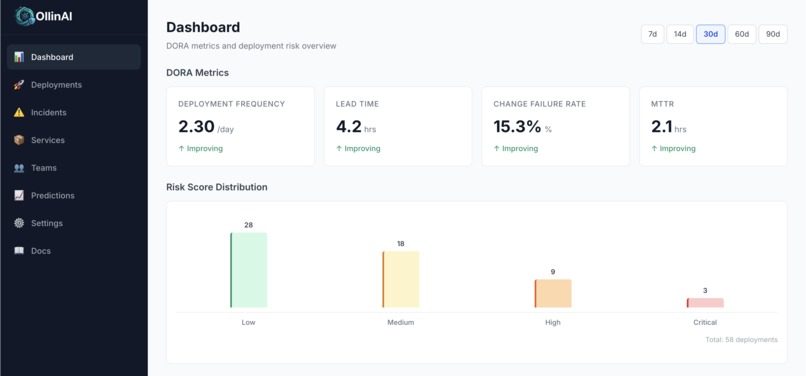
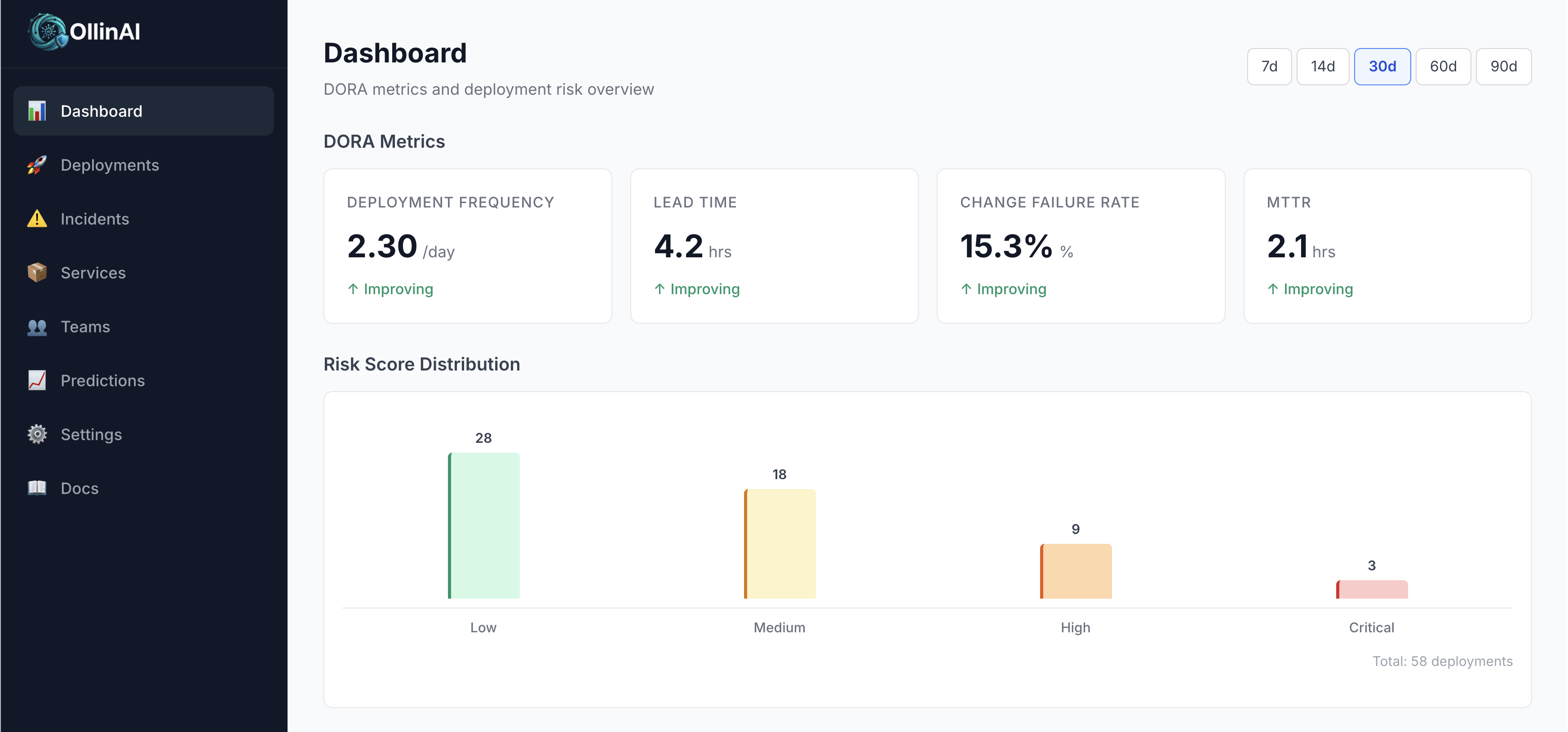
Dashboard
-
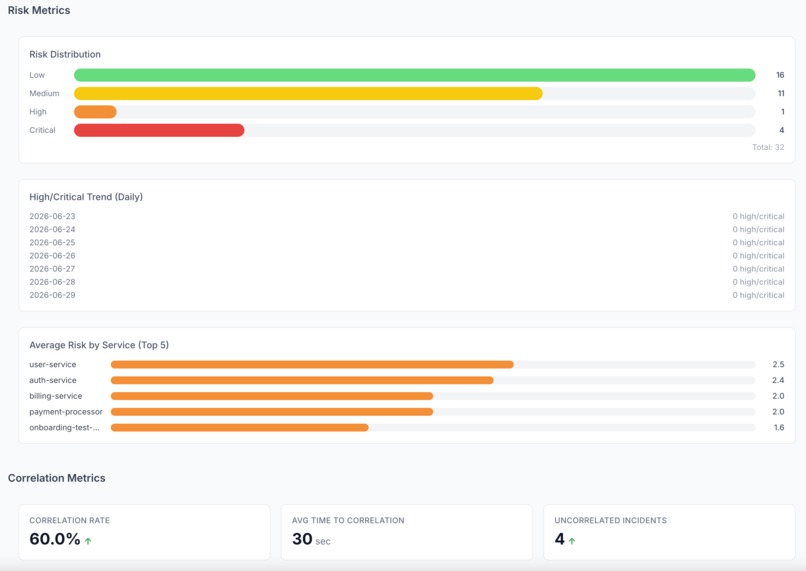
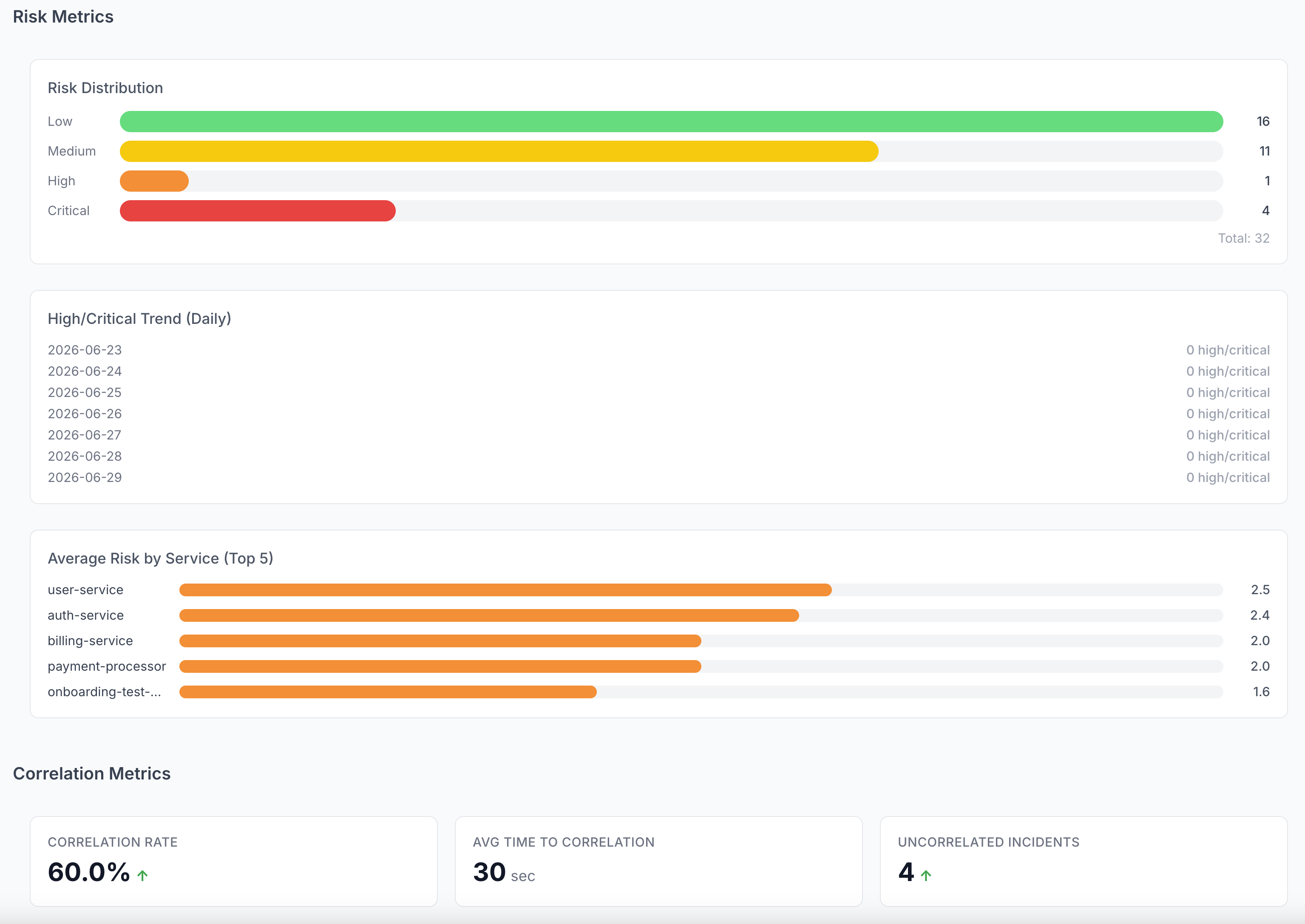
Risk metrics
-
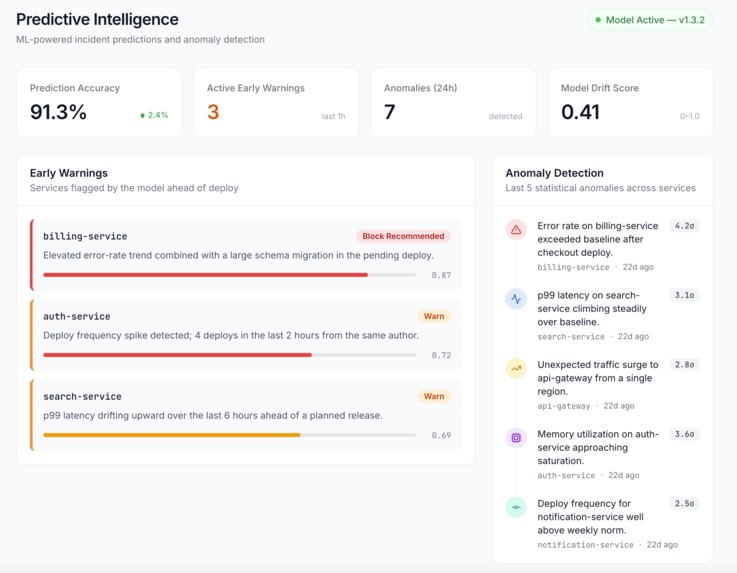
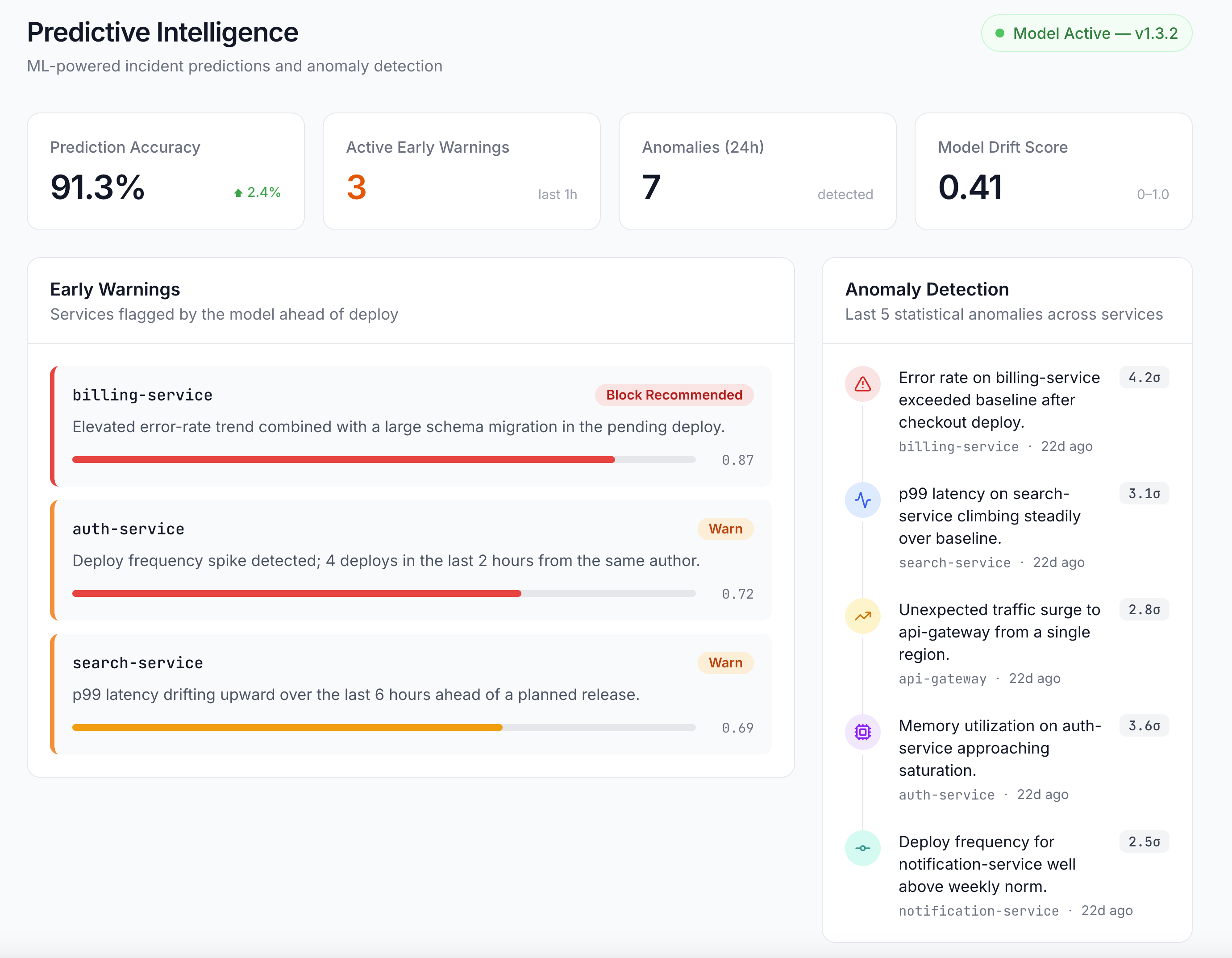
Predictive Intelligence
-
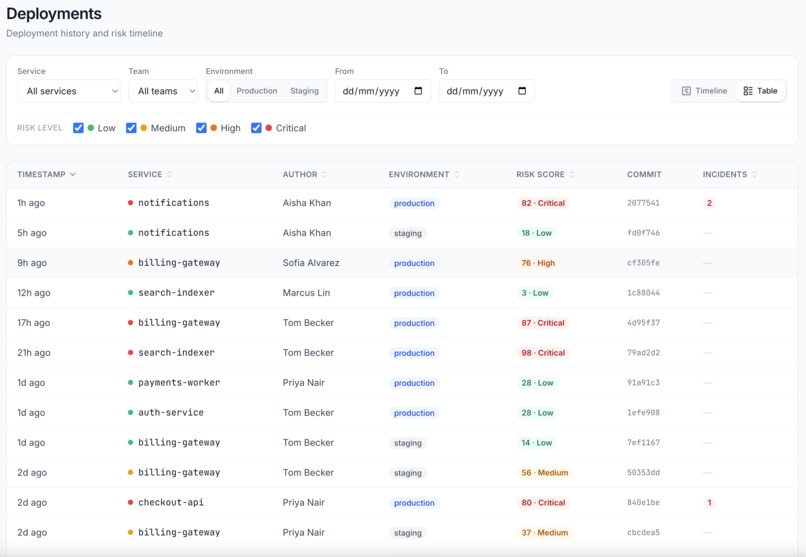
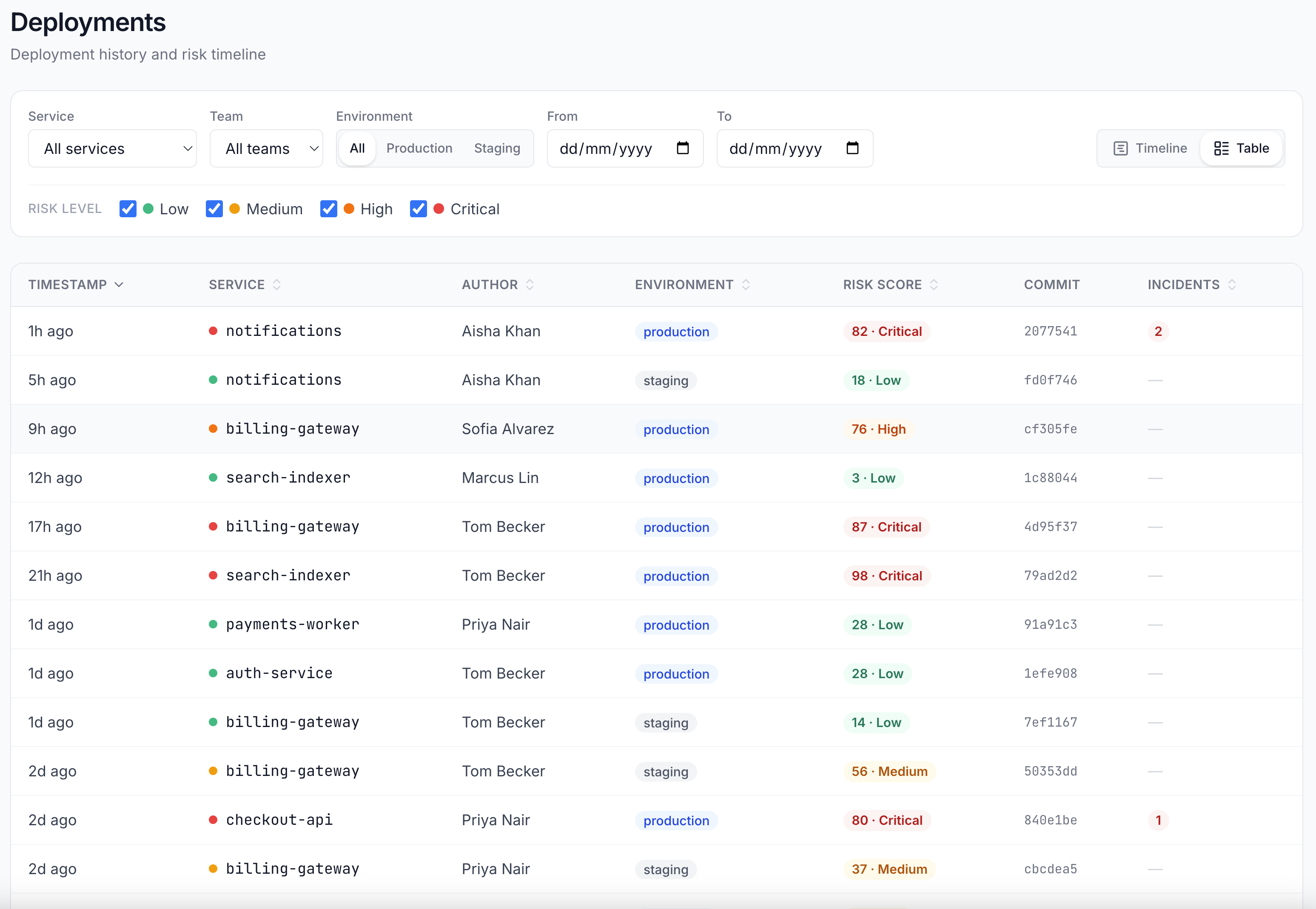
Deplyments
About OllinAI
Inspiration
I spent years watching mid-market engineering teams (50–500 engineers) struggle with the same invisible problem: they deploy fast, but they have no idea which deployment just broke production. Incident correlation happens manually — hours later — while DORA metrics rot in quarterly spreadsheets that nobody reads.
The breaking point was seeing a supply chain attack exfiltrate credentials during a CI/CD run, leaving no trace. The runner was ephemeral. The evidence was gone. Nobody even knew it happened.
I wanted to build something that gives engineering teams real-time visibility, automated correlation, and kernel-level security — all on a single platform. And I wanted DynamoDB's partition key model to be the security foundation, not just the storage layer.
The name "Ollin" comes from Nahuatl (the Aztec language) — it means "movement" or "change." Every deployment is a change. OllinAI understands the risk profile of every single one.
What it does
OllinAI is a B2B SaaS platform that:
- Automates DORA metrics in real-time — Deployment Frequency, Lead Time, Change Failure Rate, and MTTR computed incrementally as CI/CD events flow in
- Scores every deployment for risk — weighted factors, including historical failure rate, change size, timing, and author patterns, produce a low/medium/high/critical classification
- Correlates incidents to deployments automatically — when PagerDuty fires, OllinAI links it to the causing deployment within seconds
- Predicts failures before they happen — an ML engine trained on deployment history forecasts which pushes will cause incidents
- Detects supply chain attacks at the kernel level — a Rust eBPF agent captures process ancestry trees and credential access during CI/CD execution
- Generates cryptographic build attestations — in-toto framework attestations prove exactly what ran in every pipeline
Teams get a live dashboard with risk distribution, team comparisons, service health, predictions, and business impact metrics — all updating in real-time.
How we built it
Frontend: Next.js 14 (App Router) deployed on Vercel with ISR caching and client-side polling every 30 seconds. Progressive loading for advanced metric sections.
Database: Amazon DynamoDB — the architectural centerpiece. We use:
- Single-table design for configuration (10+ entity types, zero migrations)
- 3 Global Secondary Indexes on the events table for correlation, team views, and deduplication
- DynamoDB Streams triggering Lambda-based risk scoring and DORA computation
- ACID transactions for atomic integration creation + audit logging
- Conditional writes for concurrent onboarding safety
- TTL for automatic token cleanup
- DAX for the microsecond dashboard reads under load
The key insight: DynamoDB's partition key model (TENANT#{id}) IS the security model. Cross-tenant data access isn't prevented by application code — it's physically impossible at the storage layer. There's no forgotten WHERE clause, no SQL injection vector, no accidental data leak.
eBPF Agent: Written in Rust with libbpf. Attaches to kernel tracepoints to capture process ancestry, network connections, and credential file access during CI/CD runs. Detects supply chain attacks by correlating package installer processes with unauthorized network connections.
ML Pipeline: Amazon SageMaker for training and inference. Feature vectors built from deployment metadata, historical patterns, and service-level risk profiles. Models retrain continuously with drift detection.
Infrastructure: Terraform-managed AWS resources — DynamoDB tables, SQS queues, EventBridge rules, Lambda functions, IAM policies. Vercel for frontend deployment.
Challenges we ran into
DynamoDB access pattern design was the hardest upfront investment. A single-table design requires you to think about every query before writing a single line of code. We iterated on the partition key schema multiple times before landing on the final structure that supports all 4 access patterns with 3 GSIs.
Multi-tenant isolation testing — proving that cross-tenant access is truly impossible required writing property-based tests (fast-check) that generate random tenant IDs and verify zero data leakage across thousands of randomized scenarios.
eBPF on ephemeral CI/CD runners — containers are destroyed after each job. We had to buffer telemetry in a ring buffer and flush attestations before the runner terminates. Static musl binaries were necessary because runners have unpredictable library environments.
Real-time DORA computation — computing metrics incrementally (not batch) from DynamoDB Streams required careful handling of out-of-order events and idempotent processing to avoid double-counting.
Credential management across destroy/rebuild cycles — every terraform destroy + apply generates new IAM credentials that must be synced to Vercel. We built backup/restore scripts and sync tooling to make this manageable.
Accomplishments that we're proud of
- The partition key IS the security model — we didn't bolt security onto a database. We chose a database whose architecture enforces our most critical requirement structurally. Every compliance auditor we've shown this to immediately understands it.
- Sub-100ms webhook ingestion — DynamoDB on-demand mode handles bursty CI/CD traffic without throttling while Streams process downstream in parallel.
- 120-second threat-to-mitigation pipeline — from a rogue socket connection to frozen pipeline, isolated blast radius, and cryptographic proof.
- Zero-migration agility — we shipped 7 entity types, 3 settings schemas, and an onboarding state machine without a single ALTER TABLE.
- Property-based testing for isolation — formal verification that no sequence of operations can access another tenant's data.
- Full working product — auth, onboarding, 7 CI/CD integrations, subscription tiers, RBAC, and 8 metric dashboard sections. Not a prototype — a platform.
What we learned
- DynamoDB forces good design upfront. You can't add a JOIN later. You can't SELECT * across tenants. This constraint is a feature — it makes security breaches structurally impossible rather than merely unlikely.
- Single-table design pays off at scale but requires discipline. The upfront cost of modeling access patterns is repaid every time you add a feature without a migration.
- DynamoDB Streams + Lambda is the ideal event-driven architecture for real-time metric computation. The coupling is loose, retries are built in, and scaling is automatic.
- eBPF is production-ready for security monitoring — kernel-level visibility without kernel module risk. The Rust ecosystem (libbpf-rs) makes this accessible.
- Property-based testing reveals bugs that unit tests never find. Random input generation caught edge cases in our correlation window logic that hand-written tests missed entirely.
What's next for OllinAI: Engineering Intelligence & Security
- DynamoDB Global Tables activation — multi-region active-active replication for enterprise data residency (EU, APAC)
- DAX cluster deployment — microsecond reads for high-traffic dashboards
- Expanded ML models — anomaly detection on deployment patterns, team velocity prediction, automated remediation suggestions
- GitHub App marketplace listing — one-click integration for GitHub Actions users
- SOC2 Type II certification — leveraging DynamoDB's built-in encryption, PITR, and audit trails
- Open-source the eBPF agent — community-driven detection rules for CI/CD supply chain threats
- EventBridge Pipes integration — simplified stream processing without custom Lambda glue code
Built With
- amazon-dynamodb
- amazon-eventgridge
- amazon-web-services
- dynamodb
- dynamodbstreams
- ebpf
- ed25519
- next.js
- rest
- rust
- tailwind
- terraform
- typescript
- vercel
- webhooks


Log in or sign up for Devpost to join the conversation.