
Inspiration
In Southeast Asia, dementia is not just a medical condition, it’s a quiet erosion of relationships. As memory fades, so does the ability to initiate connection. Families don’t just lose shared memories, they lose everyday rituals, and emotional closeness. This creates a painful tension: families want to care, but modern life (urban migration, work pressure) makes constant presence impossible. Most existing solutions focus on monitoring (trackers, alerts), treating elders like patients rather than people.
We were inspired to build something different:
a relational-first AI that preserves dignity, identity, and emotional bonds, not just safety.
What it does
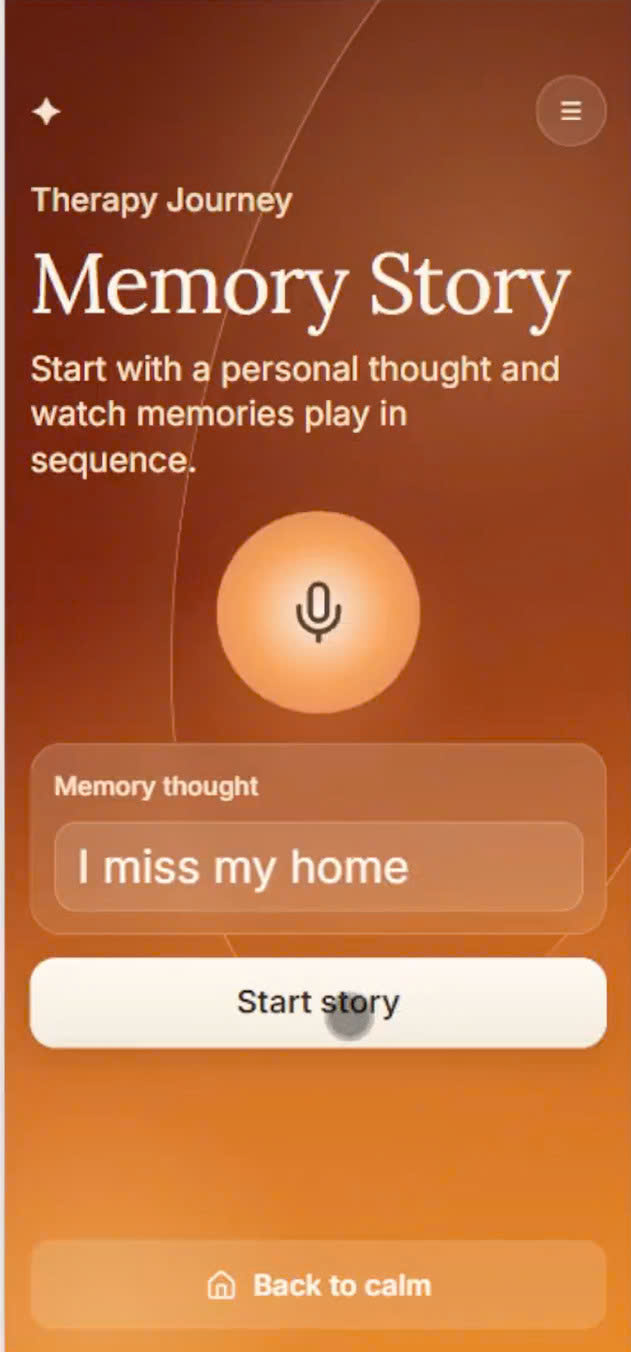
Memora is a context-aware AI memory companion that acts as a “digital bridge” between elders and their families.
It helps elders with early-stage dementia:
- Reconnect with loved ones through personalized memory guides
- Engage in natural, warm conversations with visual instead of clinical reminders
- Maintain a sense of identity through their “vocabulary of life”
For caregivers, it:
- Reduces emotional burden and guilt
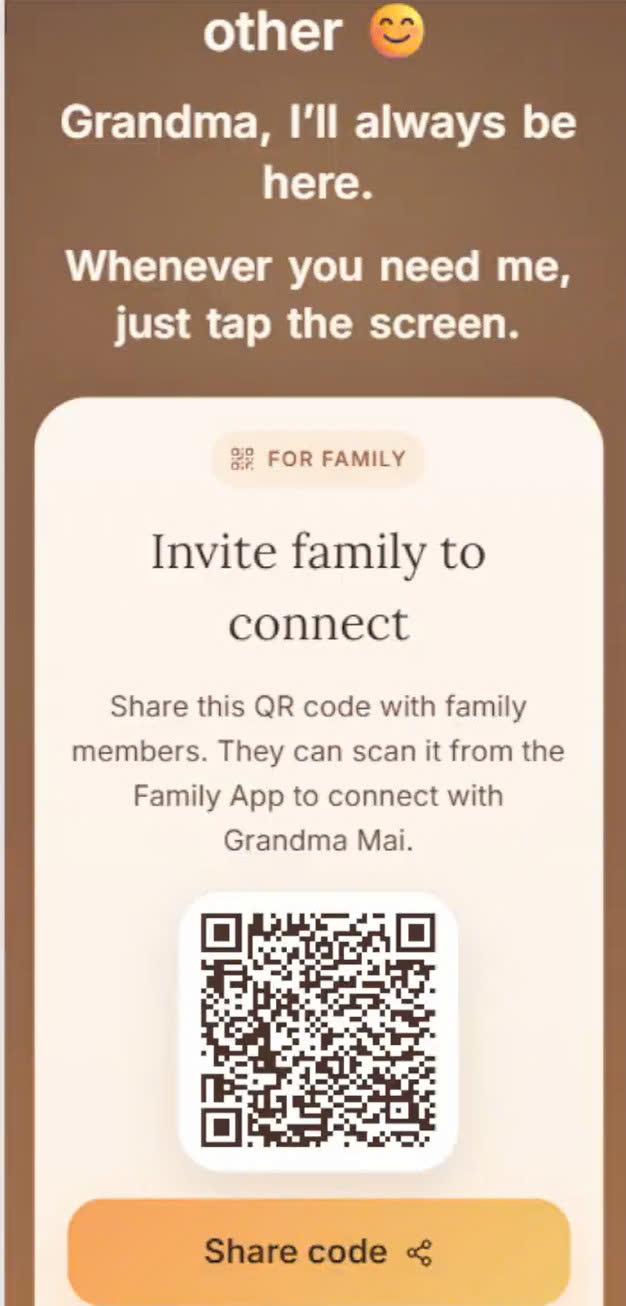
- Enables meaningful connection even from a distance
- Transforms passive family data into an active caregiving tool
Example:
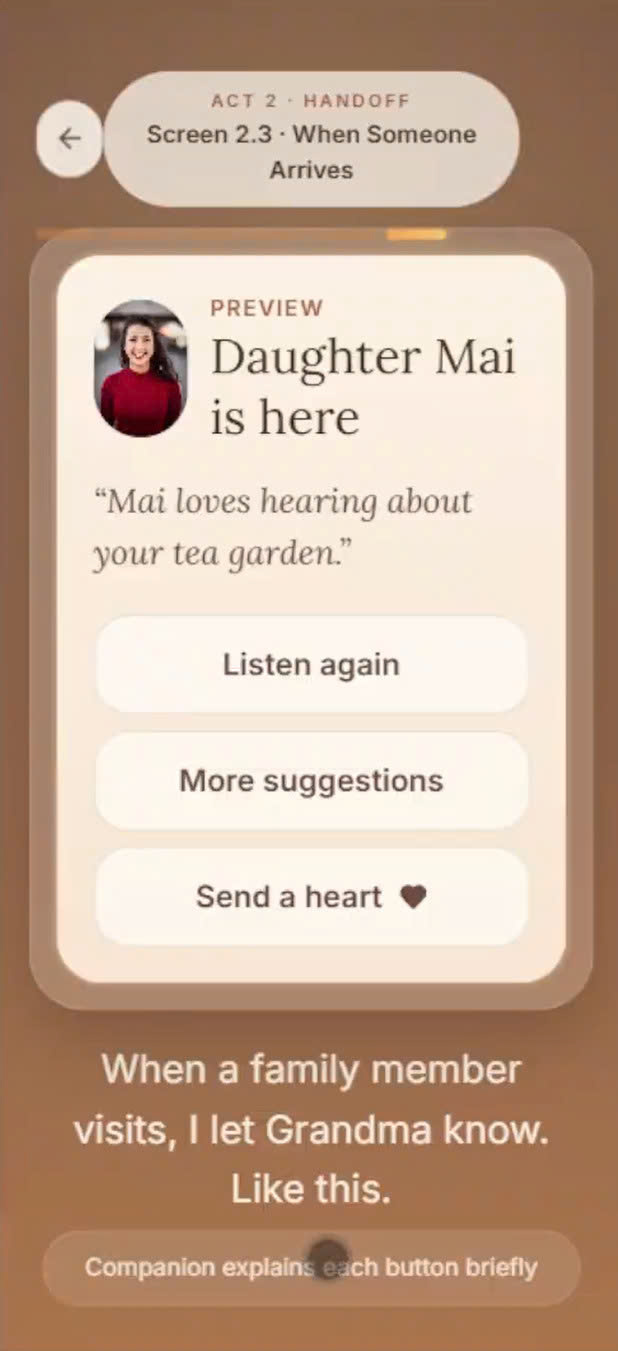
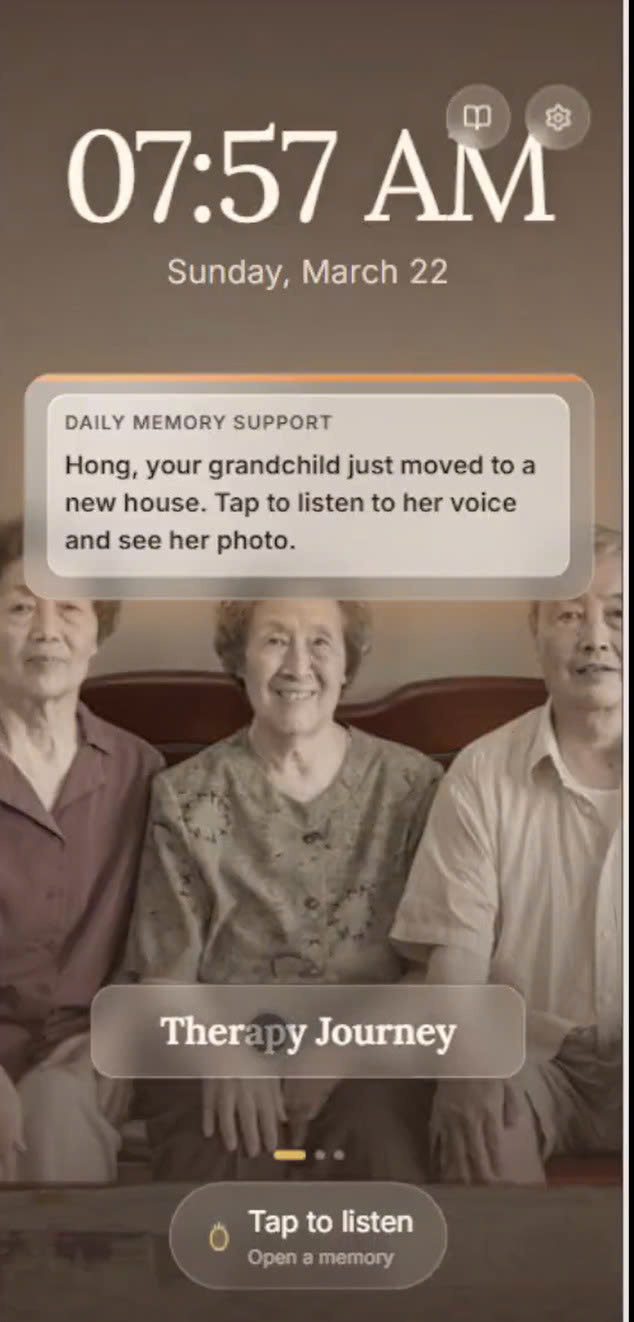
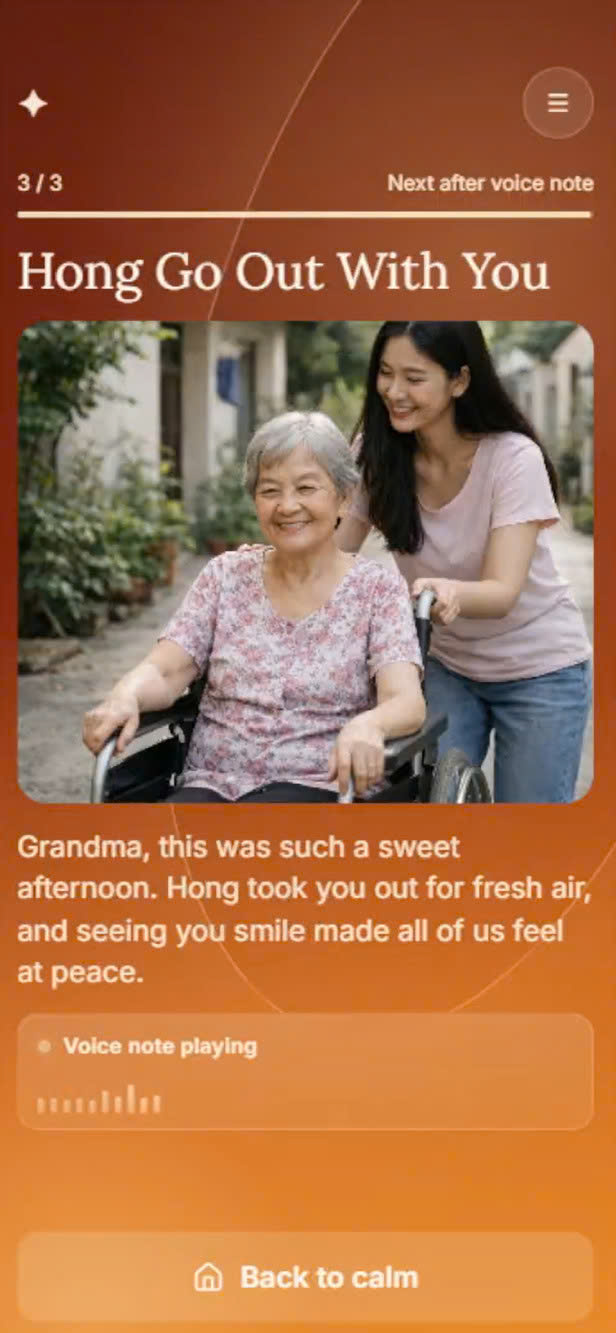
Instead of asking “Do you remember your daughter?”, the system gently guides the elder through a familiar, emotionally grounded moment from the memory graph:
Anna’s photo appears, accompanied by her voice:
“Hi… it’s evening — I used to call you around this time.”
A short memory follows:
“Remember when we talked about your garden last week?”
Then, softly prompting connection:
“Do you want to send her a message?”
How we built it
We designed a multi-layer AI system combining memory, context, and emotion-aware generation:
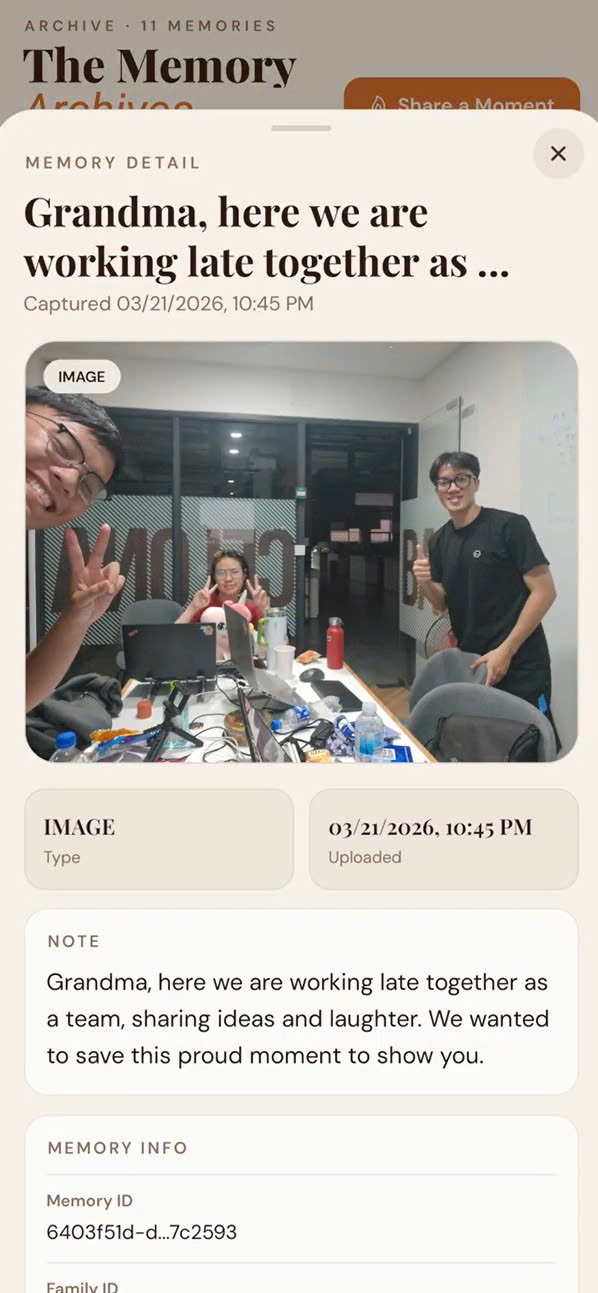
Personal Memory Graph
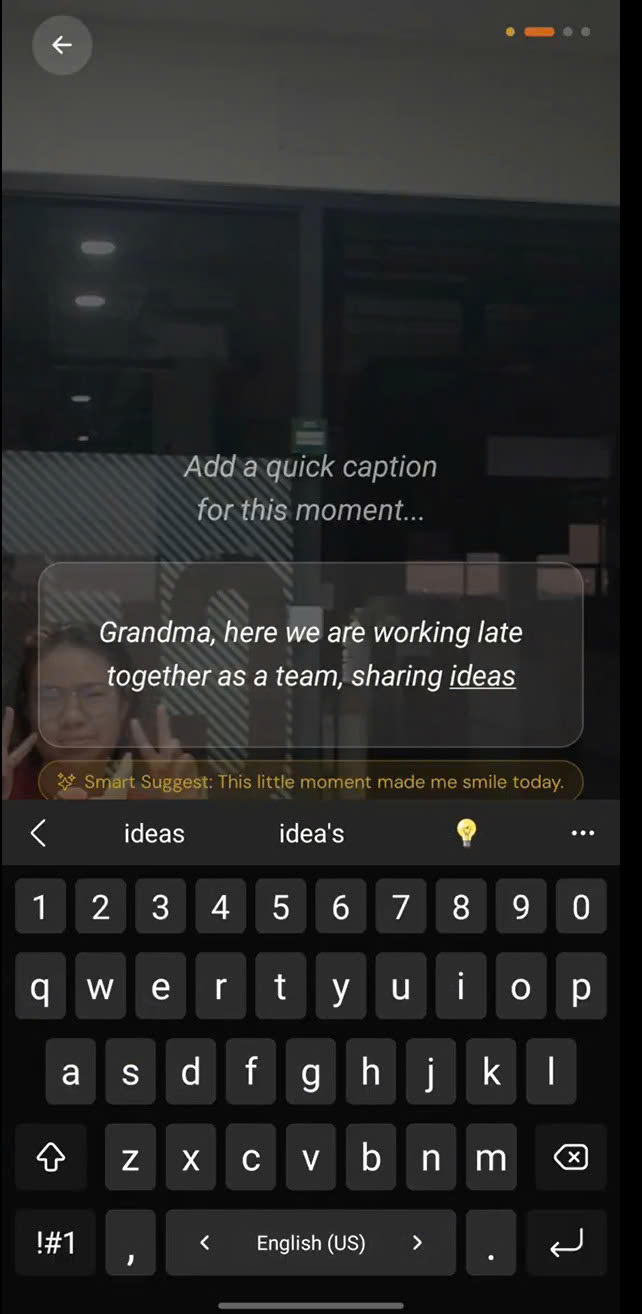
- Built from family uploads (photos, videos, notes)
- Structured into relationships (people, events, emotions, etc.)
Agentic AI Reasoning
- An AI agent reasons over the memory graph to generate personalized “memory journeys” using validation therapy principles
- Proactively discovers and suggests meaningful memory prompts to support recall and emotional connection
- An AI agent reasons over the memory graph to generate personalized “memory journeys” using validation therapy principles
Context-Aware Triggering
- Uses time, location, and proximity (BLE) signals
- Detects meaningful “ritual moments” (e.g., dinner time, familiar places)
- Uses time, location, and proximity (BLE) signals
Tech Stack & AI
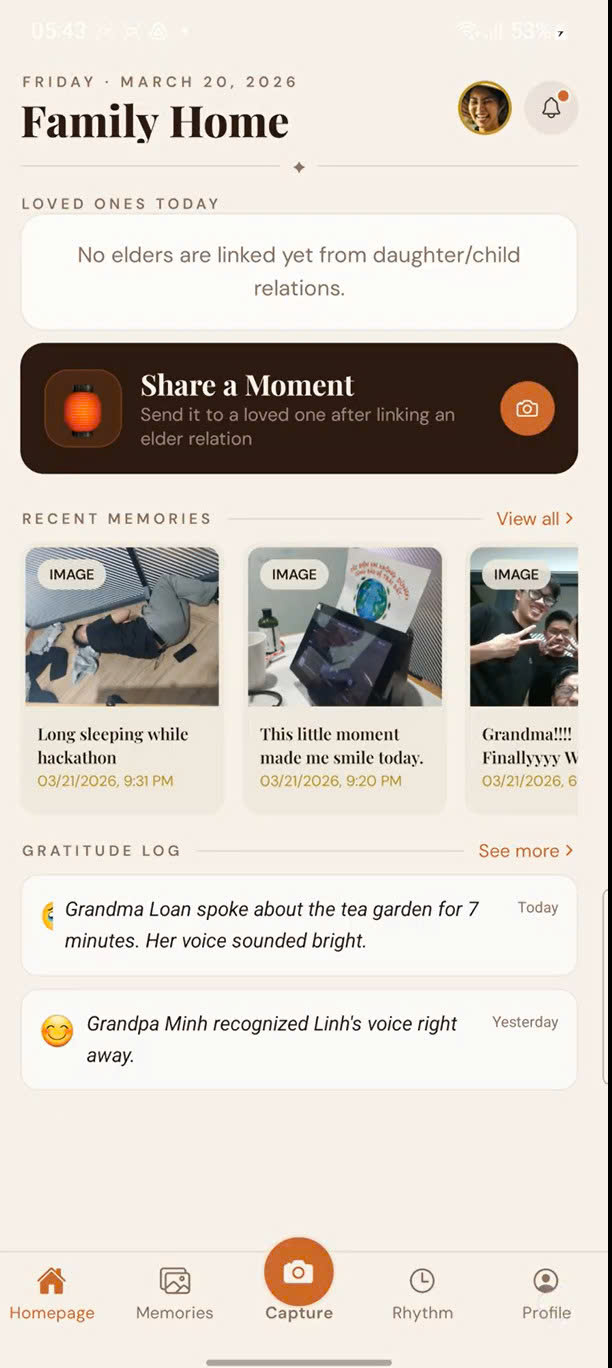
- FastAPI backend + React Native frontend with dual apps (family + elder interface)
- AWS S3 + CloudFront: Media storage and fast content delivery
- Amazon Aurora (PostgreSQL) with pgvector and Apache AGE: Stores embeddings, knowledge graph, and user data
- TinyFish: Core AI agent for memory reasoning and orchestration
- GPT-5.4-mini: Extracts entities/relationships from uploads and performs multimodal understanding
- ElevenLabs: Text-to-speech (and speech pipeline) for natural interaction
- FastAPI backend + React Native frontend with dual apps (family + elder interface)
Human-Centered Design
- Elder interface: simple, calm, voice-first
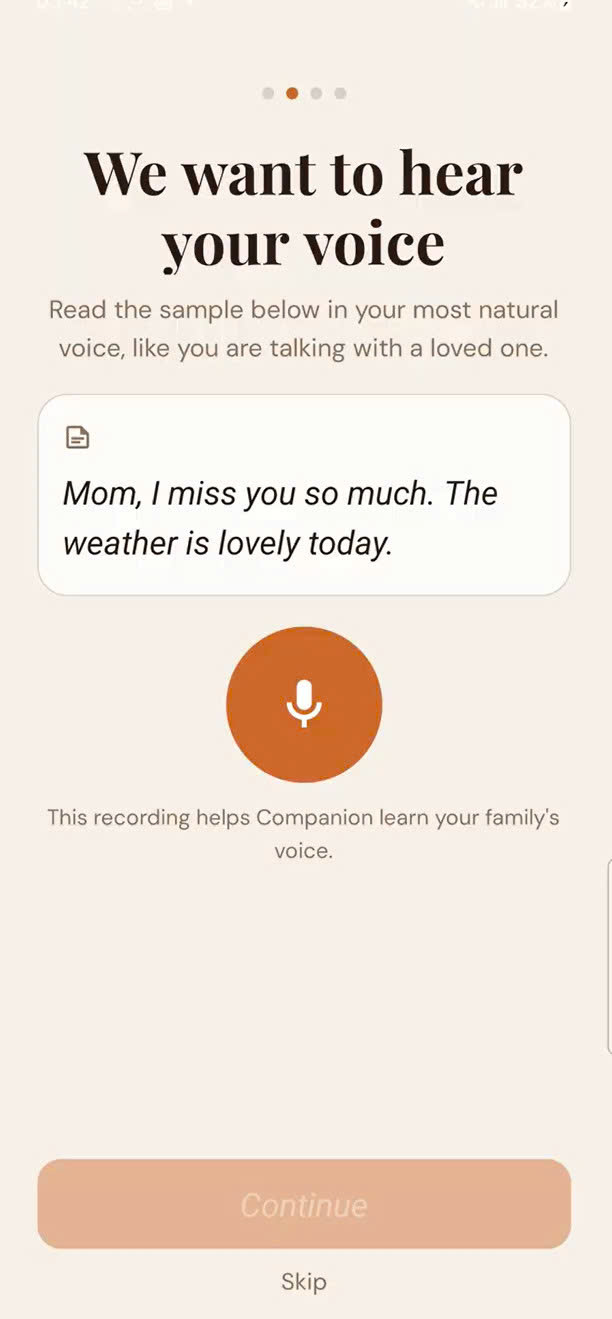
- Caregiver app: intuitive memory upload and relationship annotation
## Challenges we ran into
- Elder interface: simple, calm, voice-first
Avoiding hallucination in sensitive contexts AI must never fabricate harmful or confusing memories -> required strict grounding in the memory graph.
Balancing prompting vs. autonomy: Too many prompts feel intrusive; too few → no engagement. Finding the right “ritual timing” was hard.
Emotional design is harder than technical design: Tone, phrasing, and cultural nuance matter more than raw model performance.
Noisy real-world environments: Background voices and ambient noise affect speech systems → required filtering and robustness tuning.
Accomplishments that we're proud of
Built a relational-first AI system, not just another monitoring tool
Designed an AI that preserves dignity instead of testing memory
Created a memory graph that turns family data into meaningful interactions
Aligned deeply with real cultural context in Southeast Asia
Developed a system that could delay institutional care by strengthening home relationships
What we learned
- AI in healthcare is not just about accuracy, it’s about empathy
- Personalization is only meaningful when grounded in real human context (memories, relationships)
- Small, consistent emotional interactions (“micro-rituals”) can have huge long-term impact
- Designing for elders requires simplicity, warmth, and trust, not features
What's next for oldbodies
- Pilot with 50 dementia–caregiver pairs in Ho Chi Minh City
- Expand multilingual support (Vietnamese, Thai, Malay)
- Improve personalization with adaptive memory graphs + long-term learning
- Partner with clinics, Memory Cafés, and community centers to validate the solution
Built With
- agent
- ai
- amazon-web-services
- elevanlabs
- fastapi
- gpt
- graph
- medical
- multimodal
- postgresql
- python
- react-native
- tinyfish


Log in or sign up for Devpost to join the conversation.