-
-
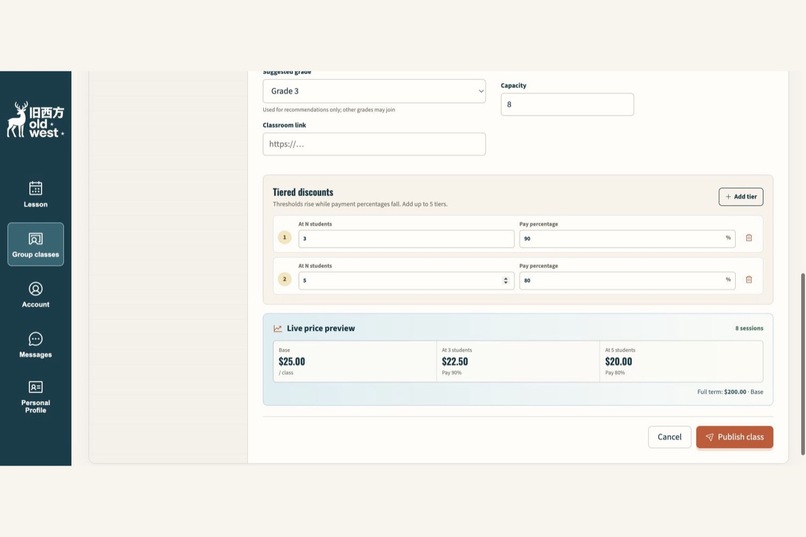
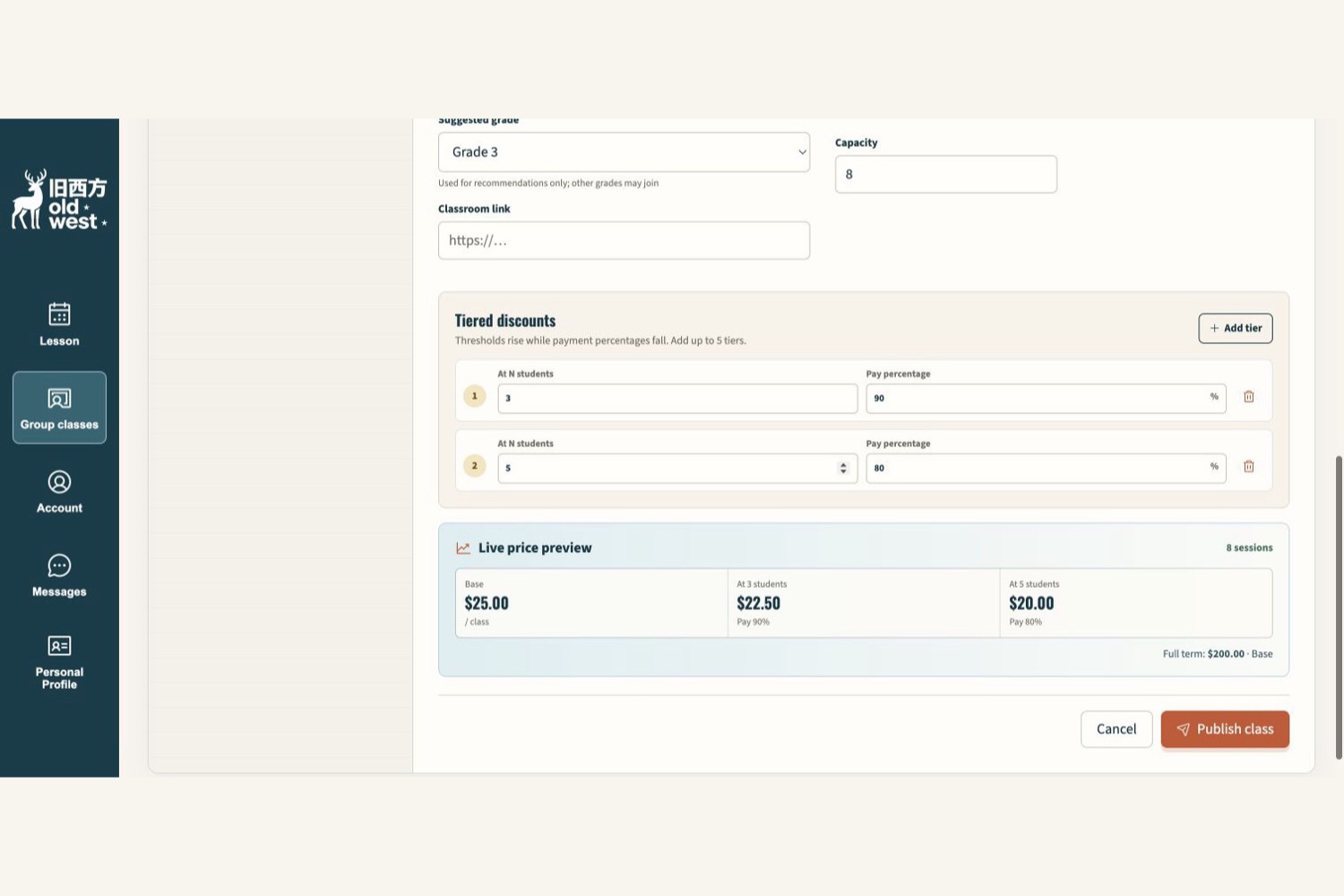
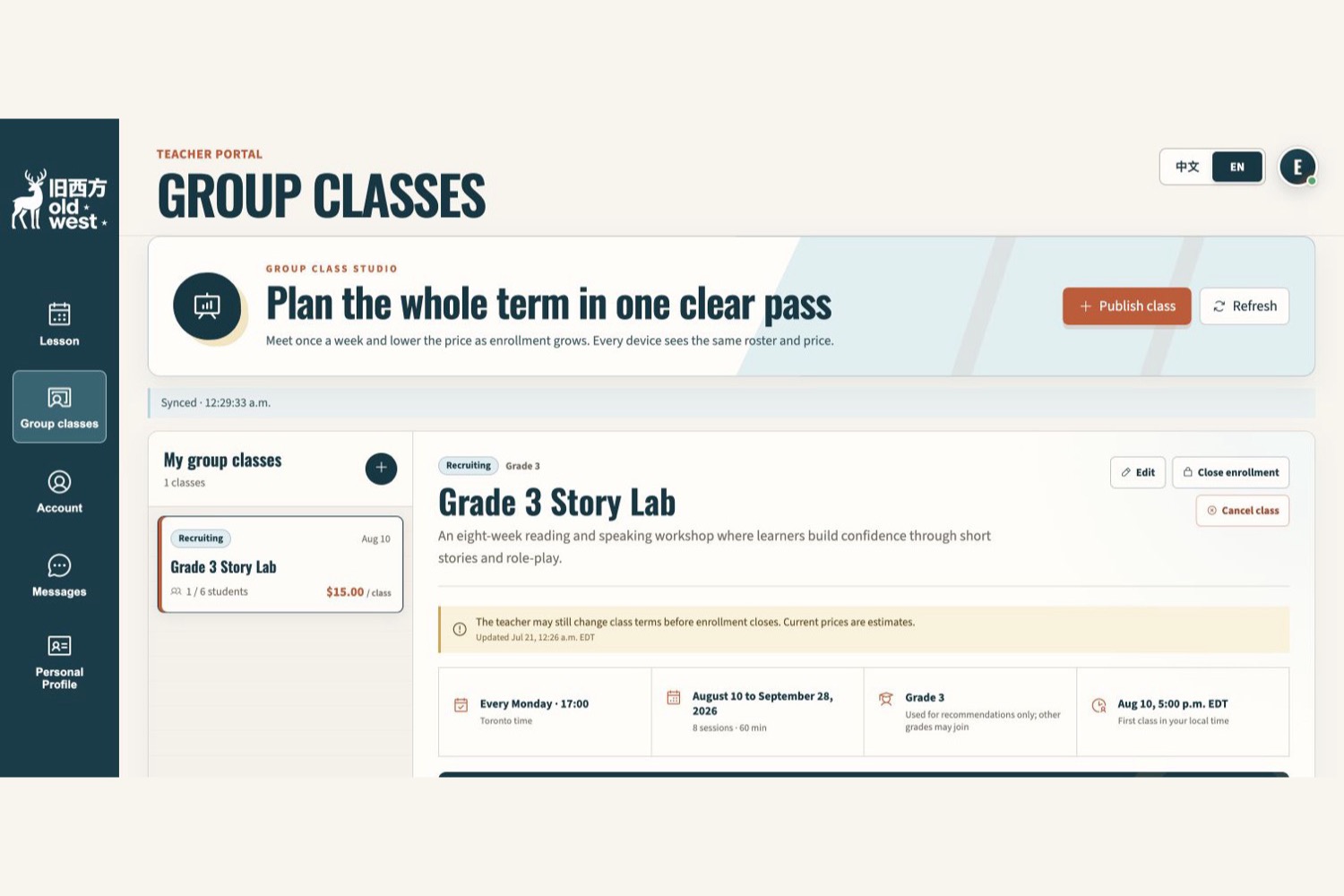
The publishing form validates weekly schedules, capacity, and tiered discounts while previewing class and term prices.
-
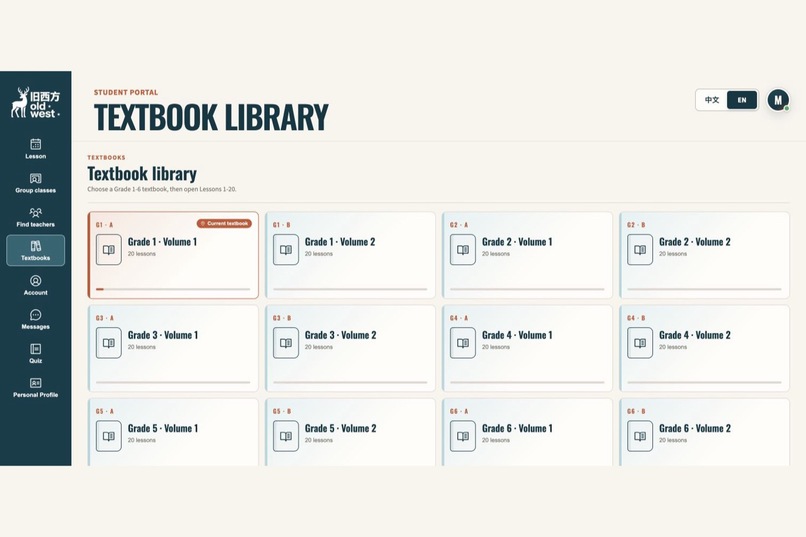
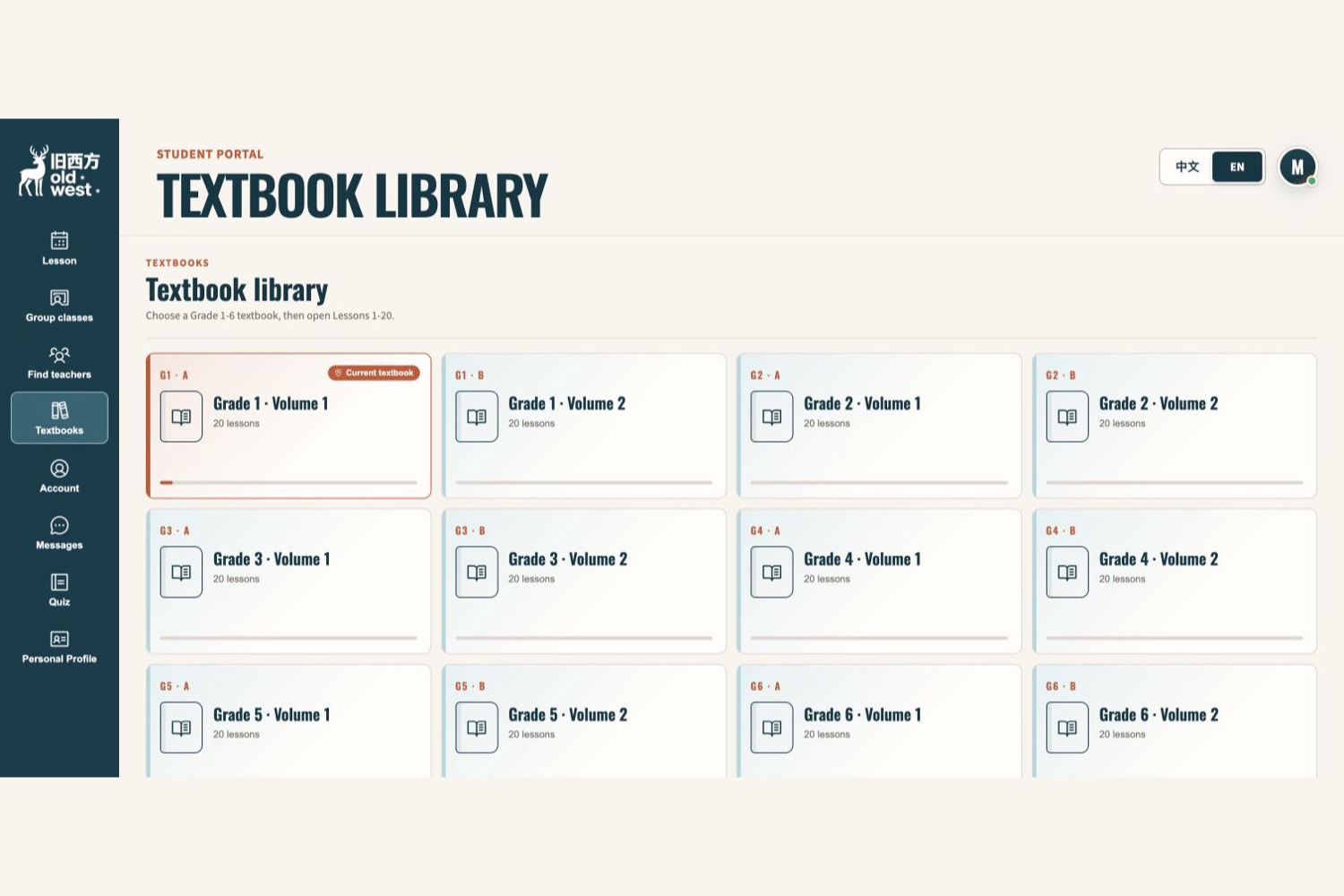
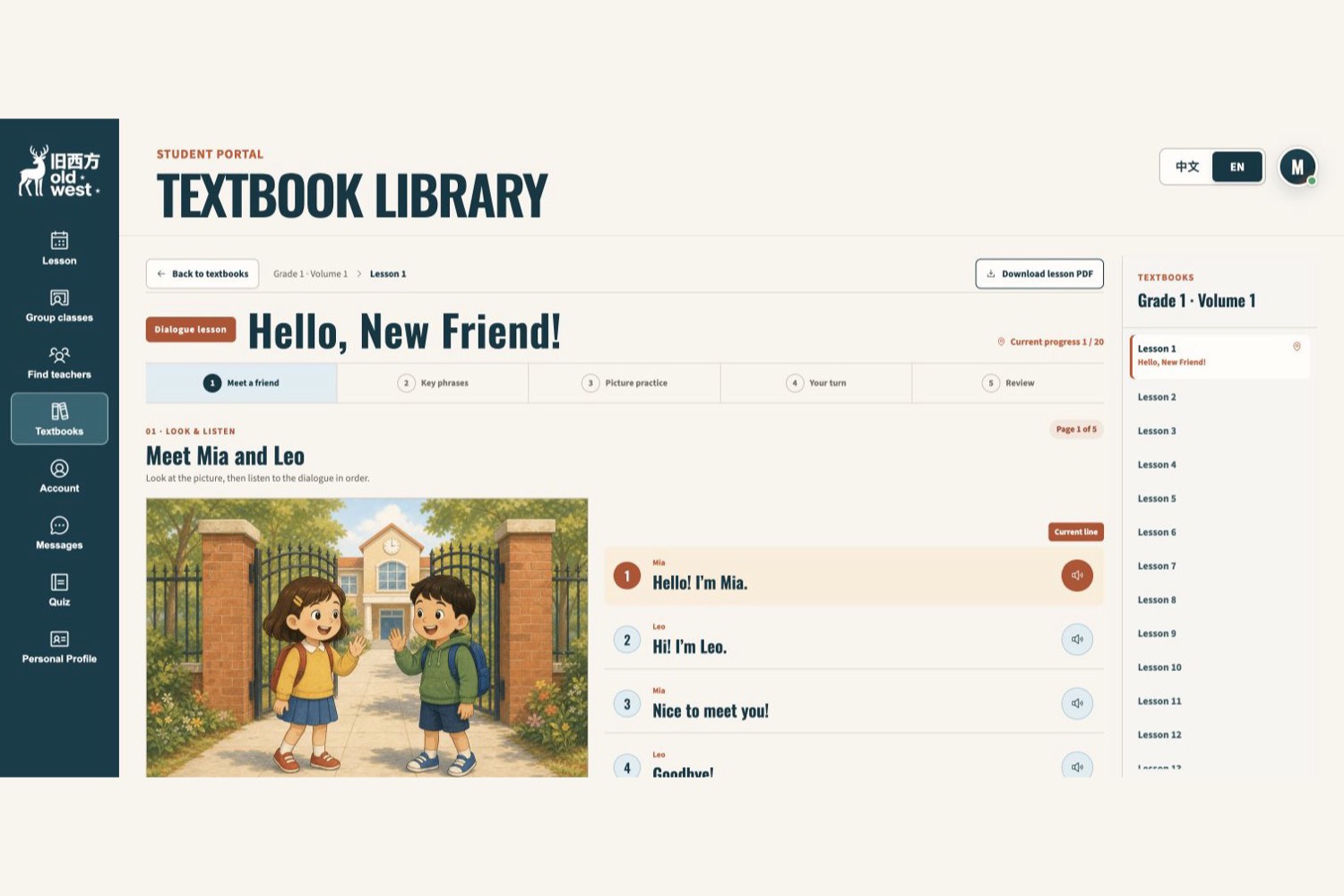
The textbook library organizes Grades 1-6 into two volumes and 20 lessons, with visible learning progress.
-
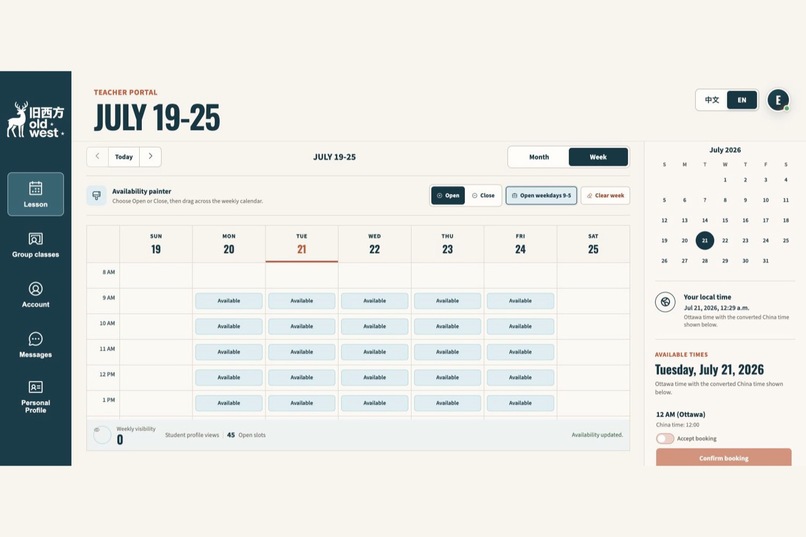
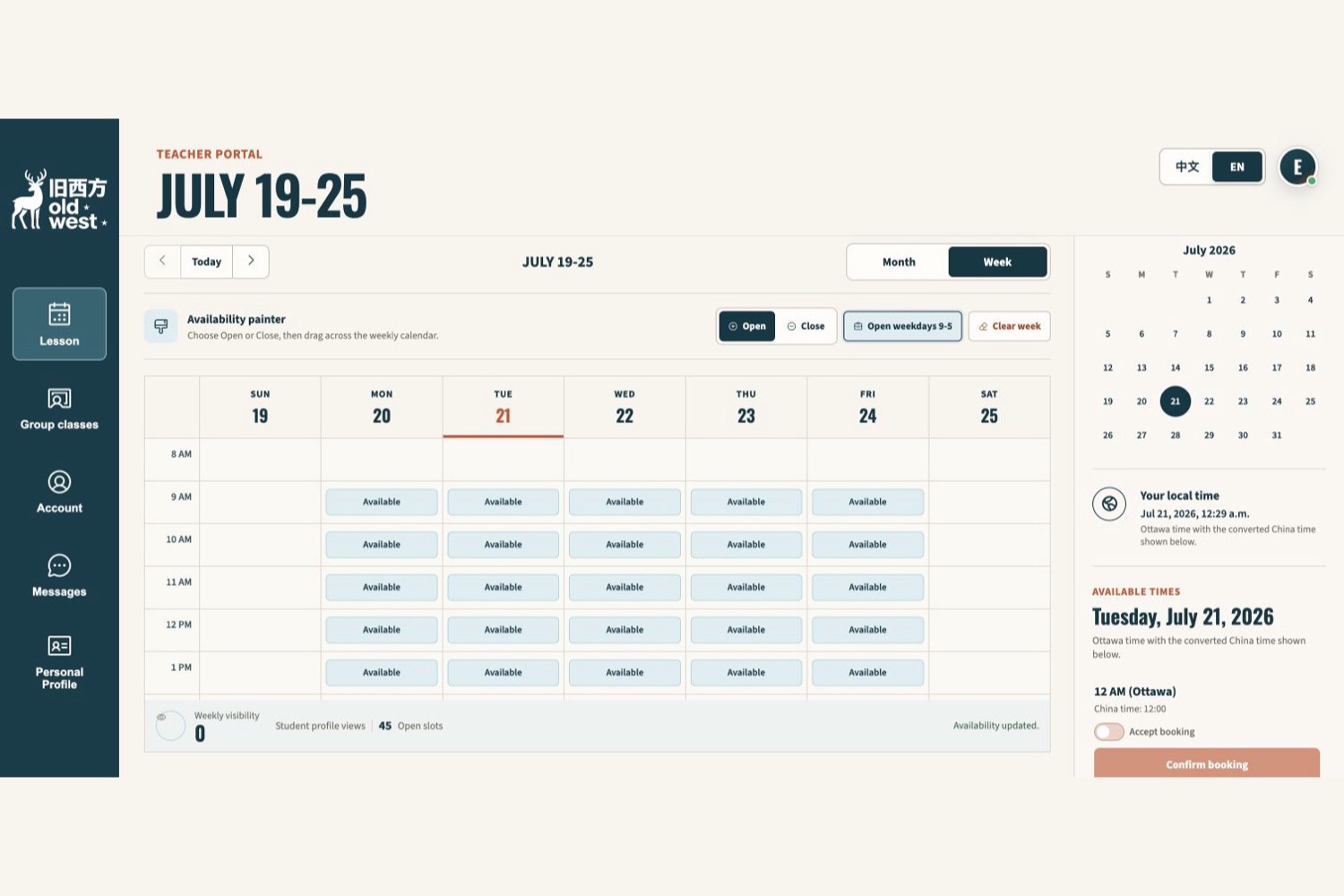
Teachers open an entire workweek in one click, paint availability on the calendar, and track profile exposure.
-
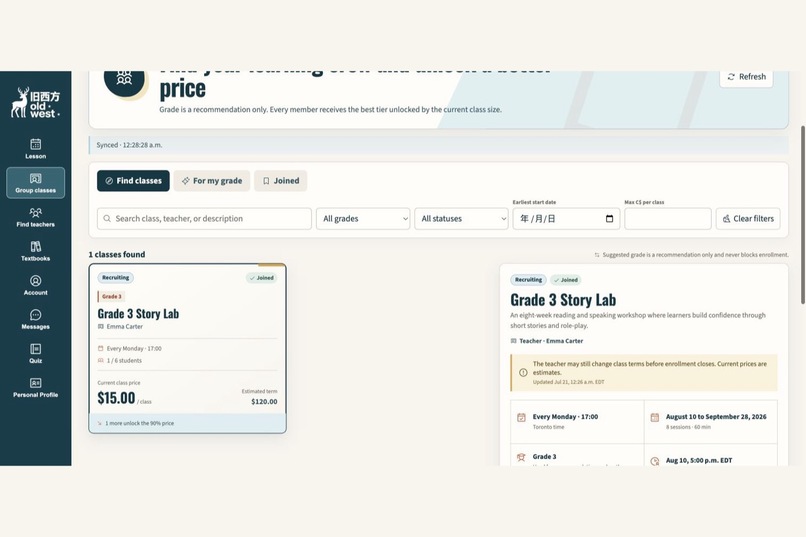
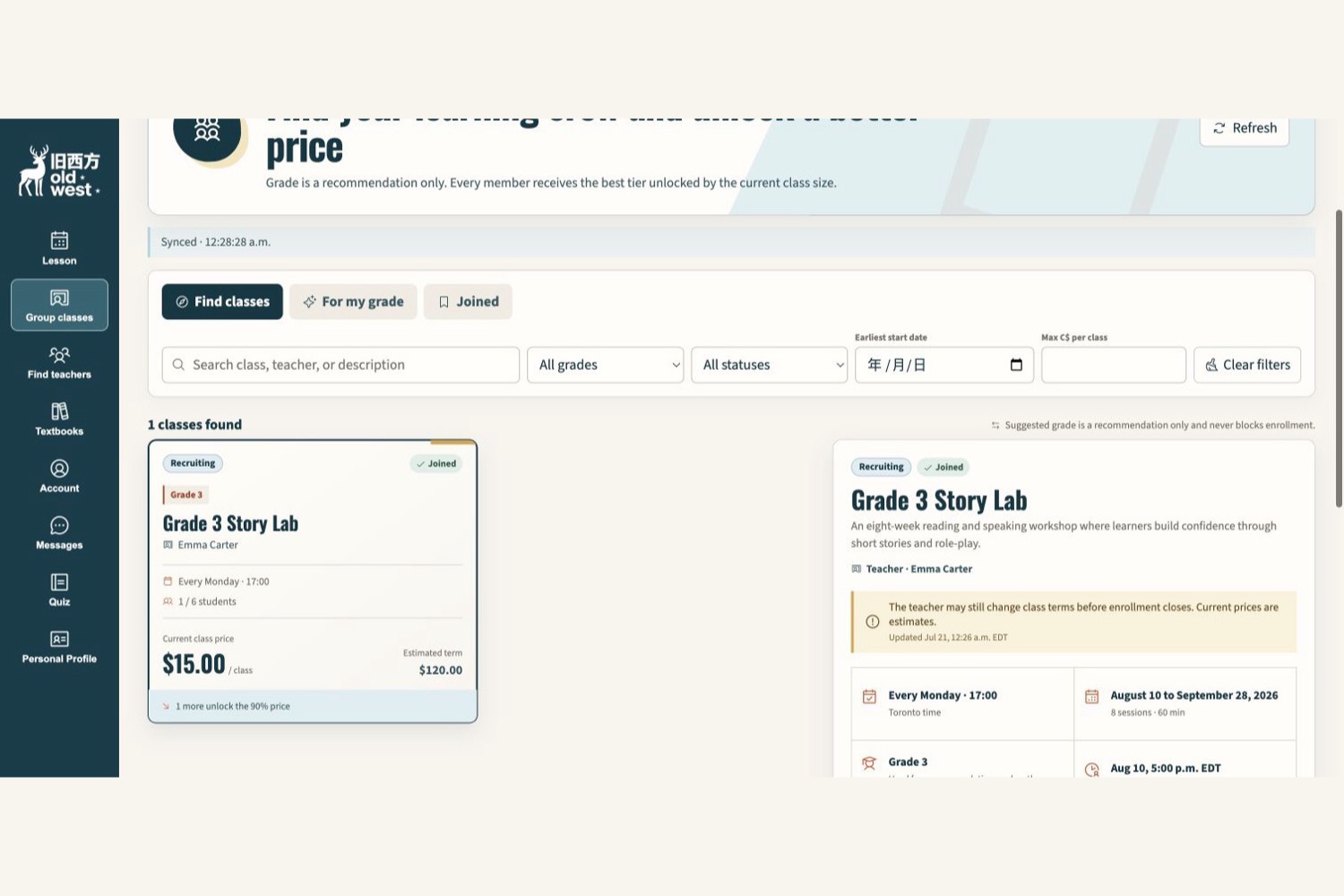
A shared group-class marketplace shows enrollment, estimated term price, and the next discount tier in real time.
-
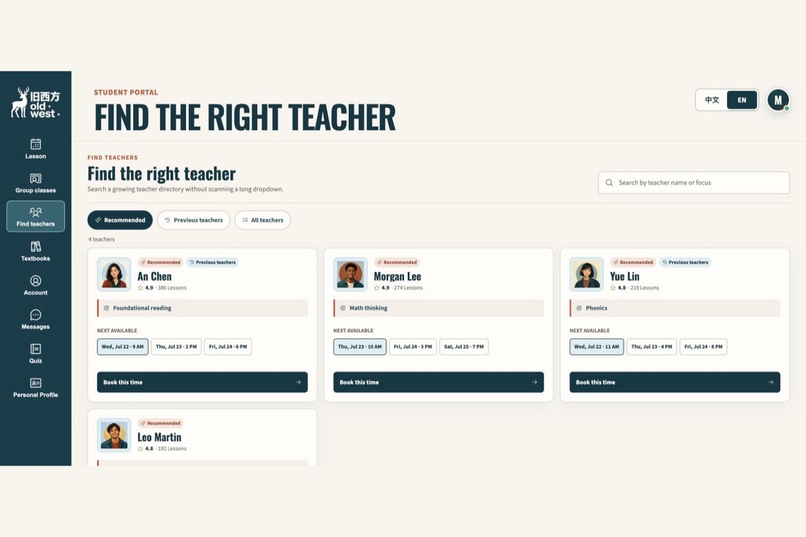
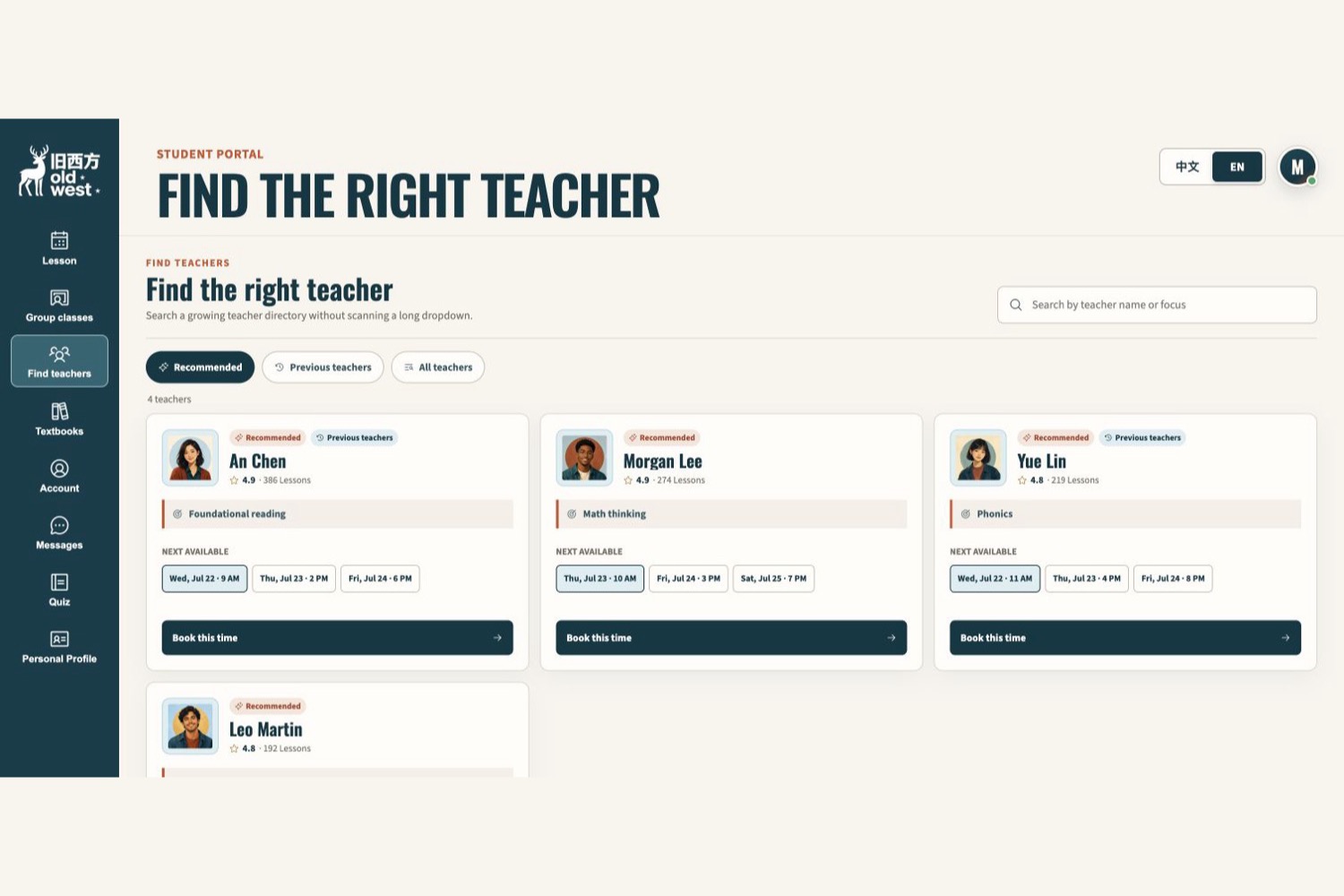
Students browse recommended and previous teachers, compare focus areas, and book transparent one-to-one lesson times.
-
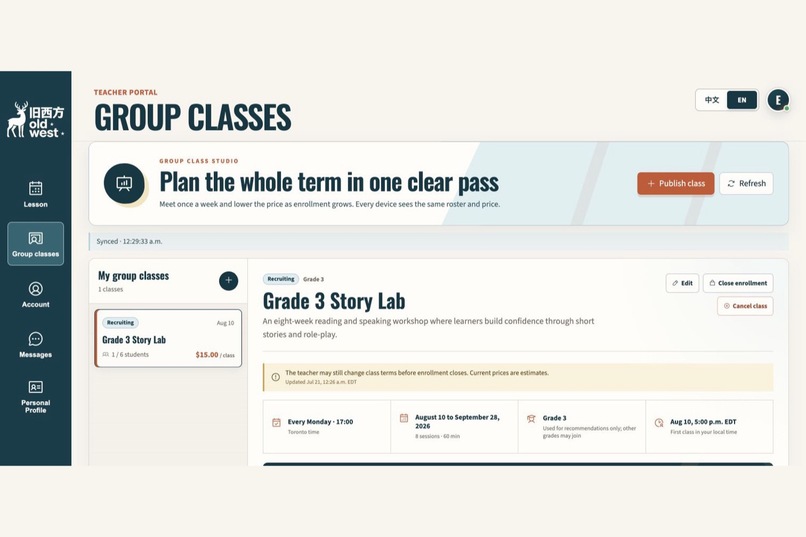
Teachers manage recurring classes, rosters, schedules, lifecycle status, pricing, and protected classroom links.
-
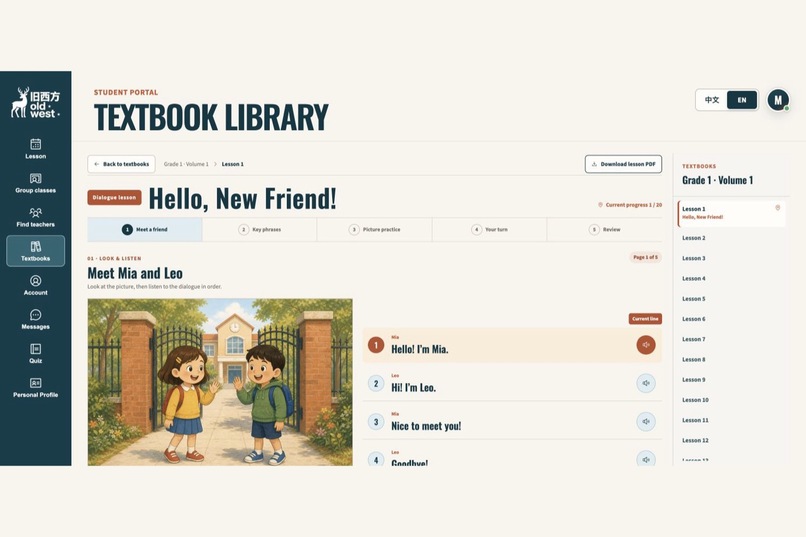
An original five-page Grade 1 lesson combines illustration, dialogue audio, guided practice, and a downloadable PDF.
-
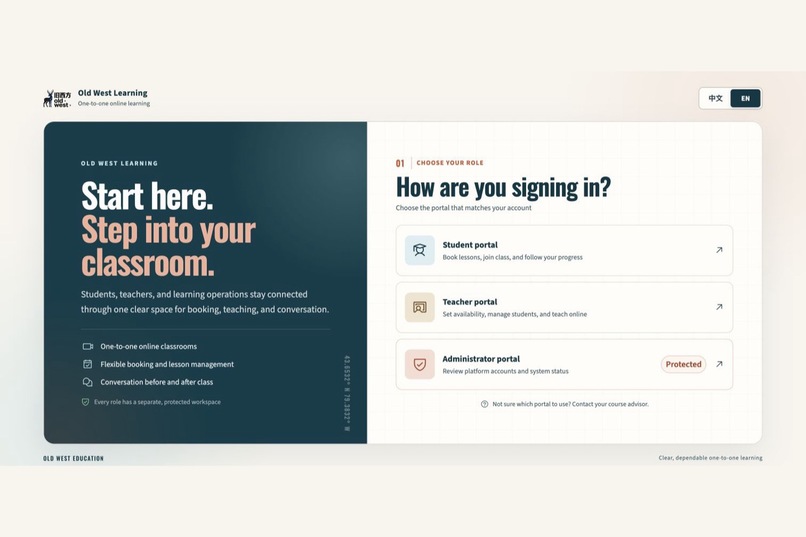
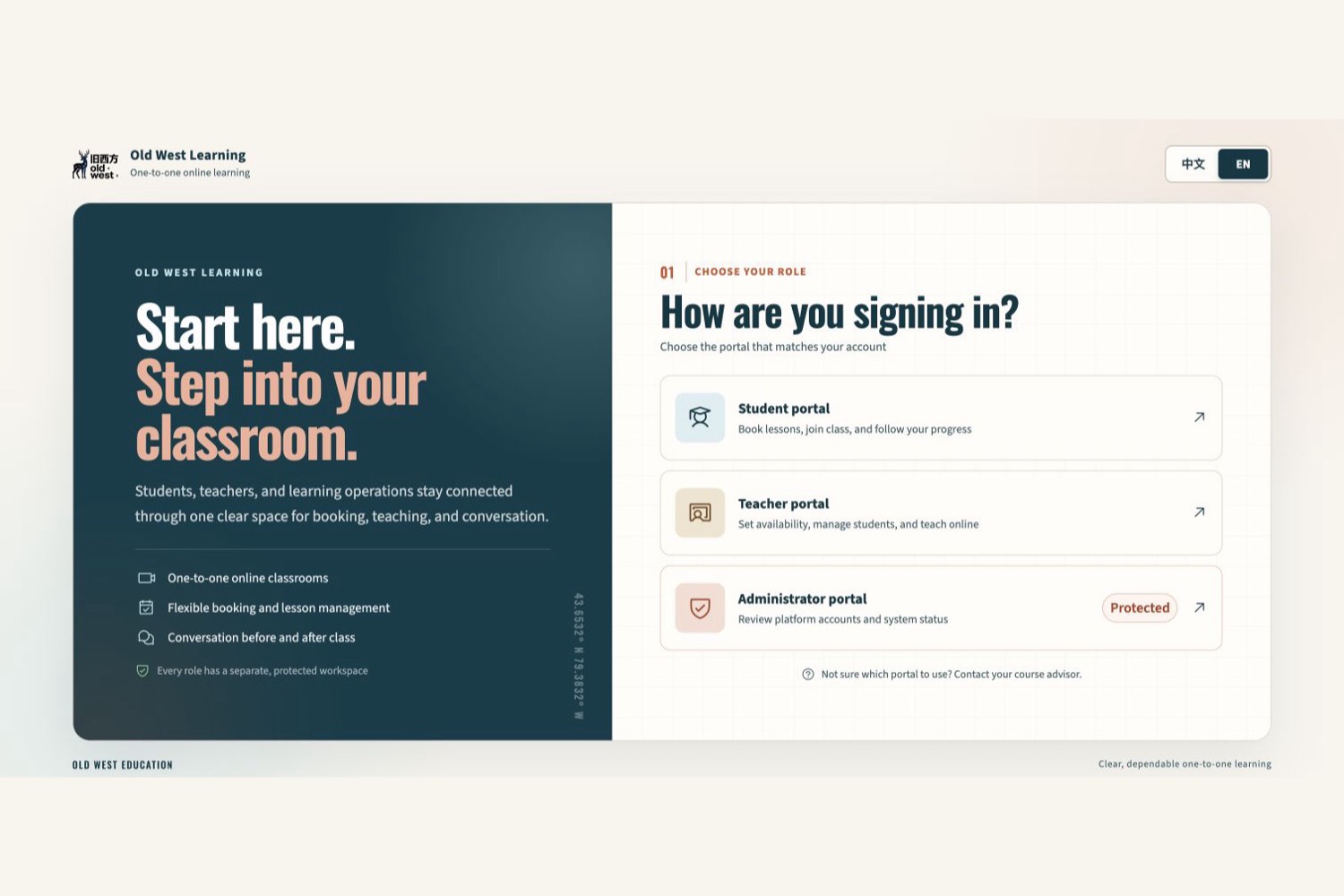
Three protected portals connect students, teachers, and administrators in one bilingual learning platform.
Inspiration
I kept seeing online English-tutoring advertisements aimed at Chinese families. The lessons could be expensive, yet the split between teacher pay and platform fees was rarely clear. I saw an opportunity to connect children directly with North American English teachers while using automation to keep the organization lean instead of building a large management team.
The target price for a one-to-one lesson is C$20 per hour: approximately C$19 for the teacher and C$1 for the platform. Parents see the price structure clearly, and teachers can earn remotely without surrendering a large share to intermediaries.
What it does
Old West Learning is a bilingual operating system for a small online school. It includes:
- Separate student, teacher, and administrator workspaces
- Role-bound registration, login, email verification, and password recovery
- Teacher discovery, recommendations, previous-teacher history, and scheduling
- Bilingual messaging and student progress tracking
- A textbook library organized by grade, volume, and lesson
- An original five-page Grade 1 lesson with illustrations, dialogue audio, guided practice, and a downloadable PDF
- Recurring group classes with capacity limits, enrollment, lifecycle states, classroom links, and tiered discounts
One-to-one tutoring is designed as a low-fee service. Group classes are planned as the main revenue engine, with a potential 20%–30% platform commission.
What changed during OpenAI Build Week
The starting point was a blank student dashboard and a basic teacher calendar. During Build Week, GPT-5.6 and Codex helped turn that baseline into a responsive bilingual platform with three protected portals, shared server data, original lesson content, redesigned chat, teacher discovery, progress tracking, and a complete group-class workflow.
The group-class system was the largest addition. Teachers can publish weekly recurring classes, define minimum and maximum enrollment, create up to five discount tiers, manage rosters, close enrollment, and protect classroom links. Students see the current per-lesson price, expected term total, next discount threshold, and live enrollment state across browsers and devices.
How we built it
The frontend uses vanilla HTML, CSS, and JavaScript. A Python 3.11 standard-library server provides authentication and application APIs. Persistent data is stored in local JSON files protected by a process lock and atomic writes. Member sessions are role-bound Bearer tokens, and scheduling calculations use America/Toronto while student views show local time.
GPT-5.6 helped convert product ideas into explicit rules for permissions, recurring schedules, discount tiers, lifecycle states, and responsive bilingual UX. Codex inspected the existing codebase, implemented the Python APIs and frontend workflows, generated and verified the lesson PDF, ran browser-based QA, compared desktop and mobile layouts, and fixed behavioral and visual regressions.
Challenges we ran into
The hardest problem was not drawing the interface; it was making shared behavior reliable. Two students can attempt to take the final seat at the same time, teachers can edit a class while students are viewing it, and prices must freeze correctly when enrollment closes. We added locking, revision checks, server-side validation, and automated tests so only one student can win the final seat.
We also had to keep role permissions, bilingual copy, mobile layouts, and existing one-to-one booking behavior consistent while adding substantial new functionality.
Accomplishments that we are proud of
As one builder, I completed a working education-platform prototype rather than only a landing page. The original Grade 1 textbook is especially important to me: producing the illustrations, dialogue, audio, exercises, web reader, and PDF at this speed would not have been practical for me alone without GPT-5.6 and Codex.
I am also proud that the group-class demo is backed by shared server data and includes a real concurrency test rather than relying on static mockups.
What we learned
I learned that an AI coding agent is most effective when product decisions are made explicit and then verified through tests and browser QA. The workflow was not simply asking AI to generate a website. It was an iterative loop of specifying behavior, inspecting existing code, implementing, testing, reviewing the interface, and correcting failures.
What is next for Old West Educational Institution
Next steps include production hosting, payment processing, stronger identity and university-student teacher verification, curriculum expansion, and pilot classes with real users. One-to-one lessons will remain transparently priced with a small platform fee, while group classes will provide the sustainable revenue needed to operate and improve the service.
Built With
- codex
- css3
- github
- gpt-5.6
- html5
- javascript
- openai
- python


Log in or sign up for Devpost to join the conversation.