Inspiration
Walk through any Nigerian market and you'll see the same thing: a trader with one phone, three ways of getting paid, and no single place to see the day's money. Cash goes in a drawer, transfers land in a bank app, and a customer who wants to pay in bitcoin usually gets turned away. Many traders also sell airtime and pay bills for customers on the side, using yet another app.
We wanted one till that works on the phone a trader already owns, takes every kind of payment, and treats Bitcoin as a normal way to pay rather than an experiment.
What it does
Oja POS ("oja" means "market" in Yoruba) turns a phone into a point-of-sale:
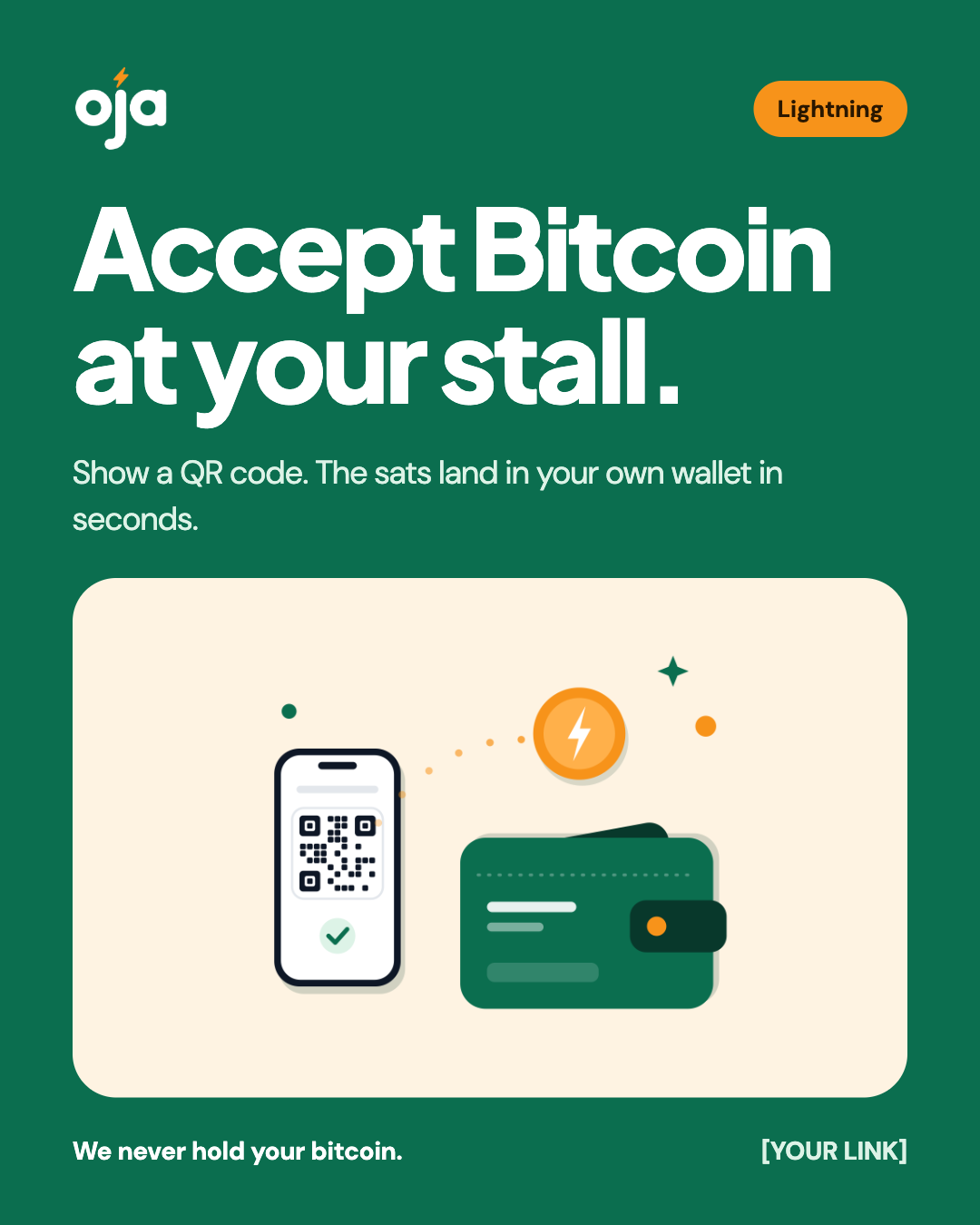
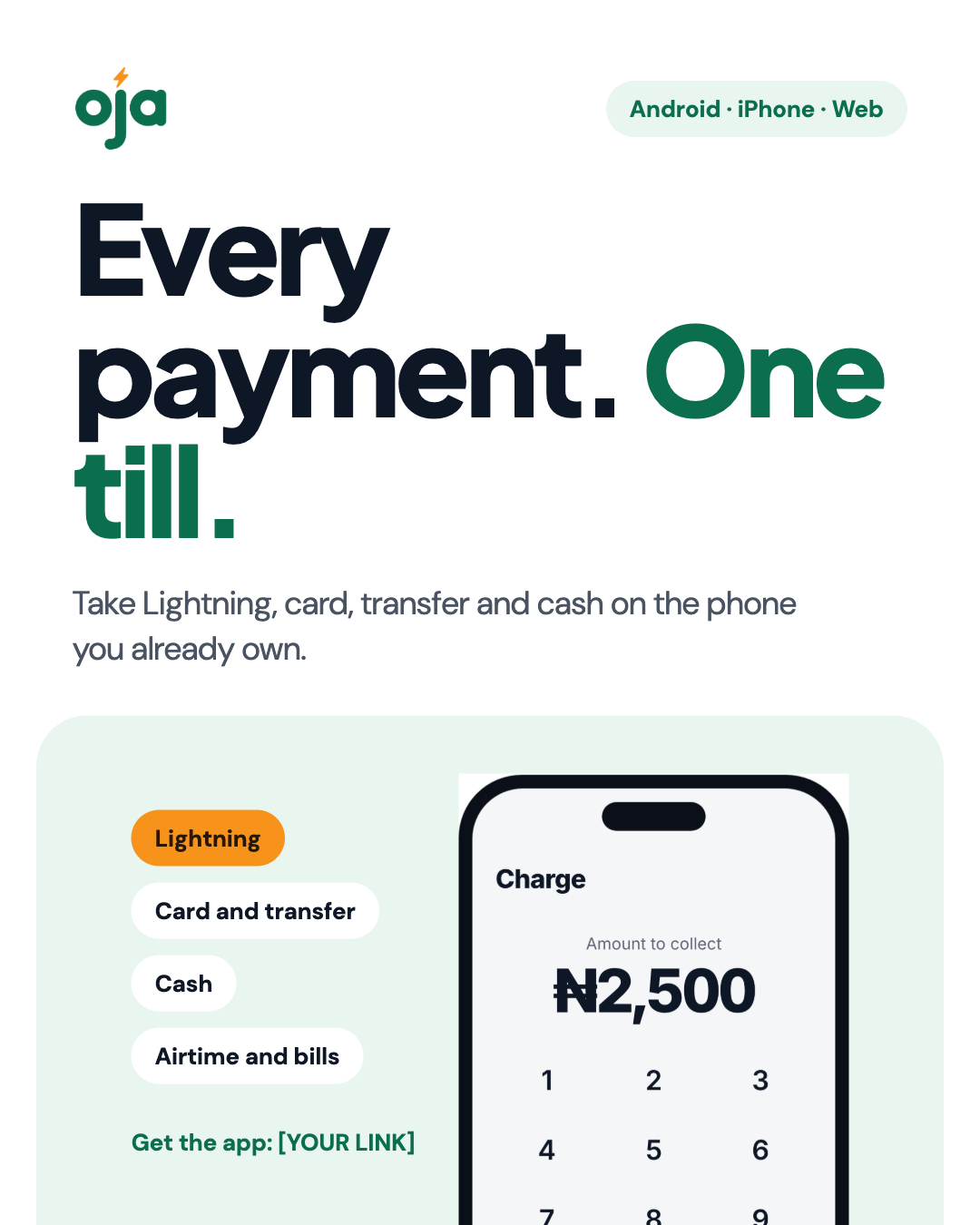
- Take payments. Type the amount, then choose (Lightning, card / bank transfer / USSD (via Paystack) or cash. The customer scans a QR code with their own wallet or banking app.
- Bitcoin goes straight to the trader. The merchant connects their own Lightning wallet with Nostr Wallet Connect. Oja POS asks that wallet for an invoice and shows the success screen only when the wallet confirms the payment. We never hold anyone's sats.
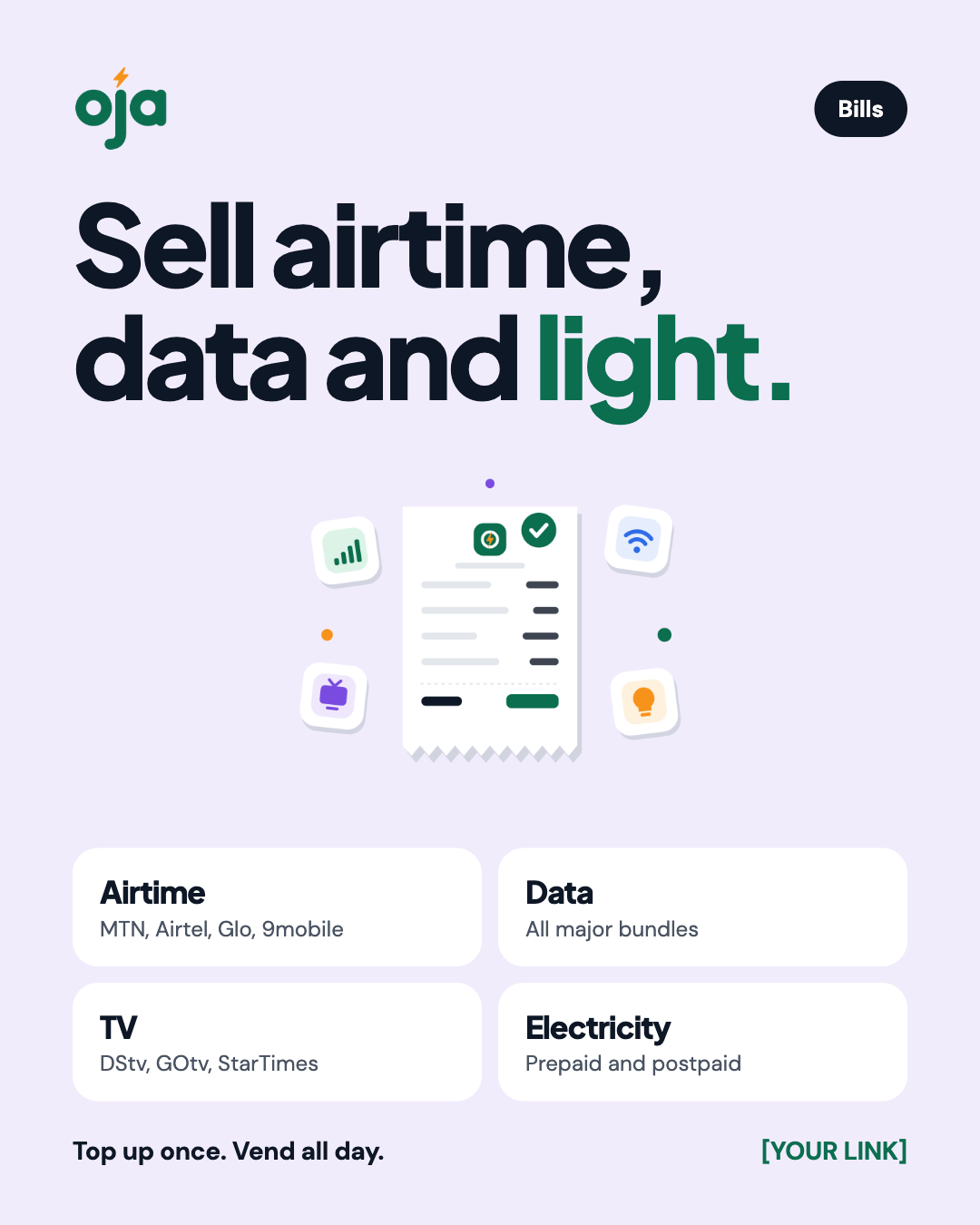
- Sell bills. From a naira float, the trader can sell airtime, data, TV subscriptions and electricity tokens to customers.
- See the day at a glance. Today's sales, float balance, sats received and a full activity history.
It runs on Android, iPhone and the web from one Flutter codebase.
How we built it
- Flutter app for Android, iOS and web, with a phone layout and a desktop layout (sidebar navigation, two-panel sign-in).
- Lightning via Nostr Wallet Connect (NIP-47), written in pure Dart so it runs on all three platforms: BIP-340 Schnorr signatures, NIP-44 v2 encryption with NIP-04 fallback, and relay messaging over WebSockets.
- Pricing in naira. The app converts the naira amount using a live BTC/NGN rate and always rounds up to the next sat:
$$ \text{sats} = \left\lceil \frac{\text{amount}_{\text{NGN}}}{\text{BTC/NGN rate}} \times 10^{8} \right\rceil $$
- Cloudflare Worker backend that holds every secret (Paystack, VTpass, Firebase service account). The app contains no payment keys.
- Firebase (free plan): email sign-in and Firestore for the ledger, locked down with security rules so the app can never edit its own balance.
- Paystack for card, transfer and USSD payments, confirmed by verifying with Paystack plus a signed webhook. VTpass for airtime, data, TV and electricity.
- A landing page that is also the front door to the web app, plus a logo, app icons and onboarding illustrations designed for the project.
Challenges we ran into
- Lightning on the web. Most Lightning libraries for Flutter use native code that doesn't run in a browser. We implemented the Nostr Wallet Connect protocol ourselves in Dart, including Schnorr signing and both encryption schemes, and checked them against published test vectors and a reference library.
- Money that adds up.Payments can be confirmed twice (by the app and by a webhook), and two purchases can happen at the same instant. We made every credit idempotent and used optimistic concurrency on debits, so a payment counts exactly once and the float can never go negative.
- Ambiguous bill payments. A network error doesn't mean a bill purchase failed. We only refund on a definite failure; anything unclear stays "processing" until a status check settles it.
- Free-tier constraints. Firebase's free plan has no Cloud Functions, so all trusted logic lives in a Cloudflare Worker that talks to Firestore over REST.
What we learned
- How Nostr Wallet Connect works end to end, and why letting merchants keep their own keys matters for trust.
- That payment UX is mostly about honesty: show success only when the money has really arrived.
- How to design a ledger where the client is never trusted with the balance.
What's next
- Withdrawing the naira float to a bank account (Paystack Transfers).
- Offline mode for markets with patchy network.
- Yoruba, Hausa, Igbo and Pidgin translations.
- Pilot with traders and POS agents, and collect feedback.


